Sapphire vs White Topaz: Understanding the Key Differences
When selecting a colorless gemstone for fine jewelry, many consumers find themselves weighing the merits of sapphire versus white topaz as potential alternatives to diamonds. While both stones offer a clear, brilliant appearance at first glance, they belong to entirely different mineral families with distinct properties that significantly impact their performance, longevity, and value. Sapphire belongs to the corundum family, sharing its chemical composition with rubies and colored sapphires, whereas white topaz is a silicate mineral prized for its availability and affordability. Understanding these fundamental differences is crucial for making an informed investment, particularly when choosing a center stone for an engagement ring or a piece intended to become a family heirloom.
One common misconception perpetuated by some retailers is that white topaz and white sapphire are interchangeable as budget-friendly diamond substitutes. This notion often leads to disappointment when buyers discover that their white topaz engagement ring has developed scratches, chips, or a cloudy appearance within months of daily wear. Another frequent misunderstanding involves the assumption that higher carat weight always provides better value, causing shoppers to choose a large white topaz over a smaller sapphire without considering the long-term durability implications. Recognizing why sapphire vs white topaz comparisons matter can prevent costly replacement expenses and ensure your jewelry selection aligns with your lifestyle and expectations.
Physical and Chemical Composition: What Sets Them Apart
The fundamental distinction between these gemstones begins at the molecular level, where sapphire crystallizes as aluminum oxide (Al2O3) in the trigonal crystal system, while white topaz forms as aluminum fluorosilicate in the orthorhombic system. This difference in chemical structure directly influences their hardness, with sapphire ranking 9 on the Mohs scale compared to topaz's rating of 8. While a single number difference might seem negligible, the Mohs scale is logarithmic, meaning sapphire is significantly harder and more resistant to scratching than topaz. Additionally, sapphire possesses a specific gravity of 3.95-4.03, making it denser than topaz, which ranges from 3.49-3.57, resulting in sapphires appearing slightly smaller than topaz stones of identical carat weight.
Formation environments further distinguish these minerals, as sapphires typically develop in metamorphic rocks or alkaline igneous deposits under high temperature and pressure conditions over millions of years. Kashmir sapphires and Ceylon sapphires originate from distinct geological settings that contribute to their unique optical properties. Conversely, white topaz commonly forms in pegmatite deposits and high-temperature quartz veins, with major deposits found in Brazil, Nigeria, and Sri Lanka. These different birthplaces affect not only the availability and pricing but also the typical inclusion patterns found within each stone.
A practical example illustrating these compositional differences occurs when a jeweler evaluates a vintage ring brought in for restoration. A 1920s sapphire engagement ring often requires only cleaning and prong tightening to restore its original beauty, whereas a topaz ring from the same era frequently shows significant abrasion on facet junctions and may have developed chips along the girdle due to decades of wear. This real-world scenario demonstrates why understanding sapphire gemstone properties matters for anyone considering a purchase meant to last generations.
Visual Differences: Brilliance, Fire, and Light Performance
Light behavior provides the most immediate visual distinction between these two gemstones, governed by their differing refractive indices and dispersion values. Sapphire boasts a refractive index of 1.76-1.77, which creates substantial brilliance and that desirable "crisp" appearance associated with high-quality gemstones. White topaz, with a lower refractive index of 1.61-1.64, produces a softer, more "glassy" luster that lacks the intense sparkle of its corundum counterpart. When examining dispersion—the ability to split white light into spectral colors—sapphire achieves 0.018 while topaz manages only 0.014, meaning sapphire displays more fire and rainbow flashes under direct light.
The luster quality also differs significantly, with sapphire exhibiting vitreous to adamantine luster that mimics diamond's reflective qualities, while white topaz maintains a strictly vitreous, glass-like appearance. Color zoning presents another differentiating factor; sapphires occasionally display subtle growth patterns or silk inclusions that create a soft, velvety appearance, particularly in untreated stones from Kashmir or Burma. White topaz tends toward uniform clarity but may contain two-phase inclusions or cleavage planes visible under magnification, characteristics that distinguish it from the typically cleaner appearance of fine white sapphire.
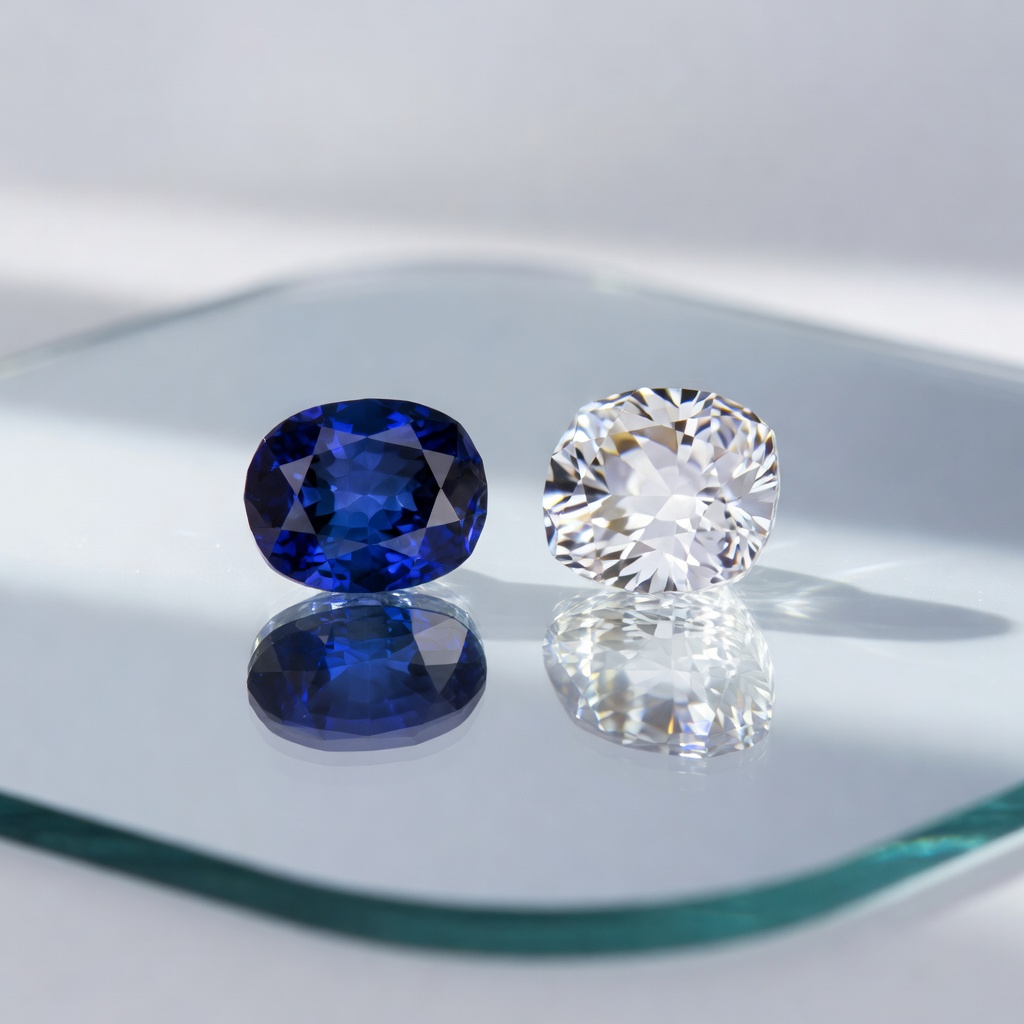
Consider the experience of a bride comparing loose stones under jewelry store lighting: when placed side by side on white display paper, a one-carat white sapphire immediately draws the eye with its bright flashes and crisp facet edges, while the white topaz appears slightly watery and less defined despite being equally colorless. This white topaz brilliance differential becomes particularly noticeable in dim lighting conditions, where sapphire maintains its sparkle while topaz appears increasingly dull. For those seeking a white sapphire vs white topaz comparison that mimics diamond performance, the sapphire's superior optical properties provide a significantly more convincing alternative.
Wearability and Durability: Which Stone Lasts Longer?
Durability considerations extend far beyond the simple hardness scale, encompassing toughness, cleavage characteristics, and resistance to environmental factors. While sapphire's Mohs rating of 9 provides excellent scratch resistance suitable for daily wear, its true advantage lies in its lack of cleavage planes and exceptional toughness. White topaz, despite its respectable hardness of 8, possesses perfect basal cleavage, meaning it can split cleanly along one crystal direction when struck with sufficient force. This structural weakness makes topaz particularly vulnerable to damage during setting, cleaning, or accidental impact against hard surfaces.
Thermal shock resistance further favors sapphire, as corundum remains stable across extreme temperature variations commonly encountered during jewelry manufacturing and everyday wear. White topaz demonstrates greater sensitivity to rapid temperature changes, potentially developing internal fractures when exposed to sudden heating or cooling. Additionally, sapphire maintains its polish and facet edges for decades with minimal maintenance, while topaz requires regular repolishing to address the inevitable abrasions that occur at facet junctions after several years of normal wear.
A compelling case study involves two sisters who received similar solitaire rings five years ago: one featuring a white sapphire center stone and the other a white topaz of comparable size. Upon inspection today, the sapphire ring shows no visible wear under 10x magnification, maintaining its original brilliance and crisp facet edges. The topaz ring, however, displays noticeable scratching on the table facet and rounded facet junctions, requiring professional repolishing to restore its original appearance. This real-world sapphire vs topaz durability test illustrates why hardness differences translate to vastly different lifespans under identical wearing conditions.
Cost Analysis: Sapphire vs White Topaz Pricing
The economic disparity between these gemstones reflects their relative rarity, mining difficulty, and market demand, with white topaz vs sapphire price comparisons revealing a dramatic spread. Quality white topaz typically retails between $5 and $50 per carat, making it an accessible option for fashion jewelry and temporary pieces. Fine-quality white sapphires, particularly those with excellent clarity and cut, command prices ranging from $300 to over $5,000 per carat depending on origin, size, and treatment status. This substantial price difference means a two-carat white topaz might cost $40, while a comparable-sized premium white sapphire could demand $1,200 or more.
Value retention heavily favors sapphire, as high-quality specimens from renowned localities like Kashmir or Burma appreciate over time and maintain strong resale markets. White topaz experiences minimal value retention, functioning primarily as a consumable fashion component rather than an investment vehicle. Several factors influence sapphire pricing beyond basic quality metrics, including geographic origin (with Kashmir and Burmese stones commanding premiums), heat treatment disclosure (unheated stones fetch higher prices), and certification from recognized laboratories like GIA or AGS.
For budget allocation strategies, consider the example of a couple with $2,000 to spend on an engagement ring center stone. Choosing white topaz allows for a substantial three to four-carat stone with money remaining for elaborate settings or additional accent diamonds. Allocating the same budget toward white sapphire yields a modest 0.75 to 1-carat stone, yet provides a gem capable of withstanding daily wear for decades without degradation. This white topaz vs sapphire price analysis suggests that topaz suits temporary or fashion-forward designs where size matters more than longevity, while sapphire represents the prudent choice for symbolic jewelry intended to last generations.
Best Jewelry Applications for Each Gemstone
Selecting the appropriate gemstone requires matching material properties to intended use cases, with sapphire dominating applications requiring maximum durability and prestige. Engagement rings, anniversary bands, and heirloom pendants benefit enormously from sapphire's scratch resistance and toughness, ensuring these emotionally significant pieces remain pristine through decades of continuous wear. White sapphire particularly excels in classic solitaire settings where its brilliance can rival diamond, and its durability eliminates concerns about damage during household chores or professional activities.
White topaz finds its niche in fashion jewelry, accent stones, and pieces designed for occasional rather than daily wear. Cocktail rings, brooches, and trendy earrings that follow seasonal styles represent ideal applications for this affordable gemstone, allowing designers to create substantial looks without prohibitive costs. When using topaz, protective settings become essential considerations; bezel settings or protective halos help shield the stone's vulnerable edges and girdle from impact, whereas tension settings or exposed prong settings expose topaz to unnecessary chipping risks.
Metal choices should complement each gemstone's characteristics and value profile. Platinum and 18k white gold pair naturally with white sapphire, creating a cohesive luxury aesthetic appropriate for the stone's prestige and permanence. For white topaz, sterling silver or 10k white gold settings maintain proportional value relationships while keeping overall costs accessible. A practical tip for jewelers involves recommending white topaz for "right-hand rings" or special occasion jewelry while reserving sapphire for left-hand rings subjected to constant daily exposure. This sapphire engagement ring alternatives strategy ensures clients receive appropriate durability for their specific wearing patterns.
Treatments, Sourcing, and Ethical Considerations
Transparency regarding gemstone enhancement distinguishes professional dealers from less scrupulous sellers, as both sapphires and white topaz commonly undergo treatments affecting their appearance and stability. Heat treatment represents the standard enhancement for sapphires, with approximately 95% of corundum on the market having undergone controlled heating to improve clarity and color. This treatment is permanent and stable, requiring no special care, though unheated natural sapphires command significant premiums. White topaz occasionally receives irradiation or surface coatings to improve colorlessness or create fancy colors, though these treatments may be less stable and require disclosure.
Ethical sourcing considerations vary by geographic origin, with sapphires from Sri Lanka (Ceylon) and Madagascar increasingly subject to fair-trade protocols and responsible mining initiatives. These sources often provide superior working conditions and environmental protections compared to unregulated operations. White topaz sourcing primarily concentrates in Brazil and Nigeria, where mining practices range from artisanal family operations to larger industrial concerns. Consumers prioritizing ethical provenance should request documentation regarding mining practices and community impact.
Certification requirements differ significantly between these gemstones due to their value disparities. Investment-grade sapphires warrant reports from GIA, AGS, or SSEF laboratories detailing origin, treatment status, and quality parameters. For white topaz, a detailed appraisal from a credentialed gemologist typically suffices, documenting the stone's identity and fair market value for insurance purposes. A practical case study involves a collector who discovered her "white sapphire" engagement ring was actually white topaz, highlighting the importance of verifying gemstone identity through independent laboratories when significant investments are involved. This gemstone comparison guide emphasizes that documentation protects consumers and ensures accurate valuation.
Expert Identification: How to Tell Them Apart
Distinguishing between these colorless gemstones requires understanding their optical properties, particularly the birefringence that creates a distinctive doubling effect in white topaz. When viewing a straight line or sharp object through the pavilion of a white topaz, the line appears doubled due to the mineral's optical anisotropy, whereas sapphire shows a single crisp line because it is optically uniaxial. This simple visual test provides reliable preliminary identification without specialized equipment, though it requires practice to observe clearly in smaller stones.
Professional gemological testing offers definitive identification through refractive index readings using a refractometer (sapphire: 1.76-1.77 vs topaz: 1.61-1.64), polariscope examination showing different optic figures, and specific gravity testing. Inclusion patterns provide additional diagnostic clues, with sapphires often displaying rutile silk, hexagonal growth zoning, or fingerprint inclusions, while white topaz typically shows cleavage cracks, two-phase inclusions, or parallel growth lines. Specific gravity testing distinguishes them definitively, as sapphire sinks more rapidly in heavy liquids due to its higher density.
Home identification techniques include the thermal conductivity test, where sapphire (like diamond) disperses heat rapidly, causing breath condensation to evaporate almost instantly. Topaz clears condensation more slowly, similar to glass or quartz. Another method involves checking for abrasion: after several months of wear, topaz typically shows scratches on facet junctions visible with a 10x loupe, while sapphire maintains pristine edges. When purchasing pre-owned jewelry or dealing with unfamiliar sellers, seeking verification from a certified gemologist provides peace of mind and ensures accurate valuation, particularly given the significant white sapphire vs white topaz price differential.
Pros and Cons: Sapphire vs White Topaz at a Glance
Evaluating these gemstones side-by-side reveals distinct advantages and limitations that guide appropriate selection for specific applications and budgets. The following comprehensive comparison table summarizes key characteristics to facilitate informed decision-making:
| Characteristic | White Sapphire | White Topaz |
|---|---|---|
| Hardness (Mohs) | 9 (Excellent scratch resistance) | 8 (Good, but softer) |
| Refractive Index | 1.76-1.77 (High brilliance) | 1.61-1.64 (Moderate brilliance) |
| Durability Profile | No cleavage, excellent toughness | Perfect basal cleavage, prone to chipping |
| Price per Carat | $300 - $5,000+ | $5 - $50 |
| Best Application | Engagement rings, daily wear heirlooms | Fashion jewelry, occasional wear |
| Brilliance/Fire | High dispersion (0.018), diamond-like | Low dispersion (0.014), glassy appearance |
| Maintenance | Minimal; occasional cleaning | Regular repolishing needed; careful handling |
| Value Retention | Strong; appreciates over time | Minimal resale value |
| Thermal Stability | Excellent | Sensitive to thermal shock |
Sapphire's primary advantages include exceptional durability suitable for lifelong daily wear, superior optical performance that convincingly simulates diamond, and strong value retention that supports heirloom传承. The prestige associated with sapphire as a precious gemstone adds symbolic weight to engagement rings and milestone gifts. However, sapphire disadvantages encompass significant upfront costs that may exceed modest budgets, the prevalence of heat treatments requiring disclosure, and the risk of synthetic or imitation stones in the unregulated market.
White topaz offers compelling benefits for specific use cases, including natural origin (not synthetic), crisp colorless appearance at acquisition, and versatile design possibilities due to affordable pricing. Fashion designers favor topaz for creating bold statement pieces without budget constraints. The disadvantages, however, prove substantial for daily wear applications: lower hardness results in rapid abrasion and loss of brilliance, perfect cleavage creates vulnerability to catastrophic breakage, and minimal value retention makes replacement rather than repair the economical choice when damage occurs. Understanding these trade-offs ensures buyers align their expectations with the material realities of their chosen gemstone.
Making Your Final Decision: Expert Recommendations
Selecting between these gemstones ultimately depends on matching material properties to lifestyle requirements, budget parameters, and emotional significance. Sapphire represents the definitive choice for engagement rings, wedding bands, and any jewelry intended for continuous daily wear over decades. The initial investment premium pays dividends through eliminated replacement costs, maintained beauty without maintenance, and the psychological security of wearing a durable precious gemstone. For milestone celebrations such as ten-year anniversaries or significant birthdays, white sapphire communicates permanence and value appreciation.
White topaz suits temporary pieces, trend-driven fashion jewelry, and situations where maximizing carat size within strict budget constraints outweighs longevity concerns. Consider topaz for cocktail rings worn occasionally to special events, prom jewelry, or trendy designs likely to be replaced within two to three years as styles change. The key involves honest assessment of wear frequency: if the ring will reside in a jewelry box except for monthly outings, topaz provides adequate service; if it will accompany the wearer through daily activities including typing, cleaning, and exercise, sapphire's durability becomes essential.
A longitudinal cost analysis often surprises budget-conscious shoppers. While a $100 white topaz seems economical compared to a $1,000 white sapphire, replacing the topaz every three to four years due to abrasion or breakage ultimately exceeds the sapphire's one-time cost over a decade. Additionally, the emotional cost of damaged engagement jewelry often outweighs financial considerations. Final checklist items should include: verifying budget allows for sapphire without financial strain, confirming daily wear intentions, researching reputable sellers offering certification, and honestly assessing willingness to remove jewelry during physical activities. This gemstone comparison guide concludes that sapphire rewards the serious investment, while topaz serves the fashion-forward and budget-limited when expectations align with its limitations.
Frequently Asked Questions
Which is more durable: sapphire or white topaz?
Sapphire is significantly more durable with a Mohs hardness of 9 compared to topaz's 8. This means sapphire is much more resistant to scratches and everyday wear. Additionally, sapphire has better toughness and no perfect cleavage planes, making it less prone to chipping than white topaz, which has perfect basal cleavage and can split upon impact.
Can white topaz pass as a diamond or sapphire?
White topaz can initially resemble a diamond or white sapphire due to its colorless appearance, but its lower refractive index (1.61-1.64) creates less brilliance and fire. Side-by-side comparisons reveal white topaz appears more 'glassy' with subdued sparkle. While it can work as a budget alternative, gemologists and trained jewelers can easily distinguish it through light performance and hardness testing.
Is sapphire worth the extra cost over white topaz?
For daily-wear jewelry like engagement rings, sapphire's superior durability, brilliance, and prestige justify the higher investment. A quality sapphire retains value and can last generations with minimal maintenance. However, for occasional-wear fashion pieces, white topaz offers attractive aesthetics at a fraction of the cost, making it practical for trend-driven designs rather than lifetime investments.
Do sapphires and white topaz require different care?
Yes. Sapphire requires minimal care—regular cleaning with mild soap and occasional professional inspection. White topaz needs more delicate handling: avoid ultrasonic cleaners due to cleavage risks, remove during physical activities, and store separately to prevent scratches. Topaz is also more sensitive to temperature changes and chemicals, requiring gentler cleaning methods.
How can I tell if my stone is sapphire or white topaz at home?
Look for the doubling effect: view a straight line through the stone; topaz shows a doubled line due to birefringence, while sapphire shows a single line. Also, breathe on the stone—sapphire's higher thermal conductivity clears fog instantly, while topaz clears more slowly. For certainty, visit a gemologist who can perform hardness and refractive index tests.
Which gemstone is better for an engagement ring?
Sapphire is the superior choice for engagement rings due to its exceptional durability suitable for daily wear over decades. Its resistance to scratches and chips ensures the stone remains beautiful with minimal maintenance. While white topaz can be used for budget-conscious couples, its lower hardness and cleavage make it vulnerable to damage from everyday activities, potentially requiring replacement within years.
Are white topaz and white sapphire the same thing?
No, they are completely different minerals. White sapphire is colorless corundum (same family as blue sapphire) with hardness 9 and superior optical properties. White topaz is a silicate mineral with hardness 8 and lower brilliance. White sapphire commands premium prices and is often used as a diamond alternative, while white topaz serves as a more affordable accent stone in jewelry.
What is the typical price difference between sapphire and white topaz?
The price gap is substantial. Quality white topaz typically costs $5-$50 per carat, while fine-quality sapphire starts around $300 per carat and can exceed $5,000 per carat for premium stones with exceptional color and clarity. A 1-carat white sapphire (as comparison) averages $500-$1,000, making it 10-20 times more expensive than white topaz of similar size.