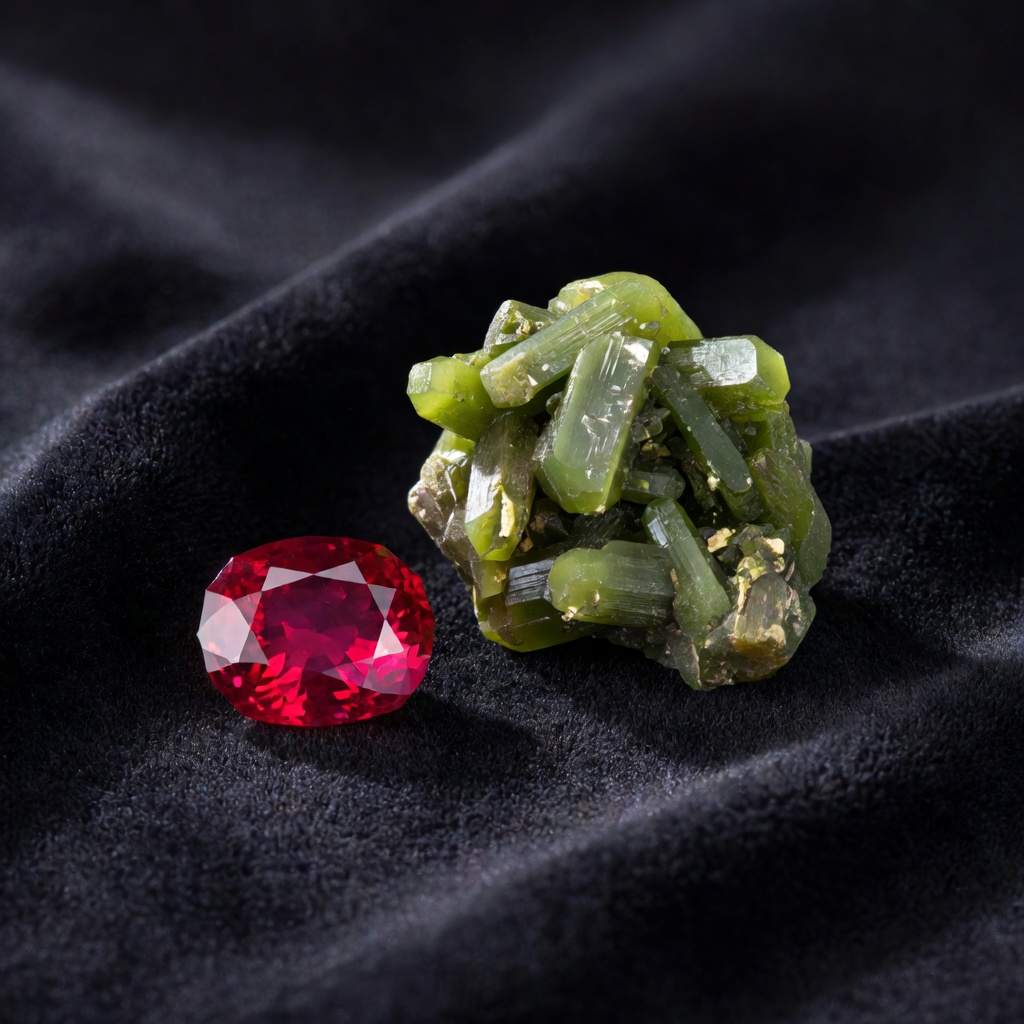
Introduction: Why Compare Ruby and Epidote?
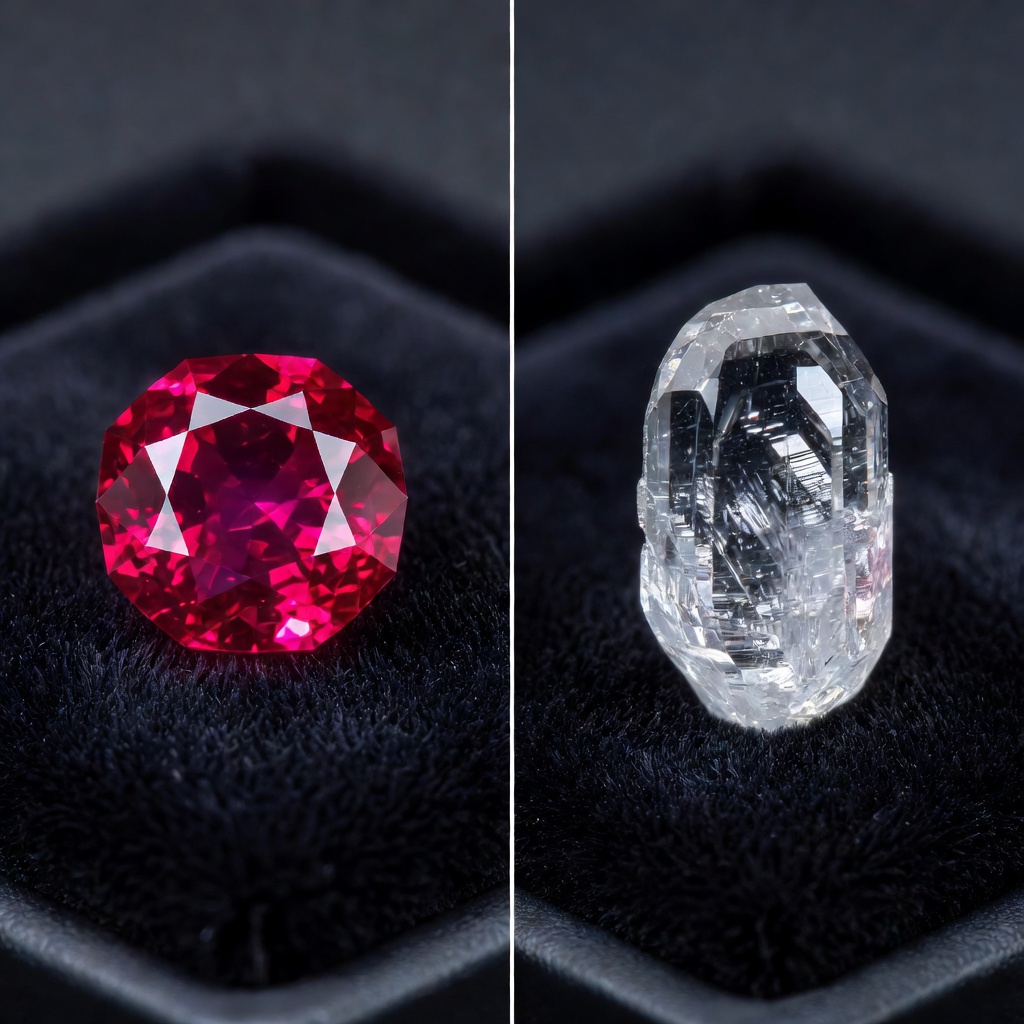
When exploring the vast spectrum of colored gemstones, few comparisons present as dramatic a contrast as ruby vs epidote. Ruby stands as one of the prestigious "Big Four" precious gemstones alongside diamond, sapphire, and emerald, commanding attention in royal collections and luxury jewelry houses for centuries. In stark opposition, epidote remains a beloved secret among mineral collectors and crystal enthusiasts, rarely appearing in mainstream jewelry counters despite its striking visual appeal. This comparison illuminates the fundamental difference between ruby and epidote across multiple dimensions—from geological formation to market valuation.
The visual distinction between these stones could not be more pronounced. Ruby exhibits an imperial red that has symbolized passion, power, and prosperity across virtually every culture, ranging from delicate pinkish-red hues to the coveted pigeon blood red prized by connoisseurs. Conversely, epidote displays a distinctive pistachio green epidote coloration that shifts from translucent lime to deep forest green, occasionally appearing nearly black in iron-rich specimens. This chromatic opposition—red corundum vs green epidote—creates entirely different aesthetic statements, appealing to distinctly different sensibilities and wardrobe palettes.
Despite their obvious visual differences, misconceptions persist within the gem market. Some novice collectors mistakenly identify translucent red epidote varieties as "fake" or imitation rubies, particularly when encountering uncut crystal specimens. Additionally, both stones form in metamorphic environments, leading to occasional confusion among rockhounds exploring marble and schist deposits. Understanding these distinctions proves crucial for collectors, jewelry designers, and spiritual practitioners seeking to make informed acquisitions rather than costly identification errors.
Geological Origins and Chemical Composition
The fundamental mineral composition of these gemstones explains their divergent properties and market positions. Ruby represents the red variety of corundum, an aluminum oxide (Al₂O₃) mineral that crystallizes under intense heat and pressure within metamorphic rocks. The presence of chromium ions replacing aluminum atoms within the crystal lattice produces ruby's signature crimson coloration. These formation conditions typically occur in marble deposits or basaltic rocks, where limestone metamorphosis or igneous activity creates the perfect environment for corundum growth over millions of years.
Epidote presents a significantly more complex chemical architecture as a calcium aluminum iron sorosilicate with the formula Ca₂Al₂(Fe³⁺;Al)(SiO₄)(Si₂O₇)O(OH). This intricate structure forms in both metamorphic and igneous environments, particularly within schists, gneisses, and contact metamorphic zones where hydrothermal alteration occurs. The variable iron content within epidote's composition directly influences its color intensity; higher iron concentrations produce the darker green to black varieties, while aluminum-rich specimens display the characteristic pistachio green tones that collectors prize.
Geographic distribution further distinguishes these minerals. Premier ruby deposits occur in Myanmar (formerly Burma), Mozambique, Thailand, and Sri Lanka, with Burmese Mogok stones commanding particular reverence for their "pigeon's blood" color and exceptional fluorescence. Mozambique has emerged as a significant contemporary source, producing rubies with excellent clarity and size. Epidote, being more abundant mineralogically, sources from diverse locations including Austria's Knappenwand (famous for exceptional crystals), Pakistan's northern territories, Brazil's Minas Gerais region, and the United States. This abundance differential directly impacts their respective market classifications as precious vs semi-precious gemstones.
Physical Properties and Durability Comparison
Durability represents perhaps the most critical practical distinction when evaluating ruby vs epidote for jewelry applications. Ruby hardness mohs scale ranking stands at an impressive 9, second only to diamond's perfect 10. This exceptional hardness derives from corundum's tightly packed atomic structure and strong aluminum-oxygen bonds, rendering ruby suitable for daily wear including engagement rings, bracelets, and pieces subject to frequent impact. The gemstone's toughness—resistance to breaking and chipping—complements its hardness, though rubies containing significant silk inclusions may exhibit slightly reduced structural integrity.
Epidote ranks significantly lower at 6 to 7 on the Mohs hardness scale, placing it in a category requiring substantial protection in jewelry settings. This relative softness, combined with perfect cleavage in one direction, makes epidote vulnerable to scratching, chipping, and fracturing under normal wear conditions. The mineral's brittleness proves particularly problematic for ring stones, which endure constant contact with hard surfaces, doorknobs, and desk edges. Epidote durability concerns necessitate protective bezel settings or placement in earrings and pendants where impact risks remain minimal.
Crystallographically, these minerals occupy different systems that influence their optical properties and cutting characteristics. Ruby crystallizes in the trigonal system, typically forming hexagonal prisms with pyramidal terminations, allowing cutters to orient stones to maximize color saturation and minimize windowing. Epidote belongs to the monoclinic crystal system, often developing elongated, prismatic crystals with distinctive striations and pleochroic properties. These structural differences affect how lapidaries approach each material—ruby accepts brilliant faceting and high polishing, while epidote requires careful orientation to display its best color and must be cut with cleavage planes in mind to prevent breakage during setting.
Color Characteristics and Visual Identification
Color analysis provides the most immediate method for distinguishing red corundum vs green epidote, though subtle variations within each species deserve careful examination. Ruby's color spectrum spans from delicate pinkish-red through orangey-red to the intensely saturated pure red that commands premium prices. The legendary "pigeon's blood" designation describes rubies exhibiting vivid saturation with a slight blue undertone, primarily found in Burmese deposits. Under ultraviolet light, natural rubies typically display strong red fluorescence due to chromium content, a diagnostic feature that helps distinguish natural stones from certain synthetics and simulants.
Pistachio green epidote presents a unique color palette ranging from translucent yellow-green to deep olive and nearly black in iron-rich specimens. Unlike ruby's consistent body color, epidote frequently exhibits strong pleochroism—the phenomenon where colors change when viewed from different crystallographic directions. A single epidote crystal might display yellow-green, brown-green, and colorless zones depending on orientation, requiring skilled cutting to present the most attractive face-up color. This optical complexity contrasts with ruby's more straightforward color presentation, though both stones benefit from proper orientation during the cutting process.
Inclusion characteristics offer additional identification markers for gemologists and educated consumers. Rubies often contain "silk"—fine rutile needle inclusions that can create asterism (star effects) when properly oriented, or indicate natural origin when scattered throughout the stone. Other common ruby inclusions include crystal inclusions, fingerprints, and color zoning. Epidote typically contains characteristic metamorphic inclusions such as actinolite needles, quartz veiling, and two-phase inclusions that reflect its formation environment. While high-clarity rubies command significant premiums, collectors often appreciate epidote specimens with interesting mineral inclusions that tell geological stories.
Market Value, Rarity and Investment Potential
The economic disparity between these gemstones reflects their relative rarity, cultural significance, and durability factors. Fine untreated rubies from Myanmar or Mozambique command prices ranging from $1,000 per carat for commercial qualities to well over $1,000,000 per carat for exceptional, large, untreated pigeon blood specimens. This valuation places ruby firmly among the world's most precious commodities, with historic stones like the Sunrise Ruby achieving record-breaking auction prices. Investment-grade rubies consistently appreciate over time, particularly untreated stones with documented provenance from exhausted mines.
Epidote remains remarkably accessible by comparison, with faceted gemstones typically retailing between $5 and $50 per carat, depending on color intensity, clarity, and size. Exceptional crystal specimens or rare transparent gem-quality material from renowned localities like Austria might command higher prices among mineral collectors, but epidote never approaches the investment tier occupied by precious gemstones. This affordability makes epidote an excellent choice for collectors seeking distinctive green stones without significant financial commitment, though it lacks the liquidity and appreciation potential of ruby investments.
The precious vs semi-precious gemstones distinction carries significant weight in jewelry markets and insurance valuations. Ruby's classification as a precious stone ensures established grading standards, certification protocols, and global liquidity. Epidote, categorized as semi-precious or simply a collector's mineral, lacks standardized grading systems and relies on subjective aesthetic evaluation. For investors seeking tangible assets, ruby offers portfolio diversification with historically stable value retention, while epidote serves better as an affordable aesthetic acquisition rather than a financial instrument.
Ruby vs Epidote Comparison Table
| Characteristic | Ruby (Red Corundum) | Epidote (Green Sorosilicate) |
|---|---|---|
| Mohs Hardness | 9 (Excellent for daily wear) | 6-7 (Requires protection) |
| Color Range | Pinkish-red to Pigeon Blood Red | Pistachio Green to Dark Olive/Black |
| Price per Carat | $1,000 - $1,000,000+ | $5 - $50 (exceptional specimens to $200) |
| Crystal System | Trigonal | Monoclinic |
| Optical Phenomena | Strong red fluorescence | Pronounced pleochroism |
| Best Jewelry Use | Rings, bracelets, daily wear | Pendants, earrings, brooches |
| Market Classification | Precious Gemstone (Big Four) | Semi-precious/Collector's Mineral |
| Cleaning Methods | Ultrasonic, steam, soap safe | Lukewarm soapy water only |
| Primary Sources | Myanmar, Mozambique, Sri Lanka | Austria, Pakistan, Brazil, USA |
| Metaphysical Association | Vitality, courage, root chakra | Manifestation, increase, heart chakra |
Jewelry Applications and Setting Recommendations
Ruby's exceptional durability enables virtually unlimited gemstone jewelry settings applications, from delicate micro-pavé accents to substantial solitaire engagement rings. High jewelry houses regularly feature rubies in rings designed for daily wear, confident that the stones will withstand decades of active use without significant abrasion. Prong settings work beautifully for rubies, securely holding the stone while maximizing light return, though bezel settings provide additional protection for particularly valuable specimens. When designing cocktail rings or statement pieces, jewelers can employ rubies in exposed settings without the liability concerns associated with softer gemstones.
Epidote requires more strategic placement within jewelry designs due to its relative softness and cleavage. This stone performs best in protected settings such as pendants that rest against clothing, earrings that experience minimal impact, or brooches worn on lapels. Bezel settings or halo designs that surround the epidote with metal provide essential protection against accidental blows. Jewelers should avoid placing epidote in rings intended for daily wear, particularly in claw settings where the girdle remains exposed to potential damage. For collectors seeking to wear epidote regularly, consider protective designs where the stone sits slightly recessed within a metal frame.
Metal pairing strategies enhance each stone's unique color characteristics. Yellow gold and platinum settings historically complement rubies, with yellow gold warming the red tones and platinum providing a neutral backdrop that emphasizes color purity. Rose gold has emerged as a contemporary favorite, creating romantic, vintage-inspired combinations. For pistachio green epidote, silver and white gold emphasize the stone's cool, natural forest tones, while rose gold creates an unexpected botanical contrast reminiscent of spring foliage. When combining both stones in a single piece—a bold design choice given their complementary color positions on the wheel—ensure settings prevent the stones from touching, as ruby's superior hardness would eventually scratch epidote's surface.
Metaphysical Properties and Crystal Healing
Beyond their physical and economic distinctions, ruby vs epidote comparisons extend into metaphysical and healing crystal communities, where each stone serves distinct energetic purposes. Ruby carries profound associations with vitality, passion, and life force energy across numerous spiritual traditions. As the traditional July birthstone, ruby connects to the root chakra, stimulating grounding energy, courage, and physical vigor. Practitioners recommend ruby for individuals seeking to overcome lethargy, boost confidence, or ignite romantic passion. The stone's intense red frequency resonates with blood circulation and cardiac health in crystal healing lore, making it a popular choice for energy workers focusing on physical vitality and emotional strength.
Epidote crystal meaning centers on the concept of "increase"—the stone reputedly amplifies whatever energy or intention the user brings to it, whether positive or negative. This property necessitates mindful work with epidote, as crystal healers caution against using it during periods of anger or fear unless specifically working to transform those emotions. Epidote primarily associates with the heart chakra, facilitating emotional healing, compassion, and the release of past traumas. Its green energy supports growth—both personal and spiritual—making it valuable for meditation practices focused on manifestation and attracting abundance. Many practitioners position epidote in wealth corners of homes or carry it during intention-setting rituals.
Practical applications in daily spiritual practice differ significantly between these stones. Ruby serves as an energizing talisman, ideal for morning meditation, physical exercise support, or wearing during challenging negotiations requiring courage and assertiveness. Place ruby on the base of the spine during root chakra meditations or wear it as a ring on the dominant hand to project confidence. Epidote works best in contemplative settings—hold it during journaling sessions, place it on the heart during breathwork, or sleep with it under the pillow to enhance dream recall and spiritual perception. Some practitioners create crystal grids combining both stones, using ruby to activate energy and epidote to direct that energy toward specific manifestation goals, though they should be positioned to avoid physical contact given their hardness differential.
Care, Cleaning and Maintenance Requirements
Proper maintenance protocols reflect the fundamental hardness differences between these gemstones. Ruby's position at 9 on the Mohs scale makes it among the most durable gemstones for jewelry, generally safe for ultrasonic cleaning and steam cleaning methods used by professional jewelers. The stone's heat resistance allows bench jewelers to work on ruby-set pieces without removing the stones, though sudden extreme temperature changes should still be avoided to prevent thermal shock. For home care, warm soapy water with a soft brush effectively removes accumulated oils and debris from ruby jewelry. Store ruby pieces separately from softer gemstones to prevent accidental scratching, though ruby itself remains safe in general jewelry boxes.
Epidote demands significantly more cautious handling within any gemstone care guide. The combination of moderate hardness (6-7) and perfect cleavage makes epidote vulnerable to damage from ultrasonic cleaners, which can cause stones to fracture along cleavage planes. Steam cleaning poses similar risks due to thermal shock and pressure. Harsh chemicals, including chlorine bleach and strong detergents, may damage epidote's surface or attack any iron content within the stone. For cleaning epidote jewelry, use only lukewarm water with mild dish soap, gently brushing with a soft-bristled toothbrush to remove dirt from setting crevices. Pat dry immediately with a soft, lint-free cloth to prevent water spots.
Storage solutions must account for the vast hardness disparity between these minerals. Never store ruby and epidote jewelry together in the same compartment or pouch, as ruby will inevitably scratch epidote's surface over time, permanently damaging its polish and potentially reducing its value. For epidote pieces, individual soft cloth pouches or separate compartments in jewelry boxes prevent contact with harder materials. When traveling, wrap epidote jewelry in soft cloth and cushion it within rigid containers to protect against impacts that might cause chipping. Inspect epidote settings regularly for loose prongs or signs of wear, as the stone's brittleness makes it more susceptible to loss if settings become compromised.
Authentication: How to Tell Them Apart
Gemstone identification between ruby and epidote generally proves straightforward for trained observers, though certain simulants and synthetics require professional verification. Visual inspection begins with color assessment—while both can occur in red varieties (rare manganese-rich epidote can appear pinkish to reddish), ruby's red displays characteristic fluorescence and depth absent in epidote. Examine crystal habit if viewing rough specimens: ruby forms hexagonal prisms while epidote typically appears as elongated, striated prisms with wedge-shaped terminations. Luster differences also provide clues, with ruby exhibiting vitreous to adamantine luster and epidote showing vitreous luster with a somewhat greasy appearance in massive forms.
Simple field tests can help distinguish these minerals without laboratory equipment. Fake ruby detection often begins with hardness testing—ruby will scratch glass, steel, and virtually any material except diamond and moissanite, while epidote can be scratched by a steel knife or file. A streak test (dragging the stone across unglazed porcelain) reveals ruby's colorless streak versus epidote's white to grayish streak, though this test damages the specimen and should only be performed on rough material. Specific gravity heft provides another indicator; ruby feels noticeably heavy for its size (SG 3.97-4.05) compared to epidote's lighter density (SG 3.38-3.49).
Professional gemological testing provides definitive identification through refractive index measurements and spectroscopic analysis. Ruby exhibits a refractive index of 1.762-1.770 with strong doubling visible under magnification, while epidote shows higher birefringence with RI ranges of 1.715-1.751. Spectroscopic examination reveals ruby's distinctive chromium absorption lines in the red and blue regions, essentially creating a "fingerprint" of the stone's chemical composition. For high-value acquisitions or when synthetic/ruby simulant confusion exists, seek certification from reputable laboratories such as GIA, SSEF, or Gübelin, which can definitively distinguish natural ruby from epidote and from laboratory-grown corundum or glass imitations.
Making Your Decision: Which Stone Is Right for You?
Selecting between ruby vs epidote ultimately depends on your specific needs, lifestyle, and intentions for the stone. Budget considerations play a significant role in this choosing gemstones process. If you seek an affordable, distinctive green stone for occasional wear or collection purposes, epidote offers exceptional value and unique aesthetic appeal without requiring substantial financial investment. For significant life events—engagements, milestone anniversaries, or generational heirlooms—ruby's durability, prestige, and enduring value justify its higher price point. Consider whether you view the purchase as a wearable investment (ruby) or an aesthetic accessory (epidote).
Lifestyle factors heavily influence practical suitability. Active individuals who work with their hands, engage in sports, or prefer low-maintenance jewelry should prioritize ruby's superior hardness and wearability. The stone withstands daily abuse that would quickly damage epidote. Conversely, if you primarily attend evening events, work in office environments without manual labor, or specifically seek pieces for spiritual meditation rather than daily adornment, epidote's fragility becomes less problematic. Assess your willingness to remove jewelry during physical activities—if you prefer "set it and forget it" pieces, ruby serves you better; if you enjoy ritualized jewelry selection for specific occasions, epidote offers interesting variety.
Aesthetic preferences and symbolic resonance complete the decision matrix. Color psychology suggests ruby's red stimulates energy, passion, and urgency, making it ideal for individuals seeking to project confidence and vitality. Epidote's green frequencies promote calm, growth, and connection to nature, suiting those who prefer organic, earthy aesthetics. Spiritual practitioners might choose based on chakra work—ruby for grounding and root chakra activation, epidote for heart healing and manifestation work. Ultimately, both stones occupy valuable but distinct niches in the gemological world, and many enthusiasts eventually acquire both, using each for its optimal purpose while appreciating the dramatic contrast between imperial red and pistachio green.
Frequently Asked Questions
Is epidote as valuable as ruby?
No, epidote is significantly less valuable than ruby. While fine rubies can command thousands to millions of dollars per carat, epidote typically ranges from $5 to $50 per carat. Ruby is one of the 'Big Four' precious gemstones, whereas epidote is considered a semi-precious collector's mineral.
Can I wear epidote jewelry every day like ruby?
Epidote is not recommended for daily wear, especially in rings. With a Mohs hardness of only 6-7 and distinct cleavage planes, epidote can scratch, chip, or fracture easily. Ruby, ranking 9 on the Mohs scale, is one of the hardest gemstones and ideal for daily wear including engagement rings.
What causes the color difference between ruby and epidote?
Ruby's red color comes from chromium ions replacing aluminum in the corundum crystal structure. Epidote's characteristic pistachio green to black colors result from iron content within its calcium aluminum iron sorosilicate composition. The higher the iron content in epidote, the darker the green or black appearance.
Are ruby and epidote ever found together in nature?
While both form in metamorphic environments, they are rarely found together in gem-quality deposits. Ruby typically forms in marble or basaltic rocks, while epidote is more common in schists and gneisses. However, both can occur in marble-hosted deposits in rare instances, though not in the same rock formations.
Can ruby and epidote be worn together in jewelry?
Yes, they can be worn together for striking color contrast (red and green are complementary colors). However, store them separately as ruby's hardness (9) can easily scratch epidote (6-7). In combined pieces, ensure settings prevent the stones from touching each other.
How do I clean epidote compared to ruby?
Clean ruby with warm soapy water, steam cleaners, or ultrasonic devices safely. For epidote, use only lukewarm water with mild soap and a soft brush. Never use ultrasonic cleaners, steam, or harsh chemicals on epidote due to its cleavage and relative softness, which can cause fracturing.
Is epidote used in fine jewelry like ruby?
Epidote appears primarily in artisan and designer jewelry rather than traditional fine jewelry. While beautiful, its softness limits use to protected settings like pendants and earrings. Ruby dominates high jewelry, red carpet pieces, and luxury collections due to its durability, rarity, and cultural significance.
Which stone is better for meditation and spiritual work?
It depends on your goals. Choose ruby for grounding, vitality, courage, and root chakra work—especially if you need energy and passion. Select epidote for heart chakra healing, manifestation, increasing what you attract into your life, and enhancing spiritual perception. Many practitioners use both for complementary energies.