Introduction: The Classic vs The Obscure
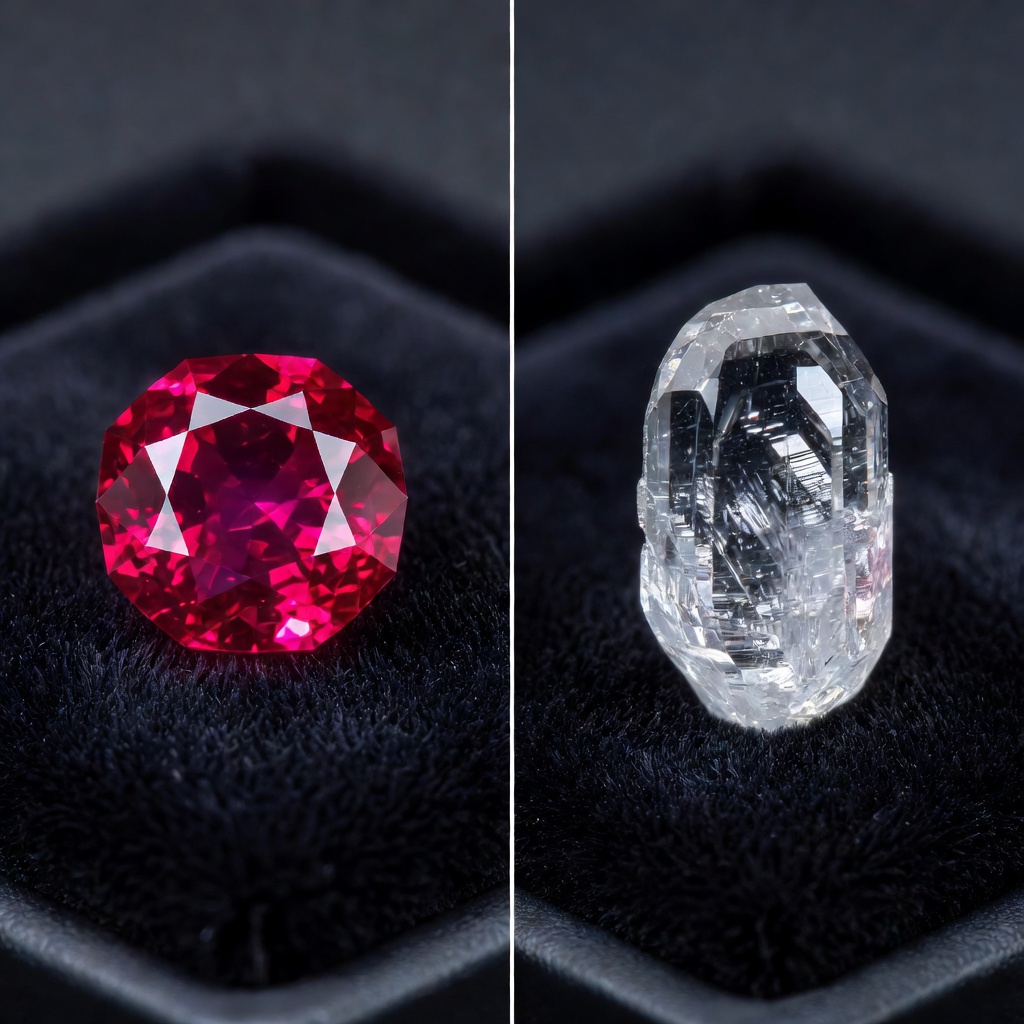
When discussing precious gemstones, Ruby stands as the undisputed monarch of the colored stone world, celebrated as the July birthstone and coveted for millennia by royalty and connoisseurs alike. This magnificent red corundum has commanded attention in crown jewels, engagement rings, and investment portfolios, establishing itself as a cornerstone of any serious gemstone collection. However, beneath the spotlight of mainstream jewelry markets lies Euclase, a breathtakingly brilliant yet obscure gemstone that remains the best-kept secret among elite collectors and mineral enthusiasts. This Ruby vs Euclase comparison unveils why understanding both stones matters deeply for collectors seeking either timeless elegance or rare exclusivity.
The framework for this precious stone comparison extends beyond mere aesthetics to encompass critical factors including geological formation, durability for daily wear, investment liquidity, and long-term value retention. While Ruby offers immediate recognition and established market demand, Euclase presents an opportunity to own one of the rare blue gemstones that rarely exceeds five carats in facetable quality, making it significantly scarcer than even the finest Kashmir sapphires. Whether you are building a jewelry wardrobe for daily enjoyment or assembling a museum-quality mineral collection, understanding the distinct characteristics of these two remarkable gems will inform decisions that balance beauty with practicality.
Geological Origins and Formation
Ruby's Metamorphic Genesis
Rubies crystallize deep within the Earth's crust under intense heat and pressure within metamorphic environments, specifically forming in marble and basalt deposits rich in aluminum and chromium. This corundum variant requires specific hexavalent chromium substitution within the aluminum oxide crystal lattice to produce the coveted red coloration, with the finest specimens originating from contact zones between limestone and granitic intrusions. The most celebrated deposits in Myanmar's Mogok Stone Tract, Mozambique's Montepuez mines, and Madagascar's Andilamena region have yielded crystals that defined the standard for "pigeon blood" red hues prized by Asian markets and European aristocracy for centuries.
The formation process spans millions of years as aluminum-rich rocks undergo recrystallization, with trace elements determining whether the resulting crystal becomes Ruby, Sapphire, or remains as colorless corundum. Environmental factors such as silica deficiency prevent the formation of muscovite during metamorphism, creating the unique chemical conditions necessary for Ruby growth in marble host rocks. These geological constraints explain why significant Ruby deposits remain limited to specific tectonic settings, despite the mineral's relative abundance in commercial qualities compared to other precious gems.
Euclase's Pegmatite Origins
Euclase emerges through entirely different geological processes, crystallizing in granite pegmatites and high-temperature hydrothermal veins where beryllium-aluminum silicates interact with silica-rich fluids under specific pressure conditions. Unlike Rubies that form in regional metamorphic settings, Euclase gemstone properties reflect its origins in late-stage magmatic differentiates where volatile-rich fluids enable the growth of large, well-formed crystals within cavities and miarolitic pockets. The most significant deposits occur in Zimbabwe's Mwami area, Brazil's Minas Gerais region, and Russia's Ural Mountains, though even these locations produce limited quantities of facet-grade material.
The crystal growth patterns of Euclase differ markedly from Ruby's hexagonal prisms, developing as elongated, striated crystals within the monoclinic system that rarely exceed a few centimeters in length. Environmental factors including rapid cooling rates and fluid composition variations result in the internal stresses and cleavage planes that make Euclase challenging to extract and cut without damage. These formation constraints contribute to the extreme scarcity of clean, large Euclase specimens compared to the more robust Ruby crystals that can reach hundreds of carats in size.
Physical Properties and Durability Comparison
Understanding the fundamental physical differences between these gemstones proves essential for making informed decisions regarding jewelry applications and long-term care. Ruby hardness and durability place it among the most resilient gemstones available to consumers, while Euclase requires careful consideration of its structural limitations despite its captivating brilliance. The following comprehensive comparison illustrates why these stones serve distinctly different purposes in both jewelry design and collector portfolios.
| Characteristic | Ruby (Corundum) | Euclase |
|---|---|---|
| Mohs Hardness | 9 (Excellent) | 7.5 (Good, but vulnerable) |
| Cleavage | None (indistinct parting) | Perfect basal cleavage |
| Toughness | Exceptional (no cleavage planes) | Poor to fair (prone to chipping) |
| Crystal System | Hexagonal (trigonal) | Monoclinic |
| Specific Gravity | 3.99-4.00 | 3.05-3.10 |
| Refractive Index | 1.762-1.770 | 1.652-1.673 |
| Optical Character | Uniaxial negative | Biaxial positive with strong pleochroism |
| Typical Size Range | 1-10+ carats (fine quality) | Under 2 carats (rarely over 5) |
| Best Jewelry Application | Rings, bracelets, daily wear | Pendants, earrings, occasional wear |
| Price Range (Per Carat) | $100-$10,000+ | $500-$15,000+ |
Structural Integrity and Wearability
Ruby's position at 9 on the Mohs hardness scale renders it second only to diamond in resistance to scratching, making it ideal for engagement rings and daily wear jewelry that must withstand constant contact with household dust (which contains silica at 7 on the Mohs scale). The absence of cleavage planes in corundum means that Ruby exhibits exceptional toughness, resisting breakage from impacts that would shatter more brittle gems like emerald or tanzanite. This structural integrity explains why antique Ruby jewelry often survives centuries of wear with minimal damage, whereas gemstone wearability guide recommendations consistently caution against similar treatment of more delicate stones.
Conversely, Euclase's 7.5 hardness rating, while respectable, leaves it vulnerable to abrasion from everyday encounters with quartz dust and harder materials encountered in normal activities. More critically, Euclase possesses perfect cleavage in one direction, creating a plane of structural weakness that can cause the stone to split cleanly when struck or subjected to pressure during setting or wear. This combination of moderate hardness and perfect cleavage necessitates protective jewelry designs and restricts Euclase primarily to earrings, pendants, and brooches where impact risks remain minimal compared to rings or bracelets.
Color Spectrum and Visual Characteristics
The Red Dominion of Ruby
Rubies command attention through their singular focus on red hues, ranging from pinkish-red and purplish-red to the highly coveted "pigeon blood" red that exhibits pure red with a hint of blue undertones under daylight illumination. This coloration results from chromium ions within the corundum lattice, with the most valuable stones displaying strong fluorescence under ultraviolet light that creates an internal glow resembling burning embers. Unlike many colored gemstones that appear flat or lifeless under artificial lighting, fine Rubies maintain their saturation across various light sources, though Burmese stones typically outperform African varieties in this regard.
The presence of microscopic rutile needles, known as "silk," often distinguishes natural Rubies from synthetic counterparts while simultaneously softening overly harsh coloration in heavily saturated stones. Clarity expectations for Ruby differ significantly from diamonds, with collectors accepting minor inclusions provided they do not compromise durability or severely impact transparency. Star Rubies exhibiting asterism through oriented rutile inclusions represent a distinct variety where inclusions create desirable optical phenomena rather than detracting from value.
Euclase's Chromatic Versatility
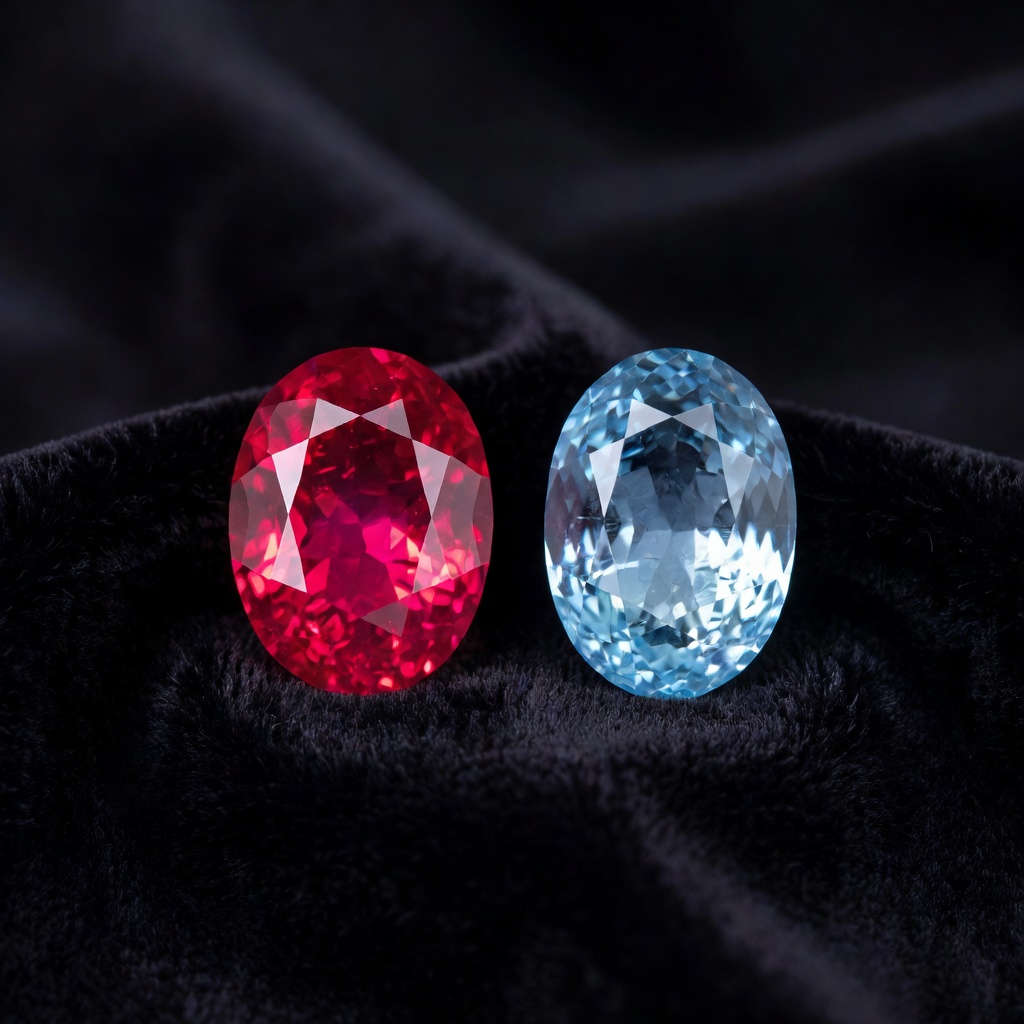
Euclase presents a diverse color palette that positions it among the most versatile rare blue gemstones, occurring in colorless, white, pale green, yellow, and the highly prized intense blue to blue-green varieties that rival fine aquamarine or blue beryl in saturation. The blue coloration stems from iron content within the beryllium aluminum silicate structure, with Zimbabwean material typically producing the most vivid hues while Brazilian deposits often yield paler, greenish-blue specimens. Unlike Ruby's consistent red signature, Euclase displays strong pleochroism, showing different colors—typically blue, green, or colorless—when viewed from different crystallographic angles, requiring skilled orientation during cutting to maximize desirable face-up color.
Clarity standards for fine Euclase exceed those of Ruby, with collectors seeking water-clear transparency that showcases the gem's high refractive index and exceptional brilliance approaching that of diamond. While Rubies often contain visible silk or mineral inclusions that document their natural origin, Euclase specimens with eye-visible inclusions suffer significant value reductions unless the crystal size proves exceptional. This emphasis on flawless clarity, combined with the rarity of large clean crystals, explains why faceted Euclase over three carats commands prices that rival or exceed those of fine Rubies on a per-carat basis.
Rarity, Availability, and Market Presence
The marketplace dynamics separating these gemstones reflect fundamental differences in geological abundance and mining economics that directly impact acquisition strategies for collectors. While Rubies range from commercially abundant heat-treated stones to exceedingly rare untreated Mogok specimens, Euclase maintains uniformly scarce availability regardless of quality grade, creating distinct challenges for prospective buyers. Understanding these supply constraints proves essential for collector gemstone investment planning and realistic expectations regarding future availability.
Ruby mining operations span multiple continents with significant production from Myanmar, Mozambique, Madagascar, and Thailand, ensuring steady supply chains for commercial-grade material suitable for mass-market jewelry. However, the distinction between "commercial" and "fine" quality creates a bifurcated market where heated, fracture-filled stones sell for hundreds per carat while untreated, unheated Burmese Rubies command tens of thousands per carat for exceptional pieces. This availability gradient allows entry-level collectors to acquire genuine Rubies at modest prices while providing upgrade paths toward museum-quality specimens as budgets permit.
Euclase presents an entirely different acquisition landscape, with facet-grade material representing an infinitesimal fraction of global gem production compared to Ruby. The combination of small crystal size—rarely yielding cut stones over two carats—and perfect cleavage that destroys many crystals during mining or cutting ensures that fine Euclase appears primarily through specialized auction houses or high-end mineral dealers rather than traditional jewelry retailers. Historical records indicate that significant Euclase specimens entered royal collections during the 18th and 19th centuries, though the gem never achieved the mainstream recognition of Ruby, preserving its status as a connoisseur's stone.
Pricing Analysis and Investment Potential
Evaluating the financial aspects of Ruby vs Euclase acquisitions requires understanding divergent market structures that affect liquidity, appreciation potential, and risk profiles for collectors. Ruby benefits from established commodity markets with standardized pricing tiers based on origin, treatment status, and quality parameters, while Euclase trades in a specialized niche where value depends heavily on specimen size, color intensity, and the reputations of specific dealers or auction houses. Both stones offer investment potential, though they serve different portfolio strategies within a diversified tangible asset allocation.
Commercial-quality Rubies suitable for jewelry production typically range from $100 to $2,000 per carat depending on color saturation and clarity, while fine untreated stones from Myanmar or Mozambique command $5,000 to $10,000+ per carat for exceptional pieces over five carats. The liquidity advantage of Ruby manifests in immediate resale potential through international dealers, auction houses, and even retail jewelers who recognize standardized grading criteria. During economic fluctuations, fine Rubies have demonstrated remarkable value retention, often appreciating during inflationary periods when tangible assets outperform securities.
Euclase pricing starts higher at entry levels—rarely available below $500 per carat even for small, pale specimens—yet escalates dramatically for intense blue stones over two carats, reaching $10,000 to $15,000+ per carat for museum-quality pieces. The collector gemstone investment case for Euclase rests on extreme scarcity rather than market demand, meaning that while prices may appreciate rapidly when competing collectors target limited supply, finding buyers requires access to specialized networks or consignment through high-end auction houses. Authentication challenges affect both stones, with Rubies requiring verification of treatment status (heat, glass-filling, flux healing) and Euclase demanding confirmation of natural origin versus synthetic hydrothermal growth.
Jewelry Design Applications and Settings
Practical jewelry applications for these gemstones diverge significantly based on their physical properties, with Ruby offering versatility limited only by budget and imagination while Euclase requires thoughtful protective strategies to ensure longevity. Jewelry designers must account for hardness differentials, cleavage planes, and typical crystal sizes when creating mountings that showcase each gem's beauty without compromising structural integrity. These constraints directly influence setting styles, metal choices, and the types of jewelry pieces appropriate for each stone.
Ruby's exceptional durability permits use in all jewelry categories including rings subjected to daily wear, tennis bracelets exposed to frequent impact, and earrings that must survive occasional drops or bumps. Prong settings work excellently for Rubies, allowing maximum light exposure to enhance brilliance while the stone's toughness withstands the pressure of tightening and retipping operations over decades of service. Metal pairing options remain flexible, with yellow gold providing warm contrast to red stones, white metals emphasizing pinkish tones, and platinum offering hypoallergenic security for valuable center stones.
Euclase demands protective settings that acknowledge its perfect cleavage and moderate hardness, with bezel settings representing the optimal choice for shielding vulnerable girdle edges from direct impact. V-prongs should be strictly avoided as they concentrate pressure directly along cleavage planes, while halo designs provide both protection and visual amplification for typically smaller Euclase specimens. Platinum or palladium settings offer superior protection compared to softer gold alloys, securely holding the stone despite the metal's resistance to wear. Gemstone wearability guide recommendations strongly favor pendants and earrings over rings for Euclase, minimizing impact risks while displaying the gem's exceptional brilliance in controlled environments.
Care, Maintenance, and Longevity
Proper maintenance protocols differ substantially between these gemstones, with Ruby tolerating aggressive cleaning methods that would destroy Euclase, necessitating distinct care regimens for owners. Understanding these maintenance requirements ensures that heirloom-quality pieces retain their beauty across generations while preventing accidental damage during routine cleaning or storage. Professional jewelers should always disclose treatment status before recommending cleaning procedures, as heated or fracture-filled Rubies require gentler handling than their untreated counterparts.
Untreated natural Rubies withstand ultrasonic cleaning and steam procedures safely, though stones with significant inclusions or fracture-filling treatments risk damage from thermal shock or vibration. Warm soapy water with a soft brush remains the safest universal method for Ruby cleaning, effectively removing accumulated oils and residues from daily wear without risking damage to the stone or setting. Regular professional inspections every six to twelve months ensure that prongs remain tight and the stone shows no signs of loosening or damage from impacts.
Euclase requires significantly restricted care protocols, with owners avoiding ultrasonic cleaners, steamers, and sudden temperature changes that could trigger cleavage along structural planes. Cleaning should utilize only room-temperature water with mild detergent and soft brushes, followed by immediate drying with lint-free cloths to prevent water spots on the high-luster surface. Storage solutions must include separate compartments or individual pouches to prevent contact with harder gems like diamonds, sapphires, or Rubies that could scratch Euclase's surface, while maintaining stable humidity levels to prevent thermal shock during retrieval.
Making the Right Choice: Collector vs Wearer
Selecting between these remarkable gemstones ultimately depends on aligning the stone's characteristics with the owner's lifestyle, aesthetic preferences, and collecting objectives. Active individuals who engage in manual work, sports, or daily activities involving hand contact should prioritize Ruby for its superior durability and resistance to damage from accidental impacts. Conversely, collectors seeking portfolio diversification through ultra-rare specimens or individuals desiring unique jewelry for special occasions may find Euclase's exclusivity and distinctive blue-green hues more compelling than Ruby's classic appeal.
Investment considerations favor Ruby for those requiring liquidity and established market recognition, while Euclase suits speculative collectors willing to hold rare specimens until appropriate buyers emerge through specialized channels. Aesthetic preferences play crucial roles, with Ruby offering timeless elegance that complements traditional and contemporary designs alike, while Euclase provides conversation-starting uniqueness that distinguishes the wearer from those wearing more common sapphire or aquamarine alternatives. For heirloom considerations spanning multiple generations, Ruby's proven durability across centuries of wear provides confidence in its ability to survive as a family treasure, whereas Euclase requires education of subsequent owners regarding its fragility and care requirements.
Frequently Asked Questions
Is Euclase harder than Ruby?
No, Ruby is significantly harder than Euclase. Ruby ranks 9 on the Mohs hardness scale (second only to diamond), while Euclase ranks 7.5. This makes Ruby far more suitable for daily wear jewelry like engagement rings, whereas Euclase requires protective settings and careful handling.
Why is Euclase more expensive than common Rubies despite being less known?
While commercial-quality Rubies are abundant, fine Euclase is exceptionally rare due to limited deposits and small crystal sizes (rarely yielding gems over 2-3 carats). Additionally, Euclase's perfect cleavage makes cutting difficult with high wastage, driving up prices for clean, large specimens that exceed even mid-grade Ruby prices.
Can Euclase be worn daily like Ruby?
Euclase is not recommended for daily wear, especially in rings or bracelets. Its 7.5 hardness and perfect cleavage make it susceptible to chipping and breaking from impacts. Ruby, with its superior toughness and hardness of 9, can withstand daily wear for generations with proper care.
What colors do Ruby and Euclase come in?
Rubies are exclusively red (from chromium content), ranging from pinkish-red to deep pigeon blood red. Euclase occurs in colorless, white, pale green, yellow, and most prized, intense blue to blue-green hues caused by iron content. Unlike Ruby, Euclase displays strong pleochroism, showing different colors when viewed from different angles.
Which is better for investment: Ruby or Euclase?
Rubies offer better liquidity and established market demand, particularly untreated Burmese stones. Euclase suits niche collectors seeking portfolio diversification; while potentially appreciating faster due to extreme scarcity, the market is smaller and selling requires specialized auction houses or collector networks rather than regular jewelers.
How can I tell Euclase apart from Blue Sapphire?
While both can appear blue, Euclase typically shows stronger pleochroism (color shifting) and a glass-like luster compared to sapphire's adamantine sparkle. Euclase is also softer (7.5 vs sapphire's 9) and usually contains different inclusion patterns. Gemological testing is essential as visual identification can be challenging with faceted stones.
Is Euclase rarer than Ruby?
Yes, fine gem-quality Euclase is significantly rarer than Ruby. While Rubies occur in multiple locations worldwide with substantial mining operations, Euclase deposits are limited, crystals are typically small and heavily included, and facet-grade material represents a tiny fraction of global gem production compared to Ruby.
What is the best setting to protect Euclase in jewelry?
Euclase requires protective settings such as bezels or halo designs that shield the edges and girdle. V-prongs should be avoided as they concentrate pressure on cleavage planes. The setting should minimize exposure to direct impacts, making pendants and earrings safer choices than rings, ideally mounted in durable platinum rather than softer gold alloys.