Understanding Sapphire and Topaz: A Gemological Overview
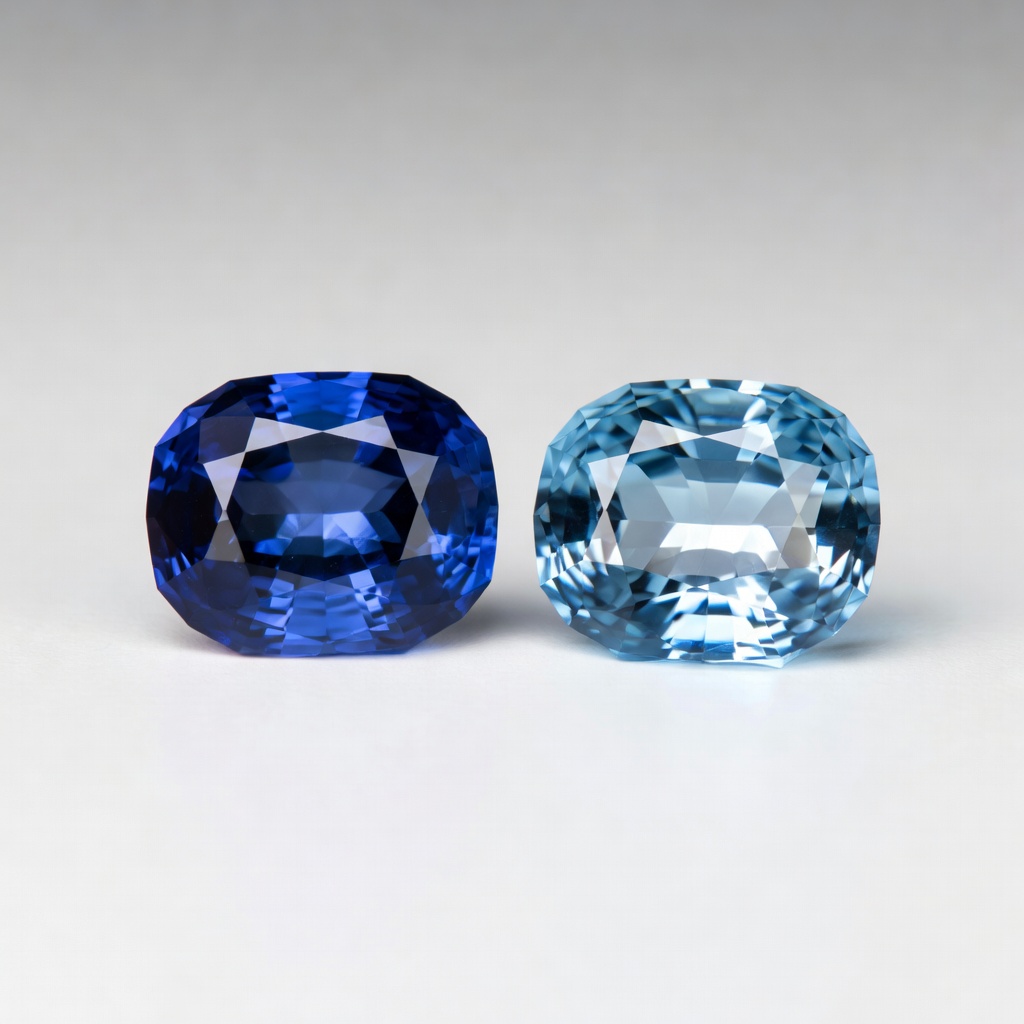
When shoppers encounter brilliant blue gemstones in jewelry cases, the debate between Sapphire vs Topaz often arises, yet these stones belong to entirely different mineral families with distinct properties. Sapphire represents the corundum mineral species, an aluminum oxide that ranks among the most coveted precious gemstones in history, while topaz belongs to the silicate mineral group as an aluminum fluorosilicate with unique crystallographic characteristics. Despite their geological differences, consumers frequently confuse these gems because modern treatments can render topaz in nearly identical cornflower blue shades to fine sapphire, creating a visual paradox that requires careful examination to resolve. Understanding the fundamental distinctions between these gemstones empowers buyers to make informed decisions based on durability requirements, budget constraints, and long-term value expectations rather than merely aesthetic preferences.
The confusion between these stones stems largely from marketing practices and color enhancement technologies that emerged in the late 20th century, when irradiation processes made abundant colorless topaz into affordable blue alternatives. However, beneath the surface beauty lies a precious gemstone comparison that reveals significant differences in hardness, rarity, and investment potential that directly impact their suitability for various jewelry applications. While both gems offer exceptional brilliance and color variety, their divergent physical properties and market values create distinct niches in the fine jewelry ecosystem, with sapphire commanding premium prices for heirloom pieces and topaz serving as an accessible entry point for collectors seeking beauty without substantial financial commitment.
Chemical Composition & Mineral Classification
The Corundum Foundation of Sapphire
Sapphire crystallizes within the trigonal crystal system as aluminum oxide (Al₂O₃), forming hexagonal prisms that develop under extreme heat and pressure conditions deep within the earth's crust. This sapphire mineral structure creates exceptional hardness and stability, with trace elements like iron and titanium substituting for aluminum to produce the iconic blue coloration, while chromium creates pink and red varieties (the latter being classified as ruby). The mineral's compact atomic structure, characterized by strong oxygen-aluminum bonds, contributes to its remarkable durability and resistance to chemical weathering, allowing sapphires to survive geological upheavals and alluvial transport that destroy less robust minerals.
Topaz's Silicate Architecture
Conversely, topaz chemical composition follows the formula Al₂SiO₄(F,OH)₂, placing it within the orthorhombic crystal system where crystals form distinctive prismatic shapes with diamond-shaped cross-sections and perfect basal cleavage. The presence of fluorine and hydroxyl groups within the crystal lattice distinguishes topaz chemically from corundum, creating different optical properties and cleavage patterns that gem cutters must navigate carefully during faceting. Topaz typically forms in pegmatites and high-temperature quartz veins, often associated with rhyolitic volcanic rocks, where fluorine-rich vapors alter pre-existing minerals under specific thermodynamic conditions that differ markedly from the metamorphic environments that produce sapphire.
Geological Formation Environments
Sapphires require metamorphic or igneous environments with high aluminum content but low silica availability, commonly forming in marble, gabbro, or syenite host rocks where slow cooling allows large crystals to develop without quartz interference. Topaz, however, crystallizes from fluorine-rich pneumolitic solutions in the final stages of magma crystallization, often appearing in miarolitic cavities within granite pegmatites where open space permits the growth of large, flawless crystals. These divergent formation processes explain why sapphire deposits often yield smaller, included crystals requiring heat treatment to improve clarity, while topaz mines frequently produce enormous transparent crystals weighing several kilograms, fundamentally affecting their respective market availabilities and pricing structures.
Mohs Hardness & Daily Wear Durability
The Significance of the Hardness Differential
The sapphire hardness vs topaz comparison reveals one of the most critical differences for jewelry applications, with sapphire rating 9 on the Mohs scale while topaz registers 8, a single digit that translates to exponentially different wear characteristics. Mohs hardness operates on a relative scale where each increment represents a substantial increase in scratch resistance, meaning sapphire's position at 9 makes it approximately four times harder than topaz at 8, and significantly more resistant to the dust and particles encountered in daily life that contain quartz (hardness 7). This hardness differential becomes particularly relevant when considering that household dust typically contains microscopic quartz particles that can scratch topaz over time but will not damage sapphire surfaces, making gemstone durability chart considerations essential for engagement ring selections.
Practical Implications for Jewelry Design
For daily wear pieces such as engagement rings and bracelets that encounter frequent impact and abrasion, sapphire's superior hardness ensures that facet edges remain crisp and the surface maintains its polish for generations, whereas topaz requires protective settings and more cautious wear patterns. Topaz possesses perfect cleavage parallel to its basal plane, meaning a sharp blow can cause the stone to split along this weak structural plane, a vulnerability that sapphire does not share due to its lack of cleavage and fracture resistance. Jewelry designers often recommend bezel or halo settings for topaz center stones to provide physical protection, while sapphire offers flexibility in prong settings or tension mounts that expose more of the gemstone to light without compromising structural integrity.
Maintenance and Longevity Considerations
Over decades of wear, a sapphire ring will typically require only occasional professional cleaning to maintain its brilliance, while topaz jewelry may need periodic repolishing to remove surface scratches and abrasions that accumulate from contact with harder materials in the environment. Professional jewelers note that topaz set in rings worn daily often show visible wear patterns within five to ten years, particularly on facet junctions and the table surface, whereas sapphire maintains its original luster virtually indefinitely under normal wearing conditions. When evaluating sapphire and topaz difference for heirloom jewelry, this longevity factor often justifies sapphire's higher initial cost through reduced maintenance requirements and superior preservation of value over time.
Color Spectrum: Natural vs Enhanced Hues
Natural Color Origins and Chemistry
Natural blue sapphire derives its color from the charge transfer between iron and titanium ions within the corundum lattice, requiring specific geological conditions where these trace elements coexist in precise ratios, making untreated fine blue sapphires exceptionally rare and valuable. In contrast, most topaz enters the market as colorless or pale yellow crystals, with the rarest natural colors being the golden-orange-pink Imperial topaz found primarily in Brazil's Ouro Preto region and the Katlang district of Pakistan. The topaz vs blue sapphire color comparison becomes complex because nearly all blue topaz available in commercial jewelry results from artificial irradiation and heat treatment of colorless material, a process that converts unstable color centers to stable blue hues but creates a gemstone fundamentally different from naturally colored sapphire.
Enhancement Technologies and Stability
Sapphire enhancement typically involves heat treatment at temperatures between 1600-1800°C, a practice dating back thousands of years that dissolves rutile inclusions and improves color saturation without introducing foreign substances or unstable color centers. Topaz treatment involves irradiation with gamma rays or electron beams to create color centers, followed by heat treatment to stabilize the blue color, though some irradiated topaz may retain residual radioactivity briefly before becoming safe for wear. Additionally, surface-coated topaz (marketed as "mystic topaz" or similar trade names) receives thin film deposits that create rainbow effects, but these coatings exhibit poor durability, scratching easily and potentially peeling during routine jewelry repairs or ultrasonic cleaning.
Rare Varieties and Premium Pricing
Padparadscha sapphire, displaying the delicate salmon-pink-orange color reminiscent of a tropical lotus blossom, commands prices exceeding $20,000 per carat for fine specimens, representing the pinnacle of sapphire rarity and desirability among collectors. Imperial topaz color varieties, particularly those showing reddish-orange to pinkish-orange hues without brown overtones, represent the most valuable topaz category, typically ranging from $500 to $2,000 per carat for untreated stones over five carats. While treated blue topaz remains affordable at $20-$100 per carat, natural pink and red topaz approaches the lower price ranges of commercial sapphire, though it rarely achieves the investment premiums associated with fine Kashmir or Burmese sapphire due to market perception differences and abundance factors.
Clarity, Brilliance & Optical Properties
Internal Characteristics and Identification Markers
Experienced gemologists distinguish these stones through characteristic sapphire inclusions such as rutile needles (silk), zircon halos, and color zoning, whereas topaz clarity typically reveals two-phase inclusions (liquid and gas bubbles), negative crystals, and distinctive cleavage planes visible under magnification. The presence of silk in sapphire, once considered detrimental, now enhances value in untreated Kashmir sapphires where it creates a velvety blue appearance, while similar inclusions in topaz usually indicate lower clarity grades and reduced value. These internal characteristics not only aid identification but also indicate geographic origin and treatment history, with heat-treated sapphires showing melted crystal inclusions and glass-filled fractures that differ from the natural healing fissures found in untreated material.
Optical Performance and Light Behavior
Sapphire possesses a higher refractive index (1.76-1.77) and specific gravity (4.0) compared to topaz's refractive index of 1.61-1.64 and specific gravity of 3.4-3.6, resulting in greater brilliance and more vivid fire when properly cut, though topaz exhibits stronger pleochroism (differential color absorption along different crystal axes). When examining gems through a 10x loupe, observers can detect double refraction in topaz (birefringence of 0.008-0.010), causing doubling of facet edges, while sapphire remains singly refractive (with rare exceptions of twinned crystals), appearing crisp and singular under magnification. These optical properties mean that sapphire generally appears more lively and brilliant under various lighting conditions, while topaz may show color shifting or windowing (light leakage through the center) if not cut with optimal proportions.
Cutting Considerations and Face-Up Appearance
Master gem cutters approach sapphire with techniques designed to maximize color saturation and minimize windowing, often choosing deeper pavilions and smaller tables for dark material to prevent the stone from appearing black, while topaz cutting focuses on weight retention due to the material's abundance and lower value per carat. The higher refractive index of sapphire allows for more aggressive cutting angles that return light efficiently, creating the "sleeping beauty" effect where the gem appears to glow from within, whereas topaz requires precise table angles to avoid the glassy appearance that can make the stone look less valuable than its actual quality. When selecting between these gems for jewelry, consumers should observe them under multiple lighting conditions—daylight, fluorescent, and incandescent—to appreciate how sapphire's superior optical properties maintain consistent beauty across environments while topaz may appear flat or washed out under certain light sources.
Price Analysis & Investment Value
Market Value Disparities and Pricing Factors
The natural sapphire vs topaz price differential reflects fundamental supply and demand economics, with fine untreated blue sapphire ranging from $1,000 to over $15,000 per carat depending on origin, color saturation, and clarity, while even the finest natural imperial topaz rarely exceeds $500-$2,000 per carat. This pricing structure emerges from sapphire's historical significance, exceptional durability, and genuine scarcity of fine material, whereas topaz occurs in large, clean crystals that allow cutters to produce gems with high clarity grades at accessible price points. Investment-minded collectors recognize that gemstone investment potential strongly favors sapphire, particularly Kashmir, Burmese, and high-quality Madagascar origins, which have appreciated steadily over decades, while topaz prices remain relatively stable without significant appreciation trends due to consistent supply from Brazilian mines.
Commercial vs Collector Grade Categories
Commercial-grade blue sapphire, typically heat-treated Thai or Australian material with moderate saturation, occupies the $300-$800 per carat range, directly competing with fine aquamarine and tanzanite, while treated blue topaz dominates the mass market at $20-$100 per carat, serving as an affordable alternative for fashion jewelry. At the collector level, unheated Burmese sapphire with "royal blue" coloration commands premiums exceeding $10,000 per carat for stones over three carats, whereas untreated imperial topaz from Brazil's Ouro Preto mines represents the apex of topaz values but remains accessible to moderate budgets at $1,000-$3,000 per carat for exceptional specimens. This price accessibility makes topaz an excellent choice for collectors seeking large, impressive gems without six-figure investments, while sapphire represents a concentrated store of value requiring significant capital but offering superior liquidity and appreciation potential.
Resale Markets and Liquidity Considerations
Sapphire maintains robust secondary markets through auction houses like Christie's and Sotheby's, where important Kashmir and Burmese stones regularly achieve record prices, while topaz rarely appears in high-end auctions unless representing exceptional size (over 50 carats) or rare natural pink coloration. Estate jewelry dealers report that sapphire pieces retain 60-80% of retail value when resold, assuming proper documentation and quality, whereas topaz jewelry typically realizes 20-40% of original retail prices, functioning more as consumable fashion than investment vehicles. For buyers prioritizing long-term value preservation, sapphire's established market infrastructure, standardized grading systems, and historical performance provide security that topaz cannot match, though both offer aesthetic pleasure and personal enjoyment value beyond financial considerations.
Geographic Sources & Ethical Mining
Legendary Sapphire Localities
Sapphire mining locations span diverse geological environments, with Kashmir (India) producing the legendary "cornflower blue" velvety sapphires from the Zanskar Range, Burma (Myanmar) yielding intense "royal blue" stones from the Mogok Stone Tract, and Madagascar emerging as the modern production leader with deposits at Ilakaka and Andranondambo. Montana's Yogo Gulch produces the only alluvial sapphires in North America with distinctive cornflower color and exceptional clarity, while Sri Lanka (Ceylon) continues its 2,000-year tradition of producing pastel blue and fancy colored sapphires from Ratnapura's gravel pits. Each origin produces distinctive inclusion patterns and trace element signatures detectable through advanced spectroscopy, allowing laboratories to determine geographic provenance that significantly impacts valuation—Kashmir origin can increase value by 50-100% over similar Burmese stones due to historical prestige and depleted mines.
Primary Topaz Deposits
Topaz sources concentrate primarily in Brazil, where the Minas Gerais state produces the world's finest imperial topaz from the Vermelhão and Capão do Lana mines near Ouro Preto, along with abundant colorless material suitable for irradiation treatment. Nigeria's Jos Plateau yields significant quantities of blue and colorless topaz, while Pakistan's Katlang region produces rare pink and red topaz associated with spinel and ruby in marble host rocks, representing the only consistent source for natural pink topaz outside Brazil. Russia's Ural Mountains historically provided the pink topaz featured in 19th-century imperial jewelry, though production has diminished significantly, and Mexico's San Luis Potosí deposits yield fine yellow and brown crystals popular for cutting large display gems.
Sustainability and Fair Trade Initiatives
Ethical concerns surrounding sapphire mining center on Myanmar's human rights issues and Madagascar's informal mining sector, where artisanal miners often work dangerous conditions without fair compensation, prompting retailers to seek Fair Trade certified sapphires from Sri Lanka and Montana's regulated operations. Topaz mining in Brazil's Ouro Preto region faces environmental challenges including deforestation and water pollution from processing chemicals, though several mining cooperatives have implemented land rehabilitation programs and community benefit sharing. Conscious consumers should request origin documentation and consider laboratory-grown sapphire or responsibly sourced topaz as alternatives to conflict-zone gems, recognizing that both materials offer beauty while supporting sustainable extraction practices that protect both workers and ecosystems.
Treatments & Industry Standards
Traditional and Modern Enhancement Methods
Sapphire treatment through high-temperature heating represents an accepted industry practice that improves color and clarity by dissolving rutile silk and altering charge transfer between trace elements, with disclosure requirements mandating that sellers identify heated versus unheated material due to significant price differentials. Modern irradiated topaz treatment involves exposing colorless crystals to nuclear reactor radiation or electron accelerator beams, creating color centers that produce stable blue hues after subsequent heat treatment, a process that requires strict safety protocols to ensure radioactive decay completes before gems reach consumers. While heated sapphire commands premium prices over unheated material only when specifically untreated, irradiated blue topaz constitutes the market standard, with natural blue topaz so rare that untreated specimens actually command higher prices than their treated counterparts—a reversal of the sapphire pricing paradigm.
Coating Controversies and Durability Concerns
Surface-coated topaz, marketed under names like "mystic topaz," "Azotic topaz," or "rainbow topaz," receives thin metallic oxide films through chemical vapor deposition, creating iridescent effects that appeal to fashion markets but suffer from poor wear resistance and potential allergic reactions to coating materials. These coatings typically measure only microns in thickness, scratching easily during normal wear and potentially peeling during jewelry repair procedures involving heat, creating consumer protection concerns that prompted the Federal Trade Commission to mandate specific disclosure of coating durability limitations. Reputable jewelers should warn buyers that coated topaz requires gentle cleaning with mild soap only, avoiding ultrasonic cleaners, steam cleaning, and abrasive polishing compounds that could damage the surface treatment, whereas sapphire withstands all standard jewelry cleaning methods without degradation.
Certification and Laboratory Standards
Accurate identification of treatments requires sophisticated equipment available at major laboratories including GIA (Gemological Institute of America), AGL (American Gemological Laboratories), and SSEF (Swiss Gemmological Institute), which use spectroscopy, microscopy, and chemical analysis to detect heat residues, irradiation indicators, and surface coatings. For sapphire purchases over $1,000, buyers should insist on reports specifying heat treatment status, origin determination, and any clarity enhancement such as glass filling or diffusion treatment, while topaz certifications should confirm whether color results from natural causes, irradiation, or surface coating. These documentation standards protect consumers from misrepresentation and ensure that insurance valuations reflect actual treatment status, as untreated natural color sapphire may be worth 300-500% more than heated equivalent, and natural imperial topaz commands significant premiums over irradiated blue varieties.
Symbolism, Birthstones & Cultural Significance
Royal Heritage and Historical Associations
Sapphire symbolism encompasses wisdom, virtue, and good fortune, with the stone adorning ecclesiastical rings of Catholic bishops and forming the centerpiece of Princess Diana's engagement ring, now worn by Catherine, Princess of Wales, cementing its status as a gem of royalty and enduring love. Ancient Persians believed the earth rested on a giant sapphire that colored the sky blue, while medieval Europeans wore sapphires to protect against envy and poison, and modern crystal practitioners associate the stone with mental clarity and spiritual enlightenment. As the September birthstone and traditional gift for 5th and 45th wedding anniversaries, sapphire carries gravitas and historical continuity that transcend fashion trends, making it a meaningful choice for commemorative jewelry.
Ancient Traditions and Modern Metaphysics
Topaz birthstone meaning connects to November birthdays and 23rd wedding anniversaries, with ancient Egyptian culture associating the golden variety with Ra the sun god, believing it derived color from the deity's powerful rays, while Greeks credited topaz with increasing strength and making the wearer invisible in emergencies. During the Renaissance, topaz was believed to break magic spells and dispel anger, and Victorian-era jewelry frequently featured pink topaz in romantic motifs, though modern metaphysical communities emphasize the stone's purported ability to manifest abundance and clarify intentions. These cultural associations, while not scientifically verifiable, contribute to the emotional value and personal significance that owners attribute to their gemstones, influencing purchasing decisions beyond purely aesthetic or financial considerations.
Birthstone Alternatives and Zodiac Connections
For individuals seeking birthstone alternatives outside their designated month, blue topaz offers an affordable December birthstone option alongside turquoise and tanzanite, while sapphire serves as the traditional September stone but appeals to those seeking alternatives to October's opal or July's ruby due to superior durability. Vedic astrology assigns specific sapphire colors to different planetary influences—blue for Saturn, yellow for Jupiter, and pink for the sun—while topaz traditionally associates with Jupiter in Western astrological traditions, creating interesting overlaps for Sagittarius and Pisces individuals who claim both stones as zodiacal correspondences. These alternative associations provide flexibility for gift-givers and self-purchasers who feel drawn to specific gemstones regardless of traditional birth month designations.
Expert Buying Guide: Making the Right Choice
Budget-Based Selection Strategies
When choosing between sapphire and topaz, budget constraints often dictate initial considerations, with topaz offering exceptional value for cocktail rings, pendants, and earrings where large size impresses without prohibitive cost, while sapphire rewards those with larger budgets seeking heirloom-quality pieces that appreciate over time. For engagement rings specifically, white sapphire presents a superior alternative to topaz for budget-conscious couples, offering Mohs 9 hardness comparable to diamond at $200-$600 per carat, whereas blue topaz, despite its attractive color, risks chipping or scratching during daily activities due to lower hardness and cleavage vulnerabilities. Smart buyers allocate sapphire investments toward pieces worn daily (rings, bracelets) while selecting topaz for special occasion jewelry (brooches, statement necklaces) that encounters less mechanical stress.
Setting and Mounting Considerations
Protective settings become essential for topaz jewelry, with bezel settings, halo surrounds, or V-prong designs providing physical protection to vulnerable girdle edges and pavilion points that might chip upon impact, while sapphire tolerates delicate claw prongs and tension settings that maximize light exposure. For topaz rings intended for occasional wear, consider low-profile designs that sit close to the finger, reducing the likelihood of knocking the stone against hard surfaces, whereas sapphire can accommodate high cathedral settings and dramatic elevated mounts that showcase the gem's brilliance without compromising security. Metal selection also influences durability, with platinum or 14k gold providing secure foundations for both stones, though topaz benefits particularly from full bezel mounts in 18k gold that cushion the stone against daily wear.
Verification and Documentation Essentials
This gemstone buying guide emphasizes the critical importance of third-party certification, recommending GIA reports for sapphire purchases to verify natural origin, treatment status, and geographic source, while AGL reports provide detailed treatment disclosure including heat, diffusion, or fracture filling that significantly affects value. For topaz, certification matters primarily when purchasing claimed natural imperial or pink varieties, as irradiated blue topaz requires no special documentation for consumer protection, though buyers should request written confirmation of any surface coating to understand care requirements. Always examine gems under magnification before purchase, looking for chips, surface-reaching inclusions, or coating irregularities in topaz, and checking for windowing, extinction, or color zoning in sapphire that might affect beauty and value.
Care and Maintenance Protocols
Sapphire jewelry requires minimal maintenance beyond periodic cleaning with warm soapy water and a soft brush, safely tolerating ultrasonic and steam cleaning when free of significant fractures, making it ideal for busy lifestyles where low-maintenance luxury proves essential. Topaz demands more careful handling, requiring storage separate from harder gems to prevent scratching, cleaning only with mild soap and soft cloths (avoiding ultrasonic cleaners that can exacerbate internal cleavages), and removal during activities involving impact risk or exposure to harsh chemicals that might affect irradiated color centers. By matching the gemstone to your lifestyle—sapphire for active daily wear and topaz for careful occasional use—you ensure that your jewelry investment remains beautiful and intact for years of enjoyment.
Comprehensive Comparison: Sapphire vs Topaz
| Characteristic | Sapphire (Corundum) | Topaz (Aluminum Fluorosilicate) |
|---|---|---|
| Chemical Formula | Al₂O₃ (Aluminum Oxide) | Al₂SiO₄(F,OH)₂ (Aluminum Fluorosilicate) |
| Crystal System | Trigonal (Hexagonal) | Orthorhombic |
| Mohs Hardness | 9 (Excellent for daily wear) | 8 (Good, but requires care) |
| Scratch Resistance | 4x more resistant than topaz | Prone to scratching from dust/quartz |
| Refractive Index | 1.76-1.77 (High brilliance) | 1.61-1.64 (Moderate brilliance) |
| Natural Color Range | Blue, pink, yellow, green, colorless, padparadscha | Colorless, yellow, brown, pink, red (rare), blue (very rare) |
| Common Treatments | Heat treatment (stable, accepted) | Irradiation (blue), coating (mystic varieties) |
| Typical Clarity | Often included (silk, crystals) | Usually eye-clean to loupe-clean |
| Price Range (per carat) | $300-$15,000+ (depending on quality/origin) | $20-$2,000 (treated blue to fine imperial) |
| Best Jewelry Applications | Engagement rings, daily wear, heirlooms | Pendants, earrings, occasional wear rings |
| Investment Potential | High (appreciates over time) | Low to moderate (stable prices) |
| Primary Sources | Kashmir, Burma, Sri Lanka, Madagascar, Montana | Brazil, Nigeria, Pakistan, Russia |
| Birthstone Designation | September | November |
| Cleaning Safety | Safe for ultrasonic, steam, and chemical cleaners | Avoid ultrasonic and steam; use mild soap only |
Frequently Asked Questions
Which gemstone is more durable for daily wear, sapphire or topaz?
Sapphire is significantly more durable with Mohs 9 hardness compared to topaz's 8. This means sapphire resists scratches 4x better, making it ideal for engagement rings and daily jewelry. Topaz requires protective settings and is better for occasional wear pieces.
Why is blue sapphire so much more expensive than blue topaz?
Natural blue sapphire's color is rare and untreated, requiring specific geological conditions. Blue topaz is typically colorless topaz irradiated to achieve blue, making it abundant and affordable. Fine Kashmir sapphire can cost $10,000+ per carat versus $20-100 for treated blue topaz.
Can you scratch a sapphire with a topaz gemstone?
No, you cannot scratch sapphire with topaz. On the Mohs scale, only materials with equal or higher hardness can scratch a mineral. Since sapphire rates 9 and topaz rates 8, topaz is softer and will be scratched by sapphire, not vice versa.
How can I tell if my blue gemstone is sapphire or topaz at home?
Look for doubling of facet edges through a 10x loupe (topaz shows doubling due to lower refractive index), check for scratches (topaz scratches easier), and observe brilliance (sapphire sparkles more). For certainty, professional gemological testing by GIA or AGL is recommended.
Which is better for an engagement ring, sapphire or topaz?
Sapphire is superior for engagement rings due to exceptional hardness (9), withstanding daily wear for decades. Topaz's lower hardness (8) and perfect cleavage make it prone to chipping. Consider white sapphire as a budget diamond alternative over topaz for rings.
Do sapphire and topaz have different meanings in crystal healing?
Sapphire is associated with wisdom, royalty, and divine favor, historically worn by clergy and nobility. Topaz is linked to joy, abundance, and truth, called the 'Stone of Strength' by ancient Greeks. Both claim metaphysical benefits, but sapphire carries stronger historical prestige.
What are the rarest and most valuable colors for each gemstone?
For sapphire, padparadscha (pink-orange) commands $20,000+ per carat. Kashmir cornflower blue and Burmese royal blue are also premium. For topaz, natural untreated imperial topaz (golden-orange-pink) is rarest at $500-2,000 per carat, while mystic topaz is treated and less valuable.
Is it true topaz can fade in sunlight while sapphire remains stable?
Yes, some topaz varieties (especially brown and yellow) can fade with prolonged UV exposure. Irradiated blue topaz remains stable. Sapphire is exceptionally stable to light, heat, and chemicals, which contributes to its value and heirloom quality.