Understanding Sapphire and Lab-Created Moissanite
When selecting the perfect gemstone for fine jewelry or bridal pieces, the debate between Sapphire vs Lab-Created Moissanite has become increasingly prominent among modern consumers. Natural sapphire, scientifically classified as corundum (Al₂O₃), forms deep within the earth's crust over millions of years through intense heat and pressure, creating crystals prized for their velvety blue hues and exceptional durability. In contrast, lab-created moissanite consists of silicon carbide (SiC) cultivated in highly controlled laboratory environments using advanced technological processes that replicate natural geological conditions in a fraction of the time. Both stones have experienced surging popularity in contemporary fine jewelry markets, with couples and collectors alike drawn to their unique combinations of beauty, durability, and distinct value propositions that challenge traditional diamond-centric preferences.
Chemical Composition and Origin Stories
The Geological Journey of Natural Sapphire
Natural sapphire originates from the mineral corundum, an aluminum oxide compound that crystallizes in metamorphic and igneous rock formations under extreme temperatures exceeding 800°C and immense subterranean pressure. These precious gems typically form in marble or basalt host rocks across specific geological regions including Madagascar, Sri Lanka, Kashmir, and Australia, where trace elements like iron and titanium create the iconic blue coloration. The formation process requires anywhere from several million to hundreds of millions of years, making each natural sapphire a unique testament to geological history with distinct inclusions and color zoning that gemologists use for origin determination. When considering natural sapphire composition, collectors value these microscopic characteristics as fingerprints proving authentic earth-born origins rather than synthetic alternatives.
Manufacturing Excellence in Lab-Created Moissanite
Modern lab-created moissanite origin stories begin in sophisticated crystal growth facilities where scientists employ either the Chemical Vapor Deposition (CVD) process or the modified Lely method to create gem-quality silicon carbide crystals. The CVD process involves introducing volatile silicon and carbon compounds into a chamber where they deposit onto seed crystals layer by layer, while the Lely method sublimates silicon carbide powder at temperatures around 2,500°C to form crystalline structures. It is crucial to distinguish between naturally occurring moissanite, which was first discovered in 1893 within a meteorite crater in Arizona and remains extraordinarily rare in nature, versus the consistently available lab-created versions that dominate today's jewelry market. These laboratory processes produce crystals with the same chemical and optical properties as their celestial counterparts but with fewer inclusions and more predictable quality characteristics.
Hardness and Durability: The Mohs Scale Comparison
Durability represents a critical consideration for jewelry intended for daily wear, particularly engagement rings that face constant exposure to potential impacts and abrasions. The sapphire hardness rating of 9 on the Mohs scale positions these gems as the third hardest mineral known to science, making them remarkably resistant to scratching from everyday encounters with household dust, which typically contains silica at 7 on the scale. However, despite this impressive hardness, natural sapphires possess distinct cleavage planes within their hexagonal crystal structure that can make them vulnerable to chipping or fracturing when struck at specific angles, particularly along the girdle edges or pointed corners of fancy cuts. Jewelry insurers and gemologists frequently document cases where sapphires sustain damage during high-impact activities, suggesting that while these stones resist surface scratches admirably, they require thoughtful protective settings for active lifestyles.
Lab-created moissanite durability exceeds that of sapphire slightly, registering 9.25 on the Mohs hardness scale and possessing a toughness rating that makes it more resistant to breaking and chipping than both sapphire and diamond in certain applications. The crystal structure of moissanite lacks the distinct cleavage planes found in corundum, meaning it does not split along predictable lines when subjected to impact, instead distributing force more evenly throughout the stone. This structural advantage makes moissanite particularly suitable for individuals with hands-on professions or active hobbies who require gemstones capable of withstanding occasional knocks against hard surfaces without catastrophic failure. Couples choosing between these stones for everyday wear should consider that while both offer excellent longevity, moissanite provides slightly superior mechanical resilience against the types of blunt force trauma that occur during sports, manual labor, or accidental impacts against doorframes and countertops.
Brilliance, Fire, and Optical Performance
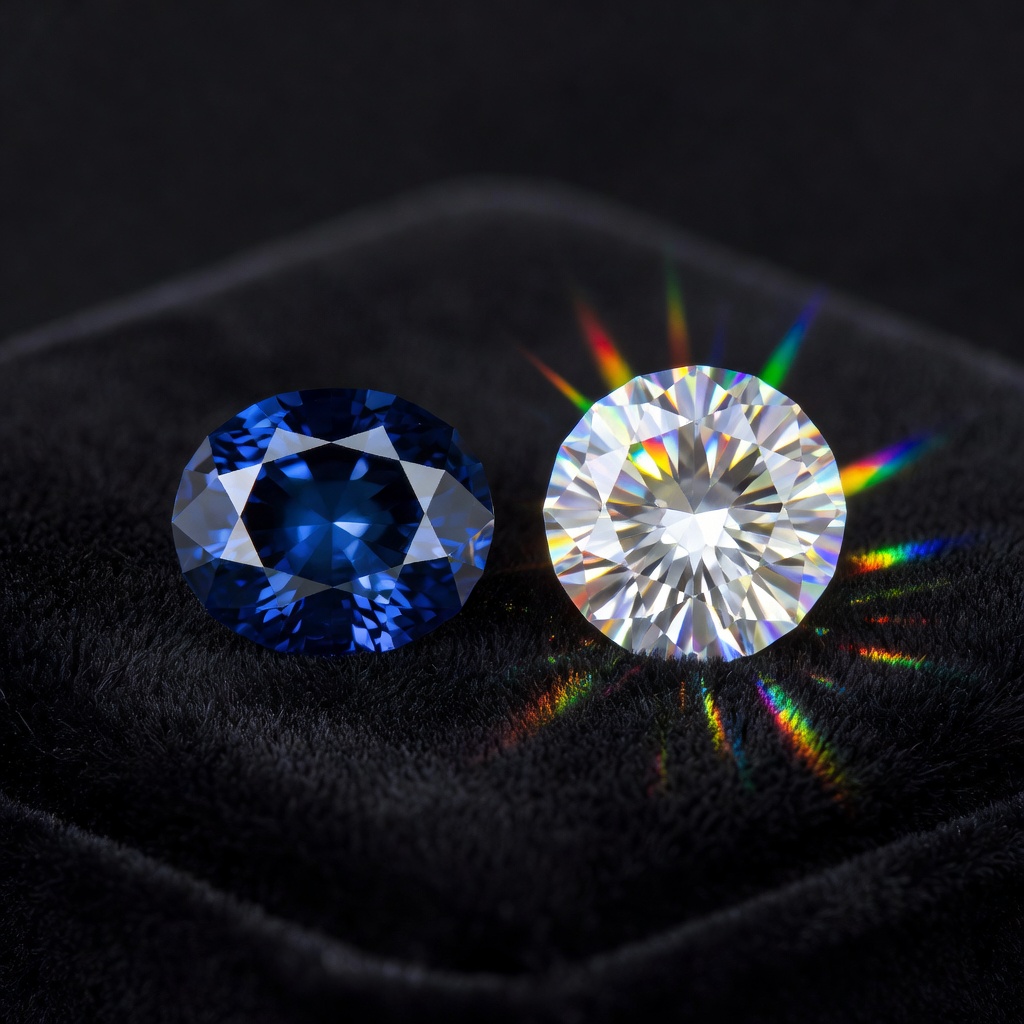
Optical characteristics distinguish these gemstones dramatically when viewed under various lighting conditions, with moissanite brilliance and fire creating distinctly different visual effects compared to sapphire's more subdued elegance. Moissanite boasts a refractive index ranging from 2.65 to 2.69, significantly higher than sapphire's 1.76-1.77, meaning it bends light more aggressively and returns greater quantities of white light (brilliance) to the viewer's eye. This superior light performance becomes immediately apparent when comparing stones side by side under jewelry store lighting or natural sunlight, as moissanite displays an intense, disco-ball-like sparkle that some enthusiasts describe as "frenetic" or "animated" compared to more restrained precious gems.
The dispersion factor, which measures a gem's ability to separate white light into spectral colors (fire), further differentiates these materials, with moissanite exhibiting 0.104 dispersion compared to sapphire's modest 0.018. This means natural sapphire vs moissanite comparisons reveal that moissanite produces approximately 2.4 times more rainbow flashes and colored light refraction than sapphire, creating vivid flashes of red, green, and blue that dance across the stone's surface with every movement. Sapphire, conversely, offers a deeper, more velvety luster characterized by subtle color shifts and an internal glow often described as "sleepy" or "soft" rather than intensely brilliant, appealing to those who prefer understated sophistication over high-voltage sparkle. When selecting between these optical personalities, consider that moissanite performs exceptionally in dim lighting conditions where its light-emitting properties compensate for low ambient light, while sapphires reveal their full beauty in natural daylight that illuminates their crystalline depths and color saturation.
Color Varieties and Aesthetic Options
Color selection plays a pivotal role in personal expression through jewelry, with both gemstones offering distinct palettes that cater to different stylistic preferences and symbolic meanings. Natural sapphires occur in a spectrum ranging from the highly coveted Kashmir cornflower blue with its velvety, milky appearance to deep royal blues, midnight navy tones, and increasingly popular fancy colors including padparadscha (peach-pink), vivid pinks, sunny yellows, and rare greens. The intensity and hue of blue sapphires significantly impact their market value, with vivid, saturated stones commanding premium prices while lighter "steely" blues or overly dark "inky" stones typically occupy lower price tiers, though personal preference should always override investment considerations when selecting a stone that resonates emotionally.
The comparison of colored moissanite vs blue sapphire reveals fundamentally different approaches to color achievement, as naturally occurring moissanite is exclusively colorless or near-colorless, with fancy colors requiring post-growth treatments such as chemical vapor coatings or irradiation processes. Colorless moissanite typically falls within the D-E-F color range on the diamond grading scale, appearing icy white with subtle undertones that vary by manufacturer, while treated options include sophisticated grays, teal blues, olive greens, and champagne yellows that mimic fancy colored diamonds. However, jewelry experts note that coated moissanite colors may wear unevenly over decades of daily use, particularly along facet junctions and girdle edges where friction occurs, whereas natural sapphire color varieties maintain their hues permanently as the color derives from integral trace elements rather than surface treatments. When matching stones to personal style, consider that blue sapphires pair magnificently with warm metal tones like yellow and rose gold that complement their cool blue depths, while colorless moissanite achieves maximum brilliance in white gold or platinum settings that enhance its diamond-like appearance.
Price Analysis and Long-Term Value
Financial considerations often drive the decision-making process for significant jewelry purchases, with substantial differences existing between these gemstones regarding initial investment and secondary market performance. Natural sapphires typically command prices ranging from $800 per carat for commercial-quality heated stones to $5,000 or more per carat for unheated, vividly colored specimens from prestigious origins like Kashmir or Burma, with exceptional untreated stones occasionally fetching tens of thousands per carat at auction. In stark contrast, lab-created moissanite maintains consistent pricing between $300 and $600 per carat regardless of size, with costs driven primarily by manufacturing complexity rather than rarity, allowing buyers to purchase significantly larger stones for their budget compared to sapphire options.
The gemstone value comparison extends beyond initial purchase price to encompass resale value and heirloom potential, areas where natural sapphires generally outperform manufactured alternatives due to their finite supply and enduring cultural prestige. High-quality natural sapphires, particularly those accompanied by certificates of origin and non-heating verification from laboratories like GIA or SSEF, often retain or appreciate in value over decades, functioning as portable wealth stores similar to fine art or precious metals. Conversely, lab-created moissanite possesses minimal resale value because unlimited production capacity ensures constant availability, meaning these stones should be purchased with the expectation of enjoying their beauty rather than viewing them as financial investments. For budget optimization, couples seeking moissanite vs sapphire engagement rings might allocate savings from choosing moissanite toward higher-quality metal settings or complementary wedding bands, while those selecting sapphires should prioritize certification and origin documentation to protect their investment value.
Sapphire vs Lab-Created Moissanite Comparison
| Characteristic | Natural Sapphire | Lab-Created Moissanite |
|---|---|---|
| Chemical Composition | Aluminum Oxide (Al₂O₃) | Silicon Carbide (SiC) |
| Mohs Hardness | 9.0 | 9.25 |
| Refractive Index | 1.76 – 1.77 | 2.65 – 2.69 |
| Dispersion (Fire) | 0.018 (Low) | 0.104 (Very High) |
| Price per Carat | $800 – $5,000+ | $300 – $600 |
| Origin | Earth-mined (Sri Lanka, Madagascar, Kashmir) | Laboratory-created (USA, China, India) |
| Color Options | Blue, Pink, Yellow, Padparadscha, Green (Natural) | Colorless, Gray, Blue, Green, Yellow (Treated) |
| Best For | Investment, Traditional Elegance, Unique Color | Maximum Sparkle, Active Lifestyle, Budget Value |
| Resale Value | Moderate to High (especially untreated rare colors) | Minimal (limited secondary market) |
Engagement Rings and Jewelry Applications
Bridal jewelry traditions and modern aesthetics collide when selecting center stones for engagement rings, with each gemstone offering distinct symbolic resonance and design possibilities. Sapphires carry profound royal associations, most notably Princess Diana's iconic 12-carat oval blue sapphire engagement ring now worn by Catherine, Duchess of Cambridge, representing loyalty, wisdom, and nobility that appeals to romantics drawn to historical significance and colored gemstone traditions. Contemporary jewelry designers frequently incorporate sapphires into three-stone settings symbolizing past, present, and future, or surround them with diamond halos that contrast beautifully against the blue center stone, with yellow gold and rose gold mountings particularly enhancing the warmth of padparadscha and pink sapphire varieties.
The rising acceptance of moissanite vs sapphire engagement rings reflects shifting priorities among modern couples who prioritize brilliance, ethical sourcing, and budget flexibility over traditional diamond-centric expectations. Moissanite performs exceptionally well in solitaire settings where its optical properties generate maximum impact, as well as in vintage-inspired halo designs where the center stone's fire complements surrounding accent diamonds without noticeable color discrepancy. For metal pairings, platinum and white gold settings create seamless transitions with colorless moissanite, enhancing the stone's diamond-like appearance, while those seeking warmer tones might select yellow gold to slightly mask any subtle warmth in near-colorless moissanite grades. Practical case studies suggest that active individuals such as rock climbers, medical professionals, or mechanics often prefer moissanite engagement rings set in low-profile bezel settings that protect the stone while maintaining exceptional sparkle under workplace lighting conditions.
Care, Cleaning, and Maintenance Requirements
Proper maintenance ensures that fine jewelry retains its beauty across generations, though sapphire jewelry care differs subtly from moissanite maintenance protocols due to variations in chemical treatments and structural characteristics. Both gemstones tolerate ultrasonic cleaning devices that use high-frequency sound waves to remove accumulated lotions, soaps, and environmental grime from setting crevices and pavilion facets, making home maintenance convenient for owners. However, steam cleaning requires caution with sapphires, particularly those that have undergone fracture filling or heat treatment to improve clarity, as extreme thermal shock can potentially damage these enhancements or exacerbate existing inclusions, whereas moissanite's thermal stability allows safe steam cleaning without risk of damage.
Storage practices significantly impact long-term preservation, with both stones requiring separate compartments in jewelry boxes to prevent contact with harder materials like diamonds (10 on Mohs scale) that could theoretically scratch moissanite or sapphire, though such scratches would be superficial given the minimal hardness differential. Moissanite maintenance benefits from occasional professional inspections every six to twelve months, particularly for prong-set rings worn daily, as the stone's extreme hardness can actually wear down prongs and mounting metals over time, potentially leading to stone loss if settings become loose. For sapphires, jewelers recommend checking for chips or abrasions along the girdle during these inspections, especially for stones with visible inclusions near the surface that might compromise structural integrity, and re-polishing services every decade or so to restore luster to facet junctions that dull through normal wear.
Ethical Sourcing and Environmental Impact
Conscious consumerism increasingly influences gemstone purchasing decisions, with ethical gemstones comparison revealing distinct environmental footprints and social implications for mining versus laboratory production. Natural sapphire mining, particularly in regions like Madagascar's Ilakaka fields or Sri Lanka's Ratnapura district, involves significant landscape disruption including deforestation, soil erosion, and water table alterations, though artisanal mining operations generally demonstrate lower carbon emissions than large-scale mechanized extraction. The traceability challenges within the sapphire trade necessitate vigilance regarding labor practices, as small-scale mining operations occasionally employ child labor or unsafe working conditions, making certifications from organizations like the Responsible Jewellery Council or verified origin documentation essential for ethically minded consumers seeking conflict-free assurances.
Lab-created moissanite production eliminates mining entirely, significantly reducing landscape destruction and community displacement, though the manufacturing process requires substantial electricity consumption for crystal growth furnaces operating at extreme temperatures. Recent life-cycle analyses suggest that carbon footprints vary dramatically between manufacturers, with facilities utilizing renewable energy sources achieving markedly lower environmental impact than those dependent on fossil fuel-generated power, prompting eco-conscious buyers to research specific brands' sustainability commitments. When evaluating the complete ecological picture, transportation emissions also factor significantly, as sapphires often travel through complex international supply chains from remote mining regions to cutting centers and retail markets, while moissanite frequently follows more direct distribution channels from concentrated manufacturing facilities to consumers, potentially offsetting some production energy costs through reduced shipping miles.
Final Verdict: How to Choose Your Perfect Stone
Selecting between these exceptional gemstones ultimately requires honest assessment of lifestyle factors, aesthetic preferences, and value priorities that align with individual circumstances and long-term expectations. Active individuals or those working in environments with high impact risk should strongly consider moissanite's superior toughness and lack of cleavage planes, which provide peace of mind during activities ranging from gym workouts to home improvement projects, while the stone's exceptional brilliance ensures it remains eye-catching even in dimly lit restaurants or evening events. Conversely, those drawn to historical significance, unique color expressions unavailable in manufactured gems, or potential investment appreciation will find natural sapphires more aligned with their priorities, particularly when selecting untreated stones from renowned origins that carry documented provenance.
The decision matrix for how to choose between sapphire and moissanite simplifies when categorizing priorities: choose moissanite for maximum optical performance, budget efficiency allowing larger carat weights, ethical certainty regarding mining practices, and mechanical durability for worry-free daily wear. Opt for sapphire when seeking distinctive color that reflects personal style beyond the colorless norm, connection to geological history and royal tradition, potential heirloom value transmission across generations, and the subtle, sophisticated luster that whispers rather than shouts. Regardless of selection, both stones represent excellent choices for fine jewelry that withstands decades of admiration, with the "perfect" stone being whichever captures your heart while meeting your practical requirements for beauty, durability, and meaning.
Frequently Asked Questions
Which is more brilliant, sapphire or moissanite?
Moissanite is significantly more brilliant than sapphire. With a refractive index of 2.65-2.69 compared to sapphire's 1.76-1.77, moissanite exhibits more sparkle and rainbow fire (dispersion). Sapphire offers a deeper, more velvety luster rather than intense brilliance.
Can you tell the difference between sapphire and moissanite with the naked eye?
Yes, easily. Blue sapphire has a distinct deep blue color and subdued sparkle, while colorless moissanite appears similar to diamond with exceptional rainbow flashes. Even blue moissanite tends to have more brilliance and different hue saturation than natural blue sapphire.
Is lab-created moissanite considered a real gemstone?
Yes, lab-created moissanite is a genuine gemstone with the same chemical composition (silicon carbide) as naturally occurring moissanite, which is extremely rare and found in meteorites. The lab process simply replicates natural formation conditions to create gem-quality crystals.
Which stone is better for an engagement ring, sapphire or moissanite?
Both are excellent choices depending on priorities. Choose moissanite for maximum sparkle, superior hardness (9.25 vs 9), and budget-friendly options. Choose sapphire for unique color, royal symbolism, and higher resale value. Moissanite withstands daily wear slightly better due to higher toughness.
Do sapphires and moissanites come in the same colors?
Natural sapphires occur in blue, pink, yellow, green, and padparadscha (peach). Moissanite is naturally colorless or near-colorless, but can be coated or treated to display gray, blue, green, or yellow hues. However, treated moissanite colors differ from the natural depth of sapphire hues.
Will moissanite pass a diamond tester?
Most basic diamond testers measure thermal conductivity, where moissanite and diamond differ, so moissanite will not pass as diamond on quality testers. However, some electrical conductivity testers may confuse the two. Sapphire has distinctly different thermal properties and will not register as diamond.
Which holds its value better, sapphire or moissanite?
High-quality natural sapphires, especially untreated Kashmir or Burmese stones, typically hold or appreciate in value. Lab-created moissanite, like other manufactured gems, has minimal resale value due to unlimited production capacity. Standard commercial sapphires also have limited resale value compared to rare specimens.
Can moissanite scratch sapphire?
Technically yes, though unlikely in normal circumstances. Moissanite rates 9.25 on the Mohs scale while sapphire rates 9, meaning moissanite is slightly harder and can theoretically scratch sapphire. However, both are extremely hard and resistant to scratching from everyday materials or each other under normal jewelry wear.