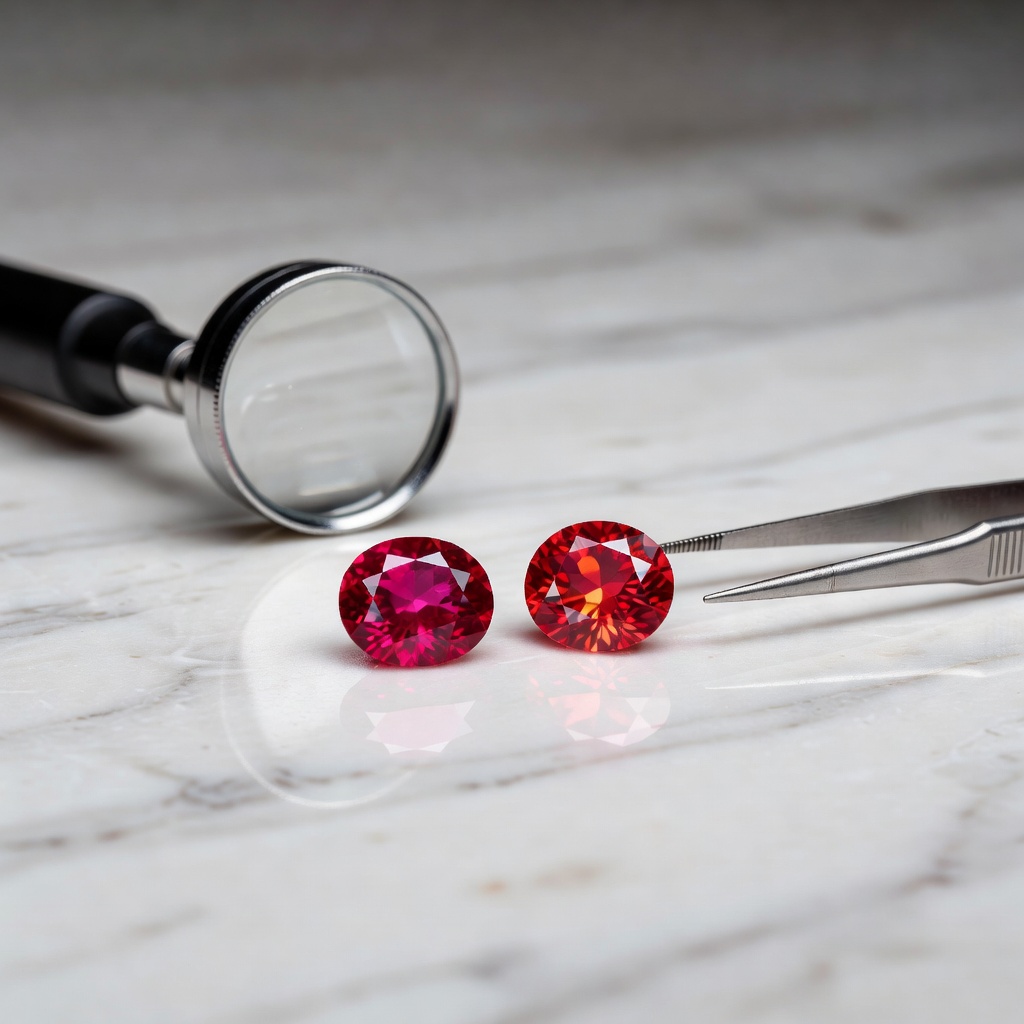
Understanding Ruby vs Zircon: A Comprehensive Gemstone Guide
When shopping for red gemstones, many buyers find themselves comparing Ruby vs Zircon, two stones that share similar fiery hues but possess distinctly different characteristics. This confusion often stems from the widespread misconception that natural zircon gemstone is the same as synthetic cubic zirconia, leading to missed opportunities for both collectors and jewelry enthusiasts. While ruby stands proudly as one of the prestigious "Big Three" colored gemstones alongside sapphire and emerald, zircon occupies a unique niche as a semi-precious stone with remarkable optical properties that rival even diamond.
The mineralogical differences between these two gems extend far beyond their market classification, affecting everything from daily wearability to long-term investment potential. Ruby represents the pinnacle of corundum family stones, prized for millennia by royalty and collectors, while zircon offers an accessible entry point into high-jewelry aesthetics without the prohibitive price tag. Understanding the fundamental distinctions between red zircon vs ruby empowers consumers to make informed decisions based on lifestyle needs, budget constraints, and aesthetic preferences rather than superficial color similarities.
Chemical Composition and Crystal Structure
The Fundamental Building Blocks
Ruby derives its chemical identity from corundum, an aluminum oxide mineral (Al₂O₃) crystallizing in the trigonal crystal system, which contributes to its exceptional hardness and structural stability. This atomic arrangement creates strong bonds between aluminum and oxygen atoms, resulting in a dense, durable crystal lattice that resists scratching and maintains polish over decades of wear. The trigonal structure also facilitates the incorporation of chromium trace elements, which replace aluminum atoms to create ruby's signature red coloration through selective light absorption.
In stark contrast, the debate of corundum vs zirconium silicate reveals zircon's entirely different chemical foundation as ZrSiO₄, a nesosilicate mineral crystallizing in the tetragonal system. This structure features isolated silica tetrahedrons connected by zirconium atoms, creating a unique optical environment that produces the phenomenon known as double refraction. Zircon typically forms within igneous rocks such as granites and syenites, often appearing as accessory minerals in pegmatites, whereas ruby develops under intense heat and pressure within metamorphic environments like marble or basalt, explaining the geographical concentration of fine Burmese and Mozambique deposits.
Hardness, Durability and Wearability
Performance Under Daily Conditions
The ruby hardness mohs scale rating of 9 positions this gemstone just below diamond as one of the hardest naturally occurring substances, making it exceptionally suitable for engagement rings and daily wear jewelry subjected to constant impact. This superior hardness translates to excellent resistance against surface scratching, ensuring that facet junctions remain crisp and the stone retains its brilliance through years of active lifestyles. Furthermore, ruby exhibits remarkable toughness—the resistance to breaking and chipping—due to the absence of cleavage planes, allowing it to withstand accidental blows that would shatter more fragile gems.
Zircon presents a more complex durability profile, ranking between 6.5 and 7.5 on the Mohs scale depending on crystallographic direction, a phenomenon known as anisotropic hardness that reflects its tetragonal crystal structure. While this hardness provides adequate protection against casual scratches, zircon's brittle tenacity and distinct cleavage planes make it vulnerable to chipping along facet edges and girdle areas when subjected to sharp impacts. Gemologists consistently recommend protective settings such as bezels or halos for zircon jewelry care, reserving this magnificent stone for earrings, pendants, and occasional wear rings rather than daily wear pieces that encounter regular knocks against hard surfaces.
Visual Characteristics and Optical Properties
Distinguishing Optical Phenomena
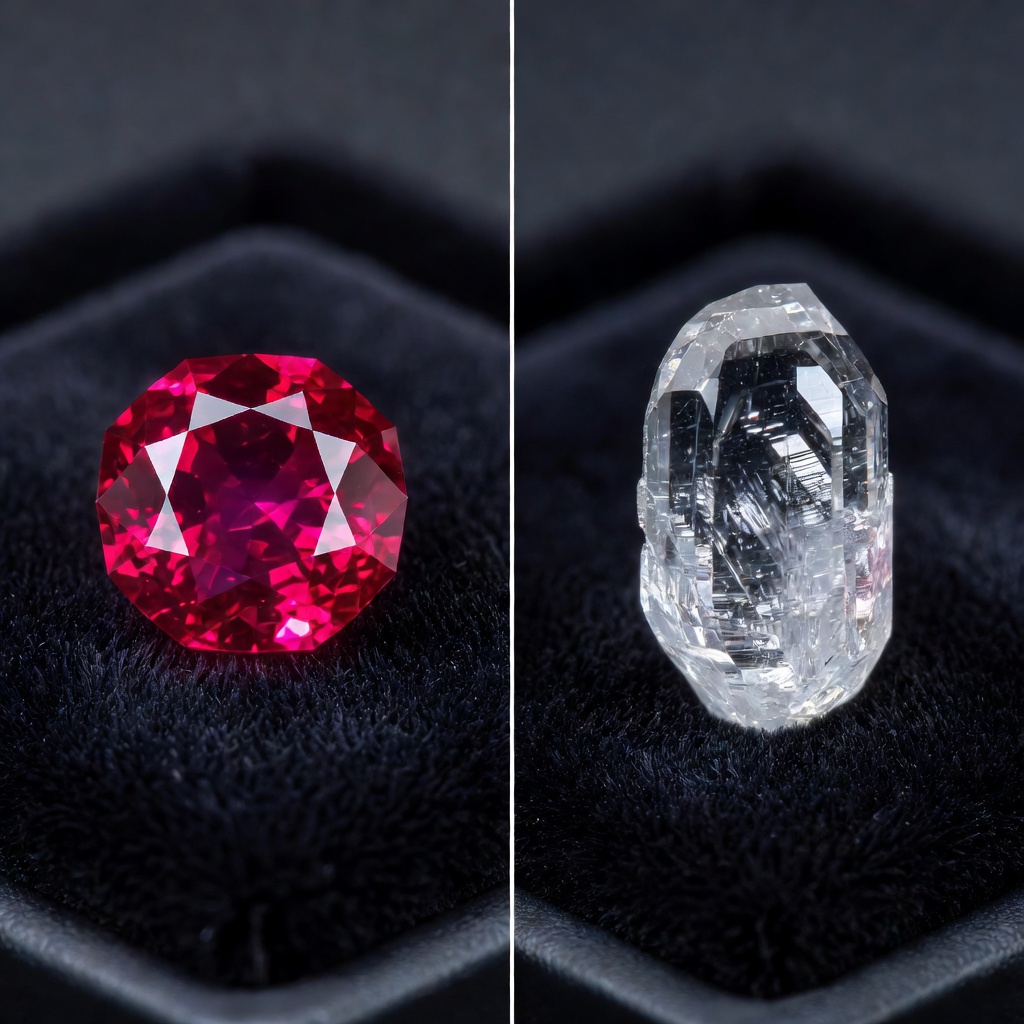
One of the most striking differences when examining zircon double refraction versus ruby's optical behavior involves observing the stone through its table facet with a 10x jeweler's loupe, where zircon displays visible doubling of the back facets due to its high birefringence (0.059). This optical property causes light to split into two rays as it passes through the crystal, creating a slightly fuzzy or doubled appearance to internal features and facet junctions that immediately distinguishes natural zircon from single-refractive ruby. The effect proves particularly noticeable in larger zircon stones, where the separation between the two refracted images becomes more pronounced, serving as a reliable identification characteristic for gemologists and informed consumers.
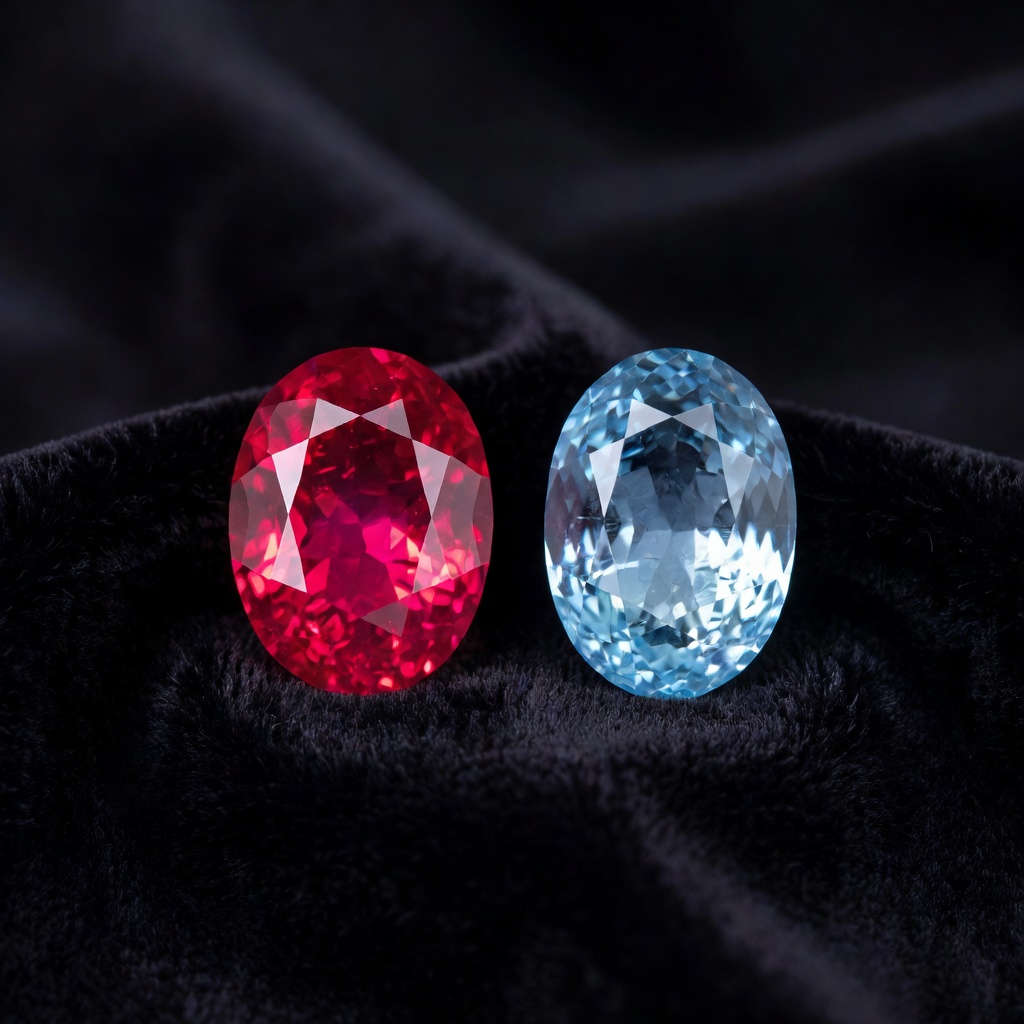
When comparing red zircon vs ruby side by side, observers often notice that zircon exhibits significantly greater dispersion—its ability to separate white light into spectral colors—creating flashes of red, orange, and blue fire that can exceed even diamond's optical performance. Ruby, conversely, displays a more subdued, velvety luster characterized by deep red saturation and occasional silk inclusions that scatter light softly across the stone's surface, producing the coveted "pigeon's blood" appearance prized in Burmese specimens. While blue zircon vs ruby comparisons highlight zircon's advantage in brilliance and fire, ruby offers unmatched depth of color and a classic, imperial aesthetic that has defined luxury jewelry for centuries, with color variations ranging from pinkish-red to deep crimson versus zircon's diverse palette including blue, colorless, yellow, and the rare red hyacinth variety.
Rarity, Value and Investment Comparison
Market Dynamics and Collector Appeal
The distinction between precious vs semi precious gemstones becomes immediately apparent when examining market values, with fine Burmese rubies commanding prices ranging from $1,000 to over $100,000 per carat depending on color saturation, clarity, and origin documentation. These extraordinary valuations reflect ruby's scarcity, particularly for stones exceeding three carats without heat treatment, alongside its historical significance as a symbol of power and passion across virtually every major civilization. Investment-grade rubies from Mogok, Myanmar, regularly achieve record-breaking prices at international auctions, often appreciating faster than traditional financial instruments while maintaining liquidity among high-net-worth collectors.
Red zircon, historically known as "hyacinth" and associated with biblical texts and ancient Greek legends, represents the rarest color variety within the zircon family, yet even exceptional specimens typically range from $75 to $500 per carat, making them accessible to intermediate collectors. While blue zircon dominates commercial markets through heat treatment of abundant brown rough material, natural red zircon remains genuinely scarce, offering niche appeal for mineralogists and historians rather than mainstream investment portfolios. The comparison between precious vs semi precious gemstones reveals that while zircon provides excellent value for jewelry enthusiasts seeking visual impact, ruby remains the superior choice for wealth preservation and generational wealth transfer, though collectors should note that untreated red zircon from specific localities may appreciate modestly as deposits deplete.
Comparative Analysis Table
| Characteristic | Ruby (Corundum) | Zircon (Zirconium Silicate) |
|---|---|---|
| Chemical Composition | Aluminum Oxide (Al₂O₃) | Zirconium Silicate (ZrSiO₄) |
| Crystal System | Trigonal | Tetragonal |
| Mohs Hardness | 9 (Excellent) | 6.5-7.5 (Good to Very Good) |
| Refractive Index | 1.76-1.77 (Single Refraction) | 1.78-1.99 (Double Refraction) |
| Specific Gravity | 4.00 | 4.6-4.8 (Heavy) |
| Dispersion/Fire | Low (0.018) | High (0.039, exceeds diamond) |
| Primary Market Colors | Red, Pink-Red, Pigeon's Blood | Blue, Colorless, Brown, Red (Hyacinth) |
| Typical Price Range | $1,000-$100,000+ per carat | $50-$500 per carat |
| Durability Rating | Excellent (Daily Wear Suitable) | Fair to Good (Protected Settings Recommended) |
| Optical Phenomenon | Single Refraction, Silk Inclusions | Double Refraction, Strong Fire |
| Best Jewelry Applications | Engagement Rings, Bracelets, Daily Wear | Earrings, Pendants, Occasional Wear |
| Investment Grade | Yes (High Liquidity) | Limited (Collector Niche) |
Common Treatments and Enhancements
Industry Standard Practices
Understanding the distinction between heated ruby vs natural specimens proves crucial for valuation, as approximately 95% of rubies on the market undergo heat treatment to dissolve rutile silk inclusions and enhance color saturation from purplish or pinkish tones to vivid red. This permanent treatment, conducted at temperatures exceeding 1,700°C, improves transparency and uniformity without introducing foreign materials, rendering treated stones more beautiful while remaining entirely natural in composition. However, unheated rubies with exceptional color command significant premiums—often three to ten times the price of heated equivalents—making certification from laboratories like GIA or SSEF essential for high-value purchases to confirm untreated status.
The treated zircon gemstone market relies heavily on heat treatment to transform common brown or reddish-brown rough into the desirable blue and colorless varieties that dominate commercial jewelry, with temperatures around 1,000°C driving out radioactive elements and altering crystal lattice conditions to produce stable colors. Additionally, some blue zircons undergo radiation treatment to enhance or create color, followed by annealing to ensure stability, processes that require explicit disclosure under trade guidelines established by organizations like the American Gem Trade Association (AGTA). When purchasing either stone, consumers should demand detailed laboratory reports specifying treatment types, as undisclosed enhancements significantly impact resale value and insurance appraisals, particularly for investment-grade rubies where natural origin commands substantial premiums.
Best Jewelry Applications and Setting Requirements
Matching Stones to Settings and Lifestyle
The ruby engagement ring remains a classic choice for couples seeking alternatives to diamond while maintaining durability suitable for daily wear, with designs ranging from vintage Art Deco clusters to modern solitaires that showcase the stone's rich color against platinum or yellow gold mountings. Ruby's exceptional toughness allows for versatile setting styles including delicate prong settings that maximize light exposure, channel settings for wedding bands, and tension settings that create the illusion of floating stones without compromising security. When designing activewear pieces, jewelers often recommend rubies over softer stones, knowing that the gem will withstand gym sessions, gardening, and office work while maintaining its polish and structural integrity for decades.
For zircon pendant settings and earring designs, protective mounting strategies become paramount to preserve the stone's beauty over time, with bezel settings that wrap the girdle in metal providing superior protection compared to exposed prong settings that leave vulnerable edges susceptible to chipping. Halo designs offer both aesthetic enhancement and physical protection for zircon center stones, while earrings minimize impact risk simply by their position away from hands and hard surfaces during daily activities. Metal pairing considerations favor 14k or 18k gold for zircon jewelry to allow for periodic re-tipping of worn prongs, whereas platinum's durability complements ruby's longevity in heirloom pieces designed to last generations without significant maintenance beyond routine cleaning.
Identification Techniques for Gemologists
Professional Verification Methods
Distinguishing between these red gems requires understanding how to identify ruby vs zircon through precise measurements of optical and physical constants, beginning with refractive index testing where ruby registers 1.76-1.77 while zircon ranges from 1.78 up to 1.99 depending on variety, with high-zircon types showing the highest readings. Specific gravity testing provides another definitive separation, with ruby averaging 4.00 on the heavy liquids scale compared to zircon's notably higher density of 4.6-4.8, causing zircon to sink rapidly in methylene iodide solutions where ruby remains suspended or sinks slowly. These objective measurements eliminate subjective color assessments that can be misleading, particularly when examining red spinel or garnet that might superficially resemble either stone.
Advanced gemstone testing methods include spectroscopic analysis using a spectroscope to reveal chromium absorption lines in ruby—a distinctive pattern featuring double lines in the red spectrum and specific absorption in the blue-green region—contrasting with zircon's characteristic uranium-related absorption spectrum showing fine lines in the red and blue regions. Under 10x magnification with a loupe, gemologists examine for the doubling effect in zircon's pavilion facets, a feature entirely absent in singly-refractive ruby, while also noting ruby's potential hexagonal growth patterns and silk inclusions versus zircon's high clarity and occasional tension cracks around crystal needles. For definitive identification, laser ablation inductively coupled plasma mass spectrometry (LA-ICP-MS) can analyze trace element chemistry, detecting zirconium in zircon and chromium/vanadium ratios in ruby to confirm geographic origins and natural versus synthetic origins.
Care, Cleaning and Maintenance Guidelines
Preserving Beauty Through Proper Handling
Both gemstones respond well to gentle cleaning using warm water mixed with mild dish soap and a soft-bristled brush, effectively removing accumulated oils and debris from behind stones where light transmission becomes compromised, though zircon jewelry care requires avoiding ultrasonic cleaners and steam cleaning that can exacerbate existing fractures or cause thermal shock due to the stone's brittle nature. Ruby cleaning tips emphasize the stone's resilience, allowing for occasional ultrasonic cleaning when the stone is unfractured and securely set, though steam cleaning should still be approached cautiously with heat-treated stones to avoid potential damage to glass-filled fractures in lower-quality material. After cleaning, patting pieces dry with a lint-free microfiber cloth prevents water spots and prepares the jewelry for immediate wear or storage.
Storage protocols differ significantly between these stones, as zircon's hardness exceeds that of common jewelry box materials like sterling silver (5.5-6.5 Mohs) and opal (5.5-6 Mohs), meaning loose zircon can scratch softer gems if jumbled together, while diamond or sapphire jewelry can reciprocally damage zircon if stored without individual soft pouches or compartmentalized boxes. Ruby, being harder than virtually all other colored gems except diamond, poses less risk to neighbors but should still be stored separately to prevent scratching gold settings or softer accent stones. Both gemstones benefit from avoiding extreme temperature fluctuations—particularly zircon, which can suffer internal damage from sudden heat changes—and should be removed before swimming in chlorinated pools, applying cosmetics, or engaging in household cleaning with harsh chemicals that might etch metal mountings or dull polish.
Final Verdict: Which Gemstone Should You Choose?
Making the Right Decision for Your Needs
Navigating the Ruby vs Zircon buying guide ultimately depends on aligning gemstone characteristics with personal circumstances, budget parameters, and intended use cases, with budget-conscious buyers finding exceptional value in zircon's dazzling brilliance that delivers high-jewelry aesthetics at fraction of the cost of precious alternatives. For those prioritizing heirloom potential and wealth preservation, ruby represents the unequivocal choice, offering liquidity in the secondary market, historical appreciation trends, and symbolic significance that transcends generations, whereas zircon suits fashion-forward collectors who prioritize optical performance over investment returns. The decision between choosing between ruby and zircon requires honest assessment of lifestyle factors—active individuals, healthcare workers, or those who rarely remove jewelry should gravitate toward ruby's durability, while those seeking statement pieces for special occasions may prefer zircon's extraordinary fire and affordable price point.
Aesthetic preferences play equally important roles in this decision matrix, with traditionalists and romantics often preferring ruby's deep, saturated reds and historical associations with passion and protection, while modern design enthusiasts appreciate zircon's rainbow dispersion and availability in trendy blue hues that complement contemporary white gold and platinum settings. Consider also the maintenance commitment: ruby requires minimal special care beyond routine cleaning, making it ideal for "set it and forget it" jewelry lovers, whereas zircon demands mindful wearing habits and protective settings that may require periodic inspection by jewelers to ensure prongs remain tight and protective bezels undamaged. Whether selecting a ruby engagement ring symbolizing eternal love or a zircon pendant celebrating December birthstone traditions, understanding these fundamental differences ensures lasting satisfaction with your colored gemstone acquisition.
Frequently Asked Questions
Is zircon the same as cubic zirconia?
No, they are completely different materials. Zircon is a natural gemstone (zirconium silicate) formed in the earth over millions of years, while cubic zirconia (CZ) is a synthetic, man-made diamond simulant created in laboratories. Natural zircon is much rarer and more valuable than CZ.
Why is ruby more expensive than zircon?
Ruby commands higher prices due to its status as one of the 'Big Three' precious gemstones, exceptional hardness (9 on Mohs scale), and historical significance. While high-quality red zircon (hyacinth) is rare, zircon is generally more abundant and softer (6.5-7.5 Mohs), making it less suitable for daily wear and therefore less valuable in the market.
How can I tell if my red stone is a ruby or red zircon?
Look for double refraction: when viewing zircon through the table facet with a loupe, you will see doubling of the back facets, while ruby shows single refraction. Additionally, zircon exhibits more 'fire' (rainbow colors) than ruby, and ruby often shows characteristic silk inclusions or hexagonal growth patterns under magnification.
Is red zircon rare compared to blue zircon?
Yes, red zircon (historically called 'hyacinth') is the rarest and most valuable color variety of zircon. While blue zircon is commonly heat-treated and widely available, natural red zircon is extremely scarce and highly sought after by collectors. However, even fine red zircon typically costs significantly less than comparable quality ruby.
Can zircon be worn daily in an engagement ring?
Zircon is not recommended for daily wear in engagement rings due to its brittleness and relatively soft hardness (6.5-7.5). It chips and abrades easily. Ruby, with its hardness of 9 and excellent toughness, is a much better choice for engagement rings intended for everyday wear. Zircon is best suited for pendants, earrings, or occasional wear rings with protective settings.
Which gemstone has better brilliance, ruby or zircon?
Zircon actually displays more brilliance and fire (dispersion) than ruby due to its high refractive index and strong dispersion properties. Zircon's fire can even exceed that of diamond. However, ruby offers a deep, saturated red glow and 'pigeon's blood' luminescence that many collectors prefer over zircon's rainbow sparkle.
Do rubies and zircons receive similar treatments?
Both gemstones commonly undergo heat treatment, but for different purposes. Most rubies are heat-treated to improve color saturation and clarity. Zircons are often heat-treated to transform brown or reddish-brown rough into popular blue or colorless gems. Unlike rubies, some blue zircons may also be created through radiation treatment, which requires proper disclosure.
Are both ruby and zircon considered birthstones?
Ruby is the traditional birthstone for July. Zircon is one of the three modern birthstones for December (along with turquoise and tanzanite), though typically the blue variety is associated with December birthstones rather than red zircon. Both stones carry historical significance, with ruby symbolizing passion and zircon representing wisdom and prosperity.