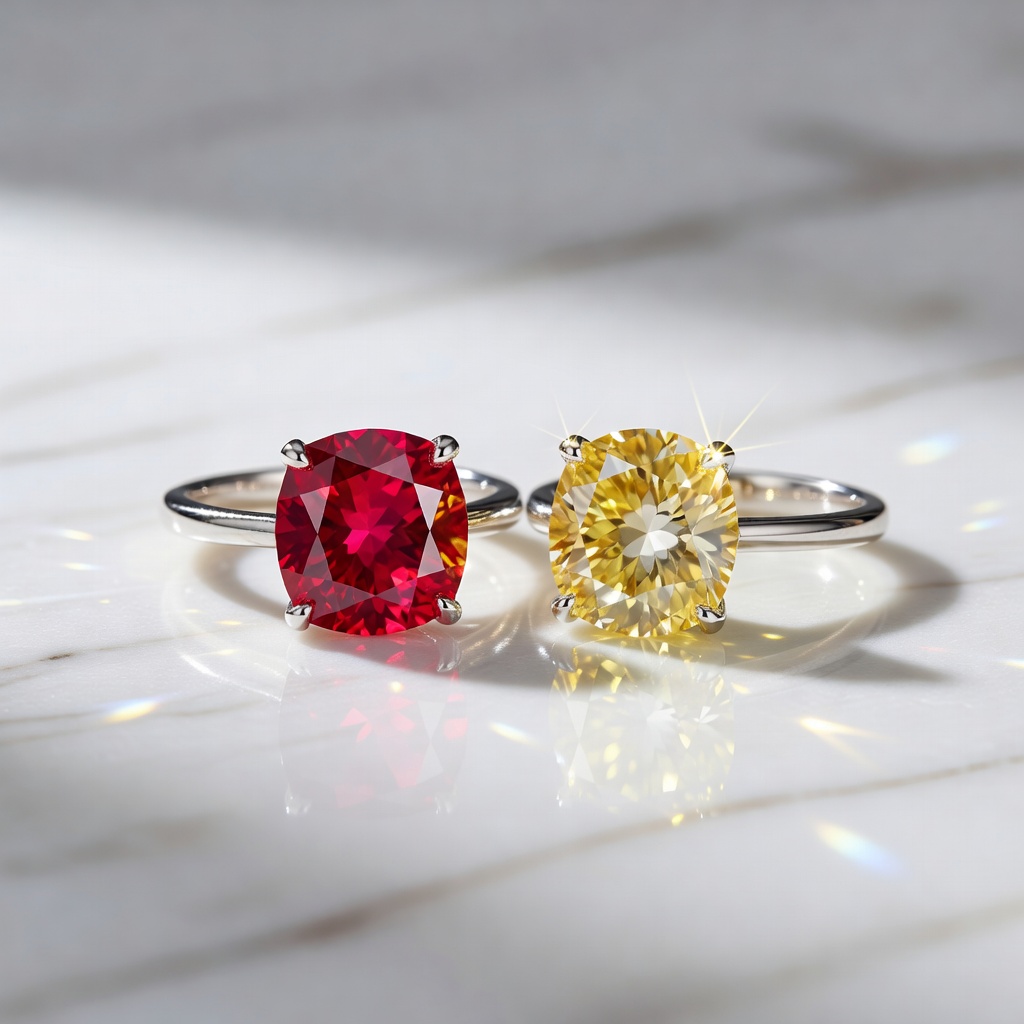
Ruby vs Yellow Diamond: Understanding the Fundamentals
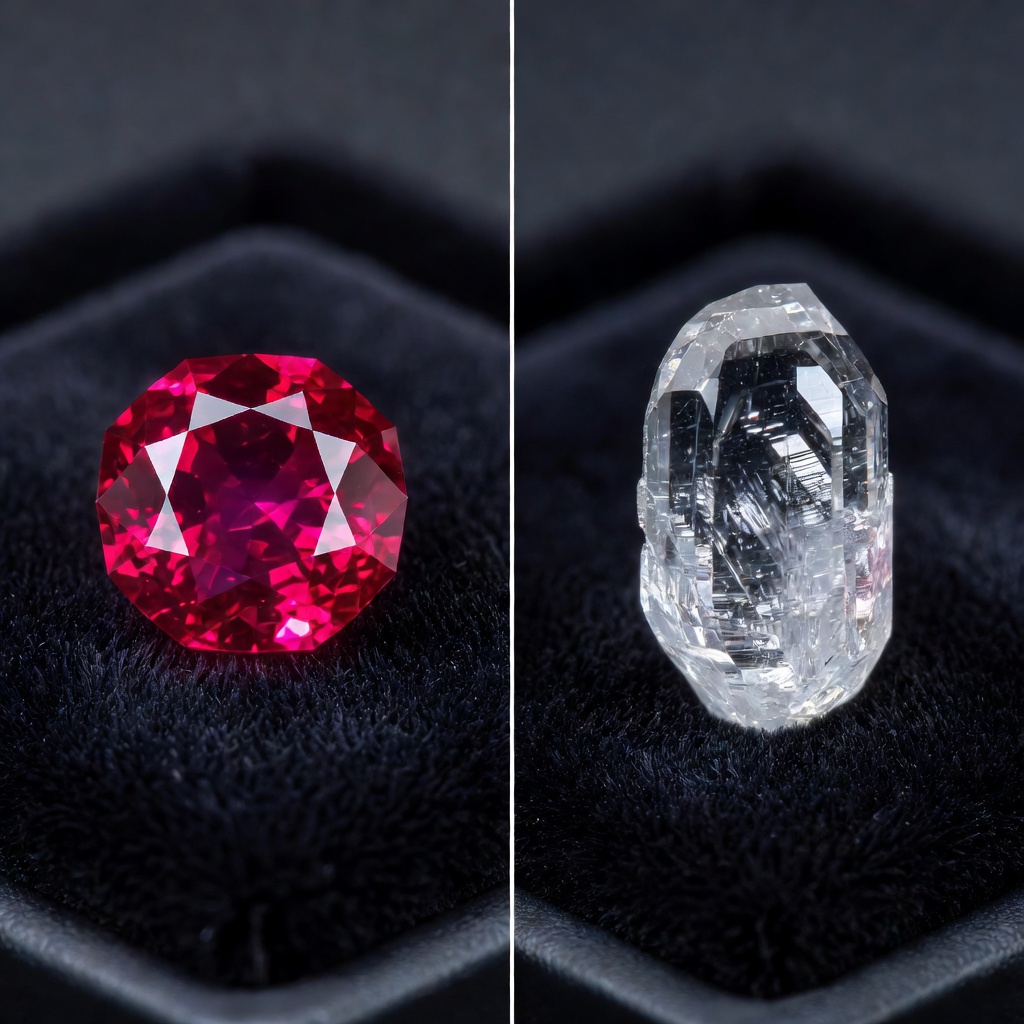
When comparing ruby vs yellow diamond, understanding their fundamental chemical differences provides essential context for appreciation and selection. Rubies belong to the corundum mineral family, composed primarily of aluminum oxide with trace chromium elements that produce their signature red hue. Yellow diamonds, conversely, consist of crystallized carbon structures identical to colorless diamonds, with nitrogen impurities absorbing blue light and reflecting yellow wavelengths back to the viewer. This distinction between corundum and diamond formation processes explains not only their optical properties but also their divergent geological origins and market valuations.
The color origin mechanisms between these gemstones reveal fascinating mineralogical processes occurring deep within Earth's mantle. Chromium atoms substituting for aluminum in the corundum lattice create the intense red coloration prized in fine rubies, with higher chromium concentrations yielding the coveted "pigeon blood" saturation. In yellow diamonds, nitrogen atoms arranged in specific configurations (known as A-centers and B-centers) during crystal growth determine whether the diamond appears light yellow or reaches the intense canary shades that command premium prices. Gemologists use advanced spectroscopy to identify these trace elements, providing crucial documentation for authentication and valuation purposes.
Historical significance further distinguishes these precious stones, with both commanding reverence across diverse civilizations and royal courts. Ancient Burmese warriors embedded rubies into their flesh before battle, believing the stones granted invincibility, while Hindu texts referred to rubies as "ratnaraj" or king of precious stones. Yellow diamonds gained prominence during the Victorian era and achieved iconic status with the Tiffany Yellow Diamond, which weighed 128.54 carats and established canary diamonds as symbols of ultimate luxury. Modern collectors often reference these historical precedents when building investment portfolios, recognizing that both stones carry cultural weight transcending mere chemical composition.
Color Grading Deep Dive: Pigeon Blood vs Canary Yellow
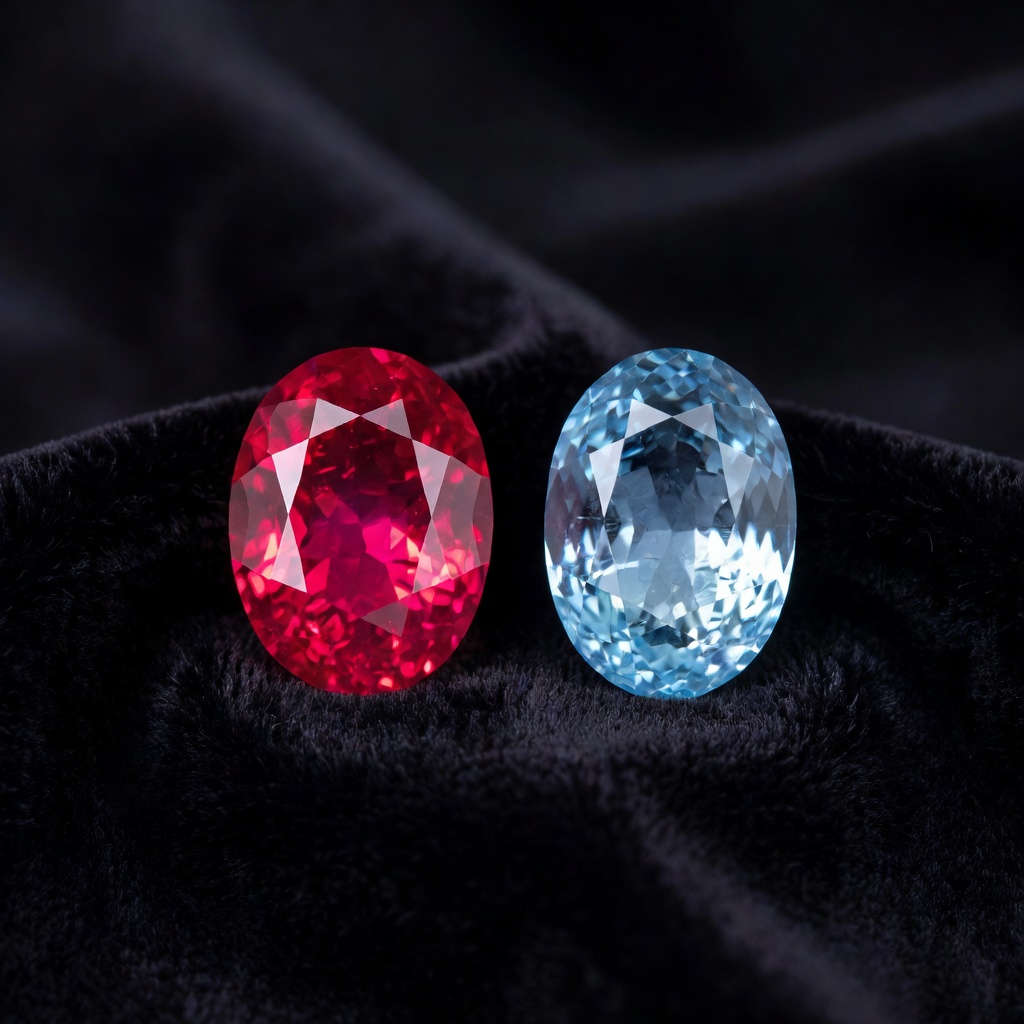
The evaluation of color represents perhaps the most critical factor when assessing pigeon blood ruby vs canary diamond quality, with each gemstone category employing distinct grading methodologies. For rubies, gemological laboratories assess three primary color components: hue (the basic color), tone (lightness or darkness), and saturation (intensity or purity). The term "pigeon blood" traditionally referred to rubies exhibiting a pure, vibrant red to slightly purplish-red hue with vivid saturation and medium-dark tone, reminiscent of the blood from freshly killed Burmese pigeons. Modern laboratories like Gübelin and AGL use strict criteria including fluorescence intensity and transmission characteristics to award this prestigious designation, with only a fraction of mined rubies qualifying for this elite classification.
Yellow diamonds follow the GIA's fancy color grading scale, which ranges from Fancy Light Yellow through Fancy Yellow, Fancy Intense Yellow, to Fancy Vivid Yellow—the equivalent of pigeon blood status in the diamond world. The canary diamond designation specifically refers to Fancy Intense or Fancy Vivid Yellow stones displaying pure, saturated yellow without secondary brown or green modifying colors. Unlike rubies where darker tones often indicate higher quality, the most valuable yellow diamonds balance intense saturation with brightness, avoiding the "muddy" appearance that occurs when tone becomes too dark. Professional dealers often examine these stones under various lighting conditions, as yellow diamonds particularly shine under natural daylight while some rubies display enhanced fluorescence under incandescent lighting.
Practical observation techniques help consumers appreciate how lighting affects these gemstones differently in real-world settings. When examining a potential purchase, place the stone under incandescent, fluorescent, and natural daylight sources to detect any color shifts or windowing (dead spots where light leaks through). High-quality pigeon blood rubies maintain their vivid red appearance across lighting spectrums, though they may appear slightly more purplish under incandescent light. Fancy vivid yellow diamonds typically appear most brilliant under natural northern daylight, while fancy light yellows might wash out under strong lighting. Jewelry designers account for these photometric properties when creating settings, often placing yellow diamonds in open-backed mountings to maximize light return while protecting rubies in bezels that enhance their depth of color.
Durability and Hardness: The Mohs Scale Reality
Gemstone durability comparison between rubies and yellow diamonds reveals nuanced differences that impact long-term wear and maintenance requirements. Diamonds universally rank 10 on the Mohs hardness scale, representing the hardest known natural material capable of scratching any other substance. Rubies closely follow at 9 on the same scale, meaning they resist scratching from most materials except diamonds themselves and moissanite. For daily wear scenarios such as engagement rings or bracelets, both stones offer exceptional scratch resistance, though diamond maintains a theoretical advantage that translates to marginally better preservation of facet edges over decades of continuous use.
However, hardness represents only one component of durability, with toughness—the resistance to chipping, cleaving, or breaking—proving equally important for jewelry applications. Despite their superior hardness, diamonds possess perfect cleavage in four directions, making them vulnerable to splitting if struck at specific angles, particularly along girdle edges or pointed corners. Rubies, belonging to the trigonal crystal system, lack cleavage planes and demonstrate superior toughness, resisting impact damage better than their carbon counterparts. This toughness factor makes rubies historically preferred for intricate carvings and domed cabochon cuts, as seen in the famous 167-carat Edwardes Ruby housed in the British Museum of Natural History.
Practical implications for daily wear extend beyond theoretical mineral properties to setting choices and lifestyle compatibility. Active individuals or those working with their hands might prefer ruby center stones for rings, as the gem withstands accidental knocks against doorframes or countertops without risk of cleaving. Conversely, diamond's scratch resistance makes it ideal for pieces worn against other jewelry, such as stacked wedding bands or tennis bracelets where stones contact metal constantly. When designing custom pieces, jewelers often recommend protective settings like bezels or half-bezels for both stones, though yellow diamonds in delicate prong settings require slightly more cautious handling than rubies in equivalent mountings. Regular professional inspections every six months help detect loose stones or worn prongs before loss or damage occurs, regardless of which gem you choose.
| Characteristic | Ruby (Corundum) | Yellow Diamond |
|---|---|---|
| Chemical Composition | Aluminum Oxide (Al₂O₃) with Chromium | Crystallized Carbon with Nitrogen |
| Mohs Hardness | 9 | 10 |
| Toughness | Excellent (no cleavage) | Good (perfect cleavage in 4 directions) |
| Color Grading System | Pigeon Blood, Vivid, Strong (based on hue/saturation) | Fancy Light to Fancy Vivid (based on tone/saturation) |
| Primary Sources | Myanmar, Mozambique, Madagascar | South Africa, Australia, Canada |
| Price Range (per carat) | $1,000-$100,000+ (untreated Burmese) | $3,000-$30,000+ (Fancy Vivid) |
| Optimal Metal Setting | Yellow Gold or Rose Gold | White Gold, Platinum, or Yellow Gold |
| Daily Wear Suitability | Excellent (impact resistant) | Excellent (scratch resistant) |
| Investment Rarity | Extreme (fine untreated material) | Moderate to High (vivid colors) |
| Common Treatments | Heat treatment, glass filling | Irradiation, HPHT enhancement |
Origins and Mining: Geographic Rarity Factors
The provenance of rubies and yellow diamonds significantly influences their market value, aesthetic characteristics, and investment potential, with specific geographic origins commanding substantial premiums. Myanmar's Mogok Stone Tract historically produced the finest pigeon blood rubies, characterized by intense red fluorescence and "silk" inclusions that create the coveted "living" glow known as "ah loo" in Burmese. Modern mining in Mozambique's Montepuez region now supplies approximately 80% of global ruby production, yielding stones with excellent transparency but typically lacking the strong fluorescence of Burmese material. Madagascar deposits, particularly those discovered in recent decades at Andilamena and Zahamena, offer intermediate characteristics with some deposits producing fine red stones rivaling Burmese quality at more accessible price points.
Yellow diamond production concentrates in different geological environments, primarily kimberlite pipes in South Africa and alluvial deposits in Australia's Argyle mine, which closed in 2020 after producing some of the world's most intense canary diamonds. The Argyle mine's Ellendale lamproite pipe specifically yielded the highly saturated "vivid" yellows prized by collectors, and the mine's closure has driven prices upward for existing stockpiles. South Africa's Kimberley region and newer Canadian mines in the Northwest Territories continue producing significant quantities of fancy yellow stones, though the Argyle closure fundamentally altered supply dynamics for investment-grade material. Unlike rubies where Burmese origin typically commands the highest prices, yellow diamonds achieve premium valuations based primarily on color intensity rather than specific geographic source, though Argyle-origin stones now carry collector premiums due to scarcity.
Case studies illustrate how origin documentation affects auction outcomes and insurance valuations. In 2015, a 25.59-carat Burmese pigeon blood ruby named the "Sunrise Ruby" sold for $30.3 million at Sotheby's Geneva, setting a per-carat record of $1.19 million that highlighted the extreme value placed on documented Burmese origin combined with untreated status. Similarly, the 202.18-carat "Red Cross Diamond," a canary yellow stone of South African origin, has appeared at auction multiple times since 1918, with its value increasing significantly following the Argyle mine closure despite its non-vivid color grade. Collectors seeking colored diamond investment opportunities should prioritize stones with verifiable origin reports from closed mines like Argyle, while ruby investors focus exclusively on Burmese or select Mozambique deposits with untreated certifications from laboratories like Gübelin or SSEF.
Investment Value and Market Dynamics
Understanding ruby vs yellow diamond value requires analyzing distinct market dynamics that govern pricing structures and liquidity across different quality tiers. High-quality untreated Burmese rubies currently command the highest per-carat prices of any colored gemstone, with exceptional pigeon blood specimens regularly exceeding $100,000 per carat at international auctions. This pricing reflects extreme scarcity—fine untreated rubies above five carats might appear on the market only a handful of times annually worldwide. Fancy vivid yellow diamonds, while certainly valuable, typically range from $20,000 to $30,000 per carat for stones under three carats, with prices escalating significantly for larger sizes or those with exceptional clarity grades.
Rarity assessment extends beyond simple carat weights to encompass treatment history, clarity characteristics, and color purity. Untreated Burmese rubies represent perhaps the rarest regularly traded gemstone category, as heat treatment—standard for approximately 95% of commercial rubies—permanently alters the stone's value trajectory. Conversely, while natural fancy yellow diamonds occur less frequently than brown or gray diamonds, they remain more abundant than fine rubies, though vivid intense yellows above two carats still qualify as genuinely rare. Market liquidity favors yellow diamonds slightly, as the GIA grading system provides standardized metrics that facilitate quicker sales, whereas ruby valuation requires specialized expertise to assess origin and treatment status accurately.
Auction performance trends reveal shifting collector preferences and emerging opportunities in both categories. Over the past decade, untreated Burmese rubies have appreciated approximately 200%, outpacing most yellow diamond categories except for Argyle vivid yellows, which saw similar gains following the mine's closure. However, commercial-grade treated rubies or those with significant inclusions depreciate rapidly, making them poor investment vehicles compared to investment-grade yellow diamonds, which maintain value more consistently across quality grades. Practical portfolio diversification strategies suggest allocating 60-70% of colored stone investments to untreated rubies with documented Burmese origin, while reserving 30-40% for fancy vivid yellow diamonds over two carats with Argyle provenance or exceptional South African origin documentation.
Symbolism and Birthstone Significance
The cultural associations surrounding July birthstone vs April birthstone distinctions influence consumer preferences and gift-giving traditions across global markets. As July's traditional birthstone, rubies carry potent symbolism related to passion, protection, and vitality, with ancient Sanskrit texts describing rubies as "ratnanayaka" or the lord of gems capable of safeguarding wearers from evil. The stone's blood-red color naturally associates with the heart, circulation, and life force, making it particularly popular for romantic gifts celebrating July birthdays or 40th wedding anniversaries. Eastern traditions, particularly in China and India, value rubies as bringers of wealth and high rank, with Burmese culture specifically attributing invincibility to warriors wearing the stones embedded in their skin.
Yellow diamonds serve as alternative April birthstones alongside traditional colorless diamonds, representing prosperity, joy, and solar energy symbolism that differs markedly from ruby's intense associations. The yellow color connects to gold, harvest abundance, and the life-giving properties of sunlight across Western traditions, while Eastern philosophies associate yellow with earth elements and stability. Unlike rubies' warrior heritage, yellow diamonds historically adorned royalty and religious artifacts as symbols of divine favor and material success, evidenced by the Pope's diamond collection and the Iranian Crown Jewels' extensive yellow diamond parures. Modern couples increasingly select yellow diamonds for engagement rings specifically to symbolize optimism and unique personal radiance rather than traditional romantic intensity.
Cross-cultural interpretations reveal fascinating divergences in how societies value these gemstones' color properties. In Feng Shui practice, rubies activate the Fame and Reputation sector due to their fire element association, while yellow diamonds enhance the Health and Center sectors through earth element connections. Western crystal healing traditions suggest rubies stimulate the root chakra for grounding and survival instincts, whereas yellow diamonds activate the solar plexus for confidence and personal power. When selecting between these stones for significant life events such as engagements or milestone anniversaries, consider whether the recipient resonates more with ruby's passionate, protective energy or yellow diamond's joyful, prosperous vibrations. Many modern jewelry designers now create fusion pieces incorporating both stones to balance these complementary energetic properties.
Jewelry Design and Setting Considerations
Optimal metal choices for colored gemstone jewelry settings significantly impact the visual performance of both rubies and yellow diamonds, requiring strategic decisions about complementary and contrasting color theory. Rubies traditionally perform beautifully in yellow gold settings, where the warm metal enhances the stone's red undertones and creates a cohesive, regal appearance reminiscent of historical royal jewelry. However, contemporary designers increasingly pair fine rubies with platinum or white gold to create striking contrast that makes the red appear more vivid through optical juxtaposition, particularly effective with Burmese stones exhibiting strong fluorescence. Rose gold offers a middle path, complementing rubies with its pinkish warmth while providing modern aesthetic appeal that bridges traditional and contemporary design sensibilities.
Cut preferences vary substantially between these gemstones based on their optical properties and color distribution requirements. Yellow diamonds maximize their color saturation through step cuts like emerald or radiant cuts that create "hall of mirrors" effects concentrating color within the stone's body, while brilliant cuts with numerous facets sometimes dilute yellow intensity by dispersing light too efficiently. Cushion and radiant cuts remain most popular for fancy yellows, with the specific facet arrangement determining whether the stone appears lemon-yellow or deep canary. Rubies, conversely, often favor mixed cuts or oval shapes that balance brilliance with color depth, as pure step cuts can create "windowing" in rubies with shallow pavilions, though high-quality transparent rubies increasingly appear in emerald cuts for contemporary cocktail rings.
Design versatility extends from classic solitaire engagement rings to elaborate vintage-inspired creations and avant-garde modern settings. For yellow diamonds, halo settings featuring colorless diamonds create dramatic contrast that makes the center stone appear more intensely yellow, while bezel settings in yellow gold intensify the diamond's inherent color through metal reflection. Ruby designs frequently incorporate diamond accents in floral motifs or geometric Art Deco patterns, with the white stones providing neutral frames that prevent color competition. Case studies from high jewelry houses demonstrate successful integration: Cartier's "Tutti Frutti" designs combine rubies with emeralds and sapphires in colorful arrangements, while Tiffany's Yellow Diamond collection showcases solitaire settings that optimize light performance. For everyday wear, consider low-profile settings that protect girdle edges, with rubies tolerating slightly higher settings than yellow diamonds due to their superior toughness.
Authentication and Certification Standards
Professional certification provides essential verification when purchasing either fancy yellow diamond grading documentation or ruby origin reports, protecting consumers from misrepresentation and undisclosed treatments. The Gemological Institute of America (GIA) serves as the primary authority for yellow diamond certification, issuing reports that specify exact color grades (ranging from Fancy Light to Fancy Vivid), fluorescence characteristics, and proportions that affect light performance. For investment-grade stones, GIA offers origin reports that can verify South African or Argyle provenance, significantly impacting valuation. The report's color origin section confirms whether the yellow results from natural nitrogen presence or artificial irradiation treatments, with natural stones commanding substantial premiums over treated equivalents.
Ruby authentication requires specialized laboratories such as the American Gemological Laboratories (AGL) or Gübelin Gem Lab, which possess expertise in corundum origin determination and treatment disclosure. These reports specifically identify whether rubies have undergone heat treatment—a common enhancement that improves clarity and color but significantly affects value—or more problematic treatments like lead glass filling, which temporarily masks fractures but renders stones vulnerable to damage from jewelry cleaning solutions or even household lemon juice. Origin determination relies on inclusion pattern analysis and trace element chemistry, with Burmese, Mozambique, and Madagascar stones exhibiting distinct "fingerprints" visible under microscopic examination. The presence of "silk" inclusions (rutile needles) often indicates unheated status in Burmese stones, as these inclusions partially dissolve during heat treatment.
Common treatments to watch for include irradiation in yellow diamonds, which artificially induces color in otherwise near-colorless stones, and diffusion treatment in rubies, where beryllium is infused into the surface to create color layers only microns deep. While irradiated yellow diamonds require disclosure under FTC guidelines, they remain stable and permanent unlike some ruby treatments. Glass-filled rubies, sometimes called "composite rubies," contain significant lead glass percentages that can constitute up to 50% of the stone's volume, making them unsuitable for jewelry subject to heat or ultrasonic cleaning. When evaluating certification documents, verify that ruby reports specifically state "no indications of heating" or "no heat" for investment pieces, and ensure yellow diamond reports confirm "Natural Color" rather than "Treated Color" or "Artificially Irradiated" designations.
Making Your Final Decision: Lifestyle and Budget Factors
Choosing between ruby and yellow diamond ultimately requires honest assessment of lifestyle compatibility, as both stones suit different wearing patterns and activity levels despite their durability. Active individuals who rock climb, practice martial arts, or work in manual trades might prefer ruby center stones for rings, as the gem's superior toughness resists chipping when accidentally struck against hard surfaces. Conversely, professionals in office environments who appreciate maintenance-free brilliance might favor yellow diamonds for their scratch resistance and timeless sparkle that requires less frequent repolishing. Consider also climate factors—rubies maintain consistent appearance across temperature variations, while diamonds can attract grease and require more frequent cleaning to maintain optimal brilliance in humid environments.
Budget optimization strategies differ significantly between these categories, allowing maximum visual impact at various price points. In the ruby market, selecting a slightly smaller stone with exceptional color ("pigeon blood" quality) often creates more impressive visual impact than larger stones with washed-out pinkish tones or significant inclusions. For yellow diamonds, choosing a Fancy Intense grade rather than Fancy Vivid can reduce costs by 40-50% while maintaining strong yellow presence, particularly when set in yellow gold that enhances the perceived color depth. Both categories offer excellent value in the one to two-carat range, where prices per carat remain lower than exponentially priced larger stones, allowing acquisition of higher quality within constrained budgets.
Emotional connection and personal color psychology should guide final selection beyond purely analytical comparisons. Some wearers feel inexplicably drawn to ruby's depth and mystery, finding the stone's red glow energizing and confidence-boosting during important presentations or social events. Others gravitate toward yellow diamonds' sunny optimism, reporting mood elevation when wearing the bright, cheerful stones. Practical case studies from bridal consultations reveal that approximately 60% of couples selecting non-traditional engagement stones choose based on "love at first sight" reactions during viewing sessions, with the remaining 40% deciding based on durability research or investment considerations. Before finalizing any purchase, spend time viewing stones in various lighting conditions while wearing your typical daily wardrobe to ensure the gem harmonizes with your personal aesthetic and brings genuine joy every time you glance at your hand.
Frequently Asked Questions
Which is more expensive, a ruby or a yellow diamond?
Generally, high-quality untreated Burmese rubies command higher per-carat prices than most yellow diamonds, often exceeding $100,000 per carat for exceptional pigeon blood specimens. However, vivid fancy yellow diamonds can surpass $20,000-$30,000 per carat, making them comparable to mid-range rubies. The price ultimately depends on color intensity, clarity, carat weight, and origin.
Is a yellow diamond harder than a ruby?
Yes, diamonds rank 10 on the Mohs hardness scale while rubies rank 9, making yellow diamonds slightly more scratch-resistant. However, rubies actually possess better toughness—they resist chipping and breaking better than diamonds due to their crystal structure. For daily wear engagement rings, both are excellent choices, though diamonds edge ahead in scratch resistance.
Can you wear rubies and yellow diamonds together in the same jewelry piece?
Absolutely. The complementary warm tones of rubies and yellow diamonds create stunning contrast in two-stone or three-stone ring designs. Many high-end jewelry houses pair these gemstones using yellow gold settings to harmonize the yellow diamond's color while making the ruby pop. Just ensure the setting protects both stones adequately given their different hardness levels.
Are natural yellow diamonds rarer than rubies?
Natural fancy yellow diamonds are actually less rare than fine-quality rubies, particularly untreated Burmese pigeon blood rubies. While yellow diamonds constitute the most common fancy colored diamond, vivid intense yellows are still rare. However, gem-quality rubies with exceptional color and no heat treatment are among the rarest gemstones on earth, often commanding premium prices over equivalent yellow diamonds.
Which is better for an engagement ring, a ruby or a yellow diamond?
Yellow diamonds offer superior scratch resistance for daily wear and maintain their brilliance indefinitely, making them practical for active lifestyles. Rubies provide unique color distinction and symbolize passion, but require slightly more care to prevent abrasion. Choose yellow diamonds for maximum durability and traditional sparkle, or rubies for distinctive color and romantic symbolism.
Do rubies hold their value better than yellow diamonds?
Untreated, high-quality Burmese rubies typically appreciate better than yellow diamonds due to extreme scarcity and increasing mine depletion. However, vivid fancy yellow diamonds from reputable sources also hold value well. Treated rubies or commercial-grade stones depreciate faster than investment-grade yellow diamonds. For investment purposes, prioritize untreated rubies with documented Burmese origin or fancy vivid yellow diamonds over 2 carats.
How can I tell the difference between a ruby and a red spinel or a yellow diamond versus yellow sapphire?
Professional gemological testing is essential. Rubies exhibit double refraction and specific chromium absorption spectra visible via spectroscope, while red spinels are singly refractive. Yellow diamonds show diamond-specific fire and brilliance patterns, while yellow sapphires appear more 'sleepy' with different pleochroism. Always request certification from GIA, AGL, or Gübelin before purchasing either gemstone.
What metal setting works best for rubies versus yellow diamonds?
Rubies traditionally shine in yellow gold settings that complement their warm red undertones, though white metals create striking contrast. Yellow diamonds perform beautifully in white gold or platinum, which accentuates their yellow color by contrast, or in yellow gold to intensify their sunny hue. Rose gold works exceptionally well with both, bridging the warm color palette effectively.