Introduction: Understanding The Key Differences
When selecting the perfect center stone for a significant jewelry piece, buyers often find themselves weighing the merits of precious against semi-precious options. The debate between ruby vs white topaz represents one of the most common decision points for consumers seeking beauty without necessarily breaking the bank. While both stones offer distinct visual appeal, they occupy vastly different positions in the gemstone hierarchy regarding rarity, durability, and investment potential. This comprehensive gemstone comparison examines every critical factor from geological formation to daily wear practicality, helping you make an informed decision whether you're shopping for birthstone jewelry or searching for affordable gemstone alternatives to diamonds.
Origin And Composition: What Makes Them Unique
The fundamental differences between these stones begin deep within the earth's crust under radically different formation conditions. Ruby gemstone crystals form from corundum, which is aluminum oxide crystallized under intense heat and pressure, with chromium traces creating the signature red color that makes these stones so coveted. In contrast, white topaz gemstone specimens are silicate minerals composed of aluminum fluorosilicate that crystallize in igneous rocks and pegmatites under less extreme conditions, making them more abundant in nature.
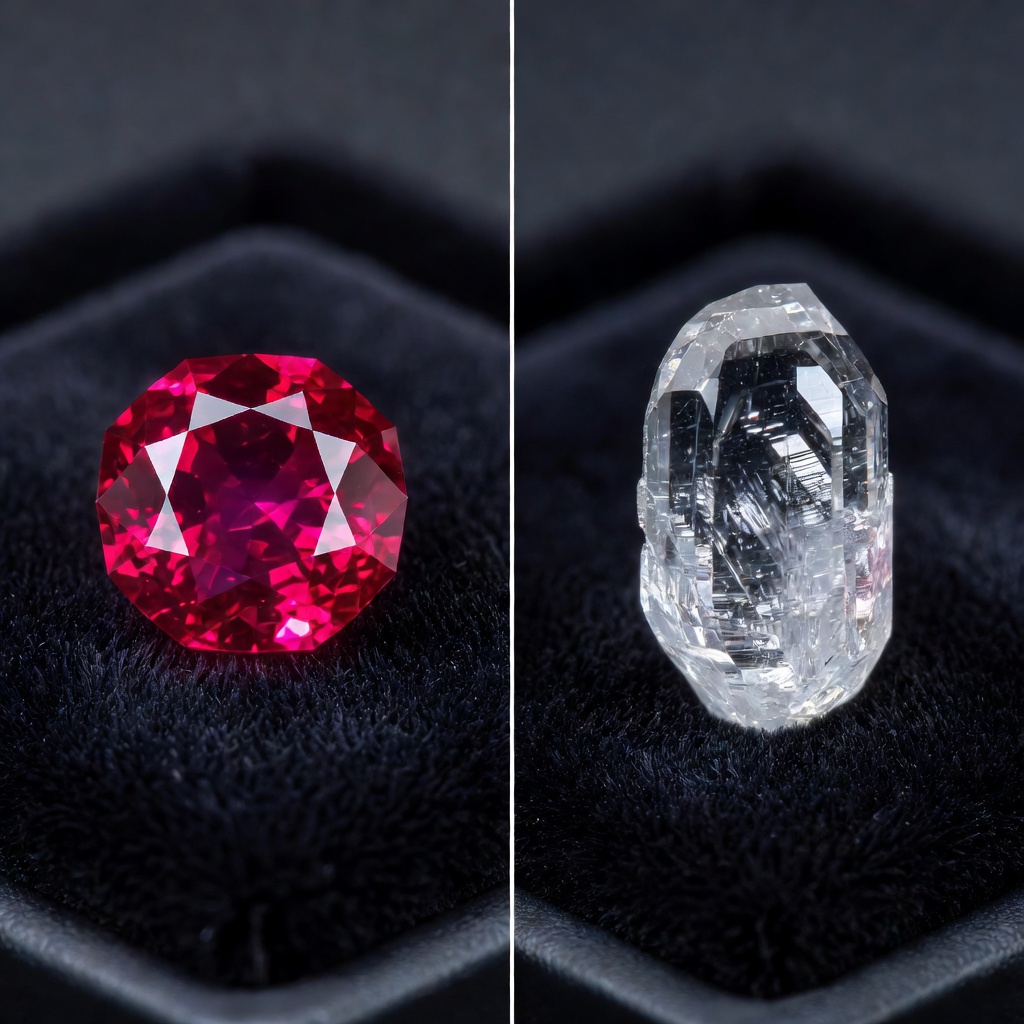
Geographic sourcing further distinguishes their rarity: Myanmar and Thailand produce the world's finest pigeon blood rubies, often commanding premium prices due to limited supply, while Brazil and Nigeria yield abundant white topaz deposits that keep market prices accessible. This rarity factor means natural rubies are significantly scarcer than white topaz, directly influencing their market positioning as luxury versus fashion jewelry components. When examining rough specimens, rubies often show hexagonal crystal habits with distinctive silk inclusions, while white topaz typically forms prismatic crystals with vertical striations and perfect cleavage planes that gem cutters must navigate carefully.
Color And Visual Characteristics
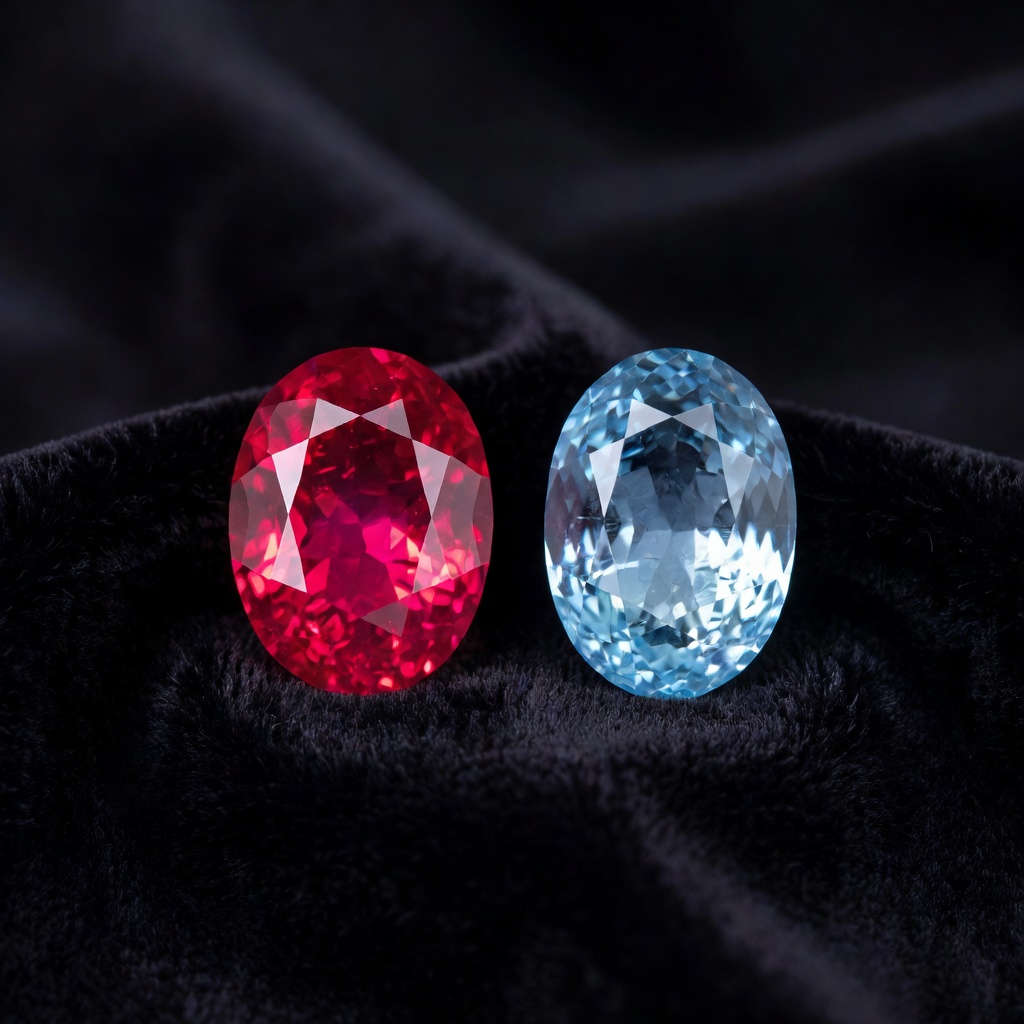
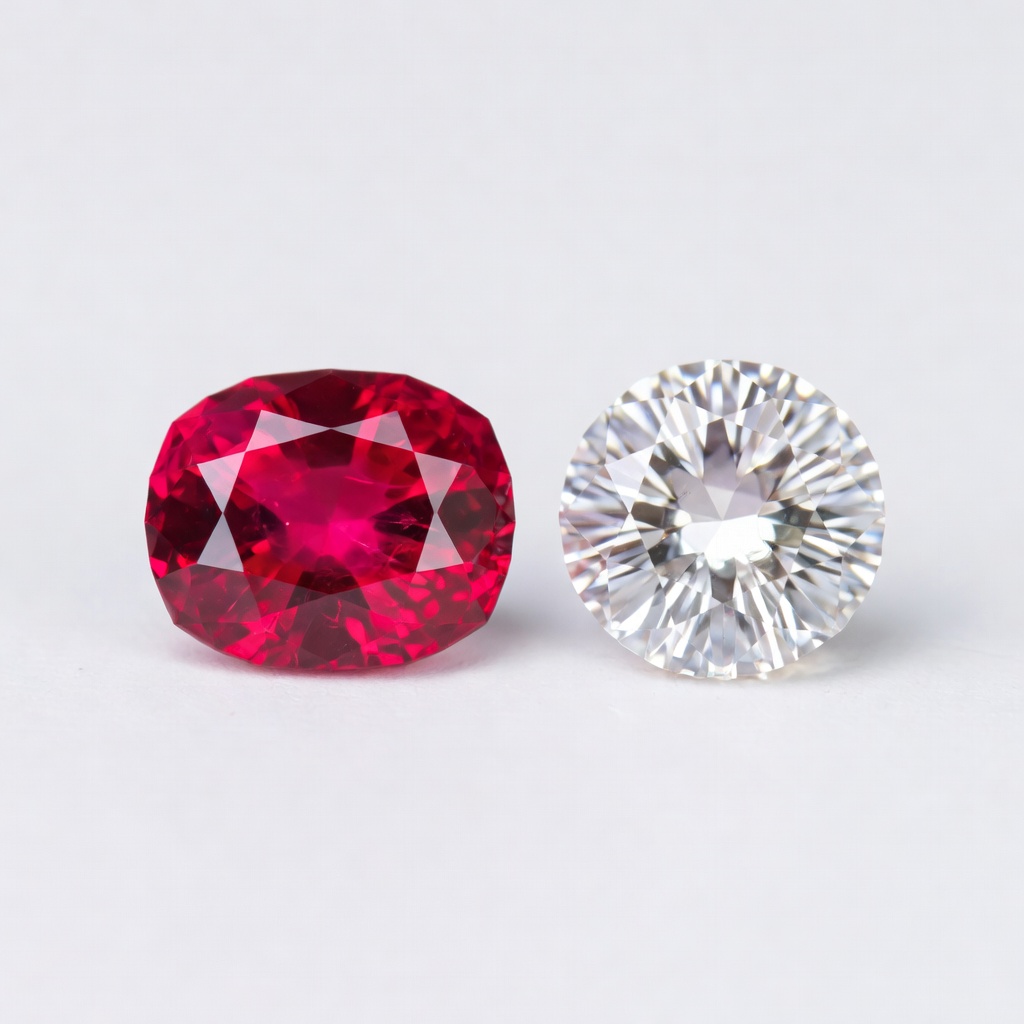
Visual distinction between these stones is immediately apparent even to untrained observers, though their optical properties reveal more subtle differences under careful examination. Ruby displays the legendary pigeon blood red, a vivid saturated hue that has symbolized passion for millennia, while white topaz offers a colorless, diamond-like appearance that serves as an affordable alternative in clear stone jewelry. The refractive index differences significantly impact white topaz brilliance compared to ruby's fire; ruby measures 1.76-1.77 on the refractive index scale, creating intense brilliance and light return, whereas white topaz registers 1.61-1.64, producing a softer, more subdued sparkle often described as watery or glassy.
Pleochroism adds complexity to ruby's appearance, showing different red shades when viewed from various angles, while white topaz maintains a single color plane regardless of viewing position. Both stones commonly undergo treatments to enhance clarity and color, with heat treatment being standard for rubies to improve red saturation, while white topaz often receives irradiation followed by heat treatment to remove any yellowish tints and achieve pure colorlessness. When shopping for either stone, always request certification documents that disclose treatments, as untreated natural rubies command significant premiums while treated white topaz should be priced accordingly as enhanced material.
Durability And Hardness Comparison
For jewelry intended for daily wear, understanding the physical limitations of each stone prevents costly disappointment and damage over time. On the Mohs hardness scale, ruby scores 9, placing it among the hardest natural substances second only to diamond, while white topaz scores 8, which though respectable, represents a significant step down in scratch resistance. However, hardness alone doesn't tell the complete story of ruby durability versus white topaz vulnerability; toughness and cleavage properties reveal critical wear considerations.
Ruby possesses no cleavage planes, meaning it resists breaking along specific structural lines and demonstrates excellent toughness against impact, whereas white topaz exhibits perfect basal cleavage, making it brittle and prone to splitting if struck at the wrong angle. For active individuals or those wearing rings during manual activities, ruby withstands impact significantly better than white topaz, which requires protective settings like bezels rather than exposed prongs to minimize chipping risks during everyday activities. If you work with your hands frequently or lead an active lifestyle involving sports or outdoor adventures, choosing ruby for ring jewelry prevents the heartbreak of discovering a chipped or split white topaz stone after accidental impact against hard surfaces.
Price And Value Analysis
The economic reality separating these stones could not be more stark, representing the difference between luxury investment and accessible fashion. Current market rates show that fine rubies can exceed $10,000 per carat for untreated Burmese specimens with exceptional color, while white topaz typically remains under $50 per carat even for larger, well-cut stones. Value factors diverge dramatically between the two: ruby pricing depends heavily on color saturation, clarity grades, and geographic origin with Burmese stones commanding significant premiums, whereas white topaz value derives primarily from size and cut quality since color variations are minimal.
From an investment perspective, high-quality rubies appreciate over time due to increasing scarcity and persistent demand from collectors, while white topaz possesses minimal resale value and functions purely as a consumable fashion item. This ruby vs white topaz price disparity reflects their market positioning, with rubies serving as luxury status symbols and portfolio diversifiers, while white topaz fills the niche of affordable gemstone alternatives for trend-conscious buyers who prioritize immediate aesthetics over long-term asset appreciation. When budgeting for a significant purchase, consider that a two-carat fine ruby might cost as much as a compact car, while a similar-sized white topaz would cost less than a dinner at a nice restaurant.
Symbolism And Cultural Significance
Beyond physical properties, these stones carry distinct energetic signatures and historical narratives that influence buyer connections. Ruby stands as the July birthstone, representing passion, protection, and royalty throughout human history, with ancient warriors embedding rubies into armor believing the stones would make them invincible in battle. White topaz serves as an April birthstone alternative for those seeking options beyond diamond, symbolizing clarity, truth, and manifestation properties that appeal to modern spiritual practitioners.
Historical context reveals rubies adorning the crowns of monarchs from India to England, where they represented divine right and prosperity, while white topaz appeared in ancient Egyptian amulets and Roman jewelry as protective talismans against injury. Modern metaphysical properties differentiate them further, with ruby associated with energy amplification, vitality enhancement, and root chakra activation, while white topaz connects to healing associations, mental clarity, and crown chakra work, making each suitable for different intentional jewelry wearing practices. When selecting birthstone jewelry as a gift, consider the recipient's birth month and personality; July babies often resonate with ruby's fiery energy, while those seeking mental clarity might prefer white topaz regardless of birth month.
Best Jewelry Applications For Each Stone
Selecting appropriate settings and jewelry types maximizes the longevity and aesthetic impact of these distinct materials. Ruby's exceptional hardness makes it ideal for engagement rings, statement cocktail pieces, and heirloom jewelry designed to last generations without showing wear, allowing for versatile setting choices including delicate prongs that expose maximum surface area to light. White topaz works perfectly for fashion jewelry, temporary trend pieces, and budget-conscious buyers who want the look of diamond without the investment, particularly excelling in earrings and pendants where impact risk remains minimal.
Setting recommendations vary significantly between the two; protective bezels or halos work best for white topaz to guard against edge chipping, while rubies tolerate any setting style including tension settings that leave the stone more exposed. Design versatility also differs, with ruby suiting vintage-inspired and bold artistic designs that complement its rich color, while white topaz complements modern minimalism and geometric settings that emphasize its clean, clear lines and contemporary aesthetic. For example, a Victorian-inspired halo setting with milgrain detailing showcases ruby's royal heritage beautifully, whereas a sleek bezel-set solitaire pendant allows white topaz to mimic the look of diamond at a fraction of the cost while protecting its vulnerable edges.
Care And Maintenance Requirements
Proper maintenance protocols extend the lifespan and beauty of both stones, though white topaz demands more vigilant attention to prevent damage. Both gemstones tolerate ultrasonic cleaners generally, but white topaz requires gentler handling due to its cleavage planes, meaning hand washing with mild soap and soft brushes proves safer than mechanical cleaning for topaz pieces. Storage considerations become crucial when protecting white topaz from harder stones; keeping white topaz jewelry in separate compartments prevents scratching from diamonds, sapphires, or rubies that could mar its surface, whereas ruby's superior hardness allows more flexible storage options.
Professional maintenance differs between the stones, with ruby needing only periodic repolishing every several years to remove minor surface scratches, while white topaz may require recutting or replacement if chipped due to its brittleness. Understanding common damage risks helps owners prevent issues; white topaz remains prone to cleavage fracturing from temperature shocks or sharp impacts, while ruby's resistance to most damage makes it virtually worry-free for everyday wear with only occasional professional inspection recommended. Create a dedicated soft pouch or lined jewelry box section specifically for white topaz pieces, and remove white topaz rings before gardening, cleaning with chemicals, or exercising to prevent the thermal shock or physical impact that could split the stone along its perfect cleavage plane.
How To Choose Between Ruby And White Topaz
Making the final selection requires honest assessment of personal circumstances, aesthetic preferences, and long-term jewelry goals. Budget constraints often drive initial decisions, with white topaz offering immediate affordability for large statement pieces under $500, while ruby requires significant investment starting in the thousands for quality specimens that justify their price through longevity. Lifestyle factors should heavily influence this gemstone comparison; active individuals, healthcare workers, or those with hands-on careers should prioritize ruby's superior hardness to avoid constant worry about damage during daily activities.
Aesthetic preferences play equally important roles, requiring buyers to choose between ruby's bold color statement that commands attention and conveys luxury versus white topaz's subtle sparkle that provides neutral elegance complementing any wardrobe color palette. Long-term goals differentiate the wise investment from the temporary accessory; those seeking heirloom potential and asset appreciation should select ruby despite higher initial costs, while shoppers wanting trendy fashion pieces for seasonal rotation find white topaz the pragmatic choice for birthstone jewelry collections that update frequently. Consider creating a decision checklist that weighs your daily activities, budget ceiling, and whether you view this purchase as a lifetime investment or a fashionable experiment before visiting jewelers.
Final Verdict: Which Gemstone Is Right For You?
After examining all technical specifications, cultural significance, and practical applications, the choice between these stones ultimately depends on your specific needs and values. The following comparison table highlights the essential differences for quick reference:
| Characteristic | Ruby | White Topaz |
|---|---|---|
| Mohs Hardness | 9 (Excellent) | 8 (Good, but cleavage issues) |
| Price Per Carat | $1,000 - $10,000+ | $10 - $50 |
| Color | Pigeon Blood Red | Colorless/White |
| Brilliance | High (RI 1.76-1.77) | Moderate (RI 1.61-1.64) |
| Best Use | Engagement rings, Heirlooms | Fashion jewelry, Earrings |
| Durability | Excellent (No cleavage) | Fair (Perfect cleavage) |
| Investment Value | Appreciates over time | Minimal resale value |
| Symbolism | Passion, Royalty, Protection | Clarity, Truth, Manifestation |
For luxury buyers seeking investment pieces that will appreciate while providing decades of wear, ruby represents the unequivocal choice despite substantial upfront costs. The stone's combination of rarity, historical significance, and physical durability justifies the ruby vs white topaz price differential for serious collectors and those celebrating major life milestones like engagements or anniversaries. Conversely, budget-conscious fashion jewelry lovers who prioritize size and immediate sparkle over longevity find white topaz an excellent entry point into fine jewelry without financial strain.
When purchasing either stone, always seek certification from reputable laboratories such as GIA or AGL for rubies, and ensure white topaz sellers disclose any treatments; purchasing from established jewelers with return policies protects your investment whether you're spending $50 or $50,000. Remember that while white topaz provides an accessible introduction to gemstone jewelry, ruby offers the permanence and prestige that defines true luxury heirlooms capable of being passed down through generations as cherished family treasures.
Frequently Asked Questions
Which Is More Expensive, Ruby Or White Topaz?
Rubies are significantly more expensive, often costing 100-200 times more per carat than white topaz. Fine quality rubies can exceed $10,000 per carat, while white topaz typically costs under $50 per carat, making it one of the most affordable transparent gemstones.
Is White Topaz A Good Alternative To Ruby?
White topaz is not an ideal alternative to ruby if you're seeking the same red color and prestige. However, it can substitute ruby's role as a durable, clear gemstone in jewelry when budget is a concern. For color similarity, red spinel or garnet would be better ruby alternatives.
Can You Wear White Topaz Everyday?
White topaz can be worn daily with caution. While its Mohs hardness of 8 is respectable, its perfect cleavage makes it prone to chipping from sharp impacts. It's best suited for earrings and pendants rather than rings for active lifestyles. Rubies are far superior for everyday wear due to their hardness 9 and lack of cleavage.
How Do I Tell Ruby And White Topaz Apart?
The color difference is immediately obvious—ruby displays rich red while white topaz is colorless. For testing, rubies are heavier (specific gravity 4.0 vs 3.5) and show stronger brilliance. A jeweler can distinguish them using a refractometer or by examining inclusions under magnification.
Which Gemstone Is Better For An Engagement Ring?
Ruby is superior for engagement rings due to its exceptional durability (9 on Mohs scale), rarity, and symbolism of passion and commitment. White topaz is not recommended for engagement rings worn daily because it's more prone to scratching and cleavage damage over time, though it works for budget-conscious temporary settings.
Do Rubies And White Topaz Have Different Meanings?
Yes, they carry distinct symbolism. Rubies represent passion, protection, courage, and prosperity, historically worn by royalty. White topaz symbolizes clarity, truth, manifestation, and is associated with healing energy. Ruby is July's birthstone, while white topaz serves as an alternative April birthstone.
What Is The Hardness Difference Between Ruby And White Topaz?
Ruby scores 9 on the Mohs hardness scale, making it extremely durable and second only to diamond. White topaz scores 8, which is still hard but significantly softer. This difference means ruby resists scratches from nearly all substances, while white topaz can be scratched by harder materials like sapphires or diamonds.
Does White Topaz Sparkle Like A Ruby?
No, they sparkle differently. Ruby has a higher refractive index (1.76-1.77) producing more intense brilliance and fire. White topaz (1.61-1.64) has less dispersion, creating a more subdued, watery sparkle. Ruby's crystal structure also creates unique light reflection patterns that white topaz cannot replicate.