Ruby vs White Sapphire: The Ultimate Guide to Choosing Your Perfect Precious Gem
When selecting a gemstone for fine jewelry, the debate between ruby and white sapphire often emerges as a compelling choice between vivid color and timeless clarity. Both stones belong to the prestigious corundum family, sharing exceptional durability and brilliance while offering distinctly different aesthetic appeals. Understanding the nuanced differences between these precious gems empowers collectors and jewelry enthusiasts to make informed decisions that align with their personal style, budget constraints, and lifestyle requirements. This comprehensive comparison explores every aspect of these magnificent stones, from their geological origins to their practical applications in modern jewelry design.
Understanding Corundum: The Mineral Connection
Ruby and white sapphire represent two color varieties of the same mineral species, aluminum oxide (Al₂O₃), which crystallizes in the trigonal crystal system to form exceptionally hard gemstones. The fundamental distinction between these corundum gemstones lies entirely in their trace element composition during formation millions of years ago. While chromium impurities create the saturated red hues characteristic of ruby, the absence of significant trace elements results in the pure, colorless appearance of white sapphire. This shared mineralogical foundation means both stones exhibit identical refractive indices and specific gravities, making them chemically indistinguishable without spectroscopic analysis.
Major mining operations for both varieties concentrate in specific geological regions known for producing exceptional quality stones. Myanmar (formerly Burma) historically produces the finest pigeon blood rubies alongside premium white sapphires, while Sri Lanka (Ceylon) yields stones with exceptional clarity and slightly different trace element signatures. Madagascar has emerged as a significant source for both varieties in recent decades, offering stones with unique characteristics that appeal to contemporary designers. When sourcing these gemstones, reputable dealers often provide origin documentation, as Burmese rubies command premium prices compared to their Thai or African counterparts, whereas Ceylon white sapphires frequently display superior brilliance due to their specific geological formation conditions.
Practical Identification Tips for Collectors
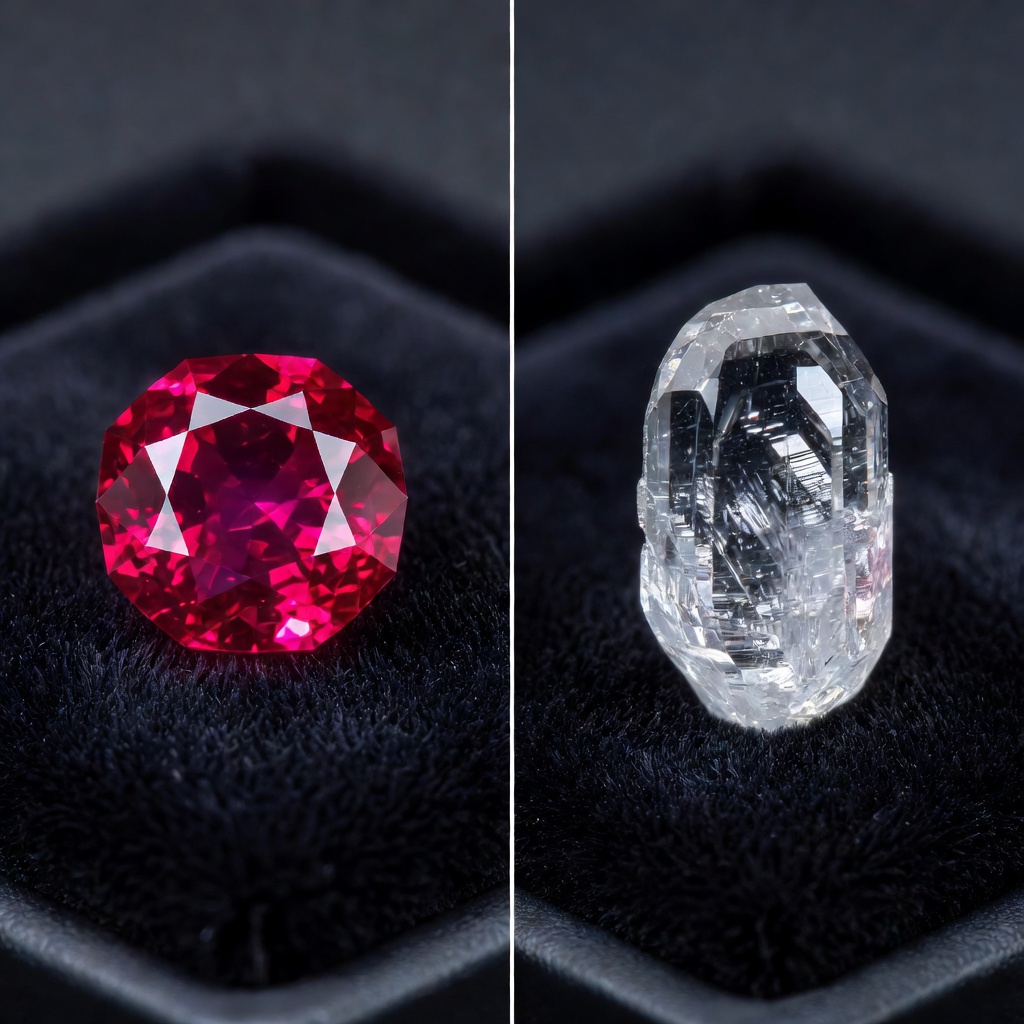
Gemology laboratories utilize advanced spectroscopy to differentiate between these corundum varieties, but collectors can observe several visual cues when examining loose stones. Ruby typically displays strong red fluorescence under ultraviolet light due to chromium content, while white sapphire remains inert or shows weak fluorescence. When examining rough specimens, ruby often presents with a distinct hexagonal crystal habit and may show parting planes, whereas white sapphire crystals tend toward barrel-shaped formations with different surface textures. For practical purchasing decisions, always request certification from recognized laboratories such as GIA or AGL when investing in high-value specimens, as these documents definitively establish the variety and any treatment history.
Visual Differences: Color, Brilliance, and Clarity
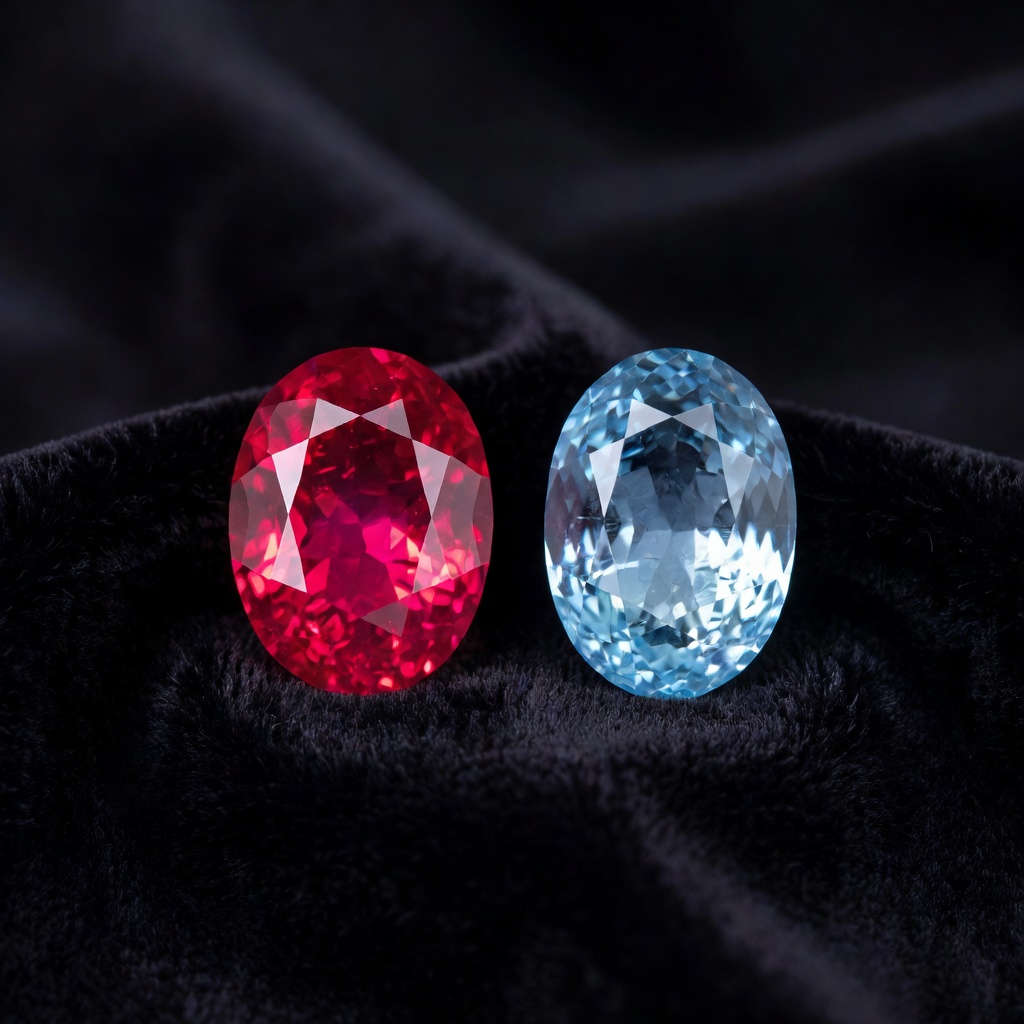
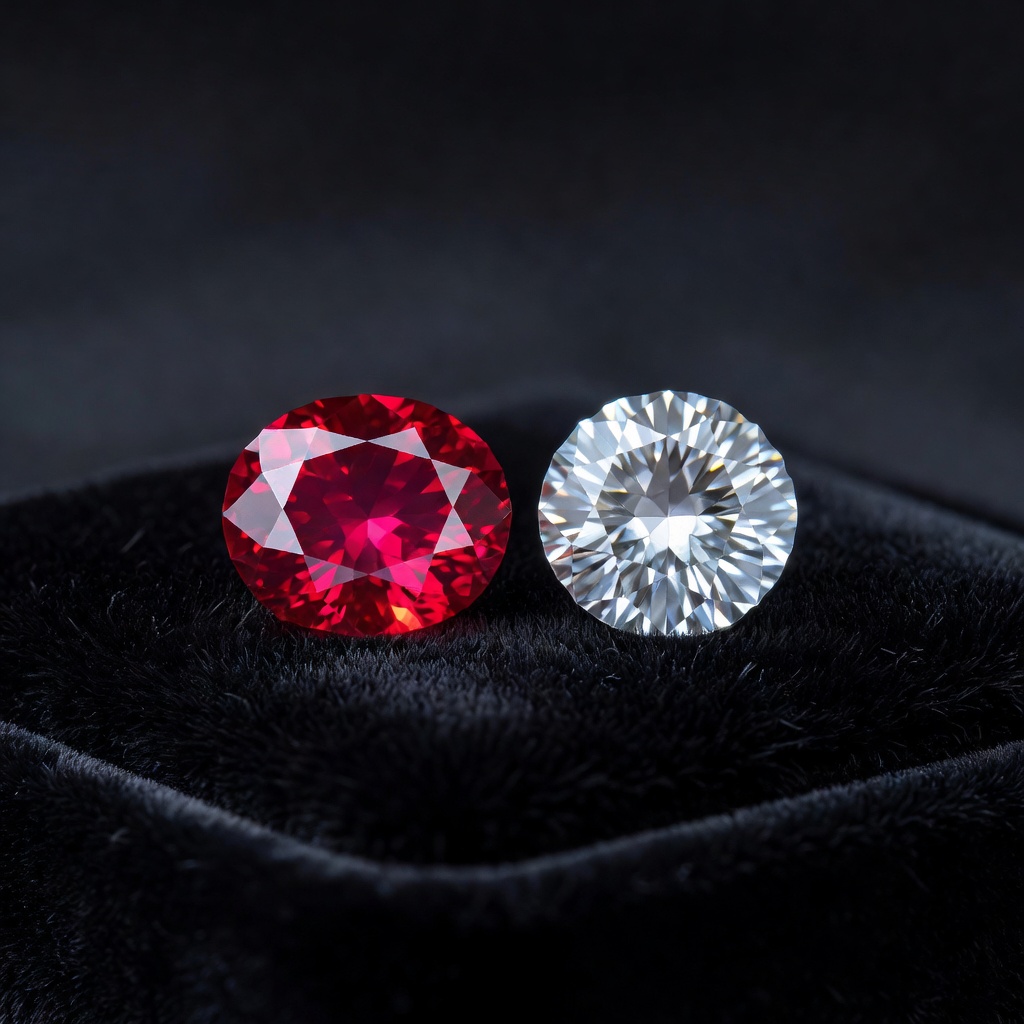
The most immediate distinction between these gemstones manifests in their color presentation and optical performance under various lighting conditions. Ruby spans a spectrum from delicate pinkish-red to the coveted deep pigeon blood red, with the most valuable stones displaying a pure, vivid red with subtle blue undertones that create a glowing, almost internal illumination. This phenomenon, known as fluorescence, causes fine rubies to appear almost lit from within, particularly in natural daylight or incandescent lighting. Conversely, colorless sapphire offers a diamond-like transparency that emphasizes cut precision and purity, though it lacks the dispersion (fire) that makes diamonds sparkle with rainbow flashes, instead presenting a more subdued, "soft" brilliance that many collectors describe as sophisticated rather than flashy.
Gemstone clarity characteristics differ significantly between these varieties due to their distinct formation environments and inclusion patterns. Rubies frequently contain rutile needle inclusions, commonly called "silk," which create a velvety texture that actually enhances the stone's value when minimal and evenly distributed, as seen in classic Burmese stones. These silk inclusions can also indicate that a ruby has not undergone high-heat treatment, making them desirable to certain collectors. White sapphires, however, typically exhibit growth zoning, tiny gas bubbles, or crystal inclusions that appear as wispy feathers or clouds, with the finest specimens displaying exceptional transparency that rivals high-quality diamonds. When selecting white sapphires for jewelry, examine the stone against a white background to detect any milkiness or cloudiness that might detract from its diamond-like appearance.
Case Study: Lighting Considerations for Jewelry Design
A recent commission for a dual-stone pendant illustrated these optical differences perfectly when a client requested both stones in a complementary setting. The ruby component displayed dramatically different personalities under LED versus natural lighting, with its red hue deepening to almost burgundy under artificial light while maintaining vivid crimson in sunlight. The accompanying white sapphire remained consistently bright across all lighting conditions but revealed slight zoning patterns only visible under magnification with fiber-optic lighting. This case demonstrates why rubies excel in statement pieces designed for evening wear where incandescent lighting enhances their glow, while white sapphires serve better in daytime jewelry or professional settings requiring consistent, neutral sparkle.
Durability and Hardness Comparison
Both ruby and white sapphire rank 9 on the Mohs hardness scale, placing them immediately below diamond and making them excellent candidates for daily wear jewelry including engagement rings and bracelets. This exceptional gemstone hardness ensures resistance to scratching from everyday encounters with household dust (which contains silica at hardness 7) or accidental contact with metal objects. However, hardness measures only scratch resistance, not overall durability, which requires consideration of toughness—the resistance to breaking or chipping under impact. Rubies containing significant rutile silk or surface-reaching inclusions may exhibit slightly reduced toughness compared to clean white sapphires, though both remain far tougher than stones like emeralds or tanzanite.
The structural integrity of these corundum varieties makes them suitable for various jewelry settings, though specific precautions optimize their longevity. Heat resistance poses minimal concern for untreated stones, as corundum melts at approximately 2,040 degrees Celsius, well above jewelry repair temperatures. However, fracture-filled rubies or diffused stones require special care during maintenance procedures. For active lifestyles, white sapphires often provide practical advantages due to their typically cleaner crystal structures, while rubies with heavy inclusions might benefit from protective bezel settings rather than exposed prong mounts. Both stones withstand ultrasonic cleaning when untreated, though steam cleaning should be avoided for stones with unknown treatment histories.
Setting Recommendations for Active Lifestyles
Consider the experience of a marathon runner who commissioned an engagement ring requiring maximum durability during daily training. The jeweler recommended a white sapphire in a full bezel setting of platinum, creating a protective frame that shielded the girdle from impacts while the stone's inclusion-free structure provided uniform toughness throughout the crystal. In contrast, a vintage ruby ring worn primarily for special occasions might safely utilize delicate prong settings that maximize light return, as the stone faces less risk of sharp impacts during occasional wear. These practical applications demonstrate how gemstone selection should align with actual wearing conditions rather than theoretical durability metrics alone.
Detailed Comparison: Ruby vs White Sapphire Characteristics
| Characteristic | Ruby | White Sapphire |
|---|---|---|
| Mohs Hardness | 9 (Excellent scratch resistance) | 9 (Excellent scratch resistance) |
| Color Range | Pinkish-red to deep pigeon blood red | Colorless to slightly milky white |
| Brilliance & Fire | Subtle glow with strong fluorescence | Diamond-like but minimal fire/dispersion |
| Typical Inclusions | Rutile needles (silk), crystals, fingerprints | Growth zoning, feathers, crystal inclusions |
| Price per Carat (High Quality) | $5,000 - $25,000+ (Burmese untreated) | $200 - $800 (Natural, unheated) |
| Toughness | Good to Fair (variable with inclusions) | Excellent (consistent structural integrity) |
| Best Jewelry Applications | Statement rings, cocktail jewelry, pendants | Engagement rings, bridal sets, daily wear |
| Investment Potential | High historical appreciation | Stable value, modest appreciation |
| Heat Resistance | Excellent (untreated stones) | Excellent |
| Cleaning Safety | Ultrasonic safe (if untreated) | Ultrasonic and steam safe |
Price Analysis and Investment Value
The precious gems comparison reveals dramatic disparities in market valuation between these corundum siblings, driven primarily by rarity and cultural demand factors. Natural untreated rubies, particularly those originating from Myanmar's Mogok Valley, command prices exceeding $10,000 per carat for fine qualities, with exceptional pigeon blood specimens reaching auction prices of $100,000+ per carat. This valuation reflects not only geological scarcity—fine ruby crystals are significantly rarer than diamond crystals of equivalent quality—but also centuries of royal association and cultural significance across Asian and European markets. Heat-treated rubies offer more accessible entry points at $1,000-$5,000 per carat, though they lack the investment trajectory of their untreated counterparts.
White sapphire occupies a distinctly different market position as an affordable luxury alternative, typically retailing between $200-$800 per carat for fine quality natural stones. This pricing structure positions colorless sapphire as an economical substitute for diamonds, offering similar hardness and clarity at approximately 10-20% of the cost of equivalent-sized diamonds. While white sapphires do not appreciate significantly as investments, they provide excellent value retention for bridal jewelry and offer budget-conscious consumers access to large, eye-clean stones that would be prohibitively expensive in diamond or ruby. For investors seeking long-term appreciation, Burmese rubies with documented untreated status and SSEF or Gübelin certification historically outperform colored gemstones as a category, showing steady appreciation even during economic downturns when other luxury assets falter.
Budget Optimization Strategies for Different Buyers
A recent analysis of three-carat gemstone purchases illustrates these economic distinctions clearly. A client seeking maximum visual impact within a $5,000 budget could acquire a heated ruby of modest color or a exceptional white sapphire with diamond-like clarity and precision cutting. Alternatively, the same budget might secure a small (0.75-carat) untreated Burmese ruby of exceptional quality, suitable as a starter investment piece. For engagement ring shoppers prioritizing size and durability over color, white sapphires enable three-carat center stones within reasonable budgets, while ruby engagement rings typically feature one-carat or smaller center stones unless significantly heated or included. These trade-offs require honest assessment of priorities: color intensity and rarity versus size, clarity, and versatility.
Symbolism, Meaning, and Cultural Significance
Ruby carries profound symbolic weight as the July birthstone and the traditional gift for 40th wedding anniversaries, representing passion, protection, and vitality across numerous cultural traditions. Ancient Burmese warriors embedded rubies into their flesh before battle, believing the stones made them invincible, while Hindu texts describe ruby as the "king of precious stones" and associate it with the sun and the power of life. Medieval European royalty prized rubies above all other gems, believing they warned of danger by darkening in color when poison was present. This rich historical tapestry imbues ruby jewelry with narrative depth beyond mere decoration, making it particularly meaningful for milestone celebrations or as heirloom pieces passed through generations.
White sapphire embodies distinctly different but equally compelling symbolism, representing purity, clarity of thought, and wisdom derived from its colorless transparency and association with the crown chakra in metaphysical traditions. As a colorless sapphire, it serves as a modern alternative for April birthstone jewelry (traditionally diamond) and appeals to individuals seeking spiritual clarity or new beginnings. The Art Deco period particularly embraced white sapphires for their geometric precision and icy brilliance, associating them with modernity, progress, and sophisticated elegance. Contemporary couples increasingly select white sapphires for engagement rings to symbolize transparent communication and pure intentions in their relationships, while the stone's affordability allows for larger carat weights that symbolize abundance without ostentation.
Cultural Applications in Modern Gift-Giving
When selecting symbolic jewelry, consider the recipient's personality and life stage. A graduating medical student might appreciate white sapphire earrings representing the clarity of diagnosis and purity of healing intentions, while a partner celebrating a July birthday or 40th anniversary resonates deeply with ruby's associations with enduring passion. Corporate gifting protocols increasingly utilize white sapphire for recognition awards, as the neutral color avoids personal color preferences while maintaining precious gem status. Conversely, ruby remains the definitive choice for romantic gestures expressing intense emotion or protective wishes, particularly in cultures with strong Asian influence where red symbolizes luck and prosperity.
Jewelry Applications and Setting Recommendations
Ruby excels in jewelry designs that emphasize bold color and vintage aesthetics, particularly when paired with warm metal tones that enhance its red saturation. Yellow gold and rose gold settings create striking contrast that makes the red appear more vivid, while antique-inspired designs featuring milgrain details and filigree work complement ruby's historical associations. Statement rings, cocktail jewelry, and pendants showcase ruby most effectively, as these pieces position the stone where lighting maximizes its fluorescence and color depth. When designing with ruby, jewelers often utilize bezel settings or partial bezels for stones with surface-reaching inclusions, protecting vulnerable areas while maintaining visual accessibility to the crown facets.
Colorless sapphire finds its strongest expression in contemporary bridal jewelry and minimalist designs that emphasize geometric precision and optical clarity. Platinum and white gold settings create seamless color continuity that enhances the stone's diamond-like appearance, while modern solitaire settings or sleek channel-set bands complement white sapphire's crisp, neutral aesthetic. For engagement rings, white sapphire performs optimally in brilliant round cuts or cushion cuts that maximize light return, though step cuts like emerald or Asscher styles may reveal clarity characteristics more readily. Unlike ruby, which often serves as the singular focal point, white sapphire integrates beautifully into multi-stone designs alongside colored gems or as accent stones to center diamonds.
Protective Settings for Different Lifestyles
Active professionals or outdoor enthusiasts should consider low-profile bezel settings for white sapphire engagement rings, which protect the girdle from chipping during rock climbing, weightlifting, or gardening activities. A case study involving a veterinary surgeon illustrates this principle: her white sapphire ring in a half-bezel platinum setting survived five years of daily animal handling without damage, whereas a previous prong-set ruby had chipped during a similar career period due to impact against metal examination tables. For ruby statement pieces intended for evening wear, elevated prong settings in 18k yellow gold maximize light penetration and color display, accepting the trade-off of vulnerability since the ring faces minimal risk during dinner parties or theater attendance.
Quality Grading and Certification Standards
The Ruby vs White Sapphire evaluation process requires understanding divergent grading priorities established by major laboratories like GIA, AGL, and SSEF. Ruby grading emphasizes color saturation above all other factors, with "pigeon blood" red—describing stones with strong red fluorescence and slight blue undertones—commanding premium prices regardless of minor inclusions. Clarity remains secondary for rubies, with collectors accepting visible inclusions (termed "jardin" or garden) provided they do not significantly impact transparency or durability. Cut quality affects value less dramatically than in diamonds, as ruby cutters prioritize weight retention from rough crystals over optical precision, often resulting in deep pavilions or asymmetrical outlines that maximize carat yield from expensive rough material.
White sapphire grading conversely prioritizes cut proportions and optical performance, similar to diamond evaluation, because the absence of color places focus entirely on brilliance and pattern. The finest white sapphires display no yellow, gray, or brown undertones and lack the "sleepiness" or milkiness caused by microscopic inclusions or scattering. Certification for white sapphires should confirm natural origin rather than synthetic manufacture, as lab-created sapphires flood the market at significantly lower prices. For both varieties, disclosure of heat treatment status remains crucial: while heat treatment is standard and accepted in the trade for improving color and clarity, untreated natural rubies carry premiums of 300-500% over heated equivalents, whereas heat treatment minimally affects white sapphire pricing since the process primarily benefits colored varieties.
Decoding Laboratory Reports for Consumers
When reviewing certification documents, look for specific terminology that indicates quality and treatment. For rubies, seek reports stating "no indications of heating" or "natural, unheated" for investment pieces, while "heated" or "H" indicates standard acceptable treatment. The origin designation significantly impacts value, with "Burma (Myanmar)" commanding highest prices followed by "Mozambique" and "Madagascar." For white sapphires, clarity grades such as "eye-clean" or "loupe-clean" indicate absence of visible inclusions, while color descriptions should read "colorless" rather than "white" (which sometimes indicates cloudiness). Reputable laboratories include photomicrographs of distinctive inclusions, providing "fingerprints" that verify identity if the stone is ever unset from its mounting.
Care, Maintenance, and Long-term Preservation
Both corundum varieties tolerate standard jewelry cleaning methods, though specific protocols ensure longevity and preserve any treatments the stones may have received. Warm soapy water (mild dish soap) and a soft-bristled toothbrush safely remove accumulated lotions and oils from both ruby and white sapphire, restoring brilliance without risking damage. Ultrasonic cleaners generally prove safe for untreated stones but should be avoided for fracture-filled rubies or stones with significant surface-reaching inclusions that might expand under vibration. Steam cleaning presents minimal risk for natural white sapphires and untreated rubies, though jewelers should exercise caution with heat-treated stones or those mounted in temperature-sensitive settings containing organic materials like wood or certain adhesives.
Storage practices require attention to prevent accidental damage to softer gemstones in your collection, as both ruby and white sapphire can scratch softer materials like opal, pearl, or turquoise. Store these hard stones in separate compartments or soft cloth pouches, or place them in a jewelry box with individual padded slots. Annual professional maintenance should include prong inspection for rings, as the metal may wear down before the gemstone shows damage, particularly for white sapphire engagement rings worn daily. For heirloom ruby pieces, consider periodic re-polishing of the table facet if surface abrasion from decades of wear creates a "glazed" appearance, a service that removes microscopic scratches and restores luster without significant carat weight loss.
Maintenance Schedules for Different Usage Patterns
Daily-worn white sapphire rings benefit from professional cleaning and prong inspection every six months, particularly for rings worn during hand-intensive activities like typing or cooking, which stress the mounting. Ruby jewelry worn weekly rather than daily requires annual inspection unless subjected to specific trauma like being knocked against hard surfaces. For investment-grade untreated rubies stored primarily in safes, maintain humidity-controlled environments to prevent potential degradation of any oil treatments (though modern rubies rarely receive oiling compared to emeralds), and photograph stones annually under consistent lighting to document any potential changes in appearance that might indicate necessary treatment or cleaning.
Making the Final Decision: Which Stone Wins?
Determining the superior choice in the Ruby vs White Sapphire debate ultimately depends on individual priorities regarding color expression, budget parameters, and lifestyle compatibility. Ruby suits individuals seeking bold personality statements, those with July birthdays or anniversary milestones, and collectors focused on investment-grade natural gemstones with historical appreciation trajectories. The stone demands acceptance of its velvety inclusions and commands higher financial investment, rewarding owners with unparalleled color intensity and cultural prestige. Conversely, white sapphire appeals to practical romantics seeking diamond-like aesthetics without premium pricing, individuals preferring neutral versatility that coordinates with any wardrobe color, and active professionals requiring maximum durability without compromise.
Budget considerations heavily influence this decision, as white sapphire enables substantial carat weights and elaborate settings within modest budgets, while ruby requires significant investment for fine quality or acceptance of smaller stones with visible inclusions. Color preference versus neutrality presents another critical fork: ruby demands commitment to red as a signature color, limiting coordination with certain clothing palettes but providing unmatched vibrancy, whereas white sapphire offers chameleon-like adaptability across fashion styles and color schemes. For engagement rings specifically, white sapphire provides practical daily wear characteristics and modern aesthetic alignment, while ruby engagement rings suit unconventional romantics comfortable with bold color as a permanent fixture on their dominant hand.
Decision Matrix for Prospective Buyers
Create a simple scoring system weighing your priorities: assign values to factors such as "daily wear durability" (white sapphire advantages), "investment potential" (ruby advantages), "color preference" (subjective), and "budget efficiency" (white sapphire advantages). If three or more categories favor one stone, that variety likely suits your needs best. Consider hybrid approaches as well: many collectors maintain a white sapphire ring for daily professional wear while reserving a ruby pendant or cocktail ring for special occasions, enjoying the benefits of both without compromise. Ultimately, both stones represent excellent choices within the corundum family, with your individual story and aesthetic vision determining which gem truly wins your heart.
Frequently Asked Questions
Is white sapphire as hard as ruby?
Yes, both white sapphire and ruby rank 9 on the Mohs hardness scale since they are both varieties of corundum. This makes them equally resistant to scratching and suitable for daily wear in rings and bracelets.
Which is more expensive, ruby or white sapphire?
Ruby is significantly more expensive than white sapphire. High-quality natural rubies, especially Burmese stones, can cost thousands per carat, while white sapphires are relatively affordable and often used as diamond alternatives.
Can white sapphire replace a diamond in an engagement ring?
White sapphire can substitute for diamonds as a more affordable option, though it lacks the fire and brilliance of diamonds. It offers excellent hardness for daily wear but has a more subdued, 'soft' sparkle compared to diamond's intense scintillation.
Do rubies and white sapphires look similar?
No, they look distinctly different. Rubies display vivid red to pinkish-red colors, while white sapphires are colorless and transparent. White sapphires can resemble diamonds or moissanite, but never look like rubies.
Is ruby or white sapphire better for daily wear?
Both are excellent for daily wear due to their 9/10 Mohs hardness. However, white sapphire might be slightly more practical for active lifestyles as it lacks the inclusions (silk) found in many rubies that can create structural weakness.
What causes the red color in ruby versus the clear appearance of white sapphire?
Ruby's red color comes from chromium trace elements in the corundum crystal structure. White sapphire is colorless because it lacks these trace elements, consisting of pure aluminum oxide without chromophores.
Are treated rubies and white sapphires worth buying?
Heat-treated rubies and white sapphires are common and acceptable in the jewelry trade, offering improved color and clarity at more accessible prices. However, untreated natural rubies command premium prices for investment purposes.
Can you wear ruby and white sapphire together in the same jewelry piece?
Yes, ruby and white sapphire complement beautifully in two-stone or three-stone designs. The contrast between vivid red and colorless white creates striking visual appeal, and their matching hardness ensures neither will scratch the other.