Understanding Ruby vs Tsavorite Garnet: A Comprehensive Colored Stone Comparison
When collectors and jewelry enthusiasts seek gemstones that represent the absolute pinnacle of their respective color families, the conversation inevitably turns to the extraordinary comparison between ruby and tsavorite garnet. Ruby, a member of the prestigious corundum family and one of the traditional "big three" colored stones alongside sapphire and emerald, has captivated civilizations for millennia with its intense red fluorescence and regal associations. In contrast, tsavorite garnet, discovered only in 1967 by Scottish geologist Campbell Bridges in Tanzania's Tsavo National Park region, represents the rare grossular garnet variety that has rapidly ascended to become one of the most sought-after green gemstones in modern luxury markets. Despite occupying opposite ends of the color spectrum, these two exceptional stones share remarkable similarities in rarity, geological scarcity, and investment potential that make this Ruby vs Tsavorite Garnet comparison essential for serious gemstone buyers, collectors, and jewelry designers seeking to understand the nuanced differences between legendary pedigree and contemporary rarity.
Geological Origins and Formation Differences
The distinct geological journeys of ruby and tsavorite garnet fundamentally influence their availability, crystal characteristics, and ultimate value propositions in the global gemstone market. Rubies form primarily within metamorphic marble deposits in Myanmar's legendary Mogok Valley, where aluminum-rich rocks subjected to intense heat and pressure create the chromium-infused corundum crystals that define the finest specimens. Secondary deposits in Mozambique's Montepuez region and Madagascar's Andilamena district occur within basalt formations, producing stones with different trace element compositions and typically darker, more iron-rich color profiles than their Burmese counterparts. These formation environments require specific tectonic conditions where limestone interacts with aluminum-bearing minerals under temperatures exceeding 800 degrees Celsius, creating the hexagonal crystal structures that cutters must navigate to maximize color and brilliance.
Tsavorite garnet originates through entirely different geological mechanisms, forming exclusively within metasomatic rocks along contact zones between graphite gneiss and limestone in East Africa's unique mineral belts. The Scorpion Mine in Kenya and various deposits near Arusha, Tanzania, represent the primary sources for this rare green garnet, where beryllium-rich fluids altered existing rock compositions to create the grossular garnet crystals colored by vanadium and chromium. Unlike ruby's widespread historical deposits across Asia, tsavorite's limited geographic occurrence within a narrow belt of East African geology means that supply constraints are inherent and permanent, with no significant discoveries outside this region despite extensive global exploration. Environmental factors including weathering patterns and host rock stability affect crystal size significantly, with most tsavorite rough yielding finished stones under one carat, whereas ruby occasionally produces exceptional crystals exceeding ten carats in regions like Myanmar's Mogok Stone Tract.
Visual Characteristics and Color Spectrum Analysis
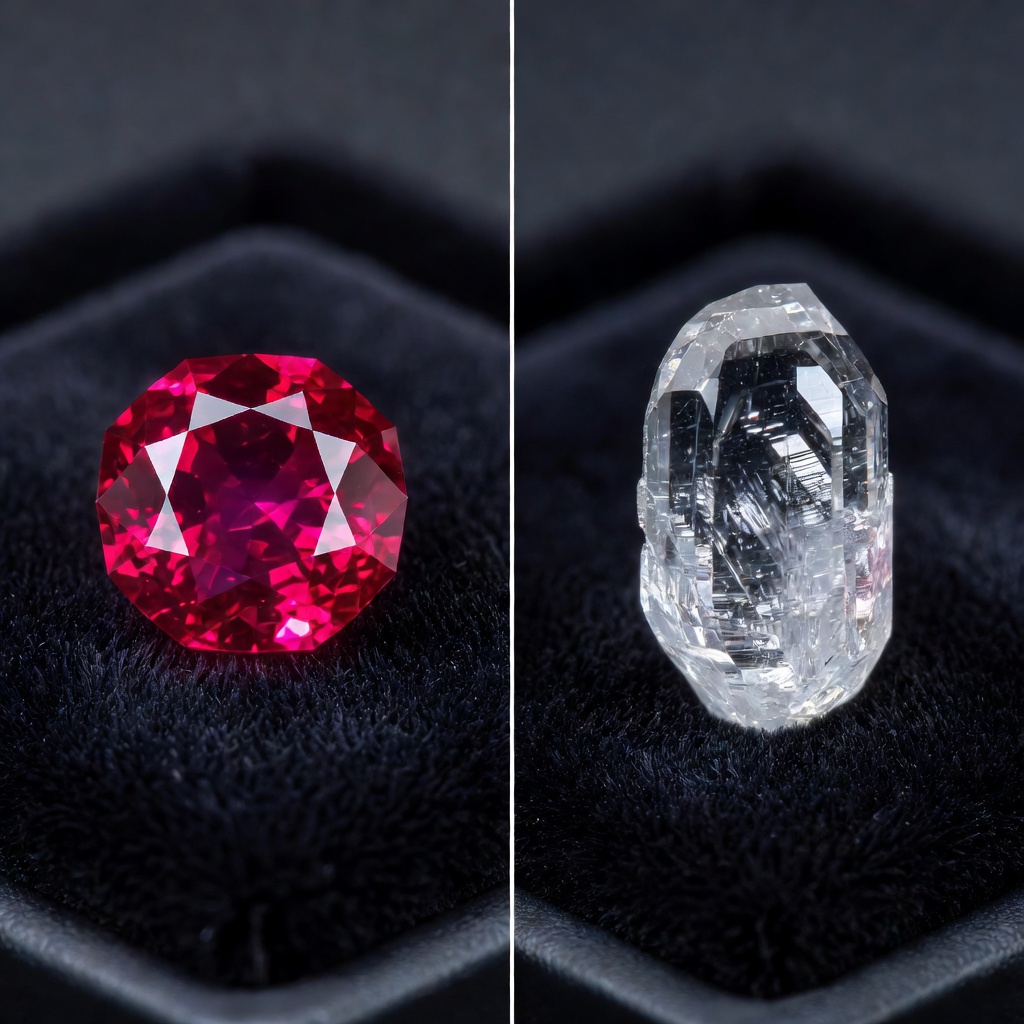
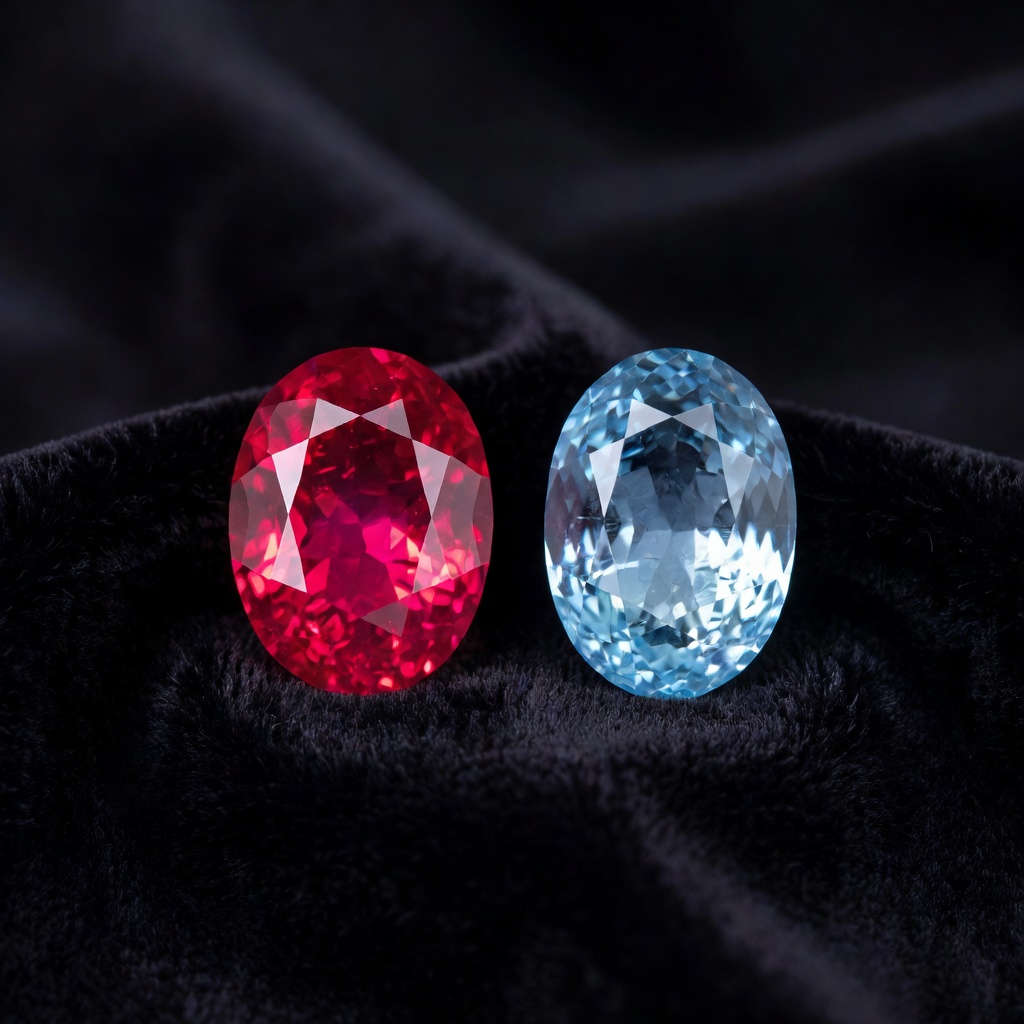
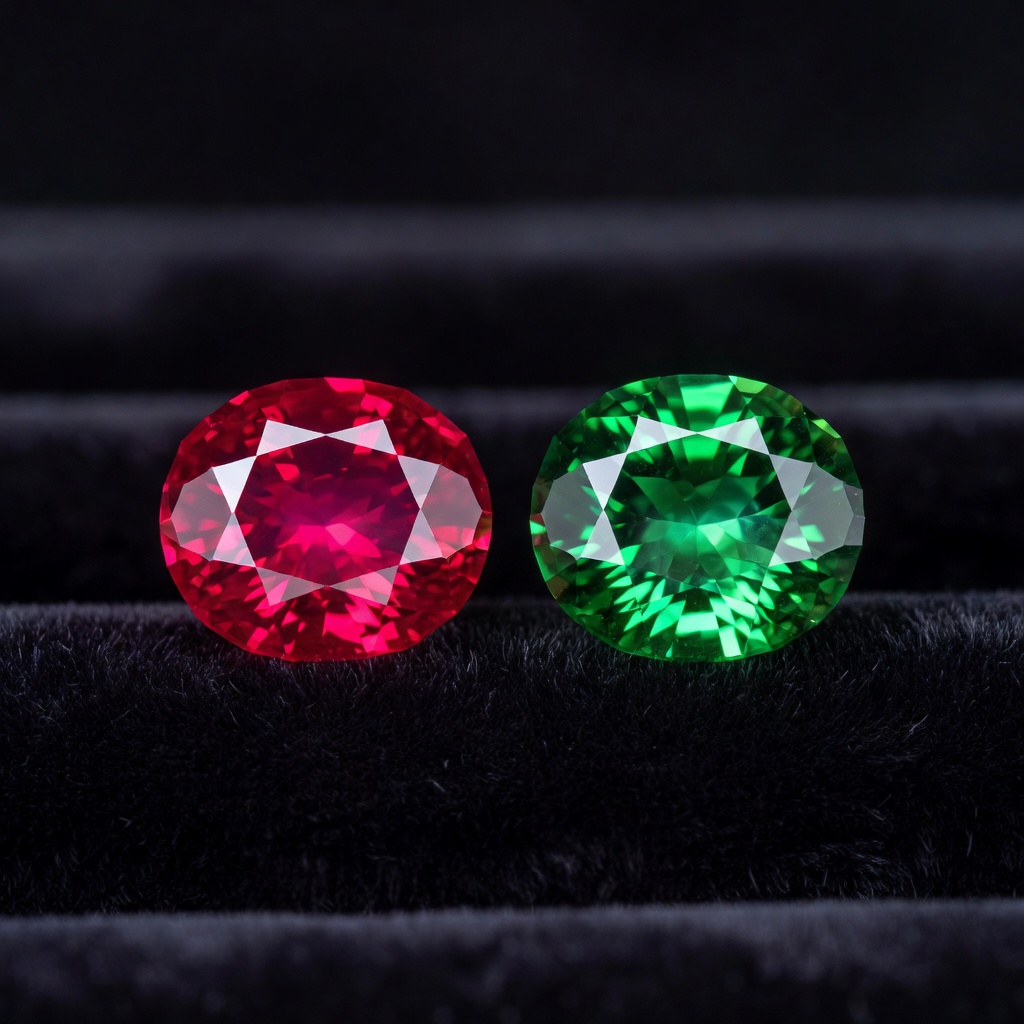
The visual distinction between Green garnet vs red ruby extends far beyond basic hue differences, encompassing complex interactions of trace elements, fluorescence, and crystallographic properties that define each stone's unique beauty. Rubies derive their color primarily from chromium substitution within the corundum lattice, creating the legendary "pigeon blood" red that exhibits strong red fluorescence under ultraviolet light, a phenomenon that causes these stones to appear internally illuminated even under incandescent lighting. The finest Burmese rubies display a pure, saturated red with a slight blue undertone that intensifies rather dulls under artificial light, while African and Thai rubies often show darker, more garnet-like tones due to higher iron content that suppresses fluorescence. Clarity standards for ruby accommodate the presence of rutile needle inclusions, commonly called "silk," which can actually enhance value when minimal and properly oriented, sometimes creating the coveted star effect known as asterism in cabochon cuts.
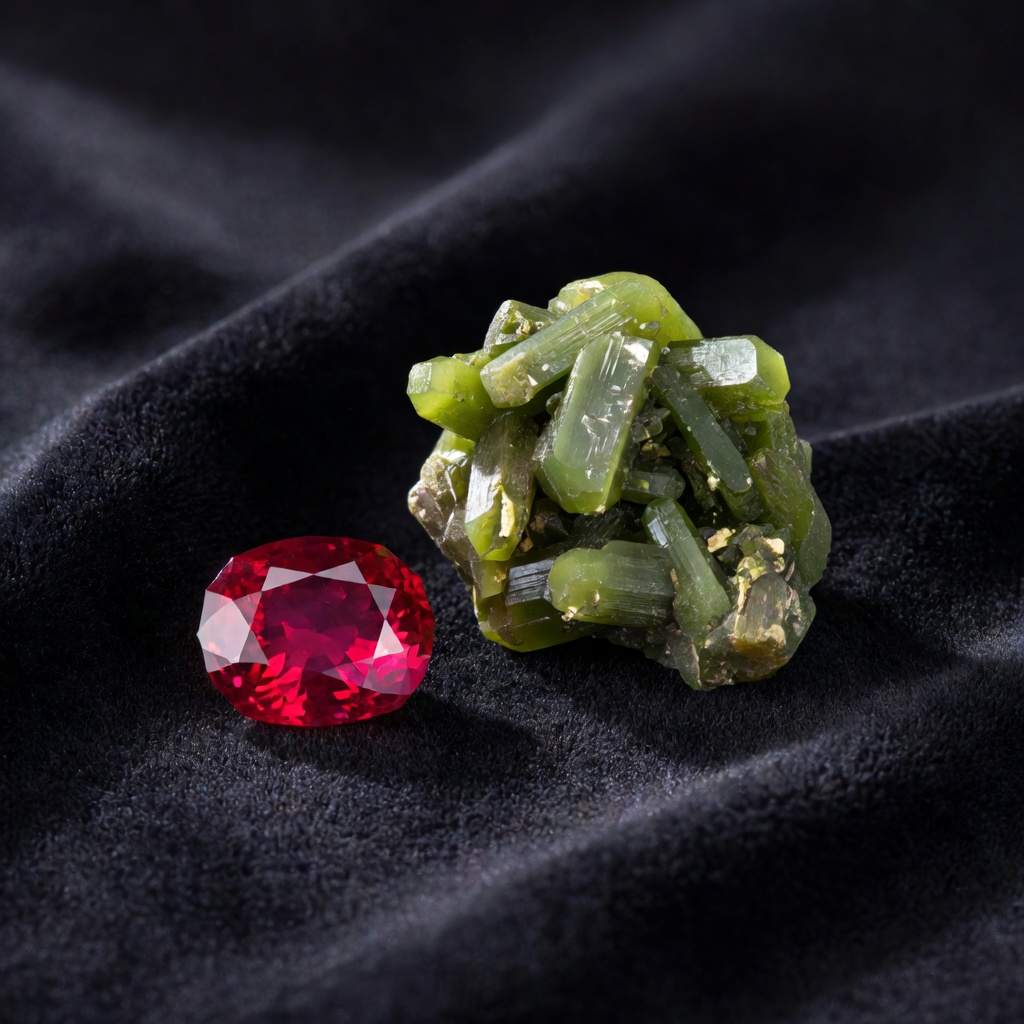
Tsavorite garnet presents a vivid emerald-green to mint green color palette caused by the simultaneous presence of vanadium and chromium within the grossular garnet structure, offering a brilliance and fire that often exceeds that of emerald due to higher refractive indices and superior clarity. Unlike ruby's characteristic inclusions, tsavorites typically present eye-clean appearances with high transparency, though collectors occasionally encounter specimens with horsetail inclusions composed of byssolite fibers that indicate Tanzanian origin. Pleochroism affects both gemstones significantly, with rubies showing stronger color variation between blue-red and orange-red depending on crystal orientation, requiring cutters to align tables perpendicular to the c-axis to maximize the desirable red hue. Tsavorite exhibits weaker pleochroism but demands equally skilled cutting to minimize extinction—dark areas where light fails to return to the eye—with brilliant cuts and oval shapes proving most effective for this typically smaller rough material.
Durability, Hardness and Daily Wearability
Understanding the practical durability differences between these gemstones proves essential when selecting jewelry intended for daily wear versus occasional special occasion use. Ruby registers 9 on the Mohs hardness scale, second only to diamond, providing excellent resistance to scratching and surface abrasion that makes it suitable for engagement rings and items subjected to constant contact with household surfaces and environmental particulates. However, despite this impressive hardness, ruby possesses a degree of brittleness due to its crystal structure and common inclusion patterns, creating potential fracture points if subjected to sharp impacts against hard surfaces like granite countertops or metal door handles. Heat sensitivity presents another consideration, as rubies may undergo permanent color changes or fracture when subjected to rapid thermal shock during jewelry repair procedures involving torch work, though they generally withstand ultrasonic cleaning better than many colored stones.
Tsavorite garnet durability characteristics differ substantially, with hardness ranging between 6.5 and 7.5 on the Mohs scale, sufficient for most jewelry applications but requiring more protective considerations than ruby. The garnet family varieties share a cubic crystal system that lacks cleavage planes, meaning tsavorite does not split along predictable lines when struck—a significant toughness advantage over stones like emerald or even diamond—though surface scratching remains a concern over decades of wear. Thermal shock poses greater risks for tsavorite than ruby, with rapid temperature changes potentially causing internal fracturing, while chemical exposure to hydrofluoric acid or strong alkaline solutions can damage the surface. For active lifestyles involving manual labor, sports, or frequent hand-washing, ruby clearly outperforms tsavorite in longevity, though protective bezel settings or halo designs can effectively extend tsavorite's wearability in rings for individuals with less physically demanding daily routines.
Rarity, Scarcity and Market Availability
The scarcity factors driving Rare green gemstones and red ruby markets reveal fascinating contrasts in how geological limitations translate to collector availability and investment desirability. Fine unheated Burmese rubies above three carats represent some of the rarest gemstones on earth, with Myanmar's Mogok deposits producing increasingly limited quantities of top-tier material due to decades of intensive mining, political instability, and trade restrictions that have constrained supply to auction houses and exclusive dealers. The discovery of significant deposits in Mozambique during the 2000s temporarily increased availability of commercial-grade material, but fine crystals exhibiting the coveted pigeon blood color without heat treatment remain extraordinarily limited, with annual global production of investment-quality stones potentially numbering in the low hundreds of carats. Size availability creates particular challenges, as rubies over five carats of fine quality command prices that can exceed $100,000 per carat at auction, reflecting mathematical rarity that intensifies exponentially with each carat increment.
Tsavorite garnet supply limitations stem from its restricted geographic occurrence and the geological reality that green grossular crystals rarely grow large enough to yield significant faceted gems. While tsavorite rough exists in East African deposits, crystals exceeding ten grams that can produce clean finished stones over two carats occur with extreme infrequency, making large, eye-clean tsavorites rarer than comparable-sized emeralds or rubies in the current market. Annual global production statistics suggest that fine tsavorite availability represents less than one percent of global emerald output, with the majority of material mined falling into commercial quality grades below $1,000 per carat. For collectors seeking stones over three carats with vivid color and high clarity, tsavorite actually exceeds ruby in scarcity per carat, despite lower overall price points, because while ruby deposits occasionally yield exceptional large crystals, tsavorite's geological constraints appear permanent and insurmountable based on current mining technology and exploration data.
Price Analysis and Investment Potential
Evaluating Tsavorite vs ruby price structures requires understanding distinct market hierarchies that separate commercial jewelry grades from investment-caliber collector stones with documented provenance. Entry-level rubies from African deposits with heat treatment typically range from $500 to $2,000 per carat, while fine unheated Burmese specimens can command $10,000 to $100,000+ per carat depending on size and color intensity, with exceptional auction pieces like the 25.59-carat Sunrise Ruby selling for over $30 million in 2015. Tsavorite pricing remains more accessible, with commercial quality green garnet available from $200 to $800 per carat, fine vivid green material ranging $2,000 to $5,000 per carat, and exceptional large stones over three carats potentially reaching $8,000 to $15,000 per carat when exhibiting the rare neon green coloration found in top Tanzanian material. This price disparity reflects ruby's historical prestige and cultural significance rather than relative rarity, as fine tsavorites over two carats are geologically scarcer than equivalent rubies but lack centuries of royal association to drive comparable valuation.
Historical price appreciation trends favor ruby gemstone investment for portfolio diversification, with untreated Burmese material showing consistent annual appreciation rates of 10-15% over the past three decades, often outperforming traditional equity markets during economic downturns due to concentrated demand from Asian collectors. Tsavorite, while demonstrating steady 8-12% annual price growth for fine material over the past decade, lacks the liquid secondary market and auction house infrastructure that facilitates rapid ruby resale, though this gap narrows as recognition grows among European and American collectors. Factors affecting value retention include origin certification from laboratories like GIA or SSEF, treatment disclosure (heat treatment significantly devalues ruby but is accepted in tsavorite if disclosed), and color grading consistency. For pure investment purposes, certified unheated Burmese rubies offer superior liquidity and crisis-proof value storage, while tsavorite presents opportunistic growth potential for collectors willing to hold rare large specimens as the market matures and supply constraints intensify.
Jewelry Design Applications and Setting Considerations
The distinct aesthetic properties of ruby and tsavorite garnet influence their optimal applications within contemporary and traditional jewelry design frameworks. Ruby's historical association with royal regalia, engagement rings, and statement cocktail pieces stems from its durability and the way yellow gold settings enhance the warmth of Burmese material while white metals provide striking contrast for African stones with purplish undertones. Prong settings work effectively for rubies in rings and pendants, allowing maximum light penetration to activate fluorescence, though bezel settings provide better protection for included stones that might chip at girdle edges. When designing ruby jewelry, craftsmen must account for pleochroism by orienting the table facet to minimize orange secondary tones, often choosing oval, cushion, or round brilliant cuts over emerald cuts that can create windowing or extinction in this valuable material.
Tsavorite garnet rings and jewelry pieces excel in modern, artistic designs that leverage the stone's brilliant green color against white gold or platinum settings that emphasize its cool, crisp tones reminiscent of spring foliage. Art Deco inspired pieces featuring geometric patterns particularly showcase tsavorite's ability to take precise faceting without chipping, while vintage-style halo designs provide both protection and amplification of the green hue through surrounding diamond accents. Protective setting styles become crucial for tsavorite due to its moderate hardness, with bezel settings, half-bezels, or channel settings recommended for rings worn daily, whereas pendants and earrings allow more delicate prong settings due to reduced impact risk. Case studies from high jewelry houses like Cartier and Tiffany demonstrate successful integration of tsavorite into tiaras and brooches where the stone's brilliance rivals emerald but with superior durability for intricate pavé work and bead-set applications that would risk damaging softer green alternatives.
Care, Maintenance and Longevity Guidelines
Proper maintenance protocols extend the lifespan and preserve the value of both ruby and tsavorite garnet jewelry, though specific cleaning methods differ based on hardness and thermal sensitivity considerations. Ruby generally tolerates ultrasonic cleaning and steam cleaning when free of significant fractures or glass-filled cavities, making it suitable for professional jewelry cleaning services that use high-frequency sound waves to remove accumulated debris from setting crevices. However, rubies treated with heat or flux healing may show damage under extreme thermal conditions, requiring disclosure of treatment history before cleaning procedures. Home maintenance should include regular inspection of prong settings every six months to prevent stone loss, particularly for high-value rubies where worn prongs pose significant financial risk, and storage in individual soft pouches to prevent scratching of other jewelry pieces.
Garnet care guide recommendations for tsavorite emphasize gentler approaches, restricting cleaning to warm soapy water and soft brushes while avoiding ultrasonic and steam methods that could exacerbate existing fractures or cause thermal shock. When storing tsavorite jewelry, separate compartments remain essential despite the stone's moderate hardness, as contact with harder diamonds, sapphires, or rubies can cause surface scratching over time, while contact with softer materials like opal or pearl could damage those stones. Professional inspection schedules should occur quarterly for tsavorite rings subjected to daily wear, checking for loose stones, worn prongs, or chips along girdle edges that might expand under continued stress. Chemical exposure presents minimal risk for both stones regarding acids typically found in household cleaners, though chlorine exposure in swimming pools can potentially damage metal settings and should be avoided for all fine jewelry regardless of gemstone type.
How to Choose Between Ruby and Tsavorite Garnet
Selecting between these exceptional gemstones requires honest assessment of lifestyle factors, color preferences, budget constraints, and symbolic meaning that align with personal values and practical wearing patterns. Active professionals or individuals engaged in manual labor, sports, or frequent travel should prioritize ruby's superior hardness and durability, accepting the higher price point as insurance against damage, while those with less physically demanding routines can confidently choose tsavorite for daily wear provided they select protective settings and commit to removal during high-impact activities. Color psychology plays a significant role in this decision, with ruby symbolizing passion, power, courage, and romantic love across virtually every culture, making it ideal for engagement rings or anniversary gifts, while tsavorite represents growth, vitality, prosperity, and connection to nature, resonating with individuals seeking renewal or celebrating new beginnings.
Budget optimization strategies differ significantly between these stones, as tsavorite allows acquisition of larger, cleaner stones with vivid color at price points where ruby might only afford smaller or included material, making it attractive for statement pieces where size matters more than historical prestige. Birthstone considerations influence many buyers, with ruby serving as July's birthstone and traditional 15th and 40th anniversary gifts, while tsavorite offers a premium alternative to January's traditional red garnet birthstone for those seeking something extraordinary within the garnet family varieties. When working with limited budgets under $5,000, tsavorite typically offers better value for size and clarity, whereas investment-minded collectors should prioritize smaller, certified unheated Burmese rubies over larger treated stones or tsavorites if long-term appreciation represents the primary purchasing motivation.
Ruby vs Tsavorite Garnet Comparison Table
| Characteristic | Ruby | Tsavorite Garnet |
|---|---|---|
| Mineral Family | Corundum (Aluminum Oxide) | Grossular Garnet (Calcium Aluminum Silicate) |
| Mohs Hardness | 9 | 6.5 - 7.5 |
| Color Range | Pinkish-red to deep pigeon blood red | Vivid emerald-green to mint green |
| Primary Sources | Myanmar (Burma), Mozambique, Madagascar | Tanzania, Kenya (East Africa) |
| Typical Clarity | Included (silk common); eye-clean rare | Typically eye-clean to slightly included |
| Price Range (per carat) | $1,000 - $100,000+ (fine unheated) | $500 - $8,000+ (fine quality) |
| Fluorescence | Strong red under UV light | None to very weak |
| Treatment Commonality | Frequently heat-treated (disclosure required) | Rarely treated; typically natural |
| Crystal Size Availability | Occasionally large (5+ carats possible) | Usually small (over 2 carats rare) |
| Best Setting Types | Prong, bezel, tension (versatile) | Bezel, halo, protective settings recommended |
| Investment Liquidity | High (established auction market) | Moderate (growing collector base) |
Frequently Asked Questions
Is tsavorite garnet more expensive than ruby?
Generally, no. Fine untreated Burmese rubies command significantly higher prices per carat, often reaching tens of thousands of dollars, while tsavorite, despite being rare, typically ranges from $500 to $8,000 per carat for top quality. However, large clean tsavorites over 3 carats can sometimes exceed lower-quality ruby prices due to extreme scarcity in larger sizes. The price differential reflects ruby's historical prestige, cultural significance, and established auction house presence rather than relative geological rarity, as fine tsavorites are actually scarcer per carat than rubies in sizes above two carats.
Can tsavorite be used in engagement rings like ruby?
Yes, but with caution. While ruby's hardness of 9 makes it excellent for daily wear engagement rings, tsavorite's 6.5-7.5 hardness requires protective settings like bezels or halos. Tsavorite is suitable for engagement rings for individuals with less active lifestyles or those willing to remove jewelry during physical activities, whereas ruby withstands daily abuse better. Many couples successfully use tsavorite in engagement rings by selecting low-profile bezel settings that protect the girdle and crown from impact, or by reserving tsavorite for pendants and earrings while choosing ruby for rings that will face constant exposure to hard surfaces.
Which is rarer: Burmese ruby or tsavorite garnet?
Both are exceptionally rare, but in different ways. Fine unheated Burmese rubies above 5 carats are among the rarest gemstones on earth, commanding astronomical prices at auction. Tsavorite is geologically rarer overall, with deposits limited to small areas in East Africa, but fine material under 2 carats is somewhat more accessible than equivalent quality ruby, though large clean tsavorites are extraordinarily scarce. The distinction lies in production volume versus size availability—while small rubies enter the market more regularly than small tsavorites, the reverse becomes true for specimens exceeding three carats, where tsavorite's crystal formation constraints create extreme scarcity.
Do rubies and tsavorites have different meanings and symbolism?
Yes. Ruby has historically symbolized passion, protection, power, and vitality, associated with royalty and courage across numerous cultures. Tsavorite, discovered only in 1967 by Campbell Bridges, represents growth, prosperity, connection to nature, and emotional healing. While ruby carries millennia of historical significance appearing in biblical texts, ancient Sanskrit writings, and European crown jewels, tsavorite offers modern symbolism tied to environmental consciousness and new beginnings. Ruby suits individuals seeking to project confidence and romantic intensity, while tsavorite appeals to those valuing renewal, balance, and the refreshing energy of spring growth.
How can I tell the difference between ruby and tsavorite garnet?
Visual inspection reveals obvious color differences—ruby ranges from pink-red to blood red, while tsavorite displays vivid green to mint green. Under magnification, rubies often show rutile needle inclusions (silk) and may display asterism, whereas tsavorites typically appear cleaner with horsetail inclusions rare in the market. A gemologist can confirm identification using refractive index testing (ruby 1.76-1.77 vs tsavorite 1.74) and spectroscopic analysis. Additionally, observing fluorescence under UV light provides immediate differentiation, as rubies typically glow vivid red while tsavorites remain inert or show very weak reaction, though this test requires proper equipment and should not replace professional laboratory certification.
Which gemstone holds value better over time: ruby or tsavorite?
Historically, fine untreated rubies have demonstrated stronger value retention and appreciation, consistently breaking auction records and serving as crisis-proof investments. Tsavorite, while showing steady price appreciation due to limited supply and growing recognition, lacks the centuries-old investment track record of ruby. For pure investment purposes, certified unheated Burmese rubies generally outperform, though fine tsavorites over 3 carats show promising appreciation potential. Liquidity represents another factor favoring ruby, as established auction houses regularly feature significant rubies with documented provenance, whereas selling tsavorites often requires specialized dealers or private collector networks, though this accessibility gap continues to narrow as the stone gains mainstream recognition.
Is tsavorite a good alternative to ruby or emerald?
Tsavorite serves as an excellent alternative to emerald for those seeking a vivid green stone with superior durability (7.5 vs emerald's 7.5-8 but with better toughness) and typically better clarity. As a ruby alternative, it offers a completely different color palette, making it unsuitable if you specifically desire red, but ideal if you want a rare, untreated, brilliantly green gemstone at a more accessible price point than equivalent quality emerald. For buyers considering colored stone investments but priced out of fine ruby or emerald markets, tsavorite provides entry into the rare gemstone category with strong fundamentals for appreciation, particularly as emerald deposits face increasing environmental and political challenges that may constrain future supply.
What is the best cut for maximizing brilliance in ruby vs tsavorite?
Rubies maximize color and brilliance through mixed cuts or oval shapes that reduce extinction (dark areas) while preserving weight. Step cuts (emeralds) are rare in fine ruby due to light leakage. Tsavorites, with higher refractive indices than emerald, perform exceptionally well in brilliant cuts, rounds, and trillions that maximize fire and scintillation, though cushions and ovals remain popular for preserving the typically smaller rough crystals. Ruby cutting requires careful orientation to minimize the orange secondary tone caused by pleochroism, often resulting in deeper pavilions that concentrate color, while tsavorite cutting prioritizes brilliance and face-up appearance due to the stone's typically high clarity and lack of significant pleochroism concerns.