Understanding the Ruby vs Topaz Distinction
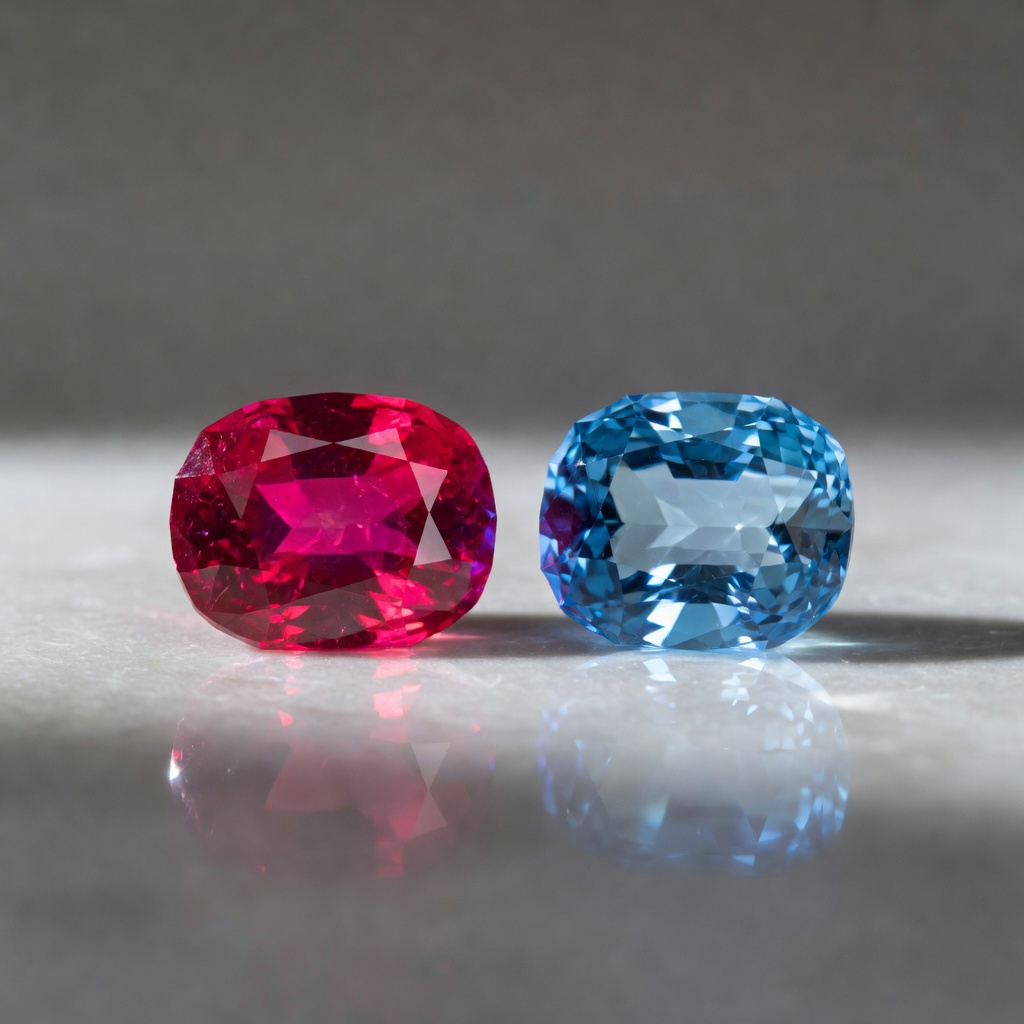
When navigating the world of colored gemstones, the comparison between ruby and topaz represents one of the most significant distinctions in the jewelry market. Ruby stands as one of the "big three" precious gemstones, belonging to the corundum family alongside sapphire, while topaz serves as a versatile and abundant silicate mineral found in numerous deposits worldwide. This fundamental difference in geological classification creates a dramatic divergence in value, rarity, and desirability that every collector, investor, and engagement ring shopper must understand before making a purchase decision.
The debate of ruby vs topaz extends far beyond aesthetic preferences, touching upon critical factors such as durability for daily wear, investment potential, and long-term value retention. While both gemstones offer exceptional beauty, their distinct physical properties, formation environments, and market positioning create unique advantages for different applications. Whether you are selecting a center stone for an heirloom engagement ring or building a diversified gemstone portfolio, understanding these key differentiators ensures you make an informed choice aligned with your lifestyle needs and financial goals.
Chemical Composition and Crystal Structure
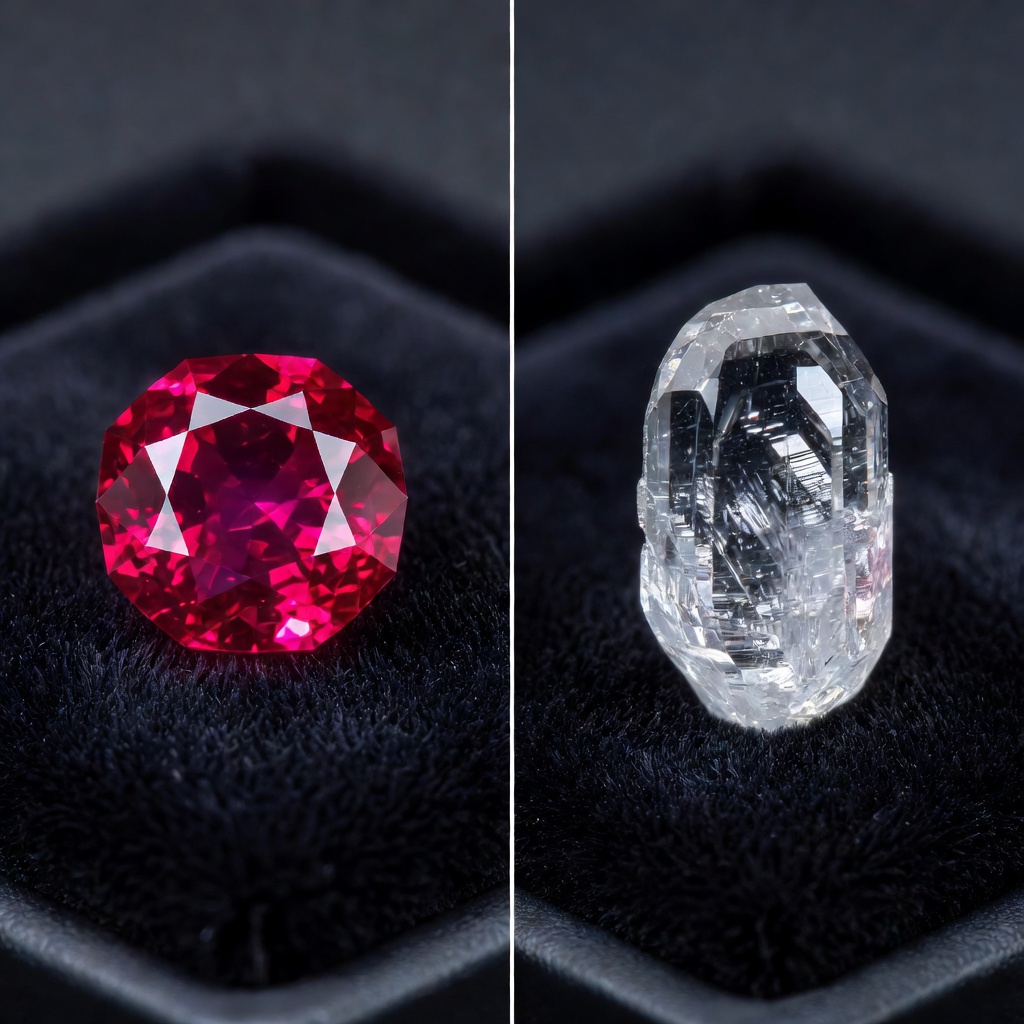
Rubies derive their exceptional properties from their membership in the corundum family, composed primarily of aluminum oxide (Al₂O₃) with trace chromium elements responsible for their characteristic red coloration. This chemical composition places rubies in the trigonal crystal system, forming hexagonal prisms with distinct barrel-shaped crystals that contribute to their optical performance and durability. The crystalline structure allows rubies to exhibit strong pleochroism, displaying different shades of red when viewed from various angles, a property that skilled gem cutters must navigate to maximize color saturation in the finished stone.
Topaz, conversely, belongs to the nesosilicate mineral group with a complex chemical formula of Al₂SiO₄(F,OH)₂, representing aluminum silicate fluoride hydroxide. This composition creates an orthorhombic crystal system characterized by prismatic crystals with diamond-shaped cross-sections and perfect basal cleavage. Unlike corundum gemstones, topaz forms in cavities within igneous rocks and pegmatites under specific fluorine-rich conditions, resulting in larger crystal formations but different optical characteristics including weaker pleochroism and distinct refractive indices that affect brilliance and fire.
Gemstone Formation Environments
The formation environments for these minerals further illustrate their fundamental differences. Rubies typically form in metamorphic environments under high pressure and temperature conditions within marble or basalt deposits, requiring specific chromium-rich parent rocks that limit their occurrence globally. Topaz crystallizes from fluorine-bearing vapors in the final stages of solidification of igneous rocks, particularly in granitic pegmatites and rhyolites, allowing for more abundant deposits but generally resulting in gemstones with different clarity characteristics and internal features than those found in corundum gemstones.
Mohs Hardness and Wearability Comparison
The disparity in hardness between these gemstones represents one of the most critical practical considerations for jewelry selection. Rubies rank 9 on the Mohs hardness scale, making them second only to diamonds in terms of resistance to scratching and surface wear. This exceptional hardness stems from the strong aluminum-oxygen bonds in the corundum structure, allowing rubies to maintain their polish and facet edges indefinitely even under daily wear conditions. For engagement rings and bracelets subjected to frequent impacts, this hardness provides significant assurance against surface damage that could dull the stone's appearance over decades of use.
Topaz registers 8 on the Mohs hardness scale, which initially suggests excellent durability for jewelry purposes. However, hardness alone does not determine a gemstone's wearability, as the presence of cleavage planes plays an equally important role in structural integrity. Topaz exhibits perfect basal cleavage parallel to the base of its crystal structure, meaning it can split cleanly with a single sharp blow, making it vulnerable to chipping or cleaving if struck against hard surfaces. This characteristic requires careful consideration when selecting topaz for rings or bracelets, whereas rubies possess no cleavage planes, providing superior resistance to breaking under impact.
Practical Implications for Active Lifestyles
For individuals with active lifestyles or occupations involving manual labor, these durability differences become paramount. A ruby set in a solitaire engagement ring can withstand gym workouts, gardening, and household chores without significant risk of damage, provided the setting remains secure. Topaz jewelry, particularly rings, requires more cautious wear; removing the piece during sports, heavy lifting, or any activity risking sharp impacts prevents potential cleavage fractures. When designing jewelry for daily wear, jewelers often recommend protective settings such as bezels or halos for topaz, while rubies offer more flexibility in open prong settings that maximize light exposure.
Color Range and Causes of Color
Ruby's color spectrum remains exclusively within the red range, defined by the presence of chromium ions substituting for aluminum in the crystal lattice. This chromophore creates the pure red to slightly purplish-red hues that define the species, with the most valuable specimens displaying "pigeon blood" red—a vivid, saturated red with a hint of blue that appears to glow from within. The chromium content not only produces color but also causes fluorescence under ultraviolet light, contributing to ruby's distinctive inner glow that distinguishes fine specimens from garnets or spinels. Any corundum displaying predominantly orange, pink, or purple tones is technically classified as fancy sapphire rather than ruby, limiting the official color range while ensuring consistency in the category.
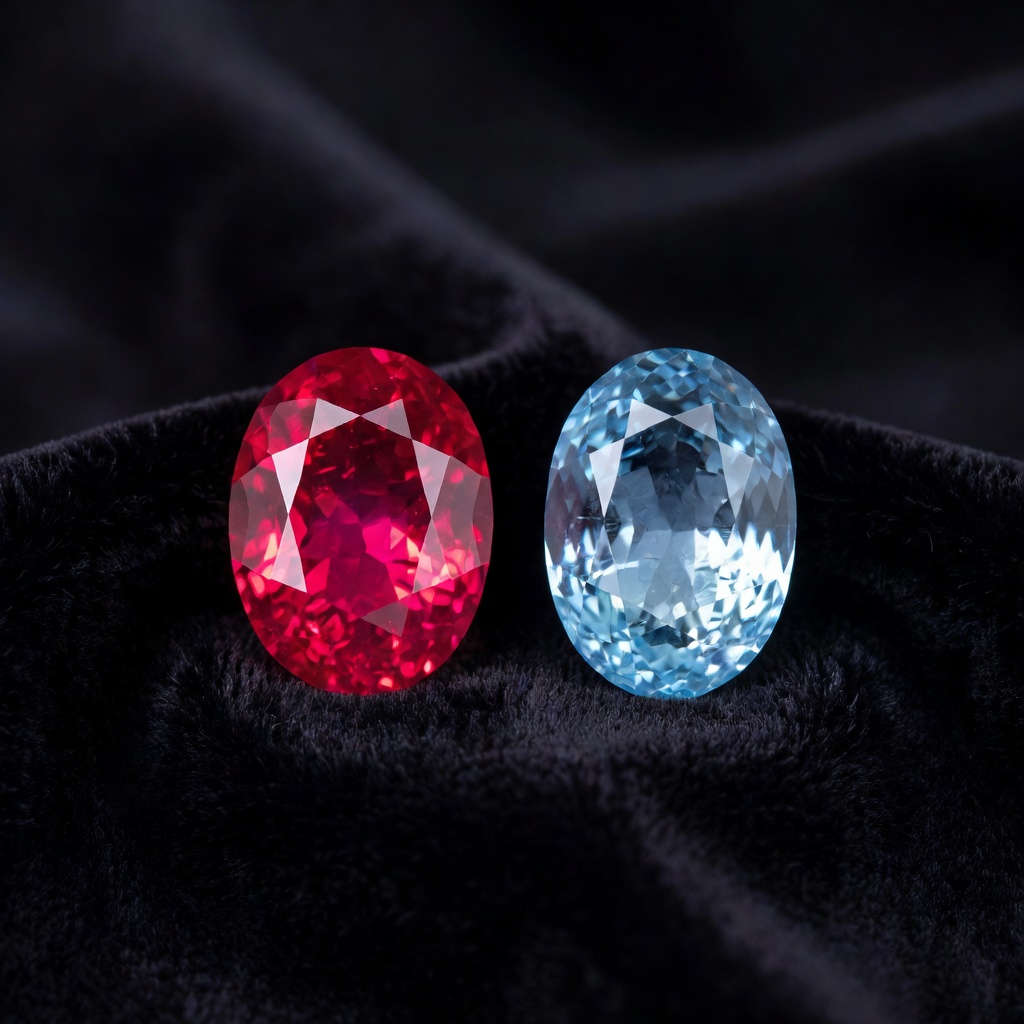
Topaz offers one of the broadest color palettes in the gemstone world, occurring naturally in colorless, yellow, orange, brown, pink, and the exceptionally rare red varieties. The golden-orange to pinkish-orange "imperial topaz" represents the most valuable natural color, historically reserved for Russian royalty and sourced primarily from Brazil's Ouro Preto region. Blue topaz, while extremely popular in contemporary jewelry, rarely occurs naturally in significant quantities; most commercial blue topaz results from irradiation and heat treatment of colorless or pale blue material. Other varieties include "sherry topaz" displaying yellowish-brown to orange-brown tones, and the controversial "mystic topaz" created through artificial thin-film coatings that produce rainbow effects.
Color Saturation and Value Relationships
The relationship between color and value differs dramatically between these gemstones. Ruby value increases exponentially with color saturation, with the finest pigeon blood specimens commanding prices that can exceed $100,000 per carat for untreated stones over five carats. Even slight variations toward pink or orange significantly reduce value. Topaz pricing follows a different curve: while imperial topaz commands premium prices ranging from $500 to $5,000 per carat depending on size and saturation, treated blue topaz remains highly affordable at $10 to $50 per carat, creating accessible entry points for collectors while maintaining elite tiers for rare natural colors.
Rarity, Market Value, and Investment Potential
The economic disparity between ruby and topaz reflects their relative scarcity in the marketplace and consumer demand dynamics. Fine natural rubies represent extreme geological rarities, with high-quality specimens over five carats constituting a tiny fraction of global production. This scarcity drives market prices ranging from $1,000 per carat for commercial-grade heated stones to well over $100,000 per carat for exceptional untreated Burmese examples. The 2021 military coup in Myanmar further disrupted supply chains from the legendary Mogok Valley, increasing prices for existing high-quality inventory and enhancing the investment appeal of certified Burmese origin stones.
Topaz remains abundant in comparison, with Brazil's Minas Gerais state producing metric tons of material annually. Commercial blue topaz dominates the market as an affordable alternative to aquamarine or sapphire, typically retailing between $10 and $100 per carat depending on cutting quality and depth of color. Investment-grade topaz is limited specifically to natural imperial topaz with intense saturation, cherry-red specimens from obsolete mines, and large flawless crystals of unusual colors. These collector pieces can appreciate in value, but the market lacks the depth and liquidity found in fine ruby trading, where auction houses regularly achieve seven-figure sales for exceptional stones.
| Property | Ruby | Topaz |
|---|---|---|
| Chemical Formula | Al₂O₃ (Corundum) | Al₂SiO₄(F,OH)₂ (Silicate) |
| Crystal System | Trigonal (Hexagonal) | Orthorhombic |
| Mohs Hardness | 9/10 | 8/10 |
| Cleavage | None (Conchoidal fracture) | Perfect basal cleavage |
| Primary Colors | Red to purplish-red only | Colorless, yellow, orange, pink, blue, brown |
| Price Range (per carat) | $1,000 - $100,000+ | $10 - $500 (imperial up to $5,000) |
| Key Origins | Myanmar, Mozambique, Madagascar | Brazil, Nigeria, Russia, Pakistan |
| Common Treatments | Heat treatment (95%+ of market) | Irradiation (blue), coating (mystic) |
| Best Jewelry Use | Engagement rings, daily wear pieces | Pendants, earrings, occasional rings |
Building a Gemstone Investment Portfolio
For investors considering these gemstones as alternative assets, rubies offer historically proven appreciation and liquidity in international markets, particularly untreated Burmese stones with documented provenance. The gemstone investment guide recommends focusing on stones over three carats with laboratory certificates from GIA or AGL, as these maintain value during economic fluctuations. Topaz investments should be approached differently, targeting only museum-quality imperial specimens over ten carats with confirmed natural color, or historical pieces from depleted mines such as the Ural Mountains or specific Brazilian localities no longer producing.
Geographic Origins and Mining Sources
The provenance of a ruby significantly impacts its value and desirability, with Burmese rubies from the Mogok Stone Tract maintaining legendary status among connoisseurs. These stones typically exhibit the coveted "pigeon blood" color with strong fluorescence and minimal iron content, distinguishing them from darker Thai or Cambodian rubies. Mozambique's Montepuez mines have emerged as the primary modern source for fine rubies, producing stones with excellent clarity and vibrant red colors that often rival Burmese material, though they generally command slightly lower premiums. Madagascar and Sri Lanka produce rubies with lighter, often pinkish tones suitable for jewelry but rarely achieving investment-grade status.
Topaz mining concentrates heavily in Brazil's Minas Gerais state, specifically around Ouro Preto and Capão do Lana, where the world's finest imperial topaz deposits occur. The Saramenha mine and surrounding areas produce the golden-orange to pinkish-red crystals considered the standard for collector-grade material. Nigeria has become an important source for natural pink topaz, while Russia's historic Ural Mountain deposits produced the original "imperial" material reserved for the Czar's family. Pakistan and Afghanistan yield colorless and blue crystals, though typically with more inclusions than Brazilian material. Unlike rubies, where Burmese origin adds significant value, topaz value depends more on color quality than specific geographic source, though Brazilian imperial topaz maintains the strongest market recognition.
Origin Verification and Documentation
Serious collectors should insist on origin reports from reputable laboratories such as GIA, AGL, or SSEF, as these documents significantly affect resale value. Burmese rubies command premiums of 40% or more over comparable Mozambique stones, making origin determination crucial for investment pieces. For topaz, while origin matters less commercially, verifying that an imperial topaz genuinely originates from the Ouro Preto region rather than being mislabeled Nigerian or treated material protects buyers from overpaying for misrepresented goods.
Common Treatments and Enhancements Explained
The ruby market relies heavily on heat treatment, with industry estimates suggesting over 95% of commercial rubies undergo high-temperature processing between 1500°C and 1800°C. This permanent treatment dissolves rutile silk inclusions, improving both clarity and color saturation by reducing bluish or purplish tints. While heat-treated rubies remain valuable and durable, untreated stones command premiums of 50% to 300% depending on quality, as they represent natural rarity. Advanced treatments include glass filling (fracture filling with lead glass) to mask cavities and fissures, though these stones require special care and should always be disclosed as treated material.
Topaz undergoes different enhancement processes tailored to market demands. Colorless or pale blue topaz is routinely irradiated to produce the London Blue, Swiss Blue, and Sky Blue varieties dominating commercial markets. This treatment is permanent and stable, though the initial radioactivity requires holding periods before the stones can be sold. Surface coating creates "mystic topaz" and other fancy colors through thin metallic films, though these coatings are vulnerable to scratching and wear, making them suitable only for pendants or earrings. Natural imperial and pink topaz commands higher prices specifically because these colors occur without artificial intervention, representing genuine geological rarities.
Certification and Disclosure Requirements
When purchasing either gemstone, laboratory certification from GIA, AGL, or Gübelin provides essential protection. These reports distinguish between natural and treated stones using advanced spectroscopy and microscopic analysis. For rubies, the presence of melted crystal inclusions or altered rutile needles indicates heat treatment, while glass-filled stones show characteristic blue flashes under magnification. For topaz, spectroscopic analysis confirms irradiation treatment, while coated stones display surface iridescence visible under magnification. Always verify that significant purchases include treatment disclosure, as undisclosed enhancements violate trade ethics and significantly impact long-term value.
Birthstone Significance and Symbolic Meanings
Ruby serves as the July birthstone and carries profound symbolic weight across cultures and centuries. Associated with passion, protection, and vitality, rubies have adorned the crowns and regalia of royalty worldwide, earning the title "King of Gemstones" in Sanskrit texts. Ancient Burmese warriors implanted rubies beneath their skin to render them invincible in battle, while medieval Europeans believed rubies preserved physical and mental health. In metaphysical practices, ruby activates the heart chakra, stimulating life force energy, courage, and enthusiasm while providing psychic protection against negative energies.
Topaz represents the November birthstone alongside citrine, symbolizing strength, intelligence, and the ability to dispel anger and sadness. The name derives from the ancient Greek island of Topazios, though the stones originally mined there were likely peridot. Imperial topaz specifically carries associations with nobility and luxury, historically restricted to Russian royalty and believed to bring abundance and charisma to its wearer. Metaphysical practitioners use topaz to enhance manifestation abilities, creative energy, and communication skills, with different colors attributed to specific chakras: blue for the throat chakra, imperial for the solar plexus, and pink for the heart.
Historical Royal Associations
The British Crown Jewels feature exceptional rubies, including the Black Prince's Ruby (actually a spinel) set in the Imperial State Crown, illustrating the historical confusion between red gemstones but cementing ruby's association with sovereignty. Topaz enjoyed similar royal patronage during the 18th and 19th centuries when Russian Czars claimed exclusive rights to imperial topaz mined in the Ural Mountains, creating an enduring connection between this golden-orange variety and aristocratic luxury. Today, both stones remain popular for significant anniversary gifts, with ruby traditionally marking 40th wedding anniversaries and topaz associated with 4th and 23rd anniversaries.
Jewelry Applications and Design Considerations
Ruby's exceptional durability makes it ideal for engagement rings and daily-wear jewelry subject to constant handling. Its resistance to both scratching and chipping allows jewelry designers to use delicate prong settings that maximize light exposure and visual impact. Classic designs featuring oval or cushion-cut rubies surrounded by diamond halos remain perennial favorites, while contemporary settings showcase fancy-shaped rubies in bezel or tension settings for modern aesthetics. When selecting ruby jewelry for daily wear, consider stones with good clarity and no surface-reaching fractures, as these could weaken the stone despite its inherent durability.
Topaz requires more thoughtful jewelry design due to its cleavage vulnerability, though its wide color range offers tremendous versatility for fashion jewelry. Protective settings such as bezels, heavy prongs, or halo designs that shield the girdle and crown from direct impact are essential for topaz rings intended for regular wear. Earrings and pendants present ideal applications for topaz, as these pieces experience less mechanical stress than rings or bracelets. The gemstone's affordability allows designers to create statement pieces featuring large, impressive stones without prohibitive costs, making topaz particularly popular for cocktail rings and bold necklaces where color impact takes precedence over long-term durability concerns.
Setting Selection Guidelines
For active individuals choosing ruby engagement rings, six-prong settings provide maximum security while allowing ample light return, though four-prong and bezel settings offer excellent alternatives depending on stone shape. With topaz, V-prong settings protect pointed tips on marquise or pear shapes, while full bezel settings offer the most protection for cabochon or faceted stones in rings. When designing custom pieces, jewelers should orient topaz crystals to minimize stress on the cleavage plane, positioning the table perpendicular to the c-axis when possible to reduce the risk of accidental cleaving.
Care, Cleaning, and Maintenance Requirements
Ruby maintenance remains relatively straightforward due to the stone's chemical stability and hardness. Untreated and heat-treated rubies tolerate ultrasonic cleaning devices safely, as the high-frequency vibrations effectively remove accumulated dirt and oils from settings without damaging the stone. However, glass-filled rubies require gentle cleaning with warm soapy water and soft brushes only, as ultrasonic waves and steam cleaners can damage the glass filler and potentially remove it from fractures. Annual professional inspections ensure prongs remain tight and detect microscopic surface damage before it compromises the stone's integrity.
Topaz demands more cautious care protocols due to its cleavage vulnerability and sensitivity to thermal shock. Never expose topaz to steam cleaners or sudden temperature changes, as these can induce internal stress leading to cleaving. Ultrasonic cleaning poses similar risks and should be avoided. Instead, clean topaz jewelry using warm water with mild dish soap and a soft-bristled brush, drying with a lint-free cloth. Store topaz pieces separately from harder gemstones like diamonds, rubies, and sapphires to prevent surface scratching, and consider removing topaz rings before activities involving potential impacts or temperature extremes.
Professional Maintenance Schedules
Establish a maintenance routine of professional cleaning and inspection every six months for ruby rings subjected to daily wear, as this frequency allows jewelers to check for loose prongs and worn mountings before stone loss occurs. For topaz jewelry, quarterly inspections help identify early signs of chipping or cleaving, particularly for pieces worn regularly. When traveling, pack topaz jewelry in individual padded compartments to prevent contact with harder materials, while ruby pieces require less protective packaging though should still be stored separately from diamonds to prevent mutual scratching.
Frequently Asked Questions
Which gemstone is more valuable, ruby or topaz?
Ruby is significantly more valuable, with fine quality stones costing $10,000-$100,000+ per carat, while even rare imperial topaz typically ranges $50-$500 per carat. Ruby's extreme rarity, especially untreated specimens, drives its premium pricing.
Can topaz be red like ruby?
Natural red topaz is one of the rarest gemstones, found only in specific Brazilian deposits. However, these stones show brownish-red or orangish-red hues distinct from ruby's pure chromium-red. Most 'red topaz' on the market is actually heated pink topaz or mislabeled material.
Is topaz durable enough for daily wear in rings?
With a Mohs hardness of 8, topaz is reasonably durable but its perfect basal cleavage makes it vulnerable to sharp impacts. For daily ring wear, rubies (Mohs 9, no cleavage) are significantly safer. If choosing topaz, opt for protective bezel settings and remove during physical activities.
How can I identify if my ruby or topaz has been treated?
Gemological laboratories use advanced spectroscopy and microscopy to detect treatments. For rubies, tiny rutile silk remnants indicate heat treatment. For topaz, neon colors often signal irradiation. Always request GIA or AGL certification for significant purchases to confirm treatment status.
Which gemstone is better for investment purposes?
Rubies offer superior investment potential due to rarity, historical value appreciation, and strong Asian market demand. Top-tier untreated Burmese rubies have increased 8-12% annually. Topaz investments are limited to rare natural imperial or cherry red specimens from obsolete mines.
Do ruby and topaz have different symbolic meanings?
Yes. Ruby symbolizes passion, love, courage, and is associated with royalty and power. Topaz represents strength, wisdom, and emotional balance. Ruby activates the heart chakra, while topaz is believed to enhance manifestation and creative energy.
Can I use ultrasonic cleaners on both ruby and topaz jewelry?
Rubies are generally safe in ultrasonic cleaners, except for glass-filled stones. Topaz should never be cleaned ultrasonically due to cleavage-related fracture risks. For both gems, warm soapy water with a soft brush remains the safest cleaning method.
What causes the price difference between heated and unheated rubies?
Unheated rubies command 50-300% premiums because they represent natural rarity. Heat treatment is permanent and improves color/clarity, but it alters the stone from its natural state. Collectors and investors prioritize untreated gems for authenticity and long-term value retention.