Introduction: Ruby vs Tanzanite in the Spotlight
When collectors and jewelry enthusiasts evaluate precious gemstones for their next significant acquisition, the debate between Ruby vs Tanzanite frequently emerges as a compelling comparison between tradition and rarity. These two magnificent colored stones represent opposite ends of the durability spectrum while sharing a reputation for captivating beauty that has dominated auction houses and jewelry boutiques throughout the past decade. Rubies have adorned the crowns of monarchs and the fingers of Hollywood icons for centuries, while Tanzanite, discovered only in 1967, has rapidly ascended from geological novelty to coveted luxury item despite its limited geological lifespan.
The modern jewelry market presents unique challenges for consumers navigating between these stones, as each offers distinct advantages regarding color intensity, wearing durability, and long-term investment potential. While Ruby gemstone properties include exceptional hardness suitable for daily wear, Tanzanite rarity creates an urgency among collectors seeking to secure specimens before predicted depletion within the next generation. Understanding the fundamental differences between these gems requires examining their geological formations, physical characteristics, and market positioning to make an informed decision that aligns with both aesthetic preferences and practical lifestyle requirements.
Geological Origins and Formation
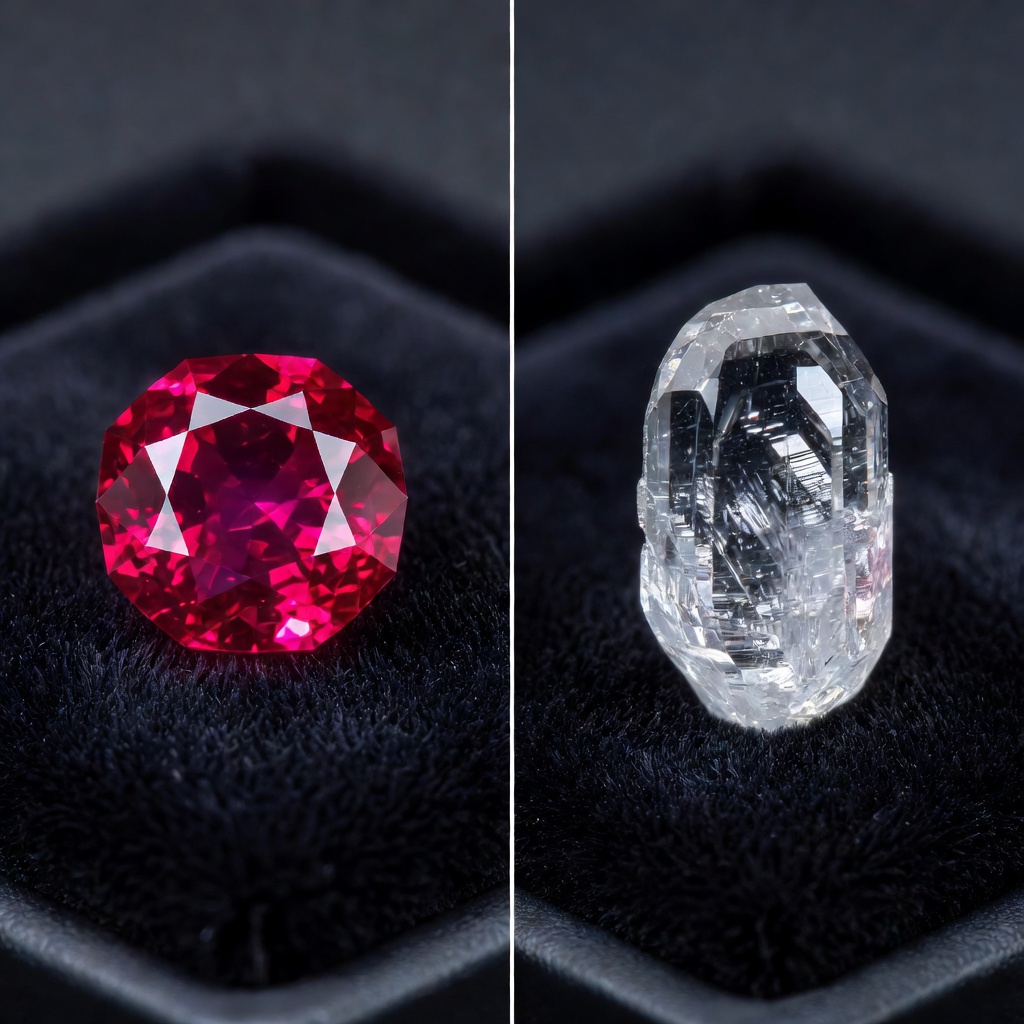
Ruby formation occurs through complex metamorphic processes within both marble and basalt deposits, creating distinct varieties that command different market values based on their geographic provenance. The Mogok Stone Tract in Myanmar historically produced the finest specimens characterized by pure red fluorescence and minimal violet secondary tones, while modern mining operations in Mozambique's Montepuez region and Madagascar's Didy mines have emerged as significant sources of high-quality material. These deposits formed over millions of years under intense heat and pressure, creating corundum crystals with chromium substitutions that produce the gem's signature red hue.
In stark contrast, Tanzanite's origin story represents one of the most geographically restricted gemstone occurrences in the world, confined exclusively to the Merelani Hills located in the shadow of Mount Kilimanjaro. This single-source origin spans merely eight square kilometers, making Tanzanite rarity a defining characteristic that distinguishes it from virtually every other commercially important gemstone. Geologists estimate that these deposits formed approximately 585 million years ago during the Pan-African orogeny, yet mining challenges including narrow vein structures, depth limitations exceeding 800 meters, and complex ore bodies have significantly constrained production volumes since commercial mining began in the 1970s.
Physical Properties and Durability Comparison
When evaluating gemstones for jewelry applications, understanding the fundamental differences between Corundum vs Zoisite becomes essential for predicting long-term performance and maintenance requirements. Ruby, as a variety of corundum, crystallizes in the trigonal system with a Mohs hardness of 9, making it second only to diamond in terms of scratch resistance and daily wear durability. This exceptional hardness allows ruby to withstand decades of continuous use in engagement rings and bracelets without showing significant surface abrasion, maintaining its polish and luster through generations of ownership.
Tanzanite, by contrast, belongs to the epidote mineral group as a variety of zoisite, crystallizing in the orthorhombic system with a Mohs hardness of only 6.5 to 7. While this places tanzanite within the hard gemstone category, it possesses perfect cleavage in one direction, creating a propensity for chipping or splitting if struck against hard surfaces or exposed to sudden temperature changes. This significant difference in toughness and durability directly impacts jewelry design choices, as tanzanite requires protective settings and mindful wearing habits compared to the virtually indestructible nature of fine ruby specimens.
Crystal Structure: Corundum vs Zoisite
The atomic arrangement within corundum creates an extremely stable aluminum oxide structure where oxygen atoms form a hexagonal close-packed framework with aluminum ions occupying octahedral sites, resulting in exceptional chemical stability and resistance to environmental degradation. This molecular architecture explains why rubies maintain their color integrity and surface polish even after centuries of wear, making them ideal heirlooms that require minimal restoration work beyond occasional cleaning and prong tightening.
Zoisite's crystal structure incorporates calcium aluminum hydroxy sorosilicate arrangements that, while stable under normal conditions, exhibit greater vulnerability to thermal shock and mechanical stress than corundum variants. Tanzanite's pleochroic nature, displaying different colors when viewed from different crystallographic directions, stems directly from this orthorhombic structure, creating the trichroic phenomenon where rough crystals show blue, violet, and burgundy simultaneously depending on viewing angle.
| Characteristic | Ruby (Corundum) | Tanzanite (Zoisite) |
|---|---|---|
| Mohs Hardness | 9 | 6.5 - 7 |
| Crystal System | Trigonal | Orthorhombic |
| Cleavage | None (conchoidal fracture) | Perfect in one direction |
| Specific Gravity | 3.97 - 4.05 | 3.10 - 3.38 |
| Refractive Index | 1.762 - 1.770 | 1.691 - 1.700 |
| Toughness | Excellent | Fair to Good |
| Primary Sources | Myanmar, Mozambique, Madagascar, Thailand | Tanzania only (Merelani Hills) |
| Typical Treatment | Heat treatment (common), flux healing, glass filling | Heat treatment (universal for color) |
Color Variations and Quality Grading
The evaluation of ruby color centers primarily on hue, saturation, and tone, with Pigeon blood ruby representing the pinnacle of quality characterized by vivid red saturation with minimal secondary purple or orange modifiers. This designation, originally coined to describe the finest Burmese rubies exhibiting a pure red with a soft, glowing fluorescence reminiscent of the blood from a freshly killed pigeon, commands premium prices exceeding $100,000 per carat for untreated specimens over five carats. Modern gemological laboratories use sophisticated colorimetry to distinguish between true pigeon blood classifications and lesser grades including pinkish-red, orangey-red, and purplish-red varieties that offer more accessible price points for collectors.
Tanzanite presents a unique grading challenge due to its pronounced pleochroism, requiring cutters to orient crystals carefully to maximize the desirable blue-violet face-up color while minimizing the less desirable brown or yellowish tones visible from other angles. Unlike ruby's relatively straightforward color assessment, tanzanite quality depends heavily on the depth of color saturation, with the most valuable stones displaying intense violet-blue to blue-violet hues reminiscent of high-quality sapphire. Heat treatment plays a universal role in tanzanite production, as virtually all commercial material undergoes controlled heating to 400-500 degrees Celsius to transform the naturally occurring brownish zoisite into the electric blue and violet tones consumers recognize.
Rarity, Scarcity and Future Availability
Tanzanite rarity extends beyond simple geological scarcity to encompass the reality of non-renewable resource depletion, with industry experts predicting the exhaustion of commercially viable deposits within 20 to 30 years based on current extraction rates. The mining area's restriction to a single location measuring merely eight square kilometers creates a supply bottleneck that no new discovery can alleviate, fundamentally distinguishing tanzanite from other gemstones where new deposits might theoretically emerge. This finite timeline has created intense competition among collectors seeking museum-quality specimens, particularly stones exceeding ten carats with exceptional color saturation, as these represent truly irreplaceable geological treasures.
Ruby deposits, while globally distributed across Myanmar, Mozambique, Madagascar, Thailand, and Vietnam, present a different scarcity model where high-quality crystals exceeding five carats with minimal inclusions remain exceptionally rare despite ongoing production. The July vs December birthstone comparison highlights this availability difference, as ruby's status as July's birthstone drives consistent annual demand supported by relatively stable supply chains, whereas tanzanite's position as December's birthstone faces potential supply disruption within the lifetime of current consumers. Savvy collectors increasingly view fine tanzanite as a disappearing commodity, while untreated Burmese rubies represent enduring scarcity within a more sustainable mining framework.
Market Value and Investment Potential
Current market analysis reveals significant disparities in Gemstone investment comparison between these two stones, with untreated Burmese rubies consistently achieving record-breaking prices at international auction houses while tanzanite occupies a more volatile but potentially lucrative niche market. The 2015 sale of the Sunrise Ruby, a 25.59-carat Burmese pigeon blood ruby, commanded $30.3 million ($1.2 million per carat), establishing benchmarks that high-quality tanzanite has yet to approach despite its rarity. Fine tanzanite specimens typically range from $300 to $800 per carat for commercial qualities, with exceptional stones over five carats reaching $1,000 to $1,500 per carat, though these figures represent a fraction of equivalent-quality ruby valuations.
Investment portfolios seeking diversification through colored gemstones should consider liquidity differences, as ruby benefits from established auction house departments and dealer networks that facilitate resale, whereas tanzanite markets remain more specialized and dependent on collector interest. However, the predicted depletion of tanzanite mines creates a unique appreciation scenario where supply contraction may drive prices upward regardless of broader economic conditions. Practical investment strategies suggest acquiring untreated rubies with laboratory certification from respected institutions like GIA or SSEF for maximum value retention, while tanzanite investments should focus on stones exceeding five carats with deep, saturated color as these will likely experience the most dramatic scarcity premiums as mining concludes.
Jewelry Design and Setting Considerations
When designing birthstone jewelry featuring these gems, jewelers must account for the dramatic hardness differential that dictates setting styles and wearing recommendations. Ruby's exceptional durability allows for versatile setting options including delicate prong settings, tension mounts, and exposed edge designs that showcase the stone's brilliance without compromising structural integrity, making it ideal for engagement rings and daily wear bracelets. The Mohs hardness scale gems comparison clearly favors ruby for active lifestyles, as it resists both scratching and chipping during activities like gardening, sports, or household chores that would damage softer stones.
Tanzanite requires protective setting strategies that minimize exposure to impact while maximizing color display, typically involving bezel settings, partial bezels, or substantial prong configurations that shield the girdle and corners from direct blows. For engagement ring considerations, tanzanite demands careful evaluation of the wearer's lifestyle; while possible to use in rings, the setting should feature elevated protection such as a halo of harder diamonds or a deep bezel that absorbs impact. Metal color pairings also differ significantly between the stones, as white gold or platinum enhances tanzanite's cool blue-violet tones creating a contemporary aesthetic, while yellow gold warms ruby's red saturation and complements traditional designs reminiscent of Victorian or Art Deco periods.
Care, Cleaning and Maintenance Requirements
Proper gemstone care protocols vary dramatically between these stones due to their differing responses to chemical exposure, thermal shock, and mechanical vibration. Ruby jewelry generally tolerates professional cleaning methods including ultrasonic cleaners and steam cleaning, provided the stone is untreated or has no significant fractures filled with glass or resin; however, routine maintenance should include annual inspections by qualified jewelers who can check for loose prongs or setting wear that might result in stone loss. Home cleaning requires only warm soapy water and a soft brush for most rubies, though owners should avoid harsh chemicals like chlorine or bleach that might attack metal settings even if they don't harm the corundum itself.
Tanzanite maintenance demands significantly more caution, as the combination of perfect cleavage and sensitivity to thermal shock makes ultrasonic and steam cleaning potentially destructive. Owners should clean tanzanite using only lukewarm water with mild dish soap applied with a soft cotton cloth or very soft brush, avoiding temperature extremes that could cause internal fracturing. Storage recommendations include keeping tanzanite pieces separated from harder gemstones like diamonds, rubies, and sapphires in individual cloth pouches to prevent surface scratching, while ruby can be stored more casually though still protected from diamond contact to prevent abrasion.
Symbolic Meanings and Cultural Significance
Ruby symbolism spans millennia of human history, with ancient Sanskrit texts referring to the gem as ratnaraj or king of precious stones, while medieval Europeans believed rubies conferred health, wisdom, wealth, and success in love upon their owners. As the July vs December birthstone comparison reveals, ruby carries associations with passion, vitality, and protection that have made it the traditional gift for 15th and 40th wedding anniversaries, representing the enduring flame of committed relationships. Royal collections worldwide feature spectacular ruby specimens, from the Black Prince's Ruby in the British Imperial State Crown to the Timur Ruby, underscoring the stone's historical connection to power and divine favor.
Tanzanite meaning centers on spiritual awareness, transformation, and higher consciousness, reflecting its relatively recent discovery during the Age of Aquarius and its association with the throat and third-eye chakras in metaphysical practices. As December's modern birthstone alongside turquoise and zircon, tanzanite represents new beginnings and the integration of communication with intuition, making it popular among those seeking gemstones with purported healing properties. While lacking the centuries of royal provenance associated with ruby, tanzanite has rapidly accumulated cultural significance as a geological phenomenon that symbolizes both the Earth's artistic capacity and the finite nature of natural resources.
Making Your Decision: Which Gemstone Wins?
Choosing between Ruby vs Tanzanite ultimately requires honest assessment of lifestyle factors, budget parameters, and long-term ownership goals rather than simply comparing aesthetic qualities. Active individuals who engage in manual work, sports, or frequent travel should prioritize ruby for its ability to withstand daily rigors without special precautions, while those seeking occasional statement pieces for evening wear might find tanzanite's unique color and impending rarity more compelling. Budget optimization strategies suggest that consumers seeking maximum visual impact per dollar might acquire larger, finer-quality tanzanite specimens than equivalently priced rubies, though they must accept the accompanying maintenance responsibilities and wearing restrictions.
For heirloom considerations, ruby offers multi-generational durability that allows stones to pass through family lineages with minimal degradation, whereas tanzanite represents a finite opportunity to own a piece of geological history that future generations may only access through secondary markets. Practical decision-making should include consultation with certified gemologists who can verify treatments and origins, as untreated Burmese rubies and fine tanzanite over five carats both represent significant acquisitions requiring expert validation. Whether selecting ruby for its timeless durability or tanzanite for its ephemeral rarity, both stones reward informed buyers with extraordinary beauty that reflects the remarkable diversity of Earth's mineral kingdom.
Frequently Asked Questions
Is Tanzanite more expensive than Ruby?
Generally, high-quality rubies command significantly higher prices per carat than tanzanite. Exceptional pigeon blood rubies can reach tens of thousands per carat, while fine tanzanite typically ranges from hundreds to a few thousand per carat. However, large, museum-grade tanzanite specimens can rival lower-quality ruby prices due to extreme rarity.
Can Tanzanite be worn daily like Ruby?
Ruby, with a Mohs hardness of 9, is suitable for daily wear including engagement rings. Tanzanite, rating 6.5-7 on the Mohs scale with perfect cleavage, is more susceptible to scratching and chipping. While possible to wear daily with extreme care, tanzanite is better suited for occasional wear or protective settings like necklaces and earrings rather than rings.
Which is better for an engagement ring, Ruby or Tanzanite?
Ruby is the superior choice for engagement rings due to its exceptional hardness (9/10) and toughness, withstanding daily wear for decades. Tanzanite requires protective bezel settings and careful wear. If choosing tanzanite for an engagement ring, select a pendant or earring style, or ensure the wearer understands the need for gentle handling and removal during physical activities.
Why is Tanzanite considered rarer than Ruby?
Tanzanite is found in only one location globally—the Merelani Hills in Tanzania—making its supply finite and geographically restricted. Geologists estimate tanzanite deposits may deplete within 20-30 years. Rubies, while rare, occur in multiple countries including Myanmar, Mozambique, Madagascar, and Thailand, offering more diverse sourcing despite high-quality stones remaining scarce.
Do Ruby and Tanzanite receive similar treatments?
Both gemstones commonly undergo heat treatment to enhance color, and this practice is widely accepted in the trade. However, rubies may also receive fracture filling or lead glass filling to improve clarity, treatments that significantly impact value. Tanzanite is almost always heat-treated to achieve its signature blue-violet color from the raw brownish zoisite, but rarely requires clarity enhancement.
Which gemstone holds its value better as an investment?
Historically, untreated Burmese rubies have shown stronger investment performance and liquidity in the auction market, often appreciating significantly over decades. Tanzanite offers investment potential due to its limited supply timeline, but the market is less liquid. For investment purposes, prioritize unheated, certified rubies over tanzanite, though high-grade tanzanite over 5 carats may appreciate as mines deplete.
Can you wear Ruby and Tanzanite together in the same jewelry piece?
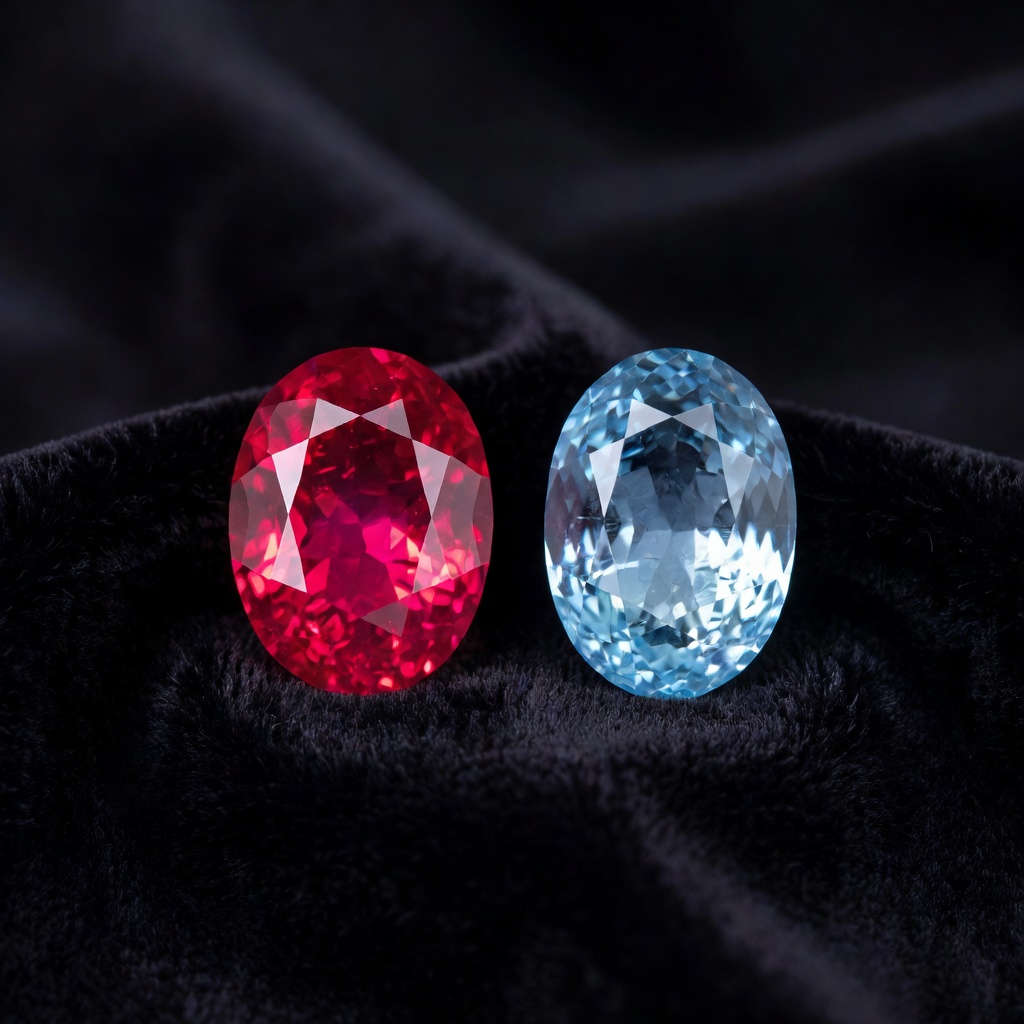
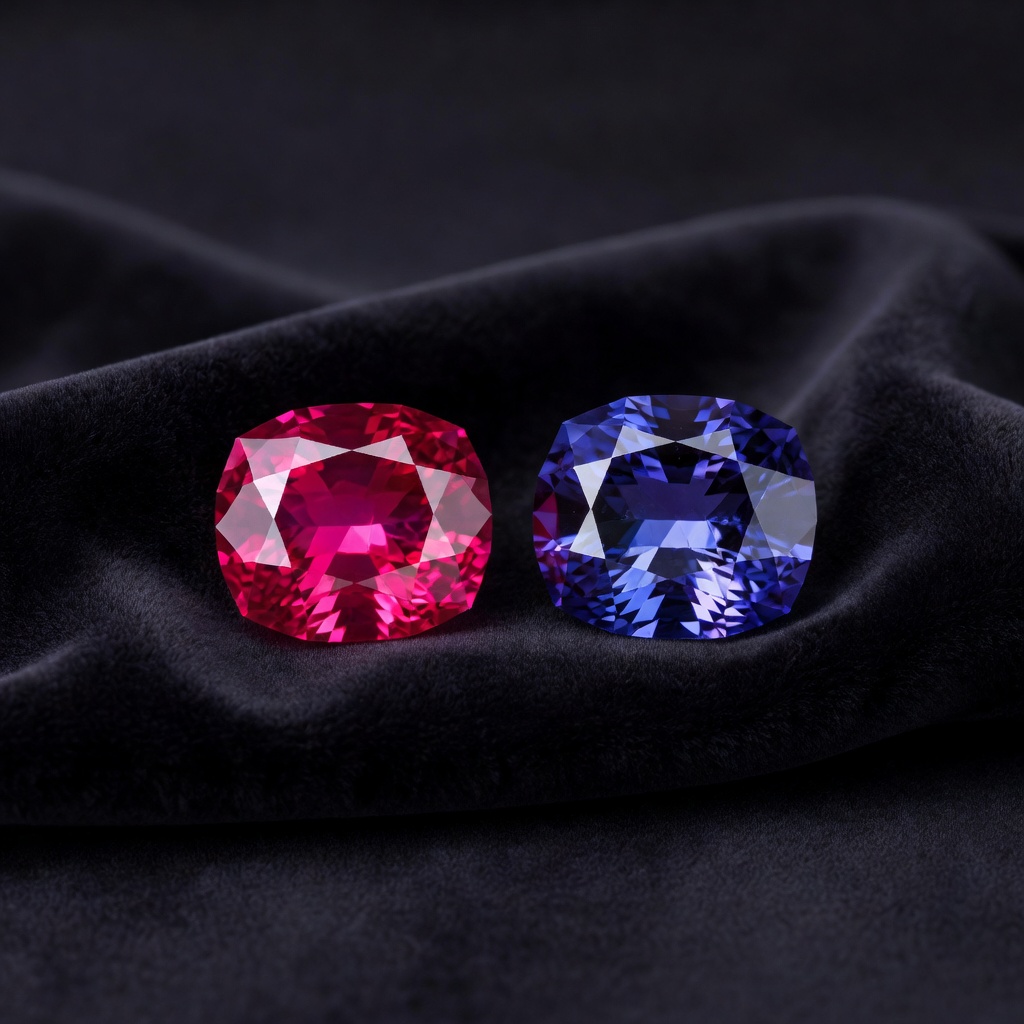
Yes, ruby and tanzanite create stunning complementary combinations due to their contrasting colors—warm red against cool blue-violet. However, consider the hardness difference: ruby may scratch tanzanite if they touch. Professional jewelers typically separate them with metal barriers or use designs where stones don't contact each other, often pairing them in multi-gem statement pieces or contrast rings.
How do I clean Ruby vs Tanzanite jewelry at home?
Clean ruby jewelry using warm soapy water and a soft brush, or professional ultrasonic cleaners if untreated. For tanzanite, use only lukewarm water with mild soap and a soft cloth—never use ultrasonic or steam cleaners due to its sensitivity to thermal shock and vibration. Always rinse thoroughly and dry with a lint-free cloth for both stones.