The Collector's Dilemma: Ruby vs Taaffeite
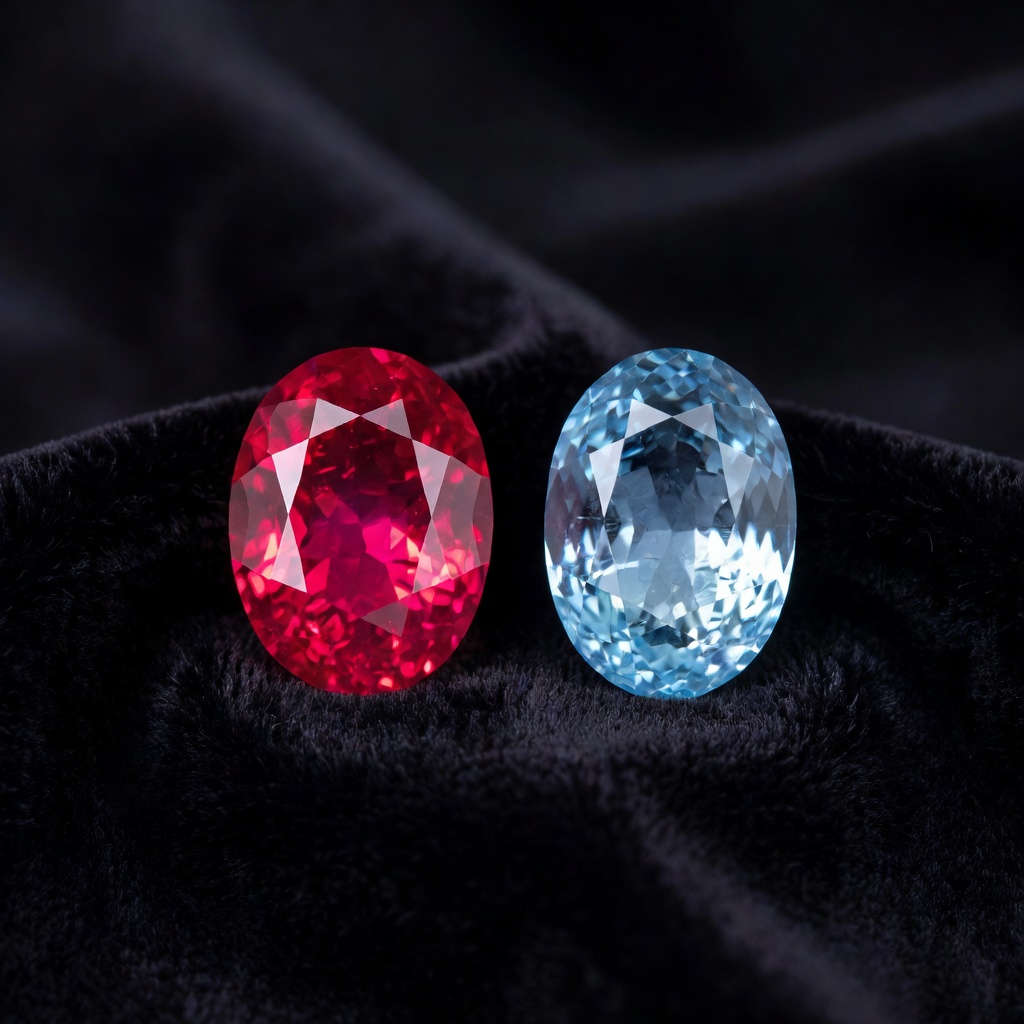
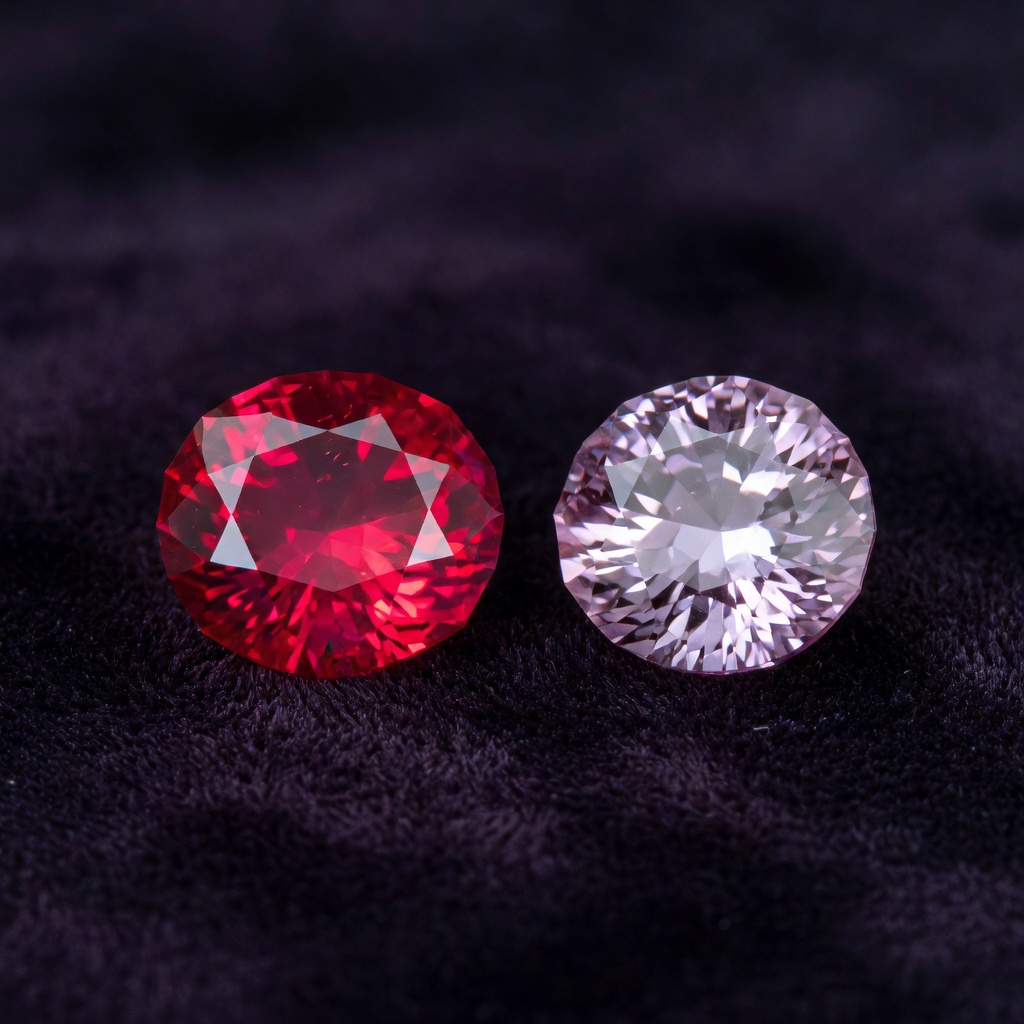
When discussing the most coveted precious stones in the world, the ruby vs taaffeite comparison represents one of the most fascinating dichotomies in gemology. On one side stands the ruby, celebrated for millennia as the "King of Gems," commanding attention in royal crowns and celebrity jewelry collections worldwide. On the other side lurks taaffeite, a mysterious mineral so rare that most jewelers will never handle a single specimen throughout their entire careers. Novice collectors frequently confuse these two gemstones, particularly when encountering taaffeite's rarer reddish varieties or ruby's lighter pinkish hues, as both can exhibit similar luster and crystal formations when faceted.
The confusion deepens when considering that both gemstones occasionally emerge from similar geological environments in Sri Lanka and Myanmar, leading to misidentification in vintage jewelry pieces and estate collections. However, beneath their superficial similarities lie dramatic differences in chemical composition, durability, and market availability that fundamentally distinguish these stones. This comprehensive guide examines the critical comparison criteria including rarity, molecular composition, investment value, and visual characteristics to help collectors, investors, and jewelry enthusiasts understand what truly separates these remarkable gemstones.
Understanding Ruby: The King of Gems
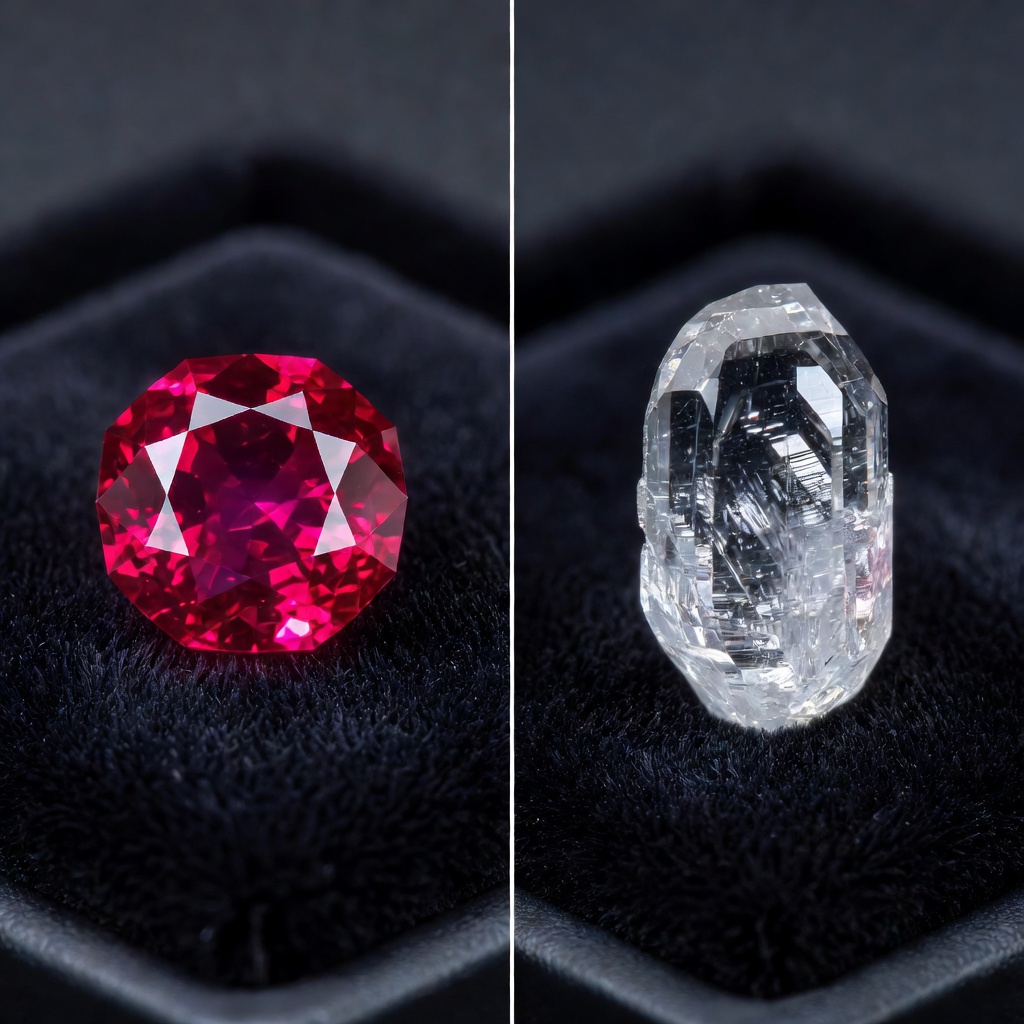
Ruby has reigned supreme in the pantheon of precious gemstones for thousands of years, distinguished chemically as corundum (aluminum oxide, Al₂O₃) containing trace elements of chromium that produce its legendary red coloration. This member of the corundum family shares its basic mineral structure with sapphire, yet the presence of chromium ions replacing aluminum creates the vivid crimson hues that have captivated civilizations from ancient India to modern auction houses. Ruby gemstone properties include exceptional hardness rated at 9.0 on the Mohs scale, making it second only to diamond in terms of resistance to scratching and daily wear damage.
The historical significance of ruby transcends mere aesthetic appreciation, embedding itself deeply into cultural warfare and monarchical traditions across continents. Burmese warriors once inserted rubies into their flesh before battle, believing the stones would render them invincible, while European royalty commissioned elaborate ruby-studded regalia to symbolize power, passion, and protection. Gemologically, rubies crystallize in the trigonal crystal system, typically forming barrel-shaped or pyramidal hexagonal prisms that gem cutters must carefully orient to maximize color saturation and brilliance. The finest specimens, particularly those exhibiting the coveted "pigeon blood" red from Myanmar's Mogok Valley, command attention not merely for their beauty but for their representation of geological perfection formed under specific pressure and temperature conditions over millions of years.
Understanding Taaffeite: The Accidental Discovery
The story of taaffeite begins not in a mining tunnel or geological survey, but rather in a Dublin jewelry store in 1945, when Austrian gemologist Richard Taaffe purchased a box of cut gemstones and noticed something peculiar about one particular mauve-colored stone. Unlike spinel, which it resembled visually, this gemstone displayed double refraction when examined through a jeweler's loupe—a property that spinel lacks entirely. This chance discovery marked the first time in recorded history that a new mineral species was identified from a faceted cut stone rather than rough crystal material, making taaffeite gemstone history uniquely significant in the annals of gemology.
Chemically, taaffeite represents a complex beryllium magnesium aluminum oxide with the formula BeMgAl₄O₈, crystallizing in the hexagonal system and representing one of the rarest gem-quality minerals known to exist. Unlike rubies that form in metamorphic rocks under high-pressure conditions, taaffeite requires extremely specific geochemical environments where beryllium and magnesium ions replace aluminum in what would otherwise become spinel crystals. This replacement occurs so infrequently in nature that fewer than ten taaffeite crystals are discovered annually, rendering it significantly rarer than diamond by orders of magnitude. The mineral typically presents in soft mauve, lilac, and pale pink hues, though color-change varieties shifting between blue and purple under different lighting conditions occasionally surface from Sri Lankan alluvial deposits.
Chemical Composition and Crystal Structure
At the molecular level, the distinction between these gemstones becomes starkly apparent, revealing why standard gemological testing remains essential for accurate identification. Ruby consists fundamentally of aluminum oxide (Al₂O₃) with chromium impurities creating its chromatic signature, while taaffeite comprises beryllium magnesium aluminate (BeMgAl₄O₈), representing an entirely different chemical family despite superficial visual similarities. This fundamental compositional difference affects every aspect of the stones' physical behavior, from how they interact with light to their specific gravity measurements that gemologists use for preliminary identification.
When conducting taaffeite vs ruby properties analysis, specific gravity provides an immediate distinguishing factor: ruby typically measures between 3.97 and 4.05, feeling noticeably heavier than taaffeite's range of 3.60 to 3.61 when handled by experienced gemologists. Refractive index variations offer even more definitive separation, with ruby registering 1.76 to 1.77 while taaffeite measures 1.71 to 1.72—differences easily detected through refractometer testing in laboratory settings. These optical properties stem directly from their crystal structures; ruby's trigonal system creates different light behavior compared to taaffeite's hexagonal formation, resulting in distinct pleochroism patterns when viewed through dichroscopic instruments that professional appraisers rely upon for authentication.
Physical Properties: Hardness and Durability
Durability considerations play a crucial role in determining appropriate settings and wear patterns for these gemstones, with significant implications for jewelry designers and consumers alike. Ruby's 9.0 rating on the Mohs hardness scale positions it among the most durable natural substances suitable for daily wear, resisting scratches from almost every material except diamond itself. Taaffeite hardness measures between 8 and 8.5 on the same scale, which while still suitable for jewelry use, indicates slightly greater susceptibility to surface abrasion and chipping when subjected to daily impacts or accidental contact with hard surfaces.
The practical implications of this hardness differential become apparent when considering setting security and long-term maintenance requirements for heirloom-quality pieces. Rubies tolerate the stress of prong settings in engagement rings and bracelets that receive constant contact, whereas taaffeite specimens—particularly those exceeding one carat—benefit from protective bezel settings that shield edges from potential damage. Both stones exhibit conchoidal fracture patterns when broken, meaning they lack perfect cleavage planes that would make them prone to splitting along specific angles; however, ruby's superior toughness (resistance to breaking) makes it the preferred choice for active wearers. Jewelry insurance appraisers typically note these durability differences when calculating replacement values, as taaffeite's relative softness combined with extreme rarity creates higher risk profiles for underwriters.
Visual Characteristics: Color and Clarity
Color evaluation represents perhaps the most subjective yet commercially critical aspect of comparing these gemstones, with distinct grading standards applied to each based on their unique optical properties. Ruby's value hierarchy centers on the "pigeon blood" red—a vivid, slightly purplish-red with high saturation and fluorescence that appears almost internally illuminated—while taaffeite color ranges typically encompass delicate mauve, lilac, pale pink, and occasionally color-change varieties that shift between blue-gray and purple under incandescent versus daylight sources. Unlike rubies, which command premium prices specifically for intense red saturation, taaffeite's value increases with color intensity regardless of hue, with deeper purple-mauve specimens generally outperforming pale pink examples in auction results.
Both gemstones display pleochroism, the phenomenon where different colors appear when viewing the crystal from different angles, though ruby's dichroism typically shows red and orangey-red compared to taaffeite's more subtle variations between violet and pale pink. Inclusion patterns provide additional diagnostic clues for gemologists: rubies frequently contain rutile needle inclusions (silk) that can create asterism in cabochon cuts or indicate untreated natural origin in faceted stones, while taaffeite typically presents with remarkable clarity due to its formation in alluvial deposits that naturally sieve out heavily included crystals. When examining疑似 specimens, collectors should note that ruby's inclusions often appear as fine intersecting needles, whereas taaffeite's rare inclusions typically manifest as fingerprints or crystal inclusions that differ significantly from corundum's characteristic "silk."
Rarity and Availability: The Supply Gap
The scarcity comparison between these gemstones reveals one of the most dramatic supply disparities in the mineral world, fundamentally affecting market dynamics and collector accessibility. While high-quality rubies remain rare and valuable, annual global production still yields thousands of carats suitable for faceting from primary sources including Myanmar, Mozambique, Madagascar, and Thailand. Conversely, taaffeite rarity reaches extreme levels with fewer than fifty faceted specimens known to exist in private collections and museums worldwide, making it one of the rarest gemstones compared to any other precious material including red beryl, alexandrite, or even painite in its earlier discovery years.
Geographic distribution further emphasizes this availability gap: rubies currently emerge from multiple active mining operations across several continents, with new deposits occasionally discovered in Greenland, Afghanistan, and Kenya. Taaffeite sources remain restricted primarily to Sri Lanka's alluvial gem gravels and limited finds in Tanzania's Umba Valley, with no significant new discoveries reported since the 1980s. This extreme scarcity creates a peculiar market phenomenon where taaffeite specimens exceeding one carat command exponential premiums disproportionate to their weight, as cutters must sacrifice significant rough material to achieve faceted gems without inclusions. Estate jewelry dealers occasionally encounter taaffeite misidentified as spinel in vintage pieces, presenting rare opportunities for knowledgeable collectors to acquire these specimens before proper identification drives prices to stratospheric levels.
Market Value and Investment Potential
Investment analysis of these gemstones requires understanding two distinctly different market dynamics—ruby's established auction house presence versus taaffeite's specialized collector niche—with taaffeite price per carat calculations following non-standard appreciation curves. Commercial-quality rubies typically range from $1,000 to $10,000 per carat depending on treatment status and origin, while unheated Burmese pigeon blood specimens regularly achieve $100,000 or more per carat at major auction houses. Taaffeite pricing remains more variable due to extreme scarcity, with smaller specimens (under 0.5 carats) occasionally appearing for $1,500 to $2,500 per carat, while stones exceeding two carats essentially become "price upon request" items where value depends entirely on competitive bidding between institutional collectors.
Several factors influence valuation beyond mere size, including origin documentation, treatment verification, and color saturation intensity. Rubies from Myanmar's Mogok Valley command premiums over Mozambique or Thai origins, particularly when accompanied by SSEF or Gübelin laboratory reports confirming Burmese provenance and absence of heat treatment. Taaffeite valuations depend heavily on color depth and clarity, with the few known reddish-purple specimens achieving higher prices than standard mauve examples. Auction records demonstrate ruby's liquidity advantage for investors seeking eventual resale, as established markets exist through Christie's, Sotheby's, and Bonhams with consistent buyer pools. Taaffeite represents a more speculative investment suitable for ultra-high-net-worth collectors focused on portfolio diversification into tangible assets where supply constraints virtually guarantee long-term appreciation, provided authentication documentation from GIA or AGL accompanies the purchase.
Identification and Authentication Methods
Professional gemstone identification methods remain essential for distinguishing these materials, as visual examination alone proves insufficient for definitive separation—particularly when encountering taaffeite's rarer red varieties or ruby's lighter pinkish tones that might suggest mauve coloring. Laboratory testing protocols begin with refractive index measurement using a refractometer: ruby consistently registers 1.762 to 1.770 with a birefringence of 0.008, while taaffeite measures 1.719 to 1.723 with birefringence around 0.004. Spectroscopic analysis provides additional confirmation, with rubies displaying characteristic chromium absorption lines in the red end of the spectrum (692.8 nm and 694.2 nm doublet) that taaffeite lacks entirely.
Practical field testing using a dichroscope helps gemologists observe the different pleochroic colors: ruby shows strong dichroism with distinct red and orangey-red or purplish-red views, while taaffeite exhibits weaker dichroism with violet and pale pink or colorless directions. Specific gravity testing via hydrostatic weighing offers another reliable separation method, though this requires unmounted stones and laboratory precision. For consumers considering significant purchases, insisting upon certification from recognized laboratories such as GIA (Gemological Institute of America) or AGL (American Gemological Laboratories) provides essential verification regarding species identification, origin determination, and treatment disclosure. These reports should specifically confirm whether a ruby has undergone heat treatment—a common enhancement that significantly affects value—or if a taaffeite is natural rather than synthetic, as laboratory-grown taaffeite entered limited commercial production in recent years, creating additional authentication challenges for the untrained buyer.
Ruby vs Taaffeite: Detailed Comparison
| Characteristic | Ruby | Taaffeite |
|---|---|---|
| Chemical Composition | Aluminum Oxide (Al₂O₃) with chromium | Beryllium Magnesium Aluminum Oxide (BeMgAl₄O₈) |
| Crystal System | Trigonal | Hexagonal |
| Mohs Hardness | 9.0 | 8.0 - 8.5 |
| Specific Gravity | 3.97 - 4.05 | 3.60 - 3.61 |
| Refractive Index | 1.762 - 1.770 | 1.719 - 1.723 |
| Typical Colors | Red, Pinkish-Red, Pigeon Blood | Mauve, Lilac, Pale Pink, Color-Change |
| Primary Sources | Myanmar, Mozambique, Thailand, Madagascar | Sri Lanka, Tanzania |
| Annual Production | Thousands of carats faceted | Fewer than 50 faceted specimens |
| Price Range per Carat | $1,000 - $100,000+ | $1,500 - $2,500+ (specimens >1ct: price on request) |
| Rarity Level | Rare | Extremely Rare (rarer than diamond) |
| Discovery Method | Mined as rough crystal | Identified from faceted cut stone (1945) |
| Optical Properties | Doubly refractive, strong pleochroism | Doubly refractive, weak pleochroism |
| Best Use | Daily wear jewelry, engagement rings | Collector specimens, occasional wear |
Conclusion: Making Your Choice
Selecting between these extraordinary gemstones ultimately depends on aligning the stone's inherent characteristics with the collector's specific objectives, risk tolerance, and intended usage. For jewelry buyers seeking heirloom pieces capable of withstanding daily wear while maintaining liquid market value, ruby offers the optimal combination of durability, beauty, and investment security. The "King of Gems" provides centuries of proven appreciation in value, established auction markets, and the emotional satisfaction of wearing one of history's most revered precious stones. Conversely, collectors prioritizing absolute rarity and portfolio diversification should consider taaffeite, accepting that this gemstone functions better as a stored tangible asset or occasional wear piece rather than a daily adornment.
Budget considerations also influence this decision significantly, as entry-level taaffeite specimens in smaller sizes may actually prove more accessible than fine unheated Burmese rubies, while top-tier examples of either material require substantial six or seven-figure investments. When choosing gemstones for long-term value retention, consider that ruby's market enjoys broader demand from jewelry manufacturers and retail consumers, while taaffeite appeals to a narrower but intensely competitive collector base willing to pay premiums for provenance and size. Regardless of selection, always prioritize certified natural stones from reputable dealers, ensuring that your acquisition—whether the historically celebrated ruby or the serendipitously discovered taaffeite—represents a genuine geological treasure worthy of its place in your collection.
Frequently Asked Questions
Is taaffeite more valuable than ruby?
While high-quality rubies (especially Burmese pigeon blood specimens) typically command higher per-carat prices at auction, faceted taaffeite over 2 carats is often more expensive than commercial-grade rubies due to extreme rarity. However, record-breaking rubies still exceed taaffeite values significantly.
How can I tell if I have a taaffeite or a ruby?
The most reliable method is refractive index testing: ruby registers 1.76-1.77 while taaffeite measures 1.71-1.72. Additionally, taaffeite is doubly refractive (like spinel's optical properties) whereas ruby shows distinct dichroism. Professional laboratory certification is essential for positive identification.
Why is taaffeite so rare compared to ruby?
Taaffeite requires specific geological conditions where beryllium and magnesium replace aluminum in spinel's crystal structure—a rare geochemical occurrence. Additionally, taaffeite forms in carbonate rocks under unique pressure/temperature conditions that occur in very few locations worldwide, primarily Sri Lanka.
Can taaffeite be red like a ruby?
Natural taaffeite rarely exhibits deep red hues; it typically displays mauve, lilac, pale pink, or color-change properties (blue to purple). While some reddish specimens exist, they lack the vivid chromium-red saturation characteristic of fine rubies and tend toward purplish-pink tones.
Which is better for engagement rings, ruby or taaffeite?
Ruby is generally superior for daily-wear engagement rings due to its 9.0 Mohs hardness and excellent toughness. Taaffeite, while durable at 8-8.5 hardness, is better suited for occasional wear pieces or collections due to extreme rarity and the difficulty of replacing damaged stones.
Was taaffeite really discovered in a jewelry store?
Yes, in 1945, Austrian gemologist Richard Taaffe discovered the mineral in a box of cut gemstones purchased from a Dublin, Ireland jewelry store. He noticed one stone showed birefringence (double refraction) unlike spinel, leading to the identification of this new mineral species—the only gemstone identified from a faceted cut stone rather than rough material.
Do rubies and taaffeites have the same healing properties?
Crystal healing traditions attribute different properties to each stone: ruby is associated with passion, vitality, and courage (root chakra), while taaffeite is linked to clarity, problem-solving, and spiritual growth (crown chakra). However, these metaphysical properties lack scientific evidence.
Where can I buy authentic taaffeite?
Authentic taaffeite is available through high-end auction houses (Christie's, Sotheby's), specialized rare gemstone dealers, and select certified jewelers. Due to its rarity, always insist on GIA or AGL certification verifying the stone is natural taaffeite, not synthetic or simulant, and expect limited inventory with significant lead times.