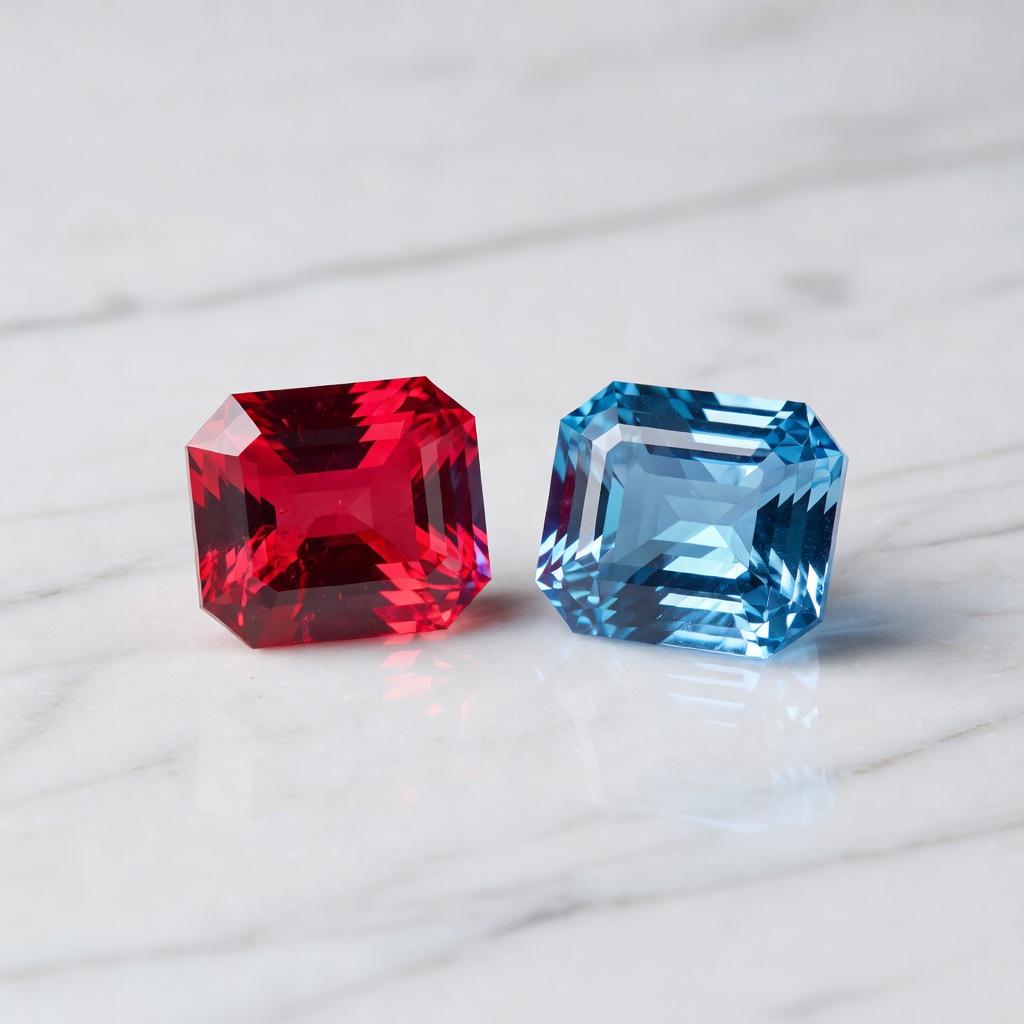
Understanding the Fundamental Differences Between Ruby and Swiss Blue Topaz
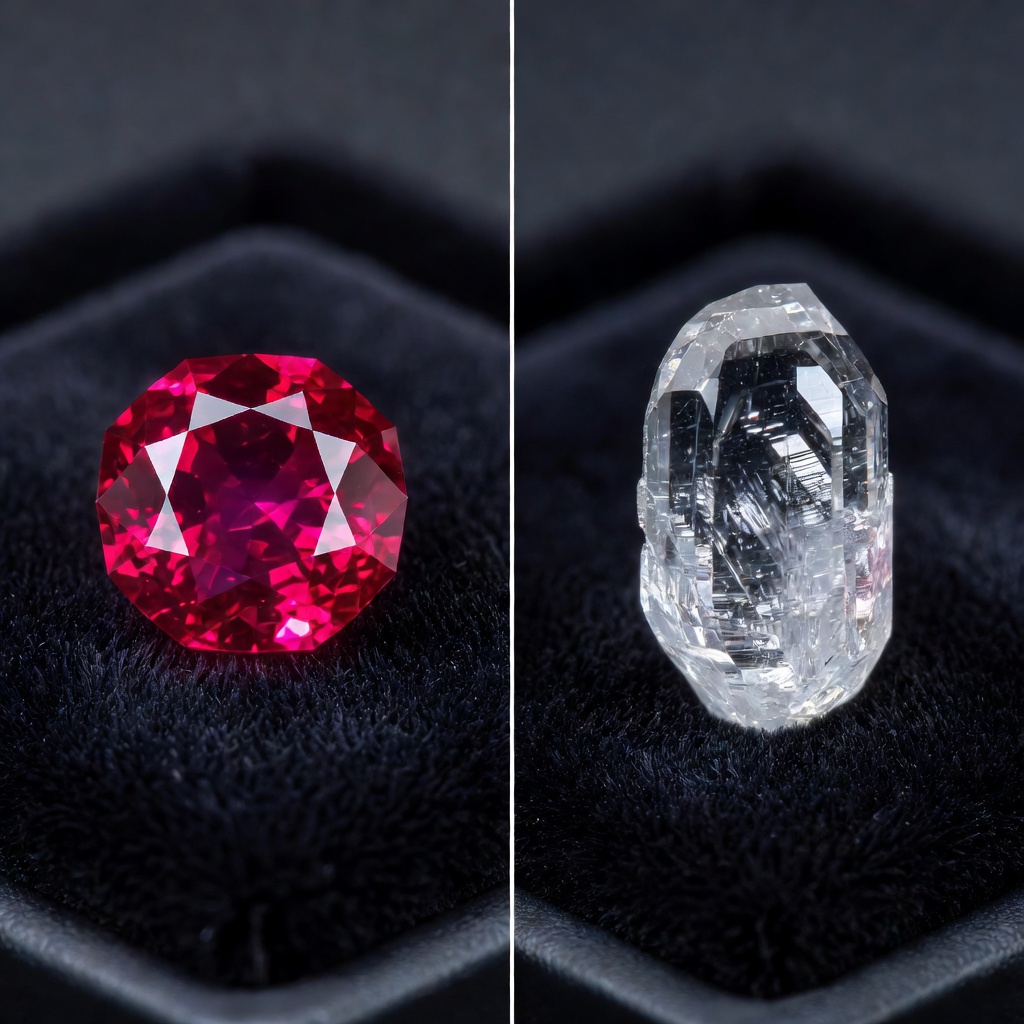
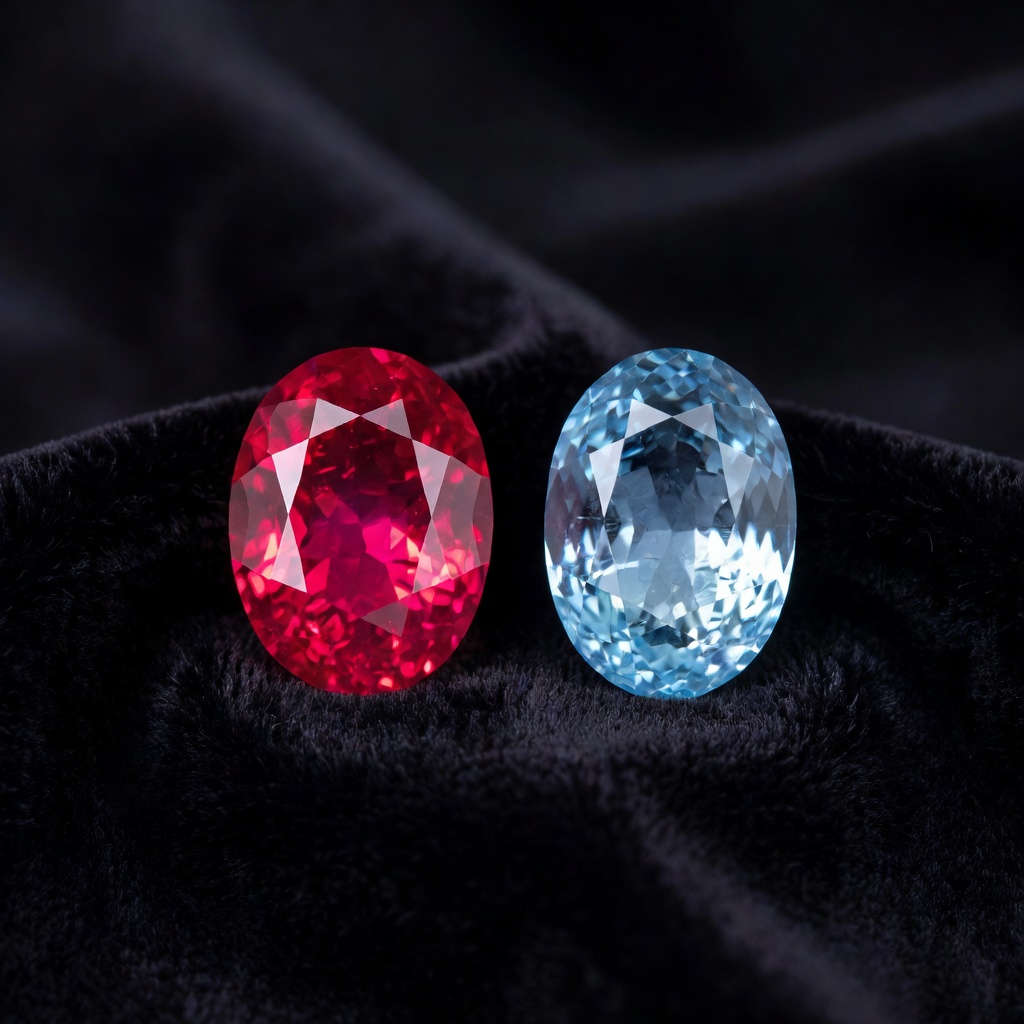
When selecting a gemstone for fine jewelry, the choice between ruby vs Swiss blue topaz represents one of the most significant decisions in the precious stone comparison spectrum. Rubies, belonging to the prestigious corundum family alongside sapphires, have commanded reverence as one of the "big three" colored gemstones for millennia, symbolizing wealth, power, and passion across civilizations from ancient India to modern auction houses. In contrast, Swiss blue topaz offers an accessible entry point into the world of colored gemstones, providing stunning vivid blue hues at a fraction of the cost while maintaining respectable durability for various jewelry applications.
The fundamental distinction begins at the mineralogical level, where ruby gemstone characteristics align with the aluminum oxide (corundum) structure, while Swiss blue topaz emerges from a completely different silicate mineral family. Historically, rubies adorned the crowns of monarchs and the hilts of warriors' swords, believed to grant invincibility and prosperity to their owners. Swiss blue topaz, though discovered in ancient times, gained widespread popularity only after modern irradiation treatments developed in the mid-20th century made its striking sky-blue color commercially available. This precious stone comparison reveals a stark economic reality: while fine untreated rubies can command prices exceeding $100,000 per carat, Swiss blue topaz typically ranges between $10 to $100 per carat, making it an attractive option for fashion-forward consumers seeking bold color without substantial investment.
Physical and Chemical Properties: A Scientific Analysis
Crystalline Structure and Composition
Delving into the molecular architecture reveals why these gemstones behave differently under various conditions. Ruby consists of aluminum oxide (Al₂O₃) with trace chromium elements replacing aluminum atoms in the crystal lattice, creating the stone's characteristic red coloration through a phenomenon known as crystal field theory. This corundum vs topaz mineral distinction is crucial because corundum's trigonal crystal system creates exceptional hardness and stability. Conversely, Swiss blue topaz possesses the chemical formula Al₂SiO₄(F,OH)₂, belonging to the nesosilicate subclass with an orthorhombic crystal structure that includes fluorine and hydroxyl ions, fundamentally altering its physical behavior and optical properties.
Hardness and Durability Metrics
The Mohs hardness scale provides essential guidance for jewelry wearability, with ruby ranking 9—second only to diamond's perfect 10—making it exceptionally resistant to scratching and surface abrasion. This remarkable hardness stems from strong oxygen-aluminum bonds within the corundum structure, allowing rubies to maintain their polish indefinitely under normal wear conditions. Swiss blue topaz registers 8 on the Mohs scale, which initially appears sufficiently hard for jewelry use; however, the crucial distinction lies in topaz's perfect basal cleavage, a property absent in corundum. This cleavage plane means that while topaz resists scratching adequately, it can split or chip when struck at specific angles, requiring more protective settings and careful handling than the virtually indestructible ruby.
Optical Characteristics and Brilliance
Refractive index measurements quantify how much light bends when entering a gemstone, directly influencing brilliance and "life." Ruby exhibits a refractive index of 1.76-1.77, creating substantial brilliance and fire that contributes to its luxurious appearance in finished jewelry. Swiss blue topaz displays a lower refractive index of 1.61-1.64, resulting in a softer, more subtle sparkle that some designers prefer for contemporary, understated pieces. Specific gravity differences further distinguish these stones: ruby's density ranges from 3.97 to 4.05, giving it substantial heft compared to topaz's lighter 3.53-3.56 specific gravity. Gemologists utilize these measurable differences alongside pleochroism—the display of different colors when viewed from different angles—to definitively separate these minerals during identification processes.
Color, Clarity, and Visual Appeal Factors
The Signature Hues: Pigeon Blood vs Sky Blue
Color represents the primary value determinant for both gemstones, though their origins differ dramatically. The most coveted rubies display "pigeon blood" red—a vivid, saturated crimson with subtle blue undertones resulting specifically from chromium content and the absence of iron that would dull the color. This natural color occurrence commands premium prices, particularly for stones from Myanmar's Mogok Valley. Swiss blue topaz presents a electric, vivid sky-blue achieved through artificial irradiation and heat treatment of originally colorless or pale blue rough material. While natural blue topaz exists, it remains extraordinarily rare; approximately 99% of blue topaz on the market undergoes enhancement, a standard industry practice that permanently stabilizes the color without requiring disclosure as "treatment" in many jurisdictions.
Clarity Expectations and Visual Purity
Clarity standards diverge significantly between these gemstones, affecting both price and aesthetic considerations. Rubies typically contain inclusions—internal characteristics including rutile needles (silk), crystals, and feathers—that gemologists accept as evidence of natural origin. These inclusions often create asterism (star effects) in cabochon-cut stones, adding value rather than detracting from it. Eye-clean rubies (showing no inclusions to the unaided eye) command substantial premiums due to their rarity. Conversely, Swiss blue topaz commonly occurs in large, clean crystals with exceptional transparency, allowing cutters to produce stones with flawless clarity that maximize light performance. This abundance of clean material means that consumers should expect eye-clean quality in Swiss blue topaz as standard, whereas included rubies remain acceptable and expected in the marketplace.
Optical Phenomena and Light Behavior
Both gemstones exhibit pleochroism, though this phenomenon manifests differently in each. Ruby displays dichroism, showing orange-red and purplish-red when viewed from different crystal directions, requiring skilled cutters to orient the table perpendicular to the c-axis to minimize color zoning. Swiss blue topaz shows weaker pleochroism with colorless to pale blue variations, making cutting orientation less critical for color optimization. Some exceptional rubies exhibit chatoyancy (cat's eye effect) or asterism (six-rayed star) when cut as cabochons, phenomena absent in topaz due to different crystal structure and inclusion patterns. These optical ruby gemstone characteristics contribute to ruby's status as a collector's gemstone with unique personality traits in each specimen.
Origins, Rarity, and Market Availability
Global Sources and Mining Geography
Geographic origin significantly influences both value and characteristics in this precious stone comparison. Premium rubies historically originated from Myanmar's Mogok region, producing stones with exceptional fluorescence and saturated color due to low iron content. Modern markets increasingly rely on Mozambique's Montepuez mines, which yield larger quantities of commercial-grade material alongside occasional fine specimens. Thailand, Sri Lanka, and Madagascar contribute additional supply, though Thai rubies typically contain higher iron, reducing fluorescence and producing darker, garnet-like reds. Swiss blue topaz sources present a different geographic distribution, with Brazil's Minas Gerais state dominating production through alluvial deposits and hard-rock mining. Nigeria, China, and Russia provide supplementary material, with Brazilian rough generally considered optimal for achieving the vivid Swiss blue coloration through treatment.
Rarity Factors and Supply Dynamics
The natural gemstone prices reflect fundamental scarcity differences between these materials. Fine untreated rubies exceeding five carats with exceptional color and clarity represent geological miracles, with fewer than 50 significant specimens appearing at auction annually worldwide. This extreme rarity drives the investment market, with Burmese rubies over ten carats essentially museum pieces commanding millions. Swiss blue topaz occurs in massive crystals weighing hundreds of pounds, allowing cutters to produce calibrated stones in any desired size without scarcity premiums. This abundance means that while a ten-carat fine ruby might cost $500,000 or more, a ten-carat Swiss blue topaz retails for approximately $100-300, illustrating the dramatic valuation gap based purely on supply limitations rather than aesthetic merit.
Ethical Sourcing Considerations
Contemporary consumers increasingly prioritize ethical provenance, affecting both gemstone categories differently. Myanmar rubies face complex sanctions and human rights concerns regarding military junta involvement in mining, leading many jewelers to favor Mozambican or Thai origins with documented ethical supply chains. The Swiss blue topaz market benefits from predominantly large-scale, mechanized Brazilian mining operations with fewer artisanal labor concerns, though environmental impact assessments remain important. Certification from organizations like the Responsible Jewellery Council or Gemological Institute of America origin reports helps consumers navigate these ethical considerations, ensuring that natural gemstone prices reflect not only quality but also responsible extraction practices.
Price Comparison and Investment Value Analysis
Current Market Valuations and Price Structures
Understanding gemstone investment value requires analyzing price per carat structures that reveal the economic hierarchy between these stones. Commercial-grade rubies start around $1,000 per carat for heated material with decent color, escalating rapidly to $10,000-$50,000 per carat for fine unheated Burmese stones, with record-breaking specimens exceeding $100,000 per carat at auction. Treatment significantly impacts valuation: heat-treated rubies command 30-50% less than unheated equivalents, while glass-filled rubies (a common treatment for low-grade material) retail for $50-500 per carat with minimal resale value. Swiss blue topaz maintains consistent affordability across all sizes, typically retailing at $10-30 per carat for standard commercial quality, with exceptional large specimens or custom cuts reaching $100 per carat, making size upgrades economically feasible for consumers seeking statement pieces.
Investment Potential and Appreciation Trends
Historical data strongly favors rubies for wealth preservation and appreciation. Over the past decade, fine untreated Burmese rubies have appreciated 8-15% annually, outperforming many traditional investments during volatile economic periods. The 2015 removal of U.S. sanctions on Myanmar initially increased supply but subsequent mining depletion has tightened markets, particularly for stones over three carats. Swiss blue topaz functions primarily as a consumable fashion item rather than investment vehicle; treated topaz shows minimal appreciation, with resale values typically 20-40% of retail purchase prices. However, rare natural blue topaz specimens or historic imperial topaz (pink-orange variety) represent legitimate collectible categories with investment potential unrelated to the common Swiss blue variety.
Value Retention and Liquidity Considerations
Investment liquidity differs substantially between these gemstones. Certified, unheated rubies from reputable dealers maintain strong secondary markets through auction houses like Christie's and Sotheby's, with established price histories supporting bank collateralization in some jurisdictions. Swiss blue topaz lacks institutional investment infrastructure; while beautiful and desirable for jewelry, it functions as a depreciating asset similar to consumer electronics. For buyers prioritizing gemstone investment value, rubies require higher initial capital but offer portfolio diversification and inflation hedging, whereas Swiss blue topaz provides immediate gratification and wearable enjoyment without expectation of financial return. This distinction guides sensible allocation decisions: reserve rubies for significant investments and heirloom creation, while utilizing Swiss blue topaz for fashion-forward, trend-responsive purchases.
Birthstone Significance and Symbolic Meanings
July's Fiery Protector: Ruby Symbolism
As the designated birthstone for July, ruby carries profound cultural weight extending beyond mere adornment. Ancient Sanskrit texts referred to ruby as "ratnaraj" or "king of precious stones," believed to maintain health, wisdom, and success in love when worn by the owner. Burmese warriors implanted rubies into their flesh before battle, convinced the stones rendered them invulnerable to wounds. In contemporary birthstone jewelry guide applications, ruby represents passion, courage, and prosperity, making it an ideal gift for 40th wedding anniversaries and significant milestones. The stone's association with the root chakra in metaphysical practices grounds energy and stimulates life force, aligning with its historical connection to vitality and blood.
December's Cool Wisdom: Blue Topaz Heritage
Blue topaz serves as one of December's three birthstones alongside turquoise and tanzanite, offering a more affordable alternative to these sometimes costly counterparts. Historically associated with the sun god Ra by ancient Egyptians and believed to break magical spells by medieval Europeans, topaz has undergone significant reinterpretation in modern crystal healing communities. Swiss blue topaz specifically resonates with the throat chakra, symbolizing clear communication, wisdom, and truth-seeking. Unlike ruby's intense, passionate energy, blue topaz promotes calmness, aids in meditation, and supports articulate expression, making it popular among educators, writers, and public speakers seeking metaphysical support for their professional activities.
Cultural Prestige and Royal Associations
The precious stone comparison extends into royal regalia and state ceremonies, where rubies dominate historical collections. The British Crown Jewels feature the Black Prince's Ruby (actually a spinel, historically confused with ruby), while the Smithsonian Institution houses the 137-carat Rosser Reeves Star Ruby. These associations cement ruby's status as a stone of kings and emperors. Swiss blue topaz lacks comparable historical royal patronage but has gained contemporary celebrity endorsement, with figures like Kate Middleton and Taylor Swift wearing blue topaz earrings and pendants at high-profile events. This modern acceptance positions Swiss blue topaz as a democratic gemstone—beautiful, accessible, and suitable for everyday elegance rather than exclusively ceremonial contexts.
Durability and Everyday Wear Suitability
Ruby's Exceptional Toughness for Daily Life
For consumers seeking engagement rings or daily-wear jewelry, ruby gemstone characteristics offer nearly ideal durability parameters. Ranking 9 on the Mohs hardness scale and possessing excellent toughness (resistance to breaking and chipping), rubies withstand the abrasions of modern life including incidental contact with household surfaces, office environments, and active lifestyles. Unlike diamonds, which can chip despite their hardness, ruby's crystal structure lacks cleavage planes, meaning it won't split along predetermined directions when struck. This durability explains ruby's popularity in Victorian and Edwardian engagement rings that remain wearable today after centuries of continuous use, demonstrating exceptional longevity that justifies higher initial costs through generations of wear.
Swiss Blue Topaz Durability Concerns and Limitations
While Swiss blue topaz durability suffices for occasional wear and protected settings, significant limitations affect its suitability for high-impact applications. The stone's perfect cleavage along the basal plane creates a vulnerability that hard knocks or temperature shocks can exploit, potentially splitting the gemstone cleanly. Additionally, the irradiation treatment that creates Swiss blue coloration can sometimes induce internal stress within the crystal lattice, though modern treatment protocols have minimized this risk. For rings intended for daily wear, Swiss blue topaz requires protective bezel settings rather than exposed prong mounts, and owners should remove the jewelry before engaging in sports, housework, or activities involving hand impacts. These precautions make topaz better suited for pendants and earrings, which experience less mechanical stress than rings.
Professional Recommendations for Active Lifestyles
Jewelry designers and gemologists generally recommend reserving Swiss blue topaz for "cocktail rings" or special occasion pieces rather than perpetual wear items. For active professionals, athletes, or individuals working with their hands, ruby offers worry-free durability that survives gym workouts, gardening, and kitchen work without requiring removal. If selecting Swiss blue topaz for daily wear, choose low-profile settings that protect the girdle (the stone's widest circumference) and avoid large stones exceeding five carats, which present larger cleavage planes and greater fracture risk. Both gemstones benefit from annual professional inspections to check setting security, but ruby tolerates ultrasonic cleaning and steam cleaning methods that might damage topaz due to thermal shock or vibration along cleavage planes.
Jewelry Design and Setting Options
Optimal Cuts and Faceting Styles
The physical properties of each gemstone dictate optimal cutting styles that maximize beauty while minimizing risk. Rubies traditionally appear in cushion, oval, and round brilliant cuts that minimize weight loss from rough while maximizing color saturation. Emerald cuts, though elegant, prove less common for ruby due to the step-cut's emphasis on clarity rather than color, and because the cut's sharp corners align with potential fracture points. Swiss blue topaz, with its abundant clean rough and single-direction cleavage, accommodates virtually any cut including elaborate fantasy shapes, checkerboard patterns, and long emerald cuts that emphasize the stone's clarity and size. The gemstone's affordability allows designers to experiment with unconventional cuts like trillion, marquise, and shield shapes that would waste expensive ruby rough.
Metal Pairings and Color Combinations
Metal selection significantly impacts the final aesthetic in this birthstone jewelry guide. Traditional ruby settings utilize 18k or 22k yellow gold, which complements the stone's warm red undertones and references historical Indian and Burmese jewelry traditions. Platinum and white gold provide contemporary alternatives that create striking contrast, making the ruby appear more vivid through color theory principles. Swiss blue topaz pairs exceptionally with white metals—sterling silver, white gold, and platinum—that enhance its cool, aquatic tones. Rose gold creates a modern, romantic pairing with both stones: the warm pink metal softens ruby's intensity while adding unexpected warmth to blue topaz, creating versatile pieces that transition between casual and formal contexts.
Design Versatility and Contemporary Trends
Ruby maintains associations with formal luxury—think Oscar red carpets and state dinners—though modern designers increasingly incorporate rubies into stackable rings and minimalist pendants for daily wear. The gemstone investment value of rubies encourages timeless, classic designs that won't appear dated decades later. Swiss blue topaz dominates contemporary fashion jewelry, appearing in large cocktail rings, geometric art deco-inspired pieces, and bohemian-style layered necklaces. Recent celebrity trends show Swiss blue topaz in asymmetric earrings and mixed-gemstone "rainbow" arrangements alongside amethyst, citrine, and peridot. For cohesive jewelry wardrobes, consumers might select ruby for signature, investment-quality pieces (solitaire rings, tennis bracelets) while using Swiss blue topaz for trendy, seasonal items that capture current fashion moments without substantial financial commitment.
Care, Cleaning, and Maintenance Requirements
Safe Cleaning Protocols for Each Gemstone
Proper maintenance preserves both beauty and value, though cleaning methods diverge based on mineral properties. Ruby's exceptional hardness and lack of cleavage make it safe for ultrasonic cleaning and steam cleaning at professional jewelers, effectively removing accumulated lotions and oils from behind the stone. Home cleaning requires only warm water, mild dish soap, and a soft brush. Swiss blue topaz demands gentler care due to its cleavage vulnerability; ultrasonic vibration can potentially split the stone along its perfect cleavage plane. Clean topaz using only lukewarm water and mild soap, avoiding temperature extremes that could induce thermal shock. Never use steam cleaners or harsh chemicals on Swiss blue topaz, as these methods risk structural damage or color alteration in treated stones.
Storage Solutions and Damage Prevention
Storage practices prevent accidental damage and preserve finish quality. Ruby's hardness means it can scratch softer gemstones including topaz, gold, and silver, requiring separate storage in individual soft pouches or compartmentalized jewelry boxes. Despite its hardness, ruby can scratch other rubies, so avoiding contact between jewelry pieces remains important. Swiss blue topaz requires protection not only from harder gems but also from prolonged UV light exposure, which can fade the irradiation-induced color over decades of direct sunlight exposure. Store topaz jewelry in opaque boxes away from windows, and avoid wearing it during prolonged sunbathing or tanning bed sessions. Both gemstones benefit from soft linings that prevent surface abrasion, though ruby tolerates more casual storage than the more delicate topaz.
Professional Maintenance and Restoration
Annual professional inspections identify loose settings before stones fall out, crucial for both gemstones but especially for exposed topaz in ring settings. Ruby occasionally requires re-polishing if surface-reaching inclusions create wear patterns over decades of use, a relatively straightforward procedure given the stone's hardness. Swiss blue topaz may require more frequent re-polishing if scratches accumulate on the surface, though the stone's softness allows relatively easy restoration. If a topaz stone chips due to impact, replacement often proves more economical than repair given the material's modest cost, whereas chipped rubies warrant expert evaluation for possible recutting to salvage value. Maintaining certification documentation for rubies ensures that any future repairs or modifications preserve the stone's documented provenance and treatment history.
Final Verdict: Which Gemstone Should You Choose?
Selecting between ruby vs Swiss blue topaz ultimately depends on creating a decision matrix that weighs budget constraints, intended use, longevity requirements, and personal aesthetic preferences. For significant life milestones—engagements, anniversaries, or heirloom creation—ruby stands unrivaled despite its premium pricing. The combination of exceptional durability, historical prestige, and strong investment appreciation makes ruby the logical choice for pieces intended to last generations and potentially appreciate in value. Choose ruby when the budget accommodates $5,000+ investments, when the wearer maintains active lifestyles requiring durable jewelry, or when the piece represents a significant emotional milestone warranting permanent, valuable commemoration.
Swiss blue topaz excels as an affordable luxury option for fashion-forward consumers seeking bold color statements without financial constraint. Select topaz for cocktail jewelry, trendy pieces that may cycle out of style, or gifts for young professionals building their jewelry collections. The stone's impressive size availability allows for dramatic designs impossible with ruby budgets, making it ideal for statement pendants, large earrings, or right-hand rings worn occasionally. For buyers prioritizing immediate visual impact over long-term investment, or those seeking December birthstone jewelry without the expense of tanzanite or turquoise, Swiss blue topaz provides exceptional value and versatile wearability.
Expert gemologists often recommend a diversified approach: acquire one exceptional ruby piece as a lifelong treasure and foundation heirloom, then supplement with Swiss blue topaz fashion items that allow color experimentation and current trend participation. This strategy maximizes both investment security and stylistic flexibility. Ultimately, both gemstones offer legitimate beauty—the ruby as nature's rare red treasure demanding respect and preservation, the Swiss blue topaz as democratized elegance bringing vivid color to accessible price points. Your selection should align with your financial comfort zone, lifestyle reality, and the emotional narrative you wish your jewelry to convey.
Detailed Comparison Table: Ruby vs Swiss Blue Topaz
| Characteristic | Ruby (Natural) | Swiss Blue Topaz |
|---|---|---|
| Chemical Composition | Aluminum Oxide (Al₂O₃) with Chromium | Aluminum Silicate Fluoride (Al₂SiO₄(F,OH)₂) |
| Mineral Family | Corundum (Precious) | Topaz (Semi-Precious) |
| Mohs Hardness | 9 (Excellent scratch resistance) | 8 (Good scratch resistance, cleavage vulnerability) |
| Color Origin | Natural chromium content (rarely treated) | Irradiation and heat treatment of colorless rough |
| Typical Clarity | Included (silk, crystals common; eye-clean rare) | Eye-clean to flawless (inclusions uncommon) |
| Price Range (per carat) | $1,000 - $100,000+ (fine untreated) | $10 - $100 (commercial quality) |
| Primary Sources | Myanmar, Mozambique, Thailand | Brazil, Nigeria, China |
| Durability for Daily Wear | Excellent (no cleavage, very tough) | Moderate (perfect cleavage, requires protection) |
| Investment Potential | High (appreciates 5-15% annually) | Low (minimal resale value) |
| Birthstone Month | July | December |
| Cleaning Method | Ultrasonic and steam safe | Mild soap only (no ultrasonic) |
| Best Jewelry Application | Engagement rings, heirloom pieces, daily wear | Cocktail rings, pendants, occasional wear |
Frequently Asked Questions
Which is more expensive, ruby or Swiss blue topaz?
Rubies are significantly more expensive, costing $1,000-$100,000+ per carat for fine quality, while Swiss blue topaz ranges from just $10-$100 per carat. This 100-1000x price difference reflects ruby's extreme rarity and precious gemstone status compared to abundant topaz. The investment value gap widens further for large specimens: a five-carat untreated Burmese ruby might command $50,000-$250,000, whereas a five-carat Swiss blue topaz typically retails for under $200. This pricing structure makes ruby an exclusive luxury item while positioning Swiss blue topaz as democratically accessible fine jewelry.
Can I wear Swiss blue topaz in an engagement ring?
While possible, Swiss blue topaz has perfect cleavage making it vulnerable to chips and cracks with daily wear. For engagement rings, ruby (hardness 9) is far more durable and suitable for lifelong wear. If choosing topaz, opt for protective settings like bezels and reserve it for occasional wear. Consider also that engagement rings experience significant mechanical stress—grocery shopping, gym workouts, handwashing—that could compromise topaz integrity over years of daily use. Many jewelers recommend selecting topaz for anniversary rings or right-hand fashion rings rather than primary bridal jewelry.
Is Swiss blue topaz a natural gemstone?
Swiss blue topaz is natural topaz material that has been irradiated and heat-treated to achieve its vivid blue color. Natural blue topaz is extremely rare; virtually all blue topaz on the market starts as colorless rough and undergoes permanent, stable enhancement treatment. The Federal Trade Commission does not require disclosure of this treatment because it is considered standard and permanent, unlike temporary coatings or dyes. The base material is indeed natural topaz crystal, distinguishing it from synthetic lab-created stones, though the color results from human intervention.
Which gemstone is better for investment purposes?
Rubies are vastly superior for investment. Fine untreated rubies appreciate 5-15% annually and have strong resale markets. Swiss blue topaz has minimal investment value due to abundance and treatment. Only rare, large, museum-quality topaz specimens have collectible value. Investment-grade rubies require certification from laboratories like GIA or SSEF documenting origin (preferably Myanmar) and absence of heat treatment. These stones function as portable wealth similar to fine art, whereas treated topaz functions as a consumable luxury good similar to a designer handbag—beautiful and enjoyable, but depreciating rather than appreciating.
How can I tell if my ruby or Swiss blue topaz is real?
For rubies, look for natural inclusions under magnification and consider certification from GIA or SSEF. Swiss blue topaz typically shows eye-clean clarity; authentic pieces have natural crystal inclusions. Both should be tested by a gemologist using refractive index, specific gravity, and spectroscopy tools. Synthetic rubies (flame fusion or hydrothermal) exhibit curved growth lines or specific inclusion patterns absent in natural stones. Glass imitations of both gems feel warm to the touch and show conchoidal fractures rather than crystalline cleavage. Professional appraisal remains the only definitive method for high-value purchases.
Do rubies and Swiss blue topaz require different care?
Yes. Rubies are tough and tolerate ultrasonic cleaning, while Swiss blue topaz requires gentler care due to cleavage and potential UV fading. Store topaz away from sunlight, clean with mild soap and soft brush, and avoid temperature shocks. Both should be stored separately to prevent scratching. Additionally, remove Swiss blue topaz before applying lotions, perfumes, or hairsprays, as chemical buildup can dull the surface and require professional polishing. Ruby's chemical stability makes it more forgiving of everyday cosmetic exposure, though regular cleaning maintains optimal brilliance for both stones.
What metals pair best with each gemstone?
Rubies traditionally pair with yellow gold for classic elegance or platinum for durability. Swiss blue topaz complements white gold and sterling silver, accentuating its cool blue tones. Rose gold creates a modern contrast with both gemstones. For ruby, higher karat gold (18k-22k) enhances the stone's warmth and historical associations with Indian and Burmese jewelry traditions. With Swiss blue topaz, the affordability of the gemstone allows experimentation with alternative metals like palladium or titanium for contemporary designs. Two-tone settings featuring both white and yellow gold work exceptionally with ruby, while tri-color designs incorporating rose gold highlight topaz's versatility.
Which birth month is associated with each stone?
Ruby is the birthstone for July, symbolizing passion and vitality. Blue topaz serves as December's birthstone (alongside turquoise and tanzanite), representing wisdom and clarity. This makes ruby jewelry ideal for summer birthdays and Swiss blue topaz perfect for winter celebrations. Historically, ruby's association with July connects to its fiery color and the height of summer energy, while December's cool blue topaz reflects winter skies and ice. Both stones also celebrate specific wedding anniversaries: ruby marks 40 years of marriage, while blue topaz represents the 4th anniversary, offering gift opportunities beyond birth month associations.