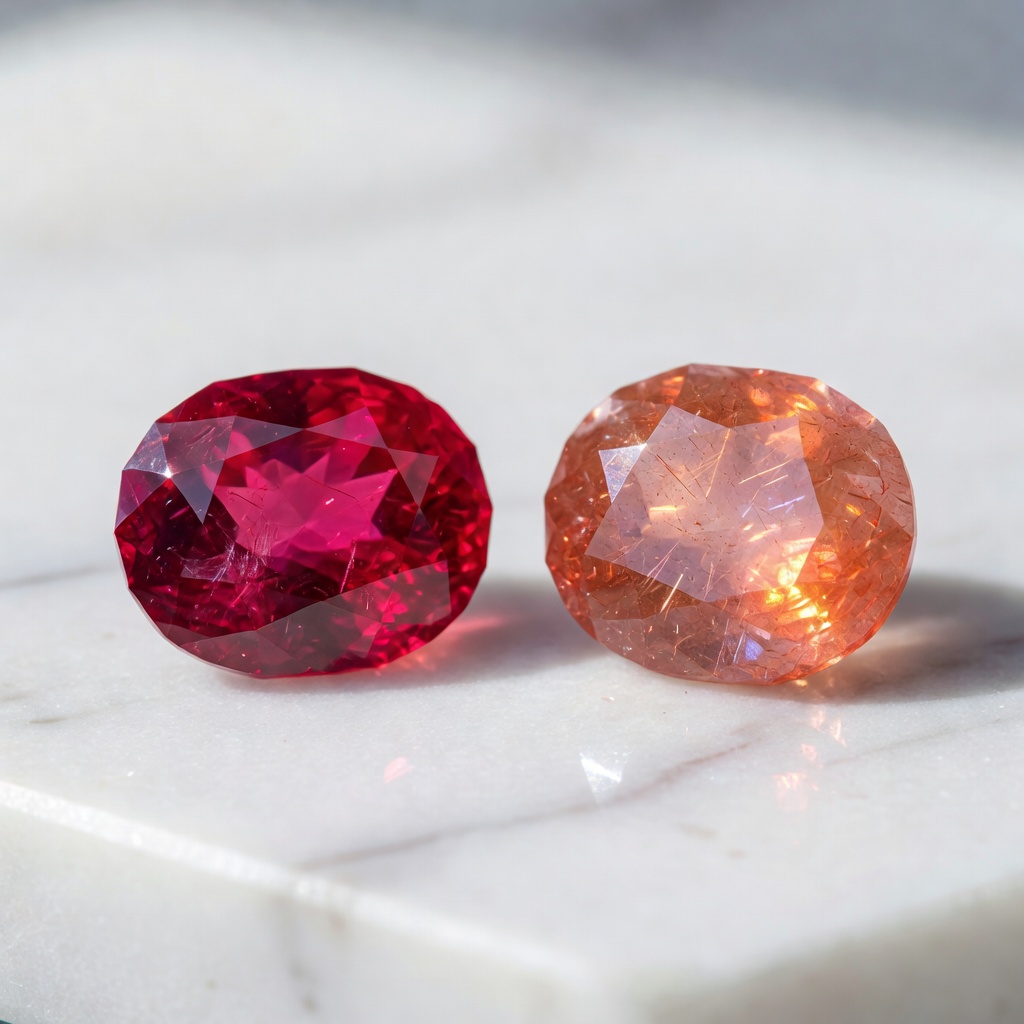
Understanding the Fundamental Differences Between Ruby and Sunstone
When exploring the Ruby vs Sunstone debate, gem enthusiasts encounter two distinctly different members of the red gemstone family that share little beyond their warm color palette. Ruby represents the pinnacle of precious gemstones as a variety of corundum (aluminum oxide), commanding respect as one of the "Big Three" colored stones alongside sapphire and emerald. In contrast, sunstone belongs to the plagioclase feldspar mineral group, classified as a semi-precious stone that offers unique optical characteristics at a fraction of the cost. While both gemstones occupy the coveted red-orange color spectrum, they deliver vastly different visual phenomena, durability profiles, and value propositions that cater to different jewelry needs and investment strategies.
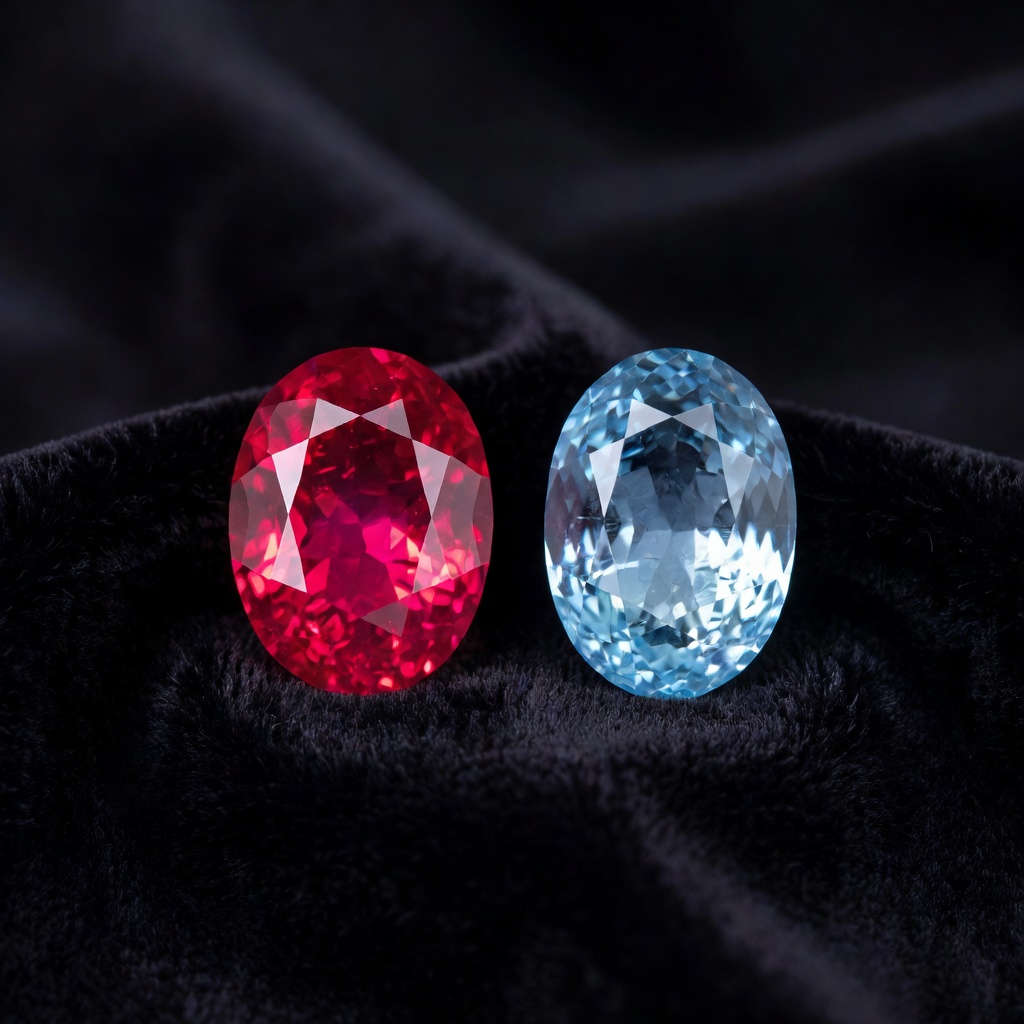
The red gemstone comparison becomes particularly fascinating when examining how these stones interact with light. Ruby captivates through its deep, saturated red fluorescence and exceptional brilliance derived from a high refractive index, creating an internal fire that seems to glow from within. Sunstone, however, produces a metallic glitter effect known as aventurescence, caused by microscopic copper platelets suspended within the feldspar crystal structure. This fundamental difference in optical behavior means that while rubies appear to contain concentrated passion and intensity, sunstones sparkle with a playful, glittering warmth reminiscent of captured sunlight.
Price accessibility represents perhaps the most practical distinction between these stones for the average consumer. Ruby functions as a luxury investment vehicle, with fine unheated Burmese specimens commanding prices that rival or exceed diamonds on a per-carat basis, making them heirlooms reserved for significant occasions. Sunstone emerges as the designer favorite for accessible luxury, offering substantial carat weights and striking visual impact at price points that allow for creative, statement-making jewelry without financial strain. This dramatic difference in market positioning allows collectors to choose between ruby's timeless prestige and sunstone's contemporary bohemian charm based on lifestyle requirements and budget parameters.
Geological Origins: From Metamorphic Rocks to Basalt Flows
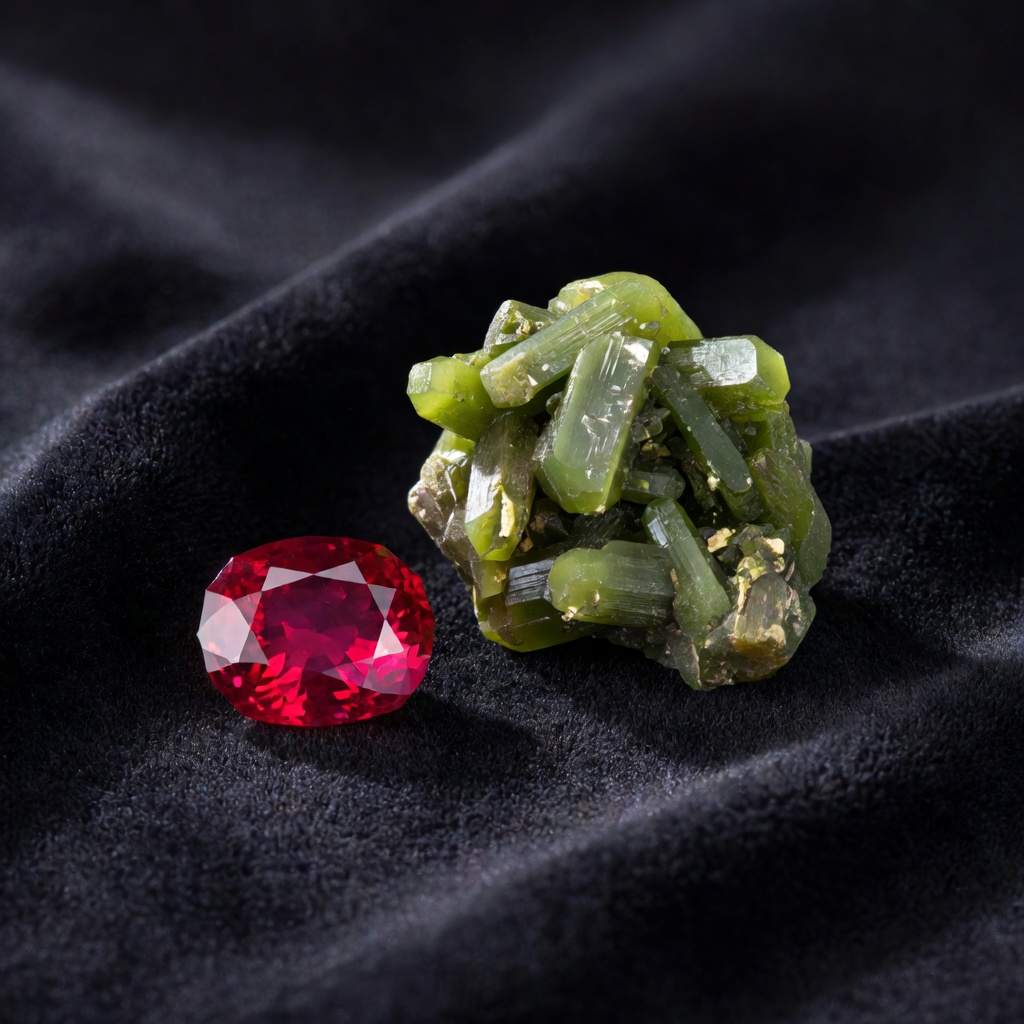
The geological journey of Oregon sunstone vs ruby reveals dramatically different formation processes that explain their physical characteristics and availability. Ruby crystallizes under extreme heat and pressure within metamorphic marble deposits, requiring specific geological conditions where aluminum-rich rocks meet chromium-bearing solutions at temperatures exceeding 800 degrees Celsius. The world's most prized rubies emerge from the Mogok Stone Tract in Myanmar (Burma), though significant deposits also exist in Thailand, Mozambique, Madagascar, and Vietnam, each location imparting subtle color variations due to differing trace element chemistry. These formation conditions mean that ruby mining typically involves hard-rock tunneling and alluvial recovery from ancient riverbeds, creating complex supply chains that impact both availability and ethical sourcing considerations.
Sunstone forms through an entirely different geological mechanism, crystallizing within basaltic lava flows and pegmatite veins where cooling magma allows feldspar crystals to grow while copper minerals become trapped within the lattice. The Oregon sunstone deposits in Lake County represent the only commercially significant source of copper-bearing sunstone in the world, creating stones with distinctive red and green color zoning and intense metallic schiller that Indian or Norwegian sunstones cannot match. These American-mined gemstones form within ancient lava flows dating back millions of years, allowing for surface collecting and shallow pit mining that leaves a smaller environmental footprint than deep-earth ruby extraction. The specificity of Oregon's copper-rich geological environment means that while sunstone occurs globally, true Oregon sunstone with its characteristic deep red and green colors remains a distinctly American treasure.
Ethical sourcing concerns differ significantly between these two gemstone formation types. Ruby mining in Myanmar has historically faced scrutiny regarding conflict financing and labor practices, though recent changes have improved traceability, while Mozambique and Thai operations generally maintain higher transparency standards. Oregon sunstone mining operates under strict American labor and environmental regulations, with many operations being small family-owned businesses that practice sustainable surface mining. When purchasing either stone, consumers should request documentation regarding origin and mining practices, with rubies benefiting from laboratory reports that verify geographic origin, and sunstone buyers seeking assurance of Oregon provenance for premium specimens.
Visual Characteristics: Pigeon Blood vs Copper Schiller
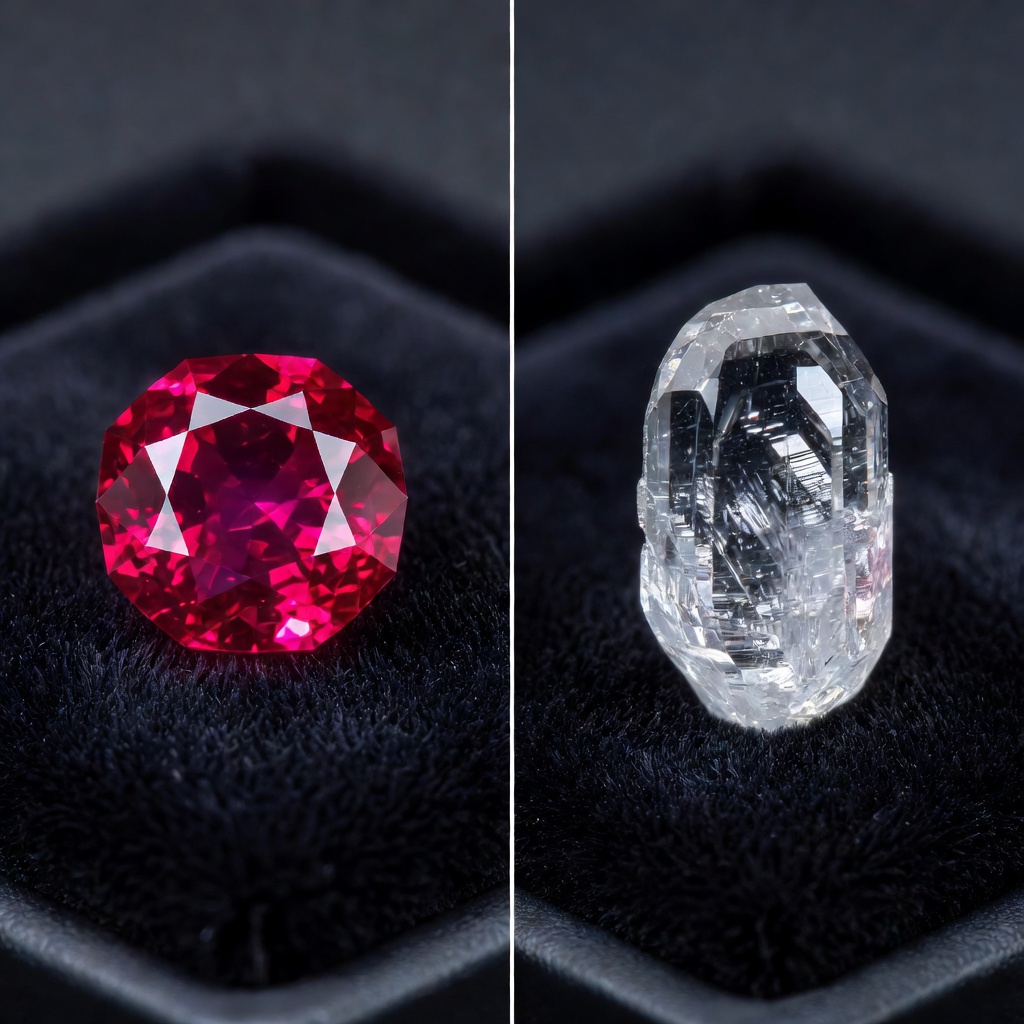
Distinguishing between these red gemstones requires understanding their unique ruby color grades and the mesmerizing sunstone aventurescence phenomenon. Ruby's color spectrum spans from pinkish-red to deep crimson, with the most valuable exhibiting "pigeon blood" red—a vivid, saturated pure red with a hint of blue that appears to glow under any lighting condition. This color results from chromium content within the corundum structure, with the finest stones displaying remarkable color consistency across the entire gem without brown or orange overtones. Gemological laboratories grade ruby color based on hue, tone, and saturation, with Burmese stones typically commanding premiums for their pure red fluorescence compared to the often darker, more garnet-like tones of Thai or East African material.
Sunstone presents a warmer, more varied color palette ranging from water-clear crystals with peach undertones to deep reddish-orange and even bicolored green-red specimens unique to Oregon deposits. The defining characteristic of quality sunstone is its aventurescence—that metallic glitter or schiller effect caused by flat, reflective copper platelets aligned within the feldspar crystal structure. When properly oriented during cutting, these platelets create a flash of coppery or golden light that moves across the stone's surface as it tilts, producing an effect entirely different from ruby's internal fire. The most valuable sunstones display intense red or green body color combined with strong, evenly distributed schiller that appears to float within the gem rather than concentrating in specific areas.
Transparency and clarity expectations differ substantially between these stones. Rubies typically appear transparent to translucent, with collectors often accepting included stones as long as the inclusions do not significantly impact brilliance or durability; in fact, rutile silk inclusions can create desirable star rubies through asterism. Sunstones range from transparent to translucent, with the copper inclusions that create aventurescence technically being clarity characteristics that would reduce value in other gemstones but enhance sunstone's desirability. When selecting either stone, examine them under diffused lighting: rubies should show even color distribution without windowing (light leakage through the center), while sunstones should display consistent schiller across the crown facets without dead spots or uneven concentration of reflective platelets.
Durability and the Mohs Scale: Everyday Wear Concerns
Understanding the precious vs semi-precious stones distinction requires examining practical durability metrics that determine suitable jewelry applications. Ruby gemstone durability ranks exceptional on every metric, scoring 9 on the Mohs hardness scale—second only to diamond—making it suitable for daily wear in any jewelry application including engagement rings, bracelets, and rings subjected to frequent impact. Unlike many hard gemstones, ruby possesses no cleavage planes, meaning it does not have natural breaking points along specific crystal directions, contributing to its legendary toughness that allows antique ruby jewelry to survive centuries of wear. This combination of hardness and toughness explains why rubies appear in crown jewels and heirloom pieces designed for permanent display and active use.
Sunstone presents more challenging durability characteristics that require thoughtful jewelry design and wear considerations. Ranking 6 to 6.5 on the Mohs scale, sunstone falls into the range where daily wear will eventually show surface scratches and abrasion, particularly when worn in rings that contact hard surfaces like countertops or metal doorknobs. More critically, sunstone possesses two directions of perfect cleavage—meaning it has natural planes where the crystal structure separates easily—making it susceptible to chipping or breaking if struck at specific angles. This cleavage vulnerability means that while sunstone works beautifully for pendants, earrings, and occasional-wear cocktail rings, it requires protective settings and mindful wear patterns to prevent damage.
Jewelry designers approach these stones with fundamentally different setting strategies based on their durability profiles. Ruby accommodates delicate prong settings, tension mounts, and intricate pave work without risk of damage during the setting process or daily wear, allowing for elevated designs that expose maximum surface area to light. Sunstone demands protective bezel settings, halo designs, or substantial prong configurations that shield the girdle and vulnerable corners from impact, with cabochon cuts often preferred for rings to eliminate fragile pointed facets. When commissioning custom pieces, specify the intended wear pattern: choose ruby for engagement rings or daily-wear anniversary bands, and reserve sunstone for statement pendants, protective earring settings, or special-occasion rings worn with care.
Market Value and Investment Potential
The economic disparity between these gemstones reflects their relative rarity, cultural prestige, and historical market positioning. Ruby maintains its status as one of the "Big Three" colored gemstones, with record-breaking auction prices regularly achieved for unheated Burmese specimens exceeding $1 million per carat for exceptional quality. Even commercial-grade rubies command significant premiums, with heated stones from Mozambique or Madagascar typically starting around $100 per carat for visible inclusions, scaling to $10,000+ per carat for fine unheated Burmese material with pigeon blood coloration. This pricing structure positions ruby as both a wearable luxury and a tangible investment asset that appreciates over time, particularly for certified unheated stones with documented Burmese or Kashmir origins.
Sunstone price per carat remains remarkably accessible despite increasing recognition of premium Oregon material. Commercial-grade sunstones from India or Norway typically range from $20 to $50 per carat, offering substantial size potential for fashion jewelry without significant investment. Premium Oregon sunstones displaying intense red color, strong copper schiller, and exceptional clarity command higher prices, generally falling between $50 and $300 per carat depending on size and visual impact, with exceptional museum-quality specimens occasionally exceeding $1,000 per carat. This affordability factor allows jewelry enthusiasts to acquire impressive, large-carat statement pieces for the cost of a modest ruby accent stone, democratizing access to beautiful red gemstone jewelry.
Investment considerations diverge sharply between these markets. Ruby gemstone value historically appreciates steadily, particularly for unheated stones over 3 carats with certification from reputable laboratories like GIA or AGL, making them suitable for wealth preservation and portfolio diversification. Sunstone functions primarily as a collectible rather than investment vehicle, with value retention depending heavily on fashion trends and the finite supply of high-grade Oregon material rather than international commodity markets. When building a jewelry collection, consider acquiring certified rubies as legacy pieces and investment hedges, while purchasing sunstones for immediate aesthetic enjoyment and personal expression without expectation of significant appreciation.
Metaphysical Properties: Passion Stones vs Leadership Crystals
Crystal healing practitioners distinguish these stones through their vibrational associations and chakra alignments despite their shared red coloration. Ruby metaphysical properties center on the Root and Heart chakras, creating a bridge between physical vitality and emotional passion that stimulates life force energy (qi or prana) throughout the body. Ancient Burmese warriors famously embedded rubies beneath their skin before battle, believing the stones conferred invincibility, protection from harm, and the courage to face mortal danger. Modern crystal workers use ruby to amplify enthusiasm for life, strengthen the heart both physically and emotionally, and encourage the passionate pursuit of goals without fear of failure.
Sunstone healing crystals operate through different energetic frequencies, primarily influencing the Sacral and Solar Plexus chakras to enhance leadership qualities, personal power, and independent thought. The stone's connection to solar energy makes it particularly valued for dispelling depression, seasonal affective disorder, and feelings of unworthiness by infusing the aura with bright, optimistic vibrations. Historical Nordic navigators allegedly used sunstone (possibly Iceland spar or the feldspar variety) to locate the sun's position on overcast days, lending the stone associations with guidance, clarity, and the ability to find one's path even in confusing circumstances. Contemporary practitioners recommend sunstone for entrepreneurs, managers, and anyone needing to assert healthy boundaries while maintaining a positive, magnetic personality.
Selecting between these stones for metaphysical work depends on identifying current life challenges and energetic needs. Choose ruby when seeking to deepen romantic relationships, recover from physical exhaustion or illness, or cultivate the courage to make significant life changes requiring sustained passion and commitment. Select sunstone when needing to boost confidence for public speaking or leadership roles, overcome codependency or people-pleasing behaviors, or attract abundance and good fortune through enhanced personal magnetism. Many crystal practitioners actually recommend working with both stones simultaneously—ruby to ground spiritual energy into physical action, and sunstone to ensure that action leads to positive recognition and success.
Jewelry Design Applications and Metal Pairings
The divergent characteristics of these gemstones inspire distinctly different design philosophies and metal choices. Ruby traditionally appears in high jewelry settings that emphasize its prestige and durability, with classic solitaire engagement rings, Art Deco geometric designs, and three-stone anniversary rings representing the most common applications. Yellow gold enhances the warmth of Burmese rubies while creating a vintage aesthetic reminiscent of Victorian or Edwardian pieces, whereas white gold or platinum settings provide contemporary contrast that makes the red appear more vivid through color complementarity. When designing with ruby, jewelers can employ delicate prong work, intricate filigree, and open gallery designs that maximize light return without compromising structural integrity.
Sunstone demands design approaches that accommodate its softer nature while showcasing its unique optical effects, lending itself to contemporary, bohemian, and artisan jewelry styles. Wire-wrapped pendants in copper or rose gold amplify sunstone's warm schiller effect, while bezel-set rings in mixed metals (combining yellow and white gold) create protective mounts that shield vulnerable edges while adding visual interest. The July birthstone alternatives market has embraced sunstone for those seeking red birthstone jewelry without ruby's price point, with designers creating sunstone stackable rings, boho-chic leather bracelet accents, and macramé pendants that highlight the stone's earthy, natural aesthetic. Protective settings remain paramount—flush mounts, thick bezels, and halo designs that provide bumper protection work better than exposed prong settings for sunstone rings.
Practical design considerations extend to stone orientation and cut selection. Rubies perform excellently in traditional faceted cuts (round brilliant, oval, cushion, emerald) that maximize brilliance and fire, with cabochon cuts reserved specifically for star rubies or opaque material. Sunstone often benefits from custom cutting that orients copper platelets perpendicular to the table facet to maximize aventurescence, with concave faceting or buff-top cuts that create windows into the stone's interior particularly effective for displaying schiller. When commissioning custom pieces, request that sunstone cutters orient the stone to show maximum glitter from the wearer's perspective, while ruby cutting should prioritize color retention and brilliance optimization.
Authentication and Treatment Disclosure
Verifying authenticity requires understanding the common treatments and imitations prevalent in the market for both stones. Natural ruby identification involves recognizing that heat treatment represents standard industry practice, with approximately 95% of commercial rubies undergoing controlled heating to improve color saturation and clarity by dissolving rutile silk inclusions. More concerning treatments include lead glass filling, where low-quality opaque ruby is infused with high-lead-content glass to improve transparency—a treatment that significantly reduces durability and value, requiring special care and disclosure. Flux healing and fracture filling represent additional treatments that improve apparent clarity but must be disclosed by ethical sellers, with unheated, untreated natural rubies commanding significant premiums and requiring laboratory certification from GIA, AGL, or SSEF.
Genuine sunstone characteristics require distinguishing natural material from imitations and lower-quality substitutes. True Oregon sunstone contains copper inclusions that create the distinctive schiller effect, whereas Indian sunstone typically displays hematite platelets producing a different quality of sparkle, and Norwegian material often shows green and red color zoning without intense metallic reflection. Aventurine glass (goldstone) represents a common imitation containing copper crystals suspended in glass that mimics sunstone's glitter but lacks natural crystalline structure and shows telltale conchoidal fractures when examined with magnification. Natural sunstone rarely undergoes treatment beyond cutting and polishing, though some material may be heat-treated to enhance color, making disclosure less critical than with ruby but still important for valuation.
Certification plays different roles for each gemstone category. High-value rubies (typically over $5,000 or 2 carats) warrant full laboratory reports verifying geographic origin, treatment status, and color grade, with Burmese unheated stones requiring documented provenance for investment purposes. Sunstone generally sells without formal certification due to its typically untreated natural status and lower price point, though premium Oregon sunstone over $1,000 may benefit from origin reports verifying it as genuine Oregon material rather than Indian imports. When purchasing either stone, work with reputable dealers who provide detailed receipts specifying treatments, and for significant ruby investments, insist on independent laboratory grading reports that protect against undisclosed treatments or synthetic material.
Care and Maintenance Requirements
Proper maintenance protocols reflect the distinct durability characteristics of each gemstone. Ruby maintenance remains relatively straightforward for untreated or heat-only treated stones, as these specimens tolerate ultrasonic cleaners and steam cleaning without risk of damage, making professional jewelry cleaning services safe and effective. Home cleaning requires only warm water with mild dish soap, a soft toothbrush for reaching behind settings, and thorough rinsing to remove soap residue that might dull the stone's luster. Stones that have undergone fracture filling or lead glass treatment require gentler care—limiting cleaning to damp cloths and avoiding heat, ultrasonic energy, or harsh chemicals that might compromise the filling material.
The gemstone care guide for sunstone demands significantly more caution due to its cleavage planes and moderate hardness. Never subject sunstone to ultrasonic or steam cleaning, as the vibrations and thermal shock can exploit cleavage planes causing cracks or complete breakage. Clean sunstone jewelry using only lukewarm water with mild soap, gently scrubbing with a very soft brush (or fingers) to avoid scratching the surface, followed by immediate drying with a soft, lint-free cloth. Avoid exposing sunstone to prolonged direct sunlight, as UV exposure over time may fade the copper-related colors, particularly in lighter peach or champagne specimens, whereas ruby exhibits excellent light stability and color permanence under all lighting conditions.
Storage solutions must account for hardness differentials between these stones. Always store ruby jewelry separately from sunstone pieces, as ruby's superior hardness (9 vs 6-6.5) will scratch sunstone surfaces if they contact each other in a jewelry box. Utilize individual soft pouches, compartmentalized jewelry boxes, or fabric-lined trays to prevent contact, and store sunstone rings flat to avoid pressure on high-profile settings that might lever the stone against its mounting. For long-term storage of investment-grade rubies, consider safe deposit boxes or home safes with humidity control, while sunstone requires no special environmental controls beyond protection from physical impact and prolonged UV exposure.
Comprehensive Comparison: Ruby vs Sunstone
| Characteristic | Ruby (Corundum) | Sunstone (Feldspar) |
|---|---|---|
| Chemical Composition | Aluminum oxide (Al₂O₃) with chromium | Plagioclase feldspar with copper/hematite |
| Mohs Hardness | 9 (Excellent for daily wear) | 6-6.5 (Requires protective settings) |
| Cleavage | None (very tough) | Perfect in two directions (prone to chipping) |
| Color Range | Pigeon blood red to pinkish-red | Peach, orange, red, green with metallic glitter |
| Optical Phenomena | High brilliance, fluorescence, asterism (star rubies) | Aventurescence (copper schiller effect) |
| Primary Sources | Myanmar, Mozambique, Thailand, Madagascar | Oregon (USA), India, Norway, Tanzania |
| Price Range | $100 to $10,000+ per carat | $20 to $300 per carat (Oregon premium) |
| Common Treatments | Heat treatment (standard), glass filling, flux healing | Usually untreated; occasional heat treatment |
| Best Jewelry Applications | Engagement rings, bracelets, daily wear | Pendants, earrings, occasional-wear rings |
| Metaphysical Focus | Passion, vitality, heart energy, protection | Leadership, independence, good fortune, personal power |
| Cleaning Methods | Ultrasonic, steam, warm soapy water (if untreated) | Lukewarm soapy water only; no ultrasonic/steam |
| Investment Potential | High (especially unheated Burmese) | Low to moderate (collectible rather than investment) |
Frequently Asked Questions
Is sunstone a type of ruby?
No, sunstone is not a type of ruby. While both can display red-orange colors, ruby is corundum (aluminum oxide) and sunstone is feldspar (plagioclase). They have completely different chemical compositions, hardness levels, and optical properties. Ruby is a precious gemstone, while sunstone is classified as semi-precious.
Which is more expensive, ruby or sunstone?
Ruby is significantly more expensive than sunstone. High-quality Burmese rubies can command $10,000+ per carat, while even premium Oregon sunstones typically range from $50-$300 per carat. Standard commercial-grade sunstones are very affordable at $20-$50 per carat, whereas even low-quality rubies rarely sell for under $100 per carat.
Can I wear sunstone every day like ruby?
Sunstone is not recommended for daily wear in rings or bracelets due to its 6-6.5 Mohs hardness and distinct cleavage planes that make it prone to chipping. Ruby, with a hardness of 9 and no cleavage, is excellent for daily wear including engagement rings. Reserve sunstone for pendants, earrings, or occasional-wear rings with protective bezel settings.
What causes the sparkle in sunstone versus ruby's glow?
Sunstone displays 'aventurescence' or schiller—metallic glitter caused by reflective copper or hematite platelets suspended within the feldspar crystal. Ruby's glow comes from its high refractive index and chromium content, which creates a deep red fluorescence under UV light and an internal fire when faceted, but does not produce the metallic glitter seen in sunstone.
Is Oregon sunstone rarer than ruby?
While high-quality rubies (especially unheated Burmese stones) are extremely rare and valuable, Oregon sunstone containing significant copper content and intense red color is also considered rare within the sunstone family. However, ruby as a species is rarer overall. Most commercial sunstone comes from India and is relatively abundant compared to fine gem-quality ruby.
Can sunstone be used as a July birthstone alternative to ruby?
Yes, sunstone makes an excellent July birthstone alternative for those born in July who want a red-orange gemstone but find ruby too expensive or prefer sunstone's unique schiller effect. While ruby is the traditional July birthstone, sunstone offers a more affordable option with warm colors that still connect to July's fiery summer energy.
How do I clean ruby versus sunstone jewelry?
Untreated rubies can be cleaned with ultrasonic cleaners, steam cleaners, or warm soapy water. Sunstone requires gentler care: use only lukewarm water with mild soap and a soft brush. Never use ultrasonic or steam cleaners on sunstone due to its cleavage planes and potential heat sensitivity. Always rinse both thoroughly and dry with a soft cloth.
Do rubies and sunstones have similar metaphysical properties?
Both stones are associated with fire energy and vitality, but they differ metaphysically. Ruby focuses on passion, heart-centered love, courage, and life force (Root and Heart chakras). Sunstone emphasizes leadership, independence, personal power, and good fortune (Sacral and Solar Plexus chakras). Ruby is more about deep emotional connection, while sunstone promotes confidence and assertiveness.