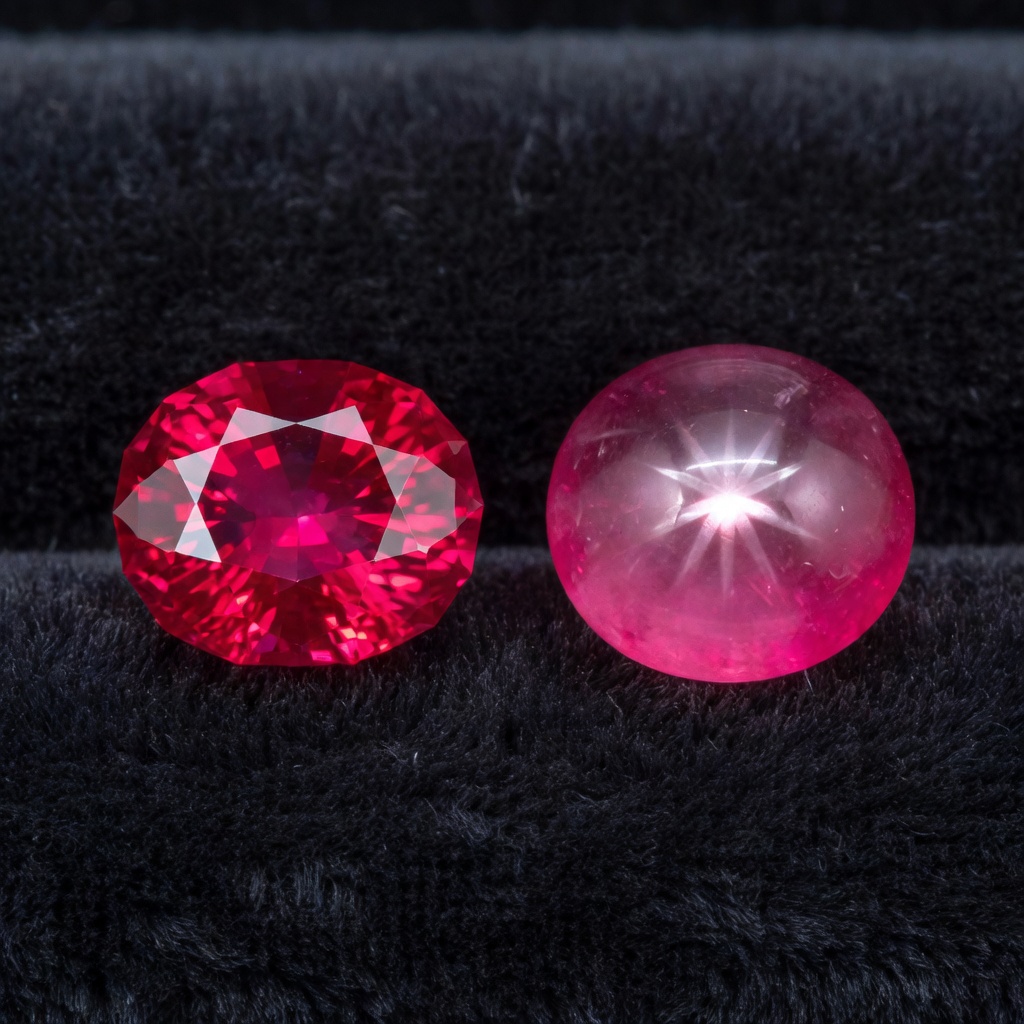
Understanding Corundum: The Mineral Connection
When exploring ruby vs star ruby, it is essential to recognize that both varieties originate from the same mineral family known as corundum gemstones. Chemically speaking, both stones consist of aluminum oxide (Al₂O₃) with trace amounts of chromium that impart the characteristic red coloration. This shared composition places both varieties at an impressive 9 on the Mohs hardness scale, making them second only to diamonds in durability and ideal candidates for daily-wear jewelry pieces. The exceptional hardness ensures that whether you choose a faceted ruby or an asteriated specimen, your investment will resist scratching and maintain its beauty for generations.
Despite their chemical identity, subtle differences in crystal structure formation create the divergent optical properties that distinguish these two varieties. Standard rubies typically form with relatively fewer structural interruptions, allowing light to pass through with minimal interference. In contrast, asteriated corundum develops specific internal arrangements of rutile needles that intersect at precise angles, creating the conditions necessary for asterism. Historically, both varieties have held immense cultural significance across civilizations, from ancient Burmese warriors who believed rubies made them invincible in battle to Victorian-era collectors who prized star rubies for their celestial appearance and perceived mystical properties.
Visual Characteristics: Transparency vs Phenomena
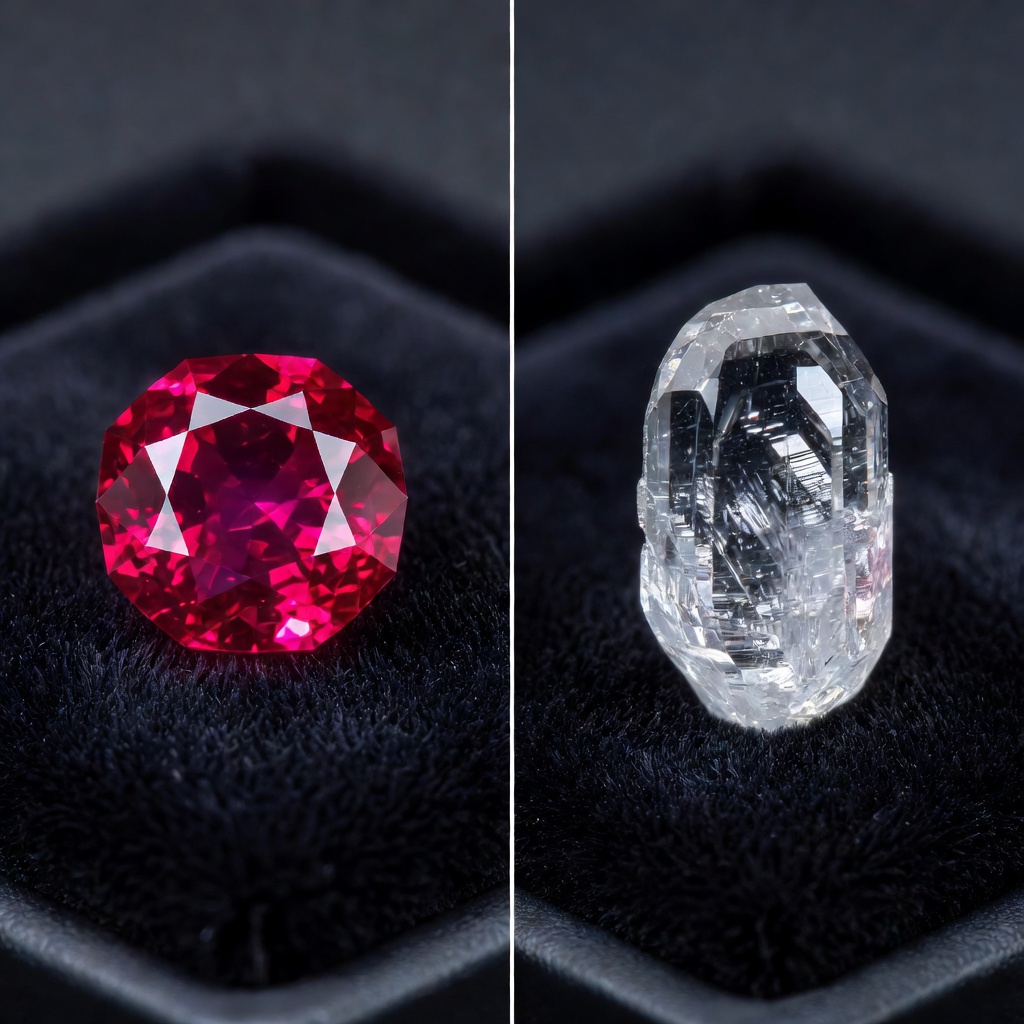
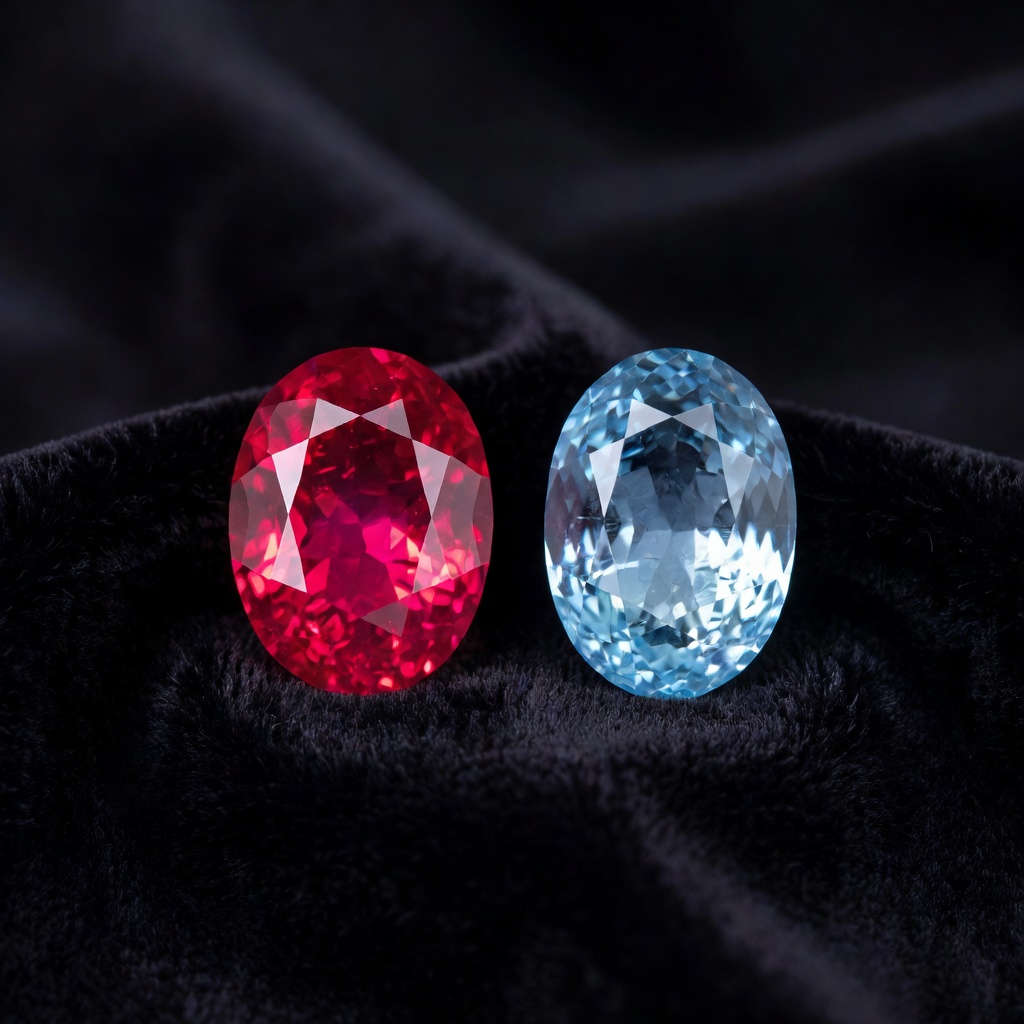
The most immediate distinction when comparing these gemstones lies in their interaction with light and overall visual presentation. Standard rubies are treasured primarily for their transparency and the intensity of their red saturation, with collectors seeking stones that allow light to penetrate deeply and return as vivid brilliance. The finest specimens exhibit a pigeon blood ruby color—a pure, vibrant red with a hint of blue that appears to glow from within, commanding premium prices in international markets. Gemologists evaluate these stones based on their ability to transmit light cleanly without significant obstruction from internal features.
Conversely, star rubies typically display translucency to opacity, with their value deriving from a unique optical phenomenon rather than crystal clarity. These stones range in color from the coveted pigeon blood red to softer pinkish-red and purplish-red hues, though the body color often appears more subdued due to the dense concentration of ruby inclusions necessary for asterism. The presence of these microscopic rutile needles, often called "silk," would significantly devalue a faceted ruby but becomes the very feature that creates the star effect in asteriated varieties. When viewing a high-quality star ruby under direct lighting, the six-rayed star appears to float across the domed surface, creating a mesmerizing three-dimensional effect that changes as the stone moves.
The Science of Asterism: How Stars Form
The captivating asterism effect that defines star rubies results from a precise geological accident involving the alignment of microscopic rutile crystal inclusions. During the gemstone's formation deep within the earth, titanium and oxygen combined to create needle-like rutile crystals that settled into the corundum structure in three distinct sets oriented at 60 and 120 degrees to one another. This specific triangular arrangement creates the framework necessary for light reflection, acting as microscopic mirrors that bounce light back to the viewer's eye in a concentrated star pattern. The phenomenon requires both the correct inclusion density—too few needles produce a weak star, while too many create an overly opaque stone—and precise crystallographic orientation.
When light strikes the surface of a properly cut asteriated corundum, it penetrates the stone and reflects off these aligned needle inclusions, creating the appearance of a six-rayed star that seems to glide across the dome as the stone moves. While the standard six-rayed star represents the most common manifestation of this phenomenon, extremely rare specimens may exhibit twelve-rayed stars when additional mineral inclusions align at different angles within the same crystal structure. Viewing the asterism effect requires specific lighting conditions; a single, direct light source such as sunlight or a focused spotlight creates the sharpest star, while diffused fluorescent lighting may render the effect invisible. This dependency on lighting angles means that star rubies offer an interactive visual experience unlike any faceted gemstone.
Cutting Techniques: Faceted vs Cabochon
The transformation from rough crystal to finished gemstone follows radically different paths depending on whether the material will become a faceted ruby or a star variety. Standard rubies typically receive faceted cuts designed to maximize brilliance, fire, and scintillation through precise geometric arrangements of polished surfaces. Master cutters analyze the rough crystal to orient the table facet perpendicular to the crystal's c-axis, minimizing color zoning and optimizing the red saturation visible face-up. Every facet placement calculation aims to return the maximum amount of light to the viewer's eye while minimizing the appearance of inclusions.
Star rubies, however, demand a completely different approach utilizing the cabochon cut—a smooth, domed surface without facets that serves as the canvas for displaying asterism. The cutting process requires extraordinary precision because the cutter must align the base of the cabochon perpendicular to the crystal's c-axis to center the star properly on the dome's apex. The dome height proves critical; too shallow a dome creates a watery, ill-defined star, while excessive height makes the stone difficult to set securely in jewelry. Cabochon cut specialists often spend hours studying rough crystals under polarized light to identify the optimal orientation before making the first cut. This specialized cutting requirement means that star rubies cannot be recut as faceted stones later, as doing so would destroy the alignment necessary for the star effect, permanently altering the stone's character and value.
Global Origins and Source Variations
The geographic origins of these corundum gemstones significantly influence their characteristics, availability, and market positioning. Myanmar (formerly Burma) produces the world's finest faceted rubies, particularly from the Mogok Stone Tract, where geological conditions create the chromium-rich, iron-poor environment necessary for pigeon blood coloration. While Myanmar also yields some star rubies, the deposits more frequently produce transparent crystals suitable for faceting rather than the heavily included material required for strong asterism. The Burmese star rubies that do emerge often display sharp, well-centered stars but typically command higher prices due to the region's reputation for excellence in ruby production.
Sri Lanka (Ceylon) stands as the premier source for high-quality star rubies, with the Rathnapura district producing stones renowned for their sharp, luminous asterism and often lighter, more translucent body colors. The island's alluvial deposits contain corundum that formed under specific conditions favoring the rutile needle inclusions necessary for star formation. Thailand, Madagascar, and Vietnam contribute significantly to the global supply, with Thai stones often exhibiting darker, more opaque characteristics and Madagascan material offering a middle ground in terms of color saturation and star sharpness. Geological surveys indicate that star ruby deposits typically form in marble host rocks with higher titanium content than the marble deposits that yield transparent faceting material, explaining why certain mines specialize in one variety while producing little of the other.
Quality Grading and Value Factors
Evaluating star ruby value requires distinct criteria that diverge significantly from the grading standards applied to transparent faceted rubies. While both varieties prioritize color intensity, the acceptable clarity standards differ dramatically. Faceted rubies undergo scrutiny for eye-clean appearance, with inclusions immediately visible to the naked eye significantly reducing value. In contrast, star rubies require the silk inclusions to create their optical effect, meaning that completely transparent material would actually prove undesirable for asteriated specimens. Instead, graders assess the uniformity of the silk distribution, ensuring it creates a balanced star without overly compromising the stone's translucency.
For faceted stones, particularly those claiming pigeon blood ruby designation, laboratories evaluate hue, tone, and saturation under standardized lighting conditions, with untreated stones from Myanmar commanding the highest premiums. Star ruby assessment focuses on three primary criteria: the sharpness of the star's rays (distinct versus fuzzy), the centrality of the star on the dome, and the completeness of all six rays extending to the stone's perimeter. Treatment history significantly impacts both varieties, with heat treatment being common and generally accepted in the trade for improving color, while diffusion treatment or fracture filling drastically reduces value. When purchasing either variety, always request certification from reputable laboratories such as GIA, SSEF, or Gübelin to verify natural origin and disclose any enhancement procedures that might affect long-term durability or value retention.
Market Value and Investment Potential
Understanding the economic landscape of ruby vs star ruby requires recognizing that these varieties operate in somewhat different market segments with distinct value propositions. Untreated pigeon blood ruby specimens from Myanmar consistently achieve the highest per-carat prices in the colored stone market, with exceptional stones over five carats occasionally selling for hundreds of thousands of dollars per carat at international auction houses. These faceted stones benefit from broad market recognition, standardized grading criteria, and liquid resale markets among high-end collectors and investors seeking portable wealth concentration.
Large star rubies exceeding five carats with sharp, centered, untreated stars represent rare collector's items that appreciate steadily but serve more specialized markets. While a fine one-carat faceted ruby might outprice a comparable star ruby, the value equation shifts as size increases, with exceptional star rubies over ten carats becoming nearly irreplaceable due to the difficulty of finding large crystals with proper inclusion alignment for strong asterism. Star ruby value also benefits from vintage and Art Deco market trends, where original period pieces command significant premiums. Investors should note that while faceted rubies offer greater liquidity, exceptional star rubies provide portfolio diversification and often outperform standard market indices during periods of economic uncertainty, particularly when paired with documented provenance or historical significance.
| Characteristic | Standard Ruby | Star Ruby |
|---|---|---|
| Optical Properties | Transparent to translucent; valued for brilliance and fire when faceted | Translucent to opaque; displays six-rayed asterism effect under direct light |
| Cutting Style | Faceted (oval, cushion, round, emerald cuts) to maximize light return | Cabochon cut with high dome required to display star phenomenon |
| Color Grading | Pigeon blood red commands highest prices; clarity and saturation critical | Color range broader; sharpness and centrality of star equally important to body color |
| Inclusion Tolerance | Eye-clean stones preferred; visible inclusions significantly reduce value | Silk inclusions necessary for asterism; evenly distributed needles desired |
| Primary Value Factors | Color saturation, transparency, cut quality, carat weight, treatment status | Star sharpness, ray completeness, centrality, body color, dome symmetry |
| Typical Origins | Myanmar (Burma), Mozambique, Afghanistan, Vietnam | Sri Lanka (Ceylon), Myanmar, India, Madagascar |
| Best Applications | Engagement rings, high jewelry, investment pieces requiring brilliance | Gentlemen's rings, vintage jewelry, collector specimens, unique statement pieces |
| Care Requirements | Ultrasonic cleaning generally safe; avoid harsh chemicals and impacts | Avoid ultrasonic cleaning due to internal inclusions; gentle soap and water only |
| Market Liquidity | High liquidity; established wholesale and auction markets worldwide | Specialized market; liquidity depends on size and star quality; vintage pieces in demand |
| Price Range (per carat) | $1,000-$100,000+ depending on quality and treatment status | $100-$10,000+ depending on star quality and size; exceptional specimens higher |
Jewelry Design Applications
The choice between these red corundum gemstones significantly impacts jewelry design possibilities and styling considerations. Standard faceted rubies dominate the engagement ring market due to their brilliant sparkle and classic appearance, pairing beautifully with diamond halos or side stones in platinum or yellow gold settings. The versatility of faceted cuts allows designers to create everything from delicate pavé bands featuring small accent rubies to dramatic cocktail rings showcasing single large pigeon blood specimens. When designing with faceted rubies, prong settings prevail to maximize light entry, though bezel settings offer protection for stones with surface-reaching inclusions.
Star rubies enjoy particular popularity in vintage and Art Deco revival jewelry, where their distinctive optical character complements the architectural lines and geometric patterns characteristic of these periods. Men's jewelry designers frequently favor star rubies for signet rings, cufflinks, and dress sets, as the cabochon surface offers a smooth, substantial feel and the star phenomenon provides masculine aesthetic appeal without excessive flash. Setting star rubies presents unique challenges; the high dome of the cabochon cut requires protective bezel or high-walled settings to prevent damage to the apex, while ensuring adequate light access to display the asterism effect. For statement pieces, designers often orient the stone so the star aligns vertically when worn, though some avant-garde pieces intentionally rotate the stone to create dynamic, asymmetrical compositions.
Care, Cleaning, and Maintenance
Both varieties of these corundum gemstones benefit from exceptional durability thanks to their Mohs hardness of 9, making them suitable for daily wear in rings, bracelets, and other jewelry exposed to potential impacts. This hardness ensures resistance to scratching from common materials like household dust (which contains quartz at hardness 7), though they remain vulnerable to damage from diamonds, moissanite, and other harder substances. Despite this shared durability, maintenance protocols diverge due to the structural differences between faceted and asteriated varieties. Standard faceted rubies generally tolerate ultrasonic cleaning and steam cleaning, provided they have not been fracture-filled or treated with temporary surface coatings.
Star rubies require more cautious handling due to their internal ruby inclusions and potential treatment history. The network of rutile needles that creates the beautiful star effect can also serve as planes of weakness within the crystal structure, making ultrasonic cleaning risky as the vibrations might potentially loosen included crystals or exacerbate existing fractures. Gentle cleaning with warm soapy water and a soft brush represents the safest method for star varieties, followed by thorough rinsing and patting dry with a lint-free cloth. For long-term storage, keep both varieties separated from other gemstones to prevent scratching, ideally in individual soft pouches or lined jewelry boxes. High-value specimens of either variety warrant professional inspection every twelve to eighteen months to check setting security and detect any damage that might require repolishing or resetting to preserve value.
Making Your Choice: Which to Buy
Deciding between these magnificent red stones ultimately depends on personal aesthetic preferences, intended use, and budget considerations. If you prioritize brilliance, fire, and the classic sparkle associated with precious gems, a faceted ruby—particularly one approaching pigeon blood ruby color standards—will satisfy your desires for traditional luxury. These stones excel in formal settings and pair seamlessly with existing diamond jewelry, offering timeless elegance that transcends fashion trends. For first-time buyers with limited budgets, smaller faceted rubies or those with slight inclusions offer entry points into ownership without compromising the essential character of the stone.
Conversely, if you seek unique optical phenomena and appreciate the interactive nature of the asterism effect, a star ruby provides distinctive character that distinguishes your jewelry from conventional pieces. These stones suit individuals who value vintage aesthetics, artistic expression, or conversation-starting accessories that reveal their secrets only under specific lighting conditions. When purchasing either variety, authentication and certification prove essential; insist on reports from recognized laboratories that verify natural origin, disclose treatments, and for star rubies, confirm the optical phenomenon is natural rather than induced through diffusion or surface coating. Consider the occasion and wardrobe integration—faceted rubies offer versatility across dress codes, while star rubies make bold statements best showcased with thoughtful styling. Regardless of your choice, both varieties represent enduring symbols of passion and prosperity that will reward careful selection with decades of wearing pleasure.
Frequently Asked Questions
What is the main difference between ruby and star ruby?
The primary difference is the optical phenomenon called asterism. While both are corundum gemstones, star rubies contain rutile needle inclusions that reflect light to create a six-rayed star effect, whereas standard rubies are valued for their transparency and vivid red color without this effect.
Is star ruby more valuable than regular ruby?
Generally, high-quality faceted rubies (especially untreated pigeon blood specimens) command higher per-carat prices than star rubies. However, large, untreated star rubies with sharp, centered stars are extremely rare and can exceed the value of lower-quality faceted rubies.
Why can't star rubies be cut with facets?
Star rubies must be cut as cabochons (smooth, domed surfaces) to display the asterism effect. Faceting would destroy the alignment of rutile needles necessary to create the star pattern. The dome height and precise orientation are critical for maximizing the star's visibility.
Do star rubies occur naturally or are they treated?
Natural star rubies exist but are rare. Many star rubies on the market undergo heat treatment to improve color and clarity. Some lower-quality stones may be diffusion-treated or filled. Always request certification from reputable laboratories like GIA or SSEF to verify natural origin.
Which is better for an engagement ring, ruby or star ruby?
Standard faceted rubies are more popular for engagement rings due to their brilliant sparkle and classic appearance. However, star rubies offer unique vintage appeal and are equally durable (9/10 hardness). Choose based on personal style—traditional brilliance versus distinctive character.
Can you see the star in a star ruby all the time?
No, the star effect (asterism) requires a direct, single light source like sunlight or a focused spotlight. Under diffused lighting or cloudy conditions, the star may disappear or appear faint. The star moves as the light source or stone moves, creating a 'floating' effect.
Are both ruby and star ruby considered July birthstones?
Yes, both varieties qualify as July birthstones since they are both ruby (corundum). The star ruby offers a unique alternative for those born in July who want something distinctive from the traditional faceted red gemstone while maintaining the birthstone connection.
How can I tell if a star ruby is authentic and not synthetic?
Natural star rubies show imperfect, slightly wavy star rays and may have visible inclusions under magnification. Synthetic stars typically show perfect, sharp stars that appear painted on, remain visible under all lighting conditions, and lack natural inclusions. Professional gemological testing is recommended for verification.