The Historic Confusion: When Royal Treasures Hid a Mineralogical Secret
For centuries, the most coveted red gemstones adorning royal crowns and imperial regalia were not what they seemed. The famed Black Prince's Ruby, a 170-carat crimson stone set in the British Imperial State Crown, and the equally impressive Timur Ruby, weighing 352 carats, were both treasured as exceptional rubies by monarchs across generations. However, modern gemological analysis revealed these legendary stones to be red spinels, creating one of history's most fascinating cases of mistaken identity in the gemstone world. This confusion stemmed from the fact that both rubies and spinels were mined from the same alluvial deposits in Myanmar's Mogok Stone Tract, where they occurred together in marble host rocks, displaying remarkably similar colors and lusters to the untrained eye.
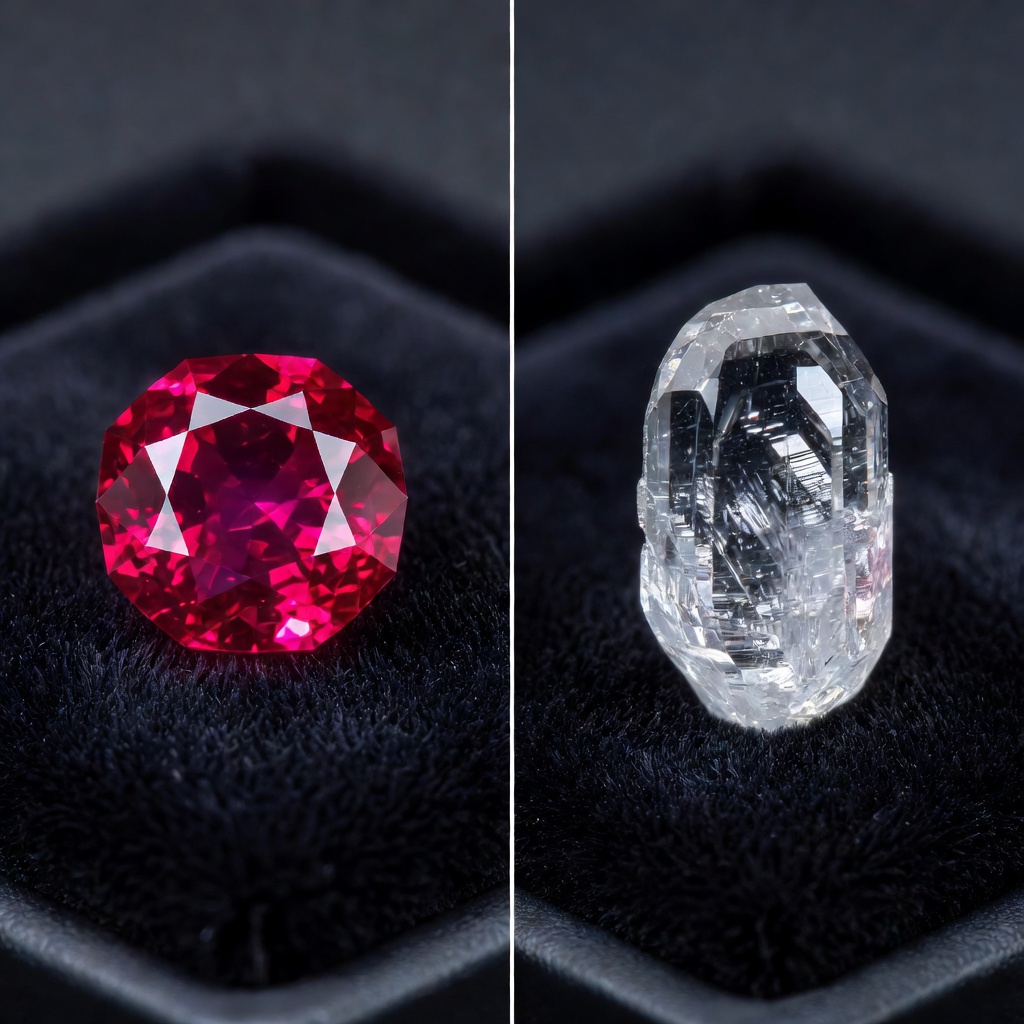
Ancient gemologists and royal courts referred to these red stones collectively as "balas rubies," named after the Badakhshan region in present-day Afghanistan where they were historically sourced. The distinction between these minerals remained impossible until 1783, when French mineralogist Jean Baptiste Louis Rome de Lisle crystallographically separated spinel from corundum through careful analysis of their crystal structures. He demonstrated that ruby formed hexagonal crystals in the trigonal system, while spinel crystallized in perfectly formed octahedrons within the cubic system, finally solving the mystery that had puzzled gem traders for millennia. This historical context explains why the debate of ruby vs spinel remains relevant today, as collectors continue to treasure both stones for their exceptional beauty and shared heritage.
Chemical Composition: Understanding Corundum vs Spinel at the Molecular Level
The fundamental differences between these red gemstones begin at the atomic level, where distinct chemical compositions create unique physical properties. Ruby belongs to the corundum family, composed of aluminum oxide (Al2O3) in a tightly packed hexagonal crystal structure, with its signature red color resulting from trace amounts of chromium replacing aluminum atoms within the lattice. This trigonal crystal system forces ruby to crystallize in barrel-shaped hexagonal prisms or flat tabular crystals, creating the structural foundation for its exceptional hardness and optical properties. The chromium content not only imparts the coveted red hue but also contributes to ruby's distinctive fluorescence under ultraviolet light, creating that inner glow prized by collectors.
In contrast, red spinel represents a completely different mineral species, chemically classified as magnesium aluminum oxide (MgAl2O4), crystallizing in the isometric or cubic system that allows for perfect octahedral crystal formation. This fundamental distinction in the corundum vs spinel comparison affects everything from durability to visual performance, as spinel's single refraction allows light to pass through uniformly without splitting. The refractive indices further distinguish these gems, with ruby registering between 1.76-1.77 while spinel maintains a slightly lower range of 1.71-1.72, though both produce exceptional brilliance. These subtle variations in optical density influence how each stone interacts with light, with spinel often appearing more "open" and brilliant while fine rubies display deeper, more saturated color with subtle optical effects.
Visual Characteristics: Distinguishing Red Spinel vs Ruby Color and Light Performance
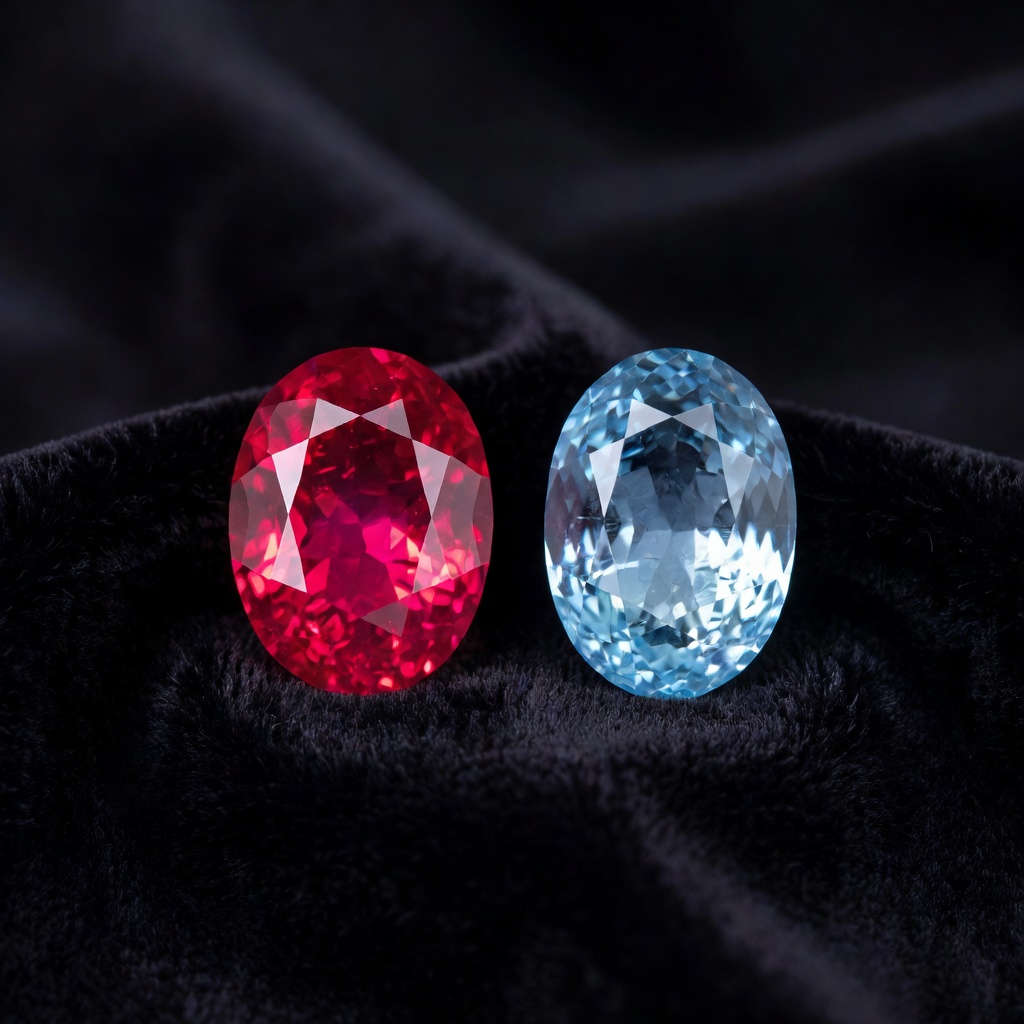
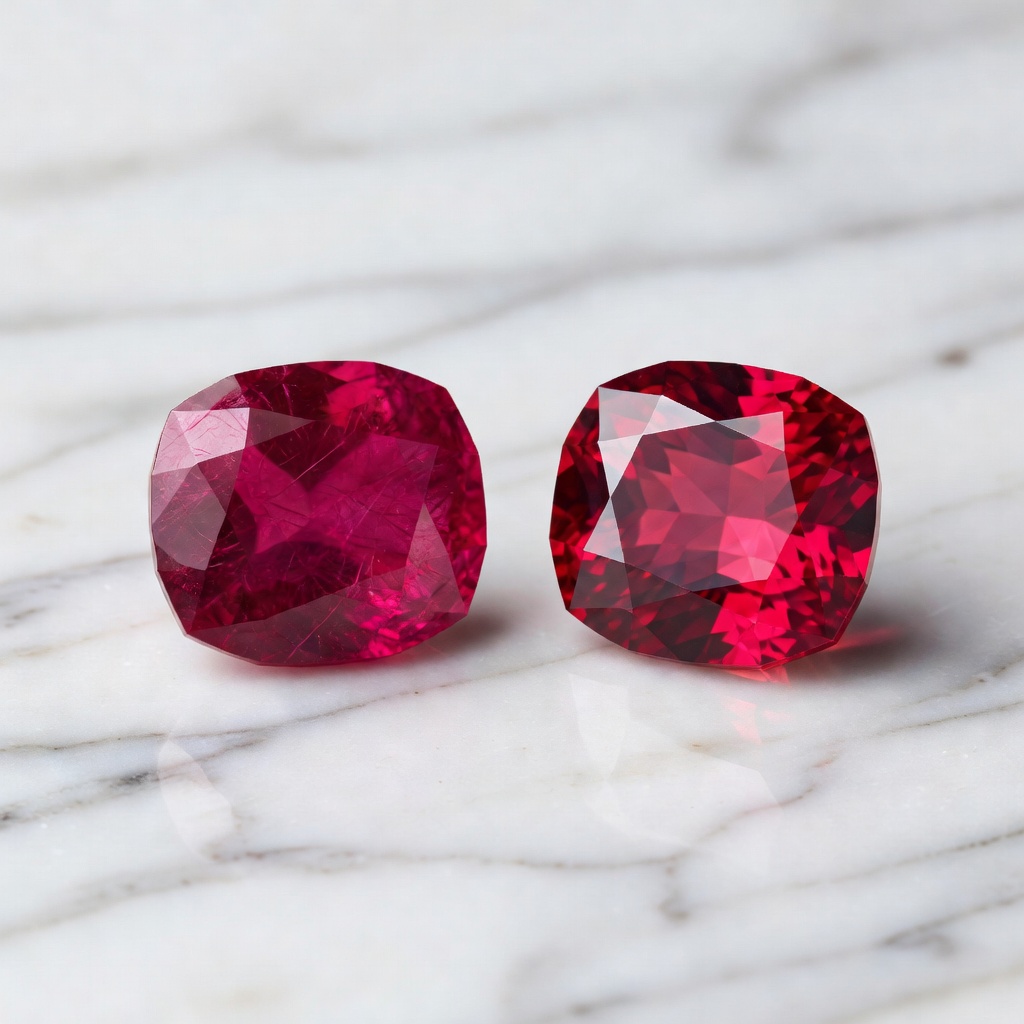
When examining red spinel vs ruby color characteristics side by side, subtle but significant differences emerge that trained gemologists use for identification. The most prized rubies, particularly those from Myanmar formerly known as Burma, display the legendary "pigeon blood" red—a deeply saturated primary red with subtle blue undertones that create a velvety, glowing appearance under various lighting conditions. This distinctive coloration often exhibits strong fluorescence under UV light, causing the stone to appear almost internally illuminated, a phenomenon rarely matched by other red gemstones. Additionally, fine rubies frequently contain microscopic rutile needle inclusions known as "silk," which can create soft, velvety visual effects and asterism (star patterns) in cabochon cuts, adding to their mystical allure.
Red spinels, conversely, typically present a brighter, more open color palette ranging from vibrant cherry red to hot pinkish-red tones that appear remarkably clean and transparent to the eye. Unlike rubies, fine spinels rarely contain the silk inclusions that characterize their corundum cousins, instead offering exceptional clarity and a glass-like purity that maximizes light return. When comparing spinel brilliance vs ruby optical performance, spinel often wins in terms of pure sparkle due to its isotropic nature, meaning it possesses single refraction that prevents the doubling of facet edges visible in ruby's anisotropic structure. This optical purity allows spinel to display exceptional fire and brilliance even in smaller carat weights, making it appear lively and vibrant in various lighting environments without the depth of color that defines the finest rubies.
Durability and Wearability: Practical Considerations for Daily Jewelry
Selecting between these gemstones for everyday wear requires careful consideration of their distinct durability characteristics and structural integrity. Ruby ranks 9 on the Mohs hardness scale, making it second only to diamond in resistance to scratching and surface abrasion, which explains its popularity for engagement rings and daily-wear jewelry subjected to constant contact. Beyond mere hardness, ruby possesses exceptional toughness—the resistance to breaking and chipping—due to its lack of perfect cleavage planes, allowing it to withstand the inevitable bumps and impacts of daily life without fracturing. This combination of hardness and toughness has made ruby the traditional choice for heirloom pieces intended to last generations, from Victorian-era cluster rings to modern solitaire engagement settings.
Spinel durability, while impressive, presents different considerations for jewelry applications, as it ranks 8 on the Mohs hardness scale and possesses perfect cleavage in the octahedral direction. This means that while spinel resists scratching from everyday dust and debris (which typically contains quartz at Mohs 7), it remains vulnerable to chipping if struck sharply along its cleavage planes, particularly at facet junctions or girdle edges. For this reason, spinel jewelry settings require thoughtful protection, with bezel settings or protective halo designs recommended for ring applications rather than exposed prong settings that leave edges vulnerable. Maintenance protocols differ as well; rubies often require gentle cleaning due to potential fracture fillings or heat treatments, while untreated spinels generally tolerate standard jewelry cleaning methods but demand careful inspection for chips after any significant impact.
Origins and Mining: From Mogok to Mozambique
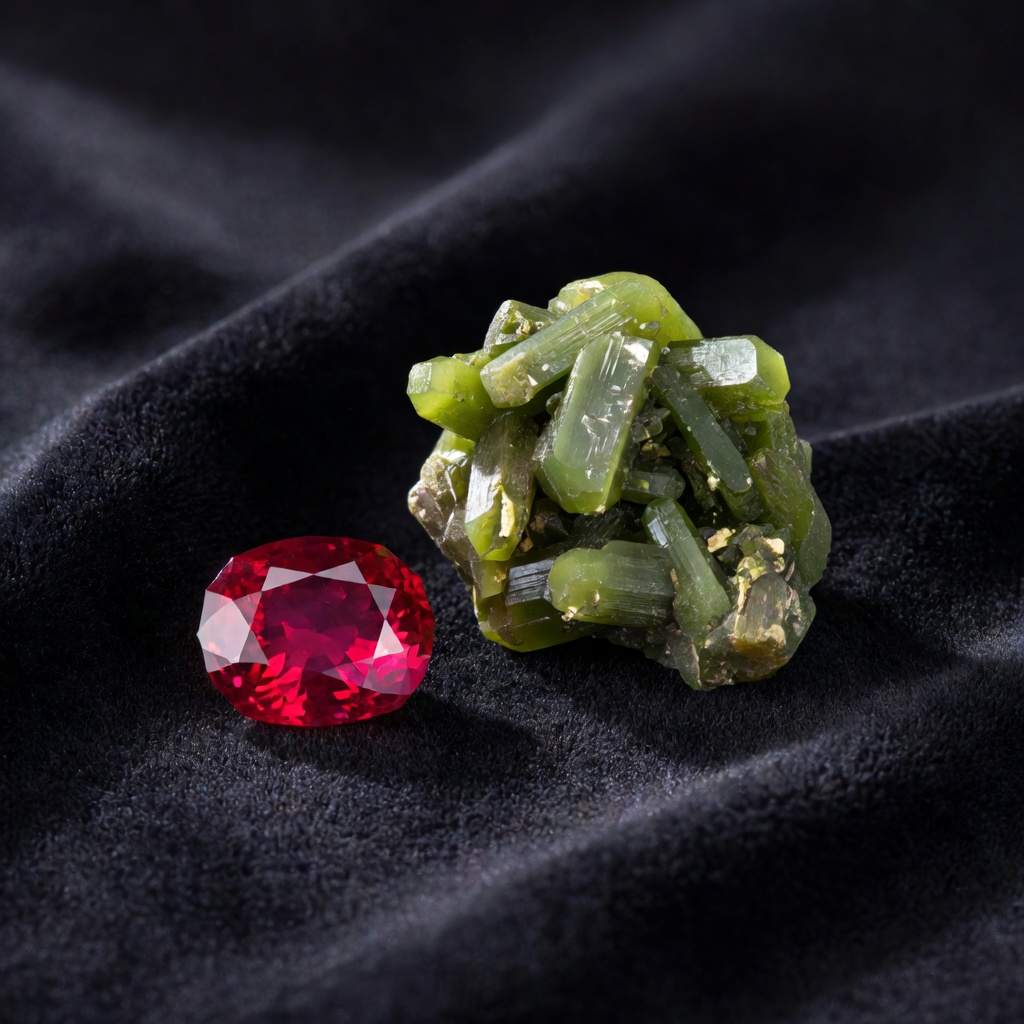
The geographic origins of these gemstones significantly influence their quality, value, and historical significance within the global gem trade. Myanmar's legendary Mogok Stone Tract remains the most prestigious source for both gemstones, producing the finest Burmese rubies with pigeon blood coloration and the ultra-rare "Jedi" spinels—stones so named for their intense neon red fluorescence that appears to glow like a lightsaber, completely free of dark tones or grayish secondary hues. These parallel deposits formed under similar metamorphic conditions in white marble host rocks, explaining why ancient miners extracted both minerals without distinguishing between them, creating the historical confusion that lasted centuries. The Mogok mines continue to yield exceptional specimens, though political instability and depleted alluvial deposits have made fine Burmese material increasingly scarce and valuable.
Modern mining operations have expanded the global map for both stones, with Vietnam and Afghanistan's Badakhshan region emerging as premier sources for cobalt-free red spinels that rival Burmese material in color saturation. Meanwhile, Mozambique and Madagascar have revolutionized the ruby market, with the Montepuez mines in Mozambique now producing the majority of commercial rubies and significant quantities of fine unheated material that challenges traditional Burmese dominance. This shift in production patterns affects the Burma ruby vs red spinel availability equation, as spinel remains significantly rarer in fine qualities despite lower overall prices, with exceptional stones over five carats commanding serious collector attention. Understanding these provenance differences helps buyers navigate the red gemstone buying guide landscape, as origin significantly impacts both market value and investment potential for serious collectors.
Market Value and Investment Potential: Analyzing Current Trends
The economic dynamics between these red gemstones reveal fascinating contrasts in pricing structures, treatment prevalence, and long-term investment trajectories. Unheated Burmese rubies currently command premium prices ranging from $10,000 to well over $100,000 per carat for exceptional quality stones, with record-breaking auction results regularly resetting market expectations for the finest pigeon blood specimens. In comparison, comparable quality red spinels typically range from $3,000 to $15,000 per carat, offering significant value for collectors seeking untreated red gemstones with exceptional visual characteristics. This price differential represents one of the most compelling arguments for natural ruby alternatives, as spinel provides similar aesthetic impact at fractionally lower costs while maintaining genuine rarity and collector interest.
However, market trends indicate that fine red spinel prices have appreciated nearly 300% over the past decade as awareness spreads among collectors and designers regarding its untreated status and historical significance. Treatment disclosure plays a crucial role in valuation differentiation; approximately 95% of rubies undergo heat treatment to improve color and clarity, a standard practice accepted in the trade but requiring disclosure, whereas high-quality spinels are typically untreated because heating rarely improves their appearance and may actually damage the stone. This distinction makes untreated fine spinels particularly attractive for investment portfolios, as their natural state ensures stable long-term value retention without the potential instability associated with treated stones. The following comparison table illustrates key differences buyers should consider when evaluating these gemstones:
| Characteristic | Ruby (Corundum) | Red Spinel |
|---|---|---|
| Chemical Composition | Aluminum Oxide (Al2O3) | Magnesium Aluminum Oxide (MgAl2O4) |
| Crystal System | Trigonal (Hexagonal) | Cubic (Isometric) |
| Mohs Hardness | 9 | 8 |
| Refractive Index | 1.76 - 1.77 | 1.71 - 1.72 |
| Specific Gravity | 3.97 - 4.05 | 3.58 - 3.61 |
| Optical Property | Double Refraction (Anisotropic) | Single Refraction (Isotropic) |
| Typical Inclusions | Rutile Silk, Hexagonal Growth Lines | Octahedral Crystals, Cleavage Cracks |
| Fluorescence (UV) | Strong Red | Weak to Moderate Red/Orange |
| Treatment Frequency | 90-95% Heat Treated | Typically Untreated |
| Price Range (Fine Quality) | $10,000 - $100,000+ per carat | $3,000 - $15,000 per carat |
| Perfect Cleavage | None (Excellent Toughness) | Octahedral (Requires Protection) |
| Color Range | Pigeon Blood, Deep Red with Blue Undertones | Cherry Red, Hot Pink, Neon Red |
Professional Identification: Laboratory Tests and Visual Cues
Distinguishing between these gemstones requires sophisticated gemological equipment for definitive identification, though several visual cues provide strong indicators for preliminary assessment. Spectroscopic analysis reveals distinct chromium absorption patterns that serve as fingerprint identifications; rubies display characteristic absorption lines at 692nm and 694nm forming a doublet, along with lines at 468nm and 475nm in the blue region, while spinels show a different pattern centered around 686nm with additional bands at 635nm and 585nm. Under magnification, the internal worlds of these stones diverge dramatically, with rubies typically exhibiting hexagonal growth lines, twinning planes, and rutile silk inclusions that appear as fine, intersecting needles, whereas spinels display octahedral crystal inclusions, iron-stained films along cleavage planes, and distinctive "spinel law" twinning that creates triangular etch marks.
For spinel ruby identification without laboratory equipment, several field tests provide reliable preliminary results, though professional certification remains essential for high-value purchases. The dichroscope test reveals ruby's pleochroism—showing orangey-red and purplish-red colors when viewed from different angles due to its double refraction—while spinel remains singly refractive showing only one color. Specific gravity testing offers definitive separation, with ruby sinking faster in heavy liquids due to its higher density (3.97-4.05) compared to spinel (3.58-3.61), a measurement easily verified with hydrostatic weighing equipment. Practical tips for collectors include examining facet edges under magnification; ruby's double refraction creates slightly doubled or fuzzy facet junctions when viewed through the table, while spinel maintains sharp, crisp edges due to its optical isotropy, providing a quick visual check for experienced buyers examining loose stones.
Jewelry Applications: Settings and Style Recommendations
Choosing appropriate jewelry designs for these gemstones requires balancing their optical properties with practical durability considerations for intended wear patterns. Ruby engagement rings represent the traditional choice for daily wear, with the stone's superior hardness and toughness allowing for secure prong settings that maximize light exposure while withstanding decades of continuous use without significant wear. Classic solitaire designs, three-stone settings symbolizing past-present-future, and vintage-inspired halo mounts all suit ruby's romantic associations and deep color saturation, with yellow gold enhancing the warmth of Burmese stones while platinum or white gold provides modern contrast that emphasizes the red intensity. For heirloom pieces intended as generational transfers, ruby remains the conservative choice, offering proven longevity that justifies higher initial investment costs.
Spinel jewelry settings demand more strategic planning to accommodate the stone's perfect cleavage while showcasing its exceptional brilliance and clarity. Bezel settings provide optimal protection for spinel rings, wrapping the girdle and pavilion edges in metal to prevent chipping from accidental impacts, while halo designs offer both protection and enhanced visual size. Pendants and earrings represent ideal applications for fine spinels, as these settings minimize exposure to hard knocks while allowing the stones to display their superior brilliance and fire without the structural compromises required for ring wear. For metal pairings, both gemstones complement traditional yellow gold, which enhances the warmth of red tones, though spinel's exceptional clarity and often lighter, brighter coloration shine particularly well in minimalist platinum settings that emphasize the stone's glass-like purity and modern aesthetic appeal.
Making Your Decision: Lifestyle, Budget, and Ethical Considerations
Selecting between these magnificent red gemstones ultimately depends on aligning personal priorities with the distinct characteristics each stone offers within your specific lifestyle context. For collectors seeking impressive carat weights and visual impact on modest budgets ranging from $500 to $3,000, spinel provides exceptional value, offering larger, cleaner stones with brilliant performance that would cost exponentially more in fine ruby qualities. Those prioritizing symbolic significance, maximum durability for active lifestyles, and traditional investment security should gravitate toward ruby, accepting the premium pricing for unheated Burmese material or exploring heated Mozambique options for more accessible entry points. The decision between ruby vs spinel often reflects personal philosophy regarding treatments, as spinel's typically untreated status appeals to purists seeking completely natural gemstones, while ruby's treatment prevalence requires careful verification of disclosure documentation.
Ethical considerations increasingly influence purchasing decisions for both gemstones, as mining operations in Myanmar face ongoing scrutiny regarding human rights practices, while African sources present mixed records requiring due diligence from conscientious buyers. Seeking certified Fair Trade stones or purchasing from dealers with documented direct relationships with specific mines provides assurance regarding extraction practices for both rubies and spinels. When considering natural ruby alternatives, spinel offers ethical advantages through its frequent occurrence in artisanal mining operations in Vietnam and Tanzania, where small-scale extraction supports local communities with lower environmental impact than industrial mining. Regardless of choice, insist upon laboratory certification from reputable institutions such as GIA, SSEF, or Gübelin to verify origin claims, treatment status, and authenticity, ensuring your investment aligns with both aesthetic desires and ethical standards.
Frequently Asked Questions About Ruby vs Spinel
Is Red Spinel as Valuable as Ruby?
Generally, fine untreated rubies command higher prices than spinels, often 5-10 times more per carat. However, exceptional 'Jedi' spinels from Myanmar with no dark tones can rival mid-quality ruby prices due to extreme rarity. Untreated status and rising collector interest make high-end spinels strong alternative investments.
How Can I Tell Ruby from Spinel Without Gemological Equipment?
Look for double refraction: Place the stone over text—ruby will show double image edges due to anisotropic properties, while spinel remains single. Check fluorescence under UV light—rubies usually glow intense red, while spinels show weaker or no reaction. Also, spinels typically appear cleaner with glass-like clarity compared to ruby's characteristic silk inclusions.
Which Is Better for an Engagement Ring, Ruby or Spinel?
Ruby is technically superior for daily-wear engagement rings due to its Mohs 9 hardness and excellent toughness. Spinel (Mohs 8) works for careful wearers but requires protective bezel settings to prevent chipping. If choosing spinel for an engagement ring, consider it for occasional wear or select a more protected pendant/earring design instead.
Why Is Spinel Called the 'Great Impostor' of Rubies?
Spinel earned this nickname because it was confused with ruby for millennia. They occur in the same mines (especially Myanmar's Mogok), share similar red colors from chromium traces, and were indistinguishable before modern gemology. Famous historical 'rubies' like the 170-carat Black Prince's Ruby in Britain's Imperial State Crown are actually red spinels.
Do Rubies and Spinels Receive the Same Treatments?
No. Approximately 90-95% of rubies on the market undergo heat treatment to improve color and clarity, which is standard and accepted. In contrast, most high-quality red spinels are completely untreated—heating spinels rarely improves them and may damage the stone. This difference makes untreated fine spinels particularly valuable to collectors.
Can Spinel Scratch as Easily as Ruby?
While spinel (Mohs 8) is softer than ruby (Mohs 9), it resists scratching from household dust (quartz, Mohs 7). However, spinel can be scratched by ruby, sapphire, or diamond. The bigger concern is spinel's tendency to chip along cleavage planes upon hard impact, whereas ruby's toughness makes it more resistant to breakage.
Which Gemstone Shows Better Brilliance and Sparkle?
Spinel typically displays superior brilliance and sparkle due to its higher refractive index range and isotropic nature (single refraction), allowing light to travel through uniformly. Ruby's double refraction can create slightly fuzzy facet edges. However, fine rubies with glass-like clarity can match spinel's brilliance while offering greater color depth.
Are Burmese Rubies and Spinels Found in the Same Locations?
Yes, both gemstones are famously mined in Myanmar's Mogok Stone Tract and newer Mong Hsu deposits. They form under similar metamorphic conditions in marble host rocks. This geographic overlap explains why historical miners and royal courts possessed both stones without realizing they were different minerals until the late 18th century.