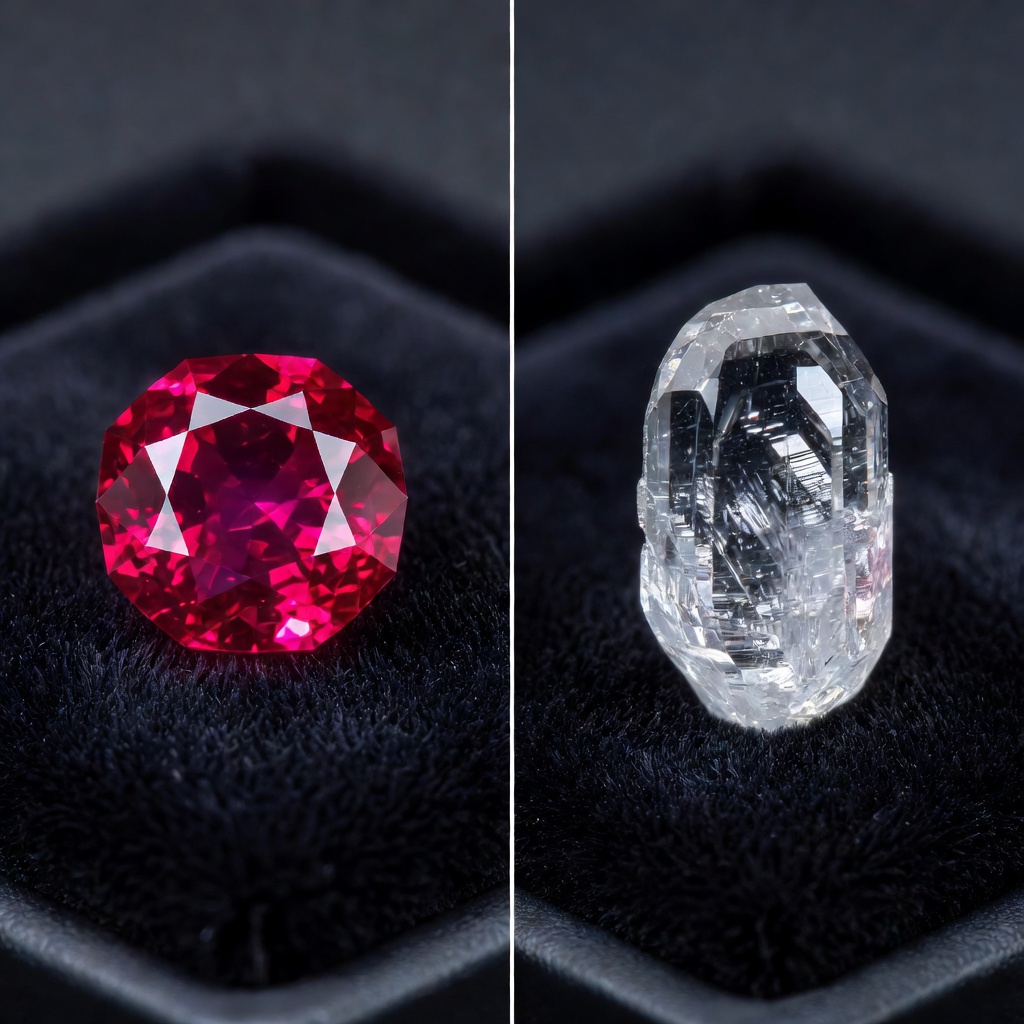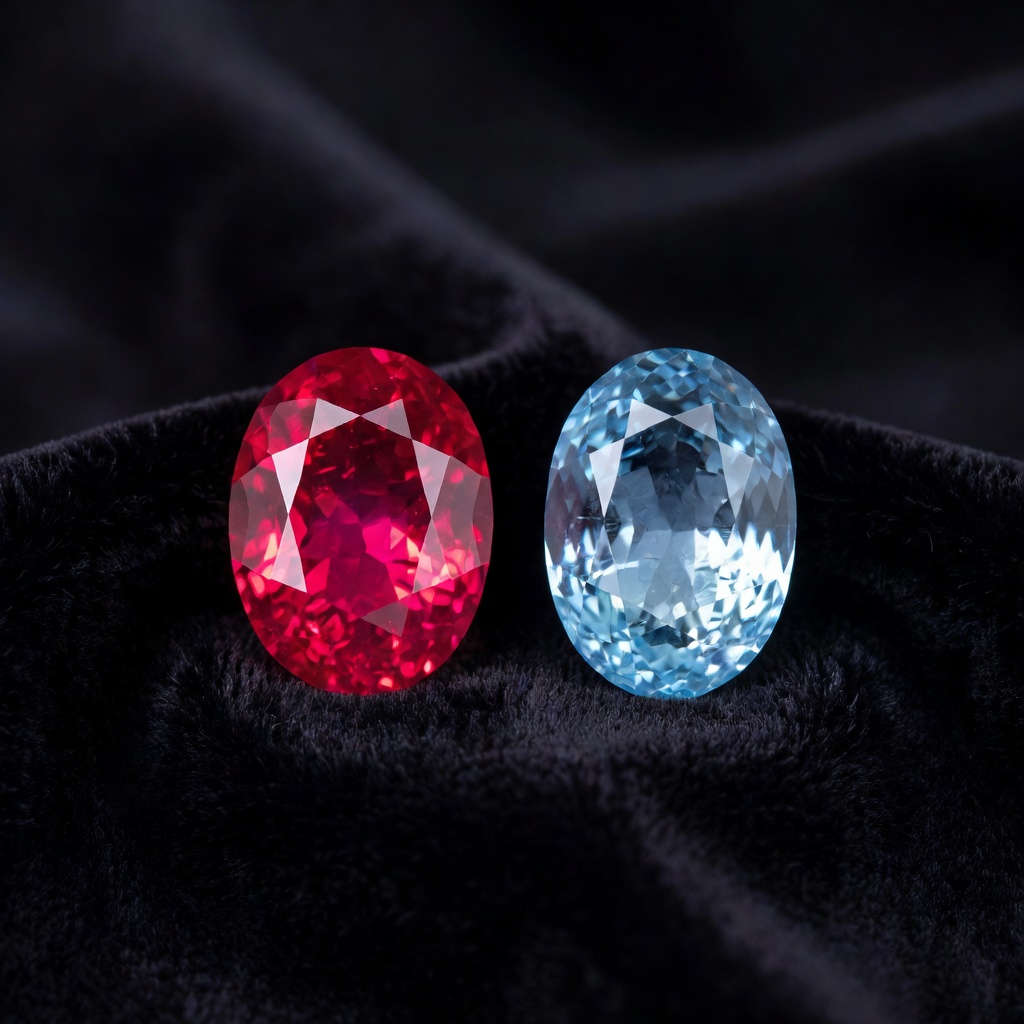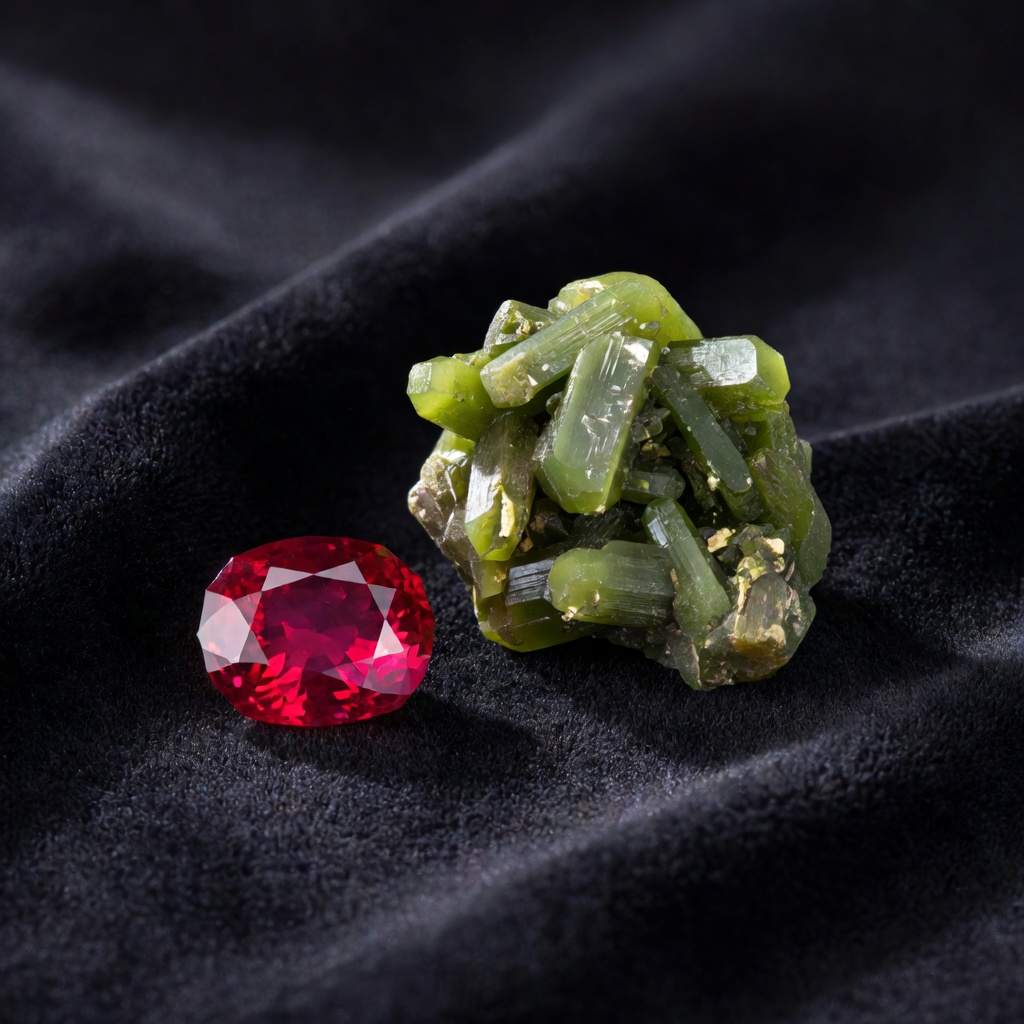
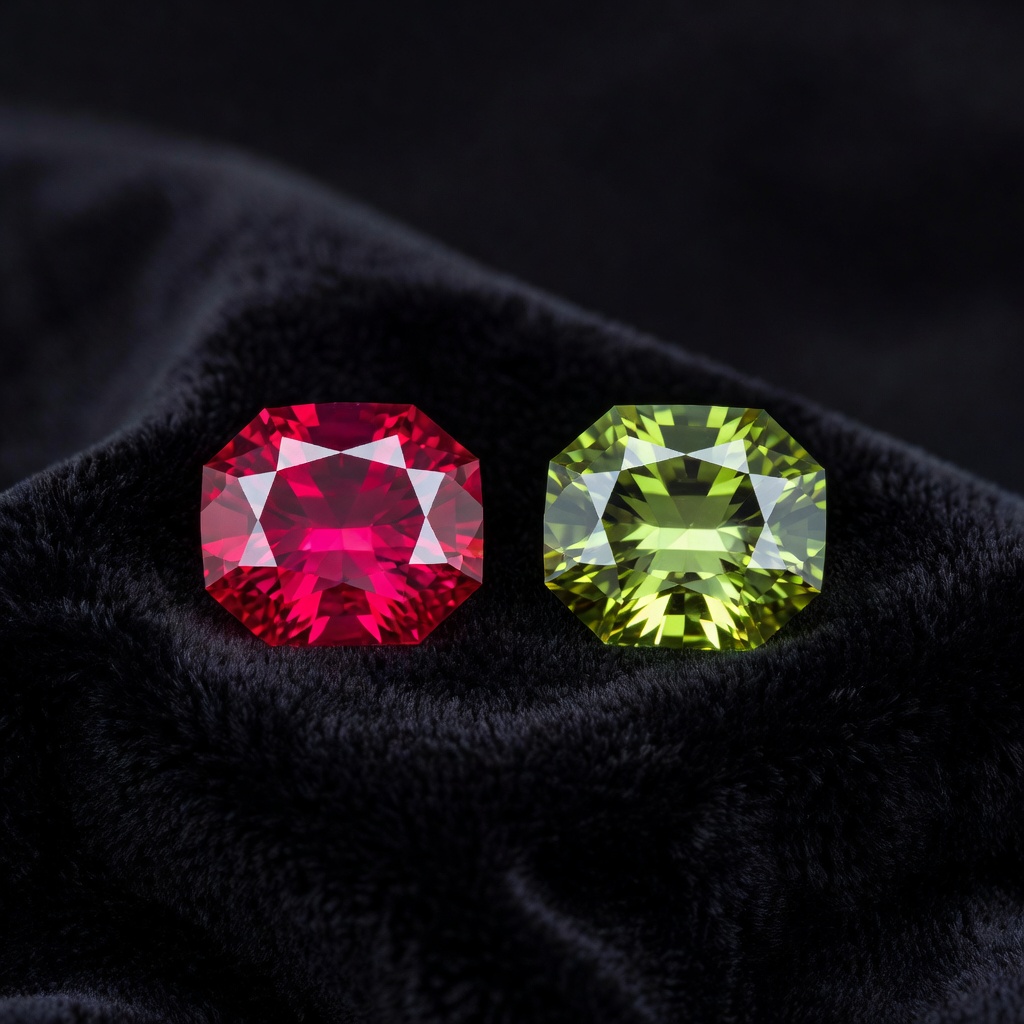
Ruby vs Sphene (Titanite): A Comprehensive Gemological Comparison
When selecting a gemstone for fine jewelry, collectors and consumers often weigh the timeless prestige of classical precious stones against the unique optical characteristics of rare collector's gems. Ruby, celebrated as the red variety of corundum, has commanded reverence across civilizations from ancient Burma to modern auction houses, symbolizing passion, power, and protection throughout human history. In contrast, sphene—also known by its mineralogical name titanite—remains a hidden treasure within the gemological community, prized primarily by connoisseurs who seek its extraordinary dispersion and brilliant fire that can exceed even that of diamond. This detailed examination of Ruby vs Sphene (Titanite) explores their fundamental chemical differences, durability characteristics, optical performances, and practical applications to guide your selection process whether you prioritize heirloom durability or distinctive visual spectacle.
Chemical Composition and Crystal Structure
Understanding the atomic architecture of these gemstones reveals why they exhibit such divergent physical properties and visual characteristics. Ruby constitutes the red variety of corundum, chemically formulated as aluminum oxide (Al₂O₃), where chromium impurities replace aluminum atoms within the crystal lattice to produce the coveted red hue; the concentration of chromium typically ranges from 0.5% to 2%, with higher percentages yielding the legendary pigeon blood red saturation. Titanite gemstone properties differ fundamentally, as sphene comprises calcium titanium silicate (CaTiSiO₅), incorporating titanium as an essential structural component rather than a trace coloring agent, which contributes to its remarkable optical density and specific gravity of 3.52.
The crystallographic distinctions between these minerals influence both their formation environments and cutting potential. Ruby crystallizes within the trigonal system, forming hexagonal prisms and pyramids often found in metamorphic marble deposits or alkali basalt flows, with notable deposits in Myanmar's Mogok Stone Tract and Mozambique's Montepuez mines. Sphene belongs to the monoclinic crystal system, typically manifesting as wedge-shaped crystals with distinct cleavage directions, forming in calcium-rich metamorphic rocks and igneous intrusions such as those found in Pakistan's Skardu region and Madagascar's alpine-type deposits. Gem cutters must navigate sphene's perfect cleavage and sensitive crystal orientation carefully, whereas ruby's toughness and lack of cleavage allow for more aggressive cutting techniques and diverse facet arrangements.
Durability and Hardness: Critical Differences
Perhaps no factor influences the practical utility of these gemstones more significantly than their relative resistance to wear, impact, and environmental stress. When evaluating Ruby hardness vs Sphene, the disparity is substantial: ruby ranks 9 on the Mohs hardness scale, making it second only to diamond and moissanite in scratch resistance, which explains its prevalence in engagement rings, bracelets, and daily-wear jewelry that must withstand constant friction against household surfaces and environmental particulates. This exceptional hardness, combined with high toughness (resistance to breaking), allows ruby jewelry to survive generations of continuous wear with minimal surface degradation, maintaining polish and facet integrity decade after decade.
Sphene presents a more delicate proposition for jewelry applications, registering merely 5 to 5.5 on the Mohs hardness scale—comparable to glass or knife blade steel—and possessing distinct cleavage planes that create planes of structural weakness within the crystal. These cleavage directions mean that sharp impacts, rapid temperature changes, or even improper setting pressure can cause sphene to fracture or chip, rendering it unsuitable for rings that encounter daily knocks against desks, car keys, or hard surfaces. For collectors considering sphene acquisition, protective bezel settings and occasional-wear design constraints become non-negotiable requirements rather than optional preferences, fundamentally limiting the stone's versatility compared to the robust ruby.
Optical Properties: Fire, Brilliance, and Color
The visual distinction between these gemstones extends far beyond their obvious color differences, encompassing complex interactions with light that create distinctly different aesthetic experiences. Ruby exhibits a refractive index between 1.76 and 1.77, producing high brilliance and a vitreous to sub-adamantine luster that enhances its depth of color, while chromium-induced fluorescence under ultraviolet light creates an internal glow—particularly in Burmese specimens—that intensifies the stone's presence in daylight equivalent lighting conditions. The finest rubies display saturation levels so intense they appear to glow from within, with pigeon blood red specimens commanding premium prices for this elusive combination of hue, tone, and fluorescence.
Sphene fire and dispersion represent the gemstone's crowning glory and primary claim to fame within collector circles, boasting a dispersion rating of 0.051 that exceeds diamond's 0.044, meaning sphene splits white light into spectral colors with exceptional efficiency. This property generates vivid flashes of red, blue, green, and yellow fire—reminiscent of fireworks—when the stone moves under direct lighting, creating a disco-ball effect that no ruby can replicate regardless of cutting quality. However, this fire manifests within a body color palette of yellow-green, green, brownish-green, or golden hues, contrasting sharply with ruby's pure red to pinkish-red spectrum; while ruby offers chromatic intensity and symbolic associations with blood and fire, sphene provides prismatic spectacle within an earthier, more subtle color range that appeals to those seeking uniqueness over classical beauty.
Ruby vs Sphene: Detailed Comparison
| Characteristic | Ruby (Red Corundum) | Sphene (Titanite) |
|---|---|---|
| Chemical Formula | Al₂O₃ (Aluminum Oxide) with Cr³⁺ | CaTiSiO₅ (Calcium Titanium Silicate) |
| Crystal System | Trigonal (Hexagonal) | Monoclinic |
| Mohs Hardness | 9 (Excellent for daily wear) | 5-5.5 (Requires protective care) |
| Refractive Index | 1.76-1.77 | 1.843-2.110 (Biaxial positive) |
| Dispersion | 0.018 (Low fire, high brilliance) | 0.051 (Exceptional fire, exceeds diamond) |
| Primary Colors | Red, pinkish-red, pigeon blood red | Yellow-green, green, golden, brownish-green |
| Cleavage | None (conchoidal fracture) | Perfect in one direction (distinct) |
| Toughness | Excellent (resistant to breaking) | Fair to poor (susceptible to chipping) |
| Typical Treatments | Heat treatment common (80-90% of market) | Typically untreated; occasional heating rare |
| Price Range (Per Carat) | $100 - $1,000,000+ (depending on quality/origin) | $50 - $500 (exceptional stones to $1,000+) |
| Best Jewelry Applications | Rings, bracelets, earrings, necklaces (unlimited) | Earrings, pendants, brooches (protected settings) |
| Cleaning Methods | Ultrasonic, steam, warm soapy water | Warm soapy water only (no ultrasonic/steam) |
Sourcing, Rarity, and Market Availability
The geographic origins of these gemstones significantly influence their availability, quality characteristics, and market pricing structures within the global gem trade. Primary ruby sources encompass Myanmar's legendary Mogok Valley, which produces the most coveted pigeon blood specimens with strong fluorescence, alongside Mozambique's Montepuez mines that have emerged as major suppliers of fine-quality material in larger sizes, and Madagascar's deposits offering diverse qualities from commercial to collector-grade stones. The market availability of ruby spans from mass-produced commercial grade material treated with lead glass filling (which requires disclosure) to exceptionally rare untreated Burmese stones over five carats that appear perhaps once per decade at major auction houses, creating a tiered marketplace accessible to various budgets yet dominated historically by Asian demand.
Fine sphene presents a different scarcity model, with premier material originating primarily from Pakistan's Skardu region, where crystals occasionally yield faceted stones over five carats—a size considered enormous for this species—alongside Madagascar's deposits and Sri Lankan gravels that produce smaller but often cleaner material. Unlike ruby's commercial abundance in lower qualities, even modest sphene specimens remain genuinely rare due to the mineral's typical inclusion patterns and cleavage challenges that prevent large clean crystals from surviving the mining process intact. This limited supply creates a collector-focused market where knowledgeable gem enthusiasts compete for the finest green, low-inclusion material at specialized mineral shows and high-end gem dealer inventories, rather than encountering sphene in standard retail jewelry establishments.
Treatments, Enhancements, and Identification
Distinguishing between natural and treated specimens requires sophisticated gemological analysis, particularly given the prevalence of enhancement procedures in the ruby market versus the generally natural state of sphene. Heat treatment affects an estimated 80-90% of rubies in the commercial market, utilizing temperatures between 800°C and 1,800°C to dissolve rutile silk inclusions, improve color saturation by reducing blue or purple overtones, and enhance overall transparency—treatments that are stable and permanent but must be disclosed according to FTC guidelines and international trade standards. Advanced laboratory techniques including spectroscopy, inclusion mapping, and chemical analysis can detect heat treatment through characteristic inclusion alterations and trace element diffusion patterns, while glass-filled rubies (a lower-value treatment) require careful microscopic examination to identify flux residues within fractures.
Sphene typically enters the market in its natural, untreated state, as the gem's sensitive cleavage and relatively modest market prices generally discourage costly enhancement procedures; however, occasional heating experiments have attempted to lighten overly dark green specimens or improve color stability, though these treatments remain rare and usually detectable through standard gemological testing. Red corundum identification versus sphene proves straightforward due to their dramatically different optical properties, refractive indices, and color ranges, though inexperienced buyers should always request certificates from reputable laboratories such as GIA, Gübelin, or SSEF when purchasing high-value specimens to confirm natural origin and treatment status. Laboratory reports provide essential documentation for insurance purposes, resale value verification, and peace of mind regarding synthetic imitations, which exist for ruby but remain virtually nonexistent for sphene due to the latter's limited commercial demand.
Price Analysis and Investment Potential
The economic landscapes for ruby and sphene diverge dramatically, reflecting their respective positions within mainstream luxury markets versus niche collector communities. Ruby value per carat spans an extraordinary range, from commercial-grade heated material available for $100-$500 per carat, through fine Mozambican specimens commanding $5,000-$20,000 per carat, to exceptional untreated Burmese stones exceeding $1,000,000 per carat for important sizes over five carats, with the record "Sunrise Ruby" selling for over $30 million total in 2015. This pricing hierarchy depends heavily on origin (with Burmese material commanding premiums), color saturation (pigeon blood vs. pinkish or purplish red), clarity levels, and crucially, treatment status, with unheated stones typically commanding 300-500% premiums over heated equivalents of similar appearance.
Sphene pricing remains comparatively accessible, with commercial quality material ranging from $50-$150 per carat, fine green specimens with strong dispersion fetching $200-$500 per carat, and truly exceptional clean stones over three carats potentially reaching $1,000 per carat or more depending on cutting quality and color purity. From an investment perspective, ruby offers established market liquidity, centuries of documented price appreciation, and strong auction house demand, particularly for unheated Burmese material that functions similarly to blue-chip stocks within the gemstone investment portfolio. Sphene represents a speculative acquisition suited for gemological enthusiasts who appreciate its unique optical properties, but it lacks the resale infrastructure, standardized grading systems, and broad market demand necessary for reliable investment returns, making it appropriate for personal enjoyment rather than serious financial speculation.
Jewelry Applications and Setting Recommendations
Practical jewelry design considerations must account for the vastly different durability profiles of these gemstones to ensure longevity and wearability. Ruby's exceptional hardness and toughness permit unlimited design flexibility, functioning beautifully in high-exposure pieces such as engagement rings, tennis bracelets, cuff bracelets, and daily-wear earrings without requiring special protective measures beyond standard prong maintenance; jewelers can set rubies in delicate four-prong settings, tension settings, or elaborate pave arrangements without fear of cleavage damage during the setting process or subsequent wear. Metal pairing recommendations often favor yellow gold (18K or 22K) to enhance the warmth of Burmese and Mozambique rubies, though platinum and white gold provide contemporary contrast that accentuates the stone's red saturation against cool metal tones.
Titanite jewelry durability constraints necessitate thoughtful design strategies that prioritize protection over prominence, restricting sphene primarily to earrings, pendants, and brooches where impact risks remain minimal, while explicitly avoiding ring designs except for occasional cocktail rings worn selectively. Bezel settings that fully encircle the girdle provide essential protection against edge chipping, while halo designs can shield the vulnerable crown facets from direct impacts; jewelers must exercise extreme caution during setting to avoid pressure along cleavage planes, often preferring protective basket settings with V-prongs at the points. White metals including platinum, white gold, and silver optimally complement sphene's yellow-green body color by providing neutral backgrounds that allow the stone's fire to dominate the visual experience, whereas yellow gold might create color competition that dulls sphene's appearance.
How to Choose Between Ruby and Sphene
Selecting between these gemstones requires honest assessment of lifestyle factors, aesthetic preferences, and long-term ownership goals rather than simply comparing price points or rarity metrics. Active individuals with hands-on professions, sports enthusiasts, or those seeking everyday heirloom jewelry should prioritize ruby's durability regardless of budget constraints, as even a modest commercial-grade ruby will outlast a fine sphene in daily wear scenarios; conversely, collectors with extensive jewelry rotations who desire unique conversation pieces for gala events or dinner parties may find sphene's exceptional fire and scarcity more aligned with their collecting philosophy. Budget considerations also influence this decision significantly, as entry-level sphene offers distinctive optical performance at accessible price points ($100-$300) where equivalent ruby purchases might yield only heavily treated or included material lacking visual impact.
Color preference serves as the ultimate differentiator for many buyers, with ruby appealing to those drawn to classical symbolism, romantic associations, and the regal authority of saturated red, while sphene attracts individuals seeking individuality, geological rarity, and the technical marvel of extreme dispersion within an unexpected green-yellow palette. For engagement ring shoppers specifically, the choice becomes practically predetermined: ruby withstands the mechanical demands of constant wear while carrying traditional romantic significance, whereas sphene demands impractical restrictions for such a symbolically important daily-wear item. Ultimately, the ideal collector might acquire both—ruby for daily adornment and investment security, sphene for specialized occasions and appreciation of mineralogical diversity.
Care and Maintenance Guidelines
Proper maintenance protocols differ substantially between these gemstones due to their hardness disparities and structural vulnerabilities. Ruby requires minimal special care beyond standard jewelry hygiene, tolerating ultrasonic cleaning devices that remove accumulated grime from pavilion facets, steam cleaning for professional jeweler maintenance, and exposure to household chemicals, light, and heat without degradation; owners should still remove ruby jewelry during heavy manual labor or gym workouts to prevent setting damage or loss, though the stone itself generally survives such encounters unscathed. Storage alongside other gemstones poses minimal risk of scratching other pieces, though storing rubies separately from softer gems prevents the ruby from damaging its neighbors.
Sphene demands meticulous, gentle care protocols that acknowledge its 5-5.5 hardness and perfect cleavage vulnerabilities. Cleaning should involve only lukewarm water with mild dish soap and a soft toothbrush, avoiding entirely ultrasonic cleaners whose vibrations can initiate cleavage fractures, steam cleaners that create thermal shock, and harsh chemical solvents including acetone or alcohol that might attack surface-reaching inclusions. Storage requires individual soft pouches or separate compartments to prevent contact with harder gemstones (including ruby, quartz, or topaz) that could scratch sphene's surface, and owners should remove sphene jewelry before activities involving temperature extremes, physical impact, or chemical exposure such as swimming pools, cleaning products, or gardening. With proper care, sphene maintains its dazzling fire for generations, though it requires significantly more attention than its corundum counterpart.
Frequently Asked Questions
Which is more valuable, ruby or sphene?
Ruby is generally significantly more valuable than sphene. Fine untreated rubies, especially Burmese pigeon blood specimens, can command $10,000 to over $1 million per carat, while even exceptional sphene typically ranges from $200-$500 per carat. However, large clean sphene crystals over 5 carats are rare and may surprise collectors with premiums.
Can sphene be worn in an engagement ring?
Sphene is not recommended for engagement rings due to its 5-5.5 Mohs hardness and distinct cleavage planes, making it susceptible to chipping and scratching during daily wear. Ruby, with its 9/10 hardness, is an excellent choice for engagement rings that withstand constant use.
Why does sphene show more fire than ruby?
Sphene possesses a dispersion rating of 0.051, which exceeds diamond's 0.044, meaning it splits white light into spectral colors more effectively. Ruby has lower dispersion (0.018) but compensates with strong fluorescence and saturated body color, creating a different but equally captivating visual effect.
Is titanite the same as sphene?
Yes, titanite and sphene refer to the same mineral (calcium titanium silicate). 'Sphene' is the traditional gemological term still used in the jewelry trade, while 'titanite' is the preferred mineralogical name referencing its titanium content. Both terms are interchangeable in gem markets.
How can I tell ruby and sphene apart visually?
Ruby appears in shades of red (pinkish to pigeon blood) with a vitreous to sub-adamantine luster, while sphene occurs in yellow-green to green hues with adamantine luster and intense rainbow fire. Under magnification, ruby shows needle-like rutile inclusions, whereas sphene displays wedge-shaped crystals and strong pleochroism (showing different colors from different angles).
Which gemstone is better for investment purposes?
Ruby offers superior investment stability due to centuries of established demand, cultural significance, and liquidity. High-quality unheated rubies appreciate consistently. Sphene remains a speculative collector's stone with limited resale markets, suitable for hobbyist collectors rather than serious investors seeking portfolio diversification.
Do rubies and sphene require different cleaning methods?
Yes. Ruby can withstand ultrasonic cleaners and steam cleaning due to its hardness and durability. Sphene requires gentle care: lukewarm soapy water with a soft brush only. Never use ultrasonic, steam, or harsh chemicals on sphene, as thermal shock or vibration can cause cleavage fractures.
What causes the green color in sphene versus red in ruby?
Ruby's red color results from chromium (Cr³⁺) ions replacing aluminum in the corundum crystal lattice, absorbing green and blue light while transmitting red. Sphene's yellow-green to green color derives from iron (Fe³⁺) substitutions within the calcium titanium silicate structure, sometimes enhanced by rare earth elements.