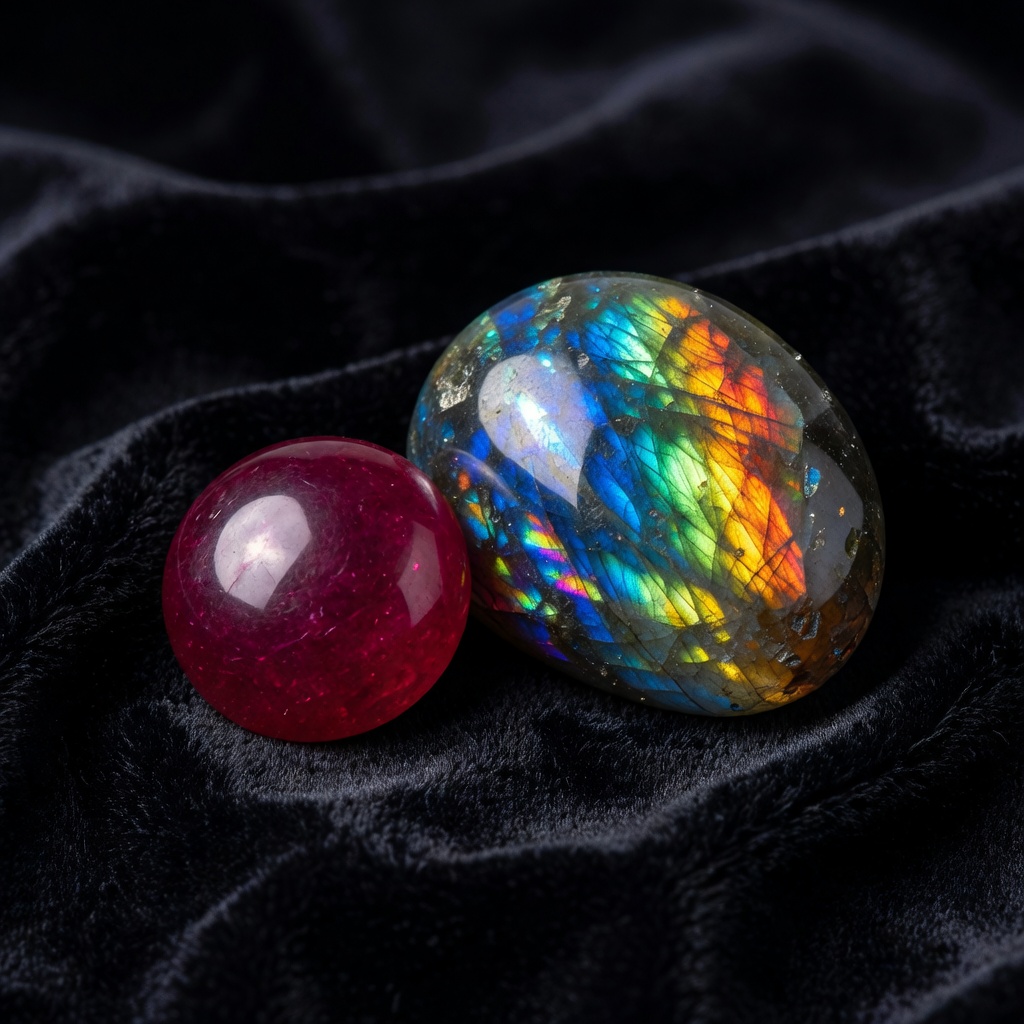
Fire Meets the Aurora: An Introduction to Ruby vs Spectrolite
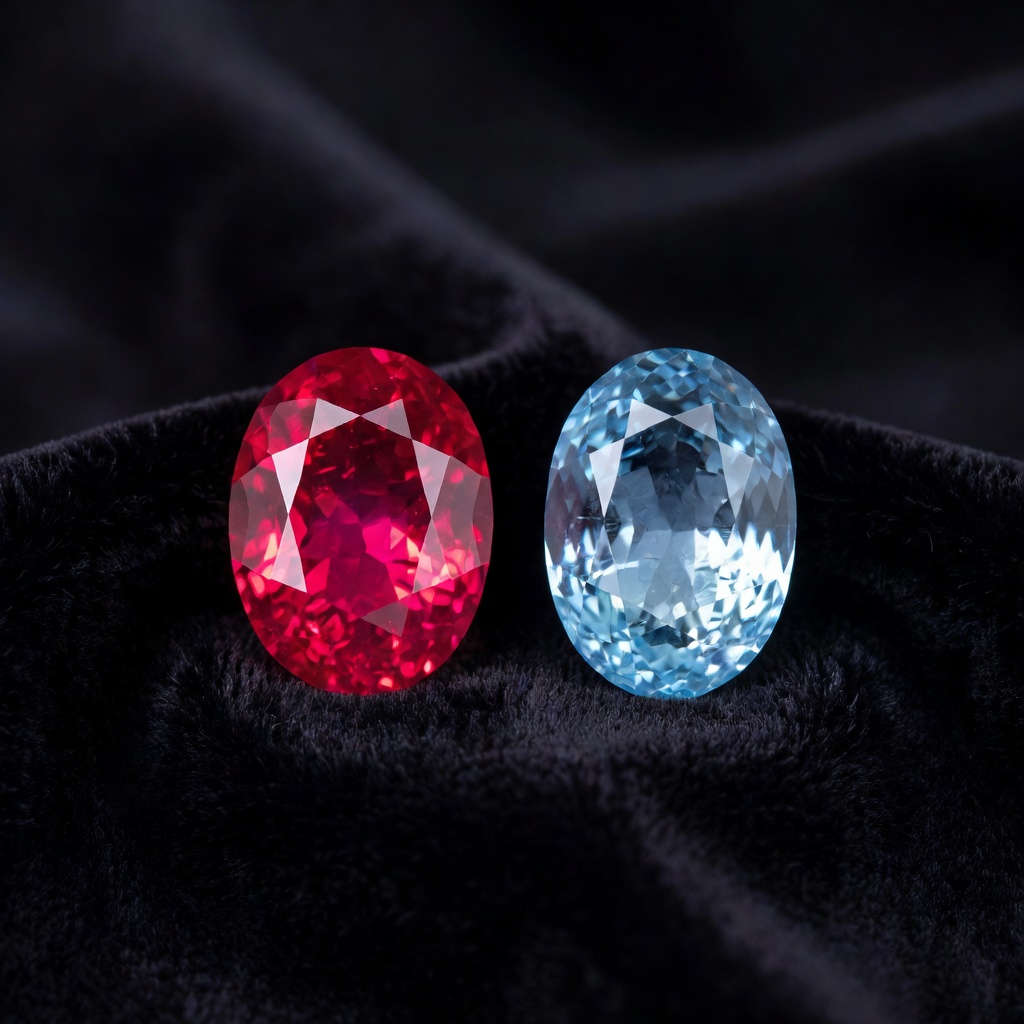
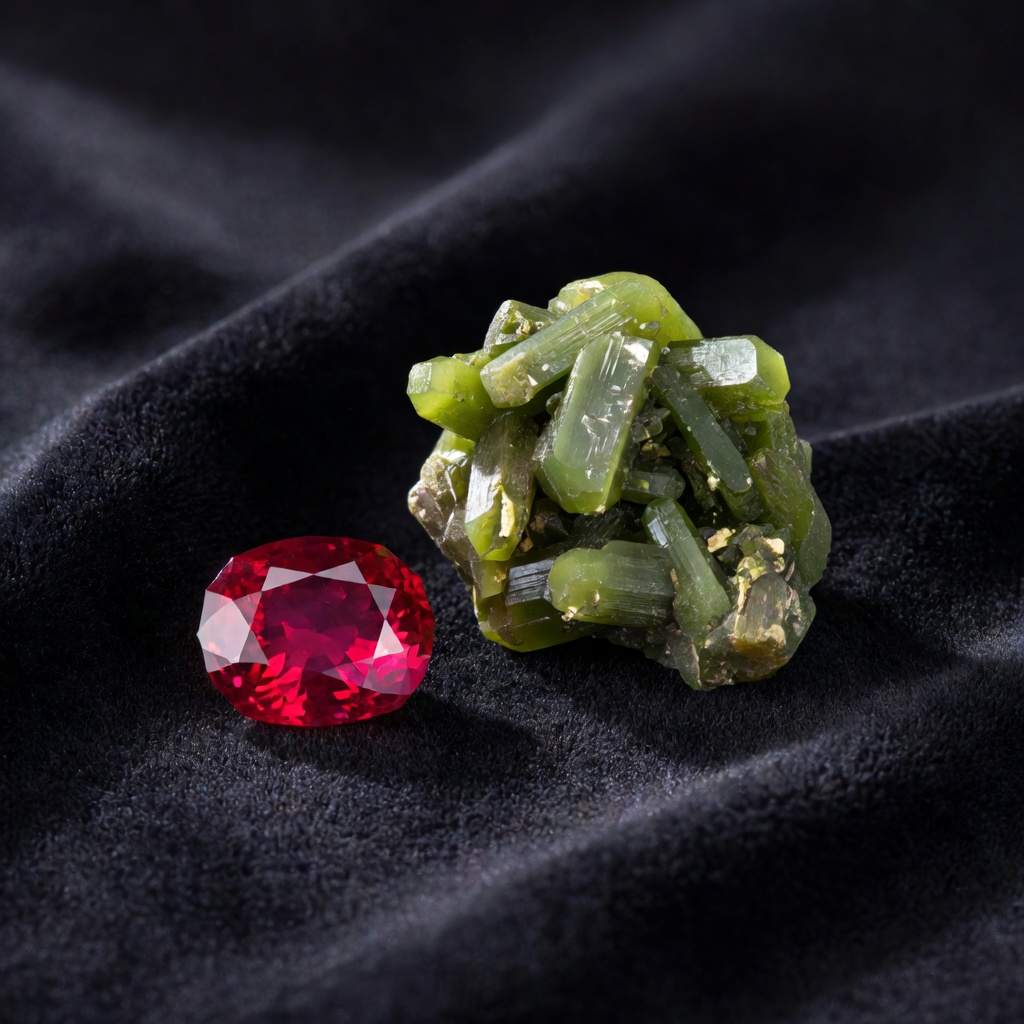
When the deep crimson glow of eternal flames collides with the ethereal dance of northern lights captured in stone, collectors witness one of the most fascinating dichotomies in the gemological world. The comparison of Ruby vs Spectrolite presents a study in contrasts: one gemstone embodies the concentrated heat of the earth's core through its unwavering red saturation, while the other captures the fleeting, prismatic magic of the Aurora Borealis through its remarkable optical phenomena. Both stones command devoted followings among serious collectors and jewelry enthusiasts, yet they occupy distinctly different classifications within the gemstone hierarchy, offering unique advantages for various applications and investment strategies.
Understanding the fundamental distinctions between these two collector's favorites requires examining multiple criteria beyond mere aesthetic appeal. Durability considerations separate the heirlooms from the occasional wear pieces, while value propositions differ dramatically between the precious gemstone markets and the specialized realm of Finnish feldspar. Whether you are selecting a center stone for daily wear, building an investment-grade collection, or seeking the perfect specimen to complete a diversified portfolio, this comprehensive analysis explores the geological origins, optical characteristics, and practical applications that define these extraordinary stones.
Geological Origins and Composition: Corundum Gemstone Properties vs Feldspar Structures
The Crystalline Foundation of Ruby
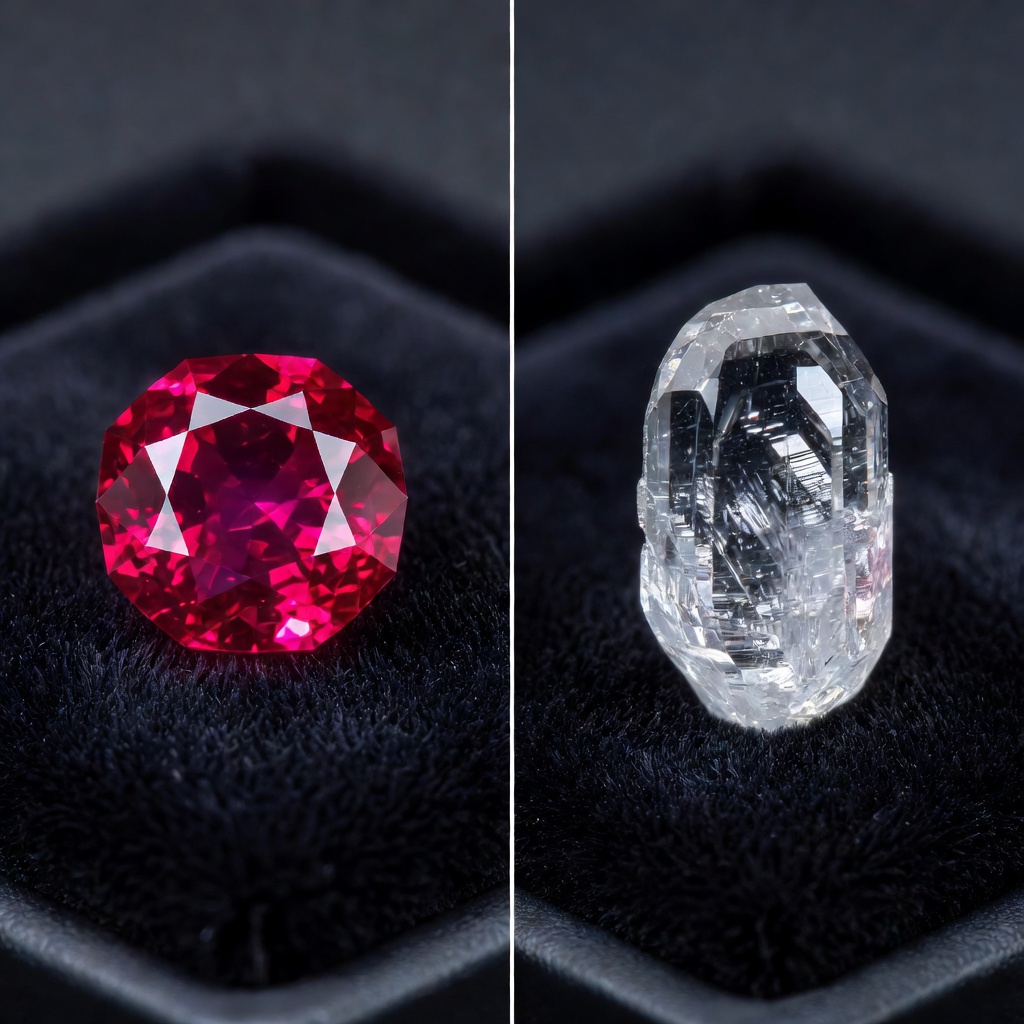
Ruby represents the red variety of corundum, a crystalline form of aluminum oxide (Al₂O₃) that forms under extreme heat and pressure within metamorphic rock environments. The presence of chromium traces, specifically when chromium ions replace aluminum in the crystal lattice, creates the gemstone's signature red coloration, with higher chromium concentrations producing the coveted "pigeon's blood" saturation. These gemstones typically form in marble or basaltic host rocks, with significant deposits found in Myanmar (Burma), Thailand, Sri Lanka, and Madagascar. The trigonal crystal system of corundum creates hexagonal prisms and pyramids, contributing to the stone's exceptional structural integrity and optical properties that distinguish it from other red gemstones.
The geological journey of a ruby spans millions of years as tectonic activity subjects aluminum-rich rocks to temperatures exceeding 800°C and immense pressure. This slow crystallization process often incorporates rutile needle inclusions, known as silk, which can actually enhance the stone's appearance through asterism (the star effect) when properly oriented. Unlike many gemstones where inclusions diminish value, these internal characteristics often serve as birthmarks confirming natural origin and can create rare optical phenomena highly prized by connoisseurs.
Finnish Spectrolite Value Through Unique Formation
Spectrolite represents the premium variety of labradorite feldspar exclusively mined in the Ylämaa region of southeastern Finland, where specific geological conditions created this extraordinary display stone approximately 1.4 billion years ago during the Precambrian era. Unlike common labradorite found throughout Canada, Madagascar, and Norway, true Finnish spectrolite developed within anorthosite intrusions where slow cooling allowed for the formation of distinct lamellar structures necessary for premium optical effects. The Finnish spectrolite value derives not only from its restricted geographic origin but from the unique chemical composition that produces broader color spectrums than its common counterparts.
Chemically classified as a plagioclase feldspar within the sodium-calcium series, spectrolite crystallizes in the triclinic system, forming tabular crystals with distinct cleavage planes. The stone's body color typically presents as dark gray to black, serving as the perfect canvas for its optical display. Unlike ruby's uniform coloration throughout the crystal, spectrolite's beauty depends entirely on light interaction with microscopic layers of alternating chemical composition within the stone, creating interference patterns that manifest as the spectacular color play known as labradorescence.
Visual Characteristics and the Labradorescence Optical Effect
Ruby's Saturated Red Spectrum and Fluorescence
The visual assessment of ruby centers on three primary characteristics: hue, saturation, and tone, with the most valuable specimens displaying a vivid, pure red to slightly purplish-red color often described as "pigeon's blood." This term, originating in the Burmese gem trade, describes a red hue with high saturation and medium-dark tone that appears to glow from within, distinct from the darker, brownish-red stones found in Thai deposits. Under ultraviolet light, chromium-rich rubies typically exhibit strong red fluorescence, a property that can make the stone appear to burn with internal fire even under daylight, creating the "red glow" phenomenon that separates premium specimens from lesser varieties.
Clarity standards for ruby differ significantly from those applied to spectrolite. While eye-clean rubies command premium prices, the gemstone typically contains inclusions visible under magnification, including rutile needles, mineral crystals, and healed fractures known as fingerprints. Gemologists accept these inclusions as evidence of natural origin, though heavy inclusions affecting transparency or durability reduce value. The presence of silk can create chatoyancy (the cat's eye effect) or asterism (six-rayed stars) in cabochon-cut stones, transforming potential clarity defects into desirable optical features that enhance rather than diminish worth.
Spectrolite's Full Spectrum Display
Where ruby offers consistency, spectrolite delivers transformation, displaying the labradorescence optical effect—a phenomenon where light enters the stone, strikes the internal lamellar structures, and reflects back as vivid flashes of color. True Finnish spectrolite distinguishes itself from common labradorite by exhibiting the complete spectrum: deep blues and greens form the base, while premium specimens reveal rare flashes of red, orange, violet, and yellow. These colors shift and dance as the stone moves, creating the impression that the gem contains captured lightning or compressed aurora.
Unlike ruby, where inclusions typically reduce value, spectrolite requires specific internal structures to function. The stone must possess precise layers of differing refractive indices to create the interference patterns responsible for color play. Clarity in the traditional sense matters less than the intensity, range, and distribution of the labradorescent flash. Collectors evaluate spectrolite based on the breadth of the color spectrum (with red and orange being rarest), the brightness of the flash, and the angle at which the colors appear—premium specimens display vivid color at multiple viewing angles rather than requiring precise positioning to see the effect.
Gemstone Hardness Comparison and Durability Analysis
Ruby's Exceptional Toughness for Daily Wear
Ranking 9 on the Mohs hardness scale, ruby possesses exceptional durability suitable for daily wear and heirloom jewelry pieces intended to survive generations. This hardness, second only to diamond among natural gemstones, combined with the absence of cleavage planes (directions along which the crystal splits easily), makes ruby an ideal candidate for engagement rings, bracelets, and other jewelry subject to regular impact. The gemstone hardness comparison heavily favors ruby for active lifestyles, as the stone resists scratching from everyday encounters with household dust (which contains silica at 7 hardness) and maintains its polish through decades of wear.
However, hardness does not equate to indestructibility. While ruby resists scratching admirably, heavily included stones or those with surface-reaching fractures may still chip if struck against hard surfaces. The toughness of corundum—its resistance to breaking and chipping—exceeds that of diamond, making ruby actually less prone to accidental breakage than the harder but more brittle diamond. This combination of hardness and toughness explains ruby's historical presence in royal regalia and warrior armor across cultures, from Burmese soldiers inserting rubies into their flesh for invincibility to European crown jewels designed for ceremonial durability.
Spectrolite's Structural Vulnerabilities
Spectrolite presents a more delicate profile with a Mohs hardness of 6 to 6.5, placing it in the same range as feldspar minerals like moonstone and sunstone. While this hardness allows for jewelry use, the stone's perfect cleavage in two directions creates significant vulnerability to breaking and chipping. This cleavage means that if struck at specific angles, spectrolite can split cleanly along its crystalline planes, unlike ruby which tends to resist such fractures. For jewelry applications, this property necessitates protective settings, particularly for rings and bracelets that encounter hard surfaces during daily activities.
The relative softness of spectrolite also means the stone scratches more easily than ruby. Regular contact with harder materials—including steel keys, other gemstones in a jewelry box, or even prolonged exposure to silica dust—can abrade the surface and diminish the optical effects that define the stone's value. While ruby can withstand ultrasonic cleaning and steam treatments (with appropriate cautions), spectrolite requires gentler handling to preserve both its surface polish and internal structural integrity. These durability constraints make spectrolite better suited for pendants, earrings, and occasional-wear rings rather than daily-wear pieces subject to constant mechanical stress.
Market Value and Investment Potential
Ruby's Position Among the Big Three Precious Gems
Ruby maintains its status as one of the "Big Three" colored gemstones alongside emerald and sapphire, commanding prices that frequently exceed those of diamonds on a per-carat basis for exceptional specimens. The precious vs semi-precious stones distinction becomes starkly apparent when examining auction records: untreated Burmese rubies over five carats with pigeon blood coloration regularly achieve prices exceeding $100,000 per carat, with the record-holding "Sunrise Ruby" fetching over $1 million per carat at Sotheby's Geneva in 2015. This valuation reflects not only aesthetic appeal but extreme rarity, as less than 10% of mined rubies qualify as gem-quality without heat treatment.
Investment-grade rubies typically appreciate steadily, particularly untreated stones from legendary mines like Myanmar's Mogok Valley or the newer Montepuez deposits in Mozambique. The market distinguishes heated rubies (which constitute the majority of commercial material) from unheated specimens, with untreated stones commanding 300-500% premiums. For collectors seeking portable wealth and inflation hedges, fine rubies offer liquidity in international markets and established authentication protocols through laboratories like Gübelin and SSEF, ensuring provenance and treatment disclosure essential for maintaining value.
Finnish Spectrolite's Niche Market Dynamics
While spectrolite cannot compete with ruby in absolute monetary terms, the Finnish spectrolite value narrative reflects a different type of rarity—geographic exclusivity rather than geological scarcity. As Finland's Ylämaa region represents the only source for true spectrolite (with common labradorite found worldwide), premium material with full-spectrum color play commands respect within collector circles. Top-quality spectrolite cabochons displaying rare red or violet flashes can achieve prices ranging from $50 to $500 per carat depending on size and color range, with exceptional museum-grade specimens exceeding these figures.
The investment thesis for spectrolite relies on increasing scarcity as Finnish mining operations face environmental restrictions and depletion of accessible deposits. Unlike ruby, which enjoys established markets in Asia, Europe, and North America, spectrolite remains a connoisseur's stone appreciated primarily by collectors who understand the distinction between Finnish material and common labradorite. This niche status creates both opportunity and risk: while prices may appreciate as supply constricts, liquidity remains lower than for precious gems, requiring longer holding periods and specialized marketing channels for resale.
Jewelry Applications: Labradorite vs Ruby in Design
Ruby's Versatility Across Jewelry Categories
The Labradorite vs Ruby debate in jewelry design often begins with intended use, as ruby's durability opens possibilities closed to softer stones. High-quality rubies frequently serve as center stones in engagement rings, particularly for couples seeking alternatives to diamonds while maintaining symbolism of eternal love and passion. The stone's hardness allows for prong settings that expose maximum surface area to light, enhancing color and fluorescence, while its toughness permits daily wear without excessive concern for damage during normal activities. Royal collections worldwide feature ruby parures (matched sets) designed for ceremonial wear, from the Burmese Ruby Tiara in the British Crown Jewels to the Timur Ruby in the Indian subcontinent's historical collections.
Beyond bridal applications, rubies excel in cocktail rings, pendant necklaces, and statement earrings where their saturated color creates focal points against various metal backgrounds. The stone's ability to maintain polish and resist abrasion makes it suitable for intricate carving and engraving, producing cameos and beads that survive centuries of handling. For active professionals or those working with their hands, ruby offers peace of mind that softer gemstones cannot match, retaining beauty through years of continuous wear without the "worn" appearance that affects lesser-hardness stones.
Spectrolite's Protective Setting Requirements
Spectrolite demands more thoughtful jewelry design, requiring protective settings that shield the stone from impact while optimizing the viewing angles for labradorescence. Bezels (metal rims encircling the stone) provide the best protection for spectrolite rings, preventing edge chipping and securing the stone against cleavage-related accidents. Pendants and earrings represent ideal applications for spectrolite, as these pieces experience less mechanical stress than bracelets or rings while allowing the wearer to position the stone to catch light and display its color shifts. Designers often orient spectrolite cabochons to maximize the "flash" when viewed from the front, sometimes cutting the stone slightly domed to broaden the angles at which the colors appear.
Statement rings featuring spectrolite work best as "occasion pieces" rather than daily wear, reserved for events where the stone can be admired without risk of kitchen counters, car doors, or desk surfaces causing damage. Some artisans incorporate spectrolite into men's cufflinks or tie pins, applications that combine visibility with relative protection from hard impacts. When designing with spectrolite, jewelers must account for the stone's directional color display, ensuring the mounting allows light entry from optimal angles rather than boxing the stone in heavy metalwork that obscures the optical effects.
Metal Pairing Strategies
The choice of metal significantly impacts the visual presentation of both stones. Traditional wisdom pairs rubies with yellow gold, the warm tones enhancing the red saturation and creating a classic, regal appearance associated with Victorian and Edwardian jewelry. However, contemporary designs increasingly set rubies in white gold or platinum to create contrast that makes the red appear more vivid through color theory principles, while rose gold offers a modern middle ground that complements pinkish-red ruby varieties. For spectrolite, cool-toned metals typically provide the best backdrop: sterling silver and white gold emphasize the blue and violet flashes, while the contrast between dark metal and bright labradorescence creates striking contemporary pieces.
Care, Cleaning and Maintenance Protocols
Ruby's Tolerant Maintenance Profile
The gemstone hardness comparison directly influences maintenance protocols, with ruby tolerating cleaning methods that would destroy spectrolite. Most ruby jewelry withstands ultrasonic cleaning, where high-frequency sound waves remove accumulated dirt and oils, though stones with significant fractures or heavy inclusions should avoid this method to prevent exacerbating existing weaknesses. Steam cleaning also proves generally safe for rubies, effectively removing lotions and skin oils that dull the surface. For routine maintenance, warm soapy water and a soft brush suffice to maintain brilliance, with the stone's hardness preventing scratching from normal cleaning materials.
Storage of ruby jewelry requires minimal special considerations, though separating pieces prevents harder stones (diamonds, other rubies, sapphires) from scratching softer materials in a mixed collection. Ruby's stability under light exposure means the color remains constant over decades, unlike some colored stones that fade in sunlight. Heat tolerance allows jewelers to perform repairs involving soldering near the stone without risking damage, though extreme thermal shock should still be avoided. These forgiving characteristics make ruby ideal for heirloom pieces intended to pass through generations with minimal degradation.
Spectrolite's Delicate Handling Requirements
Spectrolite requires significantly more cautious care to preserve both its surface and internal structure. Never subject spectrolite to ultrasonic or steam cleaners; the vibrations can exploit cleavage planes, and thermal shock from steam can cause fracturing. Chemical sensitivity presents another concern, as acids found in household cleaners, cosmetics, and even perspiration can etch the feldspar surface over time, diminishing polish and potentially affecting the optical layers responsible for labradorescence. Clean spectrolite using only lukewarm water, mild soap, and a soft cloth, drying immediately with a lint-free towel to prevent water spots.
Storage solutions for spectrolite demand separate soft pouches or individual compartments in jewelry boxes to prevent contact with harder stones that might scratch the surface. When traveling, wrap spectrolite pieces in soft cloth rather than throwing them into mixed jewelry bags where keys or metal items might cause damage. Remove spectrolite rings before cooking, cleaning, or exercising to avoid both chemical exposure and physical impact. With proper care, spectrolite maintains its captivating optical effects indefinitely, but negligence regarding its softer nature can result in permanent damage within a single incident of rough handling.
Metaphysical Properties and Cultural Symbolism
Ruby's Fiery Spiritual Legacy
Throughout history, Ruby vs Spectrolite comparisons extended beyond physical properties into the metaphysical realm, where ruby has long symbolized the sun, passion, and the blood of life. In Eastern traditions, particularly within Hindu culture, ruby (known as "ratnaraj" or king of precious stones) associates with the root chakra, believed to stimulate life force energy (kundalini), enhance vitality, and promote courage. Burmese warriors inserted rubies into their flesh beneath the skin before battle, believing the stones rendered them invulnerable to weapons, while medieval Europeans wore rubies to maintain health, wealth, wisdom, and success in love.
Contemporary crystal practitioners utilize ruby for its purported ability to amplify energy and concentration, stimulate the heart chakra, and protect against psychic attacks. The stone's red color connects to the circulatory system in holistic healing traditions, with some practitioners using rubies to address blood-related disorders and low energy states. Whether viewed through historical, cultural, or modern New Age lenses, ruby consistently represents active, outward-flowing energy—passion, protection, and the vital force required to achieve one's intentions.
Spectrolite's Mystical Northern Heritage
Spectrolite carries the mystique of the Finnish landscapes where it forms, associated with the Aurora Borealis and the shamanic traditions of the Sámi people and Nordic cultures. Unlike ruby's active, fiery energy, spectrolite represents transformation, magic, and the veil between worlds. The stone connects to the third eye and crown chakras in metaphysical systems, believed to enhance intuition, psychic abilities, and spiritual awakening. Practitioners value spectrolite as a "stone of transformation," using it during periods of change to provide strength and perseverance while maintaining clarity and objectivity.
The full spectrum of colors within spectrolite leads to its reputation as a comprehensive healing stone, with different color flashes addressing different energy centers. Blue promotes calm and communication, green supports growth and healing, while the rare red and orange flashes connect to creative and vital energies similar to ruby but in a more subdued, mystical context. Nordic shamans historically used labradorite (and by extension, spectrolite) for "journeying"—entering altered states of consciousness to retrieve information from spirit guides. Modern users often keep spectrolite in workspaces to enhance mental sharpness and in meditation areas to facilitate deeper spiritual connections, viewing it as a shield against negative energies while opening the mind to cosmic consciousness.
Making Your Decision: Precious vs Semi-Precious Stones for Your Collection
| Characteristic | Ruby (Precious) | Spectrolite (Semi-Precious) |
|---|---|---|
| Chemical Composition | Aluminum Oxide (Corundum) | Calcium Sodium Feldspar (Labradorite) |
| Crystal System | Trigonal | Triclinic |
| Mohs Hardness | 9/10 | 6-6.5/10 |
| Primary Optical Feature | Body Color (Red Saturation) + Fluorescence | Labradorescence (Color Play) |
| Durability for Daily Wear | Excellent (Suitable for rings/bracelets) | Moderate (Best for pendants/earrings) |
| Market Classification | Precious Gemstone | Semi-Precious Gemstone |
| Average Price Range | $1,000-$1,000,000+ per carat | $10-$500 per carat |
| Primary Source | Myanmar, Mozambique, Sri Lanka | Finland (Ylämaa region exclusively) |
| Best Setting Style | Prong, Bezel, or Pavé | Bezel (protective) or Flush |
| Recommended Metal | Yellow Gold or Platinum | Sterling Silver or White Gold |
Lifestyle Compatibility Assessment
Selecting between these stones requires honest assessment of your lifestyle and wearing habits. If you lead an active life involving manual work, sports, or frequent travel, ruby's superior hardness and toughness provide practical advantages that justify the higher initial investment. Nurses, chefs, gardeners, and parents of young children benefit from ruby's ability to withstand daily knocks without showing wear. Conversely, if you work in office environments, artistic fields, or primarily attend social events where jewelry serves as conversation pieces rather than constant companions, spectrolite offers unique visual impact at accessible price points.
Consider your existing jewelry collection when making this decision. If you own numerous soft stones (opals, pearls, emeralds with heavy inclusions), adding spectrolite requires adopting the same careful maintenance routines you already practice. If your collection consists primarily of durable gems (diamonds, sapphires, chrysoberyl), ruby integrates seamlessly without requiring new storage solutions or wearing restrictions. The practical case study of a collector in Seattle illustrates this point: after damaging three spectrolite rings through normal daily activities (grocery shopping, gardening, and one unfortunate drop on a tile floor), she transitioned to spectrolite pendants and ruby rings, preserving both materials appropriately.
Budget Optimization Strategies
For collectors working with limited budgets, spectrolite offers maximum visual impact per dollar, allowing the acquisition of large, impressive cabochons displaying full-spectrum color play for the cost of a small commercial-grade ruby. A 20-carat spectrolite pendant with vivid blue, green, and rare orange flashes might cost $400-800, while a 2-carat fine ruby of similar visual "presence" could cost $10,000 or more. However, for those viewing gemstones as stores of value, ruby's liquidity and appreciation history provide financial returns that spectrolite currently cannot match.
Strategic collectors often acquire both stones, using spectrolite for bold fashion statements and artistic expression while maintaining ruby pieces for investment and heirloom purposes. This diversification allows enjoyment of spectrolite's optical magic without financial anxiety about wear, while ruby satisfies the desire for precious gemstone ownership and wealth preservation. A practical approach involves budgeting 70% toward ruby for significant pieces (engagement rings, important anniversaries) and 30% toward spectrolite for creative, seasonal jewelry that expands your stylistic range.
Conclusion: Complementary Rather Than Competing
The fundamental differences between corundum and feldspar gemstones create opportunities rather than limitations for discerning collectors. When evaluating Ruby vs Spectrolite, recognize that these stones serve different purposes within a comprehensive collection: ruby provides the durability, investment stability, and classic elegance associated with precious gemstones, while spectrolite offers the optical wonder, artistic versatility, and unique provenance of a geographically restricted specialty stone. Rather than viewing the choice as an either/or proposition, consider how each complements the other—ruby for daily wear and generational wealth transfer, spectrolite for artistic expression and metaphysical exploration.
Your final decision should align with your primary objectives. If you seek a single, perfect stone for daily wear that will appreciate in value and withstand the rigors of an active life, ruby stands as the clear choice. If you desire a collection that showcases optical phenomena, supports creative jewelry design, and connects to the mystical traditions of the North, spectrolite offers irreplaceable character. Ultimately, both stones represent the pinnacle of their respective categories—the finest red gem the earth produces and the most spectacular display stone from the land of the midnight sun—inviting you to embrace both fire and aurora in your personal treasure collection.
Frequently Asked Questions About Ruby vs Spectrolite
What is the main difference between Ruby and Spectrolite?
Ruby is a precious corundum gemstone prized for its deep red color and exceptional hardness (9/10), while Spectrolite is a rare, high-grade variety of Labradorite feldspar from Finland known for displaying a full spectrum of iridescent colors called labradorescence, with a softer hardness of 6-6.5.
Is Spectrolite more valuable than Ruby?
Generally, no. High-quality untreated rubies, especially Burmese pigeon blood specimens, command significantly higher prices per carat and hold better investment value. However, premium Finnish Spectrolite with rare red or orange flashes can be valuable within the collector's market, though it remains semi-precious.
Can Spectrolite be worn daily like Ruby?
Spectrolite is not recommended for daily wear in rings or bracelets due to its 6-6.5 Mohs hardness and perfect cleavage, making it prone to scratching and chipping. Ruby's superior hardness (9/10) makes it ideal for daily wear, including engagement rings and everyday jewelry.
How can I tell Ruby and Spectrolite apart visually?
Ruby displays a consistent red to pink-red body color with possible fluorescence, while Spectrolite shows a dark base with brilliant flashes of blue, green, gold, and sometimes rare red or violet that shift with viewing angle (labradorescence). Under magnification, Ruby shows hexagonal growth patterns, whereas Spectrolite reveals twinning striations.
Which gemstone is better for an engagement ring?
Ruby is the superior choice for engagement rings due to its exceptional durability (9/10 hardness), resistance to scratching, and traditional symbolism of eternal love. Spectrolite requires protective bezel settings and is better suited for pendants, earrings, or occasional-wear rings due to its relative softness.
Do Ruby and Spectrolite have different metaphysical properties?
Yes. Ruby is associated with vitality, passion, courage, and root chakra energy, believed to stimulate life force and protect against psychic attacks. Spectrolite is considered a stone of transformation and magic, associated with the third eye chakra, enhancing intuition, and shielding the aura while facilitating spiritual awakening.
Is Spectrolite just a type of Labradorite?
Yes, Spectrolite is a high-quality variety of Labradorite specifically mined in Finland. While all Spectrolite is Labradorite, not all Labradorite qualifies as Spectrolite. True Finnish Spectrolite displays a broader color spectrum including rare reds, oranges, and violets, whereas common Labradorite typically shows only blue and green flashes.
Which stone requires more maintenance: Ruby or Spectrolite?
Spectrolite requires more careful maintenance. It should never be cleaned with ultrasonic or steam cleaners, must avoid acids and harsh chemicals, and needs protection from sharp blows. Ruby is much harder and more durable, tolerating ultrasonic cleaning (except heavily included stones) and resisting everyday wear better.