Introduction: Why Compare Ruby vs Serendibite?
When collectors and investors explore the upper echelons of the gemstone market, they inevitably encounter a fascinating dichotomy between fame and obscurity. Ruby, celebrated for millennia as the "King of Gems," represents the pinnacle of recognized luxury and desirability in the jewelry world. In stark contrast stands serendibite, a gem so extraordinarily rare that even seasoned gemologists may complete entire careers without handling a single specimen. Understanding the nuances of Ruby vs Serendibite reveals two distinct pathways to precious status: one forged through historical reverence and commercial availability, the other through extreme geological scarcity that defies conventional market dynamics.
For discerning buyers weighing precious stone investment opportunities, this comparison offers essential insights into how rarity, durability, and liquidity interact to determine long-term value. While rubies provide established market confidence and wearable beauty, serendibite offers the ultimate exclusivity that appeals to ultra-high-net-worth collectors seeking assets that exist beyond traditional supply chains. Whether you prioritize the passionate red glow of Burmese rubies or the mysterious dark allure of one of earth's rarest minerals, understanding these gems' fundamental differences ensures informed acquisition decisions aligned with your collecting philosophy.
Geological Origins and Chemical Composition
The formation of these extraordinary gemstones illustrates nature's diverse mineralogical processes, creating distinct chemical signatures that define their physical properties and visual characteristics. Rubies crystallize from aluminum oxide (corundum) infused with chromium ions, typically forming within metamorphic marble deposits or alkaline basalt environments under intense heat and pressure over millions of years. The Mogok Stone Tract in Myanmar produces the most prized specimens, where specific geological conditions create the pure red coloration without excessive iron content that might dull the stone's fluorescence.
Serendibite gemstone formations occur under significantly more restrictive geological parameters, specifically within calcium-rich skarn deposits where limestone interacts with granite intrusions. This rare calcium magnesium aluminum borosilicate was first identified in 1902 in Sri Lanka, deriving its name from "Serendib," the old Arabic name for the island nation that reflects its exclusive provenance. Unlike rubies, which occur across multiple continents including Mozambique, Madagascar, and Thailand, serendibite has only been discovered in two locations worldwide: Sri Lanka and the Mogok region of Myanmar, making its geological occurrence exponentially more limited than that of its red counterpart.
Physical Properties and Visual Characteristics
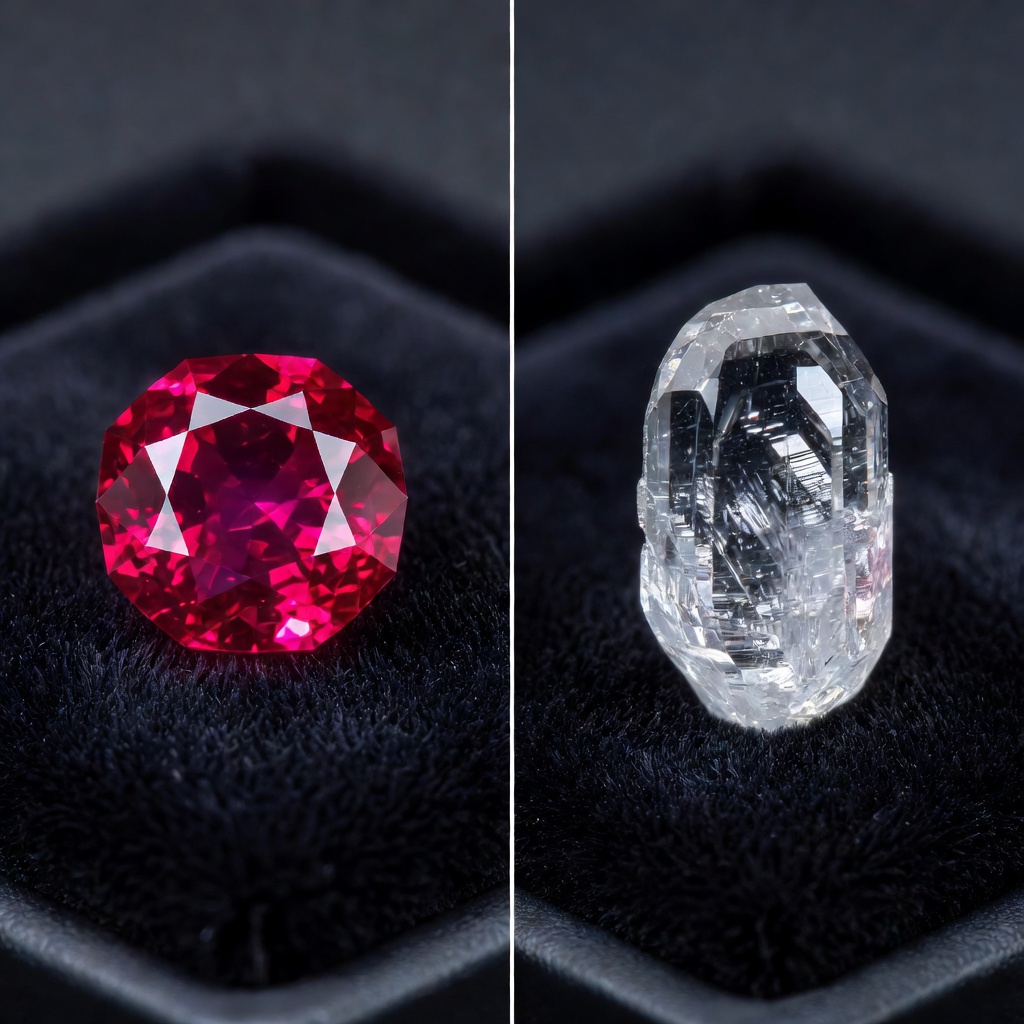
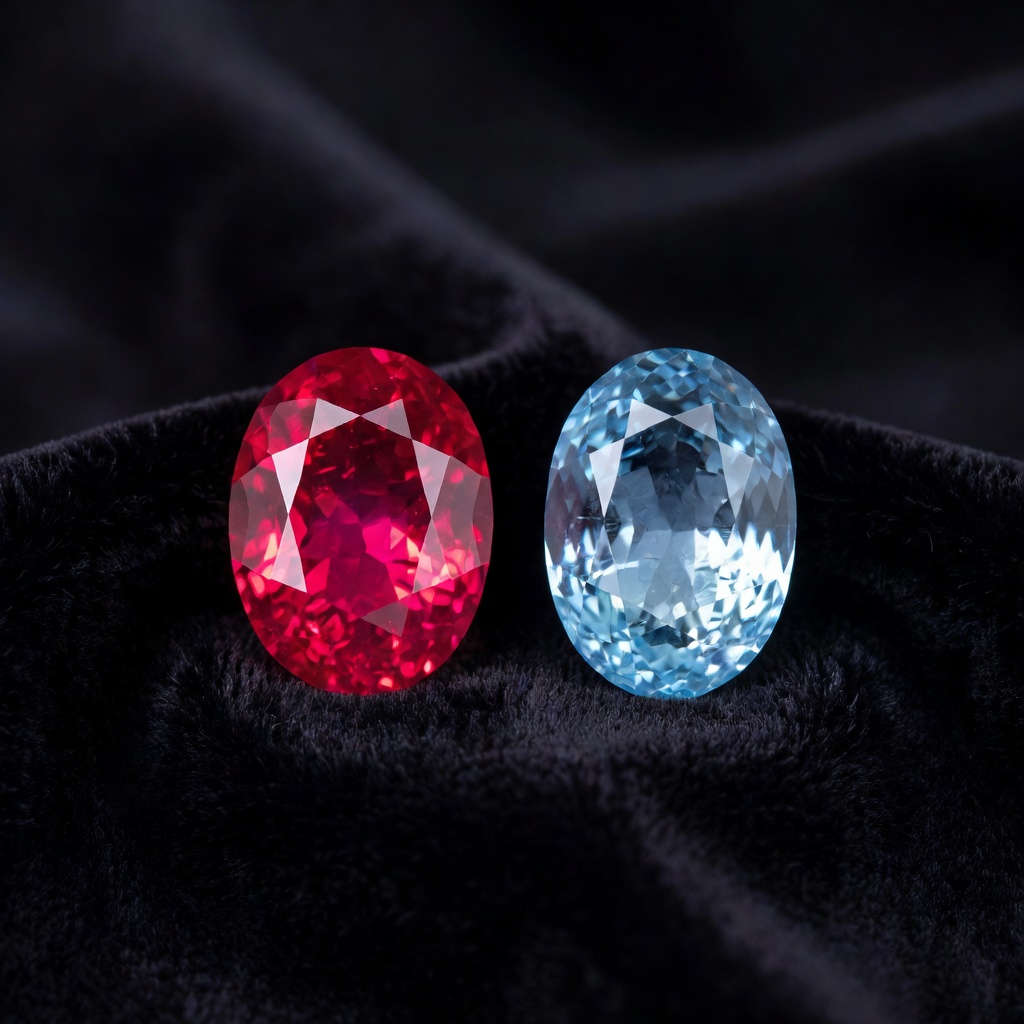
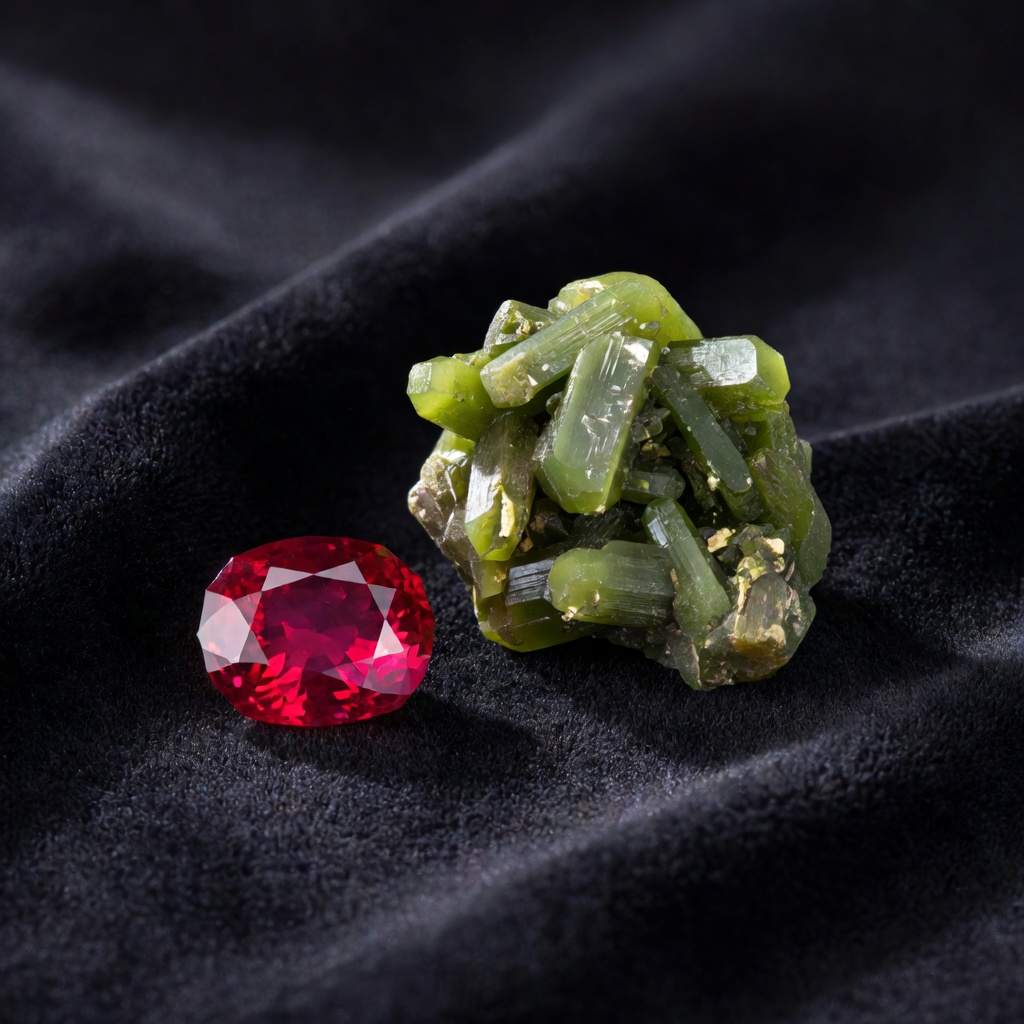
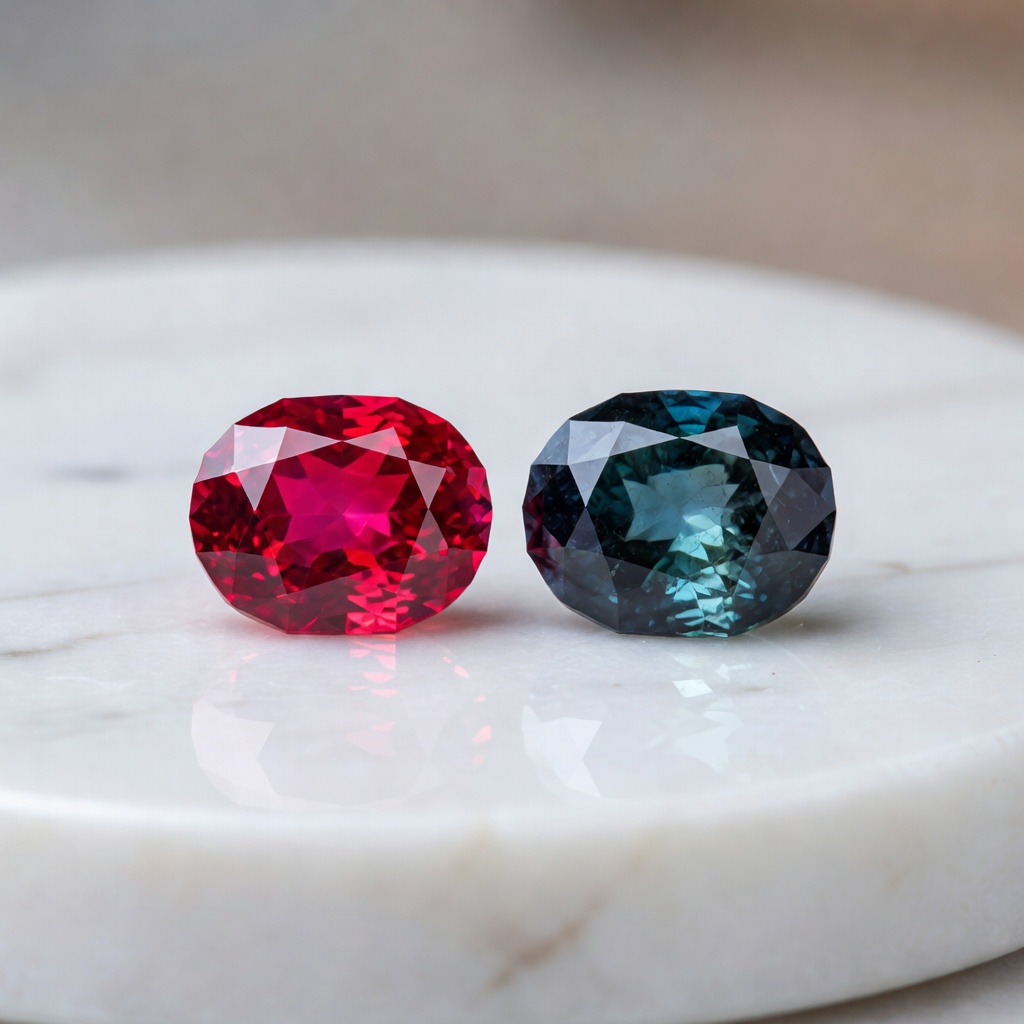
Visual distinction between these gems extends beyond mere color into fundamental structural differences that impact their practical applications and long-term preservation. Rubies exhibit the trigonal crystal system with a hardness of 9 on the Mohs scale, second only to diamond, allowing them to maintain polish and resist scratching under normal wear conditions. The most coveted specimens display "pigeon blood" red—a vivid, slightly purplish-red hue with strong fluorescence under daylight—though commercial qualities range from pinkish-red to deep crimson depending on chromium and iron content.
Conversely, serendibite typically presents in translucent to transparent dark bluish-green to nearly black colors, with gem-quality transparent specimens being extraordinarily uncommon and commanding premium valuations. Ranking 6.5 to 7 on the Mohs hardness scale with distinct cleavage planes, serendibite color variations often require careful lighting examination to appreciate the subtle greenish-blue undertones that distinguish it from similar dark gemstones. While rubies frequently contain characteristic inclusions known as "silk" (rutile needles) that can actually enhance value when they create asterism (star effects), serendibite inclusions typically indicate the skarn formation environment and may include diopside or spinel crystals trapped during crystallization.
Comparative Analysis Table
| Characteristic | Ruby | Serendibite |
|---|---|---|
| Chemical Composition | Aluminum Oxide (Al₂O₃) with Chromium | Calcium Magnesium Aluminum Borosilicate |
| Mohs Hardness | 9 | 6.5 - 7 |
| Primary Colors | Red to Purplish-Red (Pigeon Blood most valued) | Dark Bluish-Green to Black |
| Crystal System | Trigonal | Triclinic |
| Known Faceted Specimens | Millions worldwide | Fewer than 100 |
| Primary Sources | Myanmar, Mozambique, Madagascar, Thailand | Sri Lanka, Myanmar (extremely limited) |
| Typical Transparency | Transparent to Translucent | Translucent to Transparent (rare) |
| Market Availability | Commercially available at high-end jewelers | Private dealer networks only |
Rarity: The Availability Gap
The quantitative disparity between these gemstones defines perhaps the most significant divergence in their collector profiles and investment potential. Serendibite rarity reaches extremes unmatched by virtually any other gem species, with fewer than 100 faceted stones confirmed to exist in private collections and museums worldwide. Most specimens weigh under two carats, and stones exceeding five carats represent singular geological events that may never be repeated as original Sri Lankan deposits become depleted. This scarcity transforms serendibite from a mere commodity into a museum-grade mineralogical treasure that changes hands only through exclusive private networks rather than commercial retail channels.
While high-quality Burmese rubies certainly qualify as rare—particularly untreated stones over five carats with optimal color—the overall ruby market maintains steady commercial availability through deposits in Mozambique, Madagascar, and Tanzania. The rare gemstones comparison reveals that although top-tier rubies command millions at auction, thousands of faceted specimens enter the market annually across various quality grades. Mining operations in Mozambique's Montepuez region and Myanmar's Mogok Stone Tract continue producing rough material, ensuring that while exceptional pieces remain scarce, the gemstone itself maintains presence in luxury jewelry collections worldwide.
Market Value and Investment Analysis
Evaluating Serendibite vs ruby value requires understanding two fundamentally different economic models: established luxury commodity versus ultra-exclusive collectible asset. Record-breaking ruby auctions demonstrate the upper limits of gemstone valuation, with the Sunrise Ruby—a 25.59-carat Burmese stone—selling for $30.3 million in 2015, equivalent to over $1 million per carat. Such public sales establish clear price benchmarks and create liquid secondary markets where certified rubies consistently appreciate, particularly untreated Burmese specimens that benefit from both scarcity and historical prestige.
Serendibite transactions operate in shadow markets of private mineral dealers and exclusive gem shows like the Tucson Gem and Mineral Show, where prices typically range from $2,000 to $10,000+ per carat depending on transparency and size. However, the precious stone investment case for serendibite rests not on per-carat metrics but on portfolio diversification into assets uncorrelated with traditional financial markets. While rubies offer liquidity and established demand curves, serendibite appeals to collectors seeking "trophy assets" that provide inflation hedging through absolute rarity, though resale requires specialized networks and extended timeframes compared to the relatively fluid ruby market.
Jewelry Applications and Wearability
Practical considerations regarding daily use create distinct niches for each gemstone within high jewelry design and personal adornment strategies. Ruby gemstone properties, specifically its exceptional hardness of 9 on the Mohs scale, make it ideal for engagement rings, bracelets, and other pieces subject to regular impact and abrasion. High-end jewelers like Cartier and Van Cleef & Arpels regularly feature rubies in their high jewelry collections, setting them in platinum or yellow gold to complement their fiery color while ensuring generations of wearable durability. The stone's toughness allows for various cutting styles including cabochons for star rubies or precision faceting for optimal brilliance.
Serendibite demands significantly more cautious treatment due to its moderate hardness and perfect cleavage, which creates vulnerability to chipping and breaking under stress. Ruby jewelry durability standards simply do not apply to serendibite, which jewelers typically recommend for occasional wear pieces such as pendants, brooches, or earrings that minimize impact risk. Protective bezel settings with substantial metal coverage prove essential for preserving these rare specimens, while open prong settings common in diamond or ruby jewelry present unacceptable risks for serendibite's structural integrity. Collectors often acquire serendibite as display specimens within mineral collections rather than wearable art, though bespoke commissions for protective cocktail rings occasionally emerge for special occasions.
Authentication, Certification, and Treatments
Verifying authenticity presents distinct challenges for each stone, requiring specialized gemstone certification protocols to protect investors from synthetic substitutes or misidentified materials. Approximately 95% of rubies on the market undergo heat treatment to improve color and clarity, a permanent and accepted enhancement that laboratories like GIA and SSEF document explicitly on reports. Advanced testing using laser ablation inductively coupled plasma mass spectrometry (LA-ICP-MS) can determine geographic origin, crucial for Burmese rubies that command significant premiums over African or Thai material. Buyers should insist on certificates distinguishing between heated, heated with flux healing, and completely untreated stones, as these classifications dramatically affect valuation.
Serendibite identification requires even more specialized expertise due to visual similarities with black spinel, tourmaline, and dark sapphire. Gemologists must measure refractive indices (1.67-1.69 for serendibite versus 1.72 for spinel) and specific gravity (3.42-3.52) to confirm identity, as superficial appearance often deceives even experienced dealers. Unlike rubies, serendibite rarely undergoes treatment due to its extreme rarity and the risk of damaging such valuable material. Origin documentation proves particularly crucial for serendibite, as Sri Lankan specimens historically command higher prices than Myanmar material, though both sources produce extraordinarily limited quantities that require chain-of-custody documentation for investment-grade pieces.
Historical Significance and Cultural Impact
The cultural narratives surrounding these gemstones illuminate how human civilization assigns value to mineral beauty based on accessibility and historical context. Ruby history intertwines with royal power across centuries, from the Black Prince's Ruby (actually a spinel) set in England's Imperial State Crown to the Timur Ruby gifted to Queen Victoria by the East India Company. Biblical texts reference rubies as symbols of wisdom and beauty, while Burmese warriors inserted rubies into their flesh believing the stones made them invincible in battle. This millennia-long reverence created marketing momentum that sustains ruby demand regardless of geological availability, embedding the stone deeply within luxury jewelry traditions.
Serendibite discovery occurred relatively recently in 1902 when Sri Lankan mineralogist Dunil Palitha Gunasekera identified the mineral in alluvial deposits near Kolonnawa. Unlike rubies, serendibite never entered royal treasuries or religious artifacts, remaining confined to mineralogical collections and exclusive private holdings. This lack of historical marketing actually enhances its appeal to modern collectors seeking "undiscovered" assets unencumbered by cultural associations, representing mystery and exclusivity rather than the passion and power traditionally assigned to rubies. While ruby history provides market stability through established demand, serendibite offers the allure of possessing something that most of humanity will never see, creating a different but equally compelling form of cultural capital.
Collector's Guide: Making the Right Choice
Strategic acquisition requires honest assessment of collecting goals, risk tolerance, and intended use cases for these distinct asset classes. For investors prioritizing buying gemstones with liquidity and appreciation potential, Burmese rubies between 3-10 carats with vivid red color and minimal treatment offer the optimal balance of rarity and marketability. Case studies of auction performance indicate that untreated Mogok rubies consistently outperform gold and stock indices over twenty-year periods, making them suitable for inheritance planning and wealth preservation. Practical tip: Focus on stones accompanied by SSEF or GIA reports specifically noting "no indications of heating" and Burmese origin to ensure maximum resale value.
Alternatively, ruby vs serendibite investment strategies diverge sharply for ultra-high-net-worth individuals seeking portfolio diversification beyond traditional assets. Serendibite suits collectors with existing extensive holdings who require "trophy pieces" for mineral displays rather than wearable jewelry. When acquiring serendibite, prioritize transparency over size—a clean, transparent one-carat specimen holds greater value than an opaque five-carat stone. Building a balanced colored stone collection might include both varieties: rubies for liquidity and regular enjoyment, serendibite for ultimate exclusivity and conversation-piece status. Budget considerations typically place entry-level rubies at $5,000-$10,000 per carat for fine quality, while serendibite acquisition requires specialized dealer relationships and minimum investments often exceeding $20,000 for display-worthy specimens.
Conclusion: Two Different Paths to Precious Status
The comparison of Ruby vs Serendibite ultimately reveals that gemstone value derives not solely from beauty or durability, but from the complex interplay of geological rarity, cultural history, and market accessibility. Rubies offer investors a time-tested asset class with established liquidity, wearable durability, and historical prestige that transcends temporary market fluctuations. Their availability across quality tiers ensures entry points for emerging collectors while top-tier specimens satisfy the most demanding connoisseurs, creating a robust ecosystem that supports long-term appreciation and generational transfer.
Serendibite occupies a rarified position as a mineralogical unicorn whose value rests on absolute scarcity rather than commercial demand, appealing to collectors who prioritize exclusivity over liquidity. As mining depletes remaining deposits and awareness of this ultra-rare gem grows among institutional collectors, prices will likely escalate for the few specimens available. Whether you choose the passionate fire of ruby or the mysterious depths of serendibite, both represent legitimate pathways to precious stone investment success—provided your acquisition strategy aligns with the distinct characteristics, risks, and rewards inherent to each extraordinary gemstone.
Frequently Asked Questions
Is serendibite more expensive than ruby?
While top-quality Burmese rubies command higher per-carat prices at auction (often exceeding $1 million per carat), faceted serendibite is so rare that when available, it typically ranges from $2,000 to $10,000+ per carat depending on quality. However, the extreme scarcity of serendibite makes it priceless to serious collectors.
What makes serendibite rarer than ruby?
Serendibite has only been found in two locations worldwide (Sri Lanka and Myanmar) with fewer than 100 faceted specimens known to exist. Rubies, while high-quality stones are rare, are mined in multiple countries including Myanmar, Mozambique, and Madagascar with steady commercial availability.
Can serendibite be worn daily like ruby?
No, serendibite ranks 6.5-7 on the Mohs hardness scale with perfect cleavage, making it susceptible to scratching and breaking. Ruby, at 9 on the Mohs scale, is much harder and suitable for daily wear including engagement rings. Serendibite is best reserved for occasional wear or display pieces.
What colors do ruby and serendibite display?
Rubies are prized for their pure red to slightly purplish-red hues, with 'pigeon blood' red being the most valuable. Serendibite typically appears in translucent dark bluish-green to nearly black colors, with transparent specimens being extraordinarily rare and valuable.
Where can I purchase serendibite gemstones?
Unlike rubies which are available at most high-end jewelers, serendibite is primarily sold through specialized mineral dealers, high-end auction houses, and exclusive gem shows like Tucson. Due to extreme rarity, most transactions occur through private networks rather than retail stores.
Which is the better investment: ruby or serendibite?
Rubies offer better liquidity and established market demand, making them safer investments. Serendibite appeals to ultra-high-net-worth collectors seeking the world's rarest specimens, but the limited market makes resale challenging. A balanced portfolio might include both for different risk profiles.
How can I tell serendibite apart from black spinel or tourmaline?
Serendibite displays a distinctive bluish-green transmission color when held to light, whereas black spinel appears jet black. Professional gemological testing including refractive index (1.67-1.69 for serendibite) and specific gravity measurements is required for positive identification due to visual similarities.
Why isn't serendibite as famous as ruby despite being rarer?
Rubies have been coveted for millennia by royalty and feature prominently in historical treasures. Serendibite was only discovered in 1902 and has never been marketed commercially. Its extreme rarity actually prevents widespread awareness—most people will never see one in person, unlike rubies which appear regularly in jewelry stores.