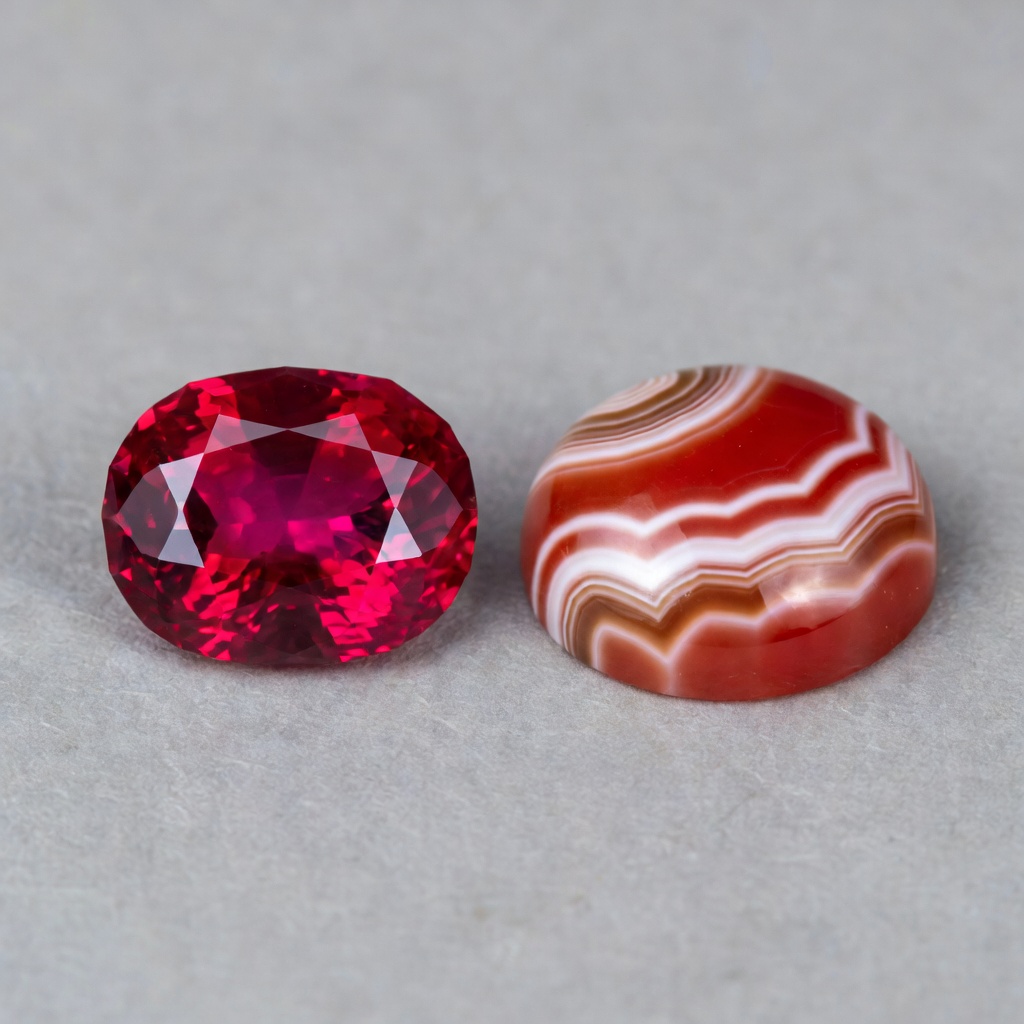
Understanding Ruby and Sardonyx: A Comprehensive Gemstone Comparison
When selecting the perfect red gemstone for jewelry or spiritual purposes, collectors and consumers frequently find themselves weighing the distinctive qualities of two fascinating stones. Ruby represents the pinnacle of precious gemstones with its intense crimson brilliance and royal associations, while Sardonyx offers earthy elegance through its characteristic banded appearance and rich historical significance. Despite both stones exhibiting reddish hues that capture attention immediately, they belong to entirely different mineral families and serve vastly different purposes in the world of gemology. Understanding the nuances of Ruby vs Sardonyx empowers buyers to make informed decisions based on durability requirements, budget constraints, and aesthetic preferences rather than merely selecting based on color alone.
Geological Origins and Chemical Composition
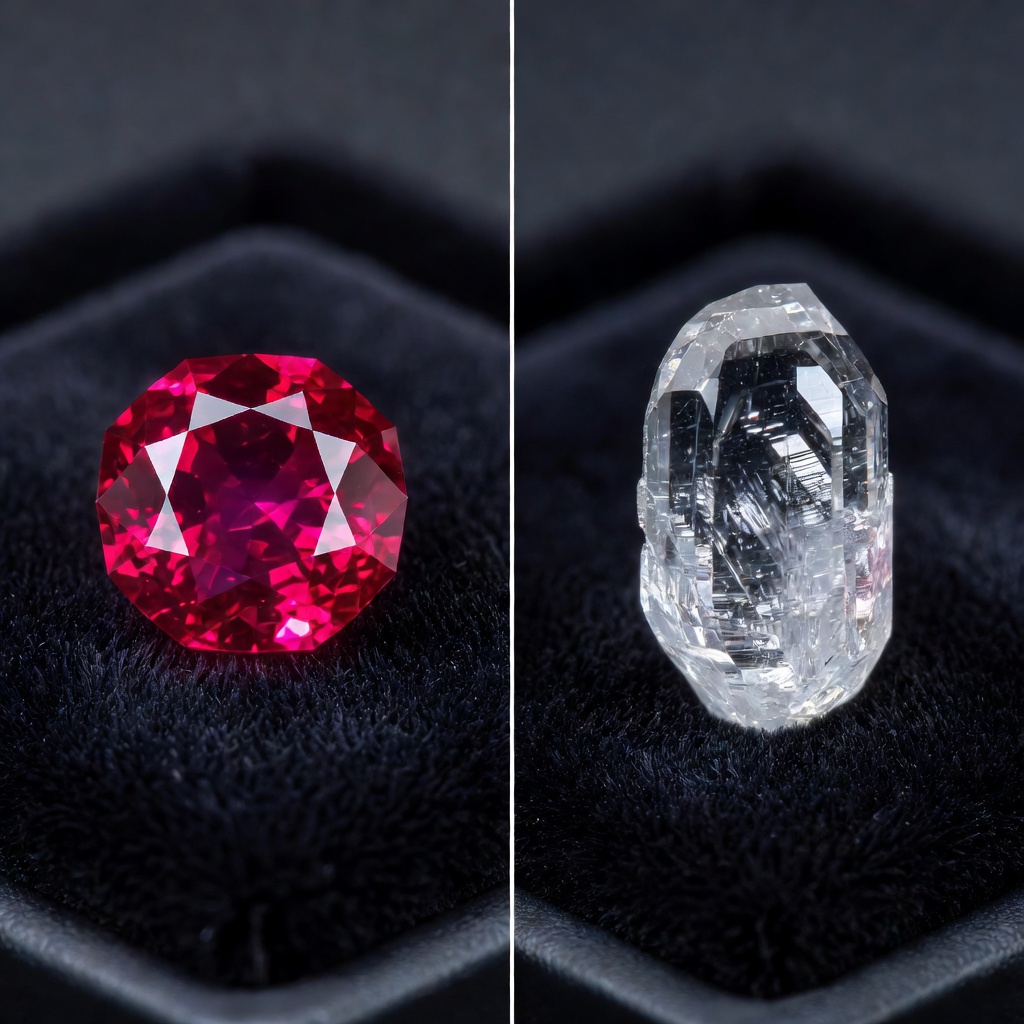
Ruby formation occurs deep within the Earth's crust under extreme conditions that few other crystals can withstand, creating one of the most durable natural substances known to humanity. As a variety of corundum composed primarily of aluminum oxide, rubies crystallize in metamorphic rocks subjected to intense heat and pressure over millions of years, with trace amounts of chromium replacing aluminum atoms to produce the iconic red coloration. The most coveted specimens originate from the Mogok Valley in Myanmar, though significant deposits also exist in Mozambique, Thailand, and Madagascar, each location imparting subtle variations in hue and clarity characteristics that experts can often identify.
Sardonyx develops through entirely different geological processes, forming as a banded variety of chalcedony within microcrystalline quartz structures found in volcanic and sedimentary environments. Unlike the singular crystalline structure of ruby, sardonyx creates alternating parallel layers of sard (reddish-brown chalcedony colored by iron oxide) and onyx (typically white or black bands), resulting from rhythmic deposition of silica-rich solutions in gas cavities or fractures. Major mining operations for quality sardonyx occur predominantly in India, Brazil, and Uruguay, where artisans have quarried these stones for millennia to create intricate cameos and seals.
Trace Elements and Environmental Factors
The vivid pigeon blood red that defines premium rubies emerges specifically from chromium content combined with the absence of iron, a chemical signature that also produces ruby's distinctive fluorescence under ultraviolet light. Conversely, sardonyx derives its earthy palette from iron oxide concentrations varying between layers, creating the sharp contrast between reddish-brown sard sections and white or black onyx bands that gem cutters exploit for artistic effect. These fundamental compositional differences explain why Ruby gemstone properties include exceptional hardness and optical phenomena, while Sardonyx composition prioritizes distinctive patterning over brilliance or transparency.
Physical Properties and Durability Comparison
Evaluating gemstones for daily wear requires careful consideration of the Gemstone Mohs hardness scale, where ruby demonstrates superior resilience rating 9 out of 10, second only to diamond in natural mineral hardness. This exceptional hardness enables ruby jewelry to withstand decades of daily wear without showing significant scratching, making it ideal for engagement rings and frequently worn heirloom pieces. Sardonyx, while reasonably durable at 6.5 to 7 on the Mohs scale, occupies a more vulnerable position where household dust (containing quartz particles at 7 hardness) can potentially abrade surfaces over time, necessitating more protective settings and mindful wearing habits.
Beyond simple hardness measurements, toughness—the resistance to breaking or chipping—varies significantly between these stones due to their internal structures. Rubies possess excellent toughness despite their crystalline nature, though they may develop cleavage planes under severe impact, while sardonyx presents a unique vulnerability along its natural banding lines where different mineral layers meet. These structural interfaces in sardonyx can create planes of weakness that respond differently to stress, requiring jewelers to orient cuts carefully to prevent delamination or cracking during setting or wear.
Heat Sensitivity and Chemical Resistance
Ruby's corundum structure provides remarkable thermal stability and chemical inertness, allowing these stones to withstand the heat generated during jewelry repair work and resist attack from most acids and solvents encountered in daily life. Sardonyx, as a porous chalcedony variety, demonstrates greater sensitivity to thermal shock and chemical exposure, with sudden temperature changes potentially causing fracturing and acidic substances threatening to etch or dull the polished surface. These durable gemstones require distinctly different approaches to maintenance and setting, with ruby forgiving occasional exposure to harsh conditions that would damage sardonyx permanently.
| Property | Ruby | Sardonyx |
|---|---|---|
| Chemical Composition | Aluminum Oxide (Corundum) | Microcrystalline Quartz (Chalcedony) |
| Mohs Hardness | 9.0 | 6.5 - 7.0 |
| Transparency | Transparent to Translucent | Opaque |
| Luster | Vitreous (Glass-like) | Waxy to Vitreous |
| Primary Color Cause | Chromium | Iron Oxide |
| Formation Environment | Metamorphic Rocks | Volcanic/Sedimentary |
| Typical Price Range | $1,000 - $15,000+ per carat | $5 - $50 per carat |
| Best Jewelry Applications | Rings, Bracelets, Earrings | Cameos, Cufflinks, Pendants |
| Heat Resistance | Excellent | Moderate (risk of thermal shock) |
| Characteristic Features | Silk Inclusions, Fluorescence | Parallel Banding, Layered Colors |
Visual Characteristics: Color, Clarity, and Cut
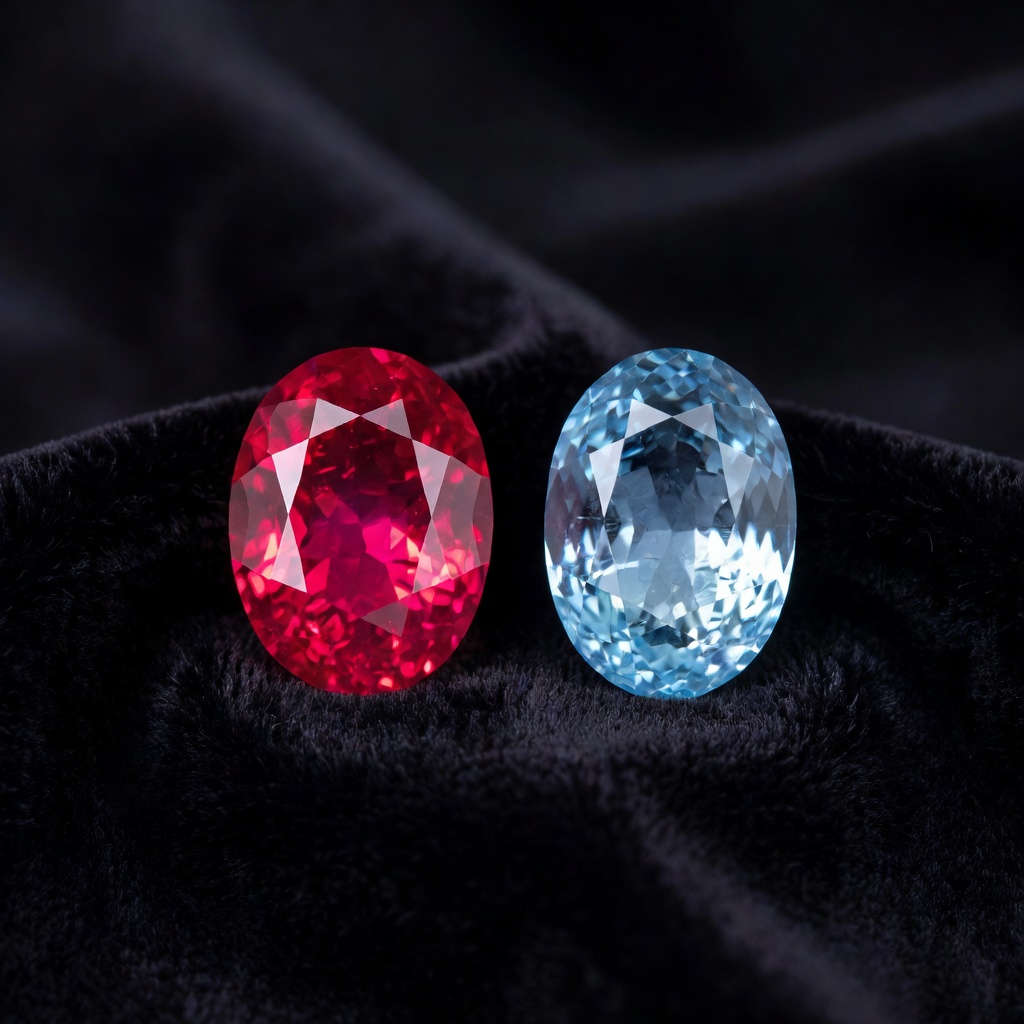
The Red gemstone comparison between ruby and sardonyx reveals dramatically different optical personalities that appeal to distinct aesthetic sensibilities and design philosophies. Premium rubies display an intense saturation often described as "pigeon blood" red—a pure, vivid crimson with slight blue undertones that seems to glow from within due to chromium-induced fluorescence under daylight. This transparency allows master cutters to fashion rubies into brilliant cuts, step cuts, or mixed designs that maximize light return and scintillation, with clarity characteristics ranging from eye-clean specimens to those containing fine rutile needle "silk" that can actually enhance value by softening brilliance and indicating untreated status.
Sardonyx bands create an entirely different visual experience characterized by opaque, parallel layers alternating between reddish-brown sard and contrasting white or black onyx sections. Unlike ruby's pursuit of pure color uniformity, sardonyx derives value from the sharpness, straightness, and contrast of its banding patterns, with the most prized specimens displaying distinct, evenly spaced layers without bleeding or irregularity between colors. Lapidaries typically cut sardonyx as cabochons, beads, or cameos to showcase these natural patterns, utilizing the different colored layers to create raised relief designs where the contrasting bands define the background and foreground elements.
Cutting Styles and Optical Effects
Faceted rubies require precise cutting angles to maximize brilliance while minimizing the extinction (dark areas) that can plague poorly proportioned stones, with oval and cushion shapes proving most popular for preserving weight from rough crystal hexagonal prisms. Sardonyx artistry emphasizes flat or gently domed cuts that display banding to advantage, with Roman-inspired cameo carvings representing the pinnacle of lapidary skill—craftsmen carefully gauge layer depths to create portraits where white layers form skin tones against dark backgrounds or vice versa. Practical examples include Victorian-era sardonyx signet rings featuring intaglio carvings used as seals, compared to Art Deco ruby platinum rings where calibrated French-cut stones create geometric patterns of pure red fire.
Birthstone Significance: July vs August
The July birthstone vs August birthstone distinction places these two red gems in different months of the modern calendar, though historical variations create interesting overlaps for those born in late summer. Ruby serves as the primary modern birthstone for July, associated strongly with the Leo zodiac sign and representing the peak of summer heat, passion, and vitality in astrological traditions. Individuals born under this sign traditionally wear ruby to enhance leadership qualities, stimulate the heart chakra, and protect against misfortune, with the stone's intense red color symbolizing the life force and courage necessary for natural-born leaders.
Sardonyx holds the distinction of being the original traditional birthstone for August, predating the modern assignment of peridot and the recent addition of spinel to August's gemstone roster. Ancient calendars and Ayurvedic traditions recognized sardonyx as the stone for August-born individuals, attributing to it the power to bring stability, eloquence, and marital happiness to those who wear it regularly. While modern consumers often overlook sardonyx in favor of peridot's lime-green popularity, traditionalists and crystal healers continue to recommend sardonyx for August-born individuals seeking grounding energy and improved communication skills rather than the growth-oriented vibrations associated with peridot.
Astrological and Metaphysical Applications
Practical applications for birthstone jewelry vary significantly between these stones based on their energetic reputations and physical durability. July-born individuals selecting ruby engagement pieces benefit from stones that withstand daily wear while supposedly enhancing passion and protecting against negative energies, making them suitable for wedding bands and professional jewelry alike. August-born wearers choosing sardonyx often prefer it for specific intention-setting pieces—perhaps a carved cameo pendant worn during important speeches or negotiations to enhance eloquence, rather than daily wear rings that might suffer damage during routine activities.
Symbolism, History, and Cultural Significance
Ruby's historical trajectory spans millennia of human civilization, earning designation as the "king of gems" in ancient Sanskrit texts and maintaining status as one of the most coveted treasures among European royalty and Asian emperors alike. Ancient Hindus believed that offering rubies to the god Krishna ensured rebirth as an emperor, while Burmese warriors inserted these stones into their flesh beneath the skin to render them invincible in battle, demonstrating the stone's association with vitality, protection, and sovereign power. Medieval Europeans wore rubies to guarantee health, wisdom, wealth, and success in love, with the stone's blood-red color creating natural associations with the heart and life force that persist in modern Sardonyx meaning and uses comparisons.
Sardonyx carries equally rich historical weight, particularly within Roman culture where it ranked among the most valued stones for seals, signet rings, and cameo portraits due to its ability to accept fine detail without fracturing. Roman soldiers wore sardonyx talismans engraved with Mars or Hercules to instill courage during battle, while orators carried these stones to enhance eloquence and public speaking abilities, believing the banded structure represented the integration of different strengths. Religious traditions associate sardonyx with marital stability and happiness, with Rebekah reportedly wearing a sardonyx bracelet when meeting Isaac in biblical accounts, establishing the stone's connection to prosperous unions.
Modern Crystal Healing Interpretations
Contemporary crystal practitioners utilize Ruby symbolism for energy work focused on stimulating the root and heart chakras, encouraging motivation, sexual energy, and positive dreams while supposedly detoxifying the blood and supporting the cardiovascular system. Sardonyx finds modern application in practices emphasizing discipline, willpower, and the integration of dualities—its banded appearance symbolizing the balance between opposing forces such as strength and gentleness, or action and contemplation. Case studies in crystal healing often recommend ruby for clients seeking to overcome lethargy or depression through invigorating red energy, while sardonyx suits those requiring structure and routine to achieve long-term goals, particularly in communication-heavy professions.
Market Value, Rarity, and Investment Potential
The distinction between Precious vs semi-precious gemstones becomes starkly apparent when comparing the market values of ruby and sardonyx, reflecting their relative rarity, demand, and historical classification. Fine untreated rubies from Myanmar or Mozambique command prices exceeding $10,000 per carat for exceptional specimens, with record-breaking stones selling for over $1 million per carat at auction, placing them firmly in the investment-grade category alongside diamonds, emeralds, and sapphires. This valuation stems from ruby's scarcity—less than one percent of rough corundum crystals contain sufficient chromium and clarity to qualify as gem-quality ruby—combined with relentless global demand from collectors and luxury jewelry houses.
Sardonyx occupies the accessible end of the gemstone market, with high-quality carved cabochons or beads typically retailing between $5 and $50 per carat depending on craftsmanship, band sharpness, and color contrast. While antique sardonyx cameos with exceptional artistry or historical provenance can achieve higher prices at auction, the material itself remains abundant and widely available, categorizing it definitively as a semi-precious stone. Ruby value derives from the four Cs standard (color, clarity, cut, carat) with particular emphasis on origin and treatment status, whereas sardonyx pricing emphasizes the lapidary's skill in utilizing the banding and the absence of treatments or dyes.
Investment Considerations and Resale Markets
Investment-minded collectors should note that untreated Burmese rubies with documented provenance appreciate consistently over time, often outperforming traditional financial markets during periods of economic uncertainty, while treated or fracture-filled rubies depreciate significantly. Sardonyx rarely functions as a financial investment due to its abundance, though vintage carved pieces from renowned workshops or specific historical periods (particularly Victorian or Art Deco cameos) may retain or increase value based on artistic merit rather than material worth. Practical tip: When purchasing ruby for investment, insist on certification from respected laboratories like GIA or SSEF verifying no heat treatment or glass filling, as these factors impact resale value exponentially more than equivalent clarity issues in diamonds.
Jewelry Applications and Design Versatility
Gemstone jewelry design possibilities diverge significantly between ruby and sardonyx based on their physical properties, traditional associations, and aesthetic characteristics. Ruby dominates high-end contemporary jewelry, featuring prominently in engagement rings (particularly for those seeking alternatives to diamonds), tennis bracelets, statement cocktail rings, and eternity bands where durability meets desire for vivid color. Modern designers frequently set rubies in platinum or white gold to enhance the stone's cool red tones, though yellow gold settings remain popular for Burmese stones with warmer, more orange-red hues, utilizing prong settings that maximize light exposure while securing the hard stone adequately.
Sardonyx excels in applications requiring detailed carving or vintage aesthetic appeal, including men's cufflinks, signet rings, beaded necklaces, and intricate cameo brooches that evoke classical antiquity or Victorian sentimentality. Jewelry artisans favor bezel settings or protective frames for sardonyx to guard the edges against chipping, often pairing the stone with yellow gold or antique bronze mountings that complement its earthy color palette. Practical design examples include Art Deco sardonyx and onyx dress sets featuring geometric carved patterns for black-tie events, compared to contemporary ruby halo engagement rings where diamond accents amplify the central stone's red brilliance.
Setting Requirements and Metal Pairings
When commissioning custom pieces, jewelers recommend platinum or 18-karat white gold for rubies to provide secure, long-lasting prongs that won't wear down against the hard stone, allowing for delicate, elevated settings that showcase brilliance. Sardonyx requires more substantial mountings, often featuring protective bezels that wrap around the stone's circumference or recessed settings that position the surface slightly below the metal plane to prevent direct impact. Case study: A recent commission featuring both stones in a family crest ring utilized platinum prongs for the central ruby while encircling it with a raised gold bezel protecting the sardonyx accent stones, demonstrating how mixed-media designs can accommodate different durability requirements within single compositions.
Care, Maintenance, and Cleaning Guidelines
Proper gemstone care tips ensure that both ruby and sardonyx jewelry maintains its beauty across generations, though maintenance protocols differ substantially due to their distinct physical properties. Untreated natural rubies generally withstand ultrasonic cleaners and steam cleaning methods safely, allowing for easy removal of accumulated lotions and oils that might dull the surface luster, though treated stones (glass-filled or heat-treated) require gentler approaches using warm soapy water and soft brushes. Professional jewelers recommend annual inspections of ruby settings to check for loose prongs, particularly in rings subjected to daily wear, while storing ruby pieces separately from other jewelry to prevent the ruby from scratching softer stones.
Sardonyx demands more meticulous care routines due to its relative softness and potential porosity, requiring avoidance of ultrasonic vibrations that might exploit natural weaknesses along banding lines and rejection of harsh chemical cleaners including ammonia, bleach, or acidic solutions. Gentle cleaning utilizing lukewarm water with mild dish soap and a soft-bristled toothbrush effectively removes debris from carved details or between beads, followed by immediate drying with a soft cloth to prevent water spots or chemical residue accumulation. Storage solutions should involve wrapping sardonyx pieces individually in soft cloth or storing them in compartmentalized jewelry boxes away from harder gemstones, particularly diamonds, sapphires, and rubies that could scratch the surface during accidental contact.
Professional Maintenance Schedules
Ruby owners should schedule professional cleaning and inspection every six to twelve months for frequently worn items, ensuring that settings remain secure and the stone shows no signs of damage from sharp impacts that might cause cleaving. Sardonyx jewelry benefits from professional examination prior to and following any repair work involving heat application, as the stone must be removed from settings before soldering to prevent thermal shock fracturing. Practical maintenance tip: Create separate "hard stone" and "soft stone" jewelry boxes for home storage, keeping rubies in the former and sardonyx in the latter, thereby preventing the 9-hardness ruby from abrading the 6.5-hardness sardonyx when drawers shift or during travel.
Final Verdict: Which Gemstone Should You Choose?
Deciding between Ruby vs Sardonyx ultimately depends on aligning gemstone characteristics with lifestyle requirements, aesthetic preferences, and budgetary constraints rather than simply selecting based on birth month or color preference. Active individuals seeking daily-wear jewelry—particularly engagement rings, wedding bands, or bracelets subjected to frequent impact—should prioritize ruby for its superior hardness and resistance to scratching, accepting the higher price point as investment in longevity. Conversely, those drawn to vintage aesthetics, classical symbolism, or carved artistry who can commit to occasional wear and gentle handling will find sardonyx offers exceptional beauty and historical resonance at accessible price points.
Budget considerations play a significant role in this decision matrix, as entry-level sardonyx jewelry costs less than a nice dinner while investment-grade rubies rival real estate in value density. Buyers prioritizing brilliance, transparency, and the "precious" gemstone status should pursue ruby, even in smaller carat weights, rather than compromising on material quality. Those valuing uniqueness of pattern, artisanal carving, and earthy elegance may discover that sardonyx provides greater design satisfaction per dollar spent, particularly when selecting vintage pieces with proven craftsmanship.
Occasion-Specific Recommendations
For milestone gifts such as 40th wedding anniversaries (traditionally ruby) or significant career achievements, ruby communicates permanence, passion, and prestige through its status as one of the "big three" colored gemstones. Sardonyx suits occasions requiring eloquence and stability—law school graduations, public speaking careers, or wedding gifts emphasizing marital fidelity—while functioning beautifully as a distinctive alternative birthstone for August celebrations. Ultimately, the wise collector might choose both: ruby for daily wear pieces that withstand life's rigors, and sardonyx for special occasion jewelry that sparks conversation through its banded beauty and historical gravitas.
Frequently Asked Questions
Is sardonyx as valuable as ruby?
No, sardonyx is significantly more affordable than ruby. While high-quality rubies can command thousands of dollars per carat, sardonyx is a semi-precious gemstone typically priced at dollars per carat. Ruby is one of the 'big three' precious gemstones alongside emerald and sapphire, whereas sardonyx, though beautiful, is abundant and easier to source.
Can sardonyx scratch ruby?
No, sardonyx cannot scratch ruby. With a Mohs hardness of 6.5-7, sardonyx is softer than ruby, which rates 9 on the Mohs scale. However, ruby can easily scratch sardonyx, so storing them separately is essential to prevent damage to the sardonyx's surface or banding patterns.
Which is better for an engagement ring, ruby or sardonyx?
Ruby is generally better suited for engagement rings due to its superior hardness (9 on Mohs scale) and resistance to daily wear. Sardonyx, rating 6.5-7, is more susceptible to scratching and chipping during everyday activities. However, sardonyx works beautifully for occasional wear rings or vintage-style pieces with protective bezel settings.
Are both ruby and sardonyx considered birthstones?
Yes, both are birthstones but for different months. Ruby is the modern birthstone for July, while sardonyx is one of the traditional birthstones for August (alongside peridot and spinel). Sardonyx was the original August birthstone in ancient calendars before peridot became the modern standard.
How can I tell ruby and sardonyx apart visually?
Rubies are typically transparent to translucent with a glass-like luster and solid red color, often showing fluorescence. Sardonyx is opaque with distinctive parallel banding in alternating colors of red-brown, white, and black. Rubies are usually faceted to maximize brilliance, while sardonyx is commonly cut as cabochons or cameos to showcase its banding.
Can you wear ruby and sardonyx jewelry together?
Yes, you can wear them together for contrasting aesthetics, but store them separately. The significant hardness difference (ruby at 9 vs sardonyx at 6.5-7) means ruby can scratch sardonyx if they rub against each other. When wearing together, ensure settings prevent contact between the stones, or use them in different pieces like a ruby ring with sardonyx earrings.
Which stone requires more maintenance?
Sardonyx requires more careful maintenance than ruby. While rubies can typically withstand ultrasonic cleaning and daily wear, sardonyx should avoid harsh chemicals, acidic cleaners, and extreme temperature changes. Sardonyx banding can also collect dirt in grooves, requiring gentle brushing with mild soap, whereas rubies are more forgiving with cleaning methods.
Is sardonyx a type of onyx or agate?
Sardonyx is technically a banded variety of chalcedony (microcrystalline quartz) that combines sard (reddish-brown chalcedony) and onyx (black and white banded chalcedony). It's related to both agate and onyx but specifically defined by its parallel bands of sard and onyx layers, distinguishing it from solid-colored onyx or patterned agate.