Understanding the Corundum Connection
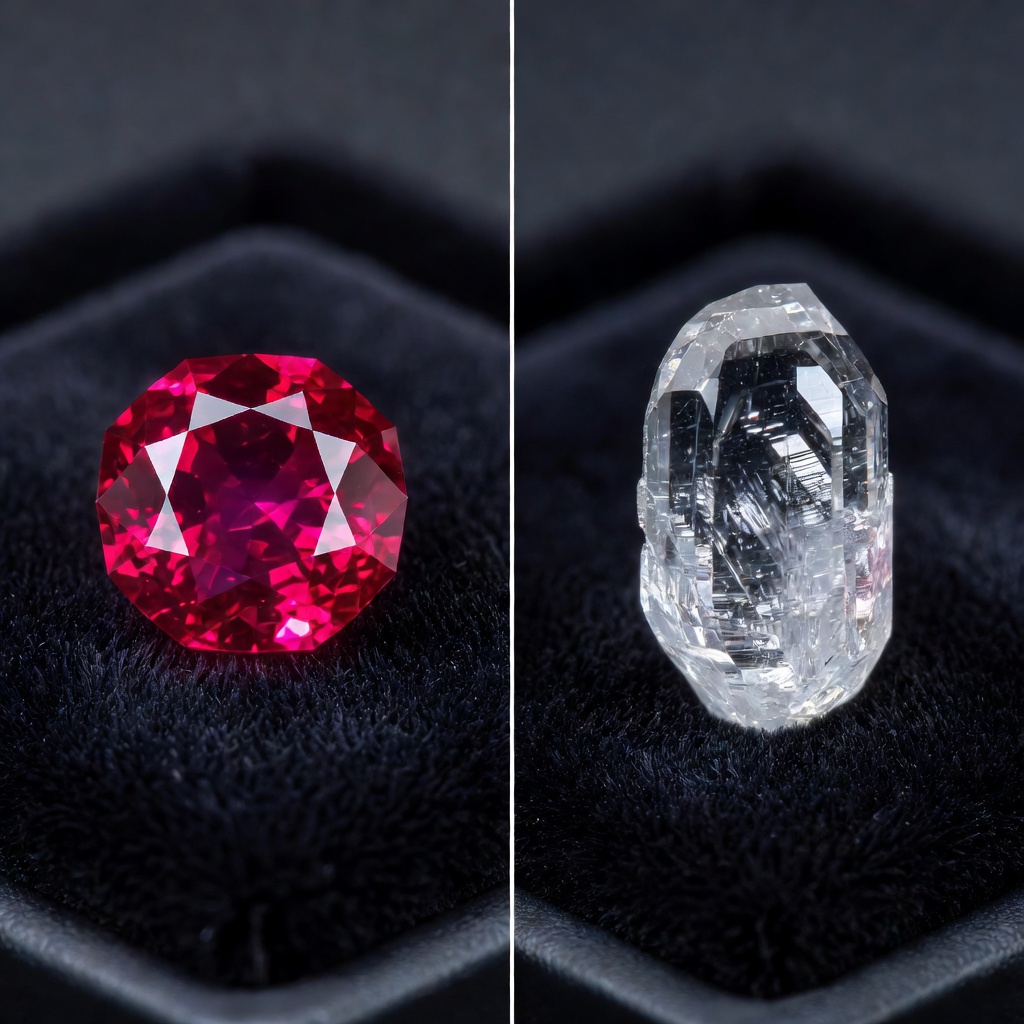
When exploring the Ruby vs Sapphire debate, gem enthusiasts often discover a surprising truth: these two legendary stones are actually mineral siblings. Both belong to the corundum family, crystalline aluminum oxide (Al₂O₃) that ranks among nature's most durable creations. The distinction between them lies not in their fundamental structure, but in the trace elements that dance within their crystal lattices, creating the visual spectrum that has captivated royalty and collectors for millennia.
The chemical composition of these corundum gemstones remains identical at their core, yet chromium impurities transform specific specimens into the fiery red stones we classify as rubies. When iron and titanium replace chromium as the dominant trace elements, the crystal manifests as blue sapphire, while other elemental combinations produce the rainbow of fancy sapphires available today. This shared heritage means that rubies and sapphires possess identical physical properties despite their dramatic color differences, making them uniquely suitable for direct comparison in jewelry applications.
Historically, both stones have adorned the crowns and regalia of empires across continents, from the Black Prince's Ruby in the British Imperial State Crown to the massive blue sapphires favored by ancient Persian royalty. Medieval Europeans believed rubies offered protection against plague and misfortune, while sapphires were thought to preserve chastity and detect fraud among medieval clergy. These deep cultural associations continue to influence modern jewelry preferences, with collectors often choosing between these precious stones based not only on aesthetics but on the centuries of lore and symbolism embedded within each gem.
Color Variations: Beyond Red and Blue
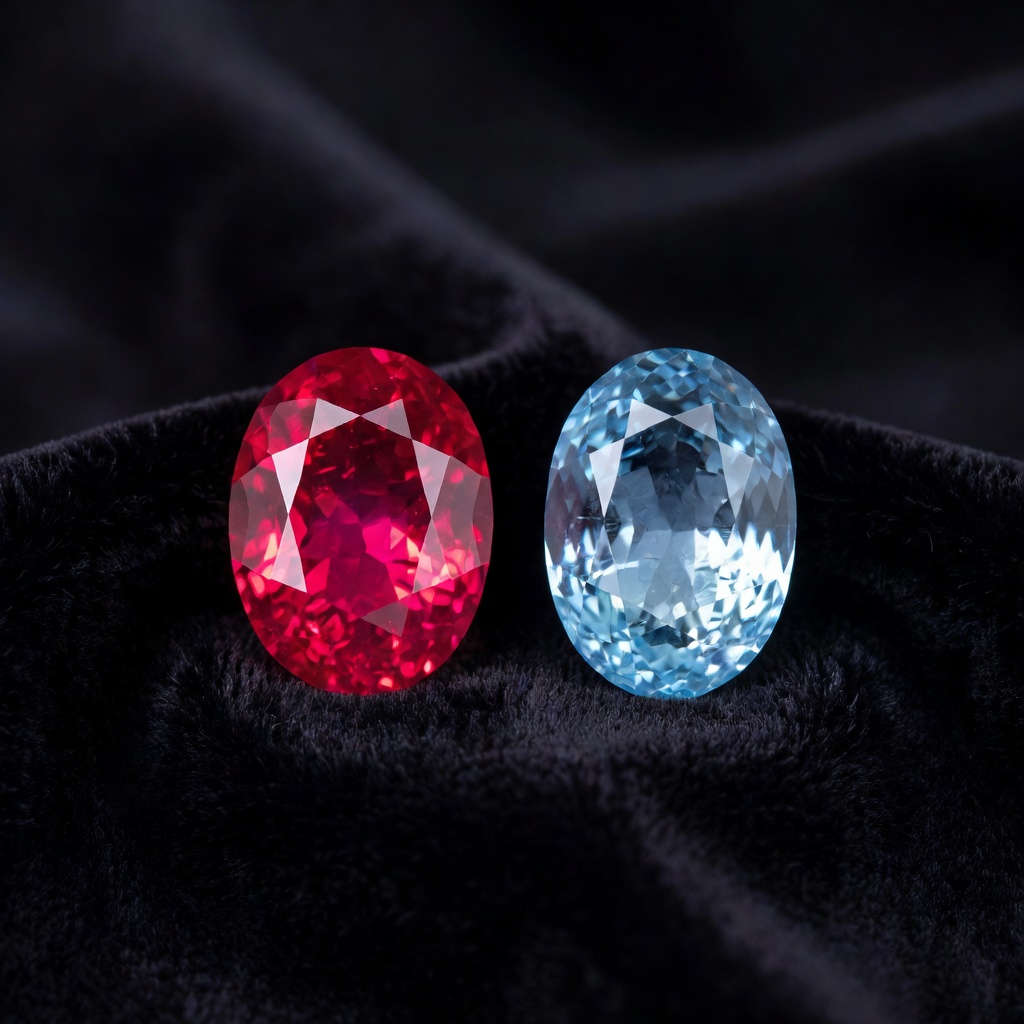
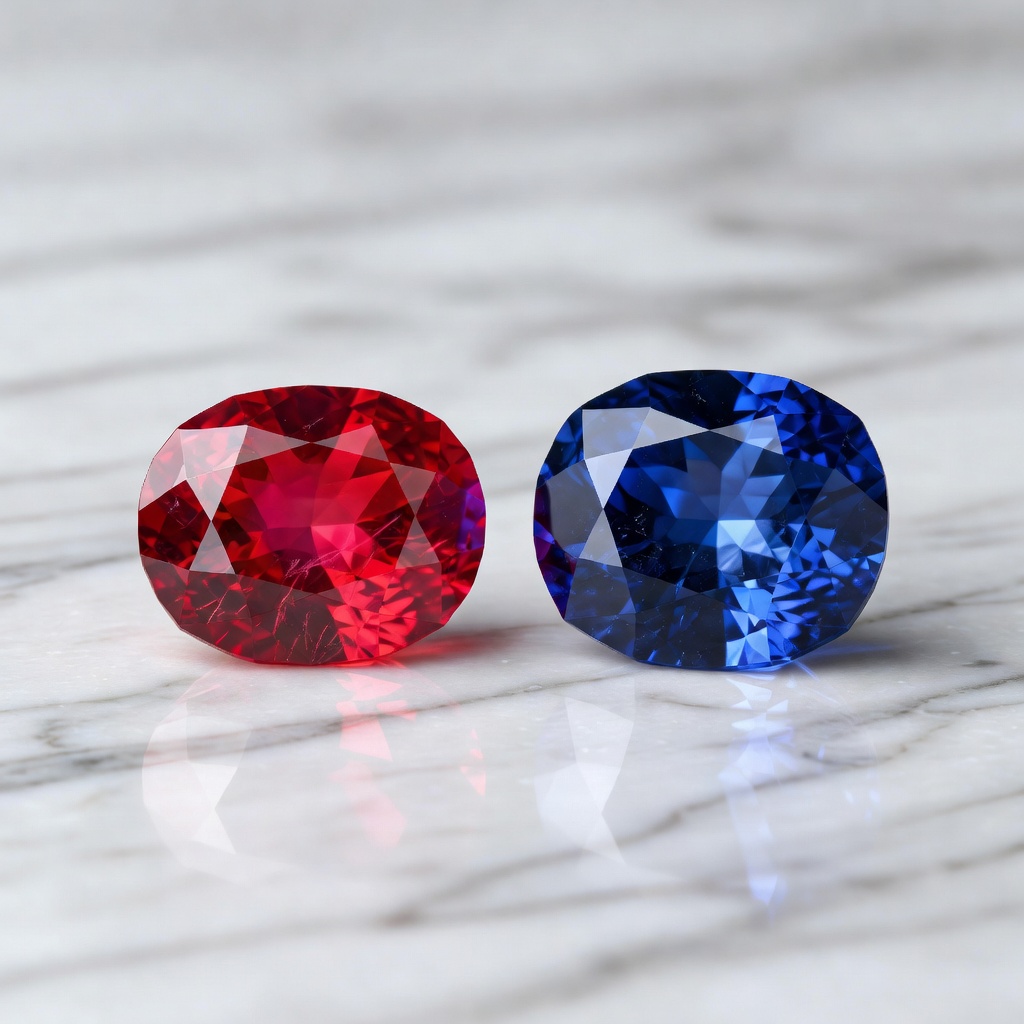
The gemological community maintains strict boundaries when classifying red ruby vs blue sapphire specimens, with color serving as the primary determinant. Any corundum displaying the characteristic red hue, caused by chromium absorption of specific light wavelengths, receives the coveted ruby designation regardless of secondary color tones. Conversely, every other color variation of corundum—including pink, yellow, green, purple, and the extremely rare orange-pink Padparadscha—falls under the sapphire umbrella, creating a fascinating hierarchy where ruby stands alone as the singular red representative of the family.
Among fancy colored sapphires, the Padparadscha variety commands particular attention for its delicate salmon or sunset coloring, resulting from the perfect balance of chromium and iron within the crystal structure. These Sri Lankan and Madagascan rarities often exceed standard blue sapphires in value, sometimes approaching the per-carat prices of fine rubies due to their extreme scarcity and the subjective nature of their color grading. Pink sapphires occupy a particularly interesting niche in the market, as they exist on a continuum with rubies; gemologists debate whether deeply saturated pink stones should technically qualify as rubies, with borderline cases sometimes receiving different classifications from different laboratories.
Color grading standards differ significantly between the two varieties, with rubies evaluated on a scale culminating in "Pigeon's Blood"—a vivid, slightly bluish-red saturation without dark overtones, historically compared to the first two drops of blood from a freshly killed Burmese pigeon. Sapphires, meanwhile, chase the coveted "Royal Blue" or "Cornflower Blue" designations, particularly for Kashmir and Burmese origins, where a velvety, intense blue without green or gray modifiers represents the pinnacle of desirability. When selecting between these stones, understanding these color hierarchies proves essential, as a slightly off-color ruby may command lower prices than a perfectly hued blue sapphire, despite ruby's general market premium.
Physical Durability and Mohs Hardness
Both rubies and sapphires register an impressive 9 on the gemstone hardness Mohs scale, placing them second only to diamond in terms of resistance to scratching and everyday wear. This exceptional hardness derives from the strong aluminum-oxygen bonds within the corundum crystal structure, creating a material suitable for heirloom jewelry intended to withstand decades or even centuries of use. For consumers considering these stones for engagement rings or daily-wear pieces, this shared durability represents a significant advantage over softer alternatives like emerald or opal, which require protective settings and careful handling.
When conducting a precious stone comparison between these corundum varieties and other gem options, their toughness—the resistance to breaking or chipping—further distinguishes them as practical choices. Unlike diamonds, which possess perfect cleavage planes that can split under sharp impact, rubies and sapphires exhibit no cleavage and display good to excellent toughness depending on their specific inclusion patterns. This structural integrity makes them particularly suitable for rings and bracelets, which encounter more physical contact than earrings or pendants, though jewelers still recommend avoiding hard blows that could cause fractures along included crystals or twinning planes.
Despite their robust nature, both stones can develop surface-reaching fractures or chips if struck against hard surfaces, particularly when significant inclusions create structural weak points. Professional jewelers typically examine each stone under magnification before setting, identifying potential vulnerability zones that might benefit from protective bezel settings rather than exposed prong mountings. For active wearers, choosing cabochon cuts rather than faceted designs can minimize chipping risks, though this choice involves trading some brilliance for enhanced durability.
Global Origins and Mining Locations
Geographic provenance plays a crucial role in the valuation and characterization of both corundum gemstones, with specific localities commanding legendary status among connoisseurs. Myanmar (formerly Burma) produces the most coveted rubies in the world, particularly from the Mogok Stone Tract, where marble-hosted deposits yield stones with the legendary "pigeon's blood" saturation and distinctive fluorescence under ultraviolet light. These Burmese rubies have become increasingly scarce and politically complex to source following international sanctions and trade restrictions, driving collectors toward emerging sources in Mozambique, Madagascar, and Thailand, each producing stones with slightly different color profiles and inclusion characteristics.
Sapphire mining encompasses a broader geographic spread, with Sri Lanka (Ceylon) maintaining its reputation as the "Island of Gems" for over two millennia, producing stones across the entire color spectrum including the highly prized Padparadscha variety. Kashmir sapphires, mined briefly from 1882 to 1887 in the Zanskar range of the Himalayas, remain the undisputed aristocrats of the blue sapphire world, displaying a velvety, cornflower blue caused by microscopic inclusions that scatter light internally. Modern production concentrates heavily in Madagascar, Australia, and Montana (USA), where ethical mining practices and traceability protocols increasingly influence purchasing decisions among environmentally conscious consumers.
Contemporary ruby sapphire origins scrutiny extends beyond mere quality assessment to encompass environmental impact and labor practices, with blockchain technology and mine-to-market certification programs gaining traction in the luxury sector. Reputable dealers now provide detailed provenance documentation, particularly for Burmese stones where political considerations affect import legality in various jurisdictions. When investing in significant specimens, buyers should request laboratory reports from respected institutions like GIA, SSEF, or Gübelin, which not only confirm authenticity and treatment status but often specify geographic origin—a factor that can double or triple a stone's market value depending on the mine's historical reputation.
Clarity, Inclusions, and Quality Grading
Examining ruby vs sapphire quality factors reveals fascinating differences in how the trade approaches internal characteristics, with rubies generally held to more forgiving clarity standards than their blue counterparts. The term "silk" describes the fine, intersecting rutile needle inclusions commonly found in rubies, which can actually enhance value when present in moderate amounts, creating a soft, velvety appearance that diffuses light beautifully within the stone. However, excessive silk or the presence of feathers (fracture-like inclusions), crystal inclusions, or color zoning can significantly detract from a ruby's transparency and durability, with surface-reaching inclusions posing particular risks for structural integrity.
Sapphires typically display different inclusion populations, commonly featuring fissures, negative crystals, and color banding rather than the distinctive silk seen in rubies, though Kashmir sapphires are celebrated for their velvety "sleepy" appearance caused by specific inclusion patterns. Heat treatment represents an industry-standard practice for both varieties, with over 90% of commercial rubies and sapphires undergoing high-temperature enhancement to improve color saturation and clarity by dissolving rutile silk or melting crystal inclusions. While heated stones remain beautiful and durable, untreated specimens—particularly those with documentation proving natural color—command substantial premiums, sometimes fetching ten to twenty times the price of treated equivalents of similar appearance.
When evaluating either stone for purchase, practical buyers should examine gems under both daylight-equivalent and incandescent lighting, as color appearance can shift dramatically between sources. Loupe-clean rubies above two carats are exceptionally rare and expensive, whereas eye-clean sapphires are more readily available in larger sizes. Laboratory certification becomes essential for significant investments, as advanced treatments like diffusion, fracture-filling, or lead-glass filling can dramatically affect value and durability while remaining invisible to the untrained eye.
Market Value and Investment Potential
The financial comparison between Padparadscha sapphire vs pigeon blood ruby reveals nuanced market dynamics where rarity, size, and treatment status intersect to determine value. Fine untreated Burmese rubies generally command the highest per-carat prices among colored gemstones, with exceptional specimens exceeding $100,000 per carat at auction, driven by extreme scarcity and insatiable demand from Asian collectors. However, the sapphire market offers its own ultra-rare tier, where unheated Kashmir blues and certified natural Padparadscha specimens can meet or exceed standard ruby prices, creating a complex valuation landscape where origin and specific color quality often trump the broad ruby-vs-sapphire distinction.
Record-breaking auction sales illustrate this competitive relationship: the "Sunrise Ruby," a 25.59-carat Burmese pigeon blood stone, sold for $30.3 million in 2015, while the "Blue Belle of Asia," a 392.52-carat Ceylon sapphire, fetched $17.3 million the previous year. Investment considerations for both categories emphasize the importance of documentation, with untreated stones from prestigious origins representing the most stable stores of value. Treatments such as beryllium diffusion or glass-filling significantly depreciate investment potential, while moderate, disclosed heat treatment represents an acceptable compromise for jewelry pieces where beauty takes precedence over appreciation.
When conducting a precious stone comparison for portfolio diversification, rubies offer greater price stability due to consistent Asian market demand, while sapphires provide more entry-level options across various price points and colors. Both categories have outperformed many traditional investments over the past two decades, though liquidity remains lower than gold or equities, requiring longer holding periods and specialized dealer networks for resale.
| Characteristic | Ruby | Sapphire |
|---|---|---|
| Mineral Family | Corundum (Aluminum Oxide) | Corundum (Aluminum Oxide) |
| Color Cause | Chromium (Cr) | Iron/Titanium (blue), various elements for fancy colors |
| Mohs Hardness | 9 | 9 |
| Primary Sources | Myanmar, Mozambique, Thailand | Sri Lanka, Madagascar, Kashmir, Australia |
| Premium Color Grade | Pigeon's Blood (vivid red with blue undertone) | Royal Blue / Cornflower Blue; Padparadscha (pink-orange) |
| Typical Inclusions | Rutile silk, crystals, feathers | Rutile needles, zircon halos, color zoning |
| Heat Treatment Prevalence | Approximately 90-95% of market | Approximately 80-90% of market |
| Price Range (Fine Quality, 1-3 carats) | $5,000 - $50,000+ per carat | $2,000 - $25,000+ per carat (varies by color) |
| Rarity of Exceptional Specimens | Extremely rare, particularly untreated Burmese | Rare; Kashmir blues and Padparadscha exceptionally scarce |
| Birthstone Month | July | September |
| Symbolic Meaning | Passion, protection, vitality, courage | Wisdom, loyalty, nobility, sincerity |
| Best Metal Pairings | Yellow gold, rose gold (enhances warmth) | White gold, platinum, silver (complements cool tones) |
| Optimal Cuts | Oval, cushion (maximize color depth) | Various; emerald and cushion popular for blues |
Birthstone Meanings and Symbolism
The birthstone meanings July September distinction offers insight into why individuals might gravitate toward one stone over the other based on personal significance or gift-giving occasions. As the July birthstone, ruby embodies the fierce energy of midsummer, representing passion, protection, and vitality across cultures from ancient India to medieval Europe. Hindu traditions regarded rubies as "ratnaraj" or king of precious stones, believing they maintained health, wealth, wisdom, and success in love, while Burmese warriors implanted rubies into their flesh to render them invincible in battle.
September's sapphire carries cooler, more cerebral associations, symbolizing wisdom, loyalty, and nobility that align with the month's association with harvest, learning, and preparation. Ancient Persians believed the earth rested on a giant sapphire, whose reflection colored the sky, while medieval clergy wore blue sapphires to symbolize heaven and attract divine blessings. Royal families throughout history have chosen sapphires for engagement rings to signify fidelity, most notably Princess Diana's famous 12-carat oval blue sapphire that now graces the hand of Catherine, Princess of Wales.
Eastern traditions sometimes reverse these associations, with Chinese culture historically valuing red above all colors for its protective yang energy, while Western gem lore tends to emphasize sapphire's connection to mental clarity and spiritual truth. When choosing between ruby vs sapphire for personal jewelry, consider whether you resonate more with ruby's fiery, action-oriented symbolism or sapphire's calm, contemplative energy. Many collectors ultimately choose both, wearing rubies for occasions requiring confidence and dynamism, while reserving sapphires for professional settings or moments requiring clear communication and steady resolve.
Jewelry Design and Setting Considerations
Contemporary jewelry trends have witnessed both stones surge in popularity as diamond alternatives for engagement rings, with couples increasingly seeking the uniqueness and color saturation that red ruby vs blue sapphire center stones provide. Ruby engagement rings make bold statements of individuality and romantic passion, particularly when set in warm yellow or rose gold that complements the stone's natural fluorescence. For daily wear, rubies benefit from protective settings such as bezels or halo designs that guard the girdle edges from chipping during physical activities.
Sapphires offer greater versatility in jewelry design due to their extensive color range, allowing for monochromatic looks with blue stones or creative combinations using pink, yellow, or green fancy sapphires within a single piece. White metals—platinum, white gold, and palladium—traditionally enhance blue sapphires by creating a cool, sophisticated contrast, though yellow gold settings have gained popularity for achieving a vintage aesthetic reminiscent of Victorian or Edwardian eras. When designing custom pieces, jewelers often recommend oval and cushion cuts for rubies to maximize color depth and minimize the windowing effect that can lighten the stone's appearance, while sapphires accommodate virtually any cut from traditional rounds to modern fantasy shapes.
For investment pieces or family heirlooms, consider classic solitaire settings that won't date stylistically, allowing the stone's natural beauty to remain the focal point across generations. Mixed gemstone designs incorporating both ruby and sapphire create striking complementary color contrasts that symbolize the balance between passion and wisdom, heart and mind. When commissioning custom jewelry, always provide your jeweler with the stone's certification report, as treatment status may influence the recommended setting style—fracture-filled stones, for instance, should never be exposed to ultrasonic cleaning or steam, requiring settings that allow for gentle manual cleaning access.
Care, Cleaning, and Maintenance Guide
Fortunately for owners of either variety, corundum gemstones share identical care requirements due to their chemical similarity, simplifying maintenance routines regardless of which stone adorns your jewelry collection. Routine cleaning requires only warm water, mild dish soap, and a soft-bristled brush—such as a baby toothbrush—to remove accumulated oils and debris from the stone's surface and setting crevices. Ultrasonic cleaners present a more controversial option: while safe for untreated or simply heated stones, they can cause damage to fracture-filled rubies or sapphires, potentially causing the filling substances to expand or cloud, permanently damaging the gem's appearance.
Steam cleaning should similarly be avoided for treated stones, though it remains safe for natural, untreated specimens. When storing ruby or sapphire jewelry, separate pieces into individual soft pouches or lined compartments to prevent harder diamonds (10 on the Mohs scale) from scratching your corundum gems, and to prevent the corundum from scratching softer stones like opals, pearls, or emeralds. Remove rings before engaging in household cleaning, as exposure to chlorine bleach or hydrofluoric acid can damage both the stone and its metal setting over time.
Professional inspection every six to twelve months ensures that prongs remain tight and settings secure, particularly for frequently worn rings that may experience subtle loosening from daily impacts. During these inspections, jewelers can also assess whether treatments have degraded or if surface-reaching fractures have developed, allowing for preventive maintenance before stone loss occurs. With proper care, both rubies and sapphires will maintain their brilliance for generations, often outlasting the original mountings, which can be replaced or updated while preserving the central gemstone.
Final Verdict: Choosing Your Perfect Gemstone
Ultimately, the ruby vs sapphire decision hinges on personal aesthetic alignment and the emotional resonance each stone evokes. Choose ruby if you desire a bold, attention-commanding presence that radiates warmth, passion, and distinctive rarity—particularly if you appreciate the stone's historical associations with power and protection. Those drawn to classic elegance, versatility, and a broader spectrum of color options will find sapphire more accommodating, especially if you prefer jewelry that transitions seamlessly from daytime professional environments to evening sophistication.
Budget optimization strategies differ slightly between the two categories: ruby buyers often maximize impact by selecting slightly smaller stones with exceptional color rather than larger stones with washed-out tones, as color trumps size in ruby valuation. Sapphire shoppers enjoy more flexibility, with beautiful 2-3 carat blue stones available at moderate price points, though investing in Padparadscha or Kashmir varieties requires the same budget discipline as fine ruby purchasing. For significant anniversaries or milestone gifts, consider the recipient's existing wardrobe and metal preferences—warm skin tones often favor ruby's red spectrum, while cool undertones harmonize beautifully with blue sapphires.
From a precious stone comparison perspective regarding long-term heirloom considerations, both varieties possess the durability and timeless appeal necessary for generational transmission. Document your stone's provenance, treatment history, and certification details to accompany the jewelry through inheritance, providing future owners with the knowledge necessary to maintain and appreciate their inheritance properly. Whether you select the fiery heart of ruby or the serene wisdom of sapphire, you are choosing a piece of earth's ancient history crystallized into permanent beauty—a decision that transcends temporary trends to express enduring personal significance.
Frequently Asked Questions
Are ruby and sapphire the same mineral?
Yes, both are varieties of corundum (aluminum oxide). The only chemical difference is trace elements: chromium creates the red color that defines rubies, while iron and titanium create blue sapphires. Any corundum that isn't red is classified as sapphire, including pink, yellow, and green varieties.
Which is more valuable, ruby or sapphire?
Generally, fine-quality untreated rubies command higher per-carat prices than standard blue sapphires, particularly Burmese pigeon blood rubies. However, exceptional Kashmir sapphires and rare Padparadscha sapphires can exceed ruby prices. Treatment status, origin, and clarity significantly impact value for both.
Is ruby or sapphire better for an engagement ring?
Both are excellent choices with identical durability (9/10 Mohs hardness). Choose ruby for a bold, passionate statement and rarity, or sapphire for classic versatility and color variety. Sapphires offer more options if you want alternatives to blue, including pink, peach, or yellow.
What causes the color difference between ruby and pink sapphire?
Both contain chromium, but the concentration determines classification. Higher chromium content creates the saturated red of rubies, while lower concentrations produce pink sapphires. The distinction can be subjective in the gem trade, with some deep pink stones borderline between categories.
Can you wear ruby and sapphire jewelry together?
Absolutely. The contrasting red and blue create a striking complementary color combination. Both share identical hardness and care requirements, making them perfectly compatible in mixed-gemstone designs. This combination symbolizes the balance of passion (ruby) and wisdom (sapphire).
Do rubies and sapphires require different maintenance?
No, both require identical care due to their shared corundum composition. Clean with mild soap and warm water using a soft brush. Avoid ultrasonic cleaners if stones are fracture-filled or lead-glass treated. Store separately from diamonds (harder) and away from softer gems to prevent scratching.
Which gemstone is rarer, ruby or sapphire?
High-quality natural rubies are generally rarer than sapphires, especially the prized pigeon blood variety from Myanmar. However, specific sapphire colors like Padparadscha (pink-orange) and fine Kashmir blues are equally or more rare than commercial-grade rubies. Most corundum mined is actually used for industrial purposes rather than gems.
How can I tell if a ruby or sapphire is heat-treated?
Laboratory certification is the only definitive method. Trained gemologists examine inclusions under magnification: heat treatment often melts crystal inclusions, creates discoid fractures, or alters silk patterns. Reputable sellers always disclose treatments, as untreated stones command significant premiums for both rubies and sapphires.