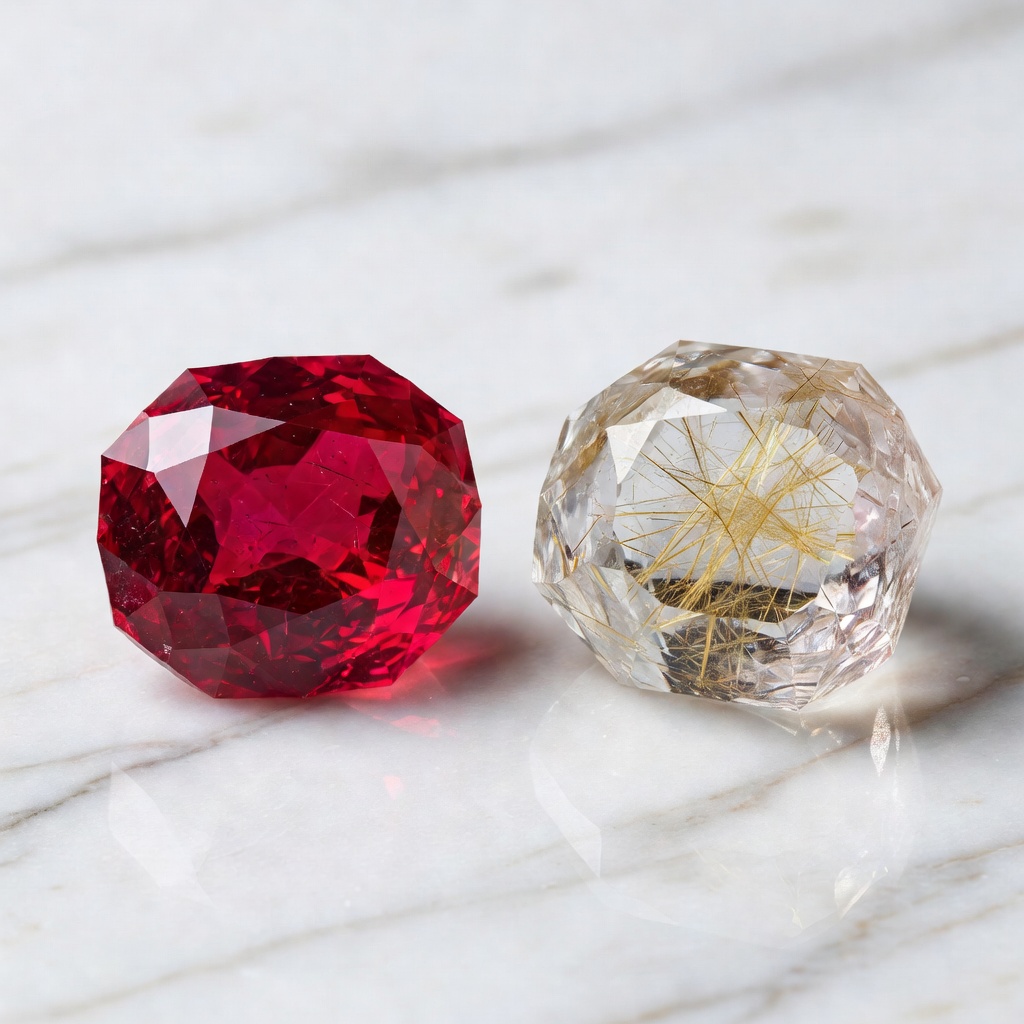
Understanding Ruby and Rutilated Quartz: A Comprehensive Gemstone Comparison
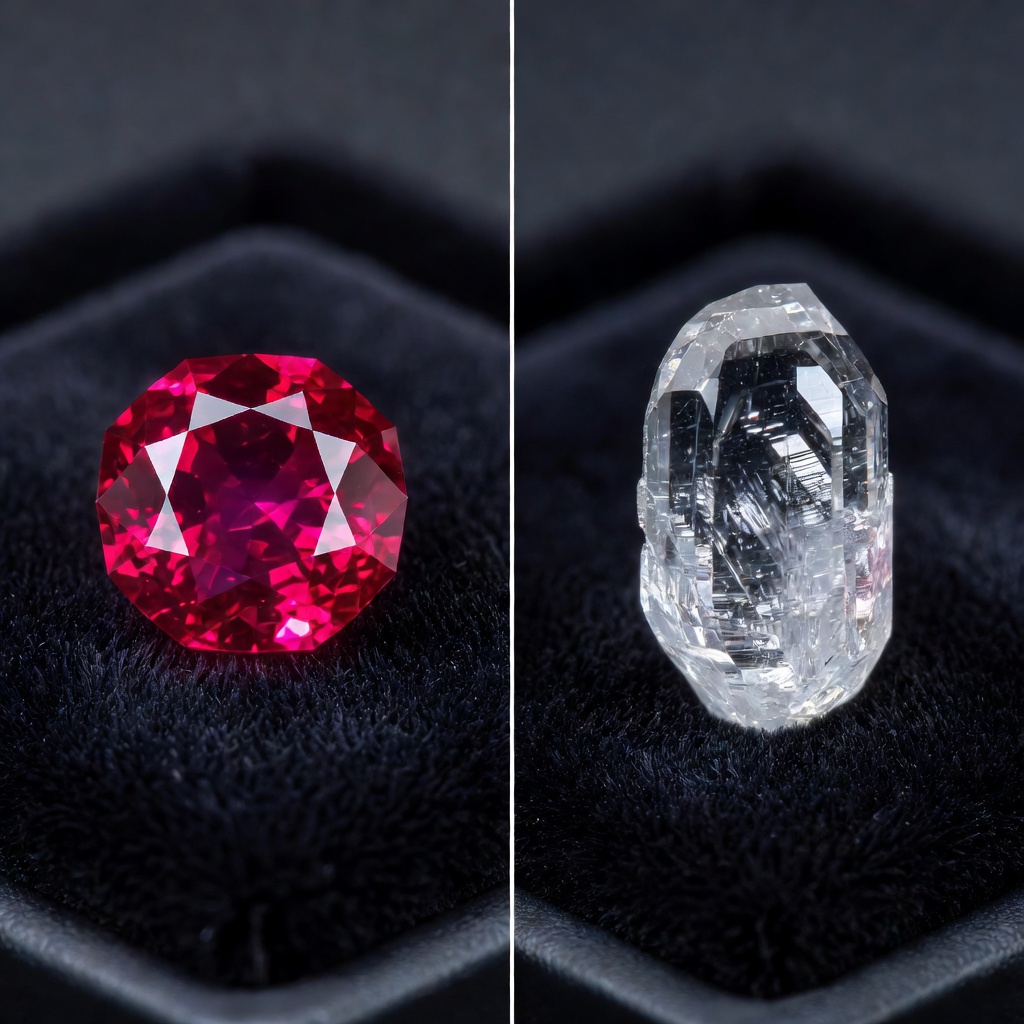
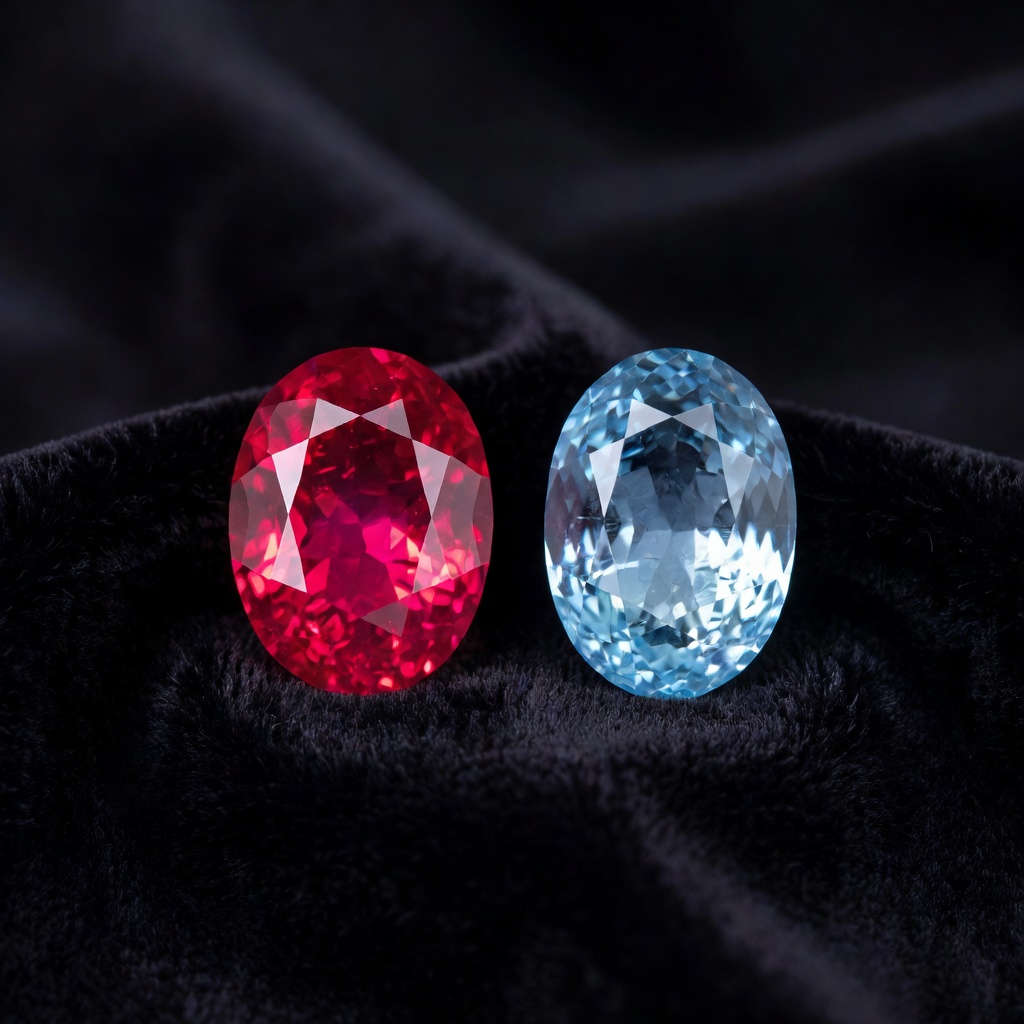
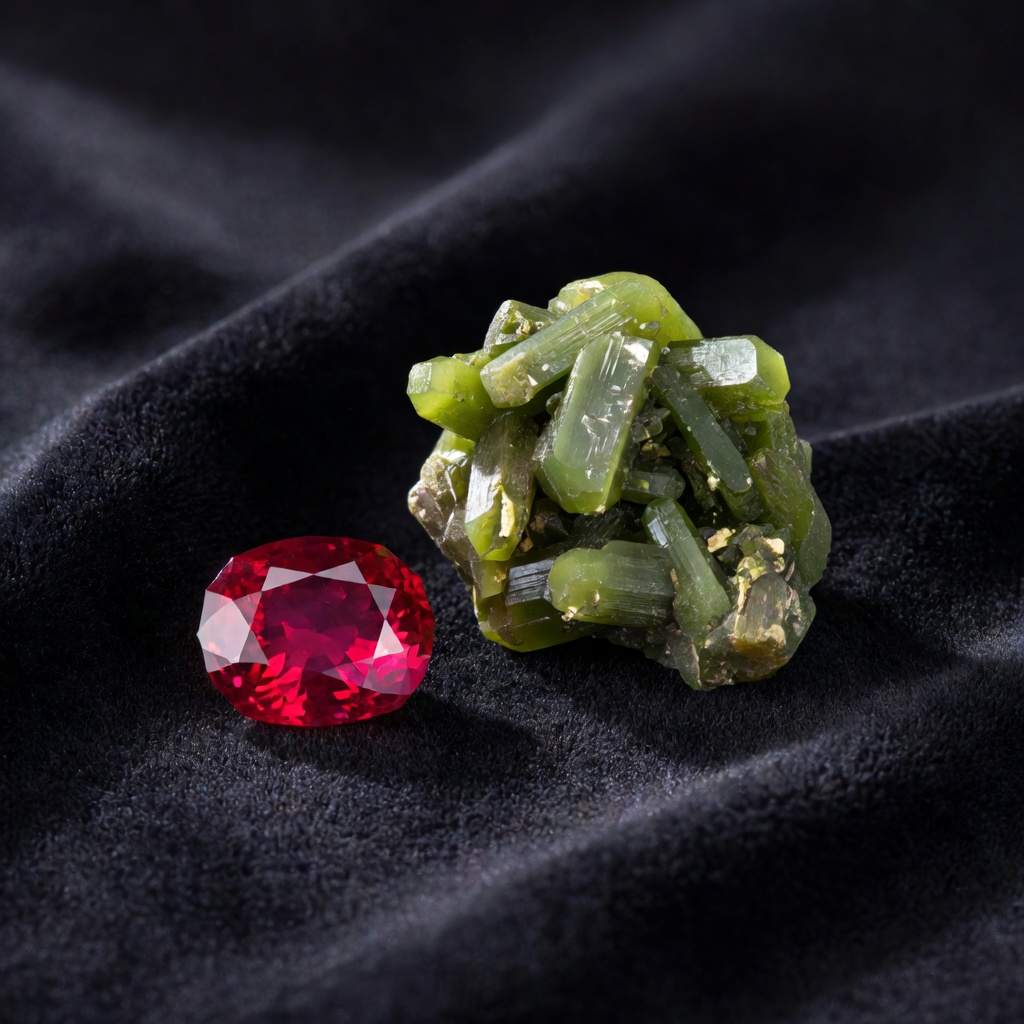
When selecting the perfect gemstone for jewelry or collection purposes, collectors and jewelry buyers often find themselves weighing the distinct characteristics of Ruby vs Rutilated Quartz. These two stones represent opposite ends of the gemstone spectrum, offering unique aesthetics, durability profiles, and value propositions that cater to different preferences and budgets. Ruby stands as one of the most coveted precious gemstones in the world, renowned for its intense red saturation and exceptional hardness derived from the corundum mineral family. In contrast, rutilated quartz emerges as a fascinating semi-precious alternative, captivating enthusiasts with its ethereal internal landscapes formed by golden rutile needles suspended within transparent crystal.
The comparison between these stones frequently arises when buyers seek Red gemstone alternatives that balance beauty with practicality. While ruby commands premium prices and represents traditional luxury, rutilated quartz offers accessible elegance with its distinctive "Venus hair" patterns that make each piece truly one-of-a-kind. Understanding the fundamental differences between Precious vs semi-precious stones helps collectors make informed decisions that align with their lifestyle needs, aesthetic preferences, and investment goals. Whether you are drawn to the regal heritage of ruby or the artistic intrigue of rutilated quartz, this comprehensive guide examines every aspect of these remarkable gems to support your purchasing journey.
Chemical Composition and Physical Properties
Understanding the molecular architecture of gemstones provides crucial insights into their durability, care requirements, and optical properties. Ruby gemstone properties stem from its classification as corundum, specifically aluminum oxide (Al₂O₃) that achieves its signature red coloration through the presence of chromium impurities. This trace element replaces aluminum atoms within the crystal lattice structure, absorbing specific wavelengths of light while transmitting the red spectrum that makes ruby so desirable. The crystallization process requires extreme heat and pressure typically found in metamorphic rock formations, resulting in hexagonal crystal systems that contribute to ruby's exceptional structural integrity.
Rutilated quartz meaning extends beyond aesthetics into its fascinating geological formation as silicon dioxide (SiO₂) containing needle-like inclusions of titanium dioxide (TiO₂), known as rutile. Unlike ruby's uniform chemical composition, rutilated quartz represents a composite gemstone where the host quartz crystal encases these foreign mineral formations during simultaneous growth phases. This unique characteristic creates the appearance of trapped golden threads, copper-colored filaments, or black needles suspended within the transparent matrix. The Gemstone hardness comparison reveals significant practical differences: ruby ranks 9 on the Mohs scale, making it second only to diamond in terms of scratch resistance, while rutilated quartz measures 7 on the same scale, rendering it more susceptible to surface abrasion and chipping during daily wear.
Practical implications of these hardness differences manifest distinctly in jewelry applications. A case study involving daily wear testing demonstrates that ruby rings maintain their polish and facet edges indefinitely under normal conditions, whereas rutilated quartz specimens show microscopic surface scratches after six months of continuous wear. For collectors considering active lifestyles, ruby offers superior protection against accidental impacts and environmental exposure, while rutilated quartz requires more thoughtful placement in protected settings such as pendants or earrings that minimize physical contact with hard surfaces.
| Property | Ruby | Rutilated Quartz |
|---|---|---|
| Mohs Hardness | 9 (Exceptionally Hard) | 7 (Moderately Hard) |
| Chemical Composition | Aluminum Oxide (Al₂O₃) with Chromium | Silicon Dioxide (SiO₂) with Titanium Dioxide Inclusions |
| Color Range | Pigeon Blood Red to Pinkish-Red and Purplish Tones | Clear/Transparent with Golden, Black, Copper, or Red Needles |
| Clarity Standards | Valued for Eye-Clean, Inclusion-Free Appearance | Prized for Visible, Artistic Rutile Inclusions |
| Primary Sources | Myanmar, Mozambique, Thailand | Brazil, Madagascar, Australia |
| Price Range (Per Carat) | $1,000 to $15,000+ | $10 to $300 |
| Best Jewelry Applications | Engagement Rings, Daily Wear Pieces | Pendants, Earrings, Occasional Wear |
| Metaphysical Focus | Passion, Vitality, Root Chakra Activation | Clarity, Amplification, Spiritual Growth |
Visual Characteristics and Color Variations
The aesthetic distinctions between these gemstones create entirely different visual experiences that appeal to diverse sensibilities within the jewelry market. Ruby exhibits a concentrated spectrum of red hues ranging from the highly prized "pigeon blood" red—characterized by vivid saturation with subtle blue undertones—to lighter pinkish-red varieties and deeper purplish-red stones influenced by iron content. The most valuable specimens display homogeneous color distribution without zoning, maintaining their intensity across the entire table facet when viewed face-up. Expert gemologists evaluate ruby color using three criteria: hue (the dominant color), tone (lightness or darkness), and saturation (intensity), with the finest stones commanding premium prices for their pure red appearance under various lighting conditions.
Rutilated quartz offers a completely different visual paradigm where clarity and inclusions coexist harmoniously rather than representing opposing quality factors. Unlike ruby, where inclusions typically diminish value, rutilated quartz derives its worth from the density, color, and artistic arrangement of its rutile needles. High-quality specimens feature dense concentrations of golden, copper-colored, black, or rare red rutile formations that create intricate patterns resembling celestial landscapes, trapped lightning, or delicate hair-like filaments. The transparency of the quartz host allows light to interact with these internal structures, creating chatoyant effects and dimensional depth impossible to achieve with opaque or solid-colored stones.
Clarity standards diverge radically between these materials, presenting interesting case studies for jewelry designers. A ruby exhibiting visible inclusions—often called "silk" when composed of rutile needles similar to those in rutilated quartz—typically sees significant price reductions unless the inclusions create rare asterism (star effects). Conversely, a rutilated quartz specimen with sparse, scattered needles might sell for $10-20 per carat, while a piece featuring dense, symmetrical "Venus hair" patterns could command $200-300 per carat. This inversion of value criteria means that rutilated quartz serves as an excellent Red gemstone alternatives for buyers who appreciate organic, artistic characteristics over crystalline perfection.
Origins, Mining, and Rarity Factors
Geographic provenance significantly influences the availability, ethical considerations, and market positioning of both gemstones, though their scarcity profiles differ dramatically. Premium rubies traditionally originate from the Mogok region of Myanmar (formerly Burma), where alluvial deposits have yielded the world's most saturated pigeon blood specimens for centuries. However, political instability and export restrictions have shifted market attention toward newer sources including Mozambique, which now produces approximately 80% of global ruby supply, and Thailand, known for darker, more affordable stones. These Rare gemstones face increasing extraction challenges as surface deposits deplete, requiring deeper mining operations that raise both environmental concerns and production costs.
Rutilated quartz occurs with considerably greater abundance across diverse geological environments, with major deposits located in Brazil's Minas Gerais region, Madagascar's crystal-rich formations, and Australia's volcanic zones. The mineral forms in hydrothermal veins and pegmatites where silica-rich solutions cool slowly enough to encase pre-existing rutile crystals. This widespread availability results in ethical mining considerations that differ substantially from ruby procurement. While ruby mining often involves artisanal operations with complex labor practices requiring traceability verification, rutilated quartz typically comes from regulated commercial mines with established safety protocols and environmental management plans.
Traceability represents a crucial factor for conscious consumers navigating the Ruby origins market. Leading laboratories now offer country-of-origin reports that verify whether stones come from Myanmar, Mozambique, or other sources, allowing buyers to make informed decisions regarding geopolitical concerns. For example, a case study of luxury jewelry brands reveals that 60% now require documented chain-of-custody certification for rubies exceeding one carat, while rutilated quartz rarely requires such extensive documentation due to its abundant nature and lower risk profile. This accessibility makes rutilated quartz an attractive option for buyers prioritizing ethical transparency without compromising aesthetic appeal.
Market Value and Investment Potential
The economic disparity between Precious vs semi-precious stones becomes immediately apparent when examining current market pricing structures and long-term appreciation trajectories. Fine quality rubies command extraordinary premiums in the Gemstone investment sector, with untreated pigeon blood specimens from Myanmar reaching $15,000 to $50,000 per carat for stones exceeding three carats. Even commercial-quality rubies with heat treatment typically range from $1,000 to $5,000 per carat depending on color saturation and clarity. This pricing reflects not only aesthetic desirability but also genuine scarcity, as gem-quality ruby rough becomes increasingly difficult to extract, driving collector demand and auction house competition for exceptional pieces.
Rutilated quartz occupies a distinctly accessible market position, with pricing determined primarily by artistic merit rather than rarity factors. Standard material with sparse golden needles typically sells between $10 and $50 per carat, while museum-quality specimens featuring dense, symmetrical rutile patterns or rare red/copper needle formations might reach $200 to $300 per carat. This affordability democratizes access to unique jewelry pieces, allowing collectors to acquire substantial statement pieces without significant financial outlay. However, the investment potential remains limited compared to ruby, as market saturation and consistent new discoveries prevent the dramatic appreciation curves seen with precious colored stones.
Portfolio diversification strategies suggest different approaches for investors versus collectors. A practical example involves allocating resources across both categories: purchasing a high-quality ruby as a generational wealth transfer vehicle while acquiring rutilated quartz for immediate wearable enjoyment and aesthetic appreciation. Financial advisors specializing in tangible assets recommend that serious Gemstone investment portfolios limit semi-precious stones to 10-15% of total allocation, focusing primarily on rubies, sapphires, emeralds, and diamonds for liquidity and appreciation potential. For buyers prioritizing immediate gratification and versatility over long-term financial returns, rutilated quartz offers exceptional value propositions that ruby cannot match at comparable price points.
Metaphysical Properties and Symbolism
Beyond their physical characteristics, these gemstones carry distinct energetic signatures that have influenced human culture for millennia, offering different pathways for spiritual practitioners and energy workers. Ruby gemstone properties in metaphysical traditions associate the stone with the root chakra (Muladhara), stimulating life force energy, passion, and physical vitality. Ancient Sanskrit texts referred to ruby as "ratnaraj" or "king of precious stones," believing it maintained health, wisdom, and success in love when worn close to the heart. Modern crystal healing practitioners utilize ruby to enhance motivation, overcome exhaustion, and stimulate the adrenal system, recommending placement at the base of the spine during meditation or wearing as rings on the dominant hand to project confidence and leadership qualities.
The Venus hair stone designation for rutilated quartz derives from Roman and Greek associations with Venus/Aphrodite, the goddess of love and beauty, who was said to have golden hair. This ethereal appearance correlates with its metaphysical reputation as an amplifier stone that intensifies the energy of thoughts, intentions, and surrounding crystals. Unlike ruby's grounding, physical focus, rutilated quartz meaning centers on mental clarity, spiritual growth, and the filtration of negative vibrations. The rutile needles are believed to act as energetic pathways, creating a "bridge" between the physical and spiritual realms while enhancing psychic abilities and intuitive insights.
Practical applications in energy work demonstrate distinct use cases for each stone. A case study involving meditation practitioners found that ruby produced measurable increases in heart rate and body temperature, supporting its association with vitality and physical activation, while rutilated quartz sessions showed enhanced alpha wave patterns associated with relaxed alertness and creative visualization. For chakra alignment protocols, ruby excels in grounding ceremonies and manifestation rituals requiring physical action, whereas rutilated quartz proves superior for crown chakra work, astral travel practices, and programming intention into crystal grids. Many practitioners recommend combining both stones in therapeutic layouts, placing ruby at the root and rutilated quartz at the crown to create a complete energetic circuit.
Jewelry Applications and Wearability
Design considerations and setting choices must account for the vastly different durability profiles of these gemstones to ensure longevity and safety in finished pieces. Ruby's exceptional hardness (9 Mohs) and toughness make it ideal for Gemstone jewelry guide recommendations regarding daily wear, including engagement rings, wedding bands, and bracelets that withstand constant exposure to environmental hazards. Its resistance to scratching allows for prong settings that maximize light exposure and display the stone's color and brilliance without protective compromises. High jewelry houses consistently feature rubies in elaborate necklaces and tiaras designed for frequent wear, confident in the material's ability to maintain polish and structural integrity across generations.
Rutilated quartz requires more thoughtful placement within jewelry collections due to its moderate hardness (7 Mohs) and inherent structural vulnerabilities around rutile inclusion points. While the quartz matrix itself proves reasonably durable, the interface between the host crystal and the titanium dioxide needles creates potential stress points vulnerable to thermal shock or impact. Consequently, Durable gemstones recommendations suggest reserving rutilated quartz for pendants, earrings, and brooches that experience minimal physical contact with hard surfaces, rather than rings or bracelets subject to daily abrasion. When ring settings prove necessary, protective bezel or halo designs that shield the girdle and pavilion from direct impact prove essential for longevity.
Setting considerations extend beyond protection to aesthetic optimization. Ruby typically receives traditional four or six-prong settings in precious metals that allow maximum light return while securing the stone firmly. In contrast, rutilated quartz benefits from open-back settings that permit light transmission through the transparent crystal, illuminating the internal rutile patterns from multiple angles. A practical example involves comparing two pendant designs: a ruby solitaire performs best with closed-back settings that prevent light leakage and enhance color saturation, while a rutilated quartz pendant achieves optimal visual impact with open galleries that backlight the golden needles, creating glowing effects impossible with opaque settings.
Authentication and Quality Assessment
Verifying authenticity and establishing quality parameters requires different approaches for these gemstones due to their varying market values and treatment histories. Ruby certification from prestigious laboratories such as the Gemological Institute of America (GIA) or American Gemological Laboratories (AGL) proves essential for significant purchases, as these reports verify origin, disclose heat treatment or fracture filling, and assess color quality using standardized nomenclature. Natural rubies frequently undergo heat treatment to improve color and clarity, a widely accepted practice that must be disclosed but significantly affects value compared to untreated specimens. Advanced testing can detect synthetic rubies created through flame fusion or flux growth methods, which share chemical compositions with natural stones but lack the geological inclusions and value of earth-mined material.
Evaluating Ruby vs Rutilated Quartz quality for the latter stone involves subjective artistic assessment rather than purely objective gemological metrics. While rutilated quartz rarely requires certification due to its affordable nature and the difficulty of synthesizing convincing rutile inclusions, buyers should examine several quality factors: rutile density (denser patterns generally command higher prices), color consistency (uniform golden needles versus mixed black and gold), pattern symmetry (star formations or parallel alignments versus scattered chaos), and base clarity (water-clear quartz hosts versus cloudy or milky matrices). Unlike ruby, where inclusions detract from value, rutilated quartz achieves premium status specifically through these internal characteristics, making each evaluation unique to the individual specimen.
Practical tips for authentication include examining ruby under UV light, where natural stones typically display red fluorescence while synthetic variants may show chalky green or orange reactions. For rutilated quartz, magnification reveals natural rutile crystals with distinct crystallographic forms, whereas imitation inclusions appear as painted surfaces or trapped fibers lacking three-dimensional structure. When purchasing investment-grade rubies, always insist on independent laboratory reports rather than seller-provided documentation, and for rutilated quartz, examine pieces under diffused light to assess how rutile patterns interact with illumination before finalizing acquisition decisions.
Care, Cleaning, and Maintenance Requirements
Proper maintenance protocols ensure these gemstones retain their beauty and structural integrity across decades of ownership, though their care requirements differ significantly due to hardness and inclusion differences. Ruby care follows relatively straightforward procedures appropriate for most durable gemstones. Warm soapy water using mild detergent and a soft brush effectively removes accumulated oils and debris from table facets and pavilion junctions. Ultrasonic cleaning generally proves safe for untreated rubies, though stones with significant fractures or glass-filled cavities should avoid this method due to potential expansion of filling materials. Steam cleaning presents minimal risks for natural rubies, though sudden temperature changes should be avoided to prevent thermal shock.
Rutilated quartz maintenance demands gentler approaches that acknowledge the structural complexity of included crystals. While the quartz host tolerates mild soap and water cleaning, ultrasonic and steam methods pose serious risks due to differential expansion rates between the quartz matrix and titanium dioxide inclusions. These thermal stresses can enlarge existing fractures or create new cleavage planes around rutile needles, potentially causing the stone to crack or lose fragments. Gemstone care tips for rutilated quartz emphasize soft cloth wiping and brief lukewarm rinses only, avoiding harsh chemical cleaners, prolonged water immersion, and exposure to rapid temperature fluctuations.
Jewelry maintenance storage protocols require particular attention when collectors own both stones. Because ruby ranks significantly higher on the Mohs scale (9 vs 7), unprotected contact between ruby and rutilated quartz pieces inevitably results in scratching of the softer material. Practical storage solutions involve separate compartmentalization in jewelry boxes, with rutilated quartz wrapped in soft cloth or stored in individual pouches to prevent abrasion from harder stones. For travel purposes, consider carrying rutilated quartz jewelry in rigid cases with foam padding, while ruby pieces can withstand standard jewelry rolls with minimal risk. Annual professional inspections prove advisable for both materials, with jewelers checking prong security for rubies and examining rutilated quartz for inclusion-related stress developments.
Making Your Final Decision
Selecting between these distinct gemstones ultimately requires honest assessment of budget parameters, lifestyle requirements, and aesthetic priorities that align with individual circumstances. When Choosing gemstones for significant purchases, buyers must evaluate whether they prioritize investment potential and heirloom durability or immediate artistic impact and affordability. Ruby represents a substantial financial commitment appropriate for marking major life milestones such as engagements, anniversaries, or significant achievements, offering the security of portable wealth that appreciates over time. The stone demands respect for its value, requiring insurance coverage, secure storage, and mindful wearing habits that acknowledge its precious nature.
Rutilated quartz serves different but equally valid purposes within a comprehensive jewelry wardrobe, excelling as a conversation piece that showcases nature's artistic capabilities without imposing financial stress. For collectors building diverse portfolios, this stone offers entry points into high-quality designer pieces at accessible price points, allowing experimentation with bold sizes and unusual cuts that would prove prohibitively expensive with ruby. Lifestyle factors heavily influence this Ruby vs Rutilated Quartz buying guide consideration: active professionals, outdoor enthusiasts, or those working with their hands might find ruby's durability essential, while creative professionals, collectors of artistic objects, or those seeking spiritual tools might prefer rutilated quartz's unique energetic and aesthetic properties.
Strategic collectors often choose to incorporate both stones into their jewelry collections, leveraging their complementary characteristics for different occasions and purposes. A practical example involves building a core wardrobe with a ruby engagement ring or classic stud earrings for daily wear and formal events, supplemented by rutilated quartz pendants or cocktail rings for artistic expression and casual settings. This diversification maximizes versatility while minimizing risk exposure for the more valuable ruby pieces. Whether choosing the passionate intensity of ruby or the ethereal beauty of rutilated quartz, understanding these materials' distinct personalities ensures selections that provide lasting satisfaction and appropriate functionality for their intended use.
Frequently Asked Questions
Is ruby more valuable than rutilated quartz?
Yes, ruby is significantly more valuable. As one of the 'big four' precious gemstones, fine rubies command $1,000 to $15,000+ per carat, while rutilated quartz is a semi-precious stone typically ranging from $10 to $300 per carat depending on the quality of rutile inclusions.
Can rutilated quartz scratch a ruby?
No, rutilated quartz cannot scratch ruby. Ruby ranks 9 on the Mohs hardness scale, while rutilated quartz ranks 7. This means ruby can actually scratch rutilated quartz, which is why they should be stored separately to prevent damage to the softer stone.
What causes the golden needles in rutilated quartz?
The golden needles are natural rutile inclusions composed of titanium dioxide. These form as the quartz crystal grows, trapping the needle-like rutile crystals inside. High-quality specimens show dense, symmetrical patterns often called 'Venus hair' and are prized for their unique appearance.
Which stone is better for an engagement ring?
Ruby is generally superior for engagement rings due to its exceptional hardness (9 Mohs) and durability for daily wear. Rutilated quartz, while beautiful, is softer (7 Mohs) and better suited for pendants, earrings, or occasional wear rings with protective settings.
Do ruby and rutilated quartz have different metaphysical meanings?
Yes, they differ significantly. Ruby is associated with passion, energy, protection, and stimulating the root chakra. Rutilated quartz is considered an amplifier stone that enhances clarity, intuition, and energy flow while filtering negative vibrations, often called the 'Venus hair stone' for its enlightening properties.
Can you wear ruby and rutilated quartz jewelry together?
Absolutely, they create striking combinations. The deep red of ruby contrasts beautifully with the golden rutile needles in quartz. However, ensure they don't rub against each other during storage or wear, as the harder ruby can scratch the rutilated quartz surface.
How can I tell if a ruby is natural versus synthetic when comparing to rutilated quartz?
Natural rubies show specific inclusions called 'silk' (rutile needles), display red fluorescence under UV light, and often have color zoning. Synthetic rubies appear too perfect. Rutilated quartz is rarely synthesized due to its affordable nature. Always request certification from GIA or AGL when purchasing expensive rubies.
Which gemstone requires more maintenance over time?
Rutilated quartz requires more careful maintenance. While both can be cleaned with mild soap and water, rutilated quartz should never be subjected to ultrasonic or steam cleaning due to potential stress points around the rutile needles. Ruby is extremely durable and can withstand most standard jewelry cleaning methods.