Ruby vs Rhodonite: A Comprehensive Guide to These Distinct Red Gemstones
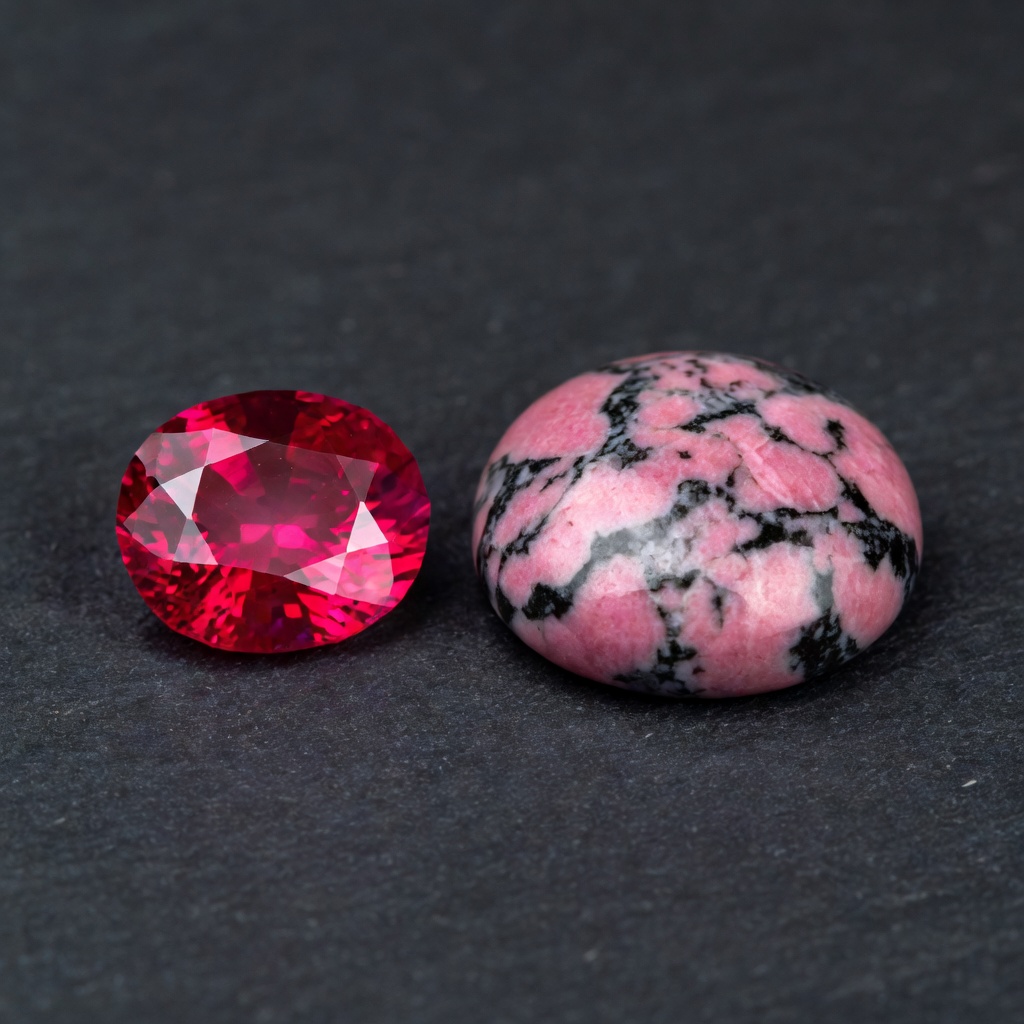
When shopping for red gemstones, many buyers find themselves comparing Ruby vs Rhodonite, two striking stones that share similar pinkish-red hues yet occupy entirely different positions in the gemological hierarchy. While both stones captivate with their rich coloring, they differ dramatically in mineral composition, durability, market value, and metaphysical applications. Understanding these distinctions is essential for making informed purchasing decisions, whether you seek a legacy investment piece or an affordable fashion accessory that resonates with your personal energy.
This detailed red gemstone comparison explores every facet of these minerals, from their geological formations to their practical applications in jewelry design. By examining the precious vs semi-precious stones classification alongside tangible factors like hardness and maintenance requirements, you will gain the knowledge necessary to select the perfect stone for your specific needs, budget, and lifestyle.
Geological Origins and Mineral Composition
The fundamental differences between these gemstones begin deep within the earth's crust, where distinct mineral compositions create their unique properties. Ruby gemstone properties stem from its classification as corundum, a crystalline form of aluminum oxide (Al₂O₃) that ranks just below diamond on the hardness scale. The presence of chromium trace elements during formation produces Ruby's signature red coloration, with higher chromium concentrations resulting in the coveted "pigeon blood" red hue prized by collectors worldwide. These stones typically form in metamorphic rocks under high-pressure, high-temperature conditions, often found within marble deposits that lack silica to prevent corundum from transforming into other minerals.
Conversely, Rhodonite mineral composition identifies it as a manganese inosilicate featuring manganese, calcium, and iron inclusions that create its distinctive appearance. Unlike Ruby's singular crystal structure, Rhodonite belongs to the pyroxenoid group of minerals and typically forms in massive or granular habits rather than distinct crystals. This manganese silicate develops through contact metamorphism or hydrothermal processes in manganese-rich environments, often displaying characteristic black manganese oxide veins that create striking patterns against its pink base. Key mining locations for high-quality Rubies include Myanmar (Burma), Mozambique, and Madagascar, while significant Rhodonite deposits occur in Russia, Australia, Sweden, and the United States, particularly in New Jersey and Massachusetts.
Formation Environment Differences
Rubies require specific geological conditions that limit their global distribution, often forming in marble belts created when limestone undergoes metamorphism without silica contamination. This rarity of suitable environments contributes to Ruby's status as a precious gemstone. Rhodonite forms more readily in various geological settings, including metamorphosed manganese deposits and hydrothermal veins, making it more abundant and accessible. Gemologists can distinguish between the two immediately through refractive index testing, as Ruby measures 1.76-1.77 while Rhodonite ranges from 1.71-1.74, providing definitive identification when visual cues prove ambiguous.
Visual Identification: Color, Clarity, and Patterns
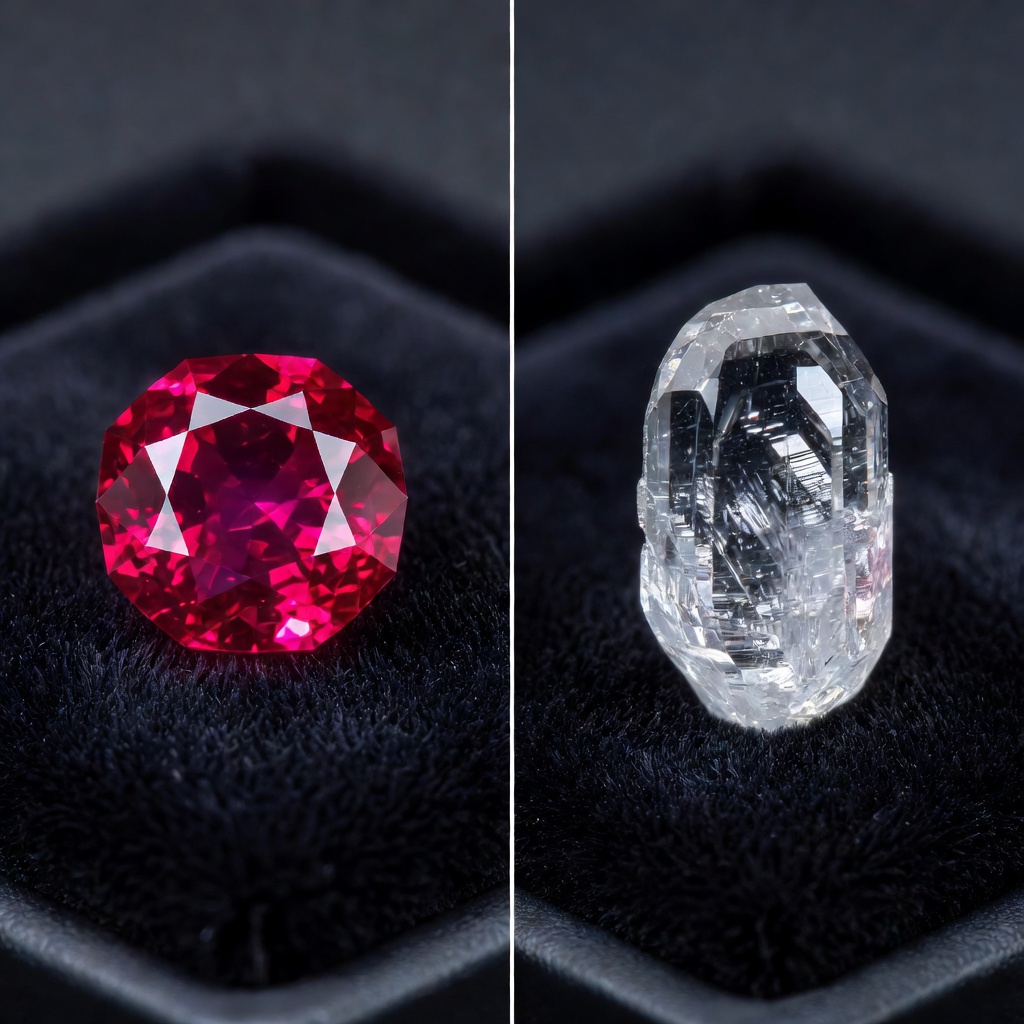
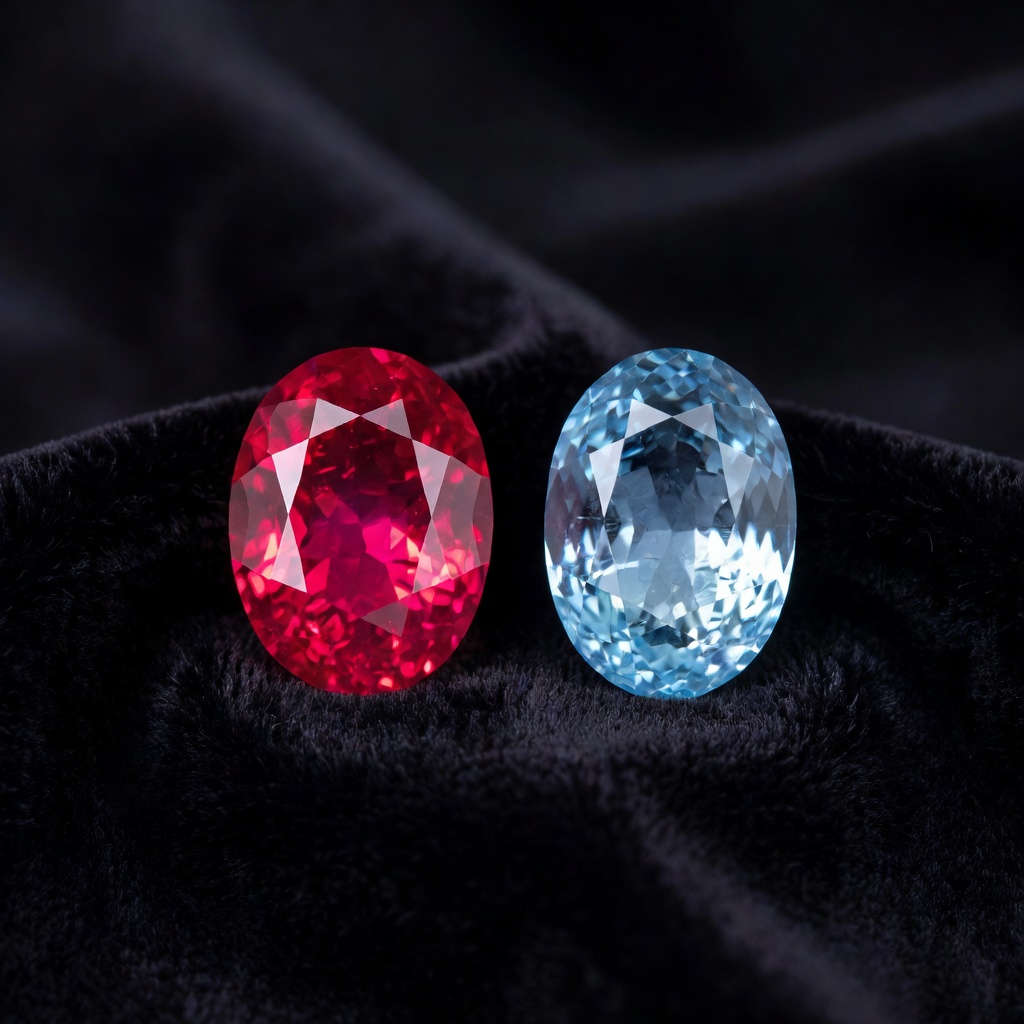
Distinguishing between these stones requires careful observation of their optical characteristics and internal structures. Rubies typically display a pure, vivid red ranging from pinkish-red to deep crimson, with the most valuable specimens exhibiting the legendary "pigeon blood" color—a saturated red with subtle blue undertones that appears to glow from within. High-quality Rubies possess exceptional transparency and a vitreous, glass-like luster that allows light to penetrate and refract brilliantly throughout the stone. When examining Ruby jewelry settings, look for stones that appear to have an internal fire or glow, particularly under incandescent lighting where their chromium content causes strong fluorescence.
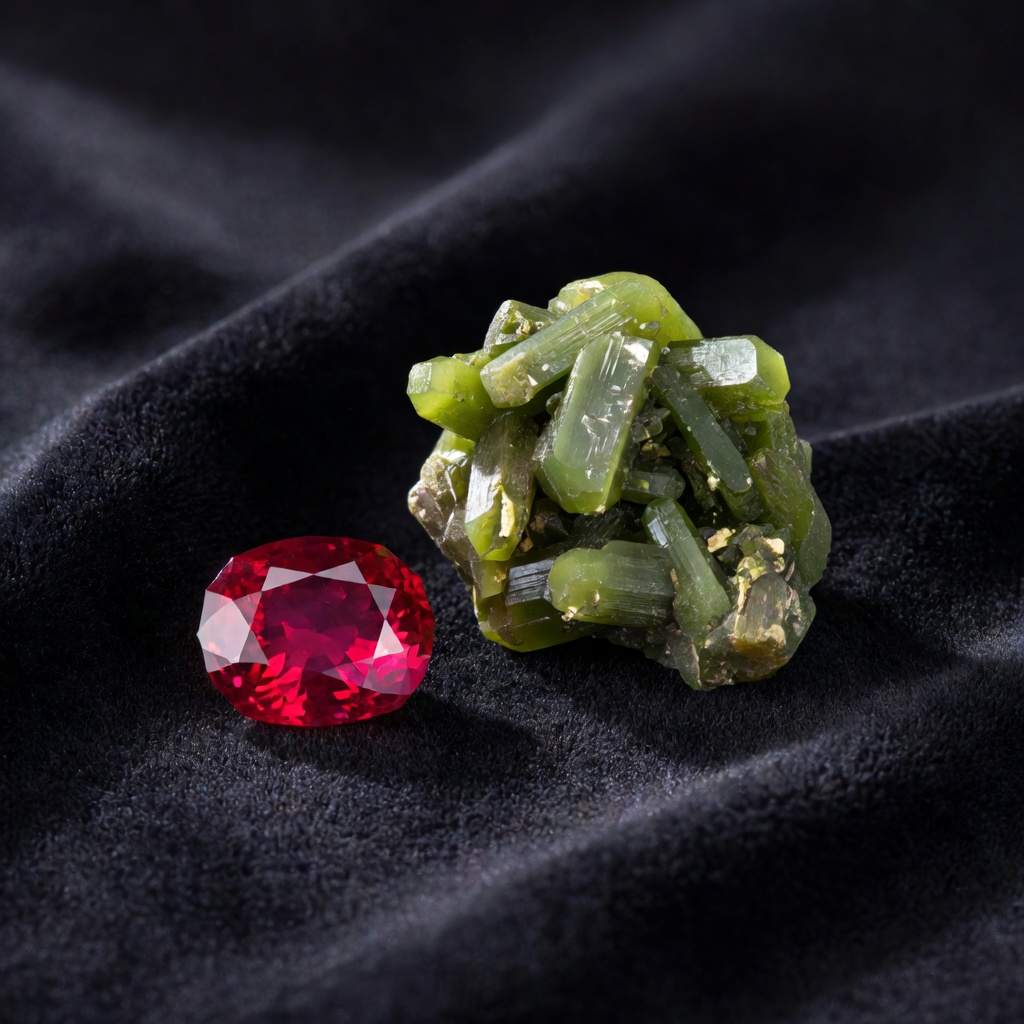
Rhodonite color patterns present a distinctly different aesthetic, characterized by a softer rose-red to pinkish-brown base color interrupted by dramatic black or dark brown manganese oxide veining. Unlike Ruby's uniformity, Rhodonite often displays mottled, spotted, or banded patterns that create unique, painterly effects within each specimen. The stone typically ranges from opaque to translucent, with a vitreous to pearly luster that appears softer and more subdued than Ruby's brilliant shine. When shopping for Rhodonite beads or cabochons, appreciate these black matrix patterns as natural fingerprints that make each piece one-of-a-kind rather than considering them flaws.
Practical Identification Tips
For collectors examining loose stones, Ruby's superior hardness allows it to scratch glass and resist surface abrasion, while Rhodonite can be scratched by a steel knife or common household items. Hold the stones against a bright light source: Ruby will show varying degrees of transparency even in darker specimens, while Rhodonite remains largely opaque except in thin sections. Additionally, Ruby typically feels heavier for its size due to corundum's specific gravity of 4.0 compared to Rhodonite's 3.4-3.7, providing a tactile clue for experienced gem handlers.
Durability and Hardness Comparison
When evaluating gemstones for jewelry applications, understanding the Ruby hardness Mohs scale rating proves crucial for predicting long-term wearability. Ruby scores 9 on the Mohs hardness scale, making it one of the hardest natural substances on earth, surpassed only by diamond at 10 and moissanite at 9.25. This exceptional hardness, combined with excellent toughness (resistance to breaking), makes Ruby ideal for daily wear applications including engagement rings, bracelets, and other high-impact jewelry pieces that withstand constant contact with hard surfaces. The stone's lack of cleavage planes means it resists chipping even when subjected to accidental impacts, explaining its popularity in heirloom-quality jewelry designed to last generations.
Rhodonite presents a more modest gemstone durability profile, ranking between 5.5 and 6.5 on the Mohs scale. While harder than common materials like window glass or a knife blade, Rhodonite remains susceptible to scratching from everyday dust (which contains quartz particles rating 7 on the scale) and shows perfect cleavage in two directions, making it prone to splitting under impact. This relative softness limits Rhodonite's suitability for rings and bracelets that encounter frequent contact, relegating it primarily to pendant necklaces, earrings, and occasional-use statement pieces. When considering Rhodonite for jewelry, designers must account for these limitations by protecting the stone with bezel settings rather than exposed prong settings that leave edges vulnerable to chipping.
| Characteristic | Ruby | Rhodonite |
|---|---|---|
| Mineral Class | Corundum (Aluminum Oxide) | Manganese Inosilicate |
| Mohs Hardness | 9 | 5.5 - 6.5 |
| Toughness | Excellent (no cleavage) | Fair to Good (perfect cleavage) |
| Color Range | Red to Pinkish-Red | Pink to Rose-Red with Black Veins |
| Transparency | Transparent to Translucent | Opaque to Translucent |
| Luster | Vitreous (Glass-like) | Vitreous to Pearly |
| Primary Sources | Myanmar, Mozambique, Madagascar | Russia, Australia, Sweden, USA |
| Price Range (per carat) | $100 - $15,000+ | $1 - $50 |
| Best Jewelry Applications | Rings, Bracelets, Daily Wear | Pendants, Earrings, Beadwork |
| Metaphysical Focus | Root Chakra, Passion, Vitality | Heart Chakra, Emotional Healing |
Implications for Daily Wear
Consider the lifestyle of the wearer when choosing between these stones. A construction worker, fitness enthusiast, or parent of young children requires the bombproof durability of Ruby for rings or bracelets. Conversely, Rhodonite suits office professionals or those who remove jewelry during physical activities, where the stone's softer nature poses no threat to its longevity. When designing custom pieces, jewelers often recommend Ruby for milestone gifts intended to become family heirlooms, while Rhodonite excels in artistic, bohemian-style jewelry emphasizing natural beauty over traditional precious stone prestige.
Market Value and Investment Potential
The Ruby value and pricing structure reflects its status as one of the "Big Four" precious gemstones alongside diamond, emerald, and sapphire. Fine-quality Rubies, particularly those originating from Myanmar's Mogok Valley, command prices rivaling high-quality diamonds, with exceptional specimens fetching $100,000 or more per carat at auction. Even commercial-grade Rubies typically range from $100 to $1,000 per carat depending on color saturation, clarity, and treatment status. Heat-treated Rubies, which comprise the majority of the market, remain valuable investments due to the permanence of the treatment and the stone's inherent rarity. When purchasing Ruby as an investment, prioritize untreated stones over 2 carats with documented Burmese or Mozambican origin, as these appreciate most consistently over time.
Rhodonite occupies the accessible end of the precious vs semi-precious stones spectrum, offering remarkable beauty at price points accessible to virtually every budget. High-quality Rhodonite cabochons or beads typically cost between $1 and $50 per carat, with even museum-quality specimens rarely exceeding $100 per carat. This affordability stems from Rhodonite's relative abundance and the market's preference for transparent faceted gems over opaque carved or cabochon stones. While Rhodonite does not function as a financial investment like Ruby, it provides excellent value for jewelry designers and collectors seeking large, visually striking specimens without the premium pricing associated with precious gems. The stone's value derives primarily from the attractiveness of its patterning and the skill of its lapidary work rather than geological rarity.
Factors Affecting Ruby Valuation
When assessing Ruby prices, consider the "Four Cs" adapted for colored stones: Color commands premium importance, with vivid slightly purplish-red to pure red stones outperforming orange-red or overly dark specimens. Clarity matters significantly, though Rubies typically contain some inclusions (known as "silk" when rutile needles are present), which can actually prove desirable by indicating natural origin and creating star effects in asteriated stones. Carat weight dramatically affects price, with exponential increases for stones over 3 carats. Origin significantly impacts value, with Burmese stones commanding 20-30% premiums over Thai or African origins due to historical prestige and typically superior color.
Metaphysical Properties and Energy Work
Crystal practitioners recognize distinct vibrational signatures that differentiate these stones despite their shared color family. Ruby metaphysical meaning centers on activation of the root chakra (Muladhara), stimulating life force energy, passion, courage, and leadership qualities. Ancient warriors embedded Rubies into their armor believing the stones provided invincibility in battle, while modern energy workers use Ruby to overcome exhaustion, lethargy, and lack of motivation. The stone's intense frequency resonates with the body's circulatory system and adrenal glands, making it valuable for those seeking to ignite their inner fire, enhance confidence in leadership roles, or revitalize romantic partnerships. When meditating with Ruby, practitioners often place the stone at the base of the spine or wear it as a ring on the dominant hand to project authority and decisive energy into their endeavors.
Rhodonite healing properties operate from a completely different energetic perspective, focusing primarily on heart chakra (Anahata) activation and emotional restoration. Known as the "rescue stone" or "stone of compassion," Rhodonite specializes in healing emotional wounds, releasing resentment, and fostering forgiveness both for oneself and others. Its calming pink energy combined with grounding black manganese creates a unique vibration that balances emotional extremes, making it invaluable for those processing grief, trauma, or relationship difficulties. Unlike Ruby's stimulating energy, Rhodonite promotes emotional equilibrium, encouraging clear communication during conflicts and supporting the development of unconditional love. Crystal healers often recommend placing Rhodonite over the heart during meditation or carrying it in a pocket during difficult conversations to maintain composure and speak from a place of authentic compassion.
Choosing Based on Spiritual Needs
Select Ruby when facing situations requiring courage, vitality, and assertive action, such as starting a business, competing in athletics, or rekindling passion in long-term relationships. Choose Rhodonite when navigating emotional healing, seeking to repair relationships, or working through past traumas requiring gentle, nurturing support. Many practitioners actually combine these stones, wearing Ruby on the dominant hand for action-oriented energy while keeping Rhodonite near the heart for emotional balance, creating a powerful synergy between doing and being. When building a crystal medicine kit, consider Ruby your energetic caffeine for motivation and Rhodonite your emotional bandage for healing.
Jewelry Design Applications
The divergent physical properties of these stones dictate distinct approaches to jewelry craftsmanship and design aesthetics. Ruby jewelry settings traditionally emphasize the stone's brilliance and prestige through high-impact designs featuring solitaire engagement rings, tennis bracelets, and accent pieces in haute couture collections. Royal families worldwide have favored Ruby for coronation regalia and state jewelry, with the British Crown Jewels featuring the Black Prince's Ruby (actually a spinel) and the Burmese Ruby Tiara. Modern designers utilize Ruby's durability to create pieces with exposed prong settings, pavé arrangements, and intricate filigree work that showcase the gem's transparency and fire. For optimal aesthetic impact, pair Rubies with high-karat yellow gold to enhance their warmth, or set them in platinum or white gold to emphasize their cool blue undertones and modern sophistication.
Rhodonite beadwork and jewelry design embrace the stone's organic, artistic qualities rather than attempting to mimic precious gem cutting styles. Lapidaries typically fashion Rhodonite into cabochons, beads, tumbled stones, or carved objects that showcase its distinctive black veining patterns against the pink background. The stone excels in bohemian-style jewelry, mala prayer beads, and protective talismans where its opaque nature and unique patterning create visual interest. Unlike Ruby, which requires precise faceting to maximize brilliance, Rhodonite's beauty emerges through polished surfaces that reveal its natural artwork. Metal pairing recommendations favor silver, copper, or rose gold settings that complement Rhodonite's pink tones, though oxidized silver provides striking contrast against the stone's lighter areas. When designing with Rhodonite, consider bezel settings or wire wrapping that protect the stone's edges while allowing maximum visibility of its characteristic matrix patterns.
Design Case Studies
A successful Ruby design might feature a 2-carat oval Burmese Ruby in a platinum halo setting with diamond accents, creating a classic engagement ring suitable for daily wear across decades. This design leverages Ruby's hardness while maximizing light return through strategic faceting. Conversely, an effective Rhodonite design could involve a 40-carat freeform cabochon wire-wrapped in oxidized sterling silver as a statement pendant, where the stone's natural shape and black dendritic patterns become the focal point. This piece would suit occasional wear during meditation practices or artistic gatherings where its unique aesthetic sparks conversation about natural mineral formation.
Care, Cleaning, and Maintenance Requirements
Understanding proper gemstone care guide protocols ensures your jewelry maintains its beauty across years of ownership. Ruby maintenance proves remarkably straightforward due to the stone's exceptional hardness and chemical stability. Owners can safely clean Ruby jewelry using ultrasonic cleaners or steam cleaning equipment commonly found in jewelry stores, as the stone's lack of cleavage and high hardness prevent damage from these aggressive methods. For home care, warm soapy water and a soft brush effectively remove accumulated oils and debris. Store Ruby pieces separately from other jewelry to prevent the stone from scratching softer gems, though Ruby itself requires no special protection from environmental factors beyond avoiding extreme thermal shock that could potentially fracture included stones.
Rhodonite demands significantly more delicate handling due to its softer nature and chemical sensitivities. Never expose Rhodonite to ultrasonic or steam cleaning, as the vibrations and heat can exploit cleavage planes and cause fractures. Instead, clean Rhodonite using only lukewarm water with mild dish soap and a soft cloth or very soft brush, avoiding any harsh chemicals, acids, or abrasive cleaners that could etch the surface or dissolve manganese components. The stone's relative porosity makes it susceptible to damage from household cleaners, perfumes, and hair products, so always apply cosmetics before donning Rhodonite jewelry. Store Rhodonite pieces in individual soft pouches away from harder stones like Ruby, Sapphire, or Diamond that could scratch its surface, and avoid exposing the stone to prolonged direct sunlight which may fade its pink coloration over time.
Storage Recommendations
Invest in a jewelry box with separate compartments or individual fabric pouches to prevent contact between different hardness stones. When traveling, wrap Rhodonite pieces in soft cloth and place them in rigid containers to prevent pressure points that could cause cleavage fractures. For Ruby pieces, while they resist scratching, storing them separately prevents them from damaging other jewelry in your collection. Consider removing all gemstone jewelry before swimming in chlorinated pools or hot tubs, as chemical exposure affects metal settings and can potentially harm Rhodonite's surface integrity.
Buyer’s Guide: Making the Right Choice
Navigating the Ruby vs Rhodonite buying guide requires honest assessment of your priorities across budget, lifestyle, and aesthetic preferences. Budget considerations represent the most immediate differentiator: if seeking an investment-grade gemstone or heirloom piece to pass through generations, Ruby justifies its higher price point through durability and prestige. However, if you desire a beautiful red gemstone for fashion jewelry or spiritual practice without significant financial commitment, Rhodonite offers exceptional value and unique beauty at a fraction of the cost. Consider starting with Rhodonite to explore whether you enjoy wearing pink-red stones before investing in Ruby, or acquire both to serve different purposes in your wardrobe.
Lifestyle factors heavily influence choosing red gemstones for daily use. Active individuals, medical professionals who wash hands frequently, or those working with their hands should prioritize Ruby for rings and bracelets due to its scratch resistance. Office workers, spiritual practitioners, or those with large existing jewelry collections might appreciate Rhodonite's distinctive appearance for special occasions and meditation practices. Personal resonance ultimately matters more than market value—some wearers feel drawn to Ruby's intense, regal energy and brilliant sparkle, while others connect deeply with Rhodonite's earthy, nurturing vibration and natural artwork. Visit gem shows or jewelry stores to handle both stones personally, noting which feels more comfortable in your hand and visually appealing to your specific taste.
Decision Matrix for Buyers
Create a checklist evaluating your specific needs: If you require daily wear durability, have a budget exceeding $500 per carat, seek investment potential, and desire traditional precious stone prestige, select Ruby. If you prefer unique natural patterns, practice crystal healing focused on emotional work, have a budget under $50 per carat, and appreciate artisanal jewelry aesthetics, choose Rhodonite. For engagement rings or wedding bands intended for constant wear, Ruby remains the only appropriate choice between these two stones, while Rhodonite better suits anniversary gifts, spiritual jewelry, or fashion pieces worn on specific occasions.
Conclusion: Two Distinct Red Beauties
This Ruby vs Rhodonite summary reveals that while both stones share the captivating red spectrum that has mesmerized humans for millennia, they serve fundamentally different purposes in the worlds of jewelry and metaphysical practice. Ruby stands as the ultimate expression of precious gemstone luxury, combining exceptional hardness, brilliant optical performance, and significant investment potential with fiery energetic properties that stimulate passion and leadership. Its status among the "Big Four" precious stones reflects not merely marketing but genuine geological rarity and superior material properties that justify premium pricing for those seeking legacy-quality jewelry.
Rhodonite offers a complementary yet equally valid pathway into red gemstone appreciation, providing accessible beauty, distinctive natural patterning, and gentle heart-centered healing energy that supports emotional wellbeing. While it cannot match Ruby's durability or prestige, its unique aesthetic qualities and affordability make it an excellent choice for artistic expression, spiritual practice, and budget-conscious collectors. Whether you choose the enduring brilliance of Ruby or the nurturing patterns of Rhodonite, both stones offer genuine connections to the earth's mineral wealth, allowing you to wear pieces of geological history that resonate with your personal journey, aesthetic sensibilities, and practical lifestyle requirements.
Frequently Asked Questions
Is Rhodonite just a type of Ruby?
No, Rhodonite and Ruby are completely different minerals with distinct chemical compositions, crystal structures, and physical properties. Ruby is corundum (aluminum oxide), while Rhodonite is a manganese silicate. They differ significantly in hardness, value, formation environments, and gemological characteristics, though both can display red to pinkish colors that sometimes confuse novice buyers. While Ruby forms as hexagonal crystals in high-pressure metamorphic environments, Rhodonite typically occurs in massive, granular formations with distinctive black manganese oxide veining that immediately distinguishes it from Ruby's typically uniform coloration.
Which is more valuable, Ruby or Rhodonite?
Ruby is significantly more valuable as one of the four precious gemstones (alongside diamond, emerald, and sapphire), with high-quality specimens commanding thousands to tens of thousands of dollars per carat depending on origin, color, and treatment status. Burmese Rubies of exceptional quality regularly achieve auction prices exceeding $100,000 per carat. Rhodonite is classified as a semi-precious stone that remains affordable even for large specimens, typically ranging from $1 to $50 per carat, making it accessible for all budgets and suitable for beginning collectors or those seeking large statement pieces without substantial financial investment.
How can I visually tell Ruby and Rhodonite apart?
Rubies typically display a pure, vivid red to slightly pinkish hue with high transparency and a brilliant glass-like (vitreous) luster that allows light to penetrate and refract throughout the stone, creating internal fire and sparkle. Rhodonite shows a softer pink to rose-red color with distinctive black or dark brown manganese oxide veining or patches that create unique patterns, and is generally opaque to translucent with a softer, more subdued luster. When held to light, Ruby will show varying degrees of transparency and possibly inclusion patterns, while Rhodonite remains largely opaque except in very thin sections, immediately revealing its different optical properties.
Can Rhodonite be worn daily like Ruby?
Rhodonite, ranking 5.5 to 6.5 on the Mohs hardness scale, is not recommended for daily wear in rings or bracelets due to its relative softness, perfect cleavage in two directions, and susceptibility to scratching from everyday dust and household materials. Daily wear would likely result in surface abrasion, chipping, or potential cleavage fractures within months of constant use. Ruby, scoring 9 on the Mohs scale with excellent toughness and no cleavage, is extremely durable and ideal for daily wear, including engagement rings, wedding bands, and heavy-use jewelry that withstands constant contact with hard surfaces without showing wear.
Do Ruby and Rhodonite have different healing properties?
Yes, they serve distinctly different energetic purposes in crystal healing practices despite sharing red coloration. Ruby stimulates passion, vitality, courage, and root chakra energy, promoting leadership qualities, life force activation, and physical stamina while helping overcome exhaustion and lethargy. Rhodonite focuses on heart chakra healing, emotional balance, compassion, forgiveness, and releasing past traumas or resentment, earning its reputation as the "rescue stone" for emotional crisis situations. While Ruby energizes and motivates action, Rhodonite calms and heals emotional wounds, making them complementary rather than interchangeable in metaphysical applications.
Is Rhodonite a good budget alternative to Ruby?
Rhodonite can be an excellent alternative for those seeking pink or red gemstones on a budget, offering unique beauty with its characteristic black veining and heart-centered metaphysical properties at a fraction of Ruby's cost. However, it cannot replicate Ruby's brilliance, hardness, transparency, or prestige for those specifically seeking precious stone qualities, investment potential, or daily-wear durability. Consider Rhodonite as an alternative for pendants, earrings, or occasional-wear fashion jewelry where its softer nature poses no practical problems, rather than as a direct substitute for Ruby in applications requiring hardness and clarity.
Can you wear Ruby and Rhodonite together in jewelry?
Yes, these stones can be worn together as complementary pieces that balance different energetic frequencies, with Ruby's fiery, activating energy pairing well with Rhodonite's calming, heart-centered vibration to create harmony between passion and compassion, action and reflection. Many jewelry designers create pieces combining both stones to leverage their contrasting visual and metaphysical properties. However, when storing these pieces, keep them separately or ensure Rhodonite is protected by settings that prevent contact with Ruby, as the harder Ruby (9 Mohs) will scratch the softer Rhodonite (5.5-6.5 Mohs) if they rub against each other in a jewelry box or drawer.
Which stone is better for an engagement ring?
Ruby is the superior and appropriate choice for engagement rings due to its exceptional hardness (9 Mohs), resistance to scratching and chipping, lack of cleavage planes, and traditional association with eternal love, passion, and commitment across numerous cultures. Its durability ensures the ring maintains its beauty through decades of daily wear including household chores, work activities, and travel. Rhodonite is too soft for daily ring wear and better suited for pendants, earrings, or occasional-use pieces, as constant wear would quickly result in surface damage and potential stone loss, making it unsuitable for symbols intended to last a lifetime.