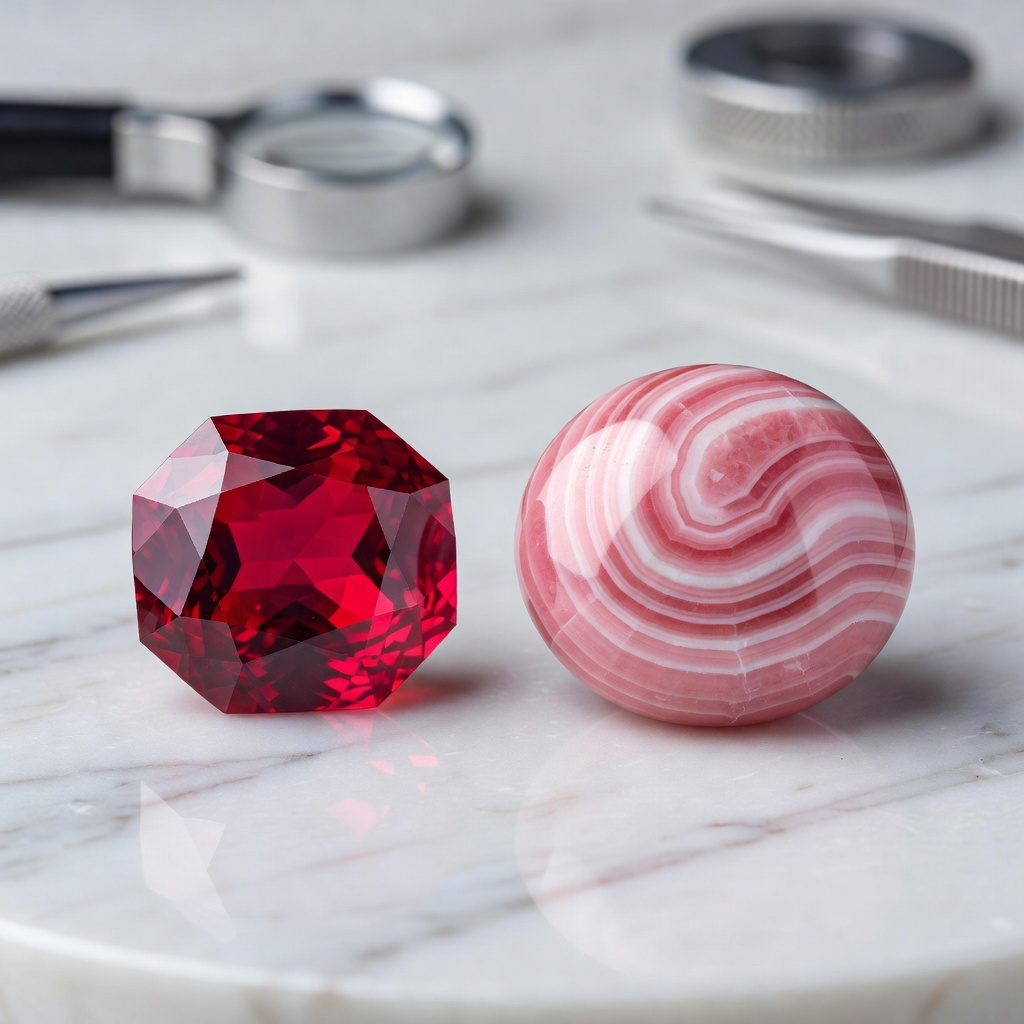
Understanding Red Gemstone Confusion
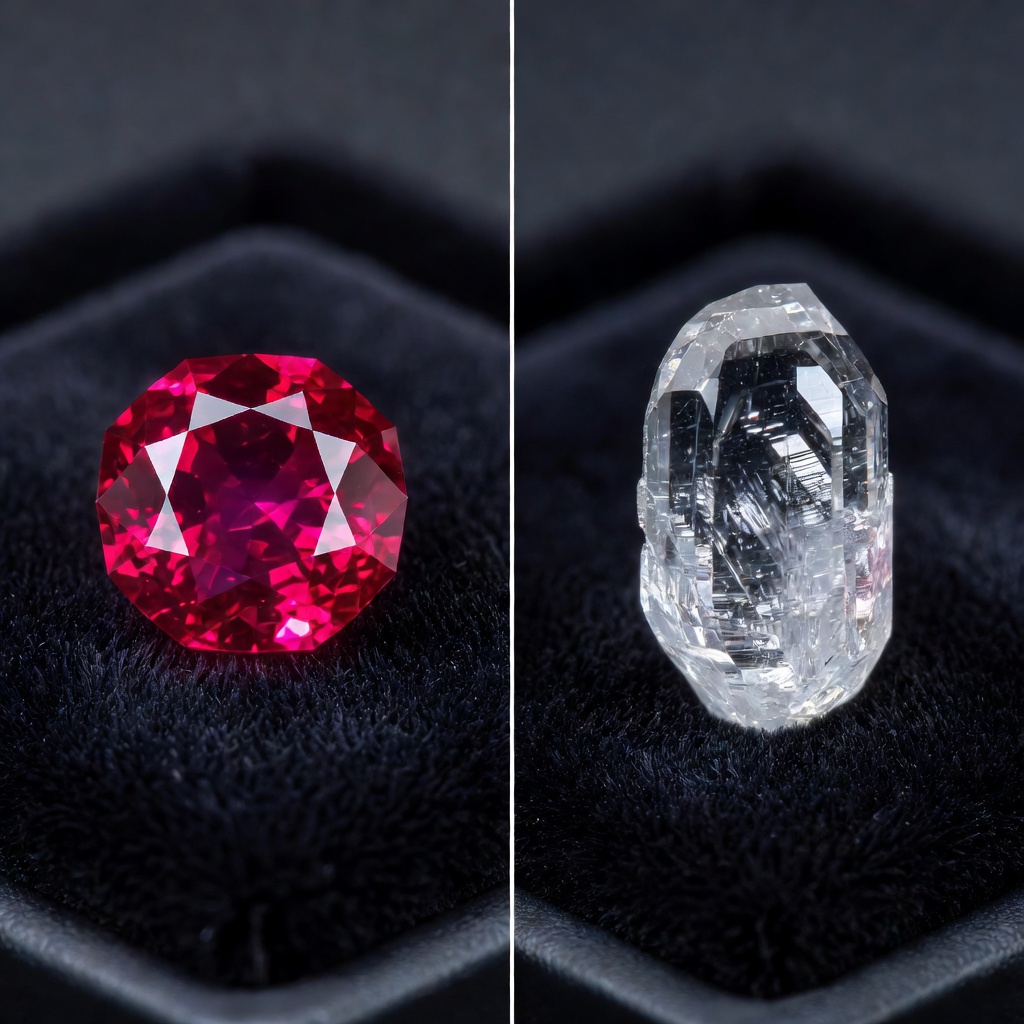
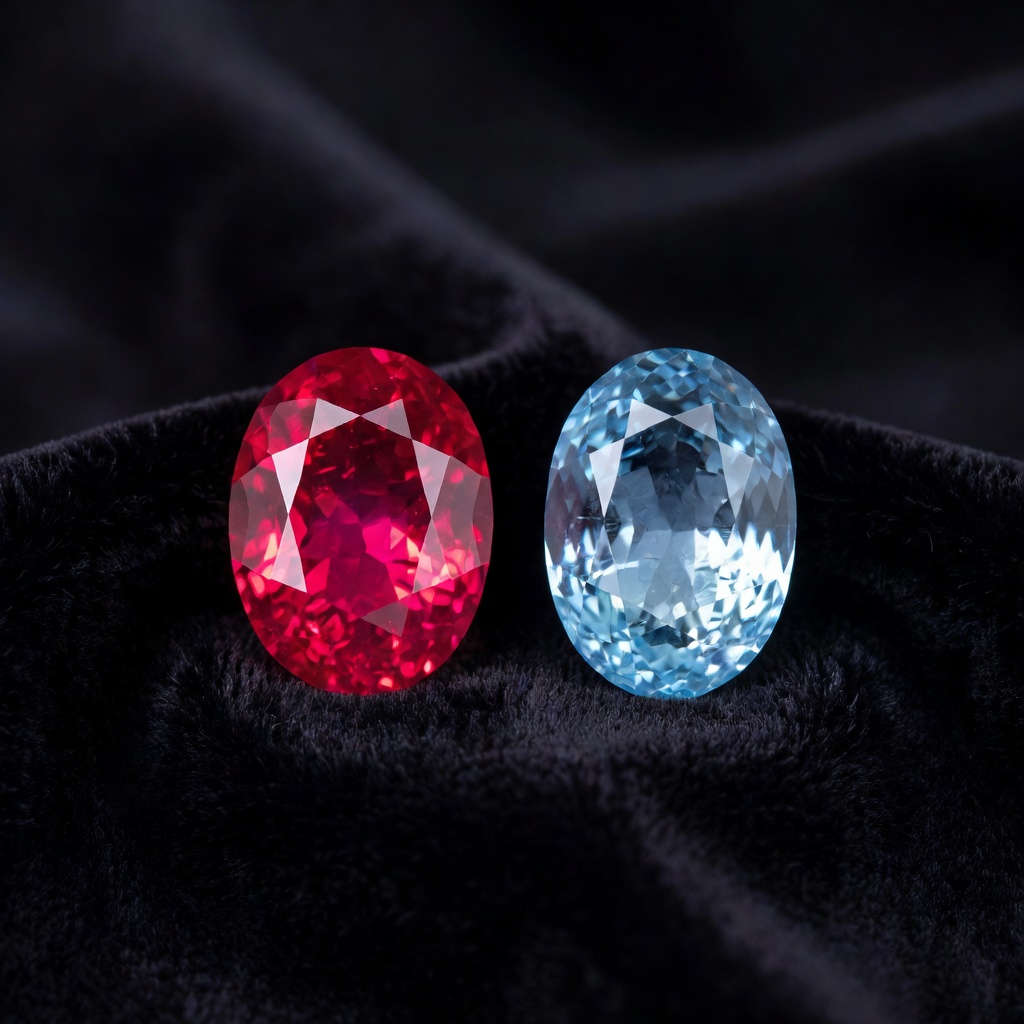
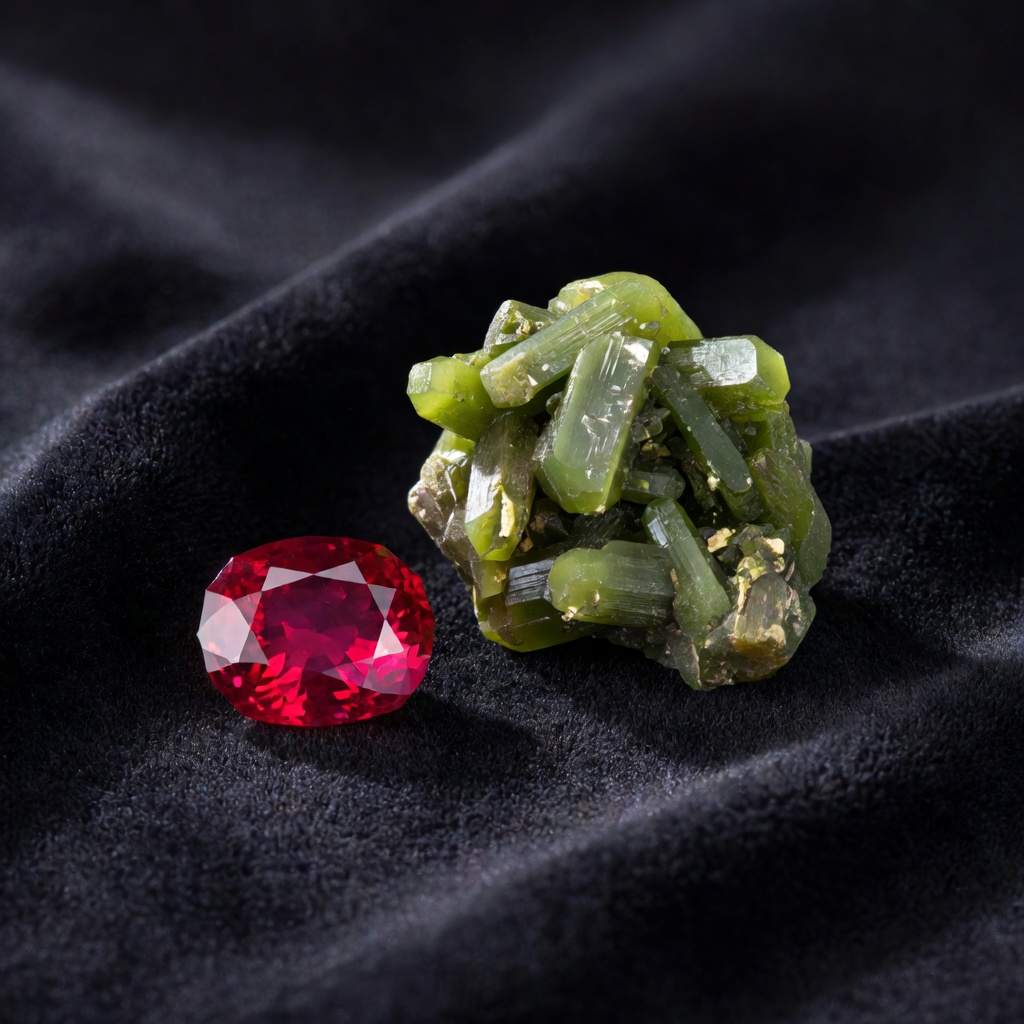
When browsing for vibrant pink to crimson gemstones, many collectors encounter the Ruby vs Rhodochrosite dilemma, often mistaking these visually similar yet fundamentally different minerals for one another. Ruby represents the pinnacle of precious corundum, a crystalline aluminum oxide that ranks among the hardest natural substances on Earth, while rhodochrosite serves as a beloved semi-precious manganese carbonate known for its delicate banding patterns and romantic coloring. This red gemstone comparison becomes particularly challenging when examining pink ruby varieties alongside high-grade rhodochrosite specimens, as both can exhibit similar saturation levels and translucent qualities under certain lighting conditions. However, beneath their superficial similarities lies a vast chasm separating these stones in terms of geological formation, market valuation, wearability, and long-term durability that every informed buyer must understand before making a purchase.
Buyers frequently confuse these minerals because both occupy the red-to-pink spectrum favored for romantic jewelry and both possess distinctive visual appeal that catches the eye in display cases. Jewelry retailers sometimes inadvertently contribute to this confusion by grouping all red stones together without clarifying the significant differences between precious corundum and carbonate minerals. When evaluating what distinguishes these stones, collectors must consider not merely aesthetic preferences but practical factors including daily wear requirements, investment potential, and maintenance protocols that vary dramatically between these two distinct gemological categories.
Chemical Composition and Geological Origins
The fundamental divergence between these gemstones begins at the molecular level, where ruby forms as aluminum oxide (Al2O3) within metamorphic rock environments subjected to intense heat and pressure over millions of years. This corundum vs manganese carbonate distinction represents one of the most significant differences in gemology, as ruby's crystalline structure incorporates trace chromium elements that produce its characteristic red fluorescence, while titanium and iron impurities may shift the color toward pink or purple hues. Geologically, exceptional rubies crystallize within marble deposits under specific temperature gradients, with the most coveted pigeon blood varieties emerging from the Mogok Valley in Myanmar and increasingly from Mozambique's Montepuez mines, where unique geological conditions create the perfect balance of color saturation and clarity.
Rhodochrosite, conversely, develops through entirely different geological processes as manganese carbonate (MnCO3), typically forming within hydrothermal veins and as stalactitic growths in silver mine cavities where manganese-rich solutions precipitate over time. This gemstone formation process creates the distinctive banded patterns characteristic of the Inca Rose gemstone, with concentric layers building up slowly as mineral-laden water drips through underground caverns. The world's finest rhodochrosite specimens originate from the Capillitas Mine in Argentina's San Juan province, where ancient Inca civilizations first discovered these banded treasures, while North American collectors prize the rare transparent crystals from Colorado's Sweet Home Mine, which occasionally yield gem-quality material suitable for faceting despite the mineral's inherent softness.
The Hardness Factor: Durability Face-Off
When examining rhodochrosite vs ruby hardness, the disparity becomes immediately apparent and carries profound implications for jewelry selection and longevity. Ruby commands a position near the summit of the Mohs hardness scale at 9, making it second only to diamond in scratch resistance and capable of withstanding decades of daily wear without showing significant surface damage. This exceptional gemstone durability stems from corundum's strong atomic bonding and hexagonal crystal system, which resists abrasion from common environmental hazards including household dust, metal contacts, and accidental impacts that would devastate softer materials.
Rhodochrosite occupies a dramatically different position on the hardness spectrum, rating only 3.5 to 4 on the Mohs scale, comparable to materials like calcite or fluorite that require careful handling and protective settings. This softness results from the mineral's carbonate composition and perfect cleavage in three directions, creating planes of structural weakness where the stone can fracture under moderate impact or pressure. For collectors considering these stones, this hardness differential means that while a ruby engagement ring can survive daily kitchen work, gym sessions, and outdoor activities without protective bezels, rhodochrosite demands ceremonial treatment reserved for special occasions and sheltered environments to prevent scratching, chipping, or complete breakage.
Practical durability testing reveals these differences starkly: a ruby will scratch glass effortlessly and resist damage from steel implements, while rhodochrosite can be scratched by a copper penny or even a fingernail if the mineral is particularly soft. Jewelers must consider these properties when designing mountings, as prong settings that work beautifully for rubies present catastrophic risks for rhodochrosite, which requires protective bezel or flush mountings that shield the girdle and table from direct contact with hard surfaces.
Visual Identification: Color, Clarity and Characteristic Patterns
Distinguishing between pink ruby vs pink rhodochrosite requires careful observation of optical properties, internal characteristics, and surface patterns that betray their distinct mineralogical identities. True ruby exhibits a vitreous to adamantine luster with a high refractive index between 1.76 and 1.78, creating brilliant flashes of light and spectral fire that dance within the stone when properly faceted, while even the most transparent rhodochrosite typically displays a lower refractive index around 1.6 to 1.8 with a more subdued pearly or vitreous glow. Color distribution provides crucial clues, as ruby generally shows uniform saturation throughout the crystal, ranging from delicate pinkish-red to the coveted pigeon blood crimson, whereas rhodochrosite almost always displays characteristic white, gray, or cream-colored concentric banding interspersed with rose-pink to raspberry-red layers.
This distinctive banding pattern, known as the Inca Rose gemstone signature, represents the most reliable visual differentiator between these minerals, resembling the cross-section of a tree trunk or the petals of a blooming rose frozen in stone. Under magnification, ruby typically reveals rutile silk inclusions, tiny needle-like crystals of titanium dioxide that create soft, velvety appearances in Burmese specimens or sharp, intersecting lines in stones from other localities, while rhodochrosite shows manganese oxide zoning, occasional calcite inclusions, or banded growth patterns that follow the curved contours of stalactitic formations. Advanced identification methods involve refractive index testing, where ruby's birefringence of 0.008 creates doubling of back facets visible under magnification, a phenomenon absent in the optically uniaxial positive rhodochrosite crystal structure.
Market Value and Investment Potential Analysis
The economic chasm separating these gemstones reflects their relative rarity, durability, and historical prestige within the jewelry trade, with ruby commanding prices that can exceed $100,000 per carat for untreated, vivid red specimens from legendary Burmese mines. As one of the traditional "Big Four" precious gemstones alongside diamond, emerald, and sapphire, ruby maintains exceptional liquidity in the investment market, with documented auction records showing untreated stones consistently appreciating in value and serving as portable wealth stores during economic uncertainties. Contemporary market analysis reveals that even commercial-quality rubies from Mozambique or Madagascar typically range from $1,000 to $5,000 per carat, while premium stones with certificates of origin from Myanmar or exceptional color grading can command five to six figures per carat depending on size and clarity characteristics.
Rhodochrosite occupies a more accessible price bracket, generally ranging from $10 to $500 per carat for fine cabochon or carved specimens, making it an attractive option for collectors seeking aesthetic beauty without substantial financial commitment. However, the market contains notable exceptions, particularly for rare transparent crystals from Colorado's Sweet Home Mine, which occasionally appear at specialty auctions commanding premium prices among mineral collectors and connoisseurs who value the unique combination of transparency and color in this typically opaque material. Investment considerations favor ruby for those seeking asset appreciation and resale liquidity, while rhodochrosite appeals to collectors focused on mineralogical rarity and aesthetic display pieces rather than traditional jewelry investments, functioning more within the specialized niche of fine mineral specimens than the mainstream gemstone market.
| Characteristic | Ruby | Rhodochrosite |
|---|---|---|
| Chemical Composition | Aluminum Oxide (Al2O3) - Corundum | Manganese Carbonate (MnCO3) |
| Mohs Hardness | 9 | 3.5 - 4 |
| Primary Color Range | Pigeon Blood Red to Pink | Rose Pink with White Banding |
| Refractive Index | 1.76 - 1.78 | 1.60 - 1.82 |
| Market Value | $1,000 - $100,000+ per carat | $10 - $500 per carat |
| Best Jewelry Use | Engagement rings, daily wear | Pendants, earrings, occasional wear |
| Durability | Excellent - suitable for daily wear | Poor - requires protective settings |
| Distinctive Features | Rutile silk inclusions, high brilliance | Inca Rose banding patterns |
| Primary Sources | Myanmar, Mozambique, Thailand | Argentina, Colorado (USA), Romania |
Jewelry Applications and Practical Wearability
When considering ruby jewelry durability for everyday wear, collectors find an ideal candidate capable of withstanding the rigors of modern life without special precautions or protective protocols. Ruby's exceptional hardness makes it perfectly suited for engagement rings, wedding bands, bracelets, and watches that encounter frequent impact and abrasion, allowing designers to utilize delicate prong settings that maximize light return without compromising structural integrity. High-end jewelry houses consistently select ruby for statement pieces intended for daily wear, knowing that the stone will maintain its polish and facet edges indefinitely with only routine cleaning, making it an heirloom-quality choice intended for generational transmission.
Rhodochrosite jewelry care requires an entirely different approach focused on protection and selective use, as this delicate mineral demands settings that guard against the mechanical stresses of daily life. Experienced jewelers recommend bezel settings, protective pendants that don't contact surfaces during wear, or earrings that minimize impact exposure, strictly avoiding ring designs intended for daily wear regardless of how carefully the wearer intends to treat the piece. Metal pairing strategies differ significantly between these stones, with white gold or platinum providing sophisticated backdrops that enhance ruby's crimson fire, while rhodochrosite benefits from yellow gold or silver bezels that offer both aesthetic warmth and physical protection against the knocks and scrapes that would quickly destroy the softer stone.
Practical case studies illustrate these differences: a ruby solitaire worn daily for twenty years typically shows minimal wear beyond requiring prong tightening and professional polishing, while a rhodochrosite ring worn weekly might accumulate surface scratches and potentially suffer catastrophic cleavage fractures within months if subjected to temperature changes or accidental impacts. For collectors determined to wear rhodochrosite, convertible jewelry designs that allow the stone to be worn as a pendant during active periods and converted to a ring for special occasions offer the best compromise between enjoying the gem's beauty and preserving its integrity.
Symbolism, Metaphysical Properties and Cultural Significance
Beyond their physical properties, these gemstones carry distinct energetic signatures and historical associations that influence collector preferences and spiritual practices across diverse cultures. Ruby serves as the July birthstone, carrying millennia of associations with passion, protection, and vital life force energy, with ancient Burmese warriors implanting rubies beneath their skin before battle to render themselves invulnerable to physical harm. This precious stone resonates strongly with the root chakra, grounding spiritual energy into physical manifestation while stimulating the heart and encouraging courageous action, making it a favored talisman for leaders, entrepreneurs, and those seeking to overcome lethargy or fear-based blockages.
Rhodochrosite meaning centers on emotional healing and self-compassion, earning the title "Stone of the Compassionate Heart" among crystal healing practitioners who utilize it for trauma recovery, inner child work, and cultivating unconditional love toward oneself and others. Unlike ruby's warrior associations, the Inca Rose gemstone connects to heart chakra energy, promoting gentle emotional release and comfort during periods of grief or stress, with Argentine folklore suggesting these stones represent the blood of ancestral spirits turned to crystal to comfort their descendants. Historical significance diverges sharply between these minerals: while Burmese royalty guarded ruby mines as state secrets and traded the stones as diplomatic currency, pre-Columbian civilizations in the Andes carved rhodochrosite into ceremonial vessels and burial objects, believing the stone could guide souls through the afterlife while providing earthly comfort to the living.
Authentication and Buying Guide
When buying ruby gemstones, insist upon certification from reputable laboratories such as GIA (Gemological Institute of America), AGL (American Gemological Laboratories), or SSEF (Swiss Gemmological Institute), as these reports verify critical factors including origin, treatment status (heat vs. unheated), and whether the stone is natural or synthetic. Red flags in the ruby market include glass-filled fractures that create deceptive clarity, diffusion-treated surfaces that artificially enhance color, and synthetic flux-grown stones that mimic natural inclusions but lack the geological complexity of mined material. For investment-grade purchases, prioritize untreated Burmese or Mozambican stones with vivid saturation and eye-clean clarity, allocating budget toward certification and provenance documentation that ensures resale value and authenticity.
Rhodochrosite quality factors focus less on laboratory certification and more on aesthetic evaluation of color intensity, banding pattern symmetry, and the absence of stabilization treatments or artificial dyes that plague the lower end of the market. Authentic rhodochrosite should feel cool to the touch and relatively heavy for its size, with natural banding that varies in thickness and shows organic irregularities rather than the mechanical precision of dyed agate imitations. Budget allocation strategies suggest investing in ruby for long-term value appreciation and heirloom quality, while allocating smaller amounts toward rhodochrosite for immediate aesthetic enjoyment and collector satisfaction, recognizing that while rhodochrosite offers beauty at accessible price points, it functions primarily as a decorative rather than investment mineral.
Final Verdict: Choosing Your Perfect Red Gemstone
Your lifestyle and intentions should drive the final decision in this Ruby vs Rhodochrosite comparison summary, with active individuals or those seeking generational jewelry heirlooms finding ruby the undisputed champion of durability and lasting value. Consider your daily routines honestly: if you work with your hands, engage in sports, or simply prefer low-maintenance luxury, ruby's hardness of 9 and exceptional toughness provide worry-free wear that rhodochrosite cannot match regardless of setting precautions or careful handling. Conversely, if you seek a statement piece for special occasions, value emotional symbolism over investment potential, or appreciate the unique banded beauty of carbonate minerals, rhodochrosite offers distinctive aesthetic appeal at accessible price points that allow for creative, occasional-wear jewelry designs.
Key differentiators ultimately crystallize around three factors: hardness and durability favor ruby exclusively for daily wear applications, market value and investment liquidity strongly favor ruby for serious collectors, while visual uniqueness and metaphysical associations offer rhodochrosite its own niche for spiritual practitioners and mineral enthusiasts. Care recommendations require ruby owners to perform occasional ultrasonic cleaning and prong inspections, while rhodochrosite demands storage in soft pouches separate from other jewelry, cleaning with only damp cloths and mild soap, and immediate removal during physical activities or temperature fluctuations. By aligning your selection with practical wear requirements, budget parameters, and aesthetic preferences, you can confidently choose between these beautiful red gemstones knowing that each offers distinct advantages suited to different collector profiles and lifestyle needs.
Frequently Asked Questions
Is rhodochrosite the same as ruby?
No, they are completely different gemstones. Ruby is a precious gemstone composed of corundum (aluminum oxide) with a hardness of 9 on the Mohs scale. Rhodochrosite is a semi-precious manganese carbonate with a much softer hardness of 3.5-4. While both can appear pink to red, ruby has a vitreous luster and greater transparency, whereas rhodochrosite typically shows distinctive white banding patterns.
Which is more expensive, ruby or rhodochrosite?
Ruby is significantly more expensive, often commanding $1,000 to over $100,000 per carat for high-quality specimens, making it one of the 'Big Four' precious gemstones. Rhodochrosite is much more affordable, typically ranging from $10 to $500 per carat, though exceptional specimens from the Sweet Home Mine in Colorado can fetch higher prices among collectors.
Can rhodochrosite be worn every day like ruby?
No, rhodochrosite is unsuitable for daily wear due to its low hardness (3.5-4) and perfect cleavage, making it prone to scratching and breaking. It's best reserved for pendants, earrings, or occasional wear rings with protective bezel settings. Ruby, with its hardness of 9 and excellent toughness, is ideal for daily wear including engagement rings and bracelets.
How can I tell ruby and rhodochrosite apart?
The easiest method is the hardness test: ruby scratches glass easily while rhodochrosite does not. Visually, rhodochrosite displays characteristic white and pink concentric banding (the 'Inca Rose' pattern) and has a pearly to vitreous luster, while ruby shows no banding, has a higher refractive index creating more 'fire,' and often contains rutile silk inclusions. A gemologist can confirm using refractive index testing.
Is pink ruby the same as rhodochrosite?
No, pink ruby is still corundum with trace elements of chromium and sometimes titanium or iron creating the pink color. It maintains ruby's hardness of 9 and crystal structure. Pink sapphire is actually the same mineral as pink ruby (corundum), with the distinction based on color intensity. Rhodochrosite is chemically manganese carbonate, much softer, and typically shows banding not seen in rubies.
Which is better for an engagement ring?
Ruby is the superior choice for engagement rings due to its exceptional hardness (9 on Mohs scale), making it resistant to scratches and chips from daily wear. Rhodochrosite is inappropriate for engagement rings because its softness (3.5-4) means it will scratch and potentially fracture with daily impact. If you prefer rhodochrosite's color, consider it for earrings or pendants instead.
What is the Inca Rose?
The Inca Rose (Rosa del Inca) is the traditional name for rhodochrosite, particularly the banded pink and white variety first discovered in the silver mines of Argentina during the Inca Empire. The name refers to the stone's resemblance to a rose flower and its historical significance to pre-Columbian civilizations who believed the stone represented the blood of their ancestors turned to stone.
Do rubies and rhodochrosite have different metaphysical meanings?
Yes, they carry distinct spiritual associations. Ruby is associated with the root chakra, symbolizing passion, vitality, courage, and protection. It's the July birthstone and has long been associated with royalty and power. Rhodochrosite resonates with the heart chakra, representing unconditional love, emotional healing, self-compassion, and comfort. It's often called the 'stone of the compassionate heart' and is used for trauma recovery.