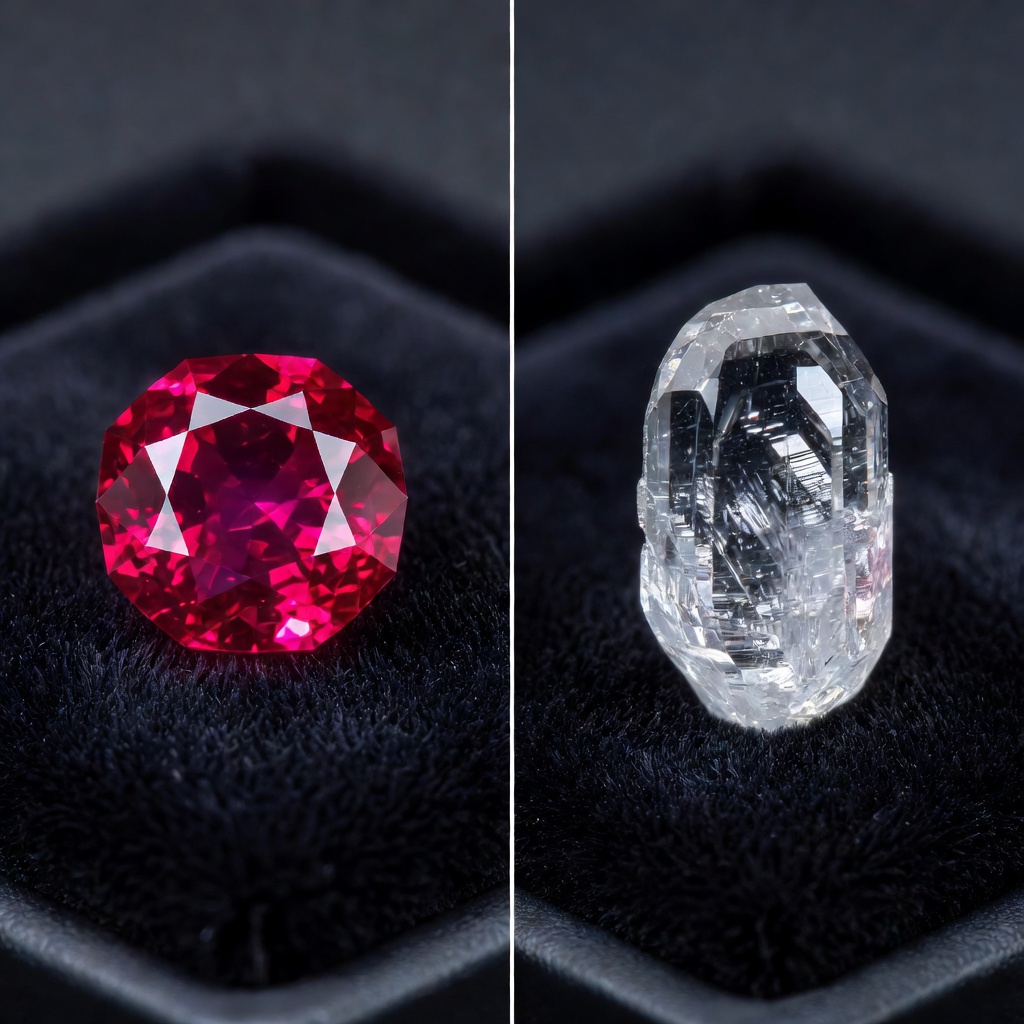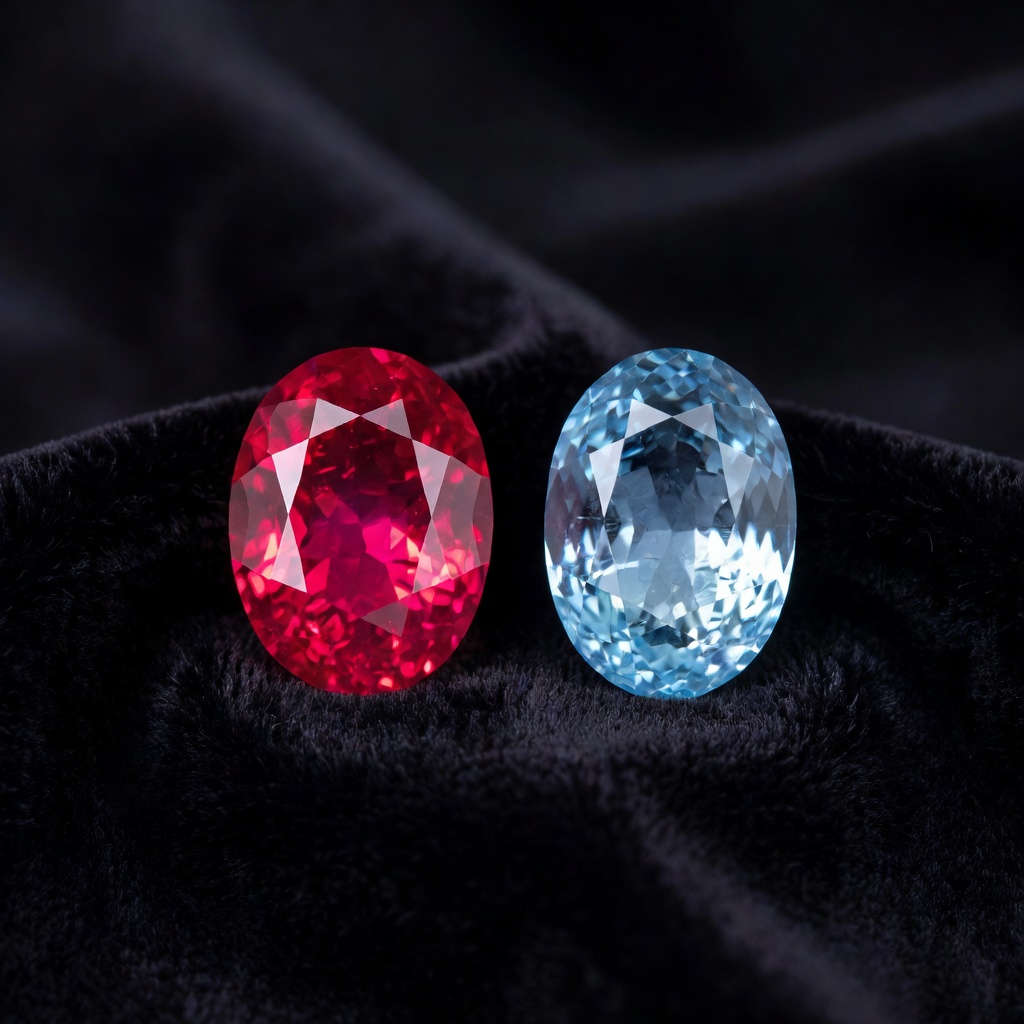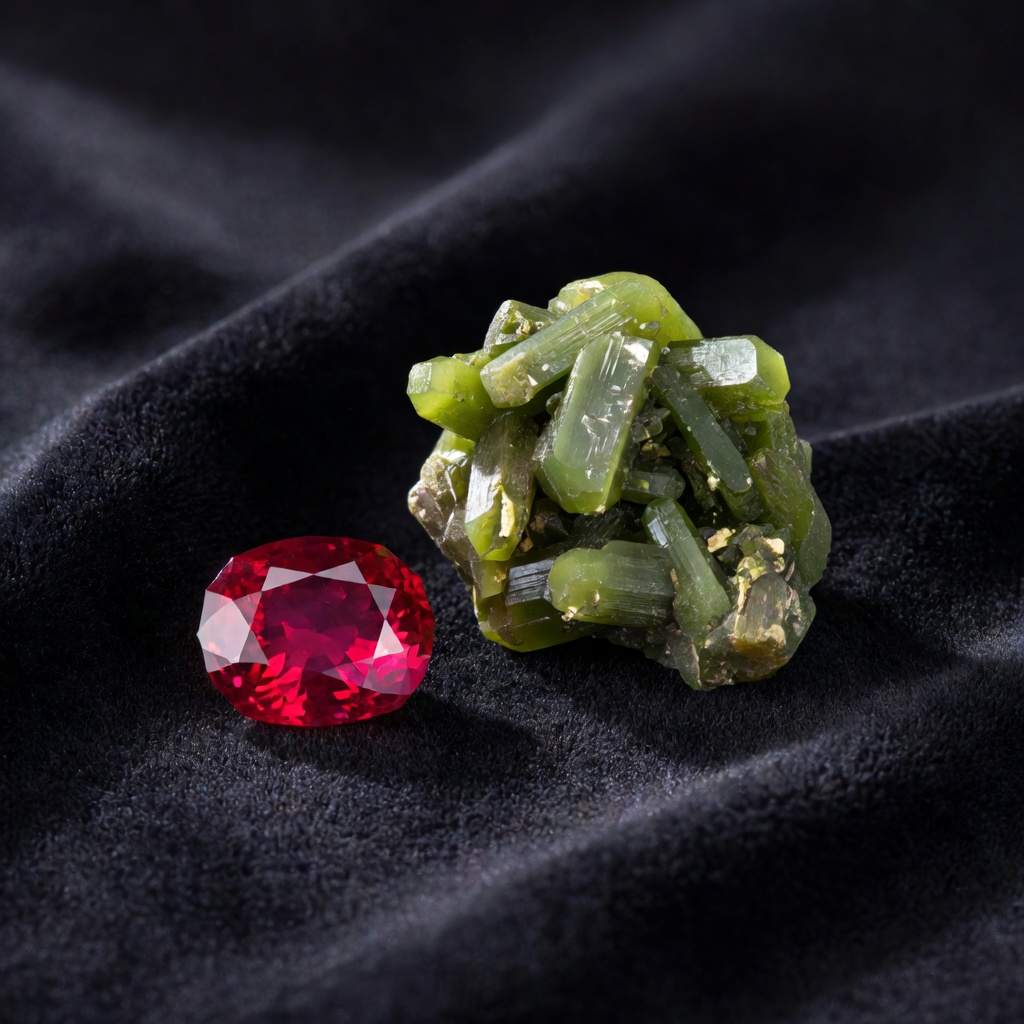
Ruby vs Red Diamond: The Ultimate Guide to Nature's Rarest Red Treasures
When collectors and connoisseurs discuss the pinnacle of red gemstones, the conversation inevitably centers on two extraordinary treasures: the ruby and the red diamond. These magnificent stones represent the absolute zenith of colored gem achievement, yet they occupy vastly different realms of rarity, value, and accessibility within the luxury market. While both display the passionate crimson hues that have captivated humanity for millennia, the difference between ruby and red diamond extends far beyond surface appearance into fundamental distinctions of chemistry, formation, and investment potential. This comprehensive analysis examines these legendary gems through the lenses of composition, rarity, durability, and market dynamics to help discerning buyers understand which crimson treasure aligns with their collection goals and lifestyle needs.
Chemical Composition and Crystal Structure: Corundum vs Carbon Gemstone
At the most fundamental level, the corundum vs carbon gemstone distinction defines every subsequent characteristic that separates these red marvels. Rubies belong to the corundum family, crystallizing as aluminum oxide (Al₂O₃) with chromium impurities substituting for aluminum atoms within the crystal lattice, typically comprising 0.5% to 2% chromium content to produce the desired red saturation. This trigonal crystal system creates a hexagonal prismatic structure that exhibits distinct optical properties including pleochroism, where the stone displays different colors when viewed from different angles—typically orange-red and purplish-red in high-quality specimens.
Red diamonds, conversely, represent the rarest expression of pure carbon crystallization, formed in the cubic isometric system identical to their colorless counterparts but with a unique twist in their molecular architecture. Unlike other fancy colored diamonds that owe their hues to chemical impurities—nitrogen creating yellows, boron creating blues—red diamonds achieve their color through plastic deformation during their journey from mantle to surface. This structural anomaly involves graining or slip planes within the crystal lattice that selectively absorb light in the green region of the spectrum, allowing only red wavelengths to transmit and create that mesmerizing crimson appearance.
These crystallographic differences manifest dramatically in optical performance. Rubies typically exhibit a velvety, silk-like luster caused by minute rutile inclusions (silk) that scatter light softly within the stone, while red diamonds display the characteristic adamantine brilliance and fire (spectral dispersion) unique to diamonds, creating rainbow flashes that rubies cannot produce. The refractive index also differs significantly: rubies measure 1.76-1.77, creating bright but subdued reflections, whereas diamonds command a 2.42 refractive index that generates that unmistakable "crushed ice" brilliance.
The Science of Red: Color Origins and Grading Pigeon Blood Ruby vs Red Diamond
Understanding the pigeon blood ruby vs red diamond color grading requires appreciating two entirely different mechanisms of chromatic expression in gemstones. Ruby coloration follows the crystal field theory, where chromium ions (Cr³⁺) positioned within the aluminum oxide lattice absorb specific wavelengths of yellow-green light around 550nm and violet light around 400nm, transmitting the complementary red wavelengths that reach the observer's eye. The legendary "pigeon blood" designation—formally defined by laboratories like GRS (GemResearch Swisslab) and SSEF (Swiss Gemmological Institute)—requires a vivid, saturated red with a slight blue undertone, specifically avoiding orange or pink modifiers, combined with strong fluorescence that creates an internal glow reminiscent of the freshly spilled blood of a Burmese pigeon.
Red diamonds achieve their color through an entirely different physical phenomenon known as color centers resulting from plastic deformation during formation under extreme pressure and heat. As the diamond crystal undergoes shear stress while rising through the mantle, atomic dislocations create vacancy clusters and interstitial atoms that act as color centers absorbing green light. This deformation must occur with extraordinary precision—too little creates pink diamonds, too much creates brown or brownish-red stones—making the pure "Fancy Red" designation without secondary purple, orange, or brown modifiers extraordinarily rare. The Gemological Institute of America (GIA) grades red diamonds on a scale from Fancy Red (the pinnacle) through Fancy Purplish Red or Fancy Brownish Red, with "Fancy Vivid Red" representing the most saturated and valuable examples.
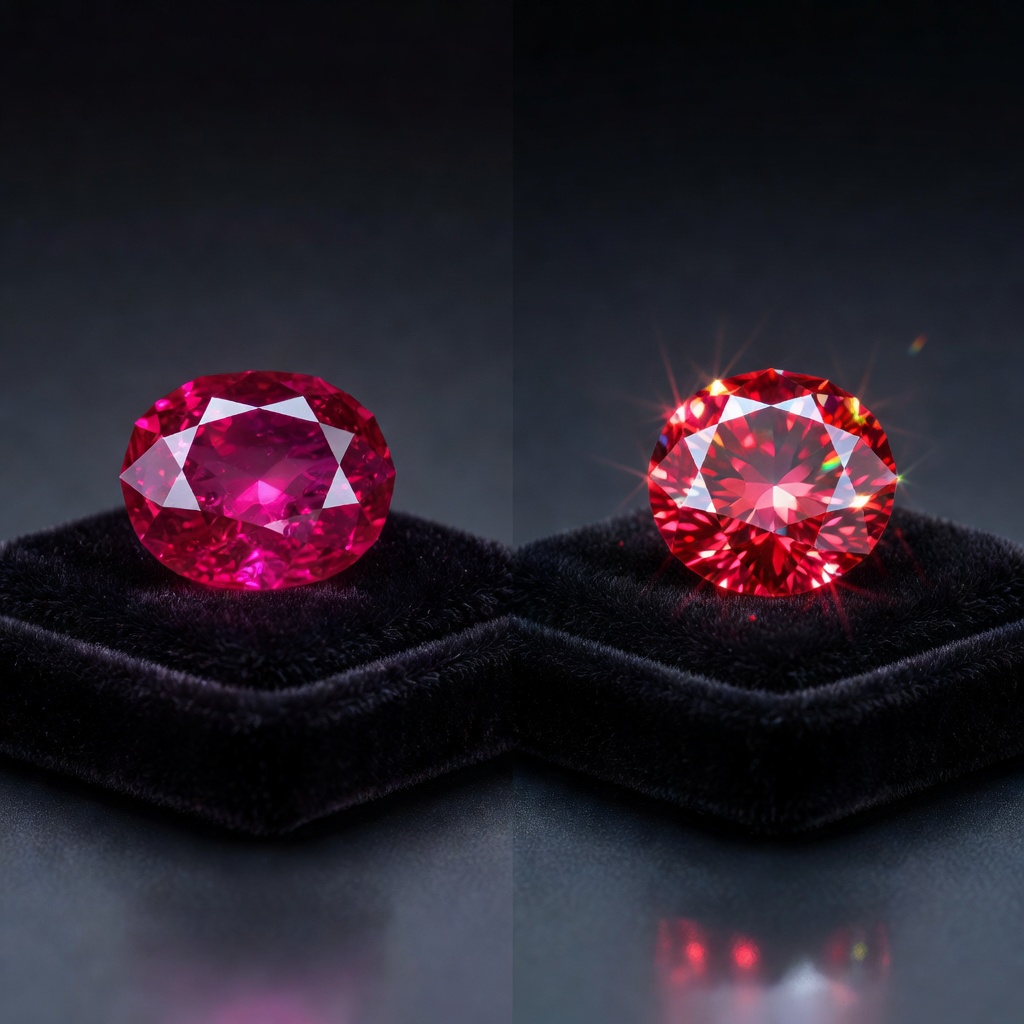
Fluorescence patterns further distinguish these gems under ultraviolet light. High-quality Burmese rubies typically exhibit strong red fluorescence under long-wave UV due to chromium content, enhancing their face-up color appearance in daylight. Red diamonds remain essentially inert under UV light, showing no fluorescence, which paradoxically helps gemologists confirm their natural origin since most synthetic red diamonds fluoresce distinctly. This optical distinction provides one of the most reliable preliminary tests when examining unset stones, though spectroscopic analysis remains essential for definitive identification.
Rarity and Geographic Origins: Understanding Red Diamond Rarity
The red diamond rarity factor represents perhaps the most dramatic divergence between these gemstones, with red diamonds existing as geological unicorns compared to the merely exceptional status of fine rubies. Gemological experts estimate that fewer than thirty true red diamonds exceeding one carat exist in the entire world, with the total global supply of authenticated red diamonds numbering in the low hundreds across all sizes. The Argyle Diamond Mine in Western Australia, which closed operations in 2020 after 37 years of production, yielded approximately 90% of the world's pink and red diamonds yet produced only a handful of certified Fancy Red diamonds annually—often just one or two crystals per year from millions of tons of ore processed.
Rubies, while still commanding premium prices for exceptional specimens, occur thousands of times more frequently than red diamonds. The Mogok Stone Tract in Myanmar (Burma) produces the most coveted pigeon blood rubies, characterized by their high chromium content and strong fluorescence, while Mozambique has emerged as a significant modern source since the 2009 discovery of the Montepuez deposits. Thailand, Sri Lanka, Madagascar, and Tanzania also contribute to global ruby supplies, with each locale imparting distinct chemical signatures detectable through advanced spectrometry. A single high-quality Burmese ruby auction might feature twenty to thirty exceptional stones, whereas a red diamond of similar quality might wait decades between public offerings.
Both gemstones form under high-pressure, high-temperature (HPHT) conditions deep within the earth's mantle—rubies at approximately 30-40 kilometers depth under 7-8 kilobars of pressure at 800-900°C, while diamonds form deeper at 140-190 kilometers under 45-60 kilobars at 900-1300°C. However, ruby formation requires specific aluminum-rich, silica-poor environments where chromium contamination occurs readily in marble or basalt host rocks. Red diamonds require the additional random variable of tectonic shearing forces acting upon the crystal during its billion-year ascent, creating the plastic deformation necessary for red coloration without destroying the crystal's integrity—a statistical improbability that explains their extreme scarcity.
Hardness, Durability, and Daily Wear: Gemstone Hardness Comparison
When evaluating the gemstone hardness comparison between these red treasures, both stones rank at the absolute pinnacle of the Mohs scale, yet subtle differences in toughness and cleavage characteristics significantly impact their suitability for various jewelry applications. Rubies register 9 on the Mohs hardness scale, making them the hardest colored gemstone after diamond, resistant to scratching from nearly all other materials except diamond dust or other rubies/sapphires. This exceptional hardness derives from the strong aluminum-oxygen bonds in the corundum structure, allowing rubies to maintain their polish and facet edges through generations of wear.
Red diamonds, occupying the apex of the Mohs scale at 10, represent the hardest known natural material, capable of scratching any other substance and maintaining their surface integrity under conditions that would damage any other gem. However, hardness—a measure of scratch resistance—differs from toughness, which measures resistance to breaking or chipping. Paradoxically, rubies often outperform diamonds in toughness due to their lack of cleavage planes; rubies possess no preferred direction of breakage and resist impact damage exceptionally well. Diamonds, including red varieties, possess perfect cleavage in four directions parallel to the octahedral crystal faces, making them vulnerable to splitting if struck at specific angles, particularly along girdle edges or sharp points.
Heat sensitivity presents another practical consideration for jewelers and owners. Rubies withstand jewelry repair temperatures exceeding 1000°C without damage, allowing for resizing, prong repair, and resetting without risk to the stone. Red diamonds, while thermally stable under normal conditions, can suffer damage from sudden thermal shock or the extreme heat of jeweler's torches if not properly protected, potentially causing internal stress fractures or color alterations in treated stones. For active individuals seeking daily-wear engagement rings or jewelry subject to impact, fine rubies often prove more practical than red diamonds, offering nearly identical scratch resistance with superior chip resistance and lower replacement anxiety given their relatively more accessible pricing.
Market Value and Investment Analysis: Red Diamond Price vs Ruby
The red diamond price vs ruby comparison reveals an astronomical value gap that places these gems in entirely different investment categories, though both demonstrate strong appreciation trajectories. Fine Burmese pigeon blood rubies currently command between $10,000 and $100,000 per carat for exceptional unheated specimens over five carats, with the legendary 25.59-carat Sunrise Ruby setting the auction record at $30.3 million ($1.19 million per carat) at Sotheby's Geneva in 2015. These figures represent the absolute ceiling for ruby valuations, with most investment-grade rubies trading between $15,000 and $50,000 per carat depending on size, clarity, and origin documentation.
Red diamonds operate in an entirely different financial stratosphere, with prices starting at approximately $1 million per carat for smaller stones (0.50-1.00 carats) with slight secondary colors, escalating to $2-3 million per carat for pure Fancy Red specimens, and potentially exceeding $5 million per carat for stones over two carats with exceptional clarity. The 0.95-carat Hancock Red diamond, purchased by Warren Hancock in 1956 for $13,500 and sold at Christie's in 1987 for $880,000 ($926,000 per carat), would likely command $3-5 million at auction today—representing a thirty-fold increase in value over 35 years. The 5.11-carat Moussaieff Red, the largest known Fancy Red diamond, remains priceless in private collection, with insurance valuations suggesting values exceeding $20 million.
Liquidity markets differ substantially between these gems. The ruby market maintains relatively robust secondary trading through auction houses, private dealers, and estate sales, with established price points for specific origins and qualities. Red diamonds rarely appear on the open market, with most sales occurring through private treaty negotiations between ultra-high-net-worth individuals and specialized dealers, making them less liquid but potentially more stable stores of value during economic volatility. Both categories resist synthetic competition effectively—laboratory-grown rubies remain easily detectable and significantly cheaper, while no commercial process consistently produces red synthetic diamonds, protecting the investment integrity of natural specimens.
| Characteristic | Ruby (Corundum) | Red Diamond (Carbon) |
|---|---|---|
| Chemical Composition | Aluminum oxide (Al₂O₃) with chromium impurities | Pure carbon with plastic deformation defects |
| Crystal System | Trigonal (Hexagonal) | Cubic (Isometric) |
| Mohs Hardness | 9 | 10 |
| Color Mechanism | Chromium absorption spectrum | Plastic deformation/lattice defects |
| Rarity Level | Rare (Thousands of fine specimens annually) | Extremely Rare (Fewer than 30 known >1ct) |
| Price Per Carat | $10,000 - $100,000+ (fine unheated Burmese) | $1,000,000 - $3,000,000+ (Fancy Red) |
| Primary Sources | Myanmar, Mozambique, Thailand, Sri Lanka | Formerly Argyle Mine (Australia), now extremely scattered |
| Standard Treatments | Heat treatment (accepted), glass-filling (lower quality) | Virtually none (HPHT rarely produces red) |
| Optical Properties | Velvety luster, strong red fluorescence | Adamantine brilliance, fire/dispersion, inert to UV |
| Best Jewelry Application | Daily wear, engagement rings, vintage designs | Investment pieces, special occasion, modern settings |
| Toughness | Excellent (no cleavage) | Good to fair (perfect cleavage planes) |
| Color Grading | Pigeon Blood, Vivid Red (GRS, SSEF standards) | Fancy Red, Fancy Purplish Red (GIA standards) |
Treatments, Enhancements, and Authentication: Detecting the Difference Between Ruby and Red Diamond
Understanding the difference between ruby and red diamond extends into the realm of treatments and enhancements, where disclosure standards and detection methods vary significantly between these gem categories. Heat treatment represents the standard enhancement for rubies, with approximately 95% of rubies on the market having undergone controlled heating to dissolve rutile silk, improve color saturation, and reduce purplish or brownish secondary hues. This treatment, performed at temperatures between 800°C and 1800°C, remains permanent and stable, accepted by the trade provided it is disclosed, though unheated specimens command premiums of 30-100% over heated equivalents of similar appearance. More controversial treatments include lead-glass filling of fractures (indicated as "composite rubies") and diffusion treatment, which laboratories can detect through microscopic examination and chemical analysis.
Red diamonds present a stark contrast in treatment landscapes—no effective commercial treatment exists to create or enhance red color in diamonds. While High-Pressure High-Temperature (HPHT) processing can alter the color of some diamonds, it rarely produces pure red hues and more commonly results in pink, purple, or brown tones. Irradiation and annealing treatments can create pink diamonds but cannot replicate the specific structural deformation required for true Fancy Red coloration. Consequently, a GIA-certified Fancy Red diamond comes with an implicit guarantee of natural color origin, eliminating the treatment anxiety that accompanies ruby purchases. This distinction makes red diamonds particularly attractive to investors seeking unquestioned natural provenance without the certification complexities surrounding heated vs. unheated rubies.
Authentication protocols require different laboratory expertise for each stone. Rubies benefit from reports from SSEF, GRS, Gübelin, or GIA, which detail origin determination (Burmese, Mozambican, etc.), presence of heat treatment, and fluorescence characteristics. Red diamonds require GIA colored diamond reports specifying the exact Fancy color grade (Fancy Red, Fancy Purplish Red, etc.) and distribution (even vs. uneven). Advanced spectroscopic techniques including Raman spectroscopy, photoluminescence, and UV-Vis-NIR absorption spectroscopy help distinguish natural stones from synthetics. While flux-grown and hydrothermal synthetic rubies exist and require careful detection, gem-quality synthetic red diamonds remain virtually non-existent in the market, providing an additional layer of security for red diamond acquisitions.
Jewelry Design and Setting Considerations: Rare Red Gemstones Comparison
The rare red gemstones comparison extends into practical jewelry design considerations, where the physical and optical properties of rubies and red diamonds dictate distinct approaches to cutting, setting, and metal selection. Ruby cutting requires masterful orientation to manage pleochroism—the phenomenon where the crystal shows different colors along different axes. Cutters must orient the table perpendicular to the c-axis to minimize the orange-red secondary color and maximize the pure red face-up appearance, often resulting in deeper pavilions and steeper crown angles than diamond cutting. This orientation challenge means ruby rough yield typically ranges from 20-30%, compared to diamond cutting yields of 40-50%, contributing to ruby pricing structures.
Red diamonds follow standard diamond cutting principles optimized for brilliance and fire, with round brilliants, cushions, and radiants maximizing light return through precise facet arrangements. However, the extreme value of red diamond rough often leads cutters to prioritize weight retention over ideal proportions, resulting in slightly deeper or thicker girdles than seen in colorless diamonds to minimize loss of precious red material. Setting recommendations differ markedly: red diamonds perform best in white metals—platinum or 18k white gold—which provide neutral backgrounds that enhance the perception of pure red color without introducing warm reflections that might suggest orange or brown modifiers. Rubies, conversely, often shine in yellow or rose gold settings, where the warm metal complements any orange secondary tones and enhances the perception of the prized "pigeon blood" warmth.
Design versatility favors rubies for their availability in larger sizes and diverse qualities suitable for various budgets. Art Deco-inspired pieces, Victorian revival designs, and intricate halo settings accommodate rubies beautifully, with the stone's velvety luster complementing milgrain detailing and filigree work. Red diamonds, available almost exclusively in sizes under two carats due to extreme rarity, suit modern minimalist settings that emphasize the stone's extraordinary color without competing design elements—think bezel-set solitaires, tension settings, or simple four-prong designs that maximize light exposure. The size constraint of red diamonds (most weighing under one carat) influences design toward delicate, elegant pieces rather than statement cocktail rings, whereas rubies regularly appear in bold 5-10 carat center stones for dramatic effect.
Cultural Significance and Symbolism: Fancy Red Diamond Investment Context
The cultural narratives surrounding these gems provide essential context for fancy red diamond investment and collecting decisions, revealing how historical significance and symbolic meaning drive market demand beyond mere aesthetics. Rubies claim ancient pedigrees spanning millennia, recognized in Sanskrit texts as ratnaraj (king of precious stones) and associated with the sun, passion, and protection from evil in Hindu, Burmese, and Chinese traditions. As the July birthstone and traditional 40th anniversary gift, rubies maintain broad cultural recognition and emotional resonance across diverse populations. The British Crown Jewels prominently feature the "Black Prince's Ruby" (actually a red spinel) and the Timur Ruby, demonstrating the gem's association with royal power and protection in Western traditions since medieval times.
Red diamonds carry a more exclusive, contemporary mythology rooted in their extreme scarcity and modern discovery history. Unlike rubies, which adorned the armor of Burmese warriors and the rings of Byzantine emperors, red diamonds emerged as symbols of ultimate luxury status primarily during the late 20th century as the Argyle mine brought these previously mythical stones to limited market attention. Their symbolism centers on intense passion, uncompromising rarity, and the pinnacle of achievement—owning a red diamond signals entry into an ultra-exclusive club of collectors rather than adherence to traditional birthstone or anniversary customs. The closure of the Argyle mine in 2020 cemented their status as finite resources with guaranteed scarcity appreciation.
Modern celebrity associations reinforce these divergent cultural positions. Rubies maintain red carpet presence through stars like Elizabeth Taylor (whose 8.24-carat Burmese ruby ring sold for $4.2 million), Jessica Simpson, and Victoria Beckham, representing accessible luxury and romantic tradition. Red diamonds appear more rarely but with dramatic impact—most famously, the 5.03-carat De Young Red Diamond resides in the Smithsonian Institution, while private collectors like Moussaieff and Hancock have secured these stones as legacy assets. For investors, rubies offer liquidity through established auction markets and broader collector bases, while red diamonds represent concentrated stores of value for family offices and sovereign wealth funds seeking non-correlated alternative assets with zero supply growth potential.
Final Verdict: Which Red Gem Should You Choose?
Deciding between ruby vs red diamond ultimately requires honest assessment of budget parameters, lifestyle requirements, and collecting philosophy rather than simply choosing the "better" stone. For collectors with budgets between $10,000 and $500,000, the choice essentially makes itself—fine rubies offer the only viable path to owning a significant, high-quality red gemstone with investment potential and wearable beauty. Within this range, buyers can acquire exceptional unheated Burmese rubies of 3-5 carats or fine Mozambique stones of 5-10 carats, pieces that provide daily wear enjoyment alongside steady appreciation. Active individuals, those seeking engagement rings, or collectors desiring versatile jewelry pieces should gravitate toward rubies for their superior toughness, larger available sizes, and lower insurance anxiety.
Ultra-high-net-worth individuals considering seven-figure acquisitions face a different calculus, where red diamonds represent the ultimate alternative asset class alongside blue diamonds and Kashmir sapphires. The decision matrix here weighs liquidity preferences against scarcity premiums—rubies offer easier exit strategies through auction houses and dealer networks, while red diamonds provide portfolio diversification with guaranteed supply constraints (no new Argyle production ever) but require patience for private sales. Color preference nuances also guide selection: those drawn to deep, saturated, slightly velvety reds with historical resonance will prefer Burmese rubies, while collectors seeking brilliant, fiery reds with spectral flash and modern exclusivity will find red diamonds irreplaceable.
For the passionate collector rather than pure investor, consider building a diversified red gem portfolio including both categories—perhaps a wearable ruby ring for regular enjoyment alongside a smaller red diamond (0.50-1.00 carat) as a concentrated store of value and conversation piece. Ultimately, rubies democratize access to red gem luxury while maintaining prestige, whereas red diamonds represent the absolute ceiling of geological rarity and financial exclusivity. Neither choice disappoints; both stones have captivated humanity for centuries and will continue appreciating as finite natural treasures in an increasingly synthetic world.
Frequently Asked Questions
Is a ruby the same as a red diamond?
No, rubies and red diamonds are completely different gemstones. Rubies are corundum (aluminum oxide) colored by chromium, while red diamonds are pure carbon with unique lattice defects causing their color. They differ in hardness, value, rarity, and chemical composition.
Which is more expensive, a ruby or a red diamond?
Red diamonds are significantly more expensive than even the finest rubies. While top-quality Burmese rubies can command $100,000+ per carat, red diamonds typically start at $1 million per carat and can exceed $3 million per carat due to their extreme rarity.
Can you tell the difference between a ruby and red diamond with the naked eye?
Yes, trained observers can distinguish them by brilliance and fire. Red diamonds display the characteristic diamond brilliance with spectral fire (flashes of rainbow colors), while rubies have a more velvety, saturated red appearance with less dispersion. Red diamonds also exhibit superior hardness and clarity characteristics.
What makes a ruby 'pigeon blood' red?
Pigeon blood red describes the most valuable ruby color: a vivid, saturated pure red with a hint of blue undertone, traditionally associated with Burmese (Myanmar) mines. This term is strictly regulated by laboratories like GRS and SSEF, requiring specific color saturation, tone, and fluorescence properties without visible inclusions affecting the face-up appearance.
Are red diamonds real diamonds?
Yes, red diamonds are 100% real diamonds composed of pure carbon. They are fancy color diamonds where the red hue results from plastic deformation in the crystal lattice during formation, not from chemical impurities like nitrogen or boron (which cause yellow or blue diamonds).
Is a red diamond a good investment compared to a ruby?
Both can be excellent investments, but they serve different investor profiles. Red diamonds offer extreme scarcity (appreciating consistently at the ultra-luxury level) but require multi-million dollar entry points. Fine unheated Burmese rubies offer more accessible entry points with strong historical appreciation and more liquid secondary markets.
Which is better for an engagement ring, a ruby or red diamond?
For daily wear engagement rings, rubies are often more practical due to their excellent hardness (9/10) and lower cost, allowing for larger stone sizes. Red diamonds, while harder (10/10), are prohibitively expensive for most budgets and better suited for investment pieces or special occasion jewelry rather than daily wear.
Why are red diamonds so much rarer than rubies?
Red diamonds require extremely specific geological conditions where diamond crystals undergo plastic deformation while maintaining perfect clarity and red coloration without turning brown or pink. This specific deformation process occurs in less than 0.01% of diamonds. Rubies form more readily when chromium-rich aluminum oxide crystallizes under heat and pressure, making them thousands of times more common than red diamonds.