Introduction to Ruby and Red Beryl: The Red Gemstone Dilemma
When collectors and jewelry enthusiasts seek the ultimate red gemstone, they inevitably encounter the fascinating comparison of ruby vs red beryl, two minerals that represent the pinnacle of crimson beauty in the gemological world. Both stones captivate with intense saturation and remarkable clarity, yet they occupy distinctly different niches within the luxury market, creating confusion among buyers who struggle to distinguish between these visually similar treasures. Understanding the nuanced differences between these premier red colored stones becomes essential for making informed investment decisions, as their mineralogical distinctions directly impact durability, value retention, and appropriate jewelry applications. Whether you are assembling a serious mineral collection or selecting a center stone for an heirloom piece, recognizing the unique characteristics that separate corundum from beryl family minerals will prevent costly misidentifications and ensure your acquisition aligns with your long-term goals.
The red gemstone comparison extends beyond mere aesthetic appreciation into the realm of geological rarity and market dynamics, where red beryl rarity contrasts sharply with ruby's more established presence in high jewelry. While rubies have adorned crown jewels and engagement rings for millennia, red beryl remains a relatively recent discovery in gemological history, known only to dedicated connoisseurs and specialist collectors who appreciate its extreme scarcity. This disparity in market recognition creates unique opportunities for educated buyers who understand that rarity does not always correlate with mainstream brand awareness, making the distinction between these stones crucial for both portfolio diversification and personal adornment choices.
Chemical Composition and Crystal Structure
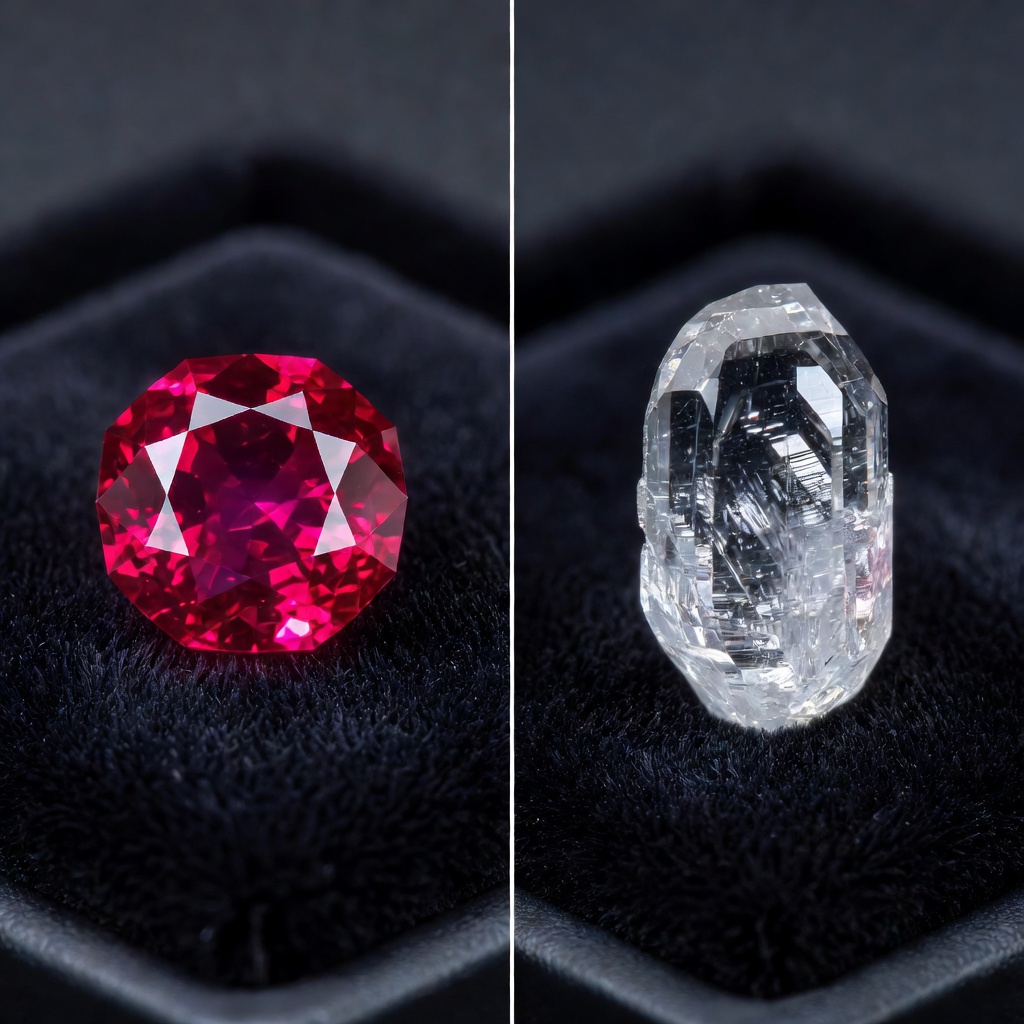
The fundamental distinction in the corundum vs beryl mineralogy debate begins at the atomic level, where ruby crystallizes as aluminum oxide (Al₂O₃) with chromium impurities replacing aluminum atoms to create its iconic red coloration. This trigonal crystal system produces hexagonal barrel-shaped crystals that form under high-pressure, high-temperature metamorphic conditions, typically in marble or basalt host rocks where aluminum-rich fluids interact with chromium-bearing minerals. Gem cutters working with ruby must account for its dichroic nature, orienting rough material carefully to maximize color saturation through the table facet while minimizing the appearance of pleochroism that can show orange or purplish secondary tones depending on viewing angle.
Red beryl, conversely, belongs to the beryl family with the chemical formula Be₃Al₂Si₆O₁₈, where manganese ions (Mn³⁺) occupy specific sites in the crystal lattice to produce the distinctive raspberry red hue that distinguishes it from other beryl varieties like emerald or aquamarine. This hexagonal crystal system forms in rhyolitic volcanic environments through a unique combination of beryllium-rich gases and mineralized fluids, creating crystals that typically exhibit pronounced hexagonal prisms terminated by flat basal pinacoids. When examining bixbite vs ruby rough specimens, mineralogists note that red beryl crystals often display more complex surface etching and terminations than corundum, requiring lapidaries to employ specialized pre-forming techniques that preserve weight while navigating the stone's natural growth patterns and internal stress fractures.
Practical implications of these compositional differences manifest during the cutting process, where ruby's superior hardness allows for more aggressive faceting angles and thinner girdles that maximize brilliance, while red beryl demands protective settings and thicker girdles to prevent chipping along cleavage planes. A case study from the Gemological Institute of America demonstrates how a 5-carat red beryl rough crystal from Utah's Wah Wah Mountains required 40% more material retention in the pavilion compared to a similar-sized ruby rough from Mozambique, directly impacting the final yield and per-carat valuation of the finished gemstone.
Color Analysis: Pigeon Blood vs Raspberry Red
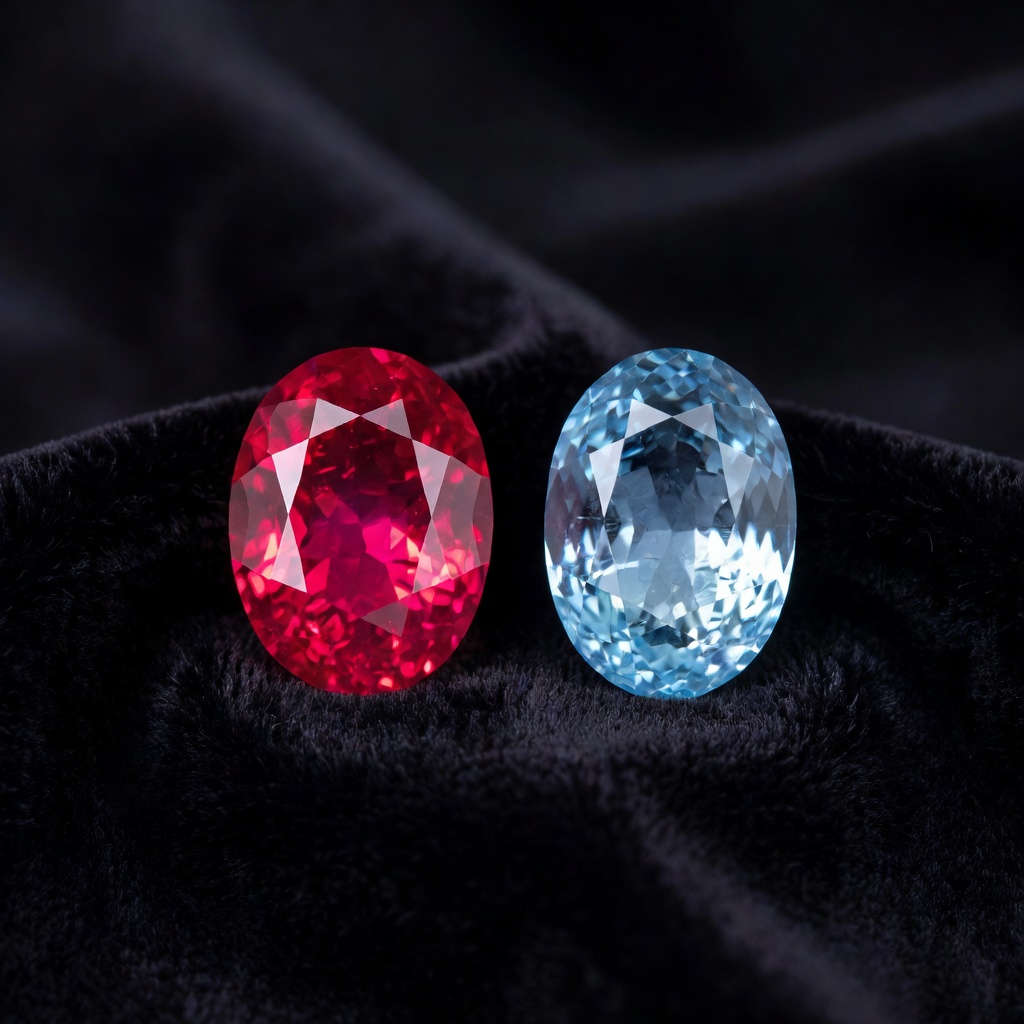
The pinnacle of ruby color grading, known as pigeon blood red, represents a specific combination of hue, tone, and saturation that originated from Myanmar's Mogok Stone Tract, characterized by a vivid, saturated red with a slight blue undertone that appears to glow from within the stone. This phenomenon results from chromium content interacting with the crystal structure to create strong fluorescence under daylight (which contains UV components), making fine Burmese rubies appear almost internally illuminated compared to their darker, more garnet-like counterparts from other localities. Gemological laboratories like Gübelin and SSEF employ sophisticated spectrophotometric analysis to certify pigeon blood designation, requiring not only specific color metrics but also provenance verification that commands significant premiums in the auction market.
Red beryl color exists within a narrower spectrum, ranging from raspberry pink-red to deep purplish-red, but rarely achieving the pure red saturation that characterizes finest ruby due to the manganese chromophore's absorption spectrum differing from chromium's electronic transitions. Unlike ruby's potential for strong fluorescence, red beryl typically shows weak to moderate reddish fluorescence under long-wave UV light, with some specimens from the Harris Claim exhibiting a distinctive orange-red reaction that helps gemologists distinguish them from simulants or treated stones. The red beryl color palette, while limited, offers a unique "stoplight" red in exceptional specimens that appeals to collectors seeking something distinct from the classic ruby appearance, particularly for those who appreciate the stone's more subtle, sophisticated hue that complements both white and yellow metal settings.
Practical considerations for collectors include lighting environments when evaluating these stones, as pigeon blood rubies demonstrate remarkable color consistency across incandescent, fluorescent, and daylight sources due to their fluorescence properties, whereas red beryl may appear more pink or brownish under warm lighting conditions. When purchasing either gemstone, request examination under standardized daylight-equivalent lighting (5500K) to assess true body color without the enhancement of fluorescence or warm light bias, ensuring that your investment maintains its visual appeal across various wearing environments from daylight offices to evening candlelight dinners.
Rarity and Geographic Origins
The geological distribution of ruby mining locations spans multiple continents, with Myanmar's Mogok region historically producing the finest specimens, while modern deposits in Mozambique's Montepuez district and Madagascar's Vatomandry area supply the majority of current market material, creating a relatively stable though still precious supply chain. Annual global ruby production exceeds thousands of kilograms of rough material, with Gemfields' Montepuez mine alone producing over 30 million carats since 2012, though only a fraction qualifies as gem-quality faceting rough with the intense color and clarity demanded by high jewelry houses. This comparative abundance allows luxury brands like Cartier, Van Cleef & Arpels, and Bulgari to feature important rubies regularly in their haute joaillerie collections, establishing strong market recognition and liquidity for investment-grade stones.
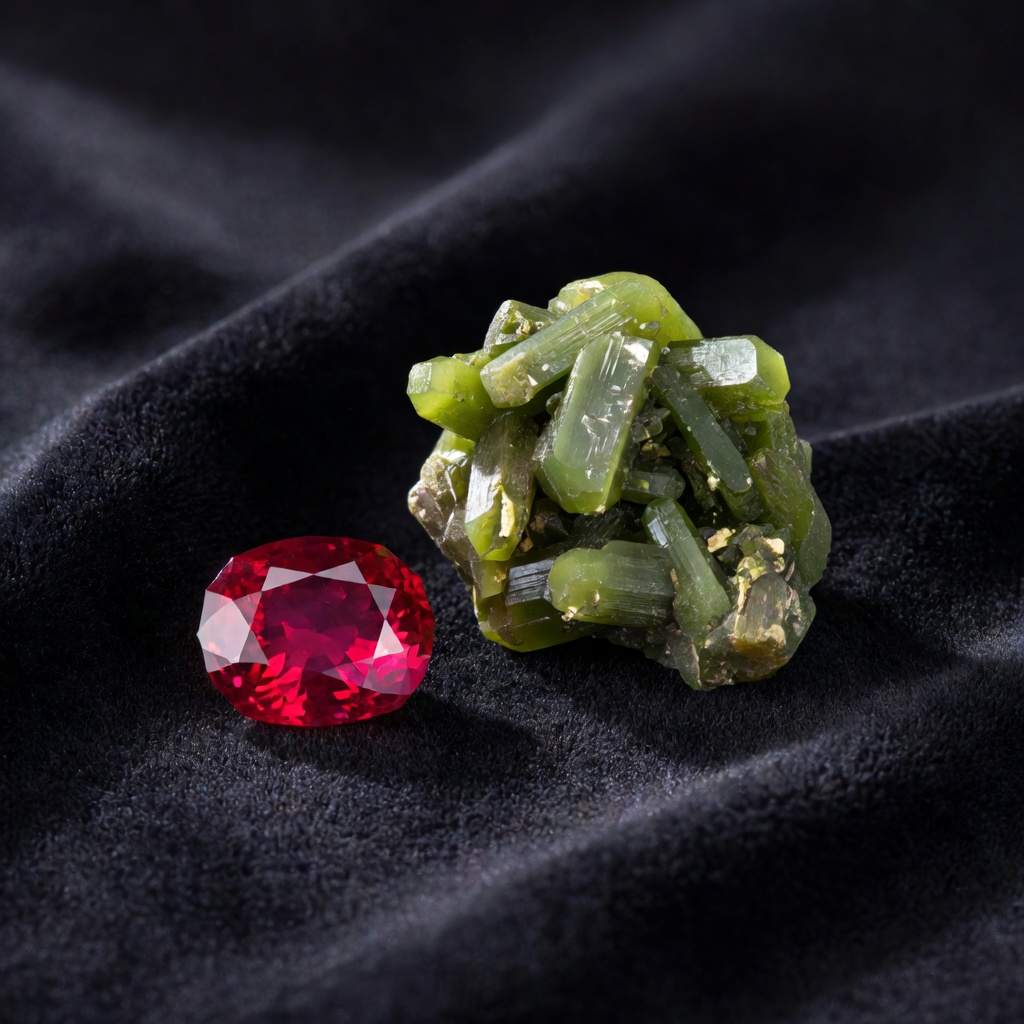
Red beryl rarity reaches extreme levels unparalleled in the gem world, with gem-quality crystals found essentially exclusively in Utah's Wah Wah Mountains, specifically within the rhyolite flows of the Topaz-Spor Mountain formation where unique geochemical conditions existed during the Tertiary period. Mining statistics reveal that for every 150 tons of ruby rough processed globally, approximately one crystal of red beryl emerges, and of these, only 10% exhibit the clarity and color saturation suitable for faceting, with the remainder serving as mineral specimens or being cut into cabochons. The Ruby Violet Claims and surrounding private parcels have produced fewer than 60,000 carats of total gem-quality red beryl since discovery in 1904, making individual stones over one carat extraordinarily rare and those exceeding two carats museum-grade specimens that rarely appear on the open market.
For collectors considering provenance documentation, rubies now benefit from blockchain traceability initiatives and country-of-origin reporting from major houses, while red beryl requires careful chain-of-custody records from the specific Utah mining operations such as the Harris Claim or dormant periods of the Violet Mine. When acquiring red beryl, insist on documentation specifying the exact claim location within the Wah Wah Mountains, as material from certain pockets command premiums due to superior color saturation, and verify that the specimen was legally extracted under Bureau of Land Management permits or valid mining claims to ensure ethical ownership and future resale viability.
Durability and Wearability Factors
When evaluating red beryl hardness against ruby's legendary durability, the Mohs scale reveals a significant gap that directly impacts jewelry design decisions, with ruby ranking 9 (second only to diamond) while red beryl measures 7.5 to 8, comparable to emerald or topaz. This numerical difference translates to substantial practical implications for daily wear, as ruby's atomic structure provides exceptional resistance to scratching and abrasion, allowing it to maintain polish and facet integrity through decades of continuous wear in engagement rings, bracelets, and rings subjected to household chemicals and environmental exposure. Red beryl's lower hardness, combined with its brittle tenacity and distinct cleavage in one direction, creates vulnerability to chipping and facet-edge abrasion, requiring protective settings and occasional wear protocols rather than daily exposure to impact risks.
The ruby durability profile extends beyond hardness to include excellent toughness—the resistance to breaking and chipping—due to the absence of cleavage planes in corundum's crystal structure, making it ideal for intricate cutting styles like step cuts or high-relief cabochons that might compromise more fragile materials. In contrast, red beryl's perfect basal cleavage means that sharp impacts perpendicular to the c-axis can cause splitting or fracturing, necessitating bezel settings or protective halos in ring designs rather than exposed prong settings that leave the girdle vulnerable to knocking against hard surfaces. Jewelers specializing in rare gems recommend reserving red beryl for pendants, earrings, and brooches where impact probability remains minimal, rather than rings that encounter daily contact with countertops, car keys, and other abrasive surfaces.
Case studies from insurance claims reveal that red beryl rings show damage rates approximately eight times higher than ruby rings of similar age and wear patterns, with common issues including chipped table facets and abraded crown junctions that require costly repolishing and significant weight loss. For collectors commissioning custom pieces, consider a pendant design featuring a 2-carat red beryl surrounded by diamond melee that protects the girdle while showcasing the stone's unique color, versus a ruby solitaire engagement ring that can withstand the rigors of daily wear without special precautions beyond standard jewelry care.
Clarity Characteristics and Diagnostic Inclusions
Ruby clarity characteristics often include rutile silk—minute needle-like inclusions of titanium dioxide that intersect at 60 and 120 degrees following the hexagonal crystal structure—which, when dense and uniform, create the star effect (asterism) in cabochon-cut stones highly prized in Asian markets. These silk inclusions also serve as diagnostic evidence of unheated status in Burmese rubies, as heat treatment typically melts or alters rutile needles into melted-looking droplets or causes them to dissolve entirely, making their presence valuable for provenance verification despite slightly reducing transparency in faceted stones. Experienced gemologists use 10x magnification to identify other corundum-specific inclusions such as zircon halos (discoid fractures surrounding zircon crystals), calcite crystals, and color zoning that appears as hexagonal growth bands when viewed through the girdle.
Red beryl inclusions present a distinctly different diagnostic fingerprint, typically featuring hexagonal growth zoning visible as concentric banding parallel to the prism faces, along with characteristic two-phase inclusions (liquid and gas bubbles) and apatite crystals that appear as distinct rounded or hexagonal transparent crystals within the host material. Unlike ruby's rutile silk, red beryl rarely contains long needle inclusions, instead showing "fingerprint" partially-healed fracture patterns and triangular etch pits on crystal surfaces that indicate its volcanic formation environment distinct from corundum's metamorphic origins. When examining red beryl vs ruby under magnification, look for the "snowball" inclusions unique to red beryl—clusters of tiny crystals resembling white spherical masses that indicate growth interruptions specific to the Wah Wah Mountains formation.
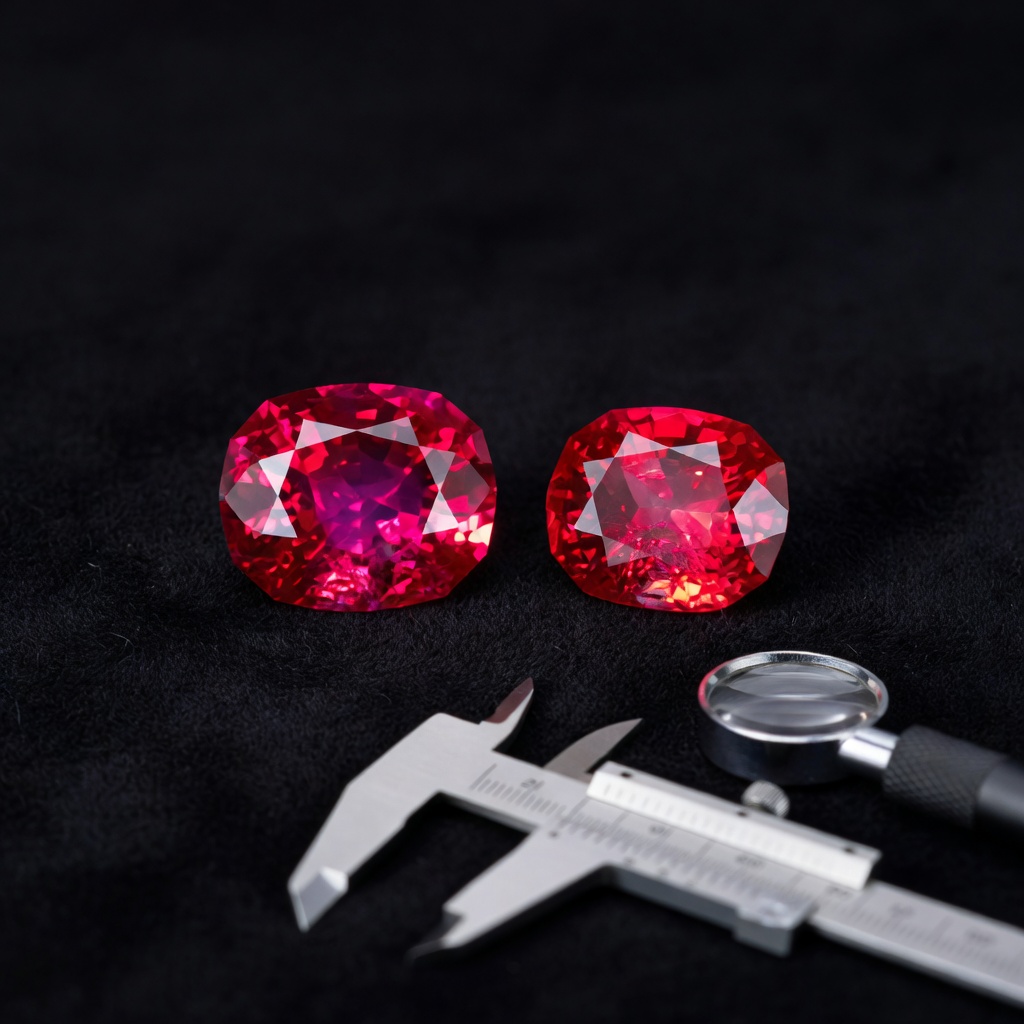
Practical identification techniques for collectors include refractive index testing using a refractometer, where ruby exhibits readings of 1.76-1.77 with a birefringence of 0.008, while red beryl shows lower indices of 1.56-1.60 with birefringence around 0.004-0.010, easily distinguishing the two even when color appears similar. For field identification without laboratory equipment, observe pleochroism through a dichroscope: ruby shows strong dichroism (orange-red to purplish-red) while red beryl displays weaker dichroism (orange-red to purplish-pink), providing a quick diagnostic test when purchasing rough or unset stones at mineral shows or estate sales.
Market Value and Investment Considerations
Analysis of red beryl value per carat reveals a bifurcated market where fine specimens exceeding one carat command prices of $8,000 to $10,000 per carat, while commercial-quality stones under 0.50 carats may trade for $500-$1,500 per carat, creating a steep exponential pricing curve based on size rarity that exceeds even that of fine sapphire or spinel. This valuation structure reflects the extreme scarcity of facetable material, with the annual production of gem-quality red beryl totaling less than 600 carats compared to millions of carats of faceted rubies entering the market annually, though red beryl's lower name recognition means liquidity remains constrained to specialist collectors rather than the broad auction market. Investment portfolios including red beryl should consider the stone as a long-term hold (10+ years) requiring specialized marketing for eventual liquidation, unlike ruby investment grade stones that maintain consistent demand among high jewelry houses and Asian investors.
Ruby pricing demonstrates a wider spectrum based on treatment status and origin, with untreated Burmese rubies exceeding $100,000 per carat for exceptional pigeon blood specimens over 5 carats, while heat-treated Mozambique rubies of similar size and color might trade for $5,000-$15,000 per carat, creating a 10:1 price differential based solely on provenance and treatment history. Auction records from Christie's and Sotheby's illustrate this hierarchy, with the "Sunrise Ruby" (25.59-carat Burmese pigeon blood) selling for $30.3 million in 2015 ($1.19 million per carat), while important red beryl specimens rarely appear at major auctions, instead trading through specialized mineral dealers like The Arkenstone or direct mining operations in Utah. For investors seeking maximum appreciation potential, untreated Burmese rubies above 3 carats offer the most liquid and historically proven appreciation, while red beryl represents a speculative luxury suitable only for diversified portfolios that can absorb the risk of limited resale markets.
When building a colored stone portfolio, allocate 70-80% toward established markets (unheated ruby, Kashmir sapphire, Colombian emerald) and 20-30% toward rare speculative stones like red beryl, ensuring that your collection maintains liquidity while capturing potential upside from extreme rarity. Document all purchases with certificates from respected laboratories such as Gübelin, SSEF, or AGL for rubies, and ensure red beryl acquisitions include detailed geological provenance letters from recognized mineralogists who can verify Wah Wah Mountains origin, as synthetic red beryl produced by Chatham and others has entered the market requiring careful differentiation from natural material.
Treatments, Enhancements, and Ethics
The prevalence of treated ruby vs natural specimens dominates the commercial market, with approximately 95% of rubies undergoing heat treatment to dissolve rutile silk and improve color saturation, a practice accepted in the trade when properly disclosed but significantly impacting value when compared to unheated natural stones. Advanced treatments including glass filling (fracture filling with lead glass), diffusion coloring, and flux-assisted heat treatment require sophisticated detection using laser ablation ICP-MS or advanced spectroscopy, as these enhancements can dramatically alter a stone's apparent clarity and durability while remaining invisible to standard gemological testing. When purchasing rubies, insist on certificates from laboratories that specifically test for heat treatment, glass filling, and diffusion, looking for terminology such as "no indications of heating" or "heated" rather than vague "natural origin" statements that might obscure treatment status.
Red beryl treatments remain exceedingly rare due to the material's extreme scarcity and delicate structure that cannot withstand standard heat treatment without risking thermal shock fracturing or color degradation from the manganese chromophore's sensitivity to oxidation state changes at high temperatures. Unlike emerald, red beryl rarely undergoes oiling or resin filling due to its typically high clarity in gem-quality specimens and the specific chemistry of its inclusions that do not respond to clarity enhancement techniques; however, collectors should remain vigilant for composite stones (doublets or triplets) using red beryl crowns bonded to red garnet or glass pavilions to simulate larger stones. The primary ethical consideration for red beryl involves mining practices in Utah's fragile desert ecosystem, where small-scale operations must balance extraction with environmental reclamation, making stones from permitted, environmentally conscious operations command ethical premiums among educated collectors.
For both gemstones, verify certification from laboratories employing standardized disclosure protocols, such as the American Gemological Laboratories (AGL) for rubies or the Gemological Institute of America (GIA) for red beryl identifications, ensuring that any treatments are explicitly stated on the report. When examining treated ruby, assess the longevity of enhancement by avoiding stones with glass filling in shank-mounted rings subject to heat from sizing operations, as lead glass fillers can be damaged by the jeweler's torch, whereas natural or simply heated rubies tolerate standard jewelry repair procedures without degradation.
Buying Guide: Making the Right Choice
When developing a buying red beryl strategy, prioritize carat weight retention over perfect clarity, as stones over 1.50 carats represent extreme rarities worth acquiring even with minor inclusions visible to the unaided eye, whereas ruby buying guide principles emphasize eye-clean clarity (no visible inclusions at 6 inches) for stones above 2 carats intended for investment purposes. Budget allocation should account for setting costs, with red beryl requiring custom protective mountings (budget $500-$2,000 additional) versus standard prong settings suitable for ruby, and consider the total cost of ownership including specialized insurance riders that recognize red beryl's replacement difficulty versus ruby's more standardized valuation tables used by standard jewelry insurers.
For setting considerations, select bezel or half-bezel designs for red beryl that protect the girdle and pavilion from impact, using 14k or 18k gold rather than platinum to provide slight flexibility that absorbs shock, whereas ruby accommodates any setting style including delicate pave baskets or tension settings that expose the stone to maximum light return. Practical verification tips include purchasing loose stones rather than mounted gems when possible, allowing for accurate refractive index and specific gravity testing by independent gemologists before final setting, and insisting on "recourse periods" in sales contracts that allow return if laboratory testing reveals undisclosed treatments or incorrect identification.
Recommended gemological laboratories for certification include Gübelin and SSEF for high-value rubies (particularly Burmese origin verification), AGL for comprehensive treatment detection in rubies of all origins, and GIA for definitive red beryl identification including origin confirmation through inclusion pattern analysis and spectroscopic data. When working with specialized red beryl dealers such as Rex Harris Minerals or Red Beryl Mines LLC, request video documentation of the stone under different lighting conditions and magnification, as the limited market means in-person inspection may not be feasible, and establish escrow payment arrangements for transactions exceeding $10,000 to ensure both parties' protection during the verification period.
Ruby vs Red Beryl: Detailed Comparison
| Characteristic | Ruby | Red Beryl |
|---|---|---|
| Chemical Composition | Aluminum Oxide (Al₂O₃) with Chromium | Beryllium Aluminum Silicate (Be₃Al₂Si₆O₁₈) with Manganese |
| Mineral Family | Corundum | Beryl |
| Mohs Hardness | 9 | 7.5 - 8 |
| Toughness | Excellent (no cleavage) | Fair to Good (perfect basal cleavage) |
| Color Range | Pigeon blood red to purplish-red, pinkish-red | Raspberry red to deep pinkish-red |
| Fluorescence | Strong red under UV (Burmese) | Weak to moderate orange-red under UV |
| Primary Sources | Myanmar, Mozambique, Madagascar, Thailand | Wah Wah Mountains, Utah (USA) exclusively |
| Rarity Level | Rare (thousands of kg mined annually) | Extremely Rare (approx. 600 carats gem-quality annually) |
| Typical Inclusions | Rutile silk, zircon halos, hexagonal color zoning | Hexagonal growth zoning, apatite crystals, two-phase inclusions |
| Treatment Commonality | 95% heat treated; common glass filling | Rarely treated (heat sensitive) |
| Price Range (per carat) | $1,000 - $100,000+ (untreated Burmese premium) | $500 - $10,000 (exponential increase over 1ct) |
| Best Jewelry Application | Daily wear rings, bracelets, any setting style | Pendants, earrings, occasional wear rings with protective settings |
| Refractive Index | 1.76 - 1.77 | 1.56 - 1.60 |
| Investment Liquidity | High (established auction market) | Low (specialist collector market only) |
Frequently Asked Questions
Is red beryl more valuable than ruby per carat?
While high-quality untreated Burmese rubies typically command the highest prices ($10,000-$100,000+ per carat), fine red beryl often exceeds common commercial rubies in price due to extreme rarity, with top specimens reaching $10,000 per carat despite being less known in the mainstream market. The value hierarchy places untreated pigeon blood Burmese rubies at the apex of the red gemstone market, followed by fine red beryl over one carat, then heated rubies from Mozambique or Madagascar, creating a nuanced landscape where rarity and brand recognition compete for valuation dominance. For investors, this means that while a 3-carat untreated Burmese ruby might sell for $50,000 per carat at auction, a similar-sized red beryl might command only $8,000-$10,000 per carat but with significantly lower market liquidity and longer hold periods required for appreciation.
Why is red beryl sometimes called bixbite?
Red beryl was originally named bixbite after Maynard Bixby, who discovered it in Utah in 1904. However, the name 'bixbite' fell out of favor because it was easily confused with bixbyite (a black manganese iron oxide mineral), leading the gemological community to adopt 'red beryl' as the preferred terminology. The International Mineralogical Association (IMA) officially deprecated the term "bixbite" in their nomenclature recommendations to prevent confusion between these chemically and visually distinct minerals, though you may still encounter the term in older mineral collections or estate jewelry documentation from the mid-20th century. When researching historical specimens, searching for both terms may yield additional provenance information, but contemporary certificates and commercial transactions should exclusively use "red beryl" to ensure accurate mineralogical identification.
Can red beryl be worn daily in an engagement ring like ruby?
Due to its Mohs hardness of 7.5-8 and brittle tenacity, red beryl is not recommended for daily wear in engagement rings where it faces impact risks. Ruby, with its hardness of 9 and excellent toughness, is far superior for everyday jewelry and heirloom pieces subject to regular wear. The perfect cleavage of red beryl creates a risk of splitting or chipping when the stone strikes hard surfaces, whereas ruby's lack of cleavage and superior hardness allow it to withstand decades of daily wear including household chores, exercise, and accidental impacts without significant damage. If you desire red beryl's unique color for bridal jewelry, consider it for wedding pendants or anniversary earrings that receive gentler treatment, reserving the engagement ring position for ruby, spinel, or diamond that offer the durability required for constant wear.
How can I visually distinguish between ruby and red beryl?
Rubies typically display stronger fluorescence (red glow under UV light) and often show silk inclusions, while red beryl exhibits a more pinkish-red or raspberry tone with hexagonal growth patterns. A gemologist can definitively separate them using refractive index testing (ruby: 1.76-1.77, red beryl: 1.56-1.60). For quick field identification without instruments, examine the stone under incandescent light: ruby maintains strong red saturation while red beryl often shows a slight brownish or pinkish modifier, and ruby typically appears more "sleepy" or velvety due to silk inclusions compared to red beryl's often glassier clarity. When using a 10x loupe, look for rutile needles intersecting at 60 degrees in ruby versus the characteristic hexagonal growth bands and apatite crystals found in red beryl, providing visual confirmation of mineralogical identity.
Which gemstone is rarer, ruby or red beryl?
Red beryl is significantly rarer than ruby. For every 150 tons of ruby mined globally, only one crystal of red beryl is found, and only 10% of those are gem-quality. Rubies, while precious, are mined in multiple countries with substantially higher production volumes. This extreme disparity means that while a 2-carat fine ruby represents a significant purchase requiring thousands of dollars, a 2-carat fine red beryl represents a once-in-a-decade opportunity that may require years of searching and a network of specialized mineral dealers to acquire. The geological conditions necessary for red beryl formation—specifically the intersection of beryllium-rich gases with manganese-bearing mineralized fluids in rhyolitic volcanic rocks—have occurred in only one known location on Earth with gem-quality output, whereas corundum deposits suitable for ruby formation exist across multiple continents.
Do rubies and red beryl have different metaphysical properties?
Ruby is traditionally associated with passion, protection, and vitality, often called the 'Stone of Kings' and linked to the root chakra. Red beryl is believed to enhance creativity, emotional healing, and heart-based energy, connecting more with the heart chakra despite its red coloration. Practitioners of crystal healing recommend ruby for individuals seeking increased energy, courage, and leadership capabilities, often placing the stone at the base of the spine during meditation to stimulate kundalini energy, while red beryl finds use in heart-opening rituals and creative visualization practices due to its manganese content's association with artistic expression. Historical texts from Vedic traditions dating to 200 BCE specifically mention ruby (ratnaraj, or "king of precious stones") as offering protection from evil and maintaining health, whereas red beryl's more recent discovery means its metaphysical associations derive primarily from contemporary New Age practices that associate its rarity with unique spiritual vibrations.
Are treated rubies comparable in value to natural red beryl?
Heat-treated rubies generally remain more valuable than red beryl of similar size, but untreated natural rubies command premium prices far exceeding red beryl. The value hierarchy typically places untreated Burmese ruby highest, followed by fine red beryl, then heat-treated ruby. This ranking reflects market dynamics where brand recognition and historical precedent favor ruby, even in treated form, due to centuries of royal association and established luxury market presence, whereas red beryl remains a specialist's stone known primarily to mineral collectors rather than the general jewelry-buying public. For example, a 1-carat heated Mozambique ruby might retail for $2,000-$3,000, while a similar-sized red beryl might command $3,000-$5,000, but an untreated Burmese ruby of equivalent size could exceed $15,000, demonstrating the complex interplay between treatment status, species rarity, and market recognition in colored gemstone valuation.
Where can I buy certified red beryl versus ruby?
Rubies are available through most high-end jewelers, auction houses, and gemstone dealers with GIA or AGL certification. Red beryl requires specialized mineral dealers, estate sales, or specific Utah-based mining operations, always demanding verification from recognized laboratories due to its rarity and potential for misidentification. For rubies, established houses like Tiffany & Co., Cartier, or online specialists such as James Allen and Blue Nile offer extensive inventories with reliable certification, while red beryl acquisitions necessitate relationships with specialized dealers like The Arkenstone (iRocks.com), Western minerals dealers who attend the Tucson Gem and Mineral Show, or direct contact with Utah mining claim holders such as the Harris family operations. When purchasing red beryl, verify that the seller provides documentation including specific claim origin (Ruby Violet Claim, Harris Claim, etc.) and consider hiring an independent gemologist to verify the stone before finalizing high-value transactions, as synthetic red beryl and red pezzottaite (a similar-looking mineral from Madagascar) require expert differentiation from genuine Wah Wah Mountains material.