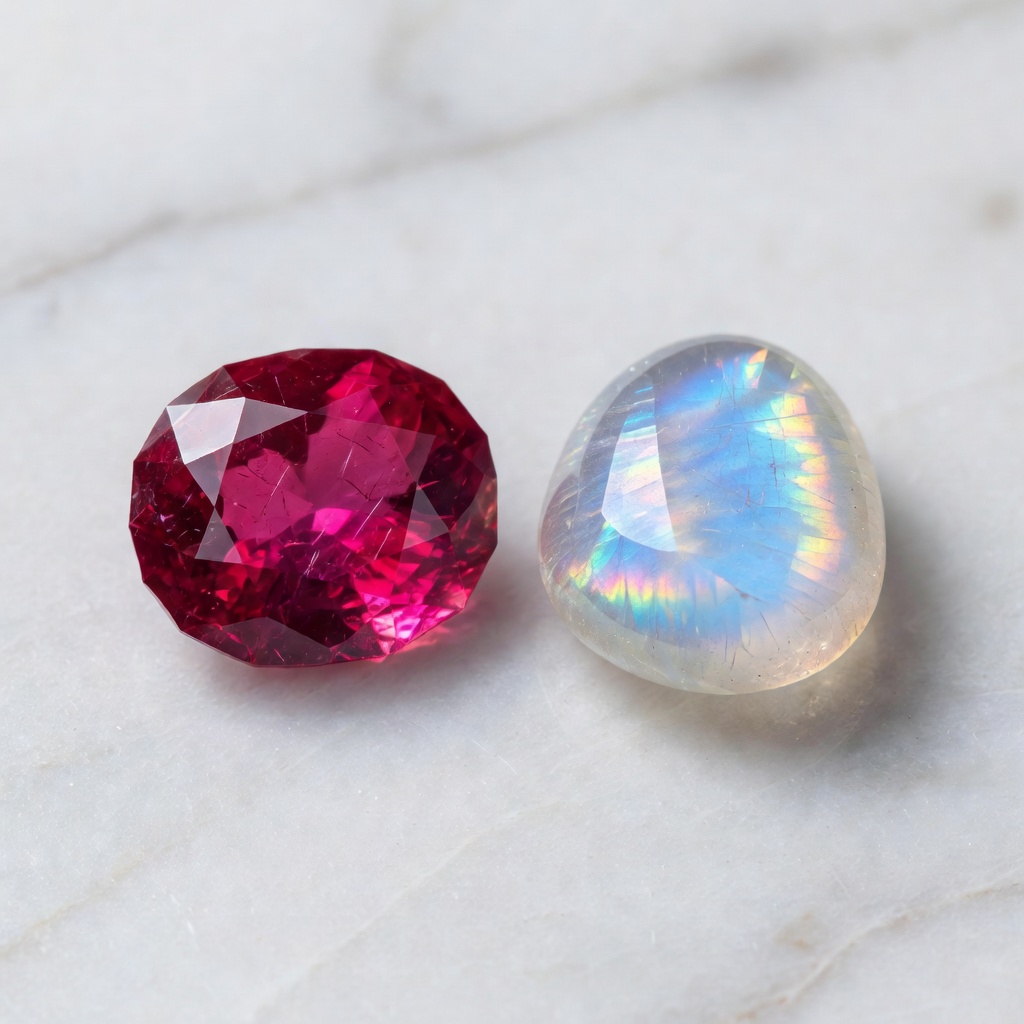
Introduction: Understanding Ruby Vs Rainbow Moonstone
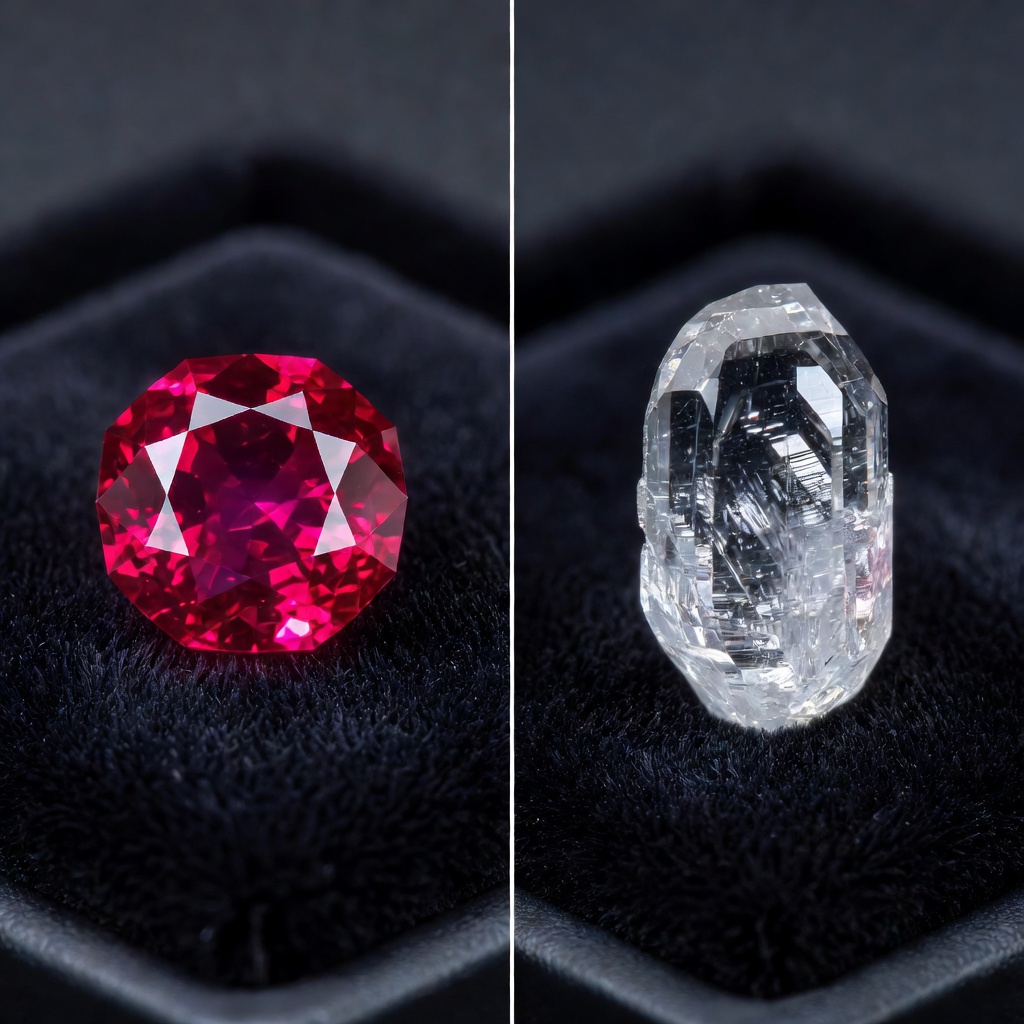
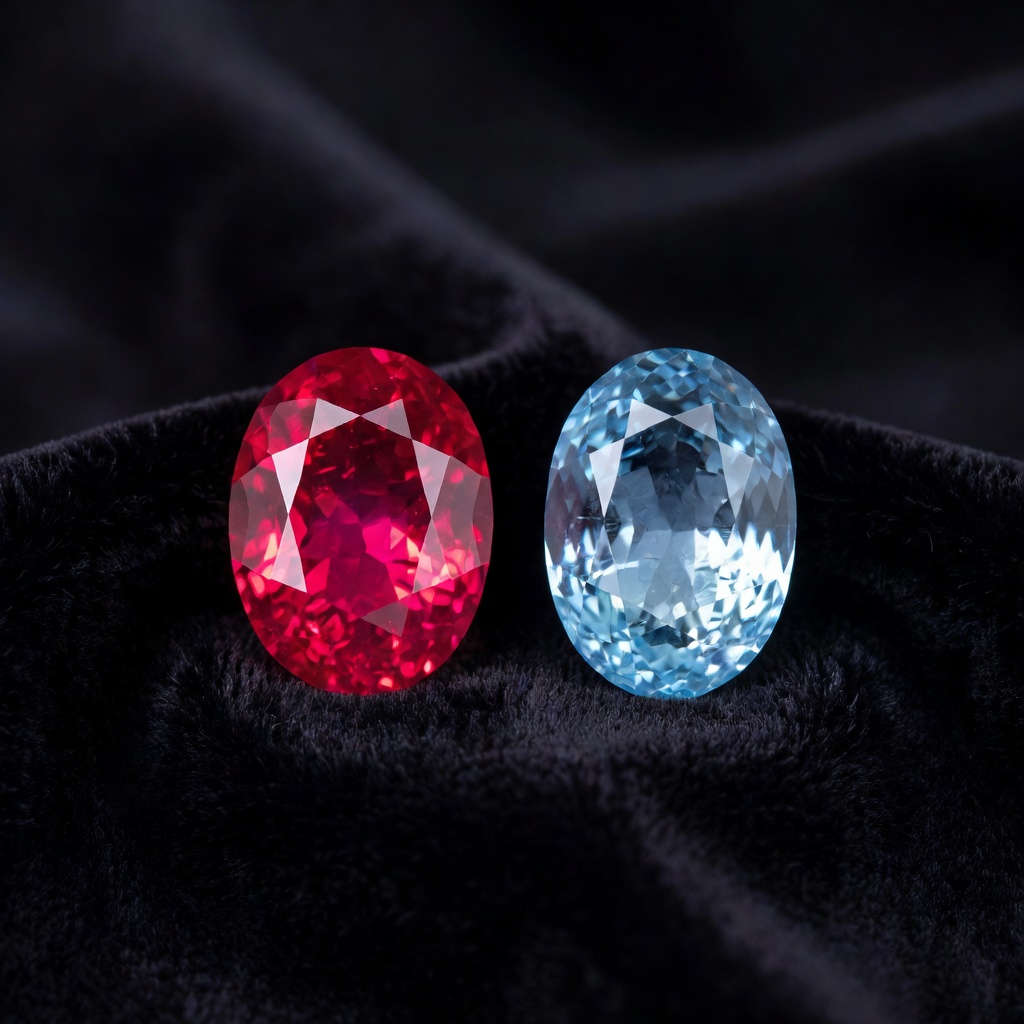
When exploring the vibrant world of colored gemstones, the comparison between Ruby vs Rainbow Moonstone presents a fascinating study in contrasts that captivates both novice collectors and seasoned jewelry enthusiasts. While these stones share popularity in fine jewelry markets and both exhibit mesmerizing optical phenomena, they represent entirely different mineral species with distinct geological formations, physical properties, and aesthetic appeals. Ruby, the fiery red variety of corundum, has adorned royalty for millennia as a symbol of passion and power, whereas Rainbow Moonstone, a specific variety of labradorite feldspar, offers an ethereal, mystical presence characterized by its signature blue adularescence and rainbow sheen.
Many consumers mistakenly assume that Rainbow Moonstone is simply a colorful variant of traditional orthoclase moonstone, or they believe that all rubies command exorbitant prices regardless of quality grade. These misconceptions often lead to confusion when selecting between these two distinct gems for jewelry purchases or crystal healing practices. Understanding the fundamental differences in composition, durability, and market positioning helps clarify why someone might choose the bold, energetic presence of a pigeon blood ruby over the subtle, intuitive energy of a blue-flash moonstone, or vice versa, depending on their lifestyle needs and personal aesthetic preferences.
Geological Origins and Mineral Composition
The geological distinction between corundum vs feldspar represents one of the most significant differences separating these two beloved gemstones. Ruby crystallizes from aluminum oxide (Al₂O₃) under extreme metamorphic conditions requiring temperatures exceeding 800°C and intense pressure deep within the Earth's crust, typically forming in marble or basaltic rock environments. This rigorous formation process creates the trigonal crystal system responsible for ruby's exceptional hardness and density, with trace amounts of chromium substituting for aluminum atoms to produce the stone's characteristic red coloration.
Conversely, Rainbow Moonstone belongs to the plagioclase feldspar group, specifically the labradorite variety, composed of calcium sodium aluminum silicate with a distinct triclinic crystal structure. Unlike the homogeneous composition of corundum, this gemstone forms through the intergrowth of two feldspar minerals—albite and orthoclase—creating microscopic lamellar layers that produce its characteristic optical effects. Primary mining locations for high-quality rubies include the Mogok region of Myanmar (Burma), Mozambique's Montepuez mines, and Thailand's Chanthaburi province, while premium Rainbow Moonstones predominantly originate from India's Bihar and Andhra Pradesh regions, Madagascar's Antsirabe district, and select deposits in Sri Lanka and Australia.
When sourcing these gemstones, practical knowledge of their origins proves invaluable for assessing quality and value. Burmese rubies typically command premium prices due to their historically superior "pigeon blood" color saturation and strong fluorescence under ultraviolet light, though Mozambican stones have gained significant market recognition for their clarity and size availability. For Rainbow Moonstones, Indian specimens often display the strongest blue adularescence against a colorless to white body, while Madagascar material frequently exhibits more prominent rainbow color flashes including peach, yellow, and green tones alongside the characteristic blue sheen.
Visual Characteristics: Color Phenomena and Appearance
The visual distinction between these gemstones represents perhaps the most immediately apparent difference, with Ruby displaying saturated red hues ranging from pinkish-red to the coveted deep "pigeon blood" color, while Rainbow Moonstone presents a milky, translucent to transparent body color dominated by moving blue or multicolored light phenomena. High-quality rubies derive their value primarily from color saturation and tone, with the most prized specimens exhibiting a pure, vibrant red with slight blue undertones that appear to glow from within due to chromium content and strong fluorescence. In contrast, Rainbow Moonstone's value depends heavily on the strength and distribution of its adularescence effect, preferably displaying a sharp, electric blue sheen that moves across the stone's surface as it tilts, though specimens showing full rainbow spectrums command particular admiration.
Clarity standards differ dramatically between these stones, reflecting their distinct geological natures and optical properties. Ruby collectors historically accept certain inclusions, particularly fine rutile needles known as "silk," which not only indicate natural origin but can create the desirable asterism effect (six-rayed star) when properly oriented. However, heavy inclusions that diminish transparency or create dark spots significantly reduce value. Rainbow Moonstone requires exceptional transparency or translucency to properly display its adularescence effect, with inclusions generally considered undesirable unless they create unique visual textures; the finest specimens appear nearly water-clear with a concentrated blue glow floating beneath the surface.
Optical phenomena provide additional distinguishing characteristics, with rubies occasionally displaying asterism when cut en cabochon and illuminated by a single light source, creating a star that tracks across the dome as the stone moves. Rainbow Moonstone exhibits labradorescence (sometimes marketed as adularescence), resulting from light diffraction between the microscopic lamellar layers of albite and orthoclase feldspar, creating the illusion of moonlight floating on water. When selecting between these visual characteristics for jewelry applications, consider that ruby offers consistent color from all angles while moonstone requires specific orientation and lighting to display its magical properties optimally.
Ruby Vs Rainbow Moonstone: Comparative Analysis
| Characteristic | Ruby | Rainbow Moonstone |
|---|---|---|
| Mineral Family | Corundum (Aluminum Oxide) | Feldspar (Labradorite Variety) |
| Mohs Hardness | 9 (Excellent Durability) | 6-6.5 (Moderate Durability) |
| Primary Color | Red (Pigeon Blood to Pink) | Colorless/White with Blue Flash |
| Optical Phenomenon | Asterism (Star Effect) | Adularescence/Labradorescence |
| Birthstone Month | July | June |
| Price Range (Per Carat) | $1,000-$25,000+ | $10-$200+ |
| Best Jewelry Applications | Rings, Bracelets, Daily Wear | Pendants, Earrings, Occasional Wear |
| Cleavage | None (Excellent Toughness) | Perfect in Two Directions |
Durability Analysis: Mohs Hardness and Wearability
The Mohs hardness comparison between these gemstones reveals significant practical implications for jewelry selection and long-term wearability. Ruby ranks 9 on the Mohs scale of mineral hardness, placing it just below diamond and alongside sapphire (which is also corundum), making it exceptionally resistant to scratching and suitable for daily wear in engagement rings, bracelets, and other high-contact jewelry pieces. This remarkable hardness stems from the strong atomic bonding within the corundum crystal structure, allowing rubies to maintain their polish and surface integrity even after decades of continuous wear.
Rainbow Moonstone presents a more modest hardness rating of 6 to 6.5 on the Mohs scale, comparable to opal and turquoise, rendering it susceptible to scratching from everyday dust particles (which often contain quartz at hardness 7) and other environmental abrasives. More concerning than surface scratching, however, is moonstone's perfect cleavage in two directions, meaning the stone can split or chip along specific planes if struck with sufficient force or subjected to pressure against hard surfaces. This structural vulnerability necessitates careful consideration regarding jewelry design and wearing habits, as a moonstone ring worn during household chores or manual labor faces significantly higher damage risk than a ruby under identical conditions.
From a practical jewelry application standpoint, these durability differences dictate appropriate setting styles and wearing protocols. Rubies thrive in prong settings that maximize light exposure while securely protecting the stone, suitable for active lifestyles including regular gym sessions, gardening, and office work. Rainbow Moonstone demands protective bezel settings or halo designs that shield the girdle and edges from impact, and performs best in pendants, earrings, or occasional-wear rings rather than daily-wear pieces subject to constant mechanical stress. For collectors seeking heirloom-quality pieces, ruby offers generational durability with minimal maintenance, while moonstone requires more frequent inspection for loose settings and surface damage, along with disciplined removal during physical activities.
Birthstone Connections and Astrological Significance
The July birthstone vs June birthstone distinction places these gemstones in different months of the summer calendar, each carrying unique historical symbolism and astrological associations that influence gift-giving traditions and personal adornment choices. Ruby serves as the primary birthstone for July, historically associated with the zodiac signs of Leo (July 23-August 22) and Capricorn, though modern crystal practitioners also connect it to Aries and Scorpio due to its fiery energy. Ancient Sanskrit texts referred to ruby as "ratnaraj" or "king of precious stones," believing that owning rubies granted protection from evil, preserved physical health, and ensured harmonious relationships with enemies.
Rainbow Moonstone connects primarily to June birthdays, sharing this month with pearl and alexandrite, and resonates strongly with Cancer (June 21-July 22) zodiac energies due to its association with the moon and water elements. Unlike ruby's solar, masculine energy associations, moonstone carries distinctly feminine, lunar vibrations linked to Diana, the Roman goddess of the moon, and has historically been used as a protective talisman for travelers, particularly those journeying by sea. The stone's connection to new beginnings makes it particularly meaningful for June weddings, graduations, or career transitions.
When selecting between these stones as birthday gifts or personal talismans, consider the recipient's personality and life circumstances alongside their birth month. Ruby suits individuals seeking confidence, leadership qualities, and physical vitality—ideal for entrepreneurs, performers, or anyone needing courage to pursue ambitious goals. Rainbow Moonstone appeals to those embracing intuition, emotional healing, and creative inspiration, making it perfect for artists, healers, or individuals navigating significant life changes. Many jewelry designers create "dual birthstone" pieces combining these stones to honor relationships between July and June birthdays, such as parent-child bonds or romantic partnerships, leveraging the complementary energies of solar ruby and lunar moonstone.
Metaphysical Properties and Healing Energy
The crystal healing properties of these gemstones offer distinctly different energetic signatures, with ruby providing grounding, activating energy while Rainbow Moonstone facilitates intuitive, receptive consciousness. Ruby stimulates the root chakra (Muladhara), enhancing physical vitality, blood circulation, and adrenal function while promoting courage, passion, and zest for life. Crystal practitioners often recommend ruby for individuals experiencing fatigue, low motivation, or physical weakness, as its energetic frequency resonates with the circulatory system and metabolic processes, theoretically boosting oxygenation and cellular energy production.
Rainbow Moonstone primarily activates the crown chakra (Sahasrara) and third eye chakra (Ajna), fostering psychic development, dream recall, and emotional equilibrium through its connection to lunar cycles and feminine energy. Unlike ruby's stimulating properties, moonstone offers calming, soothing vibrations that help regulate emotional responses, reduce stress-related anxiety, and enhance intuitive decision-making capabilities. Healers frequently prescribe moonstone for hormonal balance, fertility support, and digestive alignment, believing that its water-element energy helps "go with the flow" rather than resist life's natural rhythms.
Practical applications in meditation and crystal grid work demonstrate the compatibility between these stones despite their different energies. A morning meditation practice might incorporate ruby to stimulate alertness and set ambitious intentions for the day, while evening sessions benefit from moonstone's calming presence to facilitate restful sleep and dream work. When constructing crystal grids, placing ruby at the southern position (representing fire and action) with moonstone at the northern position (representing water and intuition) creates a balanced energetic field that honors both manifesting power and receptive wisdom. Many practitioners wear ruby on the right hand (projective side) and moonstone on the left (receptive side) to maintain energetic equilibrium throughout the day.
Market Value and Investment Considerations
The gemstone investment value proposition differs dramatically between these two minerals, with fine rubies representing serious tangible assets comparable to colored diamonds, while Rainbow Moonstones offer accessible luxury with limited appreciation potential. Untreated Burmese rubies exceeding five carats with "pigeon blood" coloration and minimal inclusions can command prices exceeding $25,000 per carat at auction, with historical price appreciation averaging 8-12% annually over the past three decades. These stones function as crisis-resistant stores of wealth, often outperforming traditional stock market indices during economic downturns, particularly stones accompanied by prestigious laboratory certifications from Gübelin or SSEF confirming Burmese origin and absence of heat treatment.
Rainbow Moonstone operates in a distinctly different market segment, with exceptional specimens rarely exceeding $200 per carat unless displaying unusually large size (over 20 carats) with intense, full-face blue adularescence. While top-quality moonstones from depleted Indian mines may see modest appreciation, they generally function as consumable luxury goods rather than investment vehicles, similar to high-quality apparel or furniture. The stone's relative abundance compared to ruby, combined with its moderate hardness limiting heirloom longevity, restricts its secondary market liquidity and collectible status.
When evaluating ruby purchases for investment purposes, understanding treatment disclosure proves essential for protecting value. Heat treatment represents an accepted industry standard that permanently enhances color and clarity, with properly disclosed heated rubies maintaining stable markets, though at significantly lower prices than untreated equivalents. Conversely, lead glass-filled rubies (composite rubies) require special care and offer minimal investment value despite their attractive appearance. Rainbow Moonstones rarely undergo enhancement beyond occasional surface coating to improve adularescence, making treatment disclosure less critical, though buyers should verify that specimens are natural rather than synthetic feldspar. For budget-conscious collectors, purchasing smaller, high-quality rubies (1-2 carats) with excellent color often yields better long-term satisfaction than larger stones with compromised saturation, while moonstone enthusiasts should prioritize optical phenomena over carat weight for maximum aesthetic impact per dollar spent.
Jewelry Design Applications and Metal Pairings
Jewelry design considerations for Ruby vs Rainbow Moonstone reflect their distinct durability profiles and color temperatures, dictating different setting styles, metal choices, and design aesthetics. Rubies excel in prong settings, particularly four-prong solitaires or elaborate halo designs that maximize light penetration to enhance their red saturation and potential fluorescence. The stone's hardness accommodates tension settings, channel settings, and intricate pave work without risk of damage during the setting process, allowing designers to create delicate, lacy filigree patterns or bold architectural statements with equal confidence.
Rainbow Moonstone demands protective bezel settings, partial bezels, or robust prong configurations that shield the stone's vulnerable edges and girdle from impact while still allowing light entry to display the adularescence effect. Designers frequently employ cabochon cuts (domed, unfaceted surfaces) for moonstones to optimize the rolling flash effect, whereas rubies traditionally receive brilliant, step, or mixed cuts to maximize color and brilliance. Metal pairings follow complementary color theory: yellow gold (ranging from 14k to 22k) enhances ruby's warm red tones by creating contrast, while white gold, platinum, or sterling silver better complement Rainbow Moonstone's cool blue flashes and white body color.
Style applications vary significantly between these stones, with rubies dominating classical, regal, and Art Deco aesthetics—think Victorian cluster rings, Edwardian garland necklaces, or bold cocktail rings suitable for black-tie events. Rainbow Moonstone finds its natural expression in bohemian, Art Nouveau, and ethereal bridal designs, often accompanied by accent diamonds or incorporated into nature-inspired motifs featuring leaves, vines, or celestial bodies. For contemporary stackable ring collections, ruby bands provide durable, colorful anchors that withstand daily wear, while moonstone stacking rings require rotation with other softer stones to prevent abrasion. When designing custom pieces, consider that ruby supports intricate engraving on surrounding metalwork due to its setting stability, whereas moonstone pieces benefit from simpler, cleaner metal lines that don't compete with the stone's subtle optical display.
Care and Maintenance Requirements
Proper gemstone care guide protocols differ substantially between these stones due to their hardness disparities and structural vulnerabilities. Rubies generally tolerate ultrasonic cleaning devices and steam cleaning systems, provided they haven't undergone fracture-filling treatments or significant inclusions that might expand under thermal stress. Routine maintenance involves warm water with mild dish soap, soft-bristled brushes for removing debris from setting crevices, and annual professional inspections to check for loose prongs or wear on band shanks. Because ruby attracts grease and oils from skin contact, more frequent cleaning maintains optimal brilliance, particularly for stones with surface-reaching inclusions that might trap dirt.
Rainbow Moonstone requires significantly gentler handling, mandating cleaning with only lukewarm water, mild phosphate-free soap, and soft microfiber cloths without brushing that might scratch the surface. Never expose moonstone to ultrasonic waves, steam cleaners, harsh chemical solvents (including chlorine, ammonia, or alcohol), or sudden temperature changes that could exploit cleavage planes and cause fracturing. Storage presents additional considerations: moonstones should reside in individual soft pouches separate from harder gemstones, particularly diamonds, sapphires, and rubies, which could scratch their surfaces during transport or drawer storage.
Professional maintenance schedules should include biannual inspections for moonstone jewelry to verify bezel integrity and check for developing chips or surface-reaching fractures, while ruby pieces require annual check-ups unless subjected to unusual trauma. When traveling, pack moonstone jewelry in rigid boxes with padded interiors, avoiding placement in checked luggage where temperature fluctuations and rough handling occur. For heirloom preservation, consider having high-value rubies reappraised every three to five years to update insurance coverage as market values appreciate, while maintaining detailed photographs and laboratory certificates in secure locations separate from the jewelry itself.
Final Decision: Choosing Your Perfect Gemstone
Selecting between Ruby vs Rainbow Moonstone ultimately requires honest assessment of lifestyle factors, budget parameters, aesthetic preferences, and energetic needs. Active individuals with hands-on careers, outdoor hobbies, or young children should gravitate toward ruby's superior durability, which withstands the mechanical stresses of daily life without constant vigilance. Those seeking center stones for engagement rings intended for continuous wear similarly benefit from ruby's resilience, whereas moonstone suits individuals with desk-based professions who appreciate subtle, changing beauty and can commit to removing jewelry during physical activities.
Budget alignment strategies vary widely across the quality spectrum for both stones. Entry-level ruby purchases might focus on smaller Thai or African stones with good color but visible inclusions, offering authentic corundum beauty under $500 per carat, while mid-range collectors target heat-treated Burmese or Mozambican stones between $2,000-$8,000 per carat. Rainbow Moonstone offers democratic accessibility, with beautiful specimens available for under $50, allowing collectors to prioritize size and optical effect over budget constraints, though rare, large, high-clarity pieces with intense blue adularescence from depleted Indian mines may justify premiums up to $500 per carat.
Personal resonance and aesthetic preference evaluation remain equally important as practical considerations. Visit jewelers to handle both stones in person, observing how ruby's constant, fiery presence makes you feel compared to moonstone's shifting, mysterious glow. Consider your existing wardrobe palette: ruby complements warm earth tones, autumn colors, and power suits, while moonstone harmonizes with cool grays, blues, whites, and ethereal fabrics. For those unable to decide, consider acquiring both stones for different occasions—a ruby ring for professional power and important meetings, paired with a moonstone pendant for weekend reflection and creative pursuits. Ultimately, the perfect gemstone speaks to your individual journey, whether through ruby's encouragement to pursue passionate ambitions or moonstone's reminder to trust intuitive wisdom.
Frequently Asked Questions
Which Is More Expensive, Ruby Or Rainbow Moonstone?
High-quality untreated rubies command significantly higher prices, often thousands per carat, while premium rainbow moonstones typically range from $10-$100 per carat. However, exceptional specimens of either stone can exceed these ranges based on rarity and optical phenomena.
Can You Wear Ruby And Rainbow Moonstone Together In Jewelry?
Yes, these stones create beautiful complementary combinations due to their contrasting colors and energies. Many designers pair them in stackable rings or pendant necklaces, though care should be taken to protect the softer moonstone from the harder ruby's potential abrasion.
Is Rainbow Moonstone Actually A Moonstone Or Labradorite?
Rainbow Moonstone is technically a variety of labradorite feldspar rather than true orthoclase moonstone. It exhibits labradorescence (colorful sheen) rather than adularescence, though the trade name 'Rainbow Moonstone' is widely accepted in the jewelry industry.
Which Gemstone Is Better For An Engagement Ring?
Ruby is generally superior for daily-wear engagement rings due to its Mohs hardness of 9 and excellent toughness. Rainbow Moonstone requires protective settings and gentler wear, making it better suited for occasional wear or pendants rather than hands-on daily activities.
What Causes The Blue Flash In Rainbow Moonstone?
The blue flash, or adularescence/labradorescence, results from light scattering between microscopic layers of feldspar minerals (albite and orthoclase) within the stone. As light enters these thin layers, it diffracts and creates the characteristic billowy glow or rainbow effect.
Do Both Stones Require Special Cleaning Methods?
Rubies can typically withstand ultrasonic and steam cleaning (unless fracture-filled), while Rainbow Moonstones require gentle cleaning with mild soap, lukewarm water, and a soft cloth only. Moonstones should never be exposed to harsh chemicals, ultrasonic waves, or sudden temperature changes.
Are Heated Rubies Less Valuable Than Untreated Ones?
Heat-treated rubies are industry standard and accepted as long as disclosed, though untreated specimens command premium prices. The treatment is permanent and stable, unlike glass-filling which requires special care. Always request certification for high-value untreated rubies.
Which Stone Offers Better Protection According To Crystal Healing?
Ruby is traditionally associated with physical protection, vitality, and grounding root chakra energy, while Rainbow Moonstone offers emotional protection, psychic shielding, and intuitive guidance. Ruby acts as an energetic shield against negativity, whereas Moonstone creates a calming, protective aura.