The Ultra-Rare vs The Classic: An In-Depth Analysis
When collectors and jewelry enthusiasts explore the world of precious stones, they often encounter the timeless allure of ruby alongside the mysterious appeal of one of the rarest gemstones on earth. The debate of Ruby vs Poudretteite presents a fascinating contrast between accessibility and extreme scarcity, between historical significance and mineralogical novelty. While ruby has reigned as the "King of Gems" for millennia, adorning royal crowns and commanding premium prices at auction, poudretteite remained virtually unknown to the gem trade until the early 2000s, with fewer than two dozen faceted specimens documented worldwide.
This comprehensive comparison examines these two pink-to-red gemstones through multiple lenses: geological formation, chemical composition, practical wearability, and investment potential. Whether you are a jewelry buyer seeking a durable center stone, a mineral collector pursuing extreme rarity, or an investor analyzing burmese ruby value against poudretteite price per carat trends, understanding the fundamental differences between these gems will inform your acquisition strategy. Both stones share Myanmar as a significant source location, yet their journey from rough crystal to finished gemstone diverges dramatically in terms of availability, cutting challenges, and market liquidity.
Origins and Geological Formation
Ruby formation occurs primarily within marble and basalt deposits across specific geological regions, with Myanmar (formerly Burma) producing the most prized specimens for over eight centuries. The Mogok Stone Tract in Myanmar creates rubies through metasomatic processes where aluminum-rich rocks interact with chromium-bearing solutions, resulting in the vivid red corundum crystals that define burmese ruby value at the highest levels of the gem trade. Secondary deposits in Thailand, Madagascar, Vietnam, and Tanzania offer additional sources, though these often produce stones with different trace element signatures and color profiles compared to the classic Burmese material.
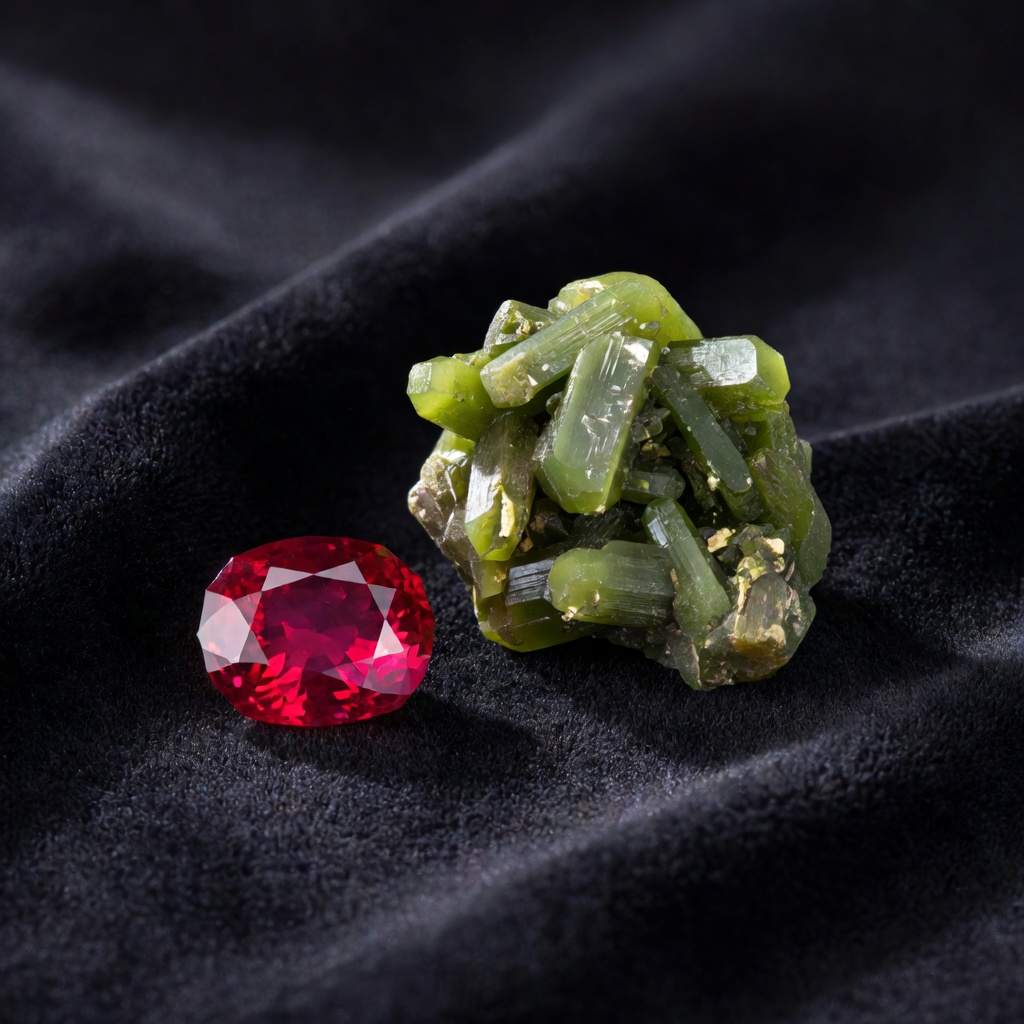
Poudretteite represents an entirely different category of geological rarity, first discovered in 1967 at Mont Saint-Hilaire, Quebec, as minute crystals within the complex alkaline pegmatites of the Poudrette quarry. For decades, mont saint hilaire minerals collectors possessed the only known specimens, with crystals rarely exceeding one millimeter in size. The game changed dramatically in 2000 when gem-quality poudretteite was discovered in the Mogok region of Myanmar, producing crystals large enough to facet into gemstones exceeding one carat. This Myanmar discovery remains the only source of facet-grade material, making poudretteite thousands of times rarer than diamond and placing it among the most elusive gems available to collectors.
The formation conditions required for poudretteite—a potassium sodium borosilicate mineral—occur only in extremely evolved alkaline igneous environments with specific boron enrichment. These conditions contrast sharply with ruby's formation, which, while geologically specific, occurs across multiple continents and geological settings. This fundamental difference in geological distribution explains why high-quality rubies, despite being rare, appear regularly at major auction houses, while authentic poudretteite gemstones surface perhaps once every few years in the public market.
Chemical Composition and Crystal Structure
Understanding the pink gemstone comparison between ruby and poudretteite requires examining their fundamentally different chemical architectures. Ruby consists of aluminum oxide (Al₂O₃) in the trigonal crystal system, with chromium ions (Cr³⁺) substituting for aluminum to create the characteristic red coloration. This corundum structure creates an extremely dense, hard material with a specific gravity of approximately 3.99-4.00, allowing ruby to accept a high polish and resist scratching from everyday wear. The trigonal system influences how cutters orient ruby rough, as the crystal's optical properties vary slightly depending on the cutting angle relative to the c-axis.
Poudretteite presents a far more complex chemical formula: KNa₂B₃Si₁₂O₃₀, classifying it as a cyclosilicate mineral within the osumilite/milarite group. Its hexagonal crystal system forms open, ring-like silicate structures that incorporate potassium, sodium, and boron in specific ratios, resulting in a much lower specific gravity of 2.53-2.58. This chemical composition makes poudretteite significantly less dense than ruby, meaning a one-carat poudretteite appears visibly larger than a one-carat ruby when viewed face-up. The boron content, while contributing to the gem's unique optical properties, also creates chemical vulnerabilities that affect the stone's durability and reaction to environmental factors.
From a gem cutter's perspective, these structural differences present distinct challenges. Ruby's trigonal symmetry and lack of cleavage allow for versatile cutting styles, though cutters must account for dichroism (color variation depending on viewing angle) when orienting the table facet. Poudretteite's hexagonal structure exhibits perfect cleavage in one direction, making the cutting process perilous—one wrong angle during polishing can split the crystal. Additionally, poudretteite's lower hardness requires gentler polishing compounds and techniques, often resulting in softer-looking facet edges compared to the crisp, sharp facets achievable on ruby.
Color Variations and Visual Characteristics
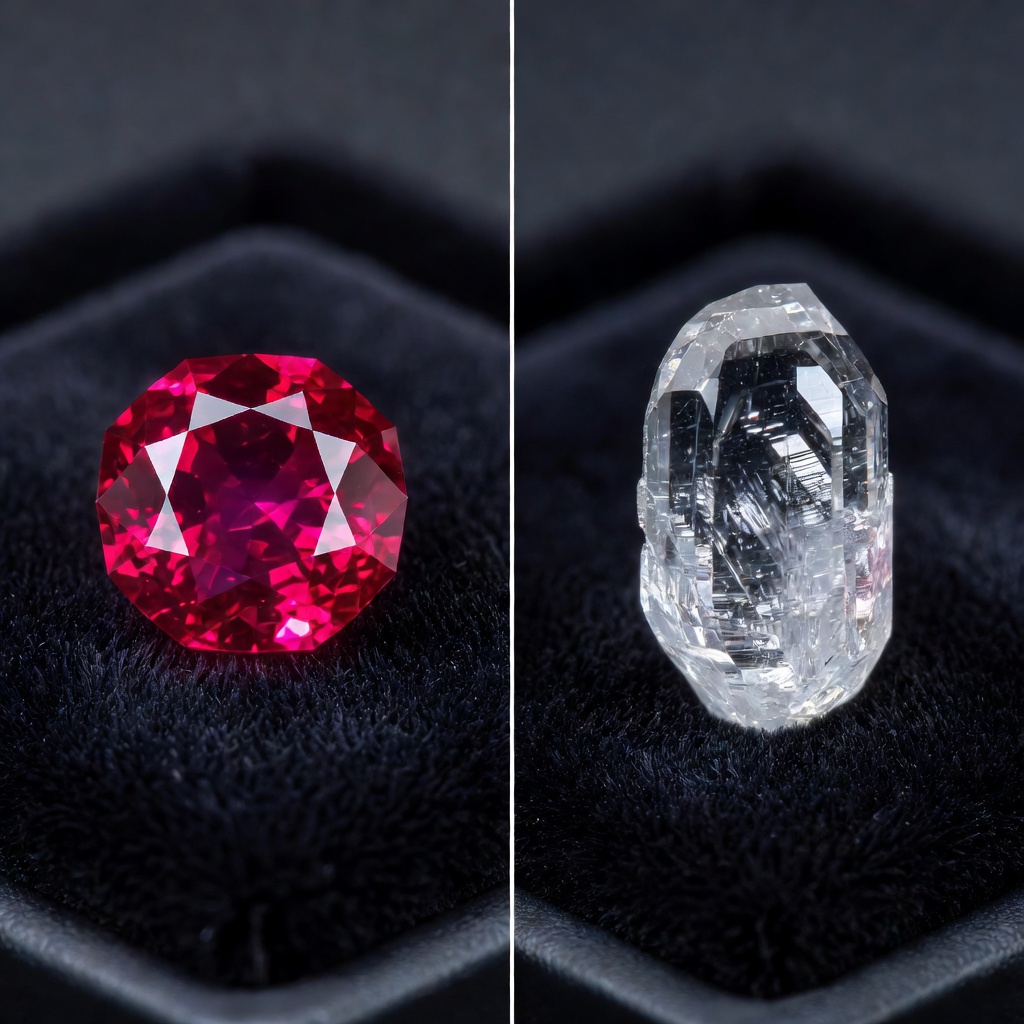
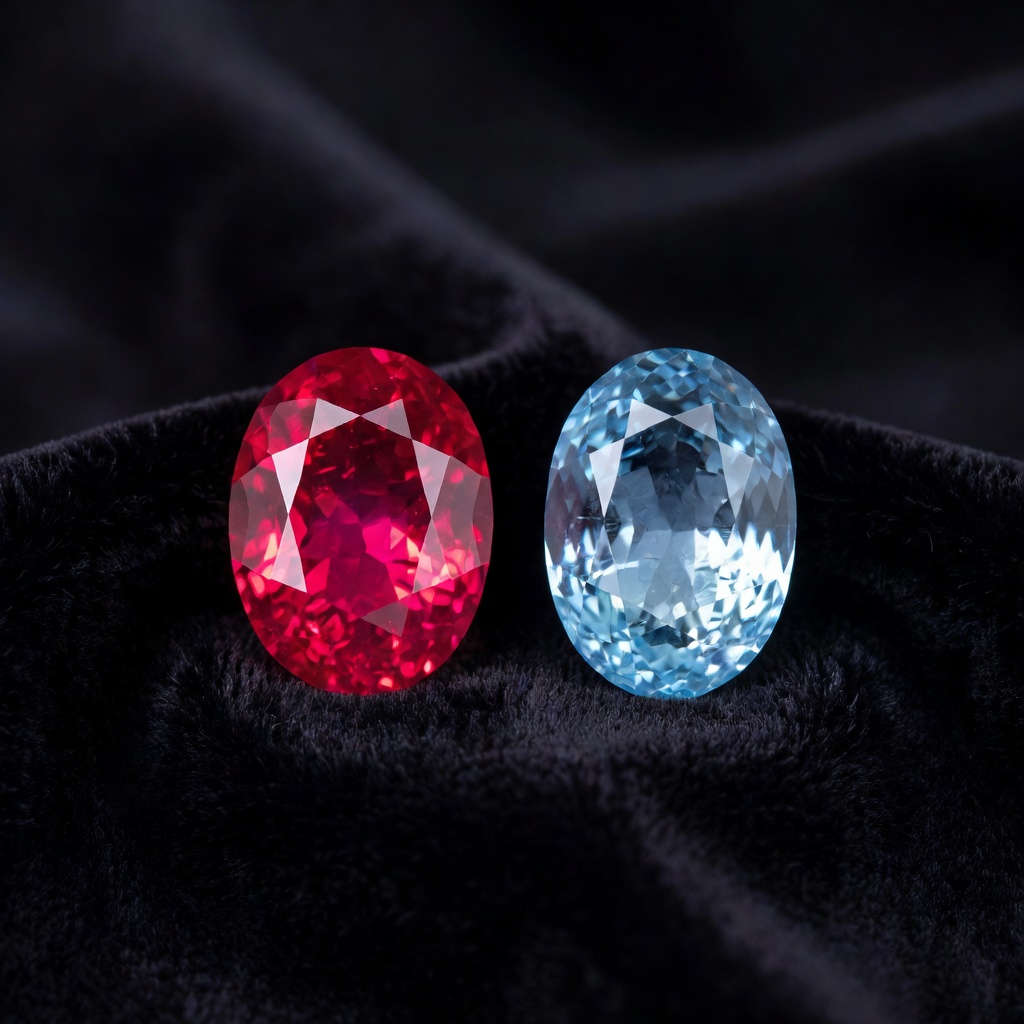
The pink gemstone comparison between these two minerals reveals distinct aesthetic philosophies: ruby pursues intensity and saturation, while poudretteite offers subtlety and delicate charm. Rubies display a spectrum ranging from pure red to slightly purplish-red or orangey-red, with the legendary "pigeon blood" red—vivid, slightly fluorescent red with a hint of blue—commanding the highest premiums in the market. Burmese rubies often exhibit a distinctive "glow" or "velvet" appearance caused by microscopic rutile silk inclusions that scatter light internally, a characteristic highly prized by connoisseurs and factored into burmese ruby value assessments.
Poudretteite presents an entirely different color palette, ranging from colorless to pale pink, rose, or lavender-pink, never achieving the saturated red intensity of fine ruby. The most valuable poudretteite specimens display a delicate peach-pink or salmon color, though many appear nearly colorless in daylight. Crucially, poudretteite exhibits strong pleochroism, showing different colors—typically colorless to pale pink—when viewed from different crystallographic directions. This optical phenomenon requires skilled cutters to orient the table facet carefully to maximize the pink coloration, often resulting in deeper pavilion cuts than those used for ruby.
Visual identification between these gems relies on several diagnostic features observable with standard gemological equipment. Under long-wave ultraviolet light, rubies typically display strong red fluorescence due to chromium content, while poudretteite remains inert or shows weak fluorescence. Ruby's high refractive index (1.76-1.77) creates more brilliant flashes of light compared to poudretteite's lower RI (1.51-1.53), which produces a softer, more subdued brilliance similar to quartz or beryl. Inclusion patterns also differ significantly: rubies often contain rutile needles, calcite crystals, or fingerprint inclusions, while poudretteite may contain characteristic growth zoning or negative crystals but rarely shows the dense inclusion patterns common in natural ruby.
Durability and Wearability Comparison
When evaluating gemstone hardness mohs scale ratings, the disparity between ruby and poudretteite becomes immediately apparent and significantly impacts their practical jewelry applications. Ruby ranks 9 on the Mohs scale, making it second only to diamond in hardness among natural gemstones. This exceptional hardness, combined with excellent toughness (resistance to breaking) and the absence of cleavage, allows ruby to withstand decades of daily wear in rings, bracelets, and other high-impact jewelry settings. Historical evidence supports this durability—rubies from ancient Burmese mines often survive centuries of wear with minimal surface abrasion, maintaining their polish through generations of use.
Poudretteite presents a stark contrast with its 5 on the Mohs hardness scale, placing it in the same category as apatite, opal, and turquoise—gems generally considered too soft for daily wear in rings. More problematic than the hardness alone, poudretteite possesses perfect cleavage in one direction, meaning a sharp impact along that crystallographic plane can cause the stone to split cleanly. This combination of moderate hardness and perfect cleavage makes poudretteite vulnerable to scratching from household dust (which contains quartz, hardness 7) and susceptible to chipping or fracturing during normal wear activities.
Practical jewelry applications reflect these durability differences. Ruby serves as an ideal center stone for engagement rings, anniversary bands, and statement cocktail rings subjected to daily handling. Jewelers can set rubies in secure prong, bezel, or tension settings without excessive concern for damage during the setting process or subsequent wear. Poudretteite, conversely, requires protective settings such as halos, bezels, or recessed mounts, and performs best in earrings, pendants, or brooches that experience minimal physical impact. Collectors purchasing poudretteite should treat it as a "cabinet specimen"—a gem for occasional wear or display rather than daily adornment. When cleaning, ruby tolerates ultrasonic and steam cleaners, while poudretteite requires only mild soap and water with a soft brush to avoid thermal shock or mechanical damage.
Rarity and Availability Factors
The distinction between these gemstones extends beyond physical properties into the realm of extreme scarcity, positioning poudretteite among the rarest gemstones on earth by any measurable metric. While high-quality rubies certainly qualify as rare—fine Burmese specimens over five carats represent perhaps a few hundred stones worldwide—the global ruby trade produces thousands of carats of gem-quality material annually across various quality grades. Major mining operations in Mozambique, Madagascar, and Myanmar maintain steady, if limited, production of facet-grade rough, ensuring that ruby remains accessible to serious collectors and jewelry buyers with sufficient budgets.
Poudretteite exists in an entirely different category of rarity. From its discovery in the 1960s until approximately 2005, fewer than 25 faceted poudretteite gemstones existed in collections worldwide, all derived from microscopic crystals found at mont saint hilaire minerals localities. The 2000 discovery of gem-quality material in Myanmar transformed the market slightly, yet total production remains extraordinarily limited. Current estimates suggest fewer than 100 faceted poudretteite stones exist globally, with most weighing less than one carat. Stones exceeding two carats approach "museum piece" status, appearing at auction perhaps once every several years.
This availability factor creates distinct market dynamics. Ruby buyers can visit high-end jewelers or auction houses with reasonable expectation of finding suitable stones within specific quality and size parameters, though top-tier Burmese material requires patience and significant capital. Poudretteite acquisition requires networking with specialized mineral dealers, gemological institutions, or private collectors, as the stone rarely appears in commercial jewelry channels. The Myanmar deposits, while producing the only facet-grade material, remain poorly quantified—unlike ruby mines with established production histories, poudretteite yields are unpredictable and sporadic, adding to the gem's mystique and collector appeal.
Market Value and Investment Analysis
Understanding poudretteite price per carat valuations requires abandoning standard gemstone pricing models, as this mineral trades more like rare art than commodity gems. Faceted poudretteite specimens typically range from $2,000 to $6,000 per carat for stones under one carat, with larger or more vividly colored specimens commanding premium prices that vary widely based on provenance and documentation. However, these figures mislead slightly—poudretteite lacks the liquid market of established gems, meaning resale opportunities depend on finding specialized collectors willing to pay for extreme rarity rather than intrinsic beauty or wearability.
Burmese ruby value follows more established investment patterns, with documented appreciation trajectories spanning decades. Top-quality unheated Burmese rubies over five carats routinely achieve prices exceeding $100,000 per carat at auction, with exceptional "pigeon blood" specimens reaching $1 million or more per carat. The record-breaking "Sunrise Ruby," a 25.59-carat Burmese stone, sold for $30.3 million in 2015, establishing ruby as a serious alternative investment vehicle. This market liquidity stems from consistent demand across Asian markets, where ruby holds cultural significance, and from established certification standards that allow buyers to verify quality and origin with reasonable confidence.
Investment considerations diverge based on collecting philosophy. Ruby offers portfolio diversification with historically stable appreciation, international liquidity at major auction houses, and insurance industry recognition. The stone's durability ensures that investment-grade pieces maintain condition over decades. Poudretteite suits a different investor profile—the mineral collector seeking "trophy" specimens representing geological extremes rather than financial return. While poudretteite prices have appreciated since the Myanmar discoveries introduced more material to the market, the ultra-niche collector base means selling requires finding the right buyer, potentially taking years. Both stones require impeccable documentation, including laboratory reports verifying natural origin, geographic source, and absence of treatments (particularly heat treatment in rubies, which significantly impacts value).
Certification and Authentication Challenges
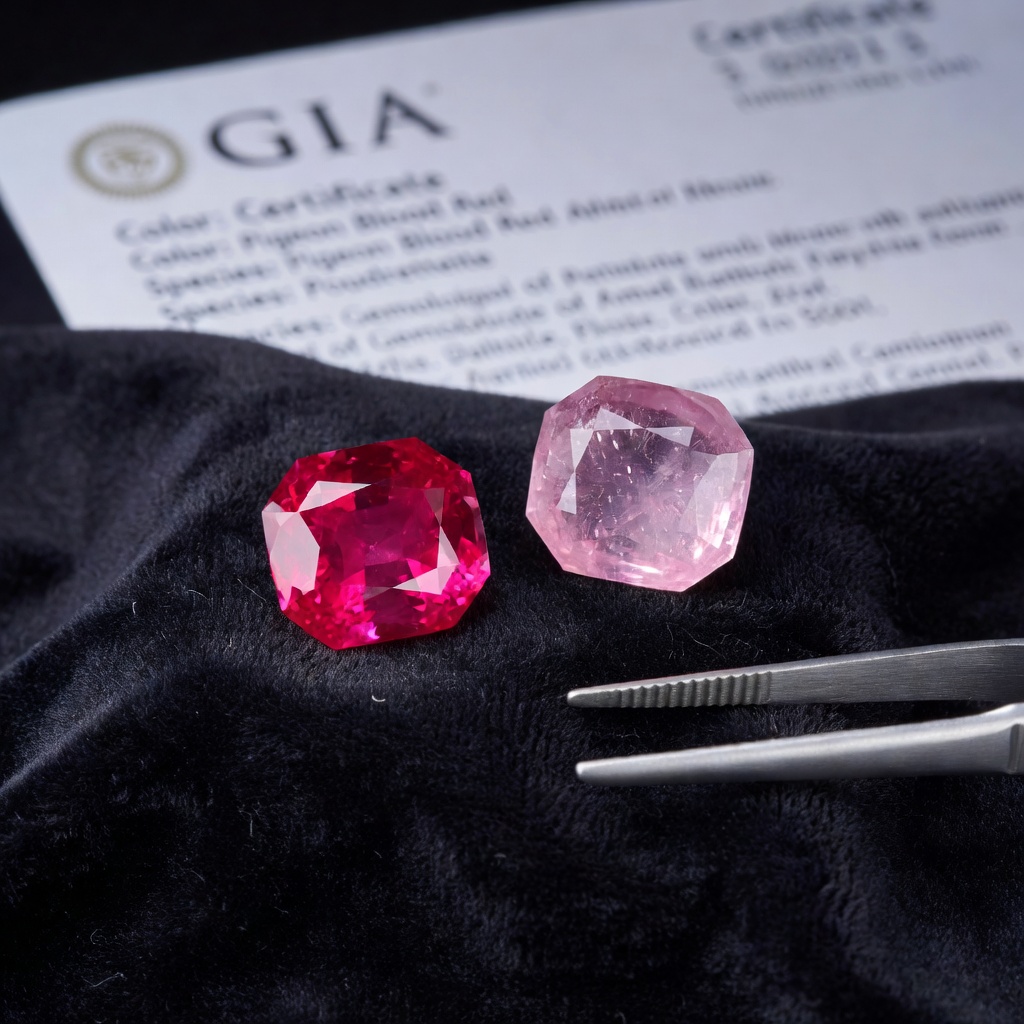
Authenticating these gemstones presents distinct challenges requiring advanced gemological techniques and specialized laboratories. For ruby, standard certification from GIA (Gemological Institute of America) or AGL (American Gemological Laboratories) provides essential documentation regarding origin determination (distinguishing Burmese from Thai, African, or other sources) and treatment disclosure (identifying heat enhancement, glass filling, or flux healing). These reports significantly impact burmese ruby value, as unheated Burmese material commands premiums of 300% or more over heated stones or those from secondary deposits. Experienced gemologists can often identify ruby treatments using standard microscopy, though advanced spectroscopy helps confirm geographic origin through trace element analysis.
Poudretteite authentication requires more sophisticated approaches due to the mineral's extreme rarity and the existence of synthetic counterparts. Distinguishing natural poudretteite from synthetic hydrothermal growth or from similar-looking pink beryl (morganite) and pink tourmaline demands advanced analytical techniques. Raman spectroscopy serves as the primary identification method, revealing poudretteite's distinctive borosilicate peaks distinct from beryl's cyclosilicate structure or corundum's simple oxide pattern. Chemical analysis through EDXRF (Energy Dispersive X-Ray Fluorescence) or LA-ICP-MS (Laser Ablation Inductively Coupled Plasma Mass Spectrometry) confirms the presence of boron and the specific potassium-sodium ratios characteristic of poudretteite.
Practical authentication tips for collectors include examining refractive indices—poudretteite's 1.51-1.53 range falls significantly below ruby's 1.76-1.77 and differs from beryl's 1.57-1.58. Specific gravity testing provides another diagnostic tool, with poudretteite floating in heavy liquids where ruby sinks. For high-value acquisitions, insist on reports from laboratories experienced with rare minerals, such as the GIA, Gübelin Gem Lab, or AGL, specifically noting whether the report confirms "natural poudretteite" versus simply "poudretteite," as synthetic production, while limited, exists in the market. UV-Vis-NIR spectroscopy can distinguish between natural and synthetic poudretteite based on absorption features related to trace manganese and iron content in natural specimens.
Final Verdict: Choosing Your Gemstone
The decision between these rarest gemstones on earth ultimately depends on your role as either a jewelry enthusiast or a mineral collector, as their applications rarely overlap. Ruby serves the practical jewelry buyer seeking a durable, beautiful gemstone with established value retention and liquidity. Its suitability for daily wear, combined with the rich history and cultural significance spanning millennia, makes ruby an ideal choice for engagement rings, heirloom pieces, or investment-grade jewelry. The established market infrastructure means you can buy with confidence, insure easily, and sell when desired through recognized channels.
Poudretteite appeals to the connoisseur collector who values extreme rarity and mineralogical significance over practicality. As one of the mont saint hilaire minerals that transitioned from microscopic curiosity to cuttable gem, poudretteite represents a triumph of modern gemology. However, its fragility restricts it to occasional wear or display pieces, while its limited market requires specialized knowledge to buy and sell effectively. For collectors who already own ruby, spinel, and other classic red gems, poudretteite offers a unique addition representing the absolute pinnacle of geological rarity.
| Characteristic | Ruby (Corundum) | Poudretteite |
|---|---|---|
| Mohs Hardness | 9 (Excellent for daily wear) | 5 (Requires protective settings) |
| Rarity Level | Rare (Thousands of carats annually) | Extremely Rare (< 100 faceted stones known) |
| Primary Color Range | Vivid red to pinkish-red (Pigeon Blood) | Colorless to pale pink/rose |
| Price per Carat (High Quality) | $10,000 - $1,000,000+ | $2,000 - $6,000 (Collector market) |
| Best Jewelry Application | Rings, bracelets, daily wear | Earrings, pendants, collector specimens |
| Primary Sources | Myanmar, Mozambique, Madagascar | Myanmar (Mont Saint-Hilaire type locality) |
| Crystal System | Trigonal | Hexagonal |
| Toughness | Excellent (No cleavage) | Poor (Perfect cleavage) |
| Market Liquidity | High (Established auction markets) | Low (Specialized collector base) |
| UV Fluorescence | Strong red | Inert to weak |
Long-term value considerations favor ruby for those seeking traditional investment characteristics and heirloom potential passed through generations. The stone's durability ensures that a ruby purchased today will appear identical centuries from now, maintaining both sentimental and monetary value. Poudretteite offers a different legacy—as a conversation piece representing the limits of geological possibility, a gem rarer than diamond by orders of magnitude, yet accessible to dedicated collectors at relatively modest prices compared to top-tier rubies. Whichever path you choose, both stones require purchasing from reputable dealers with appropriate laboratory certification, ensuring that your acquisition represents genuine natural material worthy of its place in your collection.
Frequently Asked Questions
What makes poudretteite rarer than ruby?
While high-quality rubies are rare, poudretteite is among the rarest minerals on Earth. For decades, only crystals from Mont Saint-Hilaire existed, and even today, fewer than 100 faceted poudretteite gemstones exist worldwide, compared to thousands of fine rubies available annually. The specific geological conditions required to form this potassium sodium borosilicate mineral occur so infrequently that new discoveries remain geological events rather than commercial mining operations.
Is ruby harder than poudretteite?
Yes, significantly. Ruby ranks 9 on the Mohs hardness scale, making it excellent for daily wear in rings and bracelets. Poudretteite ranks only 5 on the Mohs scale, similar to apatite, making it too soft and brittle for everyday jewelry without protective settings. This hardness differential of four full levels on the scale represents an exponential difference in scratch resistance, with ruby being essentially impervious to household dust while poudretteite scratches easily from normal environmental exposure.
Which is more expensive per carat, ruby or poudretteite?
Fine Burmese rubies typically command higher absolute prices, with top specimens reaching $1 million+ per carat at auction. Poudretteite, while extremely rare, usually ranges from $2,000-$6,000 per carat for faceted stones due to limited collector market liquidity, though museum-quality specimens are priceless. The price disparity reflects market depth rather than relative rarity—rubies benefit from thousands of years of cultural demand and established luxury markets, while poudretteite trades within a specialized community of mineral collectors.
Can poudretteite be used in engagement rings?
Due to its 5 Mohs hardness and perfect cleavage, poudretteite is unsuitable for daily-wear engagement rings. It scratches easily and can fracture. Ruby, with its 9 Mohs hardness and excellent toughness, is ideal for engagement rings and heirloom jewelry. Couples seeking a pink gemstone for daily wear should consider ruby, pink sapphire, or spinel instead of poudretteite, reserving the latter for anniversary gifts or special occasion pieces worn occasionally.
What color differences exist between ruby and poudretteite?
Rubies display intense red to slightly purplish-red hues, with 'pigeon blood' red being most valued. Poudretteite ranges from colorless to pale pink or rose, often showing pleochroism (different colors from different angles), never achieving ruby's saturated red intensity. Under incandescent lighting, ruby appears vivid and saturated, while poudretteite remains subtle and delicate, sometimes appearing nearly colorless depending on the viewing angle and lighting conditions.
Where can I buy genuine poudretteite gemstones?
Genuine poudretteite is available only through specialized mineral dealers, high-end auction houses, and select gemological institutions. Unlike ruby, it rarely appears in commercial jewelry stores. Always require GIA or AGL certification verifying natural origin, as synthetic versions exist. Reputable dealers specializing in rare species, such as those affiliated with the Mineralogical Record or similar organizations, represent the safest sources for authentic material, often providing provenance documentation tracing the stone back to the Myanmar discovery.
Is poudretteite a good investment compared to ruby?
Ruby offers better investment liquidity with established auction markets and consistent appreciation. Poudretteite suits specialized mineral collectors seeking extreme rarity, but its niche market makes resale challenging. Both require expert authentication and proper documentation for value retention. Investors should view ruby as a tangible asset class similar to fine art or precious metals, while considering poudretteite as a collectible similar to rare stamps or coins—valuable to the right buyer but requiring specialized knowledge to monetize.
How do I tell the difference between pink ruby and poudretteite?
Pink rubies show higher saturation and fluorescence under UV light. Poudretteite appears paler, often colorless to light pink, with distinct pleochroism. Definitive identification requires refractive index testing (ruby: 1.76-1.77, poudretteite: 1.51-1.53) and Raman spectroscopy to distinguish borosilicate from corundum structures. Visual examination alone often suffices for initial separation—ruby appears "heavier" and more brilliant, while poudretteite looks softer and more subdued, similar to the difference between a vivid pink spinel and a pale morganite beryl.