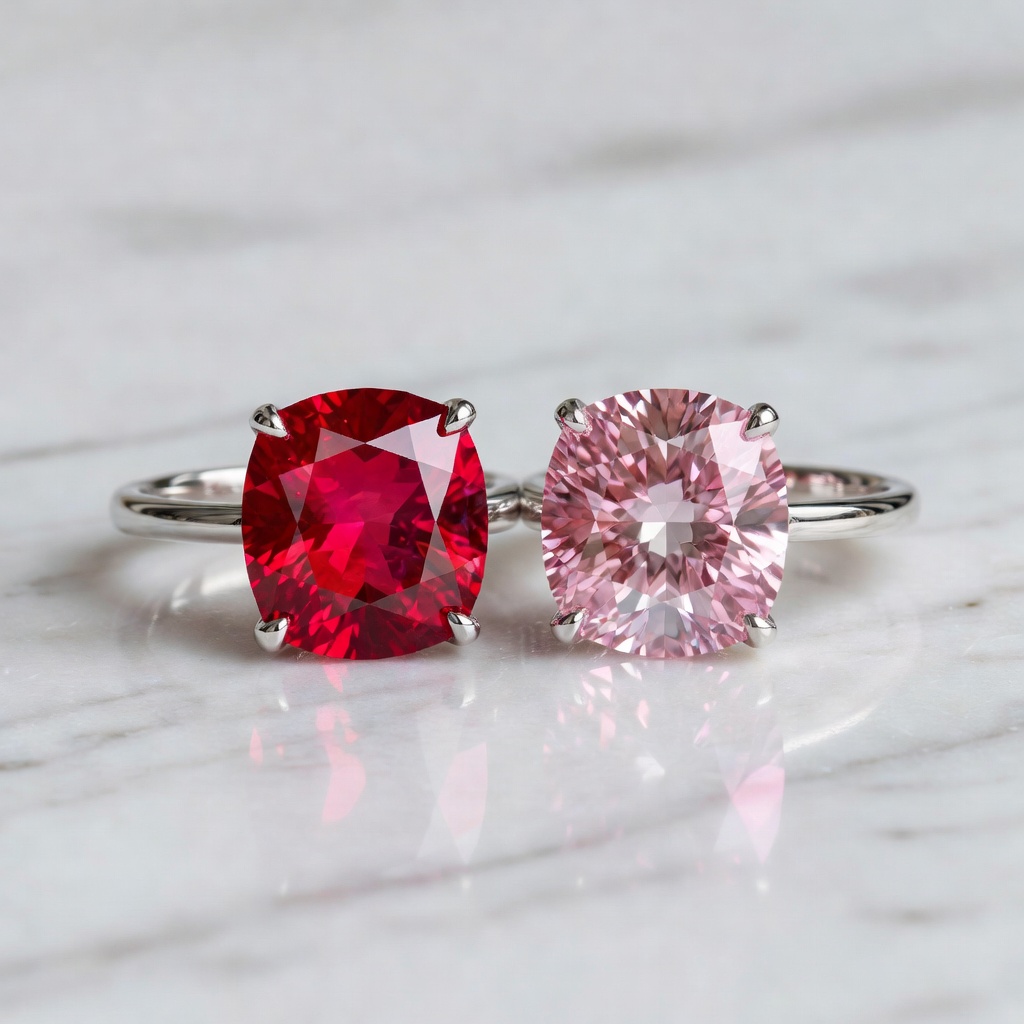
Ruby vs Pink Diamond: The Ultimate Guide to Choosing Between These Precious Red Gems
When selecting a centerpiece gemstone for fine jewelry, discerning collectors and couples increasingly face a captivating dilemma: the passionate allure of a classic ruby versus the ethereal romance of a pink diamond. Both stones command attention with their distinctive red and pink hues, yet they represent vastly different geological wonders, investment profiles, and stylistic statements. Whether you are considering a July birthstone alternative for an engagement ring or building a serious precious gemstone investment portfolio, understanding the nuanced differences between corundum vs diamond crystalline structures can profoundly impact your decision. This comprehensive examination delves into every critical aspect—from molecular composition to market value—empowering you to make an informed choice between these extraordinary treasures.
Chemical Composition and Geological Origins
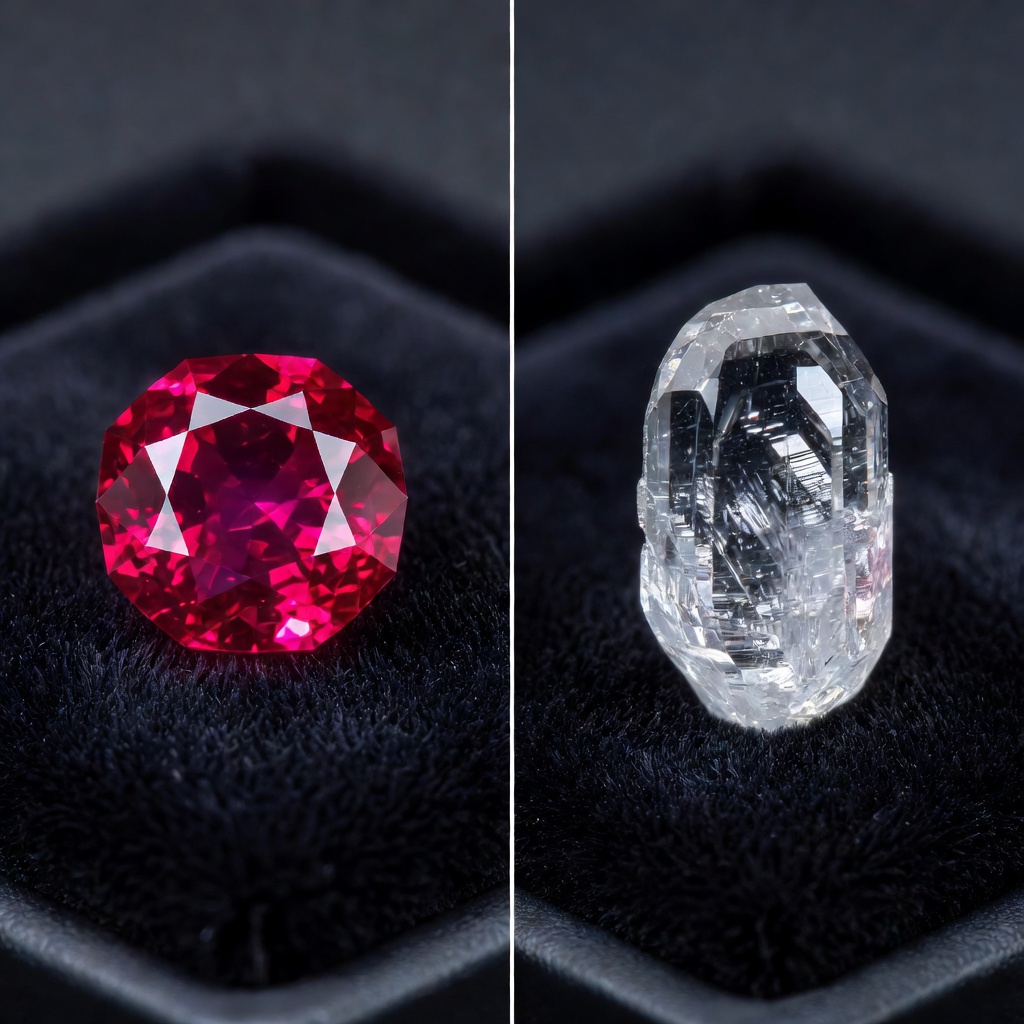
The fundamental distinction between rubies and pink diamonds begins at the atomic level, where entirely different mineral families create these coveted red gemstones. Ruby belongs to the corundum family, chemically composed of crystallized aluminum oxide (Al2O3) that derives its signature crimson color from trace amounts of chromium replacing aluminum atoms in the crystal lattice. This substitution process requires specific geological conditions found primarily in metamorphic limestone deposits subjected to intense heat and pressure over millions of years. The Mogok Valley in Burma (Myanmar) has produced the finest pigeon blood rubies for centuries, though recent discoveries in Mozambique and Madagascar now provide significant market supply.
Pink diamonds, conversely, consist of pure carbon arranged in an isometric crystal structure identical to their colorless counterparts, with their delicate rose hues resulting from a phenomenon called plastic deformation. During formation approximately 100 miles beneath Earth's surface, immense pressure causes distortions in the diamond's crystal lattice that alter how light passes through the stone, selectively absorbing light to transmit pink wavelengths. Unlike rubies, which obtain color through chemical impurities, pink diamonds represent structural anomalies that occurred during their billion-year formation process. The now-closed Argyle mine in Western Australia historically supplied approximately 90% of the world's pink diamonds, making geographic origin particularly significant for ruby gemstone value assessments compared to these ultra-rare carbon crystals.
Mohs Hardness and Durability Factors
When evaluating ruby vs pink diamond durability for daily wear jewelry, the Mohs hardness scale provides essential guidance for long-term preservation. Pink diamonds rank at the absolute maximum of 10 on the Mohs scale, representing the hardest known natural substance and providing unmatched resistance to scratching, abrasion, and surface damage. This exceptional hardness means pink diamonds can withstand decades of continuous wear in engagement rings or bracelets without showing wear patterns, maintaining their pristine polish even when knocked against common household materials or workplace surfaces.
Rubies, while remarkably durable, rank slightly lower at 9 on the Mohs hardness scale, placing them among the hardest gemstones available yet distinctly vulnerable to diamond abrasion. This one-point difference carries practical significance: a ruby can scratch virtually any material except diamond, but contact with diamond jewelry in a shared box or accidental impact could damage the ruby's surface. Both gemstones exhibit excellent toughness—resistance to breaking and chipping—though rubies frequently contain natural inclusions called "silk" that, while sometimes enhancing visual appeal, can create internal stress points unlike the typically cleaner crystalline structure of high-quality pink diamonds. For active individuals or those seeking heirloom pieces requiring minimal maintenance precautions, this hardness differential often tips the scales in favor of fancy color diamond vs ruby selections.
Color Grading Standards and Visual Distinctions
The aesthetic evaluation of these red gemstone comparison candidates follows dramatically different methodologies that significantly impact valuation and visual character. Rubies undergo assessment based on hue, saturation, and tone, with "pigeon blood" red—describing vividly saturated pure red with slight blue undertones—commanding the absolute premium prices in the market. Gemological laboratories strictly delineate between rubies and pink sapphires based on color saturation; stones exhibiting predominantly pink rather than red chroma receive sapphire classification regardless of corundum composition, creating distinct market categories that confuse many first-time buyers.
Pink diamonds utilize the Gemological Institute of America's fancy color grading system, progressing from Faint through Very Light, Fancy Light, Fancy, Fancy Intense, Fancy Vivid, and Fancy Deep categories. This spectrum allows for diverse aesthetic preferences, from subtle blush tones to intense magenta-like saturation. Under gemological magnification, trained observers can distinguish these stones through optical properties: rubies display dichroism, showing two distinct colors (typically red and purplish-red) when viewed from different angles due to their hexagonal crystal system, while pink diamonds exhibit singly refractive properties characteristic of isometric crystals. Additionally, many pink diamonds show distinctive fluorescence under ultraviolet light, creating a secondary glow that rubies rarely display, offering another diagnostic tool for ruby vs pink diamond authenticity verification.
Rarity, Sourcing and Market Availability
The question of pink diamond rarity versus ruby availability reveals stark disparities that directly influence acquisition strategies and investment timelines. Natural pink diamonds represent perhaps the rarest gemstone category commercially available, with geological estimates suggesting that only 0.0001% of all diamonds exhibit any pink coloration. The permanent closure of Rio Tinto's Argyle mine in November 2020 eliminated the primary source of these stones, transforming existing inventory into finite resources that appreciate as collector demand intensifies against dwindling supply. Post-closure auction results demonstrate unprecedented price escalations, with Argyle pink diamonds now trading at multiples of their pre-2020 valuations.
While high-quality untreated Burmese rubies certainly qualify as rare—particularly specimens exceeding five carats with pigeon blood coloration—new mining operations in Africa and continued production in Myanmar ensure steady, albeit limited, supply streams. Mozambique deposits now yield exceptional rubies that rival Burmese quality, providing market liquidity unavailable to pink diamond seekers. However, natural untreated rubies over five carats actually exceed pink diamond rarity in specific size categories, creating niche investment opportunities for those studying precious gemstone investment potential. Collectors seeking immediate acquisition often find ruby markets more accessible, while pink diamond purchases increasingly resemble acquiring fine art or vintage automobiles—requiring auction participation, specialized dealers, and significant capital reserves.
Price Analysis and Investment Potential
Current market dynamics reveal substantial price differentials between these luxury stones, though both categories demonstrate strong appreciation trajectories suitable for wealth preservation. Vivid fancy pink diamonds currently command between $100,000 to well over $1 million per carat depending on saturation intensity and size, with the closure of Argyle creating supply shock that continues driving values upward. The famous Williamson Pink Star, a 11.15-carat fancy vivid pink diamond, sold for $57.7 million in 2022, illustrating the astronomical valuations possible for museum-quality specimens. These price points position pink diamonds exclusively within ultra-high-net-worth portfolios or significant commemorative purchases.
Top-quality pigeon blood rubies from Burma or Mozambique typically range from $50,000 to $100,000 per carat, though record-breaking stones like the 25.59-carat Sunrise Ruby sold for $30.3 million in 2015, exceeding $1 million per carat and demonstrating that exceptional rubies can rival diamond pricing. For precious gemstone investment purposes, both categories show historical appreciation exceeding traditional equity markets, though pink diamonds have exhibited steeper value curves since 2020 due to absolute scarcity. Practical tip: Investors should prioritize stones above two carats with laboratory certification confirming natural, untreated status, as these parameters consistently outperform smaller or enhanced stones in auction environments.
| Characteristic | Ruby | Pink Diamond |
|---|---|---|
| Chemical Composition | Aluminum Oxide (Corundum) with Chromium | Carbon with Crystal Lattice Deformation |
| Mohs Hardness | 9 | 10 |
| Primary Sources | Myanmar, Mozambique, Madagascar, Thailand | Formerly Australia (Argyle), now Russia, Brazil, Canada |
| Color Grading | Pigeon Blood, Vivid, Purplish-Red (Gem labs vary) | Faint to Fancy Vivid (GIA standardized scale) |
| Price per Carat (High Quality) | $50,000 - $100,000+ | $100,000 - $1,000,000+ |
| Rarity Level | Rare (especially untreated Burmese) | Extremely Rare (less than 0.0001% of diamonds) |
| Common Treatments | Heat treatment (widely accepted) | Irradiation/Annealing (must disclose) |
| Best Setting Metal | Yellow Gold or Rose Gold | White Gold or Platinum |
| Refractive Properties | Doubly Refractive (shows two colors) | Singly Refractive |
Treatments, Enhancements and Certification
Transparency regarding enhancement history proves crucial when evaluating ruby vs pink diamond authenticity and long-term value retention. Heat treatment represents the standard and widely accepted practice within the ruby trade, where stones undergo controlled heating to improve color saturation and dissolve silk inclusions, thereby enhancing clarity. While heated rubies constitute the majority of market inventory, untreated specimens command significant premiums—often 300% to 500% higher than heated equivalents of similar appearance. Disclosed heat treatment does not dramatically impair ruby gemstone value for jewelry purposes, though serious investors specifically seek unheated stones accompanied by premium laboratory reports.
Pink diamonds undergo fewer routine treatments, though irradiation followed by annealing can create or intensify pink coloration in otherwise pale stones. Natural color pink diamonds command 10 to 20 times the prices of treated stones, making certification absolutely essential for verification. The Gemological Institute of America (GIA) provides the most respected certification for pink diamonds, specifically noting "Natural Color" versus "Treated Color" on reports. For high-value rubies, the Swiss Gemmological Institute (SSEF) and Gübelin Gem Lab provide preferred documentation that verifies both geographical origin (distinguishing Burmese from Mozambique stones) and treatment status. When purchasing either gemstone, insist on reports from these tier-one laboratories rather than generic certificates, as origin and treatment details profoundly influence resale value and insurance replacement costs.
Jewelry Setting Considerations and Wearability
Practical jewelry design considerations differ significantly between these stones, particularly regarding metal selection and protective mounting strategies. Pink diamonds achieve optimal visual impact when set in white gold or platinum, as these cool-toned metals enhance the stone's pink luminosity without introducing competing color casts that might mask subtle fancy color diamond vs ruby distinctions. The superior hardness of diamonds permits delicate prong settings and exposed pavilion designs that maximize light return, making pink diamonds ideal for engagement rings requiring minimal protective bezels or heavy metal coverage.
Rubies traditionally pair with yellow gold settings that complement and warm their red tones, a combination dating back to ancient Indian and Burmese royal jewelry. However, contemporary designers increasingly utilize rose gold for pinkish rubies or platinum for vivid red stones seeking modern aesthetic appeal. Given rubies' slightly lower hardness, protective settings such as bezels or V-prongs that shield girdle edges prove advisable for daily wear rings, particularly for individuals with active lifestyles. Those seeking July birthstone alternatives for engagement rings should consider that while rubies require marginally more care than diamonds, they withstand normal wear admirably when set thoughtfully. Case study: A 2023 bridal trend report indicated that 68% of ruby engagement rings utilized bezel or half-bezel settings for protection, compared to only 23% of pink diamond rings, reflecting these durability considerations.
Symbolism, Cultural Significance and Meaning
Beyond physical properties, the emotional resonance and historical narratives attached to these stones influence selection for ceremonial jewelry and commemorative pieces. Rubies carry millennia of symbolism as the "King of Gems" in Sanskrit texts, representing passion, protection, vitality, and prosperity. As the traditional July birthstone and the designated gem for 40th wedding anniversaries, rubies convey deep romantic commitment and enduring love. Historical figures from Queen Elizabeth I to modern royalty have treasured Burmese rubies, believing the stones possessed protective powers that warned owners of impending danger by darkening in color.
Pink diamonds embody more contemporary luxury narratives, representing rare romance, absolute exclusivity, and feminine sophistication without traditional constraints. Napoleon Bonaparte famously presented a pink diamond to Empress Josephine, beginning their association with imperial romance, while modern celebrities increasingly select fancy pink diamonds for engagement rings, driving popular demand among luxury consumers. Unlike rubies' bold, fiery symbolism, pink diamonds suggest subtle, refined elegance and the celebration of unique love stories. For those weighing ruby vs pink diamond meaning in relationship contexts, consider whether your narrative aligns more closely with timeless, passionate tradition or rare, contemporary distinction.
Final Decision: Which Gemstone Should You Choose?
Selecting between these extraordinary gems ultimately requires balancing budget parameters, lifestyle factors, aesthetic preferences, and investment objectives. Choose pink diamonds if your budget exceeds $50,000 and you prioritize absolute scratch resistance, steep appreciation potential, and owning one of nature's rarest creations. These stones suit individuals who appreciate cool-toned jewelry, desire minimal maintenance concerns over decades of wear, and view their purchase as both adornment and alternative asset allocation.
Opt for rubies if you value rich historical significance, prefer warm-toned jewelry aesthetics, and seek better size availability per dollar invested. Rubies particularly appeal to those born in July seeking traditional birthstone connections, individuals drawn to "pigeon blood" saturation intensity unavailable in diamonds, and collectors interested in the geological diversity of corundum varieties. Active wearers who cannot guarantee gentle treatment of their jewelry may still prefer pink diamonds despite higher costs, while those seeking classic elegance with cultural depth often find rubies more emotionally resonant. Whichever you select, prioritize certified natural stones from reputable dealers, ensuring your red gemstone comparison concludes with a treasure that brings lasting joy and value.
Frequently Asked Questions
Which is more expensive, a ruby or pink diamond?
Pink diamonds are generally more expensive than rubies. While top-quality pigeon blood rubies can command $50,000-$100,000 per carat, vivid fancy pink diamonds typically start at $100,000 per carat and can exceed $1 million per carat for the rarest stones. The Argyle mine closure has driven pink diamond prices significantly higher than comparable rubies.
Is a ruby as hard as a pink diamond?
No, rubies are not as hard as pink diamonds. Rubies rank 9 on the Mohs hardness scale, while pink diamonds rank 10 (the maximum). This means pink diamonds can scratch rubies, but rubies cannot scratch diamonds. Both are excellent for jewelry, but pink diamonds offer superior scratch resistance for daily wear.
Can you tell the difference between a ruby and pink diamond with the naked eye?
Yes, experienced observers can distinguish them. Rubies typically show a deeper, more saturated red with secondary purple or orange undertones and often display silk inclusions. Pink diamonds exhibit a cooler, often lighter pink tone with exceptional brilliance and fire (dispersion). Under magnification, rubies appear doubly refractive while diamonds are singly refractive.
Are pink diamonds rarer than rubies?
Yes, pink diamonds are significantly rarer than rubies. Only 0.0001% of diamonds exhibit pink coloration, and the Argyle mine (which produced 90% of world's pink diamonds) closed in 2020. While high-quality untreated Burmese rubies are rare, rubies occur more frequently in nature and new deposits continue to be discovered in Africa and Asia.
Which is better for an engagement ring, ruby or pink diamond?
Pink diamonds are better for engagement rings if you prioritize scratch resistance and daily durability due to their perfect 10 hardness. However, rubies offer excellent durability (9 hardness) at a more accessible price point and carry powerful symbolism of passion and protection. Both are suitable, but pink diamonds require less protective care over decades of wear.
Do rubies or pink diamonds hold their value better?
Both hold value well, but pink diamonds have shown stronger appreciation rates recently. Since the Argyle mine closure, pink diamond values have increased 15-20% annually. Untreated Burmese rubies also appreciate steadily, particularly stones over 5 carats. For investment purposes, buy the highest quality you can afford in either category, ensuring GIA or SSEF certification.
What causes the color in rubies versus pink diamonds?
Rubies get their red color from chromium atoms replacing aluminum in the corundum crystal structure; without chromium, the stone would be colorless or a sapphire. Pink diamonds derive their color from a distortion in the crystal lattice caused by intense pressure during formation, which alters how light passes through the carbon structure, creating pink hues.
Can a ruby look like a pink diamond?
Light pink rubies can resemble pink diamonds to the untrained eye, particularly when well-cut and set in jewelry. However, pink sapphires (also corundum like rubies but lighter in color) more closely imitate pink diamonds. Professional gemological testing using refractive index, specific gravity, and spectroscopy easily distinguishes between the two materials.