Understanding Ruby and Phantom Quartz: A Comprehensive Gemstone Comparison
When exploring the vast world of gemstones, few comparisons seem as stark yet fascinating as examining Ruby versus Phantom Quartz. Ruby stands as one of the coveted "Big Three" colored gemstones, a precious corundum variety that has captivated royalty and collectors for millennia with its intense red hue and exceptional durability. In contrast, Phantom Quartz represents nature's geological diary, a macrocrystalline quartz variety containing mysterious mineral inclusion "ghosts" that tell stories of interrupted crystal growth spanning thousands of years. Understanding the distinctions between these stones matters significantly for jewelry buyers seeking either investment-grade precious gems or unique mineral specimens, as well as for crystal healing practitioners evaluating which energetic vibrations align with their spiritual goals.
Geological Origins and Formation Differences
Ruby formation occurs deep within the Earth's crust under conditions of intense heat and pressure, typically within marble or schist deposits found in metamorphic environments. The most prized specimens originate from Myanmar's Mogok Valley, though significant deposits also exist in Thailand, Mozambique, and Madagascar. These aluminum oxide crystals require specific hexavalent chromium substitutions to achieve their characteristic red coloration, a geological coincidence that occurs only under precise chemical conditions during metamorphism.
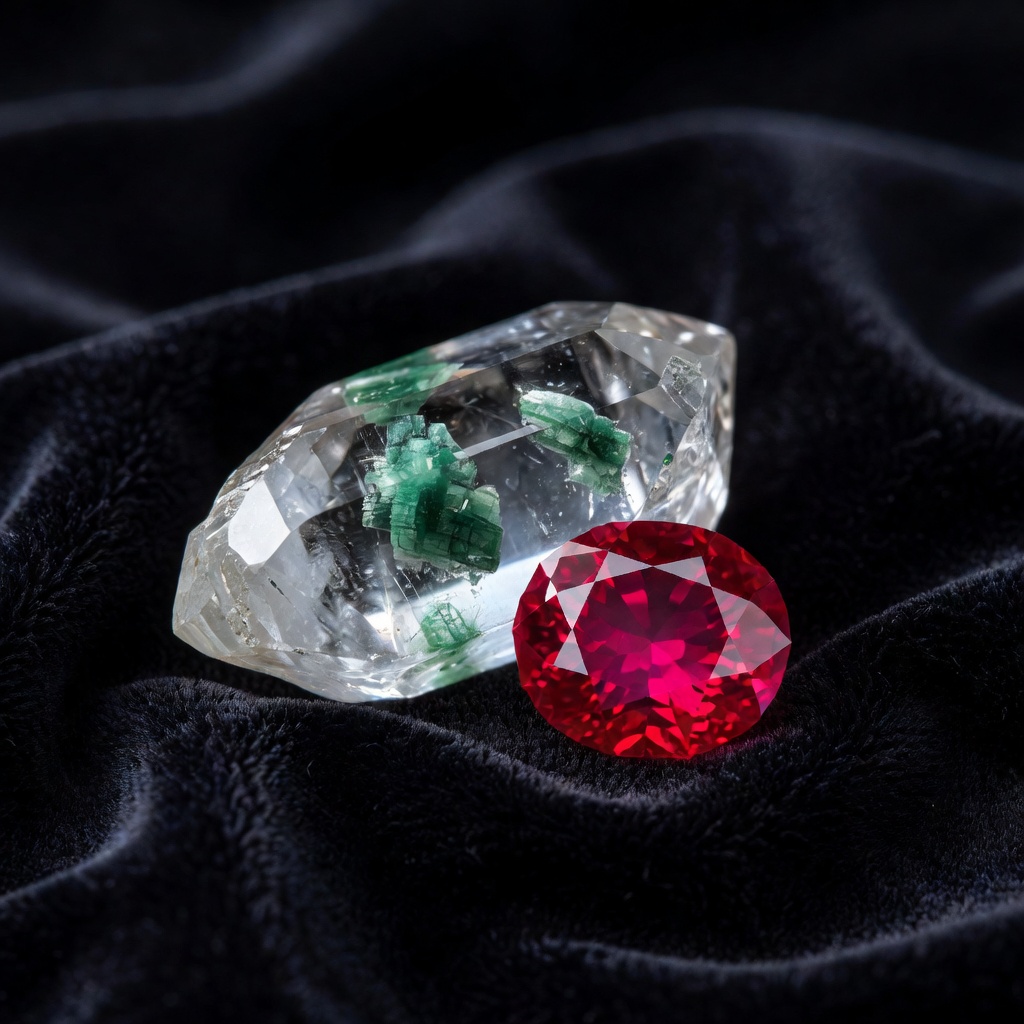
Phantom Quartz develops through an entirely different geological process involving interrupted crystal growth cycles within hydrothermal veins and pegmatites. When Quartz formation pauses due to changes in temperature, pressure, or mineral saturation, foreign minerals such as chlorite, hematite, or clay deposit onto the crystal faces. As growth resumes, these trapped materials become enclosed within subsequent Quartz layers, creating visible "phantom" outlines that mirror the original crystal shape. This stop-start growth pattern can occur multiple times, resulting in complex layered specimens that document the crystal's evolutionary history.
Practical tip for collectors: When evaluating Phantom Quartz specimens, examine the clarity of the phantom boundaries. Sharp, well-defined layers indicate minimal disturbance during the growth interruption, making such specimens more valuable than those with blurred or fractured phantoms. For Ruby acquisition, request documentation of origin, as Burmese Rubies typically command premiums due to their historically superior color saturation compared to Thai or African varieties.
Physical Properties and Chemical Composition
The fundamental chemical distinction between these gemstones begins at the molecular level, with Ruby consisting of aluminum oxide (Al₂O₃) in the corundum family, while Phantom Quartz comprises silicon dioxide (SiO₂). This compositional difference directly impacts their respective hardness ratings on the Mohs scale, with Ruby registering an impressive 9—second only to Diamond—while Quartz maintains a respectable but notably lower rating of 7. For jewelry applications, this hardness differential proves crucial, as Ruby can withstand decades of daily wear without scratching, whereas Phantom Quartz requires more protective considerations.
Crystal structure further differentiates these materials, with Ruby crystallizing in the trigonal system and typically exhibiting conchoidal or splintery fracture patterns that skilled lapidaries must navigate during cutting. Phantom Quartz belongs to the hexagonal crystal system and displays conchoidal fracturing that can follow the internal phantom planes, potentially creating structural weaknesses. Case study: A jewelry designer recently discovered that a Phantom Quartz cabochon developed micro-fractures along a chlorite phantom plane after six months of ring wear, while a Ruby ring from the same collection showed no surface wear after identical treatment.
Understanding these physical limitations helps guide appropriate setting choices. Ruby's exceptional toughness allows for high-polish finishes and exposed settings in bracelets and rings, while Phantom Quartz demands protective bezels or pendant settings that minimize impact risks. When examining Ruby corundum value, remember that hardness contributes significantly to its status as a precious gemstone capable of generational heirloom transmission.
Visual Characteristics and Aesthetic Appeal
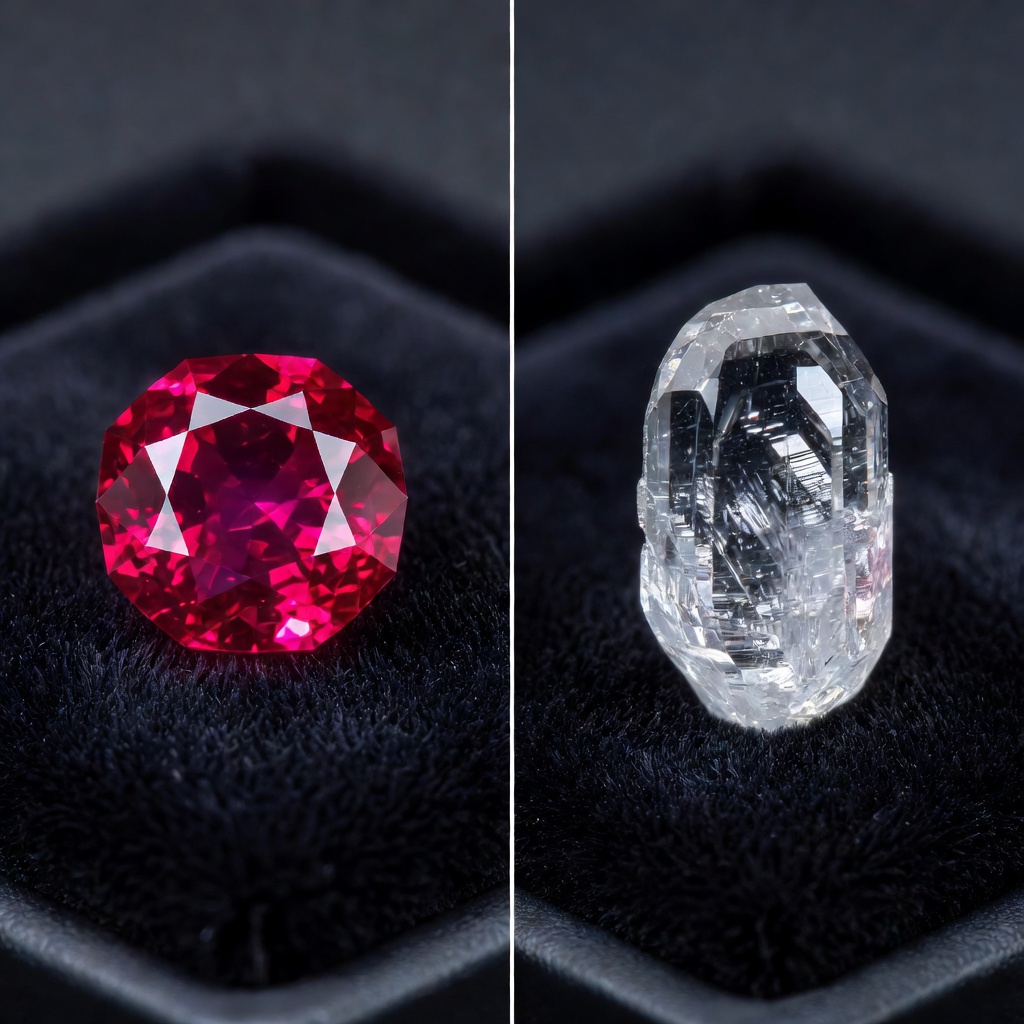
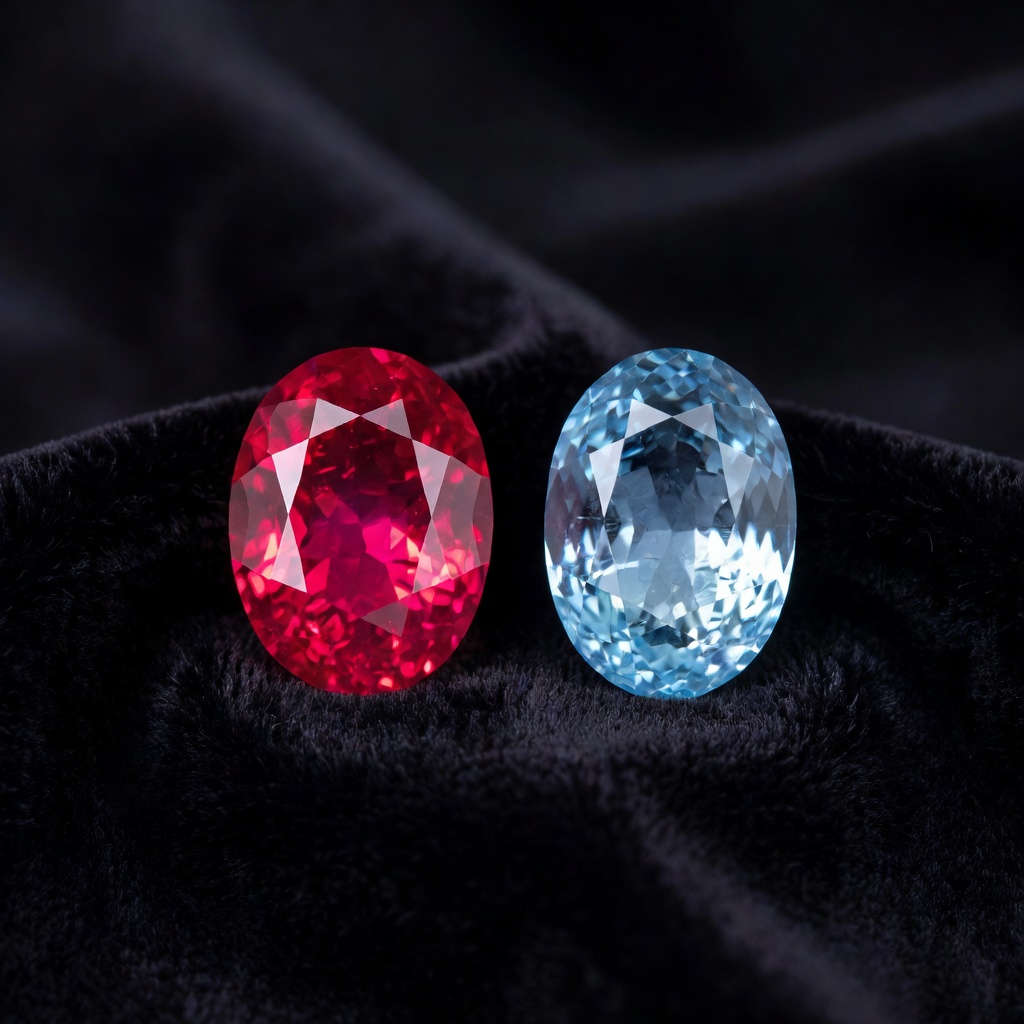
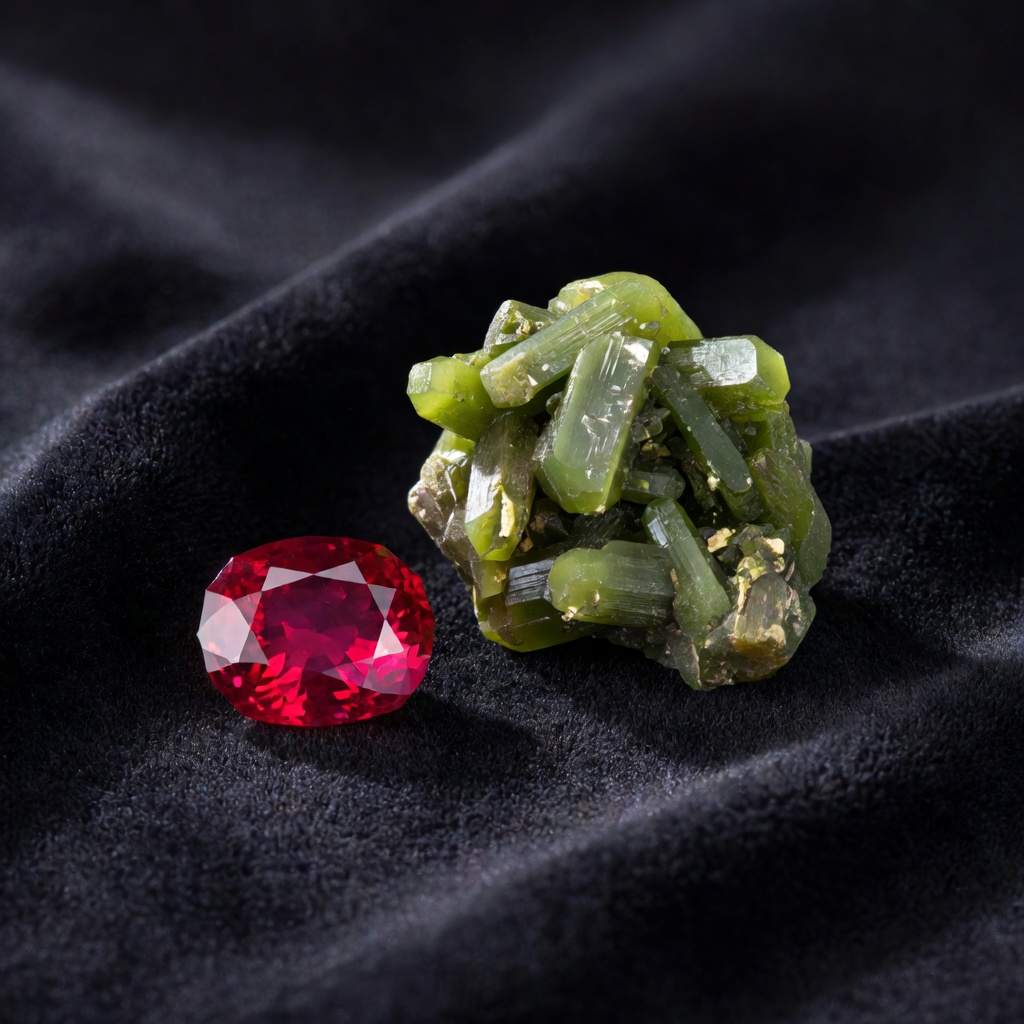
Ruby's aesthetic dominance stems primarily from its color saturation, with the most valuable specimens displaying "pigeon blood" red—a vivid, slightly purplish-red hue with high fluorescence that appears to glow from within. This color intensity results from chromium content and specific light absorption properties that create Ruby's unmistakable visual signature. Clarity standards for Ruby allow for certain inclusions, including rutile needle "silk" that can actually enhance value when it creates asterism (star effects) or indicates untreated natural origin.
Phantom Quartz captivates through transparency and internal architecture rather than body color. The phantom layers create three-dimensional landscapes within the crystal, with chlorite phantoms displaying forest-green hues, hematite phantoms showing rust-red or silver-gray tones, and clay phantoms appearing as white or cream-colored ghost crystals. These inclusions create natural "growth rings" that visualize the crystal's developmental stages, offering aesthetic complexity that differs fundamentally from Ruby's singular color statement.
Practical consideration for buyers: When selecting Ruby, prioritize color over perfect clarity, as a slightly included stone with exceptional red saturation holds more value than a flawless pale specimen. For Phantom Quartz, evaluate the phantom visibility under normal lighting conditions rather than specialized photographic lighting, as some specimens appear dramatic in macro photography but disappoint in person. The vitreous to adamantine luster of Ruby creates brilliant surface reflection, while Phantom Quartz maintains a vitreous appearance that emphasizes internal depth over surface brilliance.
Rarity, Value, and Market Pricing Analysis
The economic disparity between these gemstones reflects their classification within the precious versus semi-precious categories. Ruby commands investment-grade prices ranging from $1,000 per carat for commercial quality to over $1 million per carat for exceptional untreated Burmese stones exceeding five carats. This valuation stems from genuine rarity, as fine Rubies exceed Diamonds in per-carat pricing for comparable quality levels, particularly for untreated specimens from legendary mines.
Phantom Quartz remains accessible to collectors and jewelry enthusiasts, with specimens typically ranging from $20 for small tumbled stones to $500 for exceptional display pieces featuring multiple clear phantom layers. While certain rare varieties—such as green chlorite phantoms with exceptional clarity or red hematite phantoms with sharp geometric outlines—can command higher prices, the market remains oriented toward mineral collecting rather than luxury jewelry investment.
| Characteristic | Ruby | Phantom Quartz |
|---|---|---|
| Chemical Composition | Aluminum Oxide (Al₂O₃) | Silicon Dioxide (SiO₂) |
| Mohs Hardness | 9 (Excellent) | 7 (Good) |
| Price Range | $1,000 - $1,000,000+ per carat | $20 - $500 per specimen |
| Gemstone Classification | Precious | Semi-Precious/Collector Mineral |
| Primary Visual Feature | Pigeon Blood Red Color | Internal Phantom Layers |
| Durability for Daily Wear | Excellent (Suitable for Rings) | Moderate (Best for Pendants) |
| Healing Energy | Stimulating, Passion, Vitality | Gentle, Transformational, Spiritual Growth |
| Care Requirements | Ultrasonic and Steam Safe | Gentle Soap and Water Only |
| Investment Liquidity | High (Established Market) | Low (Collector Niche) |
| Origin Premium | Burmese (Myanmar) commands highest prices | Brazilian and Madagascan specimens most common |
Case study comparison: In 2023, a 5-carat untreated Burmese Ruby sold at auction for $150,000 per carat, while a museum-quality Phantom Quartz specimen with multiple chlorite and hematite phantoms from Brazil commanded $800 at a mineral show. This price differential illustrates how precious vs semi-precious stones occupy entirely different economic spheres despite both offering aesthetic and metaphysical value.
Metaphysical Properties and Crystal Healing
Ruby healing properties center on stimulation and activation, particularly regarding the root chakra and life force energy. Crystal practitioners utilize Ruby to ignite passion, enhance courage, and increase vitality, making it ideal for individuals seeking motivation or working through depression. The stone's intense frequency resonates with physical energy, blood circulation, and adrenal stimulation, often recommended for athletes or those recovering from illness who need energetic support for physical regeneration.
Phantom Quartz meaning revolves around transformation, evolution, and accessing wisdom from past experiences or incarnations. The visible phantom layers serve as metaphysical records, with each layer representing a different stage of the crystal's growth that practitioners believe corresponds to the user's own evolutionary journey. Unlike Ruby's stimulating energy, Phantom Quartz offers gentle, gradual vibrational support for spiritual growth, meditation depth, and understanding karmic patterns. Healers often place Phantom Quartz on the third eye or crown chakra during past life regression sessions.
Practical application tip: For crystal healing comparison purposes, consider your current energetic needs. If facing burnout requiring renewed passion and physical vitality, choose Ruby for placement on the base of the spine or wearing as a ring on the dominant hand. For processing major life transitions, grief, or spiritual awakening, work with Phantom Quartz during meditation by holding it in the receptive hand while visualizing moving through the phantom layers toward core understanding. Some practitioners create grids using both stones, positioning Ruby at the base for grounding and Phantom Quartz at the crown for spiritual access.
Jewelry Applications and Wearability
Ruby's exceptional hardness and toughness make it suitable for virtually all jewelry applications, including high-impact pieces like engagement rings, tennis bracelets, and daily-wear rings. Its ability to take and maintain a high polish ensures that Ruby jewelry retains its brilliance through decades of continuous wear. Setting options range from delicate prong settings that maximize light return to protective bezels for active wearers, with the stone's durability accommodating all metal types from platinum to rose gold.
Phantom Quartz presents more restrictive jewelry applications due to gemstone durability concerns. While Quartz rates 7 on the Mohs scale, the internal phantom planes can create cleavage risks or structural weaknesses, particularly in stones with prominent chlorite layers that may be softer than the surrounding Quartz matrix. Jewelry designers recommend reserving Phantom Quartz for pendants, earrings, and brooches—pieces that receive minimal impact—rather than rings or bracelets. When set in rings, protective bezel settings with substantial metal backing help prevent chipping along phantom boundaries.
Case study: A bridal jewelry designer recently created a complementary set featuring Ruby engagement rings for durability and Phantom Quartz pendant necklaces for the wedding party, demonstrating how both stones can coexist in a jewelry wardrobe when assigned appropriate roles. For those seeking Phantom Quartz in jewelry, consider specimens where the phantoms are centered rather than touching the surface, as surface-reaching inclusions create vulnerability points. Ruby jewelry requires no such restrictions, allowing for creative cuts including cabochons for star Rubies or precision faceting for color optimization.
Care, Cleaning, and Maintenance Requirements
Maintaining Ruby's brilliance requires minimal effort due to its exceptional hardness and chemical stability. Owners can safely clean Ruby jewelry using ultrasonic cleaners or steam cleaning methods, as the stone resists heat and vibration damage effectively. However, store Ruby pieces separately from other jewelry, as their hardness of 9 can scratch virtually any other gemstone, including Sapphire, Diamond, and certainly Phantom Quartz. A fabric-lined jewelry box with individual compartments prevents accidental contact that could damage softer stones in your collection.
Phantom Quartz demands more delicate treatment to preserve its internal features. Avoid ultrasonic cleaners entirely, as the vibrations can exacerbate existing fractures along phantom planes or loosen inclusions. Instead, clean using mild soap and lukewarm water with a soft brush, taking care not to subject the stone to rapid temperature changes that could cause thermal shock. Storage requires protection not only from harder stones but also from extreme temperature fluctuations; display Phantom Quartz specimens away from heating vents or direct sunlight that might cause internal stress.
Long-term preservation strategies differ significantly between these stones. Ruby maintains its surface polish indefinitely with occasional professional cleaning, while Phantom Quartz requires careful handling to prevent internal clouding or inclusion deterioration. Practical tip: For Phantom Quartz display pieces, maintain stable humidity levels between 40-60% to prevent dehydration of certain clay-based phantoms, whereas Ruby remains chemically inert regardless of environmental conditions.
Investment Potential and Collectibility
Ruby represents a traditional investment-grade gemstone with established resale markets, auction house recognition, and liquid value retention. Unheated, untreated Rubies from Myanmar or Mozambique appreciate consistently, particularly stones over three carats with pigeon blood coloration. These gems function as portable wealth, often outperforming traditional investments during economic volatility while serving as generational heirlooms. Collectors should prioritize certification from reputable laboratories (GIA, SSEF, Gübelin) verifying origin and treatment status, as these documents significantly impact resale value.
Phantom Quartz operates within the mineral specimen collecting market rather than the investment gemstone sector. While exceptional specimens with rare phantom combinations or exceptional clarity may appreciate within niche collector circles, they lack the liquidity and standardized grading systems that characterize precious gemstone investment. Value depends heavily on aesthetic appeal, phantom complexity, and specimen size rather than certified quality metrics. Market trends indicate growing interest in rare Phantom varieties, particularly those containing multiple mineral inclusions or unusual geometric phantom formations, though this remains speculative collecting rather than secure investment.
Strategic recommendation: Allocate Ruby purchases toward long-term wealth preservation and heirloom creation, budgeting for premium stones with documented provenance. Approach Phantom Quartz acquisition from the perspective of mineralogical appreciation and spiritual utility rather than financial return. A balanced collection might feature investment-grade Ruby jewelry alongside curated Phantom Quartz specimens for display and meditation, serving both economic and aesthetic purposes without conflating their respective market functions.
Final Verdict: Choosing Between Ruby and Phantom Quartz
Navigating the Ruby vs Phantom Quartz decision requires honest assessment of your priorities across budget, intended use, and energetic needs. Create a decision matrix evaluating your primary goals: if seeking precious status, daily wear durability, and passionate energy activation, Ruby emerges as the clear choice despite its significant cost barrier. The stone rewards investment with generational longevity, maintaining both physical beauty and market value across decades of wear.
Choose Phantom Quartz when drawn to unique geological specimens, spiritual growth work, or distinctive jewelry at accessible price points. This stone suits individuals prioritizing metaphysical exploration over material prestige, or those seeking conversation-starting display pieces that document Earth's crystalline history. For jewelry applications where budget constraints prevent Ruby acquisition, Phantom Quartz offers distinctive beauty without compromising ethical spending limits.
Practical buying guide: If selecting an engagement stone or daily wear ring, Ruby's durability justifies its premium pricing through longevity. For spiritual practitioners building a crystal toolkit, Phantom Quartz provides evolutionary energy that complements rather than competes with Ruby's vitalizing force. Ultimately, these stones need not represent mutually exclusive choices; many collectors eventually acquire both, assigning Ruby to high-impact jewelry roles while reserving Phantom Quartz for meditation spaces and occasional wear pieces. Consider your lifestyle, budget ceiling, and whether you prioritize geological wonder or precious gemstone tradition when making your final selection.
Frequently Asked Questions
Is Ruby more expensive than Phantom Quartz?
Yes, Ruby is significantly more expensive. As one of the 'Big Three' precious gemstones, high-quality Rubies can command $1,000 to over $1 million per carat, while Phantom Quartz remains affordable, typically ranging from $20 to $500 for exceptional specimens with clear, complex phantom layers.
What causes the phantom layers inside Phantom Quartz?
Phantom layers form when Quartz crystal growth pauses and minerals like chlorite, hematite, or clay deposit on the crystal faces. When growth resumes, these trapped minerals create visible 'ghost' outlines of the earlier crystal shape inside the continued Quartz formation.
Can you wear Phantom Quartz every day like Ruby?
No, Phantom Quartz is not recommended for daily wear in rings or bracelets. While Quartz rates 7 on the Mohs scale, the internal phantom planes can create structural weaknesses. Ruby, rating 9 on the Mohs scale with excellent toughness, is ideal for daily wear including engagement rings.
Which stone has better healing properties - Ruby or Phantom Quartz?
Both serve different healing purposes. Ruby stimulates passion, vitality, and courage, working strongly with the root chakra for physical energy. Phantom Quartz supports spiritual growth, past life recall, and transformation, making it ideal for meditation and evolutionary healing work.
Is Phantom Quartz considered a precious gemstone like Ruby?
No, Phantom Quartz is classified as a semi-precious gemstone or mineral specimen, while Ruby is one of the four precious gemstones (alongside Diamond, Emerald, and Sapphire). Precious status is reserved for stones combining rarity, hardness, and historical value.
Can Ruby and Phantom Quartz be worn together?
Yes, they can be worn together for complementary energy work—Ruby providing grounding and vitality while Phantom Quartz offers spiritual insight. However, store them separately as Ruby (hardness 9) can scratch Phantom Quartz (hardness 7) if they rub against each other.
How do I identify a real Ruby versus Phantom Quartz?
Rubies display vivid red to pinkish-red colors, often with rutile needle inclusions, and have a higher specific gravity (3.97-4.05). Phantom Quartz is transparent to translucent with visible internal phantom layers, typically showing green, red, or white ghost crystals inside clear Quartz.
Which is better for an engagement ring - Ruby or Phantom Quartz?
Ruby is the superior choice for engagement rings due to its exceptional hardness (9 Mohs), excellent toughness, and ability to withstand daily wear for decades. Phantom Quartz is too soft and potentially fragile along phantom planes for the daily impact an engagement ring receives.