Two Titans of the Colored Gemstone World
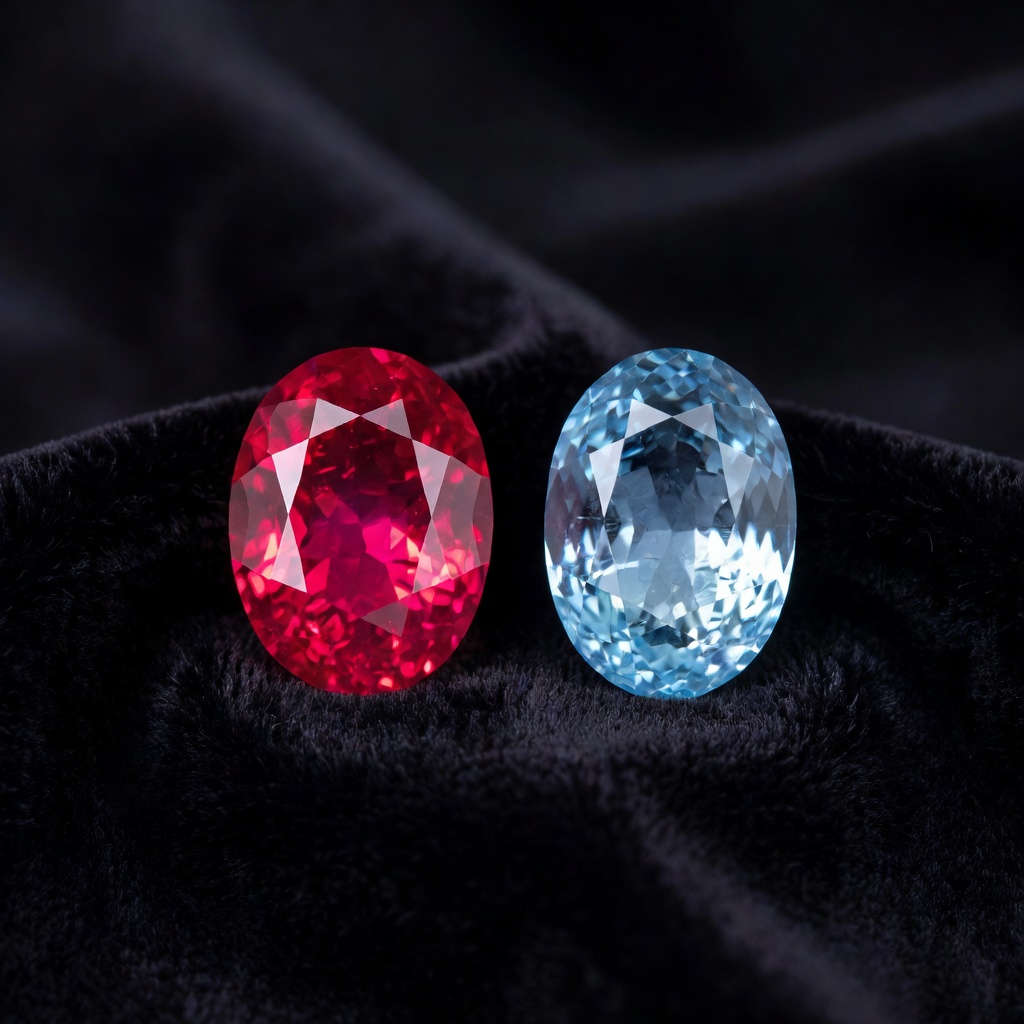
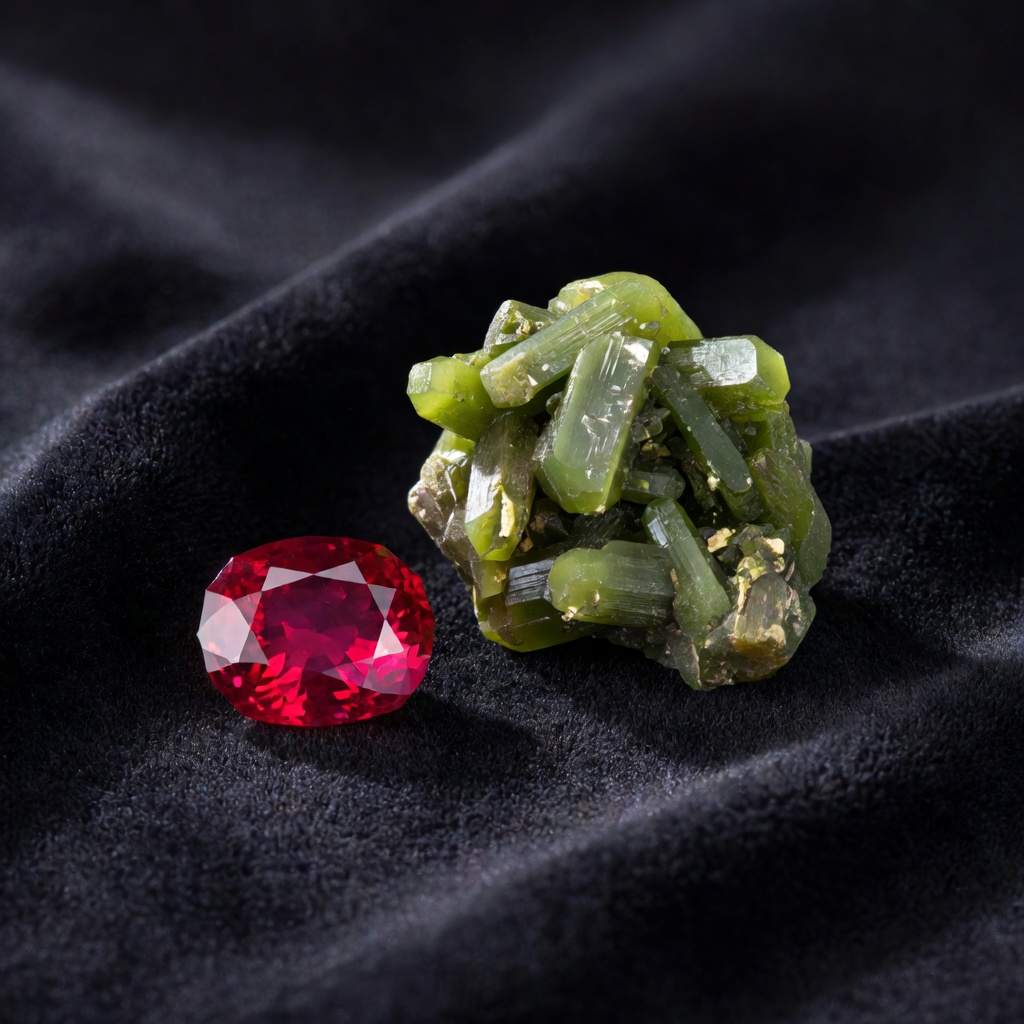
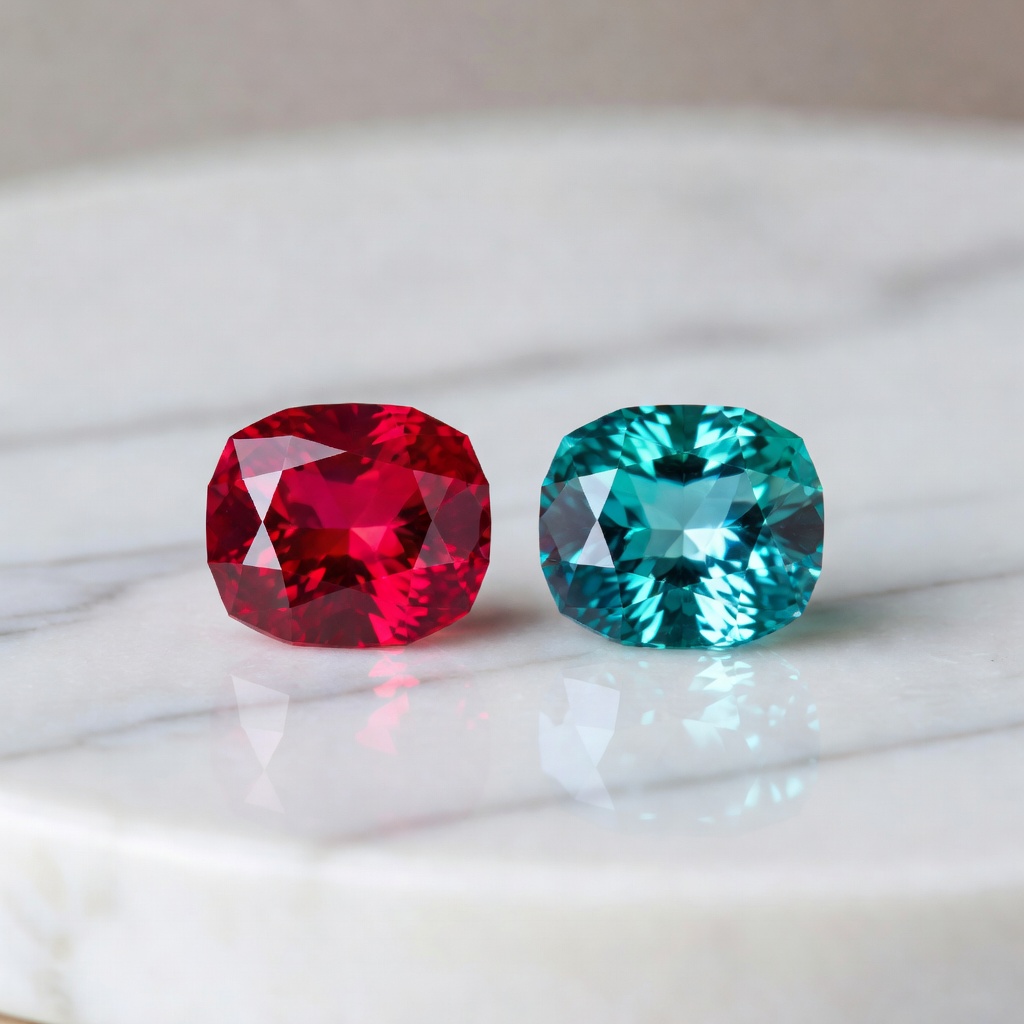
When discerning collectors and investors evaluate the upper echelons of precious gemstones, the comparison between Ruby vs Paraiba Tourmaline frequently emerges as one of the most compelling debates in high jewelry. These two exceptional stones represent the pinnacle of their respective color families, with Ruby commanding respect as the traditional "King of Gems" while Paraiba Tourmaline stands as the electrifying modern discovery that redefined blue-green gemstones. Both occupy rarefied air in auction houses and private collections, yet they appeal to distinctly different sensibilities regarding color preference, wearability, and investment philosophy.
The historical trajectory of these gemstones could not differ more dramatically. Rubies have adorned the crowns of monarchs and the ceremonial armor of warriors for over two millennia, with documented use in ancient Sanskrit texts and Burmese royal regalia establishing their supremacy in the red gemstone category. Conversely, the Neon Blue Paraiba represents one of the most significant gemological discoveries of the late twentieth century, first unearthed in 1987 by Heitor Dimas Barbosa in the Brazilian state of Paraíba. This temporal disparity creates fascinating market dynamics where ancient mystique meets contemporary rarity, forcing collectors to weigh centuries of provenance against the explosive appreciation potential of a finite modern resource.
Despite occupying opposite ends of the color spectrum, these gemstones spark intense deliberation among connoisseurs because both deliver unmatched saturation and luminosity within their hue families. A Pigeon Blood Ruby from Myanmar and a vivid Brazilian Paraiba both exhibit that coveted "glow" that seems to emanate from within the stone rather than merely reflecting surface light. This shared characteristic of exceptional fluorescence and color purity places them in direct competition for the attention of ultra-high-net-worth individuals seeking singular centerpieces for bespoke jewelry creations or tangible alternative assets for wealth preservation.
Geological Origins and Formation Differences
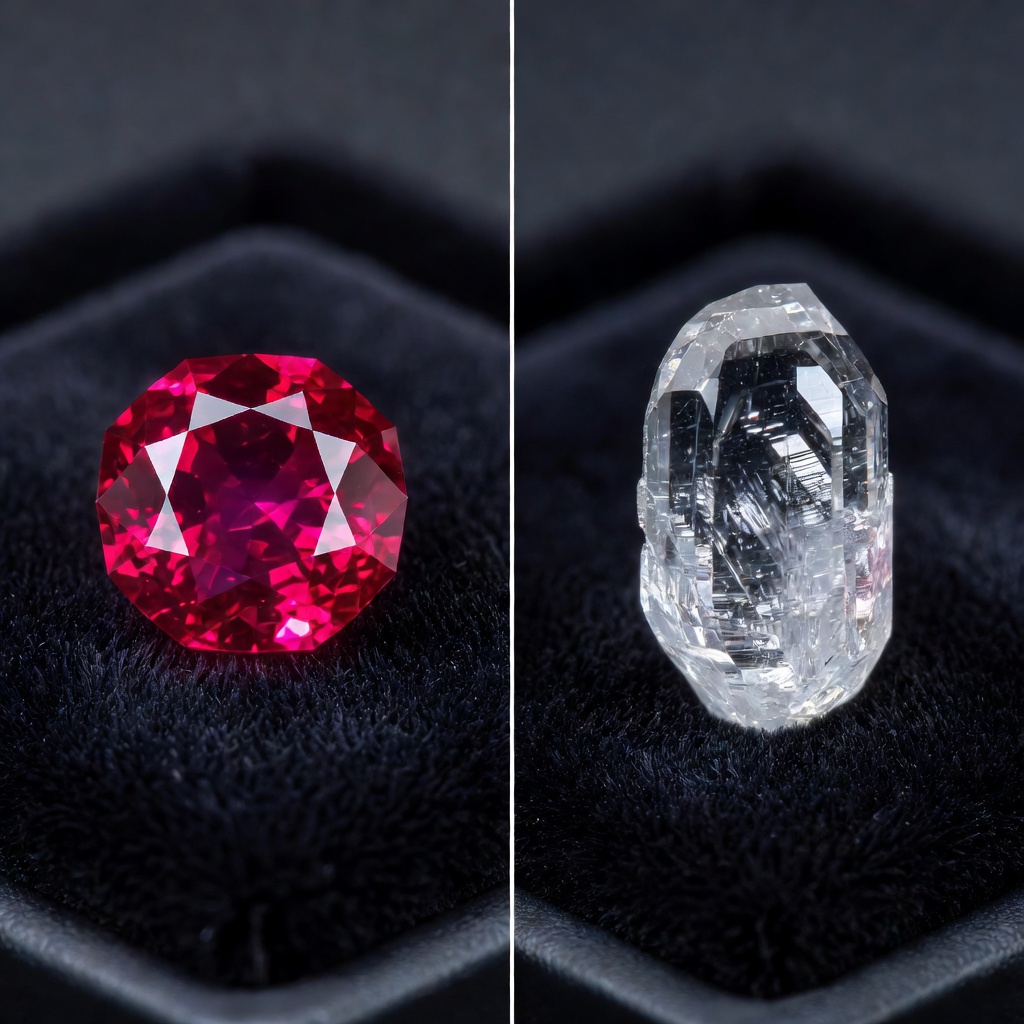
Understanding the geological genesis of these treasures reveals why nature produces them so rarely and in such limited localities. Ruby crystallizes within metamorphic rocks under intense heat and pressure, forming as a variety of corundum when aluminum oxide undergoes metamorphism in the presence of chromium. The most celebrated deposits occur in the Mogok Stone Tract of Myanmar, where marble host rocks have yielded the world's finest specimens for centuries, though significant production now emanates from Mozambique, Madagascar, and Thailand. These formation conditions require specific tectonic collisions that create the perfect chemical soup for chromium to replace aluminum atoms in the crystal lattice, resulting in the saturated red coloration that defines premium material.
Copper bearing tourmaline, specifically the Paraiba variety, forms through entirely different geological mechanisms within copper-rich pegmatite deposits. These gemstone-bearing pockets develop during the late stages of magma crystallization, where residual fluids concentrate rare elements including copper and manganese. The original Brazilian deposits in São José da Batalha represented a unique geochemical anomaly where copper—the element responsible for the characteristic neon blue and green hues—became incorporated into the tourmaline crystal structure in unprecedented concentrations. Subsequent discoveries in Nigeria and Mozambique confirmed that this copper incorporation creates the distinctive glow, though purists argue that only stones from the original Brazilian mines represent true "Paraiba" material, while others classify all copper-bearing tourmalines by the trade name "Paraiba-type."
The trace element chemistry fundamentally distinguishes these stones at the atomic level. While Ruby owes its existence to chromium ions creating absorption spectra that transmit red light, Paraiba Tourmaline requires the precise combination of copper and manganese to produce its electric coloration. Copper ions (Cu²⁺) create the blue tones, while manganese contributes purple and red components that, when mixed with copper, yield the turquoise and green-blue varieties. This chemical complexity means that even slight variations in the geological environment during formation result in vastly different color outcomes, explaining why truly vivid specimens command such extraordinary premiums compared to their more muted counterparts from the same mining regions.
Color Characteristics: Pigeon Blood vs Electric Blue
The color evaluation of these gemstones follows distinct grading paradigms that reflect their unique optical properties and cultural significance. For Rubies, the Pigeon Blood Ruby designation represents the nonpareil standard, a term historically derived from the color of the first two drops of blood from a freshly killed Burmese pigeon. Modern gemological laboratories such as Gübelin and GRS (GemResearch Swisslab) apply strict scientific criteria to this appellation, requiring a vivid red hue with medium to medium-dark tone and high saturation, accompanied by strong red fluorescence under ultraviolet light. The stone must display a homogeneous color distribution without visible zoning, brownish or orangey overtones, or excessive inclusions that diminish transparency.
The Neon Blue Paraiba phenomenon defies traditional color grading scales because its value derives from an almost radioactive intensity that seems to vibrate with internal energy. Unlike sapphires or aquamarines that derive value primarily from hue and saturation, Paraiba Tourmalines are prized for their "glow" or "neon" effect caused by the interaction of copper and manganese with light. The most coveted specimens display an electric turquoise to royal blue color that maintains its intensity even under incandescent lighting, whereas lesser stones may appear washed out or grayish under similar conditions. This persistent luminosity distinguishes premium Paraibas from other blue tourmalines or copper-bearing varieties from Africa that may share the chemical composition but lack the optical magic.
Lighting conditions reveal dramatic differences between these gemstones that significantly impact their wearability and display characteristics. Rubies, particularly those from Myanmar, possess strong fluorescence that causes them to literally glow in natural daylight, enhancing their apparent saturation and making them appear more vivid in outdoor settings than under artificial incandescent bulbs. Paraiba Tourmalines exhibit the opposite behavior, often displaying their most electric characteristics under incandescent or LED lighting, where their copper content creates that signature neon effect. This dichotomy influences jewelry design decisions, with Rubies traditionally favored for daytime statement pieces and royal regalia, while Paraibas excel in evening wear and contemporary cocktail jewelry where artificial lighting showcases their unique chromatic properties.
Physical Properties and Durability Comparison
The Mohs hardness comparison between these gemstones reveals significant practical implications for jewelry applications and long-term wear. Ruby ranks 9 on the Mohs scale of mineral hardness, placing it second only to diamond among naturally occurring gemstones and making it exceptionally resistant to scratching from everyday dust and debris, which typically contains quartz particles ranking 7 on the same scale. This superior hardness, combined with excellent toughness—the resistance to breaking or chipping—makes Ruby an ideal candidate for engagement rings, daily wear bands, and heirloom pieces designed to withstand generations of continuous use without significant surface degradation.
Paraiba Tourmaline presents a more delicate proposition with a Mohs hardness ranging from 7 to 7.5, comparable to quartz itself. While sufficiently hard to resist casual scratching, this ranking places the stone at risk of abrasion from harder materials including topaz, corundum (Ruby and Sapphire), and diamond. More critically, tourmaline possesses perfect cleavage in one direction, meaning it can split cleanly along specific crystal planes when subjected to sharp impact or pressure. This structural characteristic renders Paraiba Tourmaline more susceptible to damage from accidental blows against hard surfaces, temperature shocks, or improper setting procedures where metal prongs might create stress points along these cleavage planes.
These physical differences dictate distinct approaches to jewelry design and lifestyle compatibility. A Mozambique Ruby set in a solitaire engagement ring can withstand the rigors of daily household activities, gym workouts, and travel without requiring excessive caution, though prudent owners still remove such valuable pieces during heavy manual labor. Conversely, Paraiba Tourmaline demands protective settings such as bezels or halo designs that shield the girdle edges from impact, and ideally suits earrings, pendants, and occasion rings rather than daily wear bands. Collectors often commission Paraiba pieces specifically for gala events and sophisticated evening functions where the risk of mechanical damage remains minimal while the stone's neon luminosity receives optimal lighting conditions.
Rarity, Supply, and Market Availability
The scarcity dynamics governing these gemstones create fascinating supply constraints that directly influence their investment potential and collector desirability. Burmese Ruby production has declined precipitously over the past two decades due to political instability, environmental regulations, and the depletion of easily accessible alluvial deposits in the Mogok and Mong Hsu regions. While Mozambique Ruby deposits discovered in the Montepuez region by Gemfields have partially alleviated supply shortages, fine unheated material over five carats remains exceptionally rare, with fewer than a dozen significant stones entering the market annually. This constrained supply pipeline ensures that museum-quality Rubies appreciate consistently, regardless of short-term economic fluctuations.
Brazilian Paraiba Tourmaline represents perhaps the most extreme rarity scenario in modern gemology, with the original mines in São José da Batalha and surrounding districts producing only sporadic yields since their discovery. The pegmatite veins containing copper-bearing tourmaline measure mere centimeters in thickness, requiring labor-intensive hand mining through hard host rock with no guarantee of recovery. Most rough crystals weigh less than five grams, making finished gems over three carats extraordinarily uncommon and stones exceeding five carats virtually unobtainable outside private collections or major auction houses. This supply reality means that high-quality Paraibas often command per-carat prices exceeding those of diamonds, sapphires, or even Rubies of equivalent size.
Geographic expansion has introduced complexity to the rarity equation, as Nigerian deposits discovered in the early 2000s and subsequent Mozambican finds have increased the availability of copper-bearing tourmalines. However, purist collectors and astute investors distinguish between "Brazilian Paraiba" and "African Paraiba," with the former commanding premiums of 200-300% due to superior color saturation and historical provenance. Interestingly, Mozambique has emerged as a crucial source for both gemstones, producing significant Mozambique Ruby quantities alongside Paraiba-type tourmalines, though the latter rarely achieve the neon intensity of their Brazilian counterparts. This geographic convergence creates unique opportunities for mining investors and rough dealers while complicating origin determination for consumers seeking specific provenance.
Price Analysis and Investment Potential
Evaluating these gemstones as vehicles for precious gemstone investment requires understanding their distinct price architectures and liquidity profiles. Fine unheated Burmese Rubies currently command wholesale prices ranging from $15,000 to $50,000 per carat for stones between one to three carats, with exceptional Pigeon Blood specimens over five carats routinely achieving $100,000 to $200,000 per carat at international auctions. Mozambique material offers a more accessible entry point at $5,000 to $15,000 per carat for heated fine quality, though unheated Mozambique Rubies with Burmese-like fluorescence rapidly approach their Myanmar counterparts in valuation. The Ruby market benefits from centuries of established trading infrastructure, standardized grading criteria, and consistent demand from Asian collectors, ensuring relatively liquid resale markets for certified stones.
Paraiba Tourmaline presents a more volatile but potentially lucrative investment landscape characterized by steep appreciation curves and limited market depth. Entry-level African material with moderate saturation may trade between $2,000 and $5,000 per carat, while fine Brazilian specimens under two carats command $15,000 to $30,000 per carat. The true investment tier comprises neon-blue Brazilian stones over three carats, which have achieved auction results exceeding $50,000 per carat and demonstrate annual appreciation rates of 15-25% over the past decade. However, the Paraiba market lacks the standardized grading consistency of Rubies, with significant price variations based on subtle color differences that require expert evaluation, potentially creating liquidity challenges for uninformed sellers.
Auction records illustrate the divergent investment narratives for these stones. While the "Sunrise Ruby," a 25.59-carat Burmese Pigeon Blood, sold for $30.3 million in 2015 (approximately $1.2 million per carat), establishing Ruby as a blue-chip alternative asset, Paraiba Tourmalines have shown more recent explosive growth. A 3.47-carat Brazilian Paraiba ring by Tiffany & Co. sold for $163,000 in 2018, while similar quality stones today command significantly higher prices due to mine depletion. Sophisticated investors often allocate capital across both categories, utilizing Rubies for portfolio stability and wealth preservation while speculating on Paraiba appreciation driven by diminishing supply and increasing recognition among millennial collectors who favor its contemporary aesthetic over traditional red gemstones.
Treatments, Enhancements, and Certification
Transparency regarding treatments and enhancements proves crucial when comparing Ruby vs Paraiba Tourmaline for acquisition purposes, as both categories commonly undergo enhancement procedures that dramatically affect valuation. Heat treatment represents the standard practice for Rubies, with approximately 95% of commercial material undergoing controlled heating to dissolve silk inclusions (rutile needles), improve clarity, and intensify color by removing blue or purple overtones. This enhancement is permanent and stable, accepted within the trade, but commands significantly lower prices than unheated natural material. A fine heated Burmese Ruby might achieve $20,000 per carat, while its unheated equivalent could command $100,000 or more, necessitating disclosure verification through reputable laboratories.
Paraiba Tourmaline frequently undergoes clarity enhancement through fracture filling with colorless oils or resins to improve the apparent transparency of included material, though this practice is less prevalent than in emeralds. More controversially, some copper-bearing tourmalines receive heat treatment to lighten dark material or irradiation to intensify color, treatments that may be unstable or require disclosure for insurance and valuation purposes. Unlike Rubies, where heat treatment has centuries of documentation, Paraiba enhancement techniques continue evolving, requiring buyers to demand contemporary laboratory reports that specifically address copper content and treatment status.
Comprehensive certification from prestigious laboratories such as GIA (Gemological Institute of America), Gübelin Gem Lab, or AGL (American Gemological Laboratories) serves as non-negotiable documentation for both gemstones. For Rubies, these reports should specify origin (Burmese, Mozambique, Thai, etc.), presence or absence of heat treatment, and color grade including Pigeon Blood designations where applicable. Paraiba certificates must confirm copper content through chemical analysis and ideally specify geographic origin, distinguishing between Brazilian, Nigerian, and Mozambican material. Advanced spectroscopic analysis can detect treatment residues and artificial color modification, protecting investors from undisclosed enhancements that could compromise resale value. Buyers should never purchase high-value specimens without accompanying laboratory reports and should verify report numbers directly with issuing laboratories to prevent document fraud.
Jewelry Design and Setting Considerations
The distinct physical properties and optical characteristics of these gemstones necessitate thoughtful design approaches that maximize beauty while ensuring longevity. Paraiba Tourmaline requires protective settings that account for its moderate hardness and cleavage vulnerability, making bezel settings, partial bezels, or halo designs with protective diamond surrounds preferable to exposed prong settings that leave girdle edges vulnerable to chipping. Designers often mount Paraibas in earrings and pendants where impact risk remains minimal, utilizing the stone's Neon Blue Paraiba glow to create floating color effects against the skin or clothing. When set in rings, jewelers should specify thicker girdles and avoid sharp corner cuts that concentrate stress, instead favoring cushion, oval, or round brilliant cuts that distribute pressure evenly.
Ruby's superior durability allows for more versatile setting options including delicate prong-set solitaires, tension settings, and intricate pave arrangements that might compromise softer stones. The classic pairing of Burmese Rubies with yellow gold enhances the warmth of the red color, creating a regal aesthetic that references historical Mughal and Victorian jewelry traditions. Conversely, Pigeon Blood Ruby specimens with strong fluorescence often appear spectacular in platinum or white gold settings that provide neutral backgrounds allowing the red to dominate without color competition. This versatility enables Ruby to transition seamlessly from traditional cocktail rings to contemporary minimalist designs.
Metal selection for Paraiba Tourmaline typically favors white metals including platinum, 18k white gold, or palladium that complement the cool blue-green tones without introducing color casts. Some avant-garde designers experiment with rose gold settings that create striking complementary color contrasts with turquoise-hued Paraibas, though this requires careful color matching to avoid muddying the stone's electric appearance. The relative affordability of smaller Paraiba accent stones compared to similarly sized Rubies has inspired modern cluster designs and gradient pavé settings that create immersive color fields impossible to achieve with Ruby's higher per-carat costs. These design innovations position Paraiba as the choice for fashion-forward collectors seeking conversation pieces, while Ruby remains the preference for timeless heirloom jewelry intended to transcend generational style shifts.
Making the Right Choice: Lifestyle and Aesthetic Factors
Selecting between these extraordinary gemstones ultimately depends on aligning their inherent characteristics with personal aesthetic preferences, lifestyle requirements, and existing wardrobe compositions. Skin tone compatibility plays a significant role in this decision matrix, with warm undertones (golden or olive complexions) typically harmonizing magnificently with the crimson fire of Pigeon Blood Ruby, which enhances natural warmth and creates classic, regal appearances. Cooler skin tones with pink or blue undertones often find that the electric turquoise and neon blue of Paraiba Tourmaline create luminous, contemporary effects that brighten the complexion and provide striking contrast against both fair and deep cool-toned skin.
Wardrobe coordination reveals practical distinctions between these stones that influence daily wearability. Ruby embodies royal elegance and pairs effortlessly with formal evening wear, power suits in navy or charcoal, and autumnal color palettes featuring burgundy, forest green, and gold. The stone's association with passion and authority makes it appropriate for boardrooms, diplomatic functions, and traditional celebrations. Paraiba Tourmaline offers contemporary vibrancy that complements resort wear, summer whites, and modern minimalist fashion in ways that traditional red gemstones cannot. Its oceanic hues coordinate with cruise wardrobes, beach weddings, and creative professional environments where individual expression takes precedence over conventional luxury signaling.
Occasion appropriateness further distinguishes these acquisitions, with Rubies serving as ultimate statement pieces for milestone celebrations, significant anniversaries, and formal state occasions where historical gravitas enhances the wearer's presence. A five-carat unheated Burmese Ruby ring announces established wealth and refined taste accumulated over generations. Paraiba Tourmaline, conversely, excels as an everyday luxury statement for the cosmopolitan collector who frequents art gallery openings, contemporary design events, and international travel destinations where its exotic provenance and modern discovery story spark engaging conversations. The discerning collector might ultimately acquire both, allocating Ruby to heritage jewelry representing permanence and legacy, while selecting Paraiba for avant-garde pieces that reflect current fashion sensibilities and geological rarity.
Care, Maintenance, and Long-term Preservation
Proper maintenance protocols for these valuable assets vary significantly due to their differing durability characteristics and treatment histories. Ruby's exceptional hardness permits relatively aggressive cleaning methods including ultrasonic cleaners and steam cleaning, provided the stone lacks significant fractures or glass-filled cavities (a treatment sometimes applied to low-quality material). Owners should clean Ruby jewelry every few months using warm soapy water and a soft brush to remove accumulated lotions and oils that can dull the surface luster, followed by rinsing in clean water and drying with a lint-free cloth. Annual professional inspections by qualified jewelers ensure that prongs remain tight and settings secure, preventing the catastrophic loss of a high-value center stone.
Paraiba Tourmaline demands significantly gentler care regimens due to its lower hardness and potential clarity enhancements. Owners must avoid ultrasonic cleaners entirely, as the vibrations can loosen fracture fillings or exacerbate existing internal cleavages. Similarly, steam cleaning poses thermal shock risks that could cause the stone to fracture. Instead, clean Paraiba pieces using only warm water with mild dish soap, gently agitating with a soft toothbrush to remove debris from the pavilion facets where dirt accumulates and diminishes brilliance. Harsh chemicals including chlorine, bleach, and ammonia must be avoided as they can degrade fracture fillings and potentially affect the copper content responsible for the stone's signature color.
Storage strategies must account for the hardness differential between these gemstones to prevent accidental damage. Never store Ruby and Paraiba jewelry together in the same compartment, as the harder Ruby (9 on Mohs scale) will inevitably scratch the softer Paraiba (7-7.5) when pieces contact each other during drawer opening or travel movement. Invest in individual soft pouches or compartmentalized jewelry boxes with fabric-lined dividers. For insurance purposes, maintain updated appraisals every two to three years reflecting current market values, as both categories have shown significant appreciation. Photograph each piece from multiple angles including any distinctive inclusions that serve as identification fingerprints, and store these records separately from the physical jewelry to facilitate recovery and claims processing in case of theft or loss.
Detailed Comparison: Ruby vs Paraiba Tourmaline
| Characteristic | Ruby (Corundum) | Paraiba Tourmaline |
|---|---|---|
| Chemical Composition | Aluminum Oxide (Al₂O₃) with Chromium | Complex Borosilicate with Copper & Manganese |
| Mohs Hardness | 9 (Excellent) | 7 to 7.5 (Good to Moderate) |
| Primary Sources | Myanmar, Mozambique, Madagascar, Thailand | Brazil (Paraíba), Nigeria, Mozambique |
| Signature Color | Pigeon Blood Red (Vivid Red with Fluorescence) | Neon Blue to Electric Turquoise |
| Color Cause | Chromium replacing Aluminum | Copper (Cu²⁺) and Manganese content |
| Common Treatments | Heat treatment (95% of market) | Fracture filling, occasional heat/irradiation |
| Toughness | Excellent (no cleavage) | Moderate to Poor (perfect cleavage) |
| Size Availability | Available over 5 carats (rare in fine quality) | Rarely found over 3 carats (Brazilian) |
| Price Range (Fine Quality) | $15,000 - $100,000+ per carat | $10,000 - $50,000+ per carat (Brazilian) |
| Best Jewelry Application | Daily wear rings, heirloom pieces | Earrings, pendants, occasional rings |
| Investment Liquidity | High (established global market) | Moderate (specialized collector market) |
| Cleaning Safety | Ultrasonic and steam safe (usually) | Warm soapy water only |
Frequently Asked Questions
Which is more expensive, Ruby or Paraiba Tourmaline?
Both command premium prices, but fine Paraiba Tourmaline often exceeds Ruby per carat due to extreme rarity. However, unheated Burmese Pigeon Blood Rubies over 5 carats typically reach higher absolute prices at auction than Paraibas of similar size.
Can Paraiba Tourmaline be worn every day like Ruby?
While possible, Paraiba Tourmaline requires more care than Ruby due to its 7-7.5 Mohs hardness and perfect cleavage. Ruby's superior hardness (9) and toughness make it better suited for daily wear rings, whereas Paraiba excels in earrings and pendants.
What causes the neon color in Paraiba versus the red in Ruby?
Ruby's red color comes from chromium replacing aluminum in the corundum crystal structure. Paraiba Tourmaline's signature neon glow results from copper and manganese content, creating the unique 'glow' effect even in low lighting conditions.
Is Ruby or Paraiba Tourmaline the better investment?
Both are strong investments with different risk profiles. Ruby has centuries of proven market stability, while Paraiba offers higher growth potential due to recent discovery (1987) and depleting mines. Diversification between both is often recommended for serious collectors.
How can you tell if a Paraiba Tourmaline is genuine?
Genuine Paraiba displays intense neon blue-to-green color with strong saturation under various lighting. Laboratory certification is essential to confirm copper content and distinguish Brazilian material from more abundant Nigerian or Mozambican varieties.
Do both gemstones require special care?
Ruby requires minimal care due to its durability, tolerating ultrasonic and steam cleaning. Paraiba Tourmaline needs protective settings, avoidance of harsh chemicals, and gentle cleaning with warm soapy water to prevent damage to its clarity enhancements.
Which is rarer: Burmese Ruby or Brazilian Paraiba Tourmaline?
Fine Brazilian Paraiba Tourmaline is generally considered rarer than Burmese Ruby. The original Paraiba mines in Brazil produced very limited quantities, whereas Myanmar has yielded significant Ruby deposits historically, though both face severe supply constraints today.
Can Ruby and Paraiba Tourmaline be set together in jewelry?
Yes, the complementary colors create striking contrast in high jewelry designs. However, store them carefully as Ruby (hardness 9) can scratch Paraiba (hardness 7-7.5). Professional jewelers should use protective barriers between the stones in shared settings.