Ruby vs Opal: Understanding These Precious Gems
Ruby and opal represent two distinct paradigms in the world of precious gemstones, each captivating collectors and jewelry enthusiasts through radically different optical properties and geological origins. While both stones command significant admiration in the luxury jewelry market, ruby belongs to the corundum mineral family composed of crystalline aluminum oxide, whereas opal consists of amorphous hydrated silica formed through entirely different geological processes. These fundamental differences create unique challenges and opportunities for jewelry designers, collectors, and everyday wearers who must consider durability, maintenance requirements, and aesthetic preferences when selecting between these vibrant stones.
The geological formation of rubies typically occurs in metamorphic environments under intense heat and pressure, primarily within marble or basalt deposits found in Myanmar, Thailand, Sri Lanka, and Madagascar. Conversely, opals form in sedimentary rock cavities where silica-rich water deposits microscopic spheres over millions of years, with approximately ninety percent of the world's precious opal supply originating from the arid regions of Australia, particularly Lightning Ridge and Coober Pedy. Consumers frequently find themselves comparing these stones when selecting birthstone jewelry or investment pieces, as both offer exceptional beauty but require distinctly different care protocols and setting considerations to ensure longevity and preserve value.
Composition and Physical Characteristics
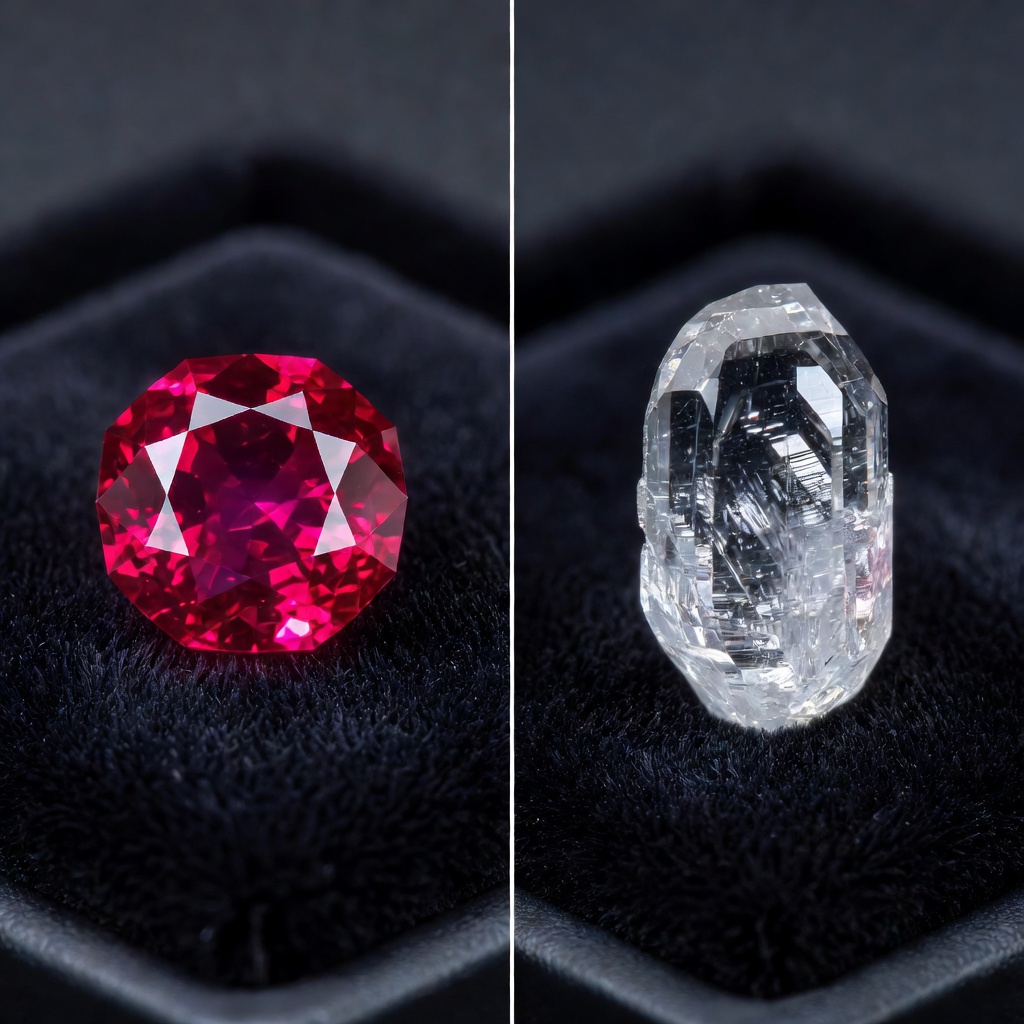
Understanding the molecular architecture of these gemstones provides crucial insight into their performance in jewelry applications and their long-term stability. Ruby's crystalline structure consists of aluminum oxide (Al₂O₃) arranged in a hexagonal crystal system, with chromium impurities responsible for its characteristic red coloration and a specific gravity ranging from 3.97 to 4.05. This dense, organized atomic arrangement contributes to ruby's exceptional hardness and brilliance, with a refractive index between 1.76 and 1.77 that creates significant fire and scintillation when properly cut.
Opal presents a stark contrast through its amorphous, non-crystalline structure composed of hydrated silicon dioxide (SiO₂·nH₂O) containing water content ranging from three to twenty-one percent by weight. The stone's lower specific gravity of 1.98 to 2.20 and refractive index of 1.37 to 1.47 results in a more subdued luster compared to ruby, though this perceived softness actually enhances the ethereal quality of opal's signature optical phenomenon. Internally, rubies often display rutile needle inclusions known as silk, which can create asterism in star rubies or indicate natural origin in transparent stones, while opals contain precisely ordered arrays of silica spheres that diffract light to produce the mesmerizing play-of-color effect prized by collectors.
Internal Characteristics and Identification
Professional gemologists utilize these internal characteristics to distinguish natural stones from synthetics and to determine geographic origin, which significantly impacts valuation. Burmese rubies typically exhibit short, rutile needles intersecting at sixty and one hundred twenty degrees, while Thai rubies often contain irregularly shaped fluid inclusions and hexagonal growth zoning. In precious opals, the uniformity of silica sphere size and packing arrangement determines the quality of color play, with Australian black opals displaying more vivid spectral colors than Ethiopian crystal opals due to differences in formation environment and sphere consistency.
Color Variations: Pigeon Blood vs Play-of-Color
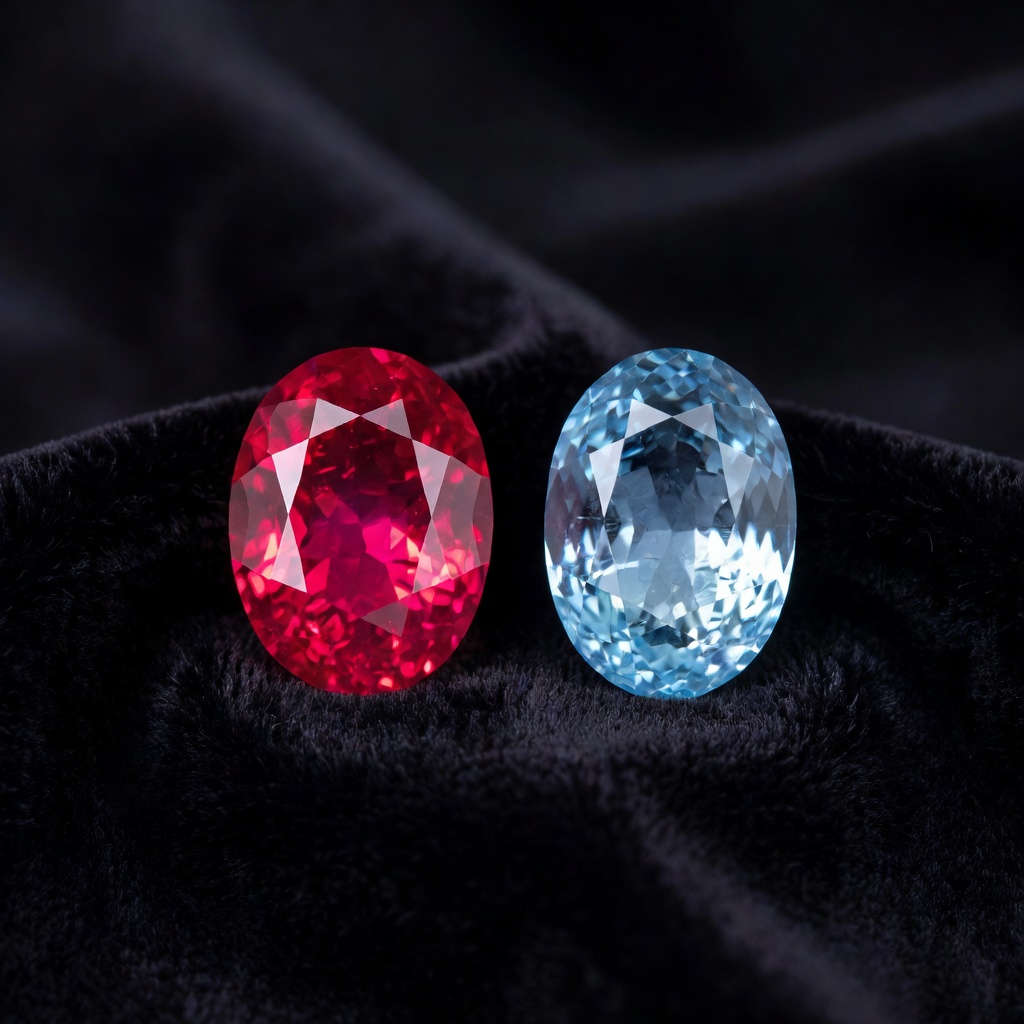
The aesthetic appeal of ruby and opal diverges dramatically in how they interact with light, offering collectors distinctly different visual experiences that cater to varying personal tastes. Rubies present a continuous spectrum of red hues ranging from pinkish-red and purplish-red to the highly coveted pure red with vivid saturation known in the trade as "pigeon blood," a term specifically associated with Burmese stones exhibiting a slightly bluish-red tone under daylight and fluorescent lighting. Color grading for rubies follows strict protocols evaluating hue (the basic color), saturation (intensity), and tone (lightness or darkness), with the most valuable stones displaying medium to medium-dark tones with vivid saturation and minimal secondary purple or orange modifiers.
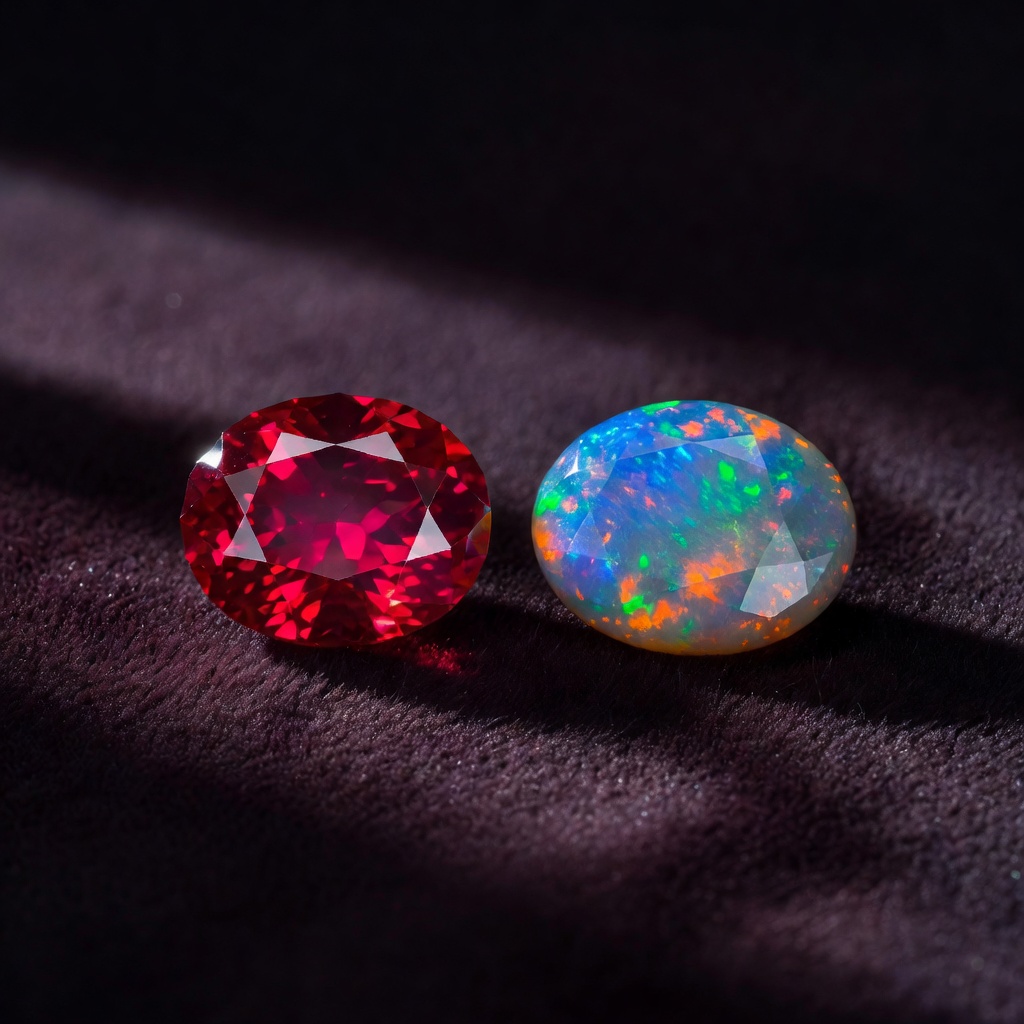
Opal's color expression operates through an entirely different mechanism called play-of-color, an optical phenomenon caused by the diffraction of light through the stone's internal silica sphere structure rather than body color alone. Gemologists categorize opals as either precious opal, which displays this characteristic flashes of spectral color, or common opal (potch), which lacks this optical effect and typically serves as the host rock for precious varieties. Unlike ruby's relatively straightforward color grading, opal evaluation considers brightness ratings on a scale of one to five, pattern distinctiveness (such as harlequin, pinfire, or flash patterns), and body tone ranging from crystal clear to opaque black, with black opal commanding premium prices due to its dark background enhancing color contrast.
Color Stability and Enhancement
Practical considerations regarding color stability differentiate these stones significantly for long-term jewelry ownership. Ruby's color remains permanently stable under normal wearing conditions and light exposure, though heat treatment commonly enhances the red saturation and clarity of commercial-grade stones, a practice accepted in the industry when properly disclosed. Opal colors remain stable in properly hydrated stones, though exposure to intense light, heat, or dry conditions can cause temporary or permanent color fading known as "crazing," where the stone develops internal cracks due to moisture loss, necessitating specific storage protocols to maintain optical performance.
Durability and Hardness on the Mohs Scale
Gemstone durability represents a critical factor in determining appropriate jewelry applications and long-term wearability, with significant disparities existing between these two precious stones. Ruby ranks nine on the Mohs hardness scale, making it second only to diamond in resistance to scratching and surface abrasion, which renders it exceptionally suitable for daily wear in engagement rings, bracelets, and other high-impact jewelry applications. This superior hardness translates to practical longevity, as ruby jewelry maintains its polish and surface integrity through decades of continuous wear with minimal visible wear patterns.
Opal's position at 5.5 to 6.5 on the Mohs hardness scale places it in a vulnerable category comparable to glass, requiring protective settings and careful wear to prevent scratching, chipping, and surface damage from everyday contact with harder materials. Beyond simple hardness measurements, toughness—the resistance to breaking and chipping—further differentiates these stones, as ruby's tenacity and lack of cleavage planes allow it to withstand significant impact without fracturing. Opals exhibit poor toughness due to their amorphous structure and internal water content, making them sensitive to thermal shock from rapid temperature changes and prone to cracking if subjected to dry environments or mechanical stress.
Practical Durability Considerations
When conducting a precious gemstones comparison for jewelry selection, understanding these durability constraints prevents costly damage and disappointment. A ruby ring worn during household cleaning, gardening, or athletic activities typically survives without incident, whereas identical treatment of an opal ring likely results in scratches from dust particles (quartz, hardness 7) or thermal shock from washing hands in hot water. Jewelry designers must account for these properties by incorporating protective bezels or halo settings for opals while allowing rubies to sparkle in elevated prong settings that maximize light return without compromising security.
Birthstone Significance and Symbolism
Cultural significance and metaphysical associations profoundly influence consumer preferences in birthstone jewelry, with both stones carrying rich historical narratives that span civilizations and continents. Ruby serves as the July birthstone, representing passion, protection, and vitality throughout history, with ancient Burmese warriors implanting rubies beneath their skin to render them invincible in battle, and medieval Europeans associating the stone with wisdom, health, and success in love. This intense red gem has adorned royal regalia across cultures, from the Black Prince's Ruby in the British Imperial State Crown to the crowns of Eastern monarchs, symbolizing power, courage, and enduring love that transcends temporal boundaries.
Opal holds the distinction of being the October birthstone, sharing this month with pink tourmaline, and carries symbolic associations with creativity, inspiration, hope, and emotional expression. Ancient Romans revered opal as the most powerful and precious gemstone because it displayed the colors of all other gems combined, while Aboriginal Australian traditions describe the creator's footprints touching the earth where opals now form, imbuing the stones with sacred spiritual significance. Unlike ruby's association with strength and authority, opal resonates with artists, writers, and free spirits who value spontaneity and the display of multiple perspectives, making it particularly popular among those seeking to express individuality through their birthstone jewelry.
Contemporary Metaphysical Applications
Modern crystal healing practitioners attribute specific energetic properties to each stone that influence consumer selection beyond aesthetic considerations. Ruby gemstone properties supposedly stimulate the heart chakra, enhancing life force energy, sexual vitality, and the courage to pursue one's passions with unwavering determination. Opal enthusiasts believe the stone amplifies emotional states, enhances cosmic consciousness, and stimulates originality and dynamic creativity, though some traditions caution that opals require energetic cleansing more frequently than rubies due to their absorbent nature. Whether approached from spiritual or purely aesthetic perspectives, both stones continue to serve as meaningful gifts for birthdays, anniversaries, and significant life milestones.
Market Value and Investment Considerations
The financial aspects of acquiring fine gemstones require careful analysis of market dynamics, rarity factors, and liquidity considerations that differ substantially between ruby and opal investment categories. Untreated Burmese rubies of exceptional quality routinely command prices exceeding ten thousand dollars per carat, with record-breaking stones fetching over one million dollars per carat at auction, establishing them as blue-chip assets within the colored gemstone market. Factors driving ruby valuation include geographic origin (with Myanmar, Mozambique, and Sri Lanka commanding different premiums), treatment status (untreated stones fetching multiples of heated equivalents), color intensity reaching pigeon blood standards, and clarity characteristics that indicate natural formation.
High-quality black opals from Lightning Ridge with intense red fire patterns can achieve prices ranging from five thousand to fifteen thousand dollars per carat for exceptional specimens, placing top-tier opals in comparable investment categories to mid-quality rubies. However, the opal market exhibits greater volatility and subjectivity in pricing, as valuation depends heavily on subjective pattern preferences, brightness intensity, and body tone consistency that vary between individual buyers. Investment liquidity generally favors rubies due to established international demand from collectors in Asia, the Middle East, and Western markets, whereas opal markets remain more specialized with primary demand concentrated in Australia, the United States, and European collector circles.
Authentication and Certification Standards
Serious investors must prioritize laboratory certification from reputable institutions such as GIA (Gemological Institute of America), SSEF (Swiss Gemmological Institute), or GRS (GemResearch Swisslab) when acquiring either stone, as treatment disclosure significantly impacts value. Heat-treated rubies represent the vast majority of commercial inventory and offer beautiful jewelry options at accessible price points, but untreated natural rubies appreciate more reliably as investment vehicles. Similarly, treated or assembled opals (doublets and triplets) provide affordable entry points for collectors, though solid natural opals with stable color patterns represent the only category suitable for serious investment portfolios.
Jewelry Design and Setting Recommendations
Successful integration of these gemstones into wearable art requires specific engineering considerations that accommodate their distinct physical properties while maximizing aesthetic impact. Ruby's exceptional durability allows for versatile setting options including delicate four-prong solitaires that expose maximum surface area to light, channel settings for wedding bands, and elaborate pavé designs where smaller rubies withstand the mechanical stress of daily wear. When designing with rubies, jewelers often recommend white gold or platinum settings for stones with pinkish undertones to enhance coolness, while yellow gold complements the warmth of Burmese and Thai rubies with orange or brown secondary hues.
Opal demands protective engineering strategies that acknowledge its vulnerability while showcasing its unique optical properties to best advantage. Bezel settings that wrap metal completely around the stone's circumference provide superior protection against edge chips and impacts, while partial bezels or halo settings with surrounding diamond or sapphire accents offer compromise solutions that increase durability without completely obscuring the opal's girdle. Metal selection for opal jewelry typically favors white gold, platinum, or silver to provide neutral backgrounds that enhance color play, though rose gold creates striking warm contrasts with crystal opals and serves as an increasingly popular contemporary choice.
Appropriate Jewelry Applications
Practical wearability assessments should guide jewelry type selection based on lifestyle factors and durability constraints. Rubies excel in high-impact applications including engagement rings, tennis bracelets, and right-hand rings designed for daily wear, maintaining their beauty through decades of active lifestyles. Opals perform optimally in protected environments such as earrings, pendants, and brooches that minimize contact with hard surfaces, or in occasional-wear cocktail rings reserved for special events rather than daily activities. For consumers determined to wear opal rings regularly, designers recommend low-profile cabochon cuts set deep within substantial bezels that elevate the stone above potential impact zones.
Care, Cleaning, and Maintenance Protocols
Proper maintenance protocols ensure these precious investments retain their beauty and structural integrity across generations, though the specific procedures differ radically due to compositional variations. Ruby cleaning benefits from mechanical methods including ultrasonic cleaners and steam cleaning systems that safely remove accumulated dirt and oils from the stone's surface and setting crevices, taking advantage of corundum's chemical inertness and thermal stability. Home maintenance for rubies requires only mild soap, warm water, and soft brushing with occasional professional inspections to check for loose prongs or mounting wear that might compromise the stone's security.
Opal maintenance demands significantly more attention to hydration and environmental conditions to prevent the destructive condition known as crazing, where dehydration causes internal cracking that permanently damages the stone's appearance. Owners should store opal jewelry with humidity sources such as damp cotton balls in sealed containers or specialized jewelry boxes with built-in moisture controls, particularly in arid climates or during winter months when indoor heating reduces ambient humidity. Cleaning opals requires only damp soft cloths or brief rinsing in lukewarm water without detergents, as ultrasonic vibrations, steam heat, and harsh chemicals can cause catastrophic failure through thermal shock or structural damage to the silica sphere arrangement.
Professional Maintenance Schedules
Establishing regular professional inspection schedules prevents minor issues from escalating into costly repairs or stone loss. Ruby jewelry benefits from annual inspections by qualified jewelers who can tighten prongs, check for abrasion on adjacent diamonds or gemstones, and professionally polish away surface scratches that may develop over years of wear. Opal pieces require more frequent assessment every six months to ensure protective settings remain intact and to evaluate hydration levels, with some collectors periodically immersing solid opals in water for several hours to ensure optimal moisture content, though this practice remains controversial among experts regarding long-term stability.
Lifestyle Factors: Choosing Your Perfect Stone
Selecting between these magnificent gemstones ultimately requires honest assessment of personal habits, environmental factors, and aesthetic preferences that determine long-term satisfaction with the purchase. Individuals with high-impact lifestyles involving manual labor, sports participation, or frequent hand washing should gravitate toward ruby's durability, as the stone withstands the mechanical stresses that would quickly damage opal. Conversely, those with sedentary professional environments, careful handling habits, and appreciation for artistic expression may find opal's ethereal beauty worth the additional maintenance requirements and protective measures necessary for preservation.
Climate considerations significantly influence opal stability, as residents of desert regions or areas with extreme seasonal humidity variations face greater challenges maintaining opal integrity than those in moderate, humid climates. Ruby maintains consistent appearance and structural stability across environmental extremes from tropical humidity to desert dryness, making it the superior choice for travelers or those living in variable climates. Personal aesthetic preferences ultimately drive the decision, with traditionalists and those seeking classic elegance typically preferring ruby's rich red sophistication, while bohemian spirits, artists, and unconventional style enthusiasts often select opal for its chameleon-like color shifts and conversation-starting uniqueness.
Case Study: Active Professional vs. Creative Artist
Consider the practical applications for two hypothetical jewelry buyers: a trauma surgeon requiring a durable engagement ring that survives constant hand washing, glove wearing, and sterilization procedures, versus a gallery owner seeking statement pieces for exhibition openings. The surgeon's lifestyle demands a ruby set in platinum with a low-profile bezel or channel setting that prevents snagging on medical textiles while resisting chemical exposure from sanitizers. The gallery owner might select a stunning black opal pendant or halo ring worn specifically during evening events, stored properly between wearing, and cherished for its artistic merit that sparks conversations about light, color, and geological wonder.
Final Verdict: Which Gemstone Wins?
Determining a definitive winner in the Ruby vs Opal debate requires evaluating specific use cases, budget parameters, and personal values regarding beauty versus practicality, as each stone excels in distinct categories without universal superiority. Rubies dominate categories of durability, investment stability, and daily wearability, making them the pragmatic choice for engagement rings, heirlooms intended for active wearers, and conservative investment portfolios seeking appreciating hard assets. Opals triumph in uniqueness, artistic expression, and the sheer wonder of natural optical phenomena, offering irreplaceable beauty for collectors willing to accept the responsibility of careful handling and protective wearing protocols.
Comprehensive Comparison Matrix
| Attribute | Ruby | Opal |
|---|---|---|
| Mohs Hardness | 9 (Excellent) | 5.5-6.5 (Fair) |
| Chemical Composition | Aluminum Oxide (Corundum) | Hydrated Silica |
| Primary Color Factor | Body Color (Red Saturation) | Play-of-Color Phenomenon |
| Daily Wear Suitability | Excellent for Rings/Bracelets | Poor for Rings; Good for Pendants/Earrings |
| Water Sensitivity | None (Can be steam cleaned) | High (Requires humidity control) |
| Investment Liquidity | High (Global demand) | Moderate (Specialized market) |
| Price Range (Fine Quality) | $5,000-$100,000+ per carat | $1,000-$15,000+ per carat |
| Birthstone Month | July | October |
| Setting Requirements | Flexible (Prong, Bezel, Channel) | Protective (Bezel recommended) |
| Cleaning Methods | Ultrasonic, Steam, Soap/Water | Damp cloth only; No chemicals |
Authentication Tips for Consumers
When purchasing either gemstone, authentication represents the most critical step in ensuring value and natural origin. Natural rubies typically display characteristic inclusions such as rutile needles, mineral crystals, or hexagonal growth zoning visible under ten-power magnification, whereas synthetic rubies often show curved growth lines, gas bubbles, or unnaturally perfect clarity. Natural opals exhibit irregular, random color patches and chaotic silica sphere arrangements under magnification, while synthetic opals display too-perfect columnar structures, snake-like patterns, or glassy consistency lacking natural variations. Always request laboratory certification from recognized institutions before investing significant sums, and purchase from reputable dealers who provide detailed disclosure regarding treatments, origin, and care requirements specific to your selected stone.
Frequently Asked Questions
Which is more expensive, ruby or opal?
Fine untreated Burmese rubies typically command higher prices per carat than most opals, often reaching tens of thousands per carat. However, rare Australian black opals with intense fire can exceed $10,000 per carat, making high-end specimens comparable to mid-quality rubies.
Can you wear an opal ring every day like a ruby?
Unlike rubies (Mohs 9), opals (Mohs 5.5-6.5) are not ideal for daily ring wear due to their softness and vulnerability to scratching, chipping, and thermal shock. Opals are best reserved for occasional wear or protective pendant settings, while rubies excel in everyday engagement rings.
Is ruby or opal better for an engagement ring?
Ruby is generally superior for engagement rings due to its exceptional hardness (9 on Mohs scale) and durability against daily wear. While opals offer unique beauty, their relative softness requires extremely protective bezel settings and careful wear, making them riskier choices for hands-on lifestyles.
Do rubies and opals have different meanings?
Yes, rubies symbolize passion, courage, and protection, historically associated with royalty and power. Opals represent creativity, inspiration, and emotional expression, often linked to artistic endeavors and spontaneity. Both are considered stones of good fortune but radiate distinctly different energetic qualities.
Which gemstone is rarer, ruby or high-quality opal?
Both are rare, but in different ways. Gem-quality rubies over 5 carats are exceptionally scarce, with Burmese stones commanding premium prices. However, precious opal displaying intense play-of-color represents less than 1% of all opal mined, making fine specimens equally rare and highly coveted by collectors.
Can you wear ruby and opal jewelry together?
Yes, ruby and opal create stunning complementary combinations due to their contrasting colors and textures. However, store them separately as ruby's hardness can scratch opal. When designing mixed pieces, ensure opals are well-protected and the stones don't touch directly.
How do I tell if my ruby or opal is natural vs synthetic?
Natural rubies typically contain inclusions like rutile needles or mineral crystals visible under magnification, while synthetics show curved growth lines or perfect clarity. Natural opals display irregular color patterns and microscopic silica spheres, whereas synthetics often show too-perfect columnar structures or glass-like consistency.
What months are ruby and opal birthstones for?
Ruby is the birthstone for July, while opal is the primary birthstone for October (along with pink tourmaline). This makes both popular choices for birthday gifts during their respective months, though their distinct durability profiles should guide jewelry selection regardless of birth month.