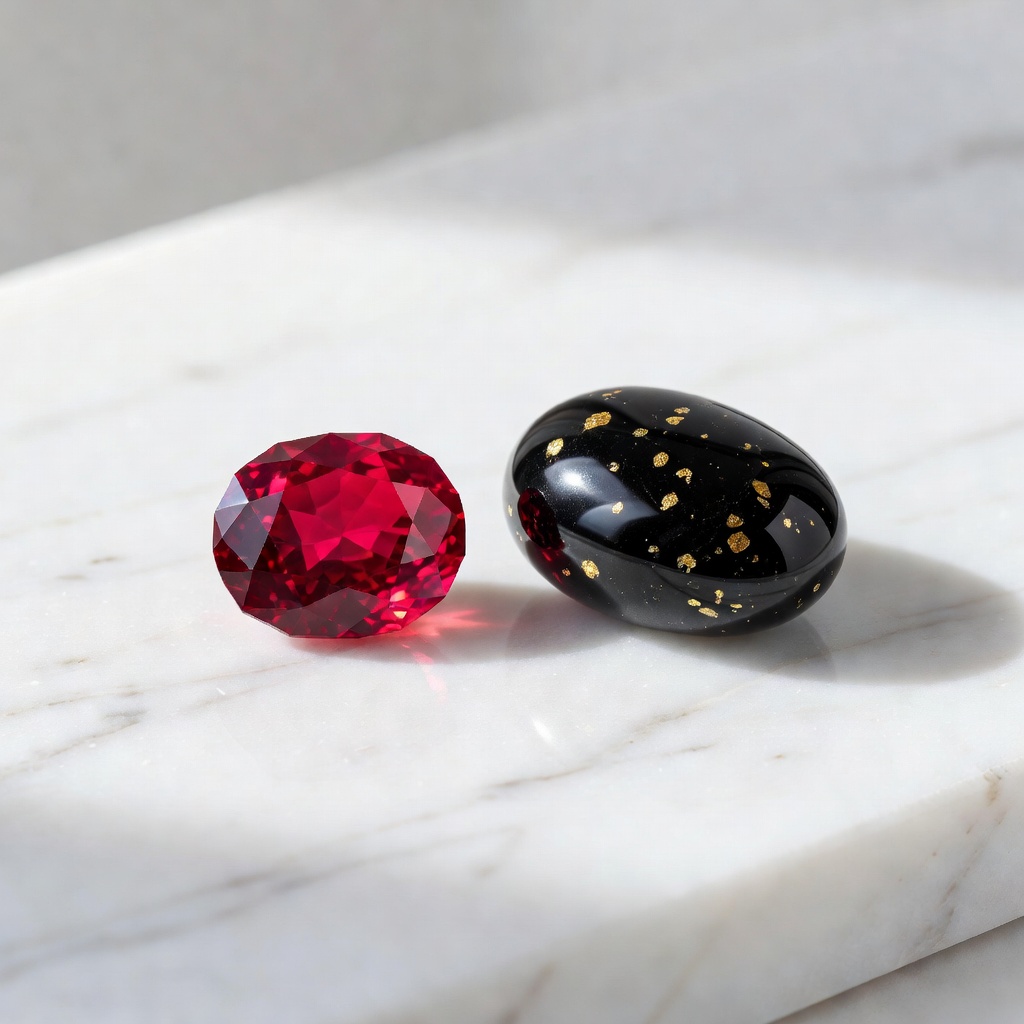
Ruby vs Obsidian: A Comprehensive Guide to Precious Gems and Volcanic Glass
When exploring the fascinating world of gemstones, few comparisons prove as striking as analyzing Ruby vs Obsidian. These two materials represent opposite ends of the geological spectrum, offering distinct aesthetics, durability profiles, and spiritual applications that appeal to different types of collectors and jewelry enthusiasts. Ruby stands as one of the traditional "big three" precious gemstones alongside sapphire and emerald, commanding premium prices and symbolizing passion and power across countless cultures. Obsidian, while visually captivating in its own right, emerges from volcanic activity as a natural glass that serves more ornamental and metaphysical purposes rather than investment-grade luxury.
Understanding the distinction between precious vs ornamental gemstones becomes essential for anyone considering a significant jewelry purchase or beginning a crystal healing practice. While both materials occur naturally within Earth's crust, their formation processes, structural integrity, and market valuations differ dramatically. This comprehensive comparison will help you navigate the decision between these contrasting stones, whether you seek a heirloom-quality investment piece or an affordable tool for spiritual protection and grounding.
Geological Origins and Formation
The Ancient Birth of Ruby Crystals
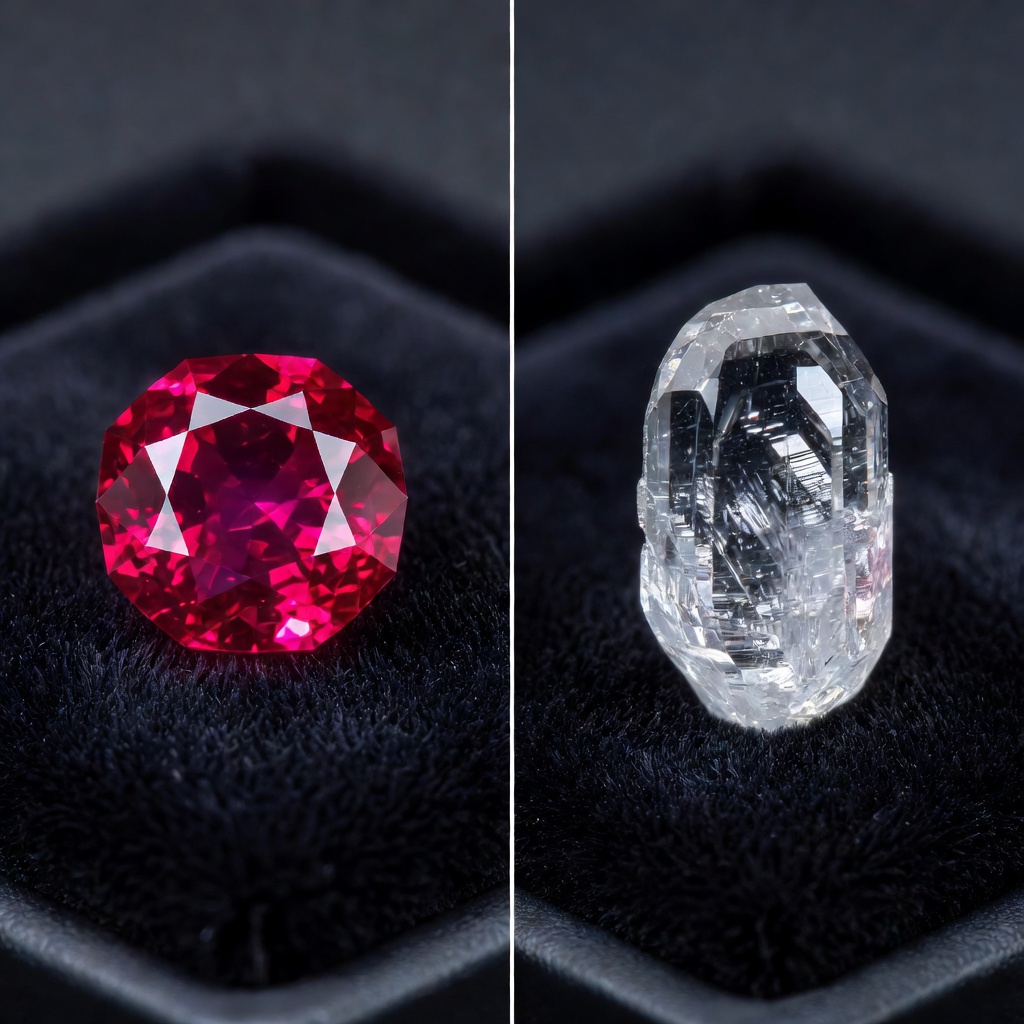
Rubies form deep within Earth's crust under extraordinary conditions that require both immense heat and intense pressure over millions of years. As a variety of corundum, rubies crystallize within metamorphic rocks such as marble and schist, where aluminum oxide molecules arrange themselves into hexagonal crystal lattices while chromium impurities create the signature red coloration. The most prized specimens originate from Myanmar's Mogok Valley, though significant deposits also exist in Mozambique, Thailand, and Madagascar, each location imparting subtle variations in color saturation and fluorescence.
The geological journey of a ruby represents one of nature's slowest creative processes, with crystals taking 20 to 30 million years to reach mineable sizes. This extended formation period contributes to the rarity and value of high-quality specimens, as perfect conditions must remain stable throughout the entire crystallization process. Miners often extract these gems from weathered marble zones or alluvial deposits where ancient rocks have eroded, revealing the treasured red crystals within.
Instant Creation of Obsidian
Unlike the methodical crystallization of corundum, corundum vs volcanic glass presents a dramatic contrast in formation timelines. Obsidian forms instantaneously when felsic lava extrudes from volcanic vents and cools rapidly at Earth's surface, preventing the organization of mineral crystals into ordered structures. This rapid cooling—sometimes occurring within days or even hours—results in an amorphous solid that gemologists classify as a mineraloid rather than a true mineral.
Major obsidian deposits occur in volcanic regions worldwide, with notable sources including Mexico's Sierra de las Navajas, Iceland's volcanic fields, and the Obsidian Cliffs of Yellowstone National Park. Archaeological evidence suggests humans have utilized obsidian for tools and ceremonial objects for over 700,000 years, valuing its ability to fracture into razor-sharp edges with conchoidal patterns. While abundant compared to precious gemstones, specific varieties such as fire obsidian or rainbow obsidian command premium prices due to their spectacular optical effects.
Physical and Chemical Composition
Crystalline Structure of Ruby
Ruby consists primarily of aluminum oxide (Al₂O₃) with trace amounts of chromium substituting for aluminum in the crystal lattice, typically comprising 0.5% to 2% of the stone's composition. This substitution creates the characteristic red hue while maintaining the trigonal crystal system that defines all corundum varieties. The ruby chemical composition grants exceptional hardness and thermal stability, allowing these gems to withstand cutting, polishing, and daily wear without degradation.
Gemologists identify rubies by their specific gravity of 3.97 to 4.05 and refractive index ranging from 1.762 to 1.770, measurements that distinguish them from red spinel or garnet imitations. The crystalline nature of ruby also produces pleochroism, where the stone displays different colors when viewed from different angles—typically orange-red and purplish-red—which cutters must consider when maximizing color saturation in finished gems.
Amorphous Nature of Obsidian
Obsidian structure fundamentally differs from crystalline gemstones, consisting of amorphous silicon dioxide (SiO₂) with approximately 70% or higher silica content plus various mineral inclusions that create color variations. The absence of crystalline organization means obsidian lacks the ordered atomic arrangement found in rubies, instead featuring a random molecular structure similar to manufactured glass. This amorphous quality results in conchoidal fracture patterns when the material breaks, producing curved surfaces with sharp edges.
The chemical composition varies by source, with magnesium and iron content creating black varieties, while hematite inclusions produce mahogany obsidian, and cristobalite spherulites form the distinctive white patches in snowflake obsidian. Unlike crystalline gems, obsidian contains microscopic water bubbles and crystallites that influence its transparency and optical properties, though these inclusions differ significantly from the "silk" rutile needles found in rubies.
Visual Characteristics and Color Variations
The Red Spectrum of Ruby
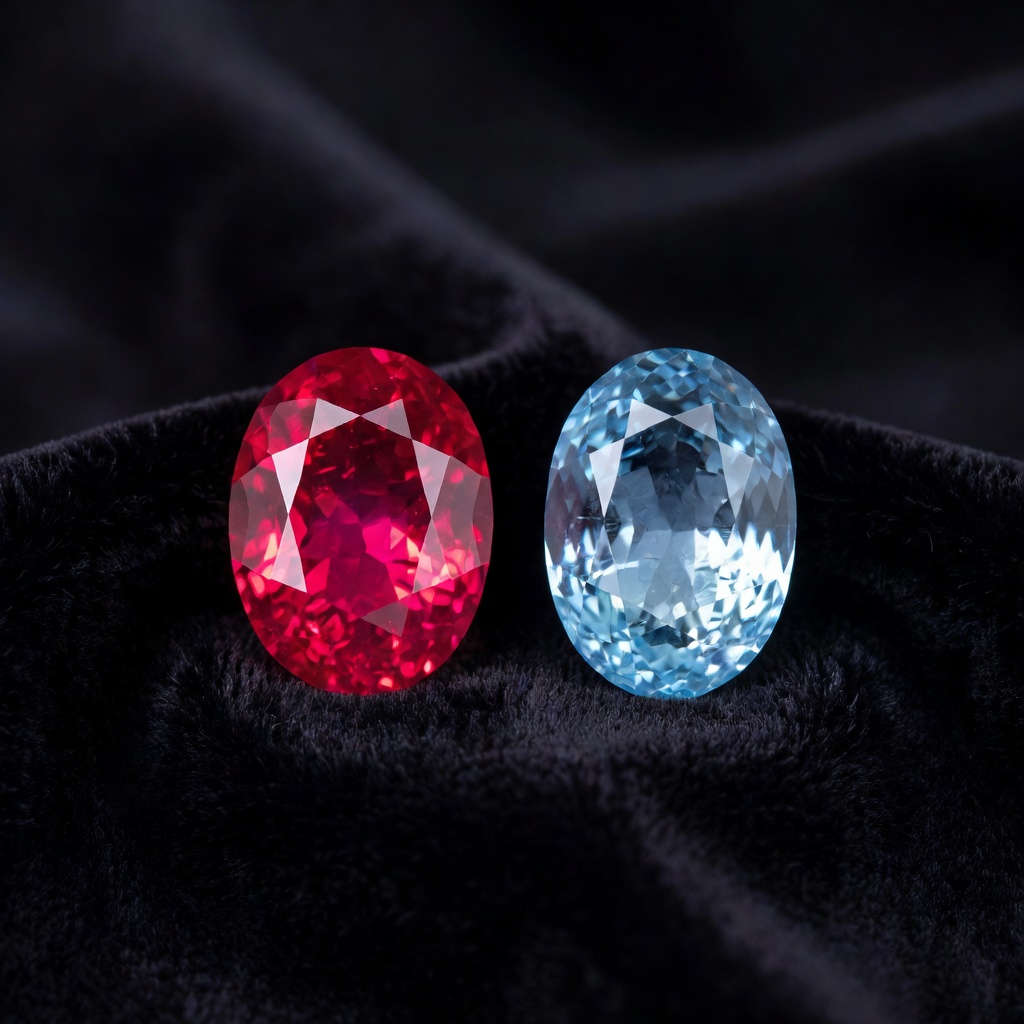
Rubies exhibit a color range from pinkish-red to deep crimson, with pigeon blood ruby representing the most coveted shade—a vivid, saturated red with slight blue undertones traditionally associated with Burmese mines. The finest specimens display vitreous to adamantine luster, creating exceptional brilliance when cut and polished. Clarity characteristics often include rutile inclusions called "silk" that create a soft, velvety appearance in premium stones, while other inclusions might appear as fingerprints, crystals, or color zoning.
When selecting ruby jewelry, consider that stones with numerous surface-reaching inclusions may require protective settings, though completely clean natural rubies command astronomical prices and often indicate potential heat treatment or synthetic origin. The fluorescence of natural rubies under ultraviolet light—caused by chromium content—creates an internal glow that enhances the stone's vitality in daylight, a characteristic difficult to replicate in imitations.
Obsidian's Dark Rainbow
While most people envision jet black stones when considering black obsidian meaning, this volcanic glass actually presents diverse visual variations. Classic black obsidian appears deep charcoal to solid black with a distinctive glassy shine and occasional gray banding. Snowflake obsidian features white cristobalite inclusions resembling floral patterns against the dark background, while mahogany obsidian displays reddish-brown swirls created by iron oxide impurities.
Rare varieties include rainbow obsidian, which displays iridescent bands of green, purple, and blue caused by microscopic magnetite crystals; fire obsidian, featuring bright flashes of color from thin-film interference; and sheen obsidian, showing golden or silver reflections from aligned gas bubbles. Unlike the crystalline brilliance of ruby, obsidian possesses a waxy to glassy luster that appears more subdued and earthy, appealing to those seeking organic, mysterious aesthetics rather than fiery sparkle.
Durability and Hardness Comparison
Ruby's Exceptional Resilience
The ruby hardness Mohs scale rating of 9 places it second only to diamond among natural gemstones, making it extraordinarily resistant to scratching and abrasion during daily wear. This exceptional hardness stems from the strong covalent bonds within the corundum crystal structure, allowing rubies to maintain their polish and facet edges indefinitely with proper care. Jewelry designers favor rubies for engagement rings, bracelets, and rings that withstand constant contact with hard surfaces, though the stone's toughness (resistance to breaking) remains moderate due to potential cleavage planes.
Practical testing reveals that ruby can scratch almost any material except diamond, making it suitable for heirloom pieces intended to last generations. However, owners should avoid subjecting rubies to sharp impacts, as the crystalline structure can fracture along specific directions if struck forcefully. When comparing obsidian durability against ruby, the difference becomes immediately apparent in laboratory settings where obsidian shows significant scratching from common materials like steel knives or quartz crystals.
Obsidian's Fragile Beauty
Obsidian ranks approximately 5 to 5.5 on the Mohs hardness scale, comparable to window glass or apatite, meaning it scratches relatively easily and requires protective settings for jewelry applications. The material exhibits perfect conchoidal fracture, meaning it breaks with curved, shell-like surfaces that can create extremely sharp edges but also make the stone prone to chipping. This fragility explains why ancient civilizations used obsidian primarily for cutting tools and weapons while favoring harder stones for decorative jewelry.
Temperature sensitivity presents another concern for obsidian owners, as rapid temperature changes can cause thermal shock resulting in cracks or complete breakage. Unlike ruby, which withstands ultrasonic cleaning and steam, obsidian demands gentle handling and avoidance of extreme heat or cold. When wearing obsidian jewelry, remove pieces before activities that might cause impact against hard surfaces, and consider bezel settings that wrap the stone's edges in protective metal rims.
Market Value and Investment Potential
Ruby as Luxury Investment
The ruby jewelry investment market continues to appreciate, with untreated, high-quality Burmese rubies commanding $1,000 to $15,000 or more per carat depending on color saturation, clarity, and carat weight. Exceptional specimens exceeding five carats with documented Burmese origin and no heat treatment can fetch prices rivaling fine diamonds at auction houses. Unlike many commodities, fine rubies have demonstrated consistent value appreciation over decades, with historic stones like the Sunrise Ruby selling for over $30 million, establishing the category as a legitimate alternative investment vehicle.
When building a jewelry portfolio, prioritize unheated rubies with certification from laboratories such as GIA, SSEF, or Gübelin, as treatment status significantly impacts long-term value retention. Mozambique rubies currently offer excellent value propositions, providing vivid color at lower price points than classic Burmese material, though they may not appreciate as dramatically as stones from historic mines. Remember that commercial-quality rubies with heavy treatments or synthetic origins hold minimal investment value despite their aesthetic appeal.
Obsidian's Accessible Pricing
While obsidian value remains modest compared to precious gemstones, this accessibility makes it ideal for spiritual practitioners, fashion jewelry enthusiasts, and those seeking protective talismans without significant financial investment. Standard black obsidian typically costs between $2 and $50 per piece depending on size, carving complexity, and optical quality, with even large spheres or elaborate skull carvings rarely exceeding $200. Rare varieties like fire obsidian or gem-quality rainbow material command higher prices, sometimes reaching $100 to $500 for exceptional specimens, though these still represent fractions of ruby pricing.
The ornamental classification of obsidian means it functions primarily as a decorative or metaphysical tool rather than a financial investment. However, vintage obsidian artifacts, particularly those with provenance from specific archaeological cultures or renowned lapidary artists, may accrue historical value over time. For contemporary buyers, obsidian offers an opportunity to own striking, natural material without the insurance concerns or security risks associated with high-value gemstone jewelry.
Metaphysical Properties and Spiritual Uses
Ruby's Fiery Heart Energy
Associated with the July birthstone meaning, ruby stimulates the heart chakra, encouraging passion, vitality, courage, and romantic devotion throughout various spiritual traditions. Crystal healers recommend ruby for individuals seeking to overcome lethargy or depression, as the stone's energetic frequency supposedly boosts circulation, enhances motivation, and promotes a zest for life. Ancient Hindus called ruby "ratnaraj" or king of precious stones, believing it offered protection against misfortune when worn by those of noble character.
In meditation practices, ruby helps practitioners connect with their inner power and manifest desires through heart-centered intention. The stone works particularly well for Leos and Cancers—those born under July's astrological influence—though anyone seeking to ignite creative passion or deepen romantic connections may benefit from its energetic signature. When placed on the heart during healing sessions, ruby supposedly clears blockages in the cardiac region while encouraging healthy emotional expression and self-love.
Obsidian's Protective Shield
The obsidian metaphysical properties center primarily on protection, grounding, and psychic cleansing, with black obsidian protection being the most widely recognized application. Unlike ruby's stimulating energy, obsidian absorbs negative vibrations and environmental pollution, acting as an energetic vacuum cleaner that requires regular cleansing under running water or moonlight. Shamans and healers have utilized obsidian mirrors for scrying and divination for millennia, valuing the material's ability to reveal hidden truths and subconscious patterns.
Obsidian activates the root chakra, helping individuals establish energetic boundaries and remain grounded during spiritual work or stressful situations. Varieties such as snowflake obsidian specifically address karmic patterns and past-life issues, while mahogany obsidian focuses on strengthening the aura against electromagnetic pollution. For those engaging in shadow work—exploring repressed emotions or traumatic memories—obsidian provides a protective container that prevents energetic overwhelm while facilitating deep psychological healing.
Jewelry Applications and Design Considerations
Ruby's Versatile Elegance
Ruby's exceptional hardness makes it ideal for daily-wear jewelry including engagement rings, tennis bracelets, eternity bands, and cocktail rings that withstand constant handling. Prong settings showcase ruby's brilliance effectively, though bezels offer additional protection for stones with surface-reaching inclusions. When designing ruby jewelry care routines, remember that these gems pair beautifully with yellow gold, which enhances their warm red tones, or platinum and white gold for a contemporary contrast that emphasizes the stone's vivid color.
For investment pieces, consider classic designs that transcend fashion trends, such as three-stone rings featuring ruby center stones flanked by diamonds, or solitaire pendants that showcase exceptional color without distracting halos. Ruby earrings require secure backs due to the stone's value, with studs and drops being particularly popular for July birthday gifts. When commissioning custom pieces, work with jewelers experienced in handling precious colored stones, as ruby requires different cutting angles than diamonds to maximize color rather than brilliance.
Obsidian's Protective Adornments
Given obsidian's moderate hardness, designers typically utilize protective bezel or flush settings for rings, while pendants and earrings experience less impact risk and suit various mounting styles. Obsidian jewelry settings often feature sterling silver, gunmetal, or leather cords that complement the stone's dark, earthy aesthetic, though high-karat gold creates striking contrast against black varieties. Statement pieces such as obsidian arrowhead pendants, skull carvings, or palm stones worn as pendants serve both decorative and talismanic functions.
When wearing obsidian daily, choose pieces that minimize exposure to hard surfaces—earrings and pendants work better than rings or bracelets for active individuals. Many spiritual practitioners create "protection stacks" combining obsidian with grounding stones like hematite or smoky quartz, while others pair it with clear quartz to amplify its cleansing properties. For scrying practitioners, obsidian spheres or mirrors require display stands when not in use to prevent rolling and potential chipping.
Care, Cleaning, and Maintenance Requirements
Maintaining Ruby's Brilliance
Ruby jewelry care remains relatively straightforward due to the gem's hardness and chemical stability. Ultrasonic cleaners and steam cleaning generally prove safe for untreated rubies, though stones with significant fractures or glass-filled cavities should avoid these methods. For routine maintenance, soak ruby pieces in warm water with mild dish soap, gently scrubbing with a soft toothbrush to remove accumulated oils and debris from behind the stone where dirt collects.
Store ruby jewelry separately from softer gemstones to prevent scratching other pieces, though diamonds and moissanite require separate storage to avoid damaging the ruby. While rubies resist heat damage better than most gems, avoid exposing them to sudden extreme temperature changes or harsh chemicals such as chlorine bleach. Annual professional inspections ensure prongs remain tight and settings secure, protecting your investment against loss.
Gentle Handling for Obsidian
Obsidian maintenance requires significantly more caution than ruby care due to the material's fragility and thermal sensitivity. Clean obsidian using only lukewarm water and mild soap with your fingers or a soft cloth—never use ultrasonic cleaners, steamers, or abrasive brushes that might scratch the surface or exploit internal fractures. Dry pieces immediately with a soft towel to prevent water spots, and avoid exposing obsidian to extreme temperatures such as hot car interiors or freezing conditions that might induce cracking.
Store obsidian wrapped in soft cloth or within padded jewelry boxes separate from harder stones that might scratch its surface. For energetically cleansing obsidian—which requires more frequent clearing than ruby due to its absorptive properties—use smudging with sage, burial in earth overnight, or placement on selenite charging plates rather than water methods that might damage certain varieties. Regular energetic cleansing maintains the stone's effectiveness for protection work while physical cleaning preserves its aesthetic appeal.
Final Verdict: Which Stone Should You Choose?
Selecting between Ruby vs Obsidian ultimately depends on your primary intentions, budget constraints, and lifestyle requirements. Choose ruby when seeking a lifelong investment piece, celebrating a July birthday, or requiring a durable daily-wear gem that appreciates in value while symbolizing passion and commitment. Ruby suits individuals drawn to classic luxury, fire energy, and heart-centered spiritual work who possess the budget for precious gemstones and the security consciousness to protect valuable jewelry.
Opt for obsidian when prioritizing affordable protection jewelry, spiritual grounding tools, or unique statement pieces that won't cause financial stress if damaged. Obsidian appeals to energy workers, those undergoing shadow work or spiritual transformation, and individuals attracted to organic, earthy aesthetics rather than brilliant sparkle. The stone serves particularly well as a "worry stone" for anxiety relief, a scrying tool for divination practices, or a protective talisman for empathic individuals.
Consider incorporating both stones into your collection to balance their complementary energies. Wearing ruby near the heart to stimulate passion and courage while carrying obsidian in a pocket for grounding and protection creates a harmonious energetic dynamic. This combination addresses both the solar and lunar aspects of spiritual practice—the active, fiery energy of ruby complementing the receptive, grounding force of obsidian. Whether you prioritize the precious vs ornamental gemstones distinction or seek the specific metaphysical properties each offers, both ruby and obsidian provide meaningful connections to Earth's geological and energetic wealth.
Comparison Table: Ruby vs Obsidian
| Characteristic | Ruby | Obsidian |
|---|---|---|
| Chemical Composition | Aluminum Oxide (Al₂O₃) with Chromium | Silicon Dioxide (SiO₂) - Amorphous |
| Mohs Hardness | 9 (Excellent for daily wear) | 5-5.5 (Requires protection) |
| Formation Process | Metamorphic crystallization over millions of years | Rapid cooling of volcanic lava (instant) |
| Primary Sources | Myanmar, Mozambique, Thailand | Mexico, Iceland, USA (Yellowstone) |
| Market Value | $1,000-$15,000+ per carat | $2-$50 per piece |
| Investment Potential | High appreciation over time | Decorative value only |
| Primary Chakra | Heart Chakra (Anahata) | Root Chakra (Muladhara) |
| Best Jewelry Uses | Engagement rings, heirlooms, daily wear | Pendants, earrings, spiritual tools |
| Cleaning Methods | Ultrasonic, steam, soap and water | Soap and water only (no heat/ultrasonic) |
| Metaphysical Focus | Passion, vitality, courage, love | Protection, grounding, truth, shadow work |
| Classification | Precious Gemstone (Corundum) | Ornamental Stone/Mineraloid |
Frequently Asked Questions
Which is more expensive, ruby or obsidian?
Rubies are significantly more expensive than obsidian. Natural rubies command $1,000 to $15,000+ per carat depending on quality, while obsidian typically costs $2-$50 per piece due to its abundant volcanic origin.
Is obsidian considered a real gemstone like ruby?
While obsidian is a natural material, gemologists classify it as a mineraloid or ornamental stone rather than a true gemstone like ruby. Ruby is a crystalline precious gemstone (corundum), whereas obsidian is amorphous volcanic glass lacking crystalline structure.
Can you wear obsidian in an engagement ring like ruby?
Obsidian is not recommended for daily-wear engagement rings due to its 5-5.5 Mohs hardness rating, making it prone to scratching and chipping. Ruby, with a 9 Mohs rating, is ideal for engagement rings and daily wear.
Which stone offers better spiritual protection, ruby or obsidian?
Obsidian is renowned as a powerful protection stone that absorbs negative energy and creates psychic shields. Ruby focuses more on energizing the heart chakra, enhancing passion and courage rather than protective barriers.
How can I tell the difference between ruby and red obsidian?
Rubies exhibit crystalline structure, often showing hexagonal growth patterns and inclusions called silk. Red obsidian (mahogany obsidian) appears glassy with conchoidal fracture patterns when broken and lacks crystalline brilliance.
Is ruby harder than obsidian?
Yes, ruby is significantly harder. Ruby ranks 9 on the Mohs hardness scale, making it one of the hardest natural substances, while obsidian ranks only 5-5.5, similar to window glass.
Can you wear ruby and obsidian together?
Yes, wearing ruby and obsidian together creates a powerful energy combination. The ruby stimulates passion and heart-centered energy while the obsidian provides grounding and protection, creating balanced energetic dynamics.
Which is better for meditation, ruby or obsidian?
Obsidian is generally preferred for meditation involving shadow work, grounding, and protection. Ruby excels in meditation focused on self-love, confidence, and manifesting desires. Choose based on your specific spiritual intentions.