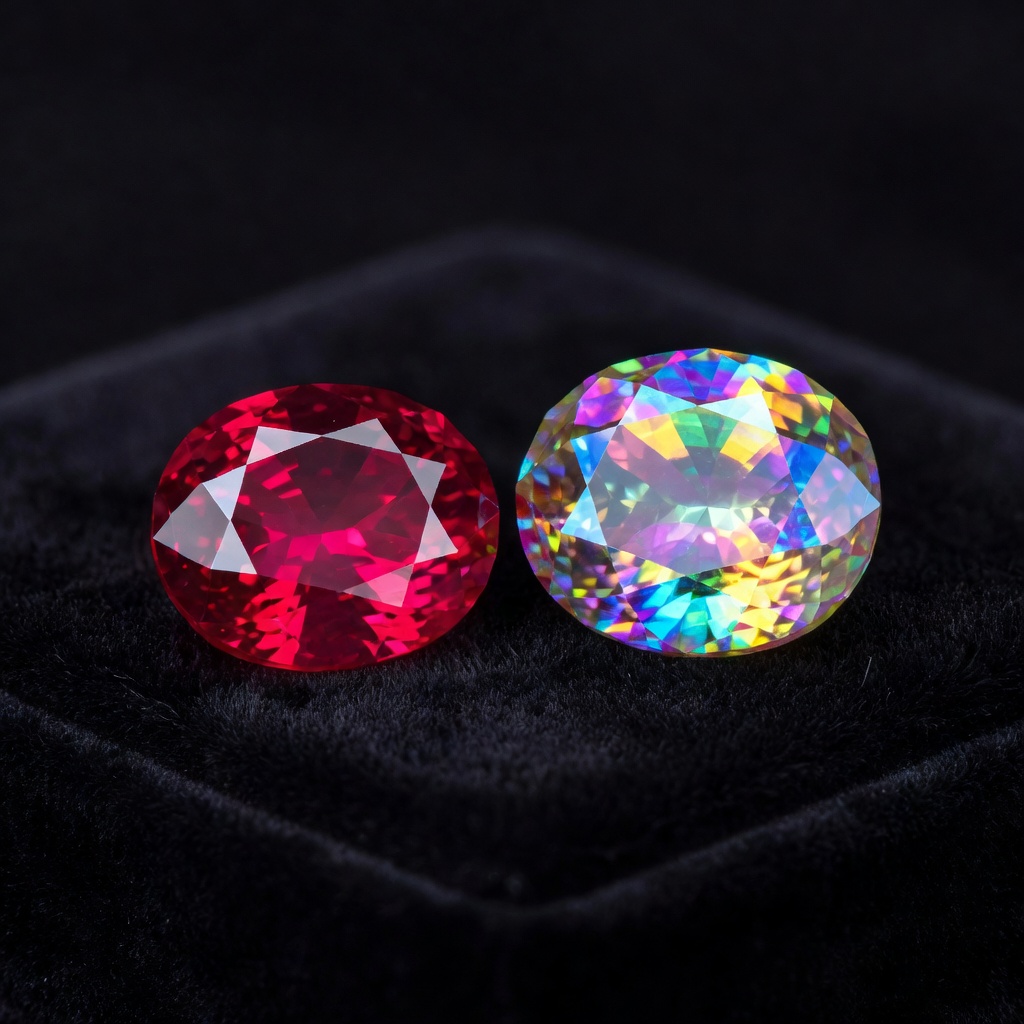
Ruby vs Mystic Topaz: Natural Beauty vs Enhanced Brilliance
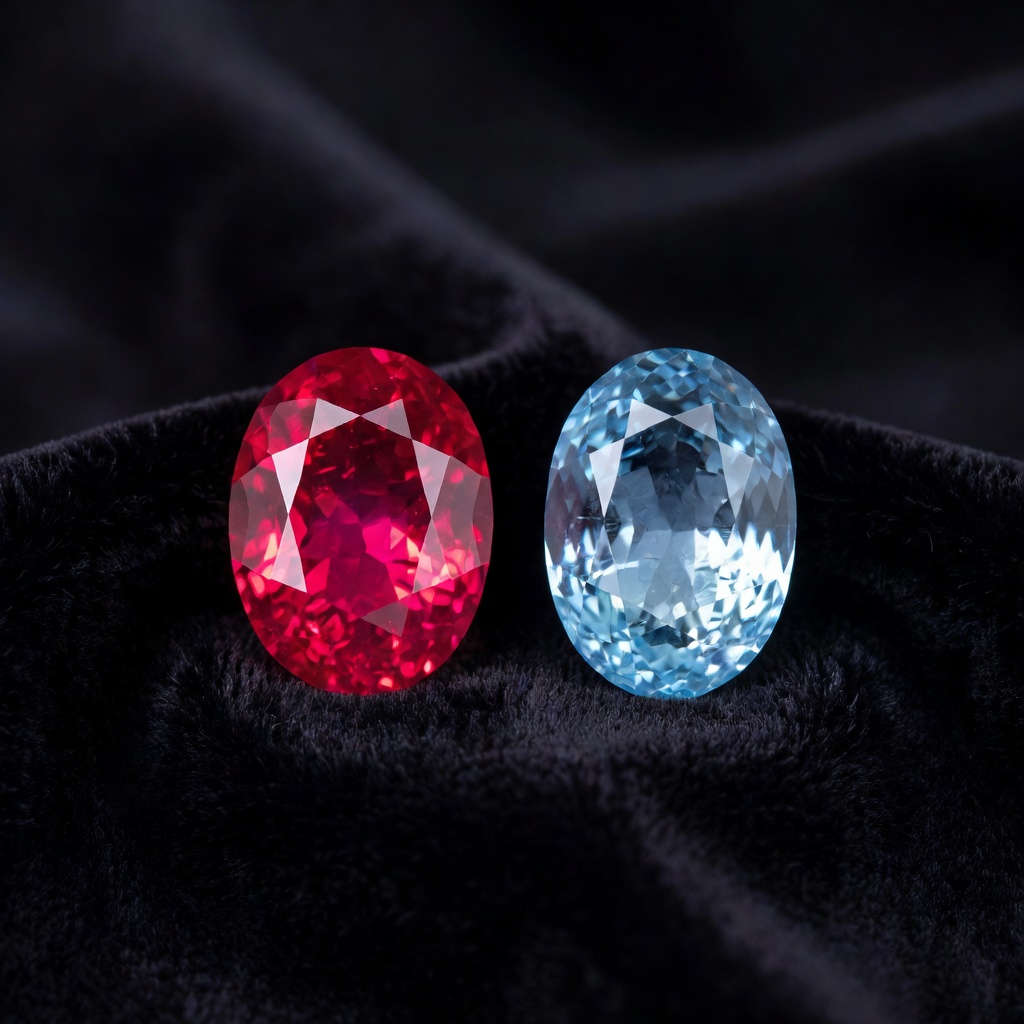
When shopping for vibrant red or rainbow-hued gemstones, consumers often find themselves comparing options that appear similar at first glance but differ fundamentally in composition, value, and longevity. The debate of Ruby vs Mystic Topaz represents one of the most striking contrasts in the jewelry market: the timeless allure of a precious natural gemstone against the modern appeal of a technologically enhanced semi-precious stone. Natural ruby has captivated civilizations for millennia as the July birthstone and a symbol of passion and power, while mystic topaz emerged in the late 1990s as a fashion-forward alternative featuring an iridescent rainbow coating over white topaz.
Understanding the distinction between natural ruby vs treated topaz requires examining not just aesthetic preferences but also practical considerations including durability, investment potential, and daily wearability. While both gemstones can display vivid colors that catch the eye, their journeys from rough material to finished jewelry piece follow radically different paths. This comprehensive guide explores the geological origins, physical properties, and market values of these distinct gemstones to help you make an informed decision whether you seek a family heirloom or a trendy accessory.
Before investing in either stone, consider your lifestyle requirements, budget constraints, and long-term expectations. Rubies offer exceptional hardness and lasting value but command premium prices, whereas mystic topaz provides affordable rainbow brilliance with specific care limitations. By evaluating factors such as precious vs semi-precious gemstones classifications, treatment disclosures, and maintenance protocols, you can select the stone that truly aligns with your personal needs and values.
Origins and Geological Formation
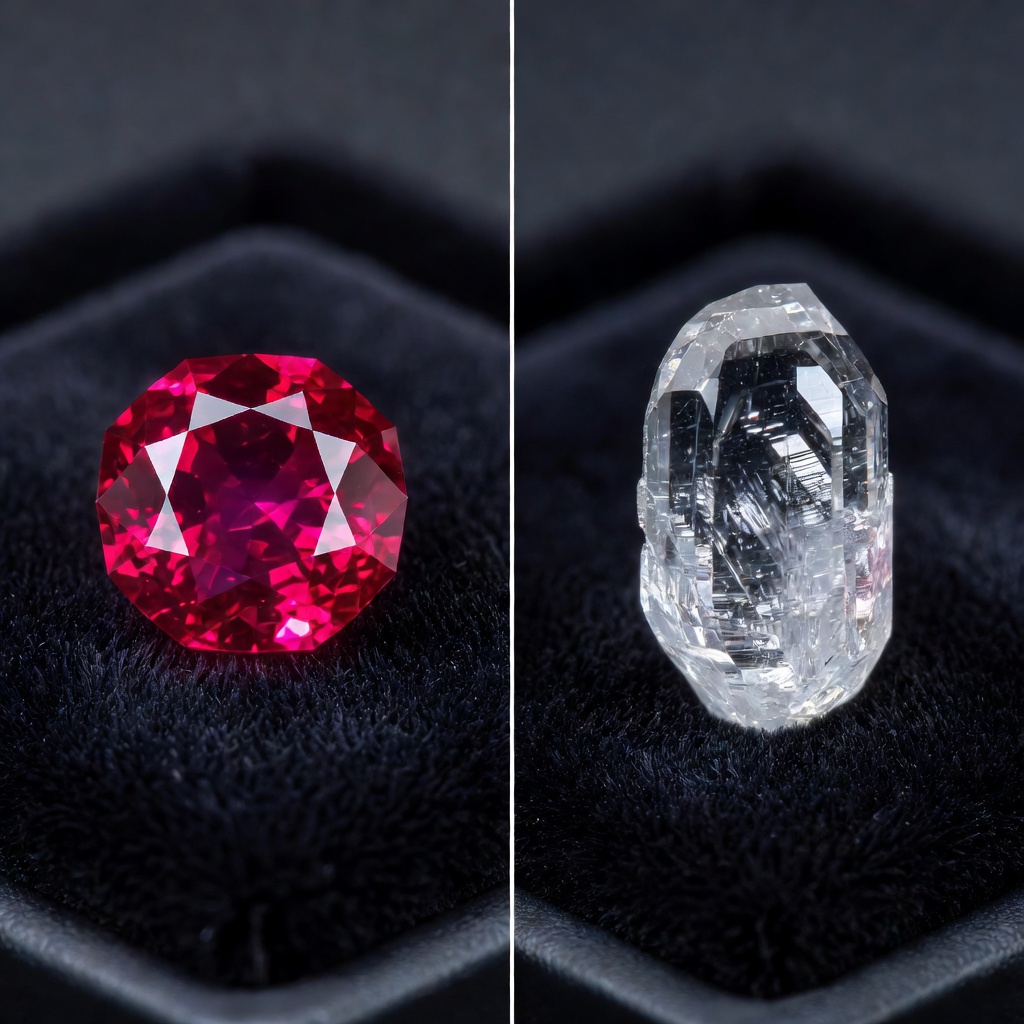
Rubies form through intense geological processes deep within the Earth's crust over millions of years, creating crystals of aluminum oxide (corundum) infused with chromium traces that produce their signature red color. These precious gems crystallize in metamorphic environments, particularly within marble deposits in Myanmar and Mozambique or basalt rocks in Thailand, where specific heat and pressure conditions allow ruby molecules to align into hexagonal crystal structures. The rarity of these formation conditions contributes to ruby's status as one of the "big three" colored gemstones alongside sapphire and emerald, with untreated natural specimens commanding extraordinary prices at international auctions.
In contrast, mystic topaz begins as natural white or colorless topaz, a silicate mineral commonly found in pegmatites and rhyolite lava flows in Brazil, Nigeria, and Sri Lanka. While the base material forms naturally over thousands of years, the "mystic" designation applies only after the rough stone undergoes a sophisticated laboratory treatment process. Manufacturers use Physical Vapor Deposition (PVD) to bond a microscopic layer of titanium or other metals onto the cut stone's surface, creating an iridescent rainbow effect through light interference rather than natural chemical composition.
The distinction between natural ruby formation and enhanced topaz availability highlights significant differences in scarcity and market dynamics. High-quality rubies from legendary mines like Myanmar's Mogok Valley or Mozambique's Montepuez district face depleting supplies, driving consistent appreciation in value. Conversely, white topaz remains abundant in the market, and the coating process can be applied to virtually any suitable rough material, making mystic topaz widely accessible at modest price points. When considering precious vs semi-precious gemstones, remember that rubies belong to the elite category of precious stones due to their rarity and historical significance, while coated topaz remains firmly in the semi-precious category despite its eye-catching appearance.
Physical Properties and Durability Comparison
Understanding the mechanical differences between these gemstones proves crucial for determining appropriate jewelry applications and setting realistic expectations for longevity. Ruby ranks at corundum hardness 9 on the Mohs scale, making it second only to diamond in terms of scratch resistance and suitability for daily wear. This exceptional hardness stems from the strong atomic bonds within the corundum crystal structure, allowing rubies to maintain their polish and resist surface abrasion even after decades of continuous wear in engagement rings and heirloom pieces.
White topaz, the base material for mystic varieties, registers at 8 on the Mohs scale, which while respectable, indicates significantly lower scratch resistance than corundum. More critically, mystic topaz coating durability presents substantial concerns for jewelry longevity. The titanium layer measuring only 1-2 microns thick sits atop the stone's surface rather than integrating within its crystal structure, creating a vulnerable interface susceptible to scratching, chipping, and chemical damage. Unlike the permanent color within a ruby, the rainbow coating relies on thin-film interference optics that degrade when the surface layer sustains damage.
Both gemstones exhibit perfect cleavage in one direction, meaning they can split along specific atomic planes if struck with sufficient force. However, rubies typically demonstrate superior toughness—the resistance to breaking and chipping—due to their internal crystal structure. Practical wear tests reveal that mystic topaz set in rings shows coating degradation within 6-12 months of daily wear, particularly along facet junctions and table edges where the stone contacts other surfaces. For active individuals or those seeking jewelry for daily wear without constant vigilance, ruby's superior durability profile makes it the unequivocal choice despite the higher initial investment.
Comparative Analysis: Ruby vs Mystic Topaz
| Characteristic | Natural Ruby | Mystic Topaz |
|---|---|---|
| Chemical Composition | Aluminum Oxide (Al₂O₃) | Aluminum Silicate Fluoride Hydroxide + Titanium Coating |
| Mohs Hardness | 9 (Excellent scratch resistance) | 8 (base material), Coating vulnerable to abrasion |
| Formation Process | Natural geological processes over millions of years | Natural base stone with artificial PVD coating |
| Color Origin | Chromium and iron trace elements (internal) | Thin-film light interference (surface coating) |
| Durability for Daily Wear | Excellent, suitable for heirloom pieces | Poor for rings/bracelets; best for occasional wear earrings/pendants |
| Treatment Category | May be heat-treated (permanent enhancement) | Surface-coated (temporary enhancement) |
| Market Value | $1,000-$20,000+ per carat depending on quality | $10-$50 per carat (fashion jewelry pricing) |
| Birthstone Status | Official July birthstone | No birthstone designation |
| Cleaning Safety | Safe for ultrasonic and steam cleaning | Requires gentle soap only; ultrasonic cleaning damages coating |
Color Chemistry: Natural Red vs Rainbow Iridescence
The vivid red hues that define fine rubies result from trace amounts of chromium replacing aluminum atoms within the corundum crystal lattice, sometimes accompanied by iron that modifies the tone toward purplish or orangish-red. This chromophoric chemistry creates color that remains permanent and stable under normal conditions, with the most prized "pigeon blood" rubies from Myanmar displaying a pure, vibrant red with subtle blue undertones visible under incandescent light. Natural ruby color grading considers hue, saturation, and tone, with untreated stones displaying subtle variations and inclusions that gemologists use to verify authenticity and origin.
Mystic topaz achieves its spectacular rainbow appearance through a completely different optical mechanism. During the Physical Vapor Deposition process, technicians place cut white topaz in a vacuum chamber where titanium oxide or other metallic compounds vaporize and condense onto the stone's surface in layers measuring mere nanometers thick. These microscopically thin films create interference patterns that split white light into spectral colors, producing shifting greens, blues, purples, and pinks as the stone moves. While visually striking, this surface-level coloration lacks the depth and permanence of ruby's intrinsic hue.
Color stability presents another critical distinction between these gemstones. Ruby's red coloration remains stable indefinitely, resisting fading even under prolonged sunlight exposure or standard jewelry cleaning procedures. Conversely, mystic topaz color treatment faces inevitable degradation; the coating can wear away unevenly, creating patchy or dull areas where the underlying white or champagne-colored topaz becomes visible. Additionally, rubies occasionally display asterism—the star effect caused by rutile needle inclusions—which adds rarity and value, while mystic topaz offers only the manufactured iridescence without natural optical phenomena.
Treatments, Enhancements, and Authenticity
Transparency regarding gemstone treatments remains essential for consumer protection and accurate valuation in the jewelry trade. Most rubies on the market undergo heat treatment, a permanent enhancement process that dissolves rutile silk inclusions and improves color clarity without adding foreign materials. This standard practice, accepted within the industry for centuries, differs fundamentally from the surface coating applied to mystic topaz. While heat-treated rubies maintain their enhanced appearance permanently, irradiated topaz value and coated topaz pricing reflect temporary modifications that may not endure throughout the stone's lifetime.
Identifying these treatments requires specific gemological knowledge and equipment. Under magnification, coated stones reveal telltale signs such as coating accumulation along facet junctions, scratches confined to the surface layer, or iridescent "rainbow" scratches that differ from natural mineral inclusions. Professional gemologists use immersion fluids and magnification to detect the interface between coating and base material, while advanced spectroscopic analysis can confirm heat treatment in rubies through characteristic inclusion alterations. Reputable dealers provide detailed disclosure documentation specifying any treatments, which directly impacts insurance valuations and resale potential.
The regulatory framework governing gemstone treatment disclosure mandates that sellers inform buyers of any enhancements that significantly affect value or durability. For rubies, untreated stones command premium prices often ten to twenty times higher than heat-treated equivalents of similar appearance. Mystic topaz requires explicit disclosure as a treated stone, and consumers should understand that the irradiated topaz value (for blue varieties) or coated topaz pricing reflects fashion jewelry tiers rather than investment-grade assets. When purchasing either stone, request laboratory reports from recognized institutions such as GIA or AGL to verify treatment status and ensure fair pricing aligned with the stone's actual characteristics.
Pricing, Value, and Investment Potential
The financial divergence between these gemstones reflects their fundamentally different positions in the gemological hierarchy and market demand structures. Natural rubies function as tangible assets and stores of value, with fine untreated specimens from Myanmar or Mozambique appreciating consistently over decades. High-quality rubies can command $5,000 to $20,000 per carat for exceptional stones, while even commercial-quality rubies typically range from $1,000 to $3,000 per carat. This ruby investment value stems from genuine scarcity, with mines producing increasingly smaller yields of fine material as deposits deplete.
Mystic topaz price per carat remains remarkably affordable, typically ranging from $10 to $50 depending on size and cut quality. This accessibility makes mystic topaz attractive for fashion jewelry and costume pieces where consumers seek dramatic visual impact without significant financial commitment. However, the stone lacks liquidity in secondary markets; pawn shops and estate buyers rarely purchase coated topaz, and resale values typically represent pennies on the dollar compared to original retail prices. The treatment's temporary nature and the stone's abundance preclude it from consideration as a serious investment vehicle.
Several factors influence ruby valuation beyond basic carat weight, including origin certification (Burmese rubies historically command premiums), color saturation (vivid red without excessive darkness or brown modifiers), clarity (eye-clean stones are rare and valuable), and treatment status (untreated stones achieve highest premiums). For mystic topaz, value derives primarily from cut quality and the uniformity of the coating application rather than inherent material rarity. When building a jewelry collection with appreciation potential, allocate resources toward natural rubies or other precious gemstones while viewing mystic topaz as a consumable fashion accessory rather than a legacy asset.
Symbolic Meanings and Cultural Significance
Throughout human history, rubies have maintained prestigious status across virtually every major civilization, from ancient Hindu texts describing the "King of Gems" to European royal regalia where rubies symbolized power, passion, and protection. Medieval Europeans believed rubies bestowed health, wisdom, and success in love, while Burmese warriors implanted rubies beneath their skin to render them invincible in battle. This rich cultural heritage imbues natural rubies with emotional resonance that transcends mere material value, making them appropriate for marking life's most significant milestones and commitments.
The July birthstone meaning specifically associates rubies with vitality, courage, and emotional intensity, making them the traditional gift for July birthdays and the designated gemstone for 40th wedding anniversaries. Presenting a ruby signifies deep affection and respect for the recipient's strength and passion, whether set in an engagement ring celebrating new beginnings or an anniversary pendant commemorating decades of partnership. The stone's connection to the heart chakra in metaphysical traditions further reinforces its association with love and life force energy.
Mystic topaz lacks this deep historical lineage but has carved a niche in contemporary metaphysical circles and fashion communities. Practitioners attribute mystic topaz metaphysical properties related to creativity, self-expression, and manifestation, suggesting the rainbow colors stimulate all chakras simultaneously. While these properties lack historical precedent, they resonate with modern consumers seeking personalized meaning in their jewelry choices. Fashion trends drive much of mystic topaz's popularity, with designers featuring the stone in bold cocktail rings and statement necklaces where its iridescent flash complements contemporary aesthetics. However, for commemorating significant life events or expressing profound emotional connections, ruby's centuries of symbolic weight offer authenticity that treated topaz cannot match.
Jewelry Applications and Wearability
Selecting appropriate settings and jewelry types maximizes the longevity and visual impact of both gemstones while respecting their distinct durability profiles. For rubies, secure bezel settings or protective halo designs prove ideal for engagement rings and daily wear pieces, shielding the stone's edges from direct impact while showcasing its color. Prong settings work well for rubies in earrings and pendants where impact risk remains minimal, though six-prong configurations provide superior security compared to four-prong styles. Given corundum hardness 9, rubies withstand the rigors of daily wear, though owners should still remove them during activities involving harsh chemicals or potential hard impacts.
Mystic topaz jewelry care requires significantly more restrictive protocols due to coating vulnerability. Jewelers strongly recommend reserving mystic topaz for earrings and pendants where the stones face minimal contact with hard surfaces, rather than rings or bracelets that encounter constant abrasion against desks, countertops, and other materials. When set in rings, reserve them for occasional evening wear rather than daily use. The coating's susceptibility to damage makes mystic topaz unsuitable for heirloom pieces intended for generational transfer, as the treatment will likely degrade before such transfer occurs.
Maintenance protocols differ dramatically between these stones. Ruby jewelry tolerates ultrasonic cleaning and steam treatments (with caveats regarding fracture-filled stones), allowing professionals to restore brilliance safely. For ruby engagement ring durability, annual professional inspections ensure prongs remain tight and the stone shows no signs of loosening. Conversely, mystic topaz demands gentle cleaning using only mild soap, lukewarm water, and soft cloths—never ultrasonic cleaners, steam jets, or chemical dips, as these can remove or cloud the titanium coating entirely. Store mystic topaz pieces separately in soft pouches to prevent harder gemstones from scratching the delicate surface film, and avoid exposure to household cleaners, perfumes, and hairsprays that may chemically attack the coating.
How to Choose: Decision Matrix for Buyers
Navigating the choice between these distinct gemstones requires honest assessment of your priorities across multiple dimensions. For budget-conscious shoppers seeking maximum visual impact per dollar, mystic topaz offers rainbow brilliance at accessible price points, allowing experimentation with large statement pieces without financial strain. However, if your budget accommodates $1,000 or more, consider whether a small but natural ruby might better serve your long-term goals than a larger coated stone, particularly for gifts marking significant occasions where authenticity carries emotional weight.
Lifestyle compatibility plays a crucial role in this ruby vs mystic topaz buying guide. Active individuals, healthcare professionals, or those working with their hands daily should avoid mystic topaz rings entirely, as the coating cannot withstand the abrasion inherent in such environments. Conversely, office professionals seeking occasional statement jewelry for social events might find mystic topaz earrings or pendants perfectly suitable. When evaluating gemstone selection criteria, consider whether you seek a "forever piece" that can accompany you through all life's activities, or a specific-occasion accessory requiring careful handling.
Emotional significance and long-term ownership expectations ultimately guide the wisest choices. If you desire a birthstone piece for July, desire investment potential, or wish to create a family heirloom, ruby represents the only appropriate choice despite higher initial costs. The stone's permanence ensures it will look identical decades hence, carrying stories and memories across generations. Mystic topaz suits trend-forward consumers who enjoy rotating their jewelry collections frequently and prioritize immediate visual wow-factor over longevity. Before purchasing, ask yourself whether you want a stone that requires protective care and eventual replacement, or one that can withstand the test of time alongside your most treasured memories.
Frequently Asked Questions
Is mystic topaz a natural gemstone or man-made?
Mystic topaz starts as natural white topaz but undergoes an artificial enhancement process. The base material is genuine topaz (Mohs hardness 8), but the rainbow iridescent effect comes from a thin titanium coating applied through Physical Vapor Deposition (PVD). This makes it a treated natural stone rather than fully synthetic, though the color effect is definitely man-made.
Which is more valuable, ruby or mystic topaz?
Natural rubies are significantly more valuable than mystic topaz. High-quality rubies can command thousands to tens of thousands of dollars per carat, especially untreated stones from Myanmar or Mozambique. Mystic topaz typically ranges from $10-$50 per carat due to the abundance of base material and the temporary nature of the coating treatment. Ruby is considered a precious gemstone investment, while mystic topaz is categorized as fashion jewelry.
Can the rainbow coating on mystic topaz wear off?
Yes, the titanium coating on mystic topaz can scratch, chip, or wear away over time, especially on ring surfaces exposed to daily abrasion. The coating is approximately 1-2 microns thick and vulnerable to harsh chemicals, ultrasonic cleaning, and hard knocks. Once damaged, the coating cannot be restored to its original appearance, though the stone can be re-polished to remove the coating entirely, returning it to white topaz.
Is ruby suitable for daily wear engagement rings?
Yes, ruby is excellent for daily wear with a Mohs hardness of 9, second only to diamond. However, rubies often undergo heat treatment and may have inclusions that create durability concerns. Choose a well-protected setting (bezel or halo) and avoid stones with surface-reaching fractures. Unlike mystic topaz, rubies can withstand ultrasonic cleaning and professional polishing without damage to their color.
Does mystic topaz have any radioactive properties?
Standard mystic topaz created through titanium coating is not radioactive. However, some blue topaz varieties (sometimes sold as 'mystic') undergo neutron irradiation to enhance color. Reputable dealers ensure irradiated stones are held until radiation levels decay to safe standards. Always purchase from certified dealers who can provide treatment disclosure documentation for peace of mind.
How should I clean ruby versus mystic topaz jewelry?
Clean ruby jewelry using warm soapy water, a soft brush, and steam or ultrasonic cleaners (if untreated). For mystic topaz, use only mild soap and lukewarm water with a soft cloth—never use ultrasonic cleaners, steam, or chemical jewelry dips as these can damage or remove the titanium coating. Store mystic topaz separately to prevent scratching the delicate surface film.
Which gemstone is better for a July birthday gift?
For July birthdays, ruby is the traditional and meaningful choice as the official July birthstone, symbolizing passion, protection, and prosperity. While mystic topaz offers a unique rainbow aesthetic at a lower price point, it lacks the birthstone significance and longevity of ruby. If budget is a concern, consider a small natural ruby or lab-created ruby rather than mystic topaz for authentic birthstone representation.
Can you tell the difference between ruby and red mystic topaz visually?
Yes, they are easily distinguishable. Rubies display a singular red hue ranging from pinkish-red to deep pigeon blood, with natural inclusions and internal crystal characteristics. Mystic topaz displays a rainbow iridescence (green, blue, purple, and pink flashes) over a golden or champagne base color, created by light interference through the coating. Under magnification, you can see the coating interface at facet junctions on mystic topaz, while ruby shows natural crystal growth patterns.