Introduction to Ruby vs Morganite
When navigating the vibrant world of colored gemstones, the comparison between ruby and morganite represents one of the most fascinating contrasts in the jewelry market today. Ruby, long celebrated as the "king of gems," commands respect as one of the four precious stones alongside diamond, sapphire, and emerald, while morganite has earned the romantic nickname "pink emerald" due to its shared beryl family lineage with the green classic. Despite belonging to entirely different mineral families, these stones frequently compete for attention among jewelry enthusiasts seeking pink-to-red hues, creating an intriguing red gemstone comparison that spans from ancient royal collections to modern engagement ring trends.
The current market landscape has intensified interest in both stones for distinctly different reasons. Ruby continues to appreciate in value as fine specimens from Myanmar and Mozambique become increasingly scarce, attracting serious collectors and investors who recognize its unmatched durability among red gems. Meanwhile, morganite has experienced a surge in popularity among millennials and Gen Z consumers who prioritize larger carat weights and budget-friendly options without sacrificing aesthetic appeal. According to recent jewelry industry reports, morganite engagement ring searches have increased by over 200% in the past five years, while Burmese ruby prices at auction houses continue setting new records, demonstrating that both stones occupy important but distinct niches in the contemporary market.
Geological Origins and Composition
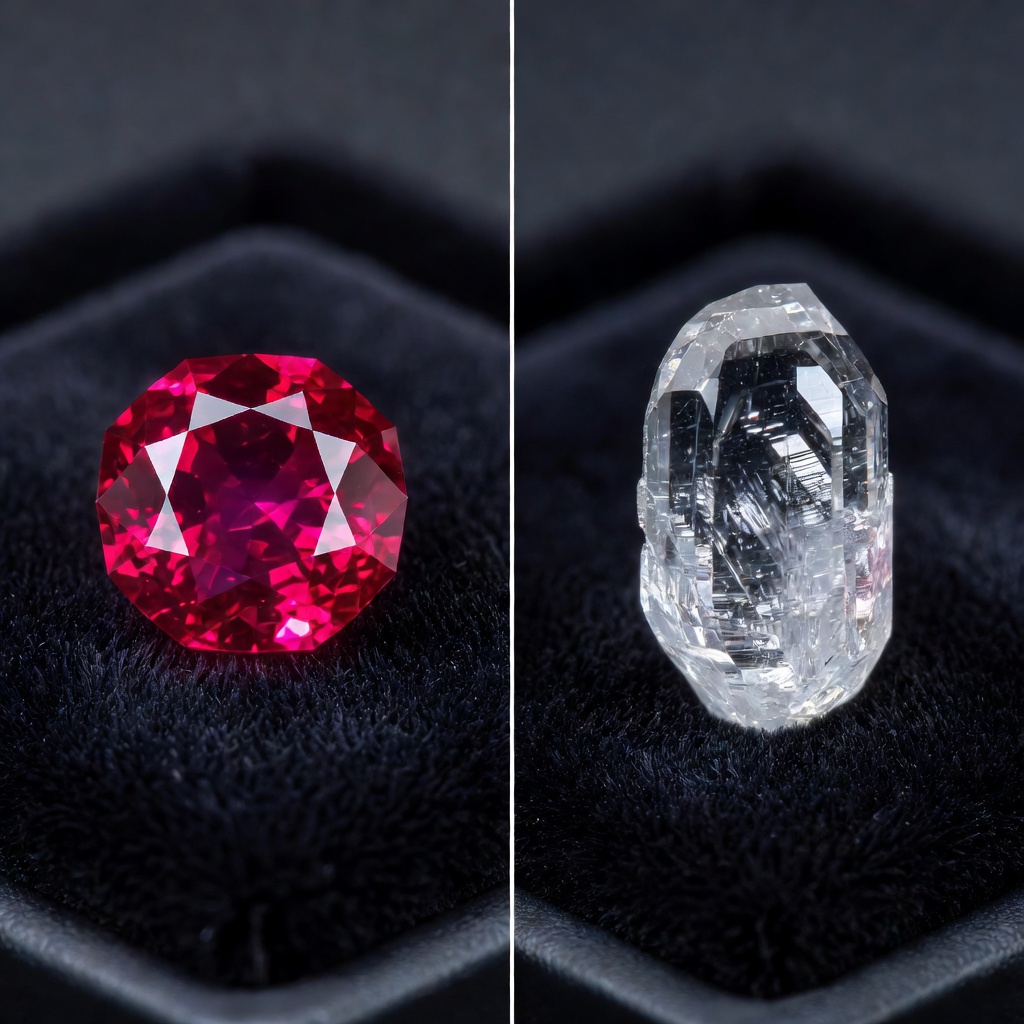
Understanding the fundamental differences between these gemstones begins with their distinct geological formations, which explain their varying properties and availability. Ruby forms as a variety of corundum, composed of aluminum oxide (Al₂O₃) crystallized under extreme heat and pressure conditions typically found in metamorphic rock environments, requiring temperatures exceeding 800°C and significant tectonic activity to develop its characteristic red chromium coloring. This intense formation process results in the pink beryl vs red corundum distinction that gemologists use to classify these materials, with ruby representing one of the hardest natural substances on earth due to its tightly packed hexagonal crystal structure.
Morganite, conversely, crystallizes as a pink variety of beryl (Be₃Al₂Si₆O₁₈) within coarse-grained igneous rocks called pegmatites, where large crystal pockets allow for the formation of sizable, relatively clean gemstones rarely found in ruby deposits. The presence of manganese or cesium trace elements creates morganite's delicate pink hues during the cooling process of these pegmatite formations, which occur under less extreme conditions than ruby's metamorphic origins. Primary mining locations further illustrate their geological differences: the world's finest rubies traditionally emerge from the Mogok region of Myanmar and more recently from Mozambique's Montepuez deposits, while exceptional morganites primarily originate from the Minas Gerais region of Brazil and the Ambatovita area of Madagascar, where pegmatite veins yield crystals weighing dozens of carats.
Color Variations and Visual Characteristics
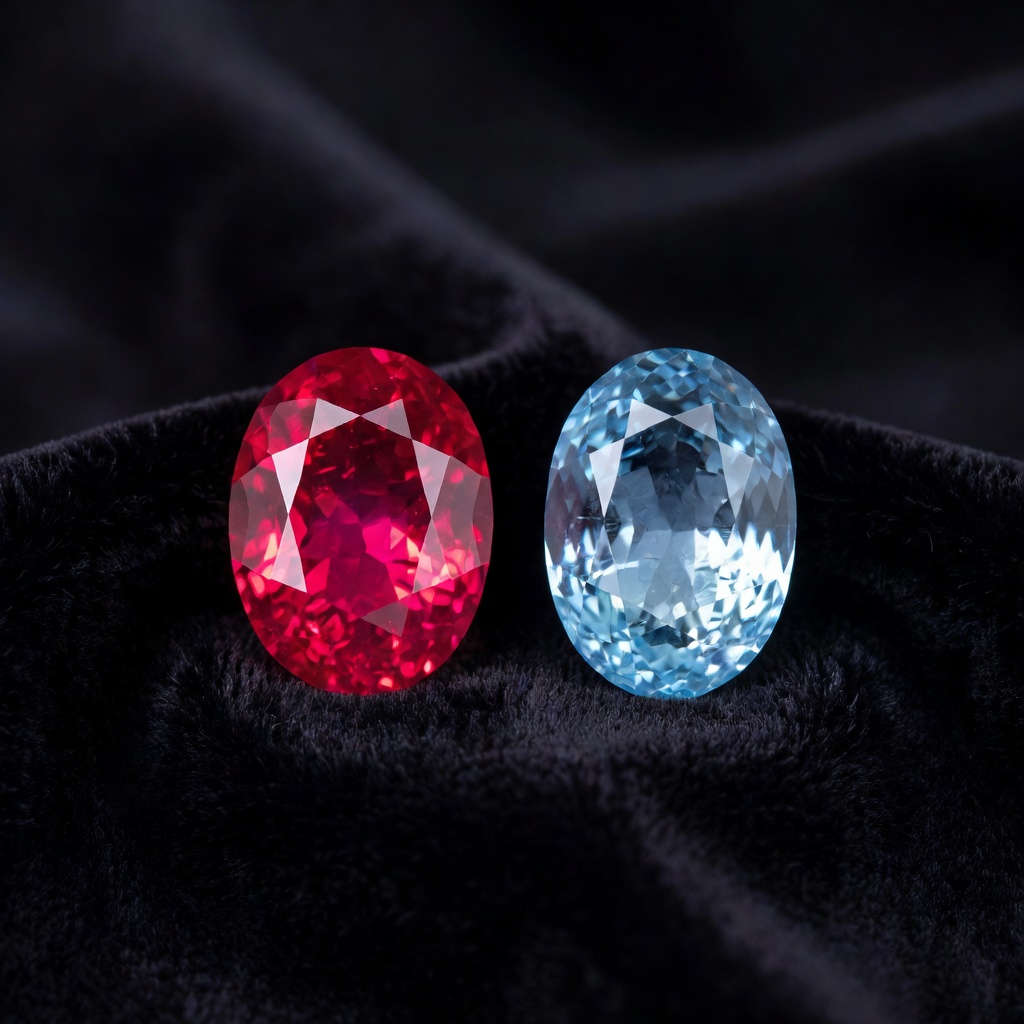
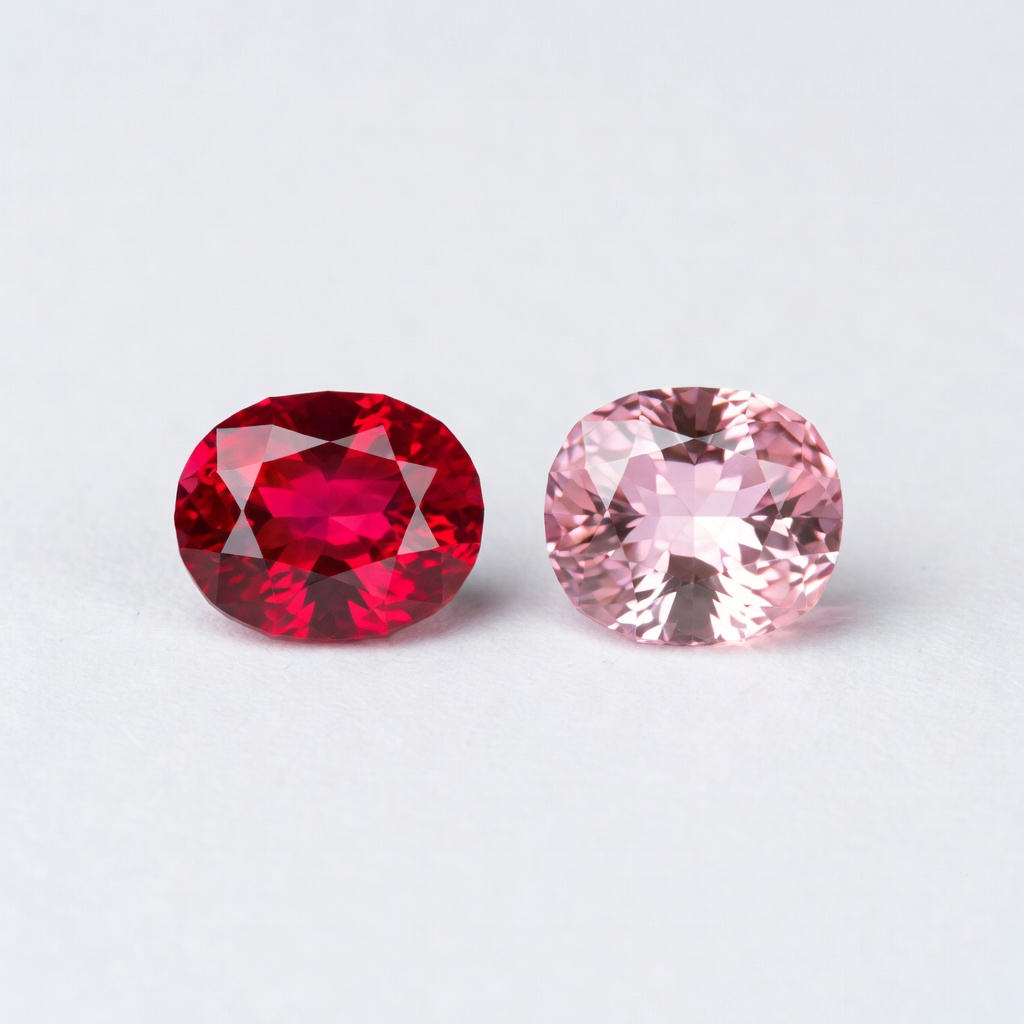
The visual distinction between these gemstones becomes immediately apparent when examining their color spectra, as ruby delivers intense saturation while morganite offers subtle, romantic pastels. Premium rubies exhibit the coveted "pigeon blood" red—a vivid, pure red with a hint of blue that appears to glow from within, though the stone also occurs in pinkish-red, purplish-red, and orangish-red variations that generally command lower prices in the ruby color grades hierarchy. When evaluating rubies under different lighting conditions, they typically maintain their color intensity under incandescent and daylight sources, though some stones with stronger fluorescence may appear slightly washed out under direct sunlight, requiring careful consideration when selecting stones for specific environments.
Morganite color ranges present a softer palette, spanning from delicate peach-pink and salmon to violet-pink hues, with the most valuable stones displaying a pure pink to slightly peachy tone without brownish or yellowish secondary colors. Unlike ruby, morganite exhibits strong pleochroism, meaning it displays different colors when viewed from different angles—typically showing a deeper pink when viewed perpendicular to the crystal's length and a near-colorless appearance when viewed parallel to it. This optical phenomenon requires skilled cutting to orient the stone properly, and morganite's color can appear significantly paler in daylight compared to incandescent lighting, often necessitating viewing stones under multiple light sources before purchase to ensure satisfaction with the actual face-up color.
Durability and Hardness Face-Off
When selecting gemstones for jewelry that will withstand daily activities, understanding the gemstone hardness comparison between these two materials becomes crucial for long-term satisfaction. Ruby ranks 9 on the Mohs hardness scale, second only to diamond, making it exceptionally resistant to scratching and suitable for heirloom pieces designed to last generations without showing wear. This superior ruby hardness stems from its corundum composition, allowing it to resist abrasion from common household dust (which contains silica at 7 on the Mohs scale) and maintain its polish through decades of continuous wear, even in high-contact settings like engagement rings.
Morganite, while still relatively durable, registers 7.5 to 8 on the Mohs scale, which places it in a category where careful consideration of lifestyle factors becomes essential for jewelry selection. While morganite durability suffices for occasional wear and pendants or earrings that avoid direct impact, the stone's beryl structure contains more cleavage planes than corundum, making it susceptible to chipping or cracking if struck against hard surfaces. For active individuals who work with their hands, garden frequently, or engage in sports, ruby represents the safer investment for rings worn daily, whereas morganite requires protective settings and mindful removal during physical activities to prevent damage that could compromise the stone's integrity or require costly repairs.
Clarity, Cut, and Size Availability
Examining the internal characteristics and cutting considerations reveals significant practical differences that affect both aesthetics and value when comparing these gemstones. Rubies typically contain rutile needle inclusions—tiny crystals of titanium dioxide that create a silk-like appearance within the stone—along with fingerprints, crystals, and color zoning that gemologists use to determine natural origin versus synthetic production. While heavily included rubies may suffer from durability issues, fine silk can actually enhance a ruby's appearance by scattering light and creating a soft, velvety effect particularly prized in Burmese specimens, though cutters must orient these inclusions carefully to maximize transparency and minimize the "sleepy" appearance that reduces brilliance.
Morganite generally offers superior clarity compared to ruby, typically containing liquid inclusions, hollow tubes, or occasionally metallic crystals, but frequently appearing "eye-clean" (without visible inclusions to the naked eye) even in larger sizes. This clarity advantage allows lapidaries to employ various morganite cuts including emerald cuts that emphasize the stone's clarity and color, oval and cushion cuts that maximize carat weight retention from rough crystals, and brilliant cuts that enhance light return in the pastel-colored material. Perhaps most significantly, morganite occurs naturally in much larger crystals than ruby, making it common to find faceted stones exceeding 10-20 carats with excellent clarity, while fine rubies over 5 carats become exponentially rarer and command astronomical prices per carat, fundamentally differentiating the two materials for buyers seeking substantial statement pieces.
Price Comparison and Investment Value
The economic disparity between these gemstones reflects their relative rarity, demand, and historical prestige within the precious gemstone value market. Fine quality rubies currently command $1,000 to $15,000 or more per carat for unheated stones with vivid red color and good clarity, with exceptional Burmese specimens over 5 carats potentially reaching $100,000+ per carat at auction, rivaling high-quality diamonds in price per carat. This pricing structure positions ruby as a genuine investment-grade asset that typically appreciates over time, particularly as Myanmar supply faces political and ethical sourcing challenges, and Mozambique mines approach depletion of their highest-grade material.
Morganite offers an accessible entry point into fine jewelry, with commercial quality stones ranging from $100 to $300 per carat and fine specimens rarely exceeding $500 per carat except in exceptionally large or unusually saturated examples. This affordability allows consumers to prioritize size and clarity without budget constraints, making morganite an attractive option for fashion jewelry and alternative engagement rings where the focus rests on aesthetic impact rather than investment potential. However, buyers should understand that morganite lacks ruby's historical price appreciation and liquid resale market; while beautiful and desirable, it functions primarily as a consumable luxury good rather than a store of value, positioning it as an "affordable luxury" alternative for those prioritizing immediate visual impact over long-term asset appreciation.
Ruby vs Morganite: At-a-Glance Comparison
| Characteristic | Ruby (Red Corundum) | Morganite (Pink Beryl) |
|---|---|---|
| Mineral Family | Corundum (Aluminum Oxide) | Beryl (Beryllium Aluminum Silicate) |
| Mohs Hardness | 9 (Excellent) | 7.5-8 (Good) |
| Color Range | Vivid red to pinkish-red, purplish-red | Peach-pink, salmon, violet-pink |
| Typical Clarity | Usually included (rutile needles common) | Often eye-clean to slightly included |
| Price Per Carat | $1,000 - $15,000+ (fine quality) | $100 - $500 (fine quality) |
| Rarity | Extremely rare in fine quality, large sizes | Readily available in larger sizes |
| Daily Wear Suitability | Excellent for rings and bracelets | Better for pendants/earrings; caution for rings |
| Best Metal Pairing | Yellow gold (traditional), white gold (modern) | Rose gold (enhances warmth), white gold |
| Investment Potential | High historical appreciation | Limited resale value growth |
Symbolism and Metaphysical Properties
Beyond their physical attributes, these gemstones carry distinct energetic signatures and historical associations that influence buyer preferences and gifting traditions. Ruby has maintained its status as a stone of kings and warriors throughout history, symbolizing passion, protection, and vital life force energy across ancient Hindu, Burmese, and European royal traditions. In Vedic astrology, ruby represents the sun and bestows authority, confidence, and courage upon the wearer, while medieval Europeans believed the stone could warn of danger by darkening in color, leading to its incorporation into armor and royal regalia as a protective talisman against physical harm and spiritual misfortune.
Morganite emerged more recently in the metaphysical community, discovered in 1910 and named after financier J.P. Morgan, but has quickly established itself as a premier heart chakra stone associated with divine love, compassion, and emotional healing. Crystal practitioners recommend morganite for releasing past trauma, attracting soul-mate connections, and fostering unconditional love, distinguishing it from ruby's fiery passion by offering gentle, nurturing energy that soothes anxiety and promotes inner peace. Modern wellness enthusiasts often choose morganite meditation stones or wear the gem during relationship counseling or periods of emotional transition, while ruby remains popular among entrepreneurs and leaders seeking the stone's traditional associations with prosperity, determination, and physical vitality.
Jewelry Settings and Metal Pairings
Maximizing the beauty and longevity of these gemstones requires thoughtful consideration of setting styles and metal choices that complement their distinct characteristics. For morganite, protective settings prove essential given its moderate hardness; bezel settings that encircle the stone's girdle offer superior protection against chipping compared to delicate prong settings, while halo designs can enhance the appearance of color in lighter stones by surrounding them with reflective diamond accents. When selecting morganite jewelry, rose gold has emerged as the metal of choice among designers, as the copper content in the alloy harmonizes with morganite's peachy undertones to create a cohesive, warm aesthetic that flatters most skin tones, though white gold and platinum provide modern contrast that makes the pink color pop more dramatically.
Ruby's exceptional durability allows for more versatile setting options, with classic four or six-prong settings remaining popular for ruby rings because they maximize light return and showcase the stone's color from multiple angles without compromising security. Traditional gemstone settings for ruby favor yellow gold, which complements the red fire and creates the classic "traffic light" contrast beloved in vintage and Indian jewelry designs, though contemporary styles increasingly feature white gold or platinum for a sleek, modern appearance that emphasizes the stone's vivid color through cool contrast. For pendants and earrings, both stones perform beautifully, though morganite particularly shines in drop earrings and statement necklaces where the stone encounters less impact risk than finger rings, while ruby excels in tennis bracelets and right-hand rings designed for daily wear.
Making Your Final Decision
Selecting between these gemstones ultimately requires honest assessment of your budget parameters, lifestyle requirements, and aesthetic preferences to ensure long-term satisfaction with your purchase. From a value-per-dollar perspective, morganite allows buyers to acquire significantly larger, cleaner stones for the same investment required for a modest-sized ruby, making it ideal for those prioritizing visual impact and size over brand recognition or investment potential. However, for choosing gemstones intended as generational heirlooms or daily-worn engagement rings, ruby's superior hardness and historical prestige often justify the higher initial investment, particularly when considering the potential cost of repairing or replacing a damaged morganite over decades of wear.
Your activity level should heavily influence this decision; if you lead an active lifestyle involving manual labor, sports, or frequent hand-washing, ruby vs morganite for engagement ring considerations strongly favor ruby's resilience. Conversely, if you work in professional environments with minimal physical impact and prefer removing jewelry during workouts or chores, morganite offers a beautiful, budget-conscious alternative. Finally, color preference intensity plays a crucial role: those drawn to bold, statement-making jewelry with vibrant, saturated color will naturally gravitate toward ruby's intense red fire, while individuals preferring subtle, romantic, feminine aesthetics will find morganite's soft peach-pink palette more aligned with their personal style, proving that neither stone is objectively superior—only better suited to specific needs, values, and visual preferences.
Frequently Asked Questions
Which is more expensive, ruby or morganite?
Natural rubies are significantly more expensive than morganites. Fine quality rubies can cost $1,000 to $15,000+ per carat, while morganites typically range from $100 to $500 per carat. This price difference reflects ruby's rarity, especially in larger sizes with vivid red color.
Can morganite be worn daily like ruby?
While morganite can be worn daily, it requires more care than ruby. With a Mohs hardness of 7.5-8 compared to ruby's 9, morganite is more susceptible to scratching and chipping. For active daily wear or engagement rings, ruby is the more durable choice.
Do rubies and morganites look similar to the naked eye?
No, they are visually distinct. Rubies display intense red to purplish-red colors with high saturation, while morganites show soft peach-pink to salmon hues. Morganite also tends to have a more pastel, subtle appearance compared to ruby's vibrant, often fluorescent quality.
Is morganite a good alternative to ruby for an engagement ring?
Morganite is a popular budget-friendly alternative offering a romantic pink aesthetic, but it lacks ruby's durability. If you choose morganite for an engagement ring, select a protective setting like a bezel and be prepared for potential scratching over time.
Which gemstone is rarer, ruby or morganite?
Fine quality rubies are much rarer than morganites. While both minerals occur in nature, gem-quality rubies with vivid 'pigeon blood' color and good clarity are exceptionally scarce. Morganite, while beautiful, is more readily available in large, clean crystals.
Which metal setting looks best with morganite vs ruby?
Morganite pairs beautifully with rose gold, which enhances its peachy-pink warmth, though white gold and platinum offer modern contrast. Ruby traditionally shines in yellow gold settings that complement its red fire, but also looks striking in white metals for a contemporary feel.
Can you clean ruby and morganite the same way?
Ruby can withstand ultrasonic cleaners and steam cleaning due to its hardness and heat resistance. However, morganite should only be cleaned with warm soapy water and a soft brush; avoid ultrasonic and steam cleaning as heat can damage morganite and potentially fade its color.
Do rubies and morganites have different meanings?
Yes, ruby symbolizes passion, courage, and protection, often associated with royalty and power. Morganite represents divine love, compassion, and healing, often called the 'heart stone.' Ruby energizes while morganite soothes emotionally.