Introduction: Two Worlds of Gemstones Collide
When considering Ruby vs Moldavite, collectors and jewelry enthusiasts encounter two radically different treasures from opposite ends of the cosmic spectrum. Ruby represents the pinnacle of Earth's traditional precious gemstones, forged deep within the planet's crust over millions of years, while Moldavite arrives as extraterrestrial glass born from a violent meteorite impact 15 million years ago. Both stones have experienced surging popularity across jewelry ateliers and crystal healing communities, yet they serve fundamentally different purposes for wearers and collectors. Understanding the comparison criteria of durability, intrinsic value, aesthetic qualities, and spiritual properties becomes essential before investing in either of these remarkable specimens.
The growing fascination with these stones reflects a broader trend in the gem market where ancient tradition meets cosmic mystery. While Ruby has adorned the crowns of emperors and symbolized passion for millennia, Moldavite has emerged from relative obscurity to become one of the most sought-after tektites in the metaphysical market. Whether you are seeking a heirloom-quality engagement stone or a transformative spiritual tool, recognizing the distinct characteristics separating these gems ensures you make an informed decision aligned with your lifestyle and intentions.
Geological Origins: Mineral vs. Meteorite Impact
The Fiery Birth of Ruby
Ruby formation begins deep within Earth's crust, where aluminum oxide crystallizes into corundum under extreme heat and pressure, with trace chromium elements providing the signature red coloration. These precious crystals primarily emerge from metamorphic limestone deposits in Myanmar (formerly Burma) and Mozambique, though significant deposits also exist in Madagascar, Thailand, and Vietnam. The geological conditions required for natural ruby gemstone properties to develop remain rare, requiring specific combinations of aluminum, oxygen, and chromium without silica contamination, which would otherwise produce sapphires instead.
Moldavite's Cosmic Creation
Contrasting sharply with Ruby's earthly genesis, Moldavite belongs to the tektite family, created approximately 15 million years ago when a massive meteorite struck the Ries Crater in modern-day Germany. The impact generated temperatures exceeding 30,000 degrees Fahrenheit, melting both the meteorite and surrounding terrestrial rock before catapulting the molten material across central Europe. This natural glass solidified during atmospheric flight, landing exclusively in the Czech Republic region, specifically the Bohemian plateau and Moravia. Unlike crystalline minerals, Moldavite possesses an amorphous structure, meaning it lacks the ordered atomic arrangement found in traditional gemstones, instead displaying the chaotic molecular patterns characteristic of rapidly cooled glass.
Structural Composition Differences
The fundamental distinction between these materials lies in their atomic architecture. Ruby exhibits a crystalline hexagonal structure with strong covalent bonds, contributing to its exceptional hardness and durability. Moldavite, as a natural glass, contains silicon dioxide mixed with various metal oxides, displaying conchoidal fractures and internal bubbles or inclusions created during its violent formation. This compositional difference directly impacts their physical properties, value assessment, and appropriate applications in jewelry design, establishing the foundation for understanding precious stones vs tektites in the gemological world.
Physical Properties and Durability Comparison
Gemstone Hardness and Wear Resistance
The gemstone hardness comparison between Ruby and Moldavite reveals dramatic differences in their suitability for daily wear. Ruby ranks 9 on the Mohs hardness scale, second only to diamond, allowing it to resist scratching from almost all other materials except diamond itself. This exceptional hardness makes Ruby ideal for engagement rings and bracelets that withstand constant contact with hard surfaces. Conversely, Moldavite registers approximately 5.5 on the Mohs scale, comparable to ordinary glass or opal, making it susceptible to scratches from everyday materials like steel knives, quartz countertops, or even vigorous cleaning.
Structural Integrity and Fracture Patterns
Beyond hardness, toughness—the resistance to breaking or chipping—further distinguishes these materials. Ruby possesses excellent toughness due to its crystalline structure without cleavage planes, meaning it resists fracturing under impact despite its hardness. Moldavite exhibits conchoidal fracture patterns typical of glass, creating curved, shell-like breaks when struck or dropped. This fragility requires protective settings and careful handling, as even minor impacts against door frames or hard surfaces can chip or crack the material. Jewelry designers must account for these limitations, often employing bezel settings for Moldavite rather than prong settings that leave edges exposed.
Longevity Concerns for Collectors
When considering long-term durability, Ruby offers generational longevity, often surviving centuries of wear while maintaining polish and structural integrity. Estate jewelry featuring Rubies frequently appears in mint condition despite decades of daily wear. Moldavite, however, requires more delicate treatment and may develop surface pitting or "sugary" textures over time if exposed to acidic environments or abrasive cleaning methods. Collectors seeking an investment piece intended for daily heirlooms should carefully weigh these durability factors, as the moldavite tektite value depends significantly on maintaining pristine surface conditions and avoiding chips that compromise aesthetic appeal.
| Property | Ruby | Moldavite |
|---|---|---|
| Mohs Hardness | 9 (Excellent) | 5.5 (Moderate) |
| Structure | Crystalline (Hexagonal) | Amorphous (Natural Glass) |
| Origin | Earth's Crust (Metamorphic) | Meteorite Impact (Tektite) |
| Durability | Excellent for daily wear | Fragile, requires protection |
| Primary Locations | Myanmar, Mozambique, Madagascar | Czech Republic only |
| Refractive Index | 1.76-1.77 (High brilliance) | 1.48-1.50 (Glass-like) |
Visual Characteristics and Aesthetic Appeal
Ruby's Spectrum of Passion
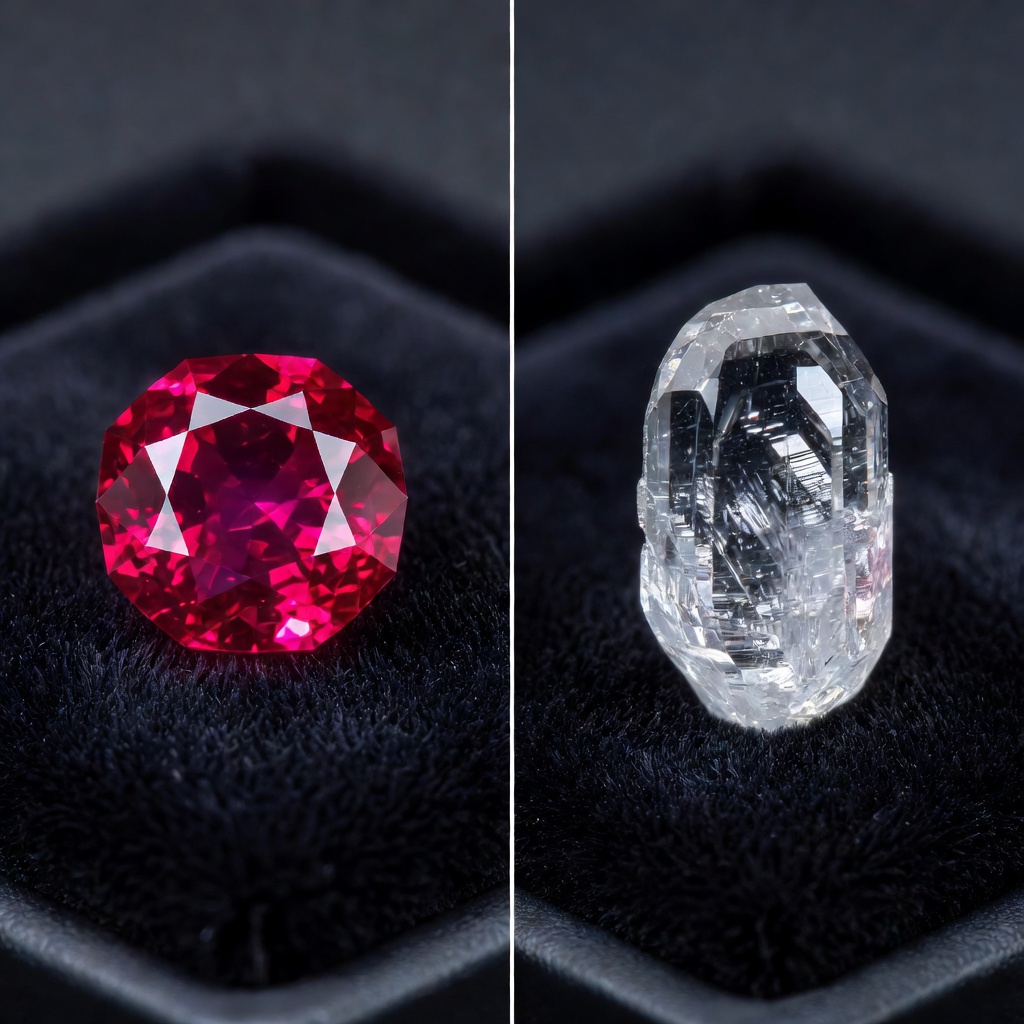
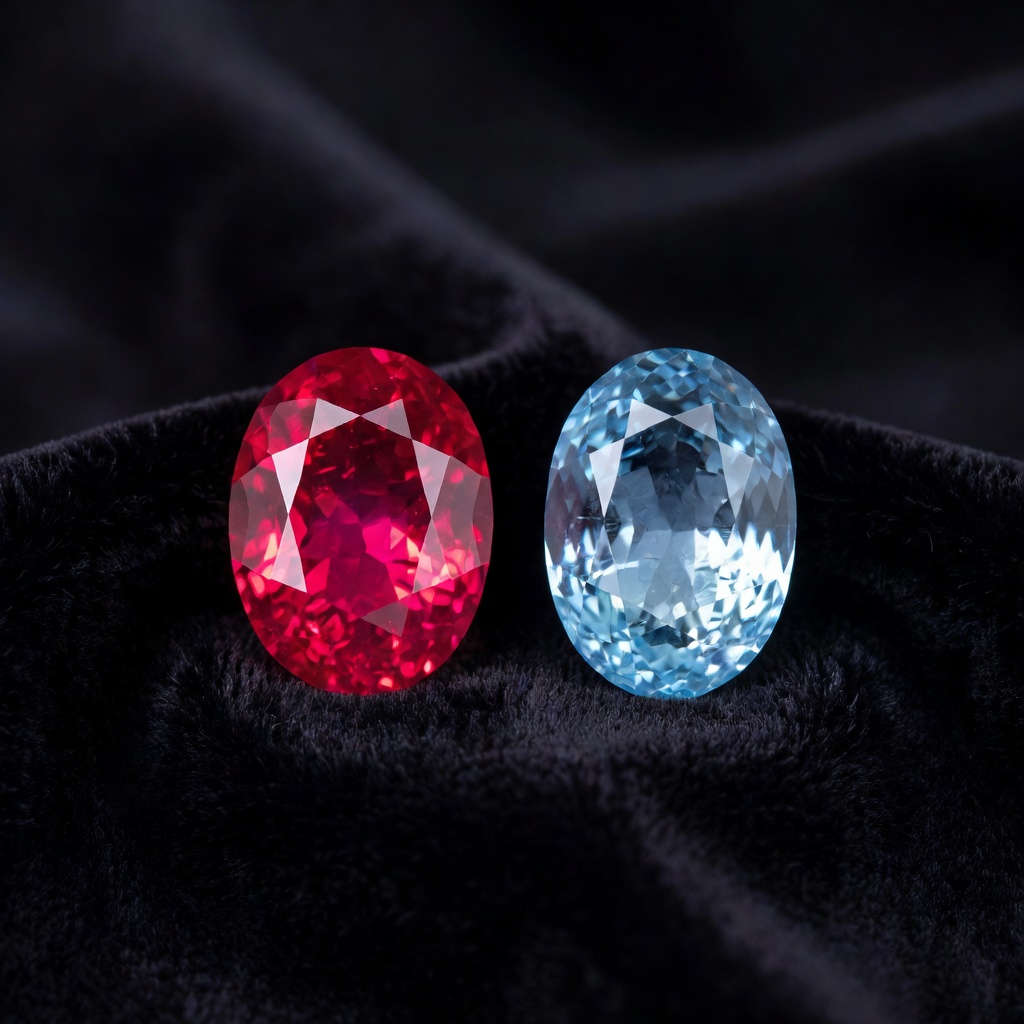
The visual allure of Ruby centers on its mesmerizing red spectrum, ranging from pinkish-red to the coveted "pigeon blood" red—a pure, vivid crimson with subtle blue undertones that command the highest prices. High-quality Rubies display exceptional transparency and brilliance when faceted, with light reflecting off the pavilion facets to create an inner glow known as "fire." Master cutters optimize ruby gemstone properties by orienting the crystal to minimize silk inclusions while maximizing color saturation, often choosing oval or cushion cuts that enhance the stone's depth and richness.
Moldavite's Sculptural Beauty
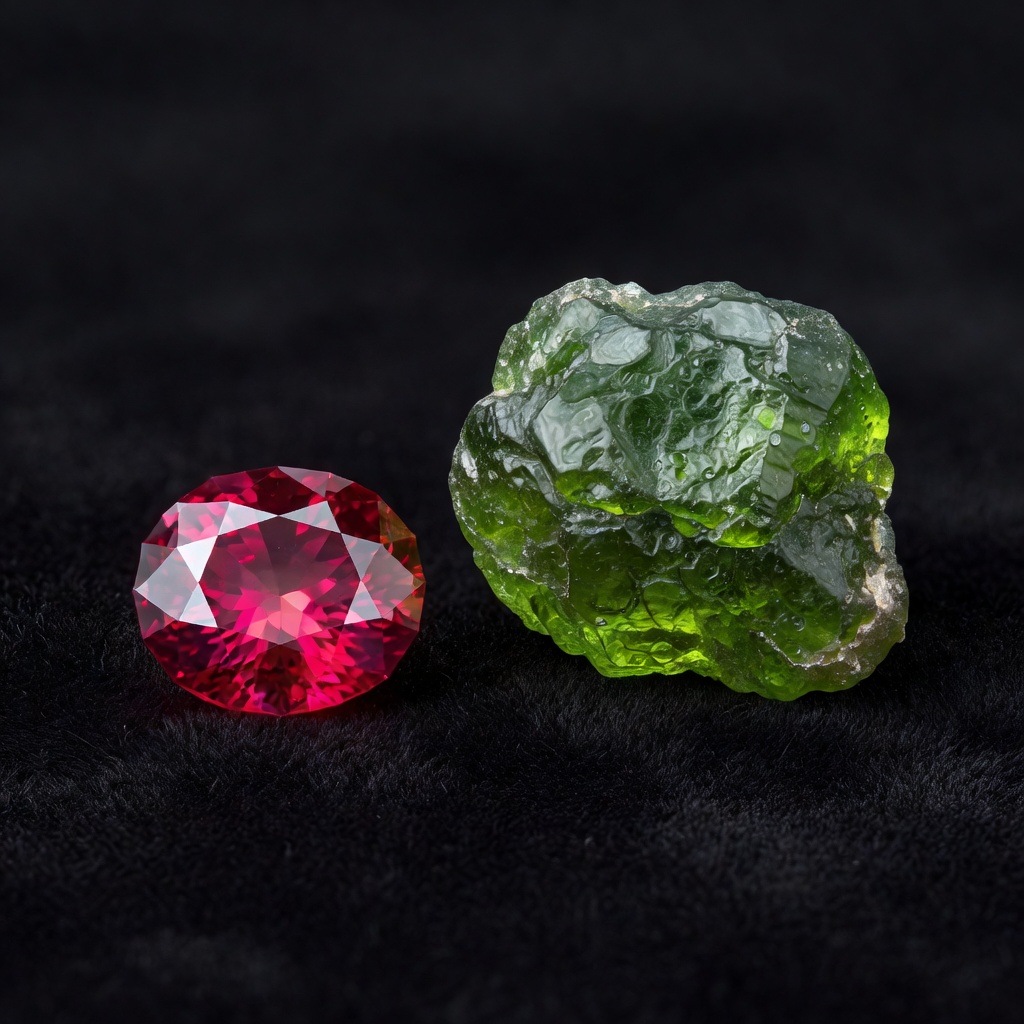
Moldavite presents an entirely different aesthetic, characterized by its distinctive olive to forest green coloration and naturally sculpted surfaces. Unlike faceted gems, Moldavite's value often derives from its raw, unpolished forms featuring intricate etchings, wrinkles, and internal bubbles created during its molten flight through the atmosphere. These surface textures, ranging from smooth drop-like forms to deeply grooved textures, tell the story of its cosmic origin. When cut, Moldavite typically appears as cabochons or free-form shapes that preserve these natural characteristics rather than attempting to achieve the geometric precision of traditional faceting.
Cutting Styles and Light Interaction
Jewelry designers approach these materials with fundamentally different philosophies. Ruby cutting focuses on optical performance, using precise angles to maximize light return and minimize the window effect, creating stones that sparkle intensely under direct light. Moldavite cutting, conversely, prioritizes preservation of natural textures and size retention, as excessive cutting diminishes the characteristic surface features that collectors prize. A faceted Ruby might lose only 30-40% of its rough weight during cutting, while heavily faceted Moldavite could lose 60-70% of its material, making such treatments economically unfeasible and aesthetically controversial among purists.
Market Value, Pricing, and Investment Potential
Price Per Carat Analysis
The moldavite tektite value and Ruby pricing structures operate in distinctly different market tiers, reflecting their geological classifications and scarcity factors. Untreated Burmese Rubies exhibiting pigeon blood coloration command prices ranging from $1,000 to over $100,000 per carat for exceptional specimens, with the record-breaking "Sunrise Ruby" selling for over $1 million per carat at auction. Authentic Moldavite typically sells between $20 and $500 per gram (approximately $100-$2,500 per carat), depending on size, texture quality, and color intensity. While high-end Moldavite pieces with exceptional sculptural forms or large sizes can exceed these ranges, they rarely approach the investment-grade pricing of fine Rubies.
Value Determination Factors
Ruby valuation follows the established "Four Cs" framework: Color reigns supreme, with pure red hues outperforming orange or purple secondary tones; Clarity standards allow for some silk inclusions that prove authenticity without diminishing transparency; Cut quality determines brilliance and face-up appearance; and Carat weight exponentially increases value due to rarity in larger sizes. Moldavite valuation prioritizes different criteria: Size matters significantly as larger specimens become exponentially rarer; Texture quality determines value, with deeply etched " hedgehog" surfaces commanding premiums over smooth drops; Color intensity favors deep forest greens over pale olive shades; and Authenticity becomes crucial given the proliferation of Chinese manufacturing fakes flooding the market.
Investment Outlook and Market Stability
From an investment perspective, Ruby maintains its status as a traditional precious gemstone with established auction houses, certification standards, and liquid secondary markets. Fine unheated Rubies appreciate steadily, serving as inflation hedges similar to gold or blue-chip art. Moldavite represents a more speculative investment, with values driven largely by the metaphysical community's demand and the finite nature of the deposit—once the Czech mines exhaust their supply, no new Moldavite will form. While this scarcity supports long-term value retention, the market lacks the institutional infrastructure of precious gemstones, making resale potentially more challenging despite growing mainstream interest in precious stones vs tektites as alternative investments.
Metaphysical Properties and Energy Differences
Ruby's Grounding Earth Force
In crystal healing traditions, Ruby activates the root chakra, anchoring spiritual energy into physical reality while stimulating vitality, passion, and life force energy. Practitioners utilize Ruby to enhance courage, improve circulation, and strengthen the heart both physically and emotionally. The stone's earthy origins connect wearers to ancestral wisdom and grounding stability, making it ideal for those seeking to manifest dreams into tangible reality or overcome lethargy and depression. Historical texts from India describe Ruby as the "king of gems," believed to protect warriors in battle and maintain health and wisdom when worn by nobility.
Moldavite's Cosmic Transformation
Moldavite carries an entirely different vibrational signature, associated with rapid spiritual transformation, cosmic consciousness, and heart chakra activation that transcends earthly boundaries. Known for producing the "Moldavite flush"—a tingling, warming sensation often accompanied by lightheadedness when first handled—this tektite accelerates personal evolution and synchronistic events. Unlike Ruby's stabilizing influence, Moldavite acts as an activator, facilitating past life recall, extraterrestrial communication, and the clearing of energetic blockages. Its extraterrestrial origin story resonates with those seeking to expand beyond three-dimensional limitations and connect with galactic consciousness.
Combining Ruby and Moldavite Together
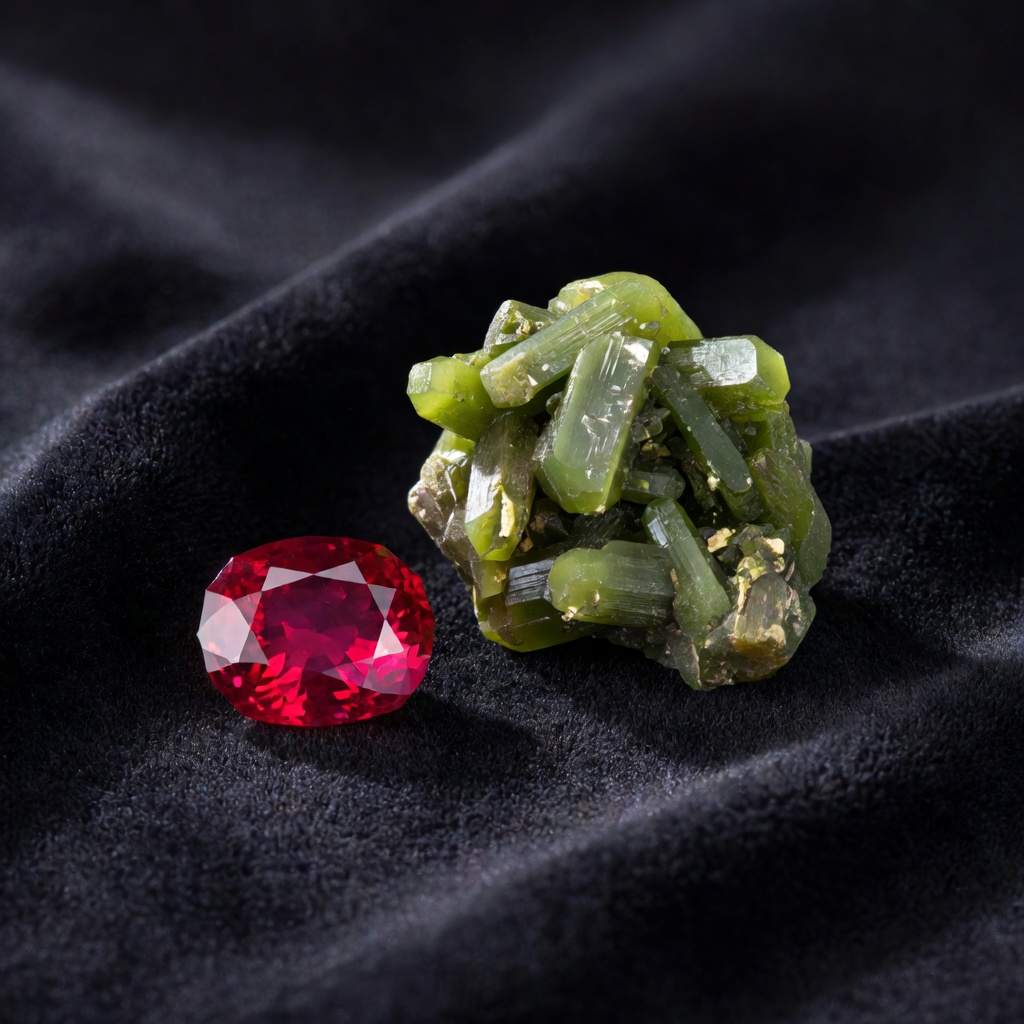
Many advanced practitioners specifically recommend wearing ruby and moldavite together to balance their complementary energies. Ruby's stabilizing, grounding force counteracts Moldavite's intense, sometimes overwhelming acceleration, creating a harmonious bridge between earth and cosmos. This combination supports transformation while maintaining practical functionality, allowing spiritual growth without losing connection to daily responsibilities. Case studies from crystal healing practitioners suggest this pairing proves particularly effective during major life transitions, supporting both the courage to change (Ruby) and the ability to release old patterns (Moldavite). However, proper storage remains essential—always keep these stones in separate soft pouches when not in use to prevent the harder Ruby from scratching the delicate Moldavite surface.
Jewelry Suitability and Design Applications
Ruby: The Heirloom Standard
Ruby's exceptional durability makes it suitable for virtually any jewelry application, particularly pieces designed for daily wear and generational inheritance. Engagement rings featuring Rubies offer unique alternatives to diamonds while providing sufficient hardness for decades of constant wear without visible scratching. Tennis bracelets, eternity bands, and statement rings showcase Ruby's brilliance under various lighting conditions, while its compatibility with both yellow gold and platinum settings allows versatile design aesthetics. High-end jewelry houses like Cartier and Van Cleef & Arpels have long favored Ruby for important parures, creating necklaces and earrings that withstand regular wear at formal occasions without requiring special precautions.
Moldavite: Occasional Wear Artistry
Moldavite's fragility necessitates thoughtful design constraints, limiting its suitability to pendant necklaces, stud earrings, and occasional wear pieces that minimize impact risk. Bezel settings provide essential protection by wrapping the stone's edges in metal, preventing the chipping that prong settings would invite. Designers often embrace Moldavite's organic, irregular shapes, creating rustic, nature-inspired pieces in sterling silver that complement the stone's earthy green tones and textured surfaces. Wire-wrapped designs allow secure holding without drilling holes that might compromise structural integrity, while raw specimen pendants preserve the natural beauty that faceting would destroy.
Metal Pairings and Design Philosophy
Ruby's versatility extends to metal compatibility, with warm yellow gold enhancing the stone's red warmth and cool platinum or white gold emphasizing the blue undertones of pigeon blood specimens. The precious nature of Ruby demands high-karat settings that match its value and durability. Moldavite pairs beautifully with oxidized silver, copper, and rustic gold tones that enhance its organic, otherworldly appearance. Contemporary designers increasingly create mixed-metal pieces that honor Moldavite's cosmic origins while grounding them in wearable art, though owners must remain vigilant about removing these pieces before physical activities, showering, or sleeping to prevent damage.
Authentication, Treatments, and Buying Guide
Understanding Ruby Treatments
The Ruby market accepts heat treatment as standard practice, with approximately 95% of commercial Rubies undergoing controlled heating to improve color and clarity—this treatment remains permanent and stable, requiring no special care. However, buyers must avoid glass-filled or leaded-glass filled Rubies, where fractures are infused with glass to improve apparent clarity; these "composite" stones lack durability and value, potentially costing thousands for material worth mere dollars. Reputable dealers disclose treatments clearly, and prices should reflect whether a Ruby is unheated, heated, or composite. Always request laboratory reports from GIA (Gemological Institute of America) or AGL (American Gemological Laboratories) when investing significant sums, as these documents verify geographic origin and treatment status.
Detecting Authentic Moldavite
Given Moldavite's popularity, the market suffers from extensive counterfeiting, with green bottle glass, melted sand, and manufactured glass flooding online marketplaces. Genuine Moldavite displays distinctive surface etching—wrinkles, pits, and grooves created by natural weathering over 15 million years—while fakes often appear too shiny, uniformly green, or perfectly shaped. Under magnification, authentic specimens contain internal bubbles and flow lines from their molten formation, whereas manufactured glass shows swirling patterns or perfect clarity. UV testing provides additional verification, as genuine Moldavite typically fluoresces weakly or not at all under short-wave UV light, while many fakes glow intensely due to chemical additives.
Documentation and Certification Importance
For Ruby purchases, insist upon GIA certification or equivalent laboratory reports that confirm natural origin, treatment status, and geographic source. These documents protect your investment and ensure resale value. Moldavite requires different documentation—provenance papers indicating the specific mine or field in the Czech Republic, accompanied by detailed photographs showing surface characteristics. Established dealers like those affiliated with the Moldavite Association provide certificates of authenticity detailing weight, dimensions, and texture classification. When comparing precious stones vs tektites, recognize that while Ruby certification follows standardized gemological protocols, Moldavite authentication relies more heavily on dealer reputation and detailed visual analysis by experienced tektite specialists.
Care, Cleaning, and Maintenance Requirements
Maintaining Ruby's Brilliance
Ruby maintenance remains relatively straightforward given its hardness and stability. Untreated Rubies tolerate ultrasonic cleaners and steam cleaning, making professional jewelry maintenance simple and effective. For treated stones or routine home care, warm water with mild dish soap and a soft brush safely remove accumulated oils and dirt without risking damage. Store Ruby jewelry separately from other pieces to prevent it from scratching softer gemstones, though it can withstand contact with most metals and harder materials. Regular inspection of prongs and settings ensures the stone remains secure, particularly in rings worn daily where impact might loosen settings over time.
Protecting Fragile Moldavite
Moldavite requires significantly more delicate handling due to its gemstone hardness comparison vulnerabilities. Never expose Moldavite to ultrasonic cleaners, steam, or harsh chemical jewelry dips, as these can damage the surface etching or cause thermal shock fracturing. Avoid prolonged water exposure, as water can seep into surface pits and, if allowed to dry repeatedly, may cause internal stress or clouding. Chemicals including perfume, hairspray, and household cleaners can etch or dull the surface, so always put Moldavite jewelry on last when dressing. Sudden temperature changes—such as moving from cold outdoor air into a heated building—can potentially crack the glass, making it unsuitable for wear in extreme weather conditions.
Storage Solutions for Both Stones
Proper storage prevents damage to both materials, though for different reasons. Store Ruby pieces in individual soft cloth pouches or lined jewelry boxes to prevent them from scratching other gems—remember that Ruby can damage virtually every other gemstone in your collection except diamond. Moldavite requires padded storage in acid-free tissue or soft cloth, isolated from harder stones that might scratch its surface. For those working with ruby and moldavite together in crystal healing practices, maintain separate storage containers and handle them individually during meditation or energy work to prevent accidental contact that could chip the Moldavite. Travel requires particular caution for Moldavite, which should be wrapped in multiple layers of soft material and carried in rigid containers to prevent pressure damage.
Final Verdict: Choosing Your Perfect Stone
Assessing Your Lifestyle Needs
The decision between Ruby vs Moldavite ultimately hinges on your intended use and daily activities. Active individuals seeking an engagement ring or daily wear statement piece should choose Ruby for its resilience against impact, scratching, and environmental exposure. Those drawn to ceremonial jewelry, meditation tools, or occasional wear art pieces might find Moldavite's unique origin and energy more compelling despite its fragility. Consider your profession—manual laborers or healthcare workers need Ruby's durability, while creative professionals or those in less physically demanding environments might safely incorporate Moldavite into their wardrobe.
Budget and Investment Considerations
Your financial parameters also guide this choice. Ruby represents a significant investment starting in the thousands for quality specimens, functioning as portable wealth similar to fine art or precious metals. Moldavite offers accessibility, with beautiful specimens available for under $200, making it an excellent entry point for collectors interested in tektites or those seeking spiritual tools without substantial financial commitment. However, remember that while Ruby maintains liquidity in the secondary market, Moldavite remains more niche, requiring specialized dealers or metaphysical communities for resale.
The Decision Matrix
Choose Ruby if you value tradition, durability, and earthly passion; if you seek a generational heirloom that withstands daily wear; if you appreciate the prestige of precious gemstones with established investment trajectories; or if you need grounding energy and vitality enhancement. Choose Moldavite if you prioritize uniqueness and cosmic connection; if you seek rapid spiritual transformation and heart-centered awakening; if you appreciate natural sculptural art and extraterrestrial origins; or if you desire an accessible entry into high-vibration crystal work. Both stones offer profound beauty and energetic benefits, but understanding their fundamental differences ensures you select the gem that truly serves your practical needs and spiritual journey.
Frequently Asked Questions
Is moldavite more valuable than ruby?
Generally, no. High-quality natural rubies, especially Burmese pigeon blood specimens, command significantly higher prices per carat ($1,000 to over $100,000) compared to Moldavite ($20-$500 per gram). However, rare large Moldavite pieces with exceptional texture can be valuable in the metaphysical market, though they rarely approach fine Ruby prices.
Can you wear ruby and moldavite together?
Yes, many crystal practitioners recommend pairing Ruby and Moldavite. Ruby's grounding, stabilizing earth energy helps balance Moldavite's intense, high-vibration transformational properties. Physically, store them separately to prevent the harder Ruby (Mohs 9) from scratching the softer Moldavite (Mohs 5.5).
Which is better for everyday wear, ruby or moldavite?
Ruby is far superior for everyday wear due to its exceptional hardness of 9 on the Mohs scale, resisting scratches and chips. Moldavite, at 5.5 hardness, is relatively fragile and best reserved for occasional wear in protective settings like pendants or earrings, avoiding rings for daily use.
Do rubies and moldavite have similar spiritual meanings?
While both are associated with transformation, they differ significantly. Ruby focuses on earthly vitality, passion, courage, and root chakra grounding. Moldavite facilitates cosmic consciousness, rapid spiritual awakening, and heart chakra expansion. Ruby stabilizes while Moldavite accelerates change.
Why is moldavite expensive if it's technically just glass?
Moldavite commands prices due to its rarity (found only in the Czech Republic), limited supply (no new material being formed), and unique extraterrestrial origin story. Unlike manufactured glass, it's a 15-million-year-old natural tektite with distinctive etched textures and bubbles that cannot be perfectly replicated.
Can moldavite be faceted and polished like a ruby?
While Moldavite can be cut and polished, it's rarely faceted like Ruby because its value lies in its natural sculptural forms and surface textures. Faceting Moldavite reduces its size significantly and diminishes the characteristic wrinkles and bubbles collectors prize. Most quality Moldavite jewelry features cabochons or raw specimens.
Which stone is rarer: natural ruby or moldavite?
High-quality unheated natural Rubies are geologically rarer than Moldavite. However, Moldavite is location-specific (only the Czech Republic) and finite, whereas Rubies occur in multiple deposits globally (Myanmar, Mozambique, Madagascar). Investment-grade Rubies remain scarcer than collectible Moldavite specimens.
Is ruby or moldavite better for meditation?
It depends on your meditation goals. Choose Moldavite for deep spiritual work, past life exploration, and consciousness expansion, though its intensity may overwhelm beginners. Choose Ruby for grounding meditation, vitality boosting, and cultivating self-confidence and courage. Beginners often find Ruby more manageable.