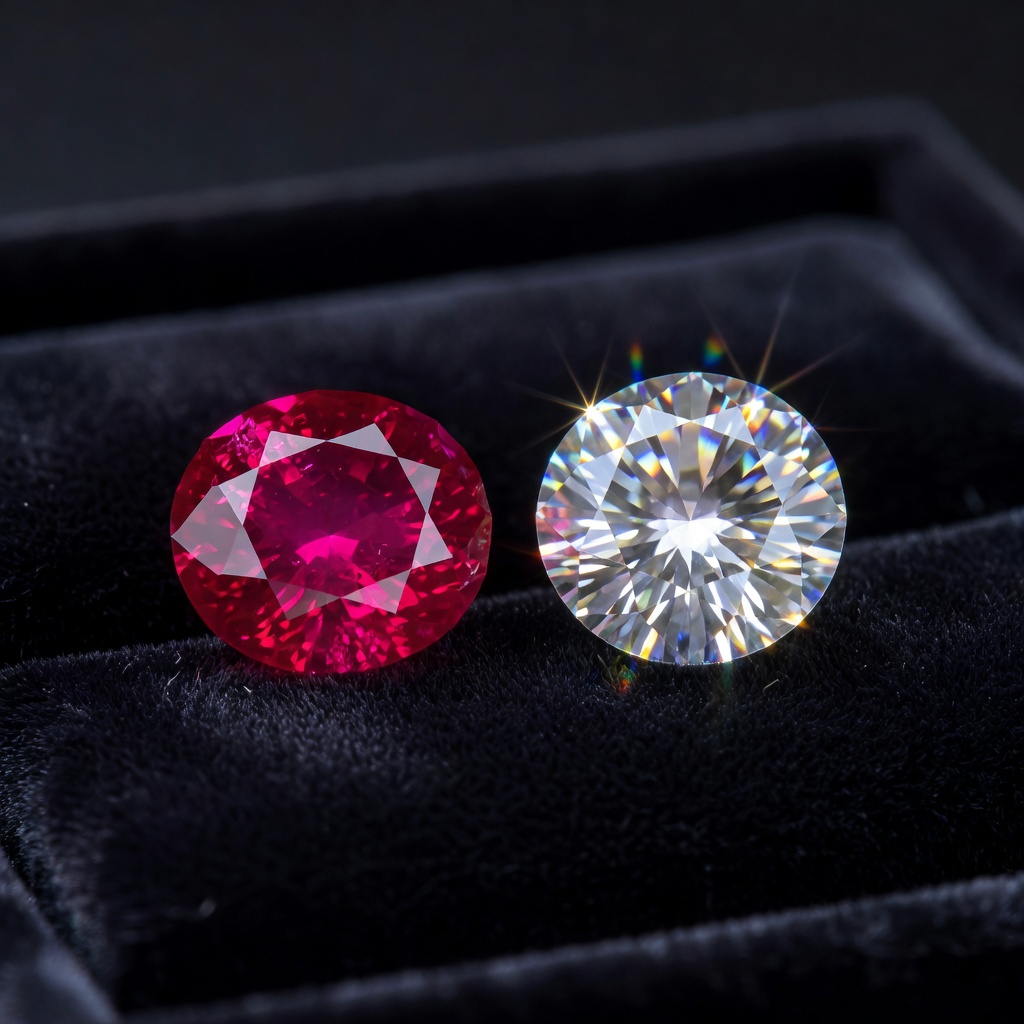
Introduction: Understanding Ruby vs Moissanite
The contemporary jewelry market has witnessed a fascinating convergence between ancient geological treasures and modern scientific achievements, placing the timeless allure of rubies against the innovative brilliance of moissanite. As consumers become increasingly sophisticated in their gemstone education, the comparison between these two distinct stones has emerged as one of the most searched queries in fine jewelry. Whether you are selecting an engagement ring that symbolizes eternal commitment or investing in a statement piece for your collection, understanding the nuanced differences between these gems is essential for making an informed decision that aligns with your lifestyle, values, and aesthetic preferences.
Rubies have captivated civilizations for millennia with their deep crimson hues and associations with royalty and passion, while moissanite represents the pinnacle of human engineering in gemstone creation. The rising popularity of both stones stems from their exceptional hardness and brilliant optical properties, yet they offer fundamentally different experiences to the wearer. This comprehensive gemstone comparison guide explores every critical factor from geological formation to daily maintenance requirements, helping you navigate the complex decision between earth-formed precious stones and laboratory-created alternatives. By examining origin stories, durability metrics, and investment potential, you will gain the clarity needed to select the perfect gemstone for your next jewelry acquisition.
Origins and Composition: Natural Ruby vs Lab-Created Moissanite
The fundamental distinction between these gemstones begins deep within their molecular structures and formation processes, representing nature's slow artistry versus human technological innovation. Natural rubies form as varieties of corundum, composed primarily of aluminum oxide with trace amounts of chromium that create their signature red coloration. These precious crystals develop under intense heat and pressure within the earth's crust over millions of years, typically found in metamorphic rocks in regions such as Myanmar, Thailand, and Mozambique. The rarity of gem-quality rubies stems from the specific geological conditions required for their formation, making each natural stone a unique artifact of geological history with individual inclusions and color zoning patterns.
Moissanite presents a stark contrast in both origin and chemical composition, consisting of silicon carbide that was first discovered in 1893 within a meteor crater by Nobel Prize-winning chemist Henri Moissan. While natural moissanite exists in trace amounts within meteorites and upper mantle rocks, virtually all moissanite available in jewelry today is lab-created through advanced technological processes. Manufacturers use thermal growing methods to produce silicon carbide crystals in controlled environments, resulting in gemstones that are chemically and optically identical to their rare natural counterparts but available in consistent quality and abundant supply. This distinction between naturally mined precious stones and engineered gemstones represents one of the most significant decision factors for modern consumers prioritizing either geological authenticity or sustainable production methods.
Practical implications of these compositional differences extend beyond mere aesthetics into questions of provenance and environmental impact. When purchasing a natural ruby, buyers often seek certification documents verifying the stone's mining origin, treatment history, and ethical sourcing standards, particularly given concerns about mining practices in certain regions. Conversely, moissanite appeals to environmentally conscious consumers who appreciate the minimal ecological footprint associated with laboratory creation, eliminating the need for invasive mining operations while providing a conflict-free guarantee. Case studies of major jewelry retailers reveal that approximately 60% of millennial buyers now inquire about gemstone origins before purchasing, highlighting how composition and sourcing have become primary drivers in the ruby vs moissanite decision matrix.
Visual Appearance: Color, Clarity, and Brilliance
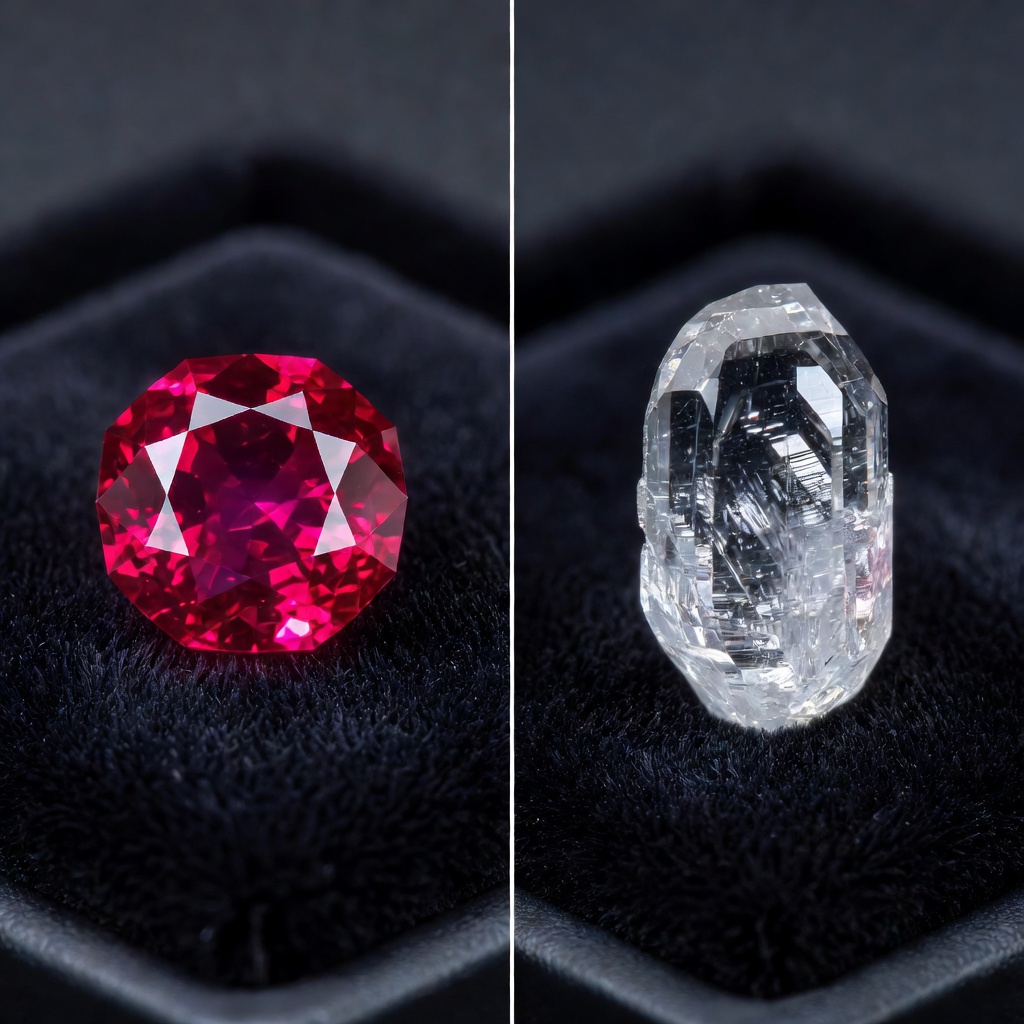
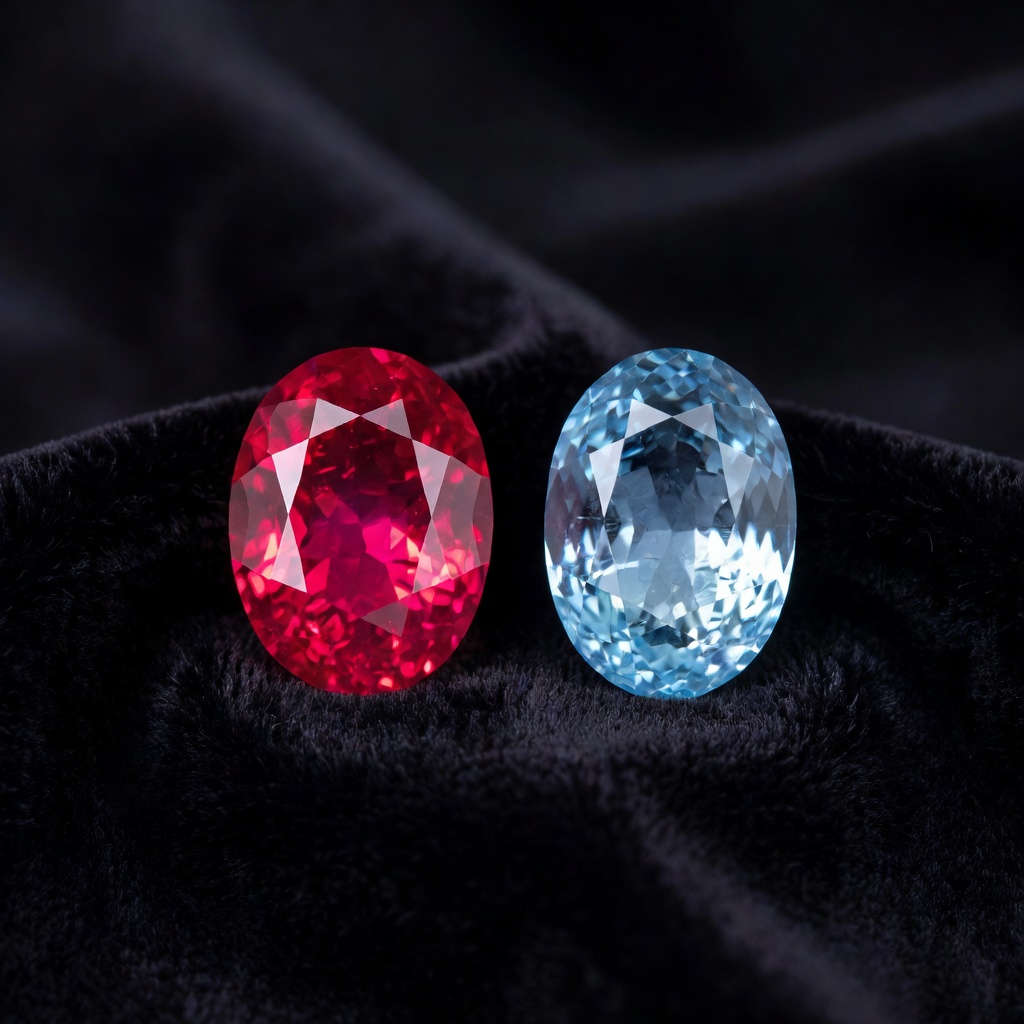
The aesthetic distinction between ruby and moissanite could not be more pronounced, offering buyers a choice between warm, saturated color and cool, spectral brilliance. High-quality rubies display the coveted "pigeon blood" red—a vivid, pure red with subtle blue undertones that represents the pinnacle of ruby color grading. Unlike diamonds or moissanite that prioritize clarity, rubies often contain characteristic inclusions known as "silk"—fine rutile needles that can actually enhance the stone's appearance by diffusing light and creating a soft, velvety glow. These natural fingerprints serve as verification of authenticity and origin, with untreated stones commanding significant premiums in the red gemstone comparison market.
Moissanite dazzles observers with a distinctly different optical performance characterized by exceptional fire and brilliance that often exceeds that of diamonds. Due to its doubly refractive nature (birefringence), moissanite splits light entering the stone into two rays, creating a mesmerizing display of rainbow-colored flashes particularly noticeable under direct lighting conditions. While ruby exhibits single refraction with a refractive index of 1.76-1.77, moissanite boasts a higher range of 2.65-2.69, resulting in more pronounced sparkle and light return. This double refraction can create a slightly blurred or fuzzy appearance when viewing facets through the crown, a characteristic that distinguishes moissanite from both diamonds and rubies upon close inspection.
Lighting conditions dramatically influence how each gemstone displays its unique optical properties, requiring buyers to view stones under multiple light sources before making a selection. Rubies typically appear most vibrant under natural daylight or incandescent lighting, where their red body color absorbs other wavelengths and reflects warm crimson tones. Under fluorescent lighting, rubies may appear slightly darker or more purplish, requiring careful consideration for office wearers. Moissanite, conversely, performs spectacularly under spotlighting and direct sunlight, where its dispersion creates brilliant fire, but may appear overly brilliant or "disco-ball" like in certain artificial lighting environments. Professional jewelers recommend viewing both stones under incandescent, fluorescent, and natural daylight before purchasing to ensure the gem's appearance aligns with your expectations for daily wear versus special occasion display.
Durability and Hardness: Mohs Scale Analysis
When evaluating gemstones for jewelry that withstands daily wear, understanding the nuanced differences between hardness and toughness becomes crucial for long-term satisfaction. On the Mohs hardness scale, which measures a mineral's resistance to scratching, ruby ranks at 9.0 while moissanite registers slightly higher at 9.25, making moissanite one of the hardest substances known to man, second only to diamond. This measurement indicates that moissanite durability vs ruby hardness favors moissanite for scratch resistance, meaning that over decades of wear, a moissanite ring will maintain its surface polish and facet edges with slightly greater resilience than ruby. However, both stones rank among the most durable gems available, suitable for engagement rings and heirlooms that pass through generations.
Hardness represents only one aspect of durability, as toughness—the resistance to chipping, cracking, and breaking—follows different physical principles. Rubies, despite their impressive hardness, possess a characteristic cleavage plane and brittle tenacity that can make them susceptible to damage from sharp impacts, particularly if they contain significant inclusions. Moissanite demonstrates superior toughness with no cleavage planes, making it less likely to fracture when struck against hard surfaces during daily activities. Practical examples from jewelry repair shops indicate that while ruby engagement rings rarely show surface scratches, they occasionally require repolishing of chipped girdles or crown facets, whereas moissanite typically maintains structural integrity even after significant impacts.
The implications for daily wear rings and long-term heirloom potential vary significantly based on lifestyle factors and setting choices. Active individuals who work with their hands or participate in contact sports may find moissanite's superior toughness advantageous for maintaining pristine condition without constant vigilance. Conversely, rubies require protective settings such as bezels or half-bezels rather than delicate prong settings, particularly for stones over two carats where the increased size creates more vulnerability to corner damage. For heirloom considerations, both stones offer excellent longevity, though rubies may require occasional professional repolishing every few decades to restore luster to abraded facet junctions, while moissanite typically maintains its original polish indefinitely under normal wear conditions.
Price and Value Investment Comparison
The economic disparity between natural rubies and lab-created moissanite represents one of the most dramatic price differentials in the gemstone market, offering buyers vastly different value propositions depending on their investment goals. Natural rubies command premium prices that can range from $1,000 to over $100,000 per carat for exceptional specimens, with untreated Burmese stones often exceeding the per-carat cost of diamonds. This pricing reflects genuine scarcity, as less than one percent of mined rubies qualify as gem-quality without heat treatment, and the finest "pigeon blood" specimens from Mogok, Myanmar, appear at auction only rarely. Conversely, moissanite typically retails between $300 to $600 per carat depending on color grade and retailer markup, providing accessibility without the barrier of extreme rarity.
Several critical factors affect ruby valuation beyond basic carat weight, creating a complex marketplace where two stones of identical size may differ in price by orders of magnitude. Origin significantly influences value, with Burmese rubies historically commanding 30-50% premiums over Thai or African stones due to their superior fluorescence and color saturation. Treatment history presents another crucial variable, as untreated natural rubies represent less than 5% of the market and can cost ten times more than heat-treated equivalents. Color grading follows strict protocols where pure red commands highest prices, while stones with orange or purple modifiers sell at discounts. For investors considering gemstone investment portfolios, these variables create both opportunity and risk, requiring expert gemological consultation and certification from recognized laboratories such as GIA or SSEF.
Resale value considerations reveal stark contrasts between these gems as storehouses of wealth versus consumable luxury goods. High-quality natural rubies with documented provenance and minimal treatment historically appreciate over time, particularly as Burmese mines face depletion and political instability restricts supply. Major auction houses regularly feature important rubies that achieve record prices, suggesting continued demand among collectors and investors. Moissanite, while offering excellent initial value for budget-conscious buyers, currently lacks established secondary markets and typically retains minimal resale value, functioning similarly to other technological products that depreciate after purchase. However, for couples prioritizing immediate visual impact and durability over long-term investment appreciation, moissanite price comparison analyses consistently show superior cost-per-wear value, allowing buyers to allocate savings toward higher quality settings or other financial priorities.
Symbolism, Meaning, and Cultural Significance
The metaphysical and cultural associations surrounding these gemstones diverge along timelines spanning thousands of years versus mere decades, offering wearers connections to either ancient traditions or contemporary values. Ruby stands as one of humanity's most revered gemstones, recognized as the July birthstone and historically associated with passion, protection, and prosperity across virtually every major civilization. Ancient Hindus called ruby "ratnaraj" or "king of precious stones," believing it offered protection from evil and misfortune to its wearer. Medieval European royalty adorned themselves with rubies to demonstrate wealth and authority, while Burmese warriors implanted rubies beneath their skin before battle, convinced the stones made them invulnerable. These deep historical roots create emotional resonance for buyers seeking jewelry with narrative depth and traditional significance.
Moissanite carries a distinctly different symbolic weight, representing modern ideals of ethical luxury, environmental responsibility, and technological mastery. Since Charles & Colvard introduced gem-quality moissanite to the jewelry market in 1998, the stone has become synonymous with conscious consumerism and sustainable practices. Unlike diamonds or rubies that may carry concerns regarding conflict zones or environmentally destructive mining, moissanite offers guaranteed ethical sourcing with minimal carbon footprint. For many contemporary couples, particularly millennials and Gen Z buyers, this alignment with personal values regarding ecological stewardship outweighs traditional associations with natural gemstones. The narrative of cosmic origins—literally stardust recreated in laboratories—adds romantic appeal for those who view their love as rare and extraordinary despite the gem's manufactured accessibility.
When considering July birthstone vs moissanite for commemorative jewelry, personal values and intended messaging significantly influence selection. Parents seeking birthstone jewelry for July-born children naturally gravitate toward rubies to honor traditional birthstone charts and establish connections to family heritage. Conversely, couples prioritizing unique personal statements may prefer moissanite's story of scientific innovation over geological chance. Case studies from custom jewelers indicate that approximately 40% of moissanite buyers specifically request the stone to avoid supporting mining industries, while ruby purchasers often cite desires for "something real" with tangible connections to earth's ancient history. Ultimately, the choice reflects broader decisions about whether jewelry should connect us to ancestral traditions or project future-oriented values regarding technology and sustainability.
Ruby vs Moissanite: At-a-Glance Comparison
| Characteristic | Ruby (Natural) | Moissanite (Lab-Created) |
|---|---|---|
| Chemical Composition | Aluminum Oxide (Corundum) with Chromium | Silicon Carbide |
| Mohs Hardness | 9.0 | 9.25 |
| Refractive Index | 1.76-1.77 (Single Refraction) | 2.65-2.69 (Double Refraction) |
| Color Range | Red (Pigeon Blood to Pinkish-Red) | Colorless to Near-Colorless (also available in fancy colors) |
| Price Per Carat | $1,000 - $100,000+ (depending on quality) | $300 - $600 (consistent pricing) |
| Durability | Excellent hardness but susceptible to chipping | Superior toughness, no cleavage planes |
| Brilliance Type | Subtle, velvety luster | High dispersion, rainbow fire |
| Origin | Myanmar, Thailand, Mozambique (Earth-mined) | Laboratory-created (USA, China) |
| Best Application | Statement pieces, colored gemstone collectors | Daily wear engagement rings, diamond alternatives |
Engagement Ring Suitability and Setting Considerations
Selecting between ruby and moissanite for an engagement ring requires careful evaluation of lifestyle factors, aesthetic preferences, and practical wearability concerns that extend beyond initial visual appeal. Ruby engagement ring alternatives have gained significant traction among couples seeking distinctive, non-traditional center stones that communicate bold personality and unique style. However, rubies demand thoughtful setting architecture to protect their relatively softer nature and potential brittleness. Protective settings such as bezels, halo surrounds, or substantial prongs become essential for rubies over one carat, particularly for individuals with active lifestyles or manual occupations. V-prongs specifically help protect the pointed corners of emerald or pear-cut rubies, which represent vulnerable areas prone to chipping during accidental impacts.
Moissanite engagement rings dominate the alternative gemstone market due to their diamond-like durability and brilliant performance at accessible price points. The stone's exceptional toughness allows for delicate, airy settings that might prove too risky for rubies, including floating tension settings or ultra-thin micro-pavé bands that maximize light entry. For couples desiring the look of a large diamond without the accompanying debt, moissanite enables impressive carat sizes—often two to three carats equivalent—within modest budgets. Metal pairing recommendations favor white gold or platinum settings for colorless moissanite to enhance its icy brilliance, though rose gold creates stunning vintage-inspired looks. Ruby rings traditionally pair beautifully with yellow gold, which complements and intensifies the red warmth, though contemporary designs increasingly feature platinum or white gold for modern contrast.
Lifestyle factors play crucial determinative roles in selecting between these stones for daily wear over decades of marriage. Medical professionals, mechanics, or athletes may find moissanite's chip-resistance advantageous for maintaining pristine condition despite frequent hand washing, glove wearing, or physical contact. Conversely, individuals with desk-based professional environments who appreciate colored gemstones and can commit to removing rings during gym sessions or household cleaning may find rubies perfectly suitable with proper precautions. Practical tips from jewelry consultants suggest that ruby engagement rings benefit from annual professional inspections to check for loose prongs or developing chips, while moissanite requires less frequent maintenance monitoring. For couples considering future anniversary upgrades, starting with a moissanite center stone allows budget allocation toward an elaborate setting that can later accommodate a ruby or diamond if desired, providing flexibility in long-term jewelry planning.
Care, Cleaning, and Maintenance Requirements
Proper maintenance protocols differ significantly between these gemstones due to their distinct chemical compositions and physical vulnerabilities, requiring owners to adopt species-specific care routines to preserve optimal appearance. Ruby maintenance demands awareness of heat sensitivity, particularly for fracture-filled or heated stones commonly found in the market. While natural corundum withstands high temperatures, treated rubies may suffer damage from ultrasonic cleaners or steam cleaning that can weaken filling substances or cause existing inclusions to expand. Safe cleaning methods include gentle soaking in warm water with mild dish soap followed by soft brushing with a baby toothbrush, avoiding harsh chemicals like chlorine bleach or hydrofluoric acid that can pit the surface or dissolve treatments. Professional jewelers recommend storing ruby jewelry separately in soft cloth pouches to prevent scratching from harder diamonds or moissanite pieces in your collection.
Cleaning moissanite presents different challenges despite the stone's chemical inertness and resistance to harsh cleaning agents. Moissanite possesses an unfortunate tendency to attract oils, grease, and soap scum more readily than diamonds or rubies due to its surface properties, causing temporary dullness that masks its inherent brilliance. Owners often panic when their moissanite appears cloudy, but this typically results from accumulated hand lotions, cooking oils, or cosmetic residues rather than permanent damage. Effective cleaning involves periodic soaking in commercial jewelry cleaning solutions or ammonia-based mixtures, followed by thorough rinsing and drying with lint-free cloths. Unlike rubies, moissanite safely tolerates ultrasonic cleaners and steam cleaning, making professional maintenance more straightforward for busy owners.
Professional maintenance schedules should account for the different wear patterns and setting requirements of each stone. Ruby rings benefit from professional inspection every six months to check for prong wear, especially since the stone's weight and potential brittleness place stress on mounting structures over time. Jewelers should examine rubies for developing chips or abrasions along facet edges, which can often be remedied through repolishing if caught early. Moissanite settings require less frequent inspection—annually suffices for most wearers—but owners should remain vigilant about checking for the "oil slick" or "stain" that sometimes appears on moissanite surfaces, a temporary surface film removable by professional polishing. For both stones, removing jewelry before swimming in chlorinated pools, applying hand sanitizer, or engaging in heavy lifting prevents unnecessary exposure to chemicals and impact risks that compromise long-term beauty.
Making Your Final Decision: Which Gemstone to Choose
Arriving at the definitive choice between ruby and moissanite requires honest assessment of your priorities across financial, aesthetic, and ethical dimensions, recognizing that neither stone represents objectively superior choice—only superior alignment with individual needs. Budget considerations play a foundational role, with moissanite offering maximized visual impact per dollar spent, allowing allocation toward elaborate custom settings or savings for other life goals. If your budget accommodates $500 to $2,000 total, moissanite provides center stone options rivaling two-carat diamonds in size and brilliance. Conversely, if you possess $5,000 to $20,000 and prioritize rarity and investment potential, a smaller but exceptional ruby offers tangible asset value and the prestige associated with precious colored gemstones. Consider also the total cost of ownership: while moissanite requires minimal maintenance expense, rubies may incur periodic repolishing or resetting costs over decades of ownership.
Aesthetic preferences ultimately drive daily satisfaction with your jewelry selection, requiring visualization of how each stone complements your personal style and existing wardrobe. Those drawn to classic elegance, vintage aesthetics, or bold fashion statements often gravitate toward ruby's warm, saturated color that commands attention and signifies confidence. Ruby particularly suits individuals with warm skin tones or those who frequently wear earth tones, reds, and gold jewelry. Alternatively, if your style leans toward modern minimalism, Scandinavian simplicity, or you prefer jewelry that coordinates effortlessly with silver tones and cool color palettes, moissanite's brilliant colorless sparkle provides versatile wearability. Practical exercises suggest spending time viewing both stones under various lighting conditions and against your skin tone before committing, as photographs rarely capture the true experiential difference between these distinct optical performances.
Ethical sourcing priorities increasingly influence gemstone selection for socially conscious consumers navigating concerns about environmental impact and labor practices. Moissanite offers undisputed advantages for those prioritizing minimal ecological disruption, as laboratory creation eliminates mining waste, habitat destruction, and potential human rights concerns associated with artisanal mining operations. However, responsibly sourced natural rubies certified through Fair Trade initiatives or sourced from reputable mines with transparent labor practices allow buyers to support mining communities while acquiring earth-formed treasures. When choosing between ruby and moissanite, consider whether your values align more closely with preserving geological heritage and supporting traditional mining economies, or with embracing technological innovation and minimizing environmental footprints. Many collectors ultimately choose both—moissanite for daily wear engagement rings subject to hard use, and rubies for special occasion statement pieces where their color and rarity can be showcased and protected.
Frequently Asked Questions
Is moissanite harder than ruby?
Yes, moissanite ranks 9.25 on the Mohs hardness scale, while ruby ranks 9.0. This makes moissanite slightly more resistant to scratching, though both are excellent for daily wear and among the hardest gemstones available.
Can moissanite be red like a ruby?
While moissanite can be manufactured in various colors including reddish tints, it cannot naturally achieve the deep, pure 'pigeon blood' red of a high-quality natural ruby. Red moissanite tends to appear more pinkish or orange-red rather than possessing ruby's characteristic vivid crimson.
Which is more expensive, ruby or moissanite?
Natural rubies are significantly more expensive than moissanite. High-quality rubies can cost thousands to tens of thousands per carat due to rarity, while moissanite typically costs a few hundred dollars per carat as it is lab-created and readily available.
Does moissanite sparkle more than ruby?
Yes, moissanite has a higher refractive index (2.65-2.69) than ruby (1.76-1.77) and exhibits double refraction, creating more rainbow fire and brilliance. Rubies offer a more subtle, silky luster rather than intense sparkle.
Is ruby or moissanite better for an engagement ring?
Moissanite is often preferred for engagement rings due to its superior toughness, diamond-like appearance, and lower cost. However, rubies offer unique color and tradition but require more careful setting protection and maintenance for daily wear.
Can you scratch a ruby with moissanite?
Technically yes, since moissanite (9.25) is harder than ruby (9.0), it can potentially scratch a ruby surface. However, both stones are extremely hard, and significant scratching typically only occurs with improper storage where they rub together forcefully.
Are rubies rarer than moissanite?
Natural gem-quality rubies are far rarer than moissanite. While natural moissanite is extremely rare (found only in meteorites), virtually all moissanite jewelry contains lab-created stones, making them abundant compared to earth-mined natural rubies.
Which gemstone requires more maintenance?
Rubies generally require more careful maintenance due to potential heat sensitivity and the presence of inclusions that can attract dirt. Moissanite is low-maintenance but tends to attract oils and grease, requiring more frequent cleaning to maintain its sparkle.