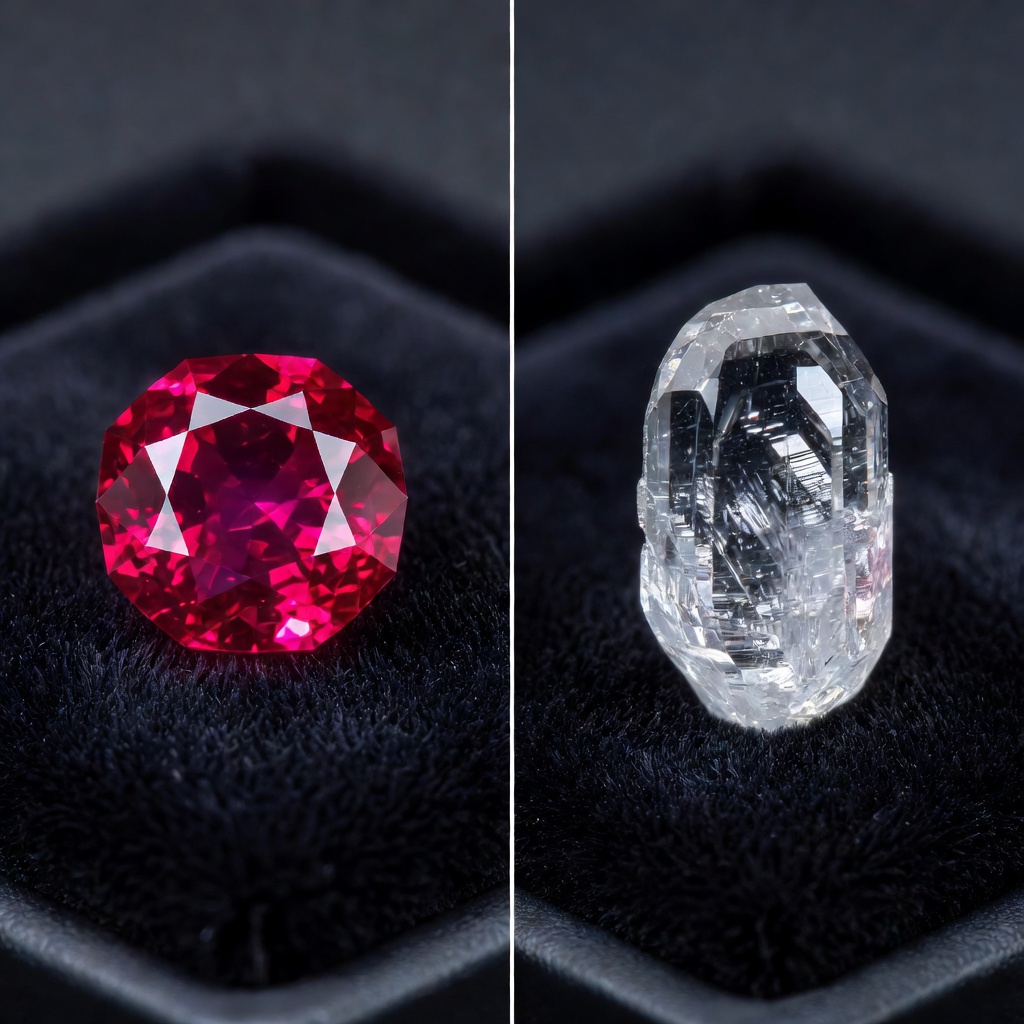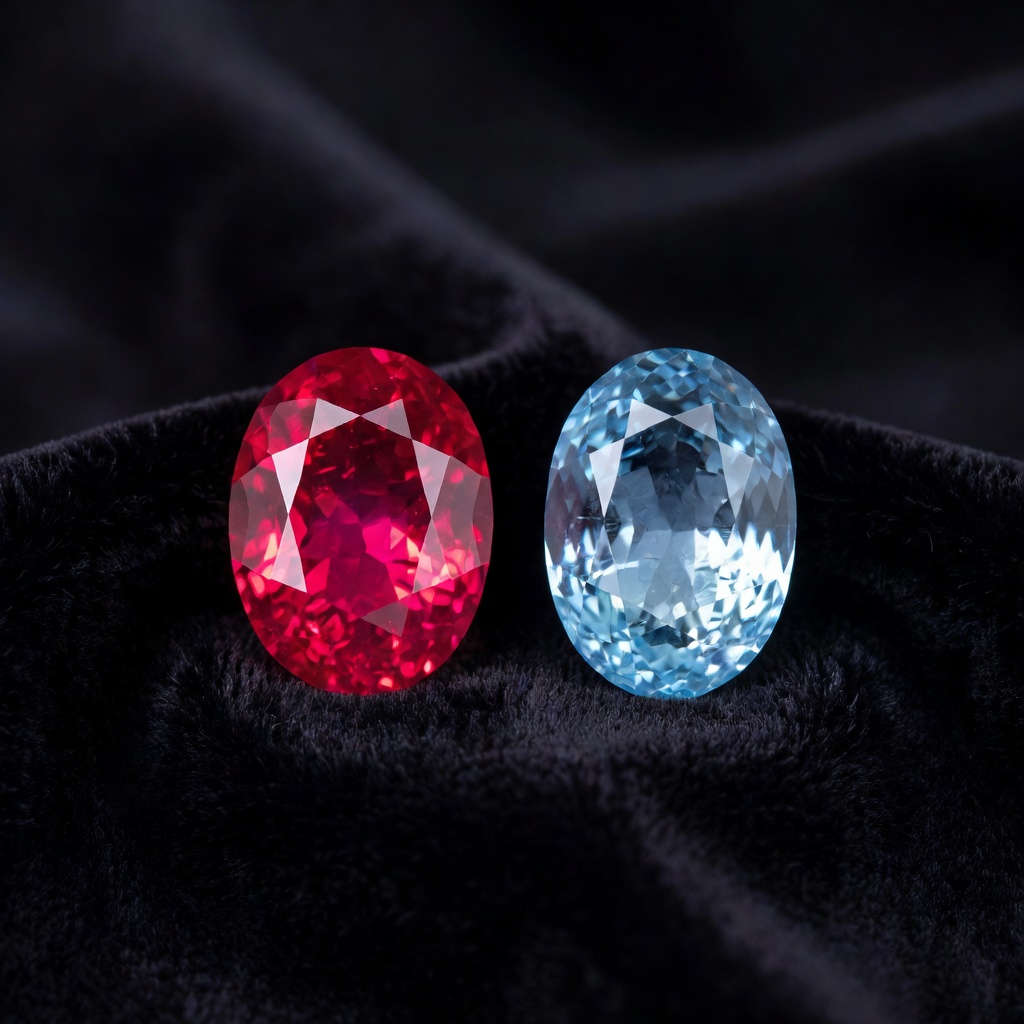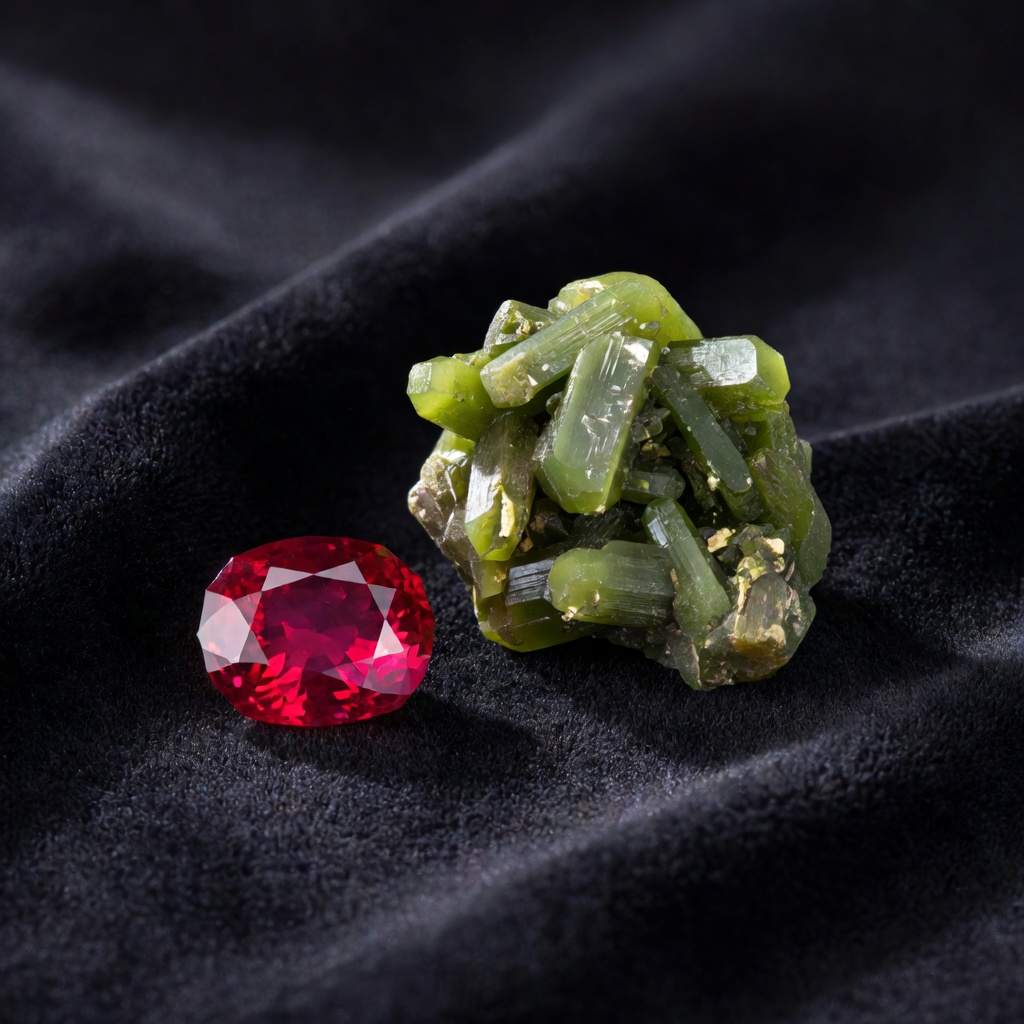
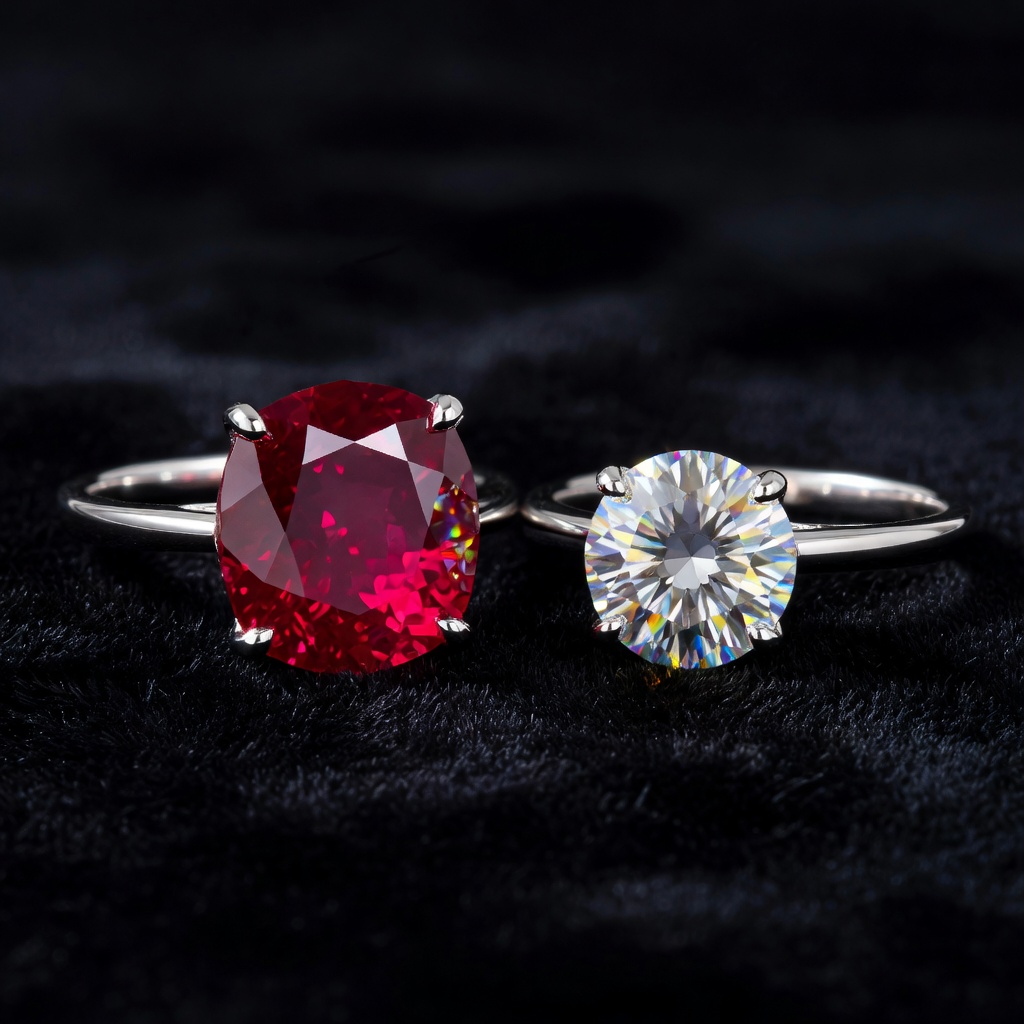
Understanding Two Distinct Gemstone Worlds
When selecting a centerpiece for fine jewelry, particularly engagement rings, modern consumers increasingly find themselves weighing the merits of ruby vs moissanite. These two gemstones occupy different realms of the jewelry universe—rubies represent the pinnacle of precious corundum gemstones prized by civilizations for millennia, while moissanite emerges as a scientifically engineered silicon carbide marvel that challenges traditional notions of luxury. Despite their categorical differences, with rubies celebrated for their passionate red hues and moissanite typically marketed as a colorless diamond alternative, shoppers frequently compare them when considering durability, aesthetic impact, and value propositions for daily-wear pieces.
The comparison becomes particularly relevant when exploring red gemstone alternatives or when buyers prioritize longevity and brilliance over traditional prestige. Rubies offer an unmatched historical pedigree and natural rarity, whereas moissanite provides accessibility and optical performance that surpasses many natural stones. Your final decision will ultimately hinge upon four critical factors: structural durability under daily wear conditions, visual aesthetics and light performance, budgetary constraints, and personal ethical considerations regarding sourcing and environmental impact.
Origins and Composition: Natural Rarity vs Scientific Precision
The fundamental distinction between these gemstones begins deep within their atomic structures and formation processes. Natural rubies form as aluminum oxide (Al₂O₃) within metamorphic rock formations, with chromium trace elements substituting for aluminum to create the signature red coloration. These precious crystals require specific geological conditions—intense heat and pressure over millions of years—found primarily in Myanmar (formerly Burma), Mozambique, and Madagascar. Burmese rubies, particularly those from the Mogok Valley, command premium prices due to their exceptional fluorescence and "pigeon blood" color saturation, while African deposits have democratized access to high-quality stones in recent decades.
Moissanite presents a fascinating contrast as a precious vs lab created gemstones case study. Originally discovered in 1893 by Nobel Prize-winning chemist Henri Moissan within a meteor crater in Arizona, natural silicon carbide (SiC) remains extraordinarily rare on Earth. Consequently, all jewelry-grade moissanite today derives from sophisticated laboratory processes that replicate the mineral's formation under controlled conditions. Companies like Charles & Colvard utilize advanced thermal growing processes to create crystals that, while chemically identical to the space-born mineral, bypass the environmental disruption and uncertain supply chains associated with mining operations.
These divergent origins create distinct chemical architectures affecting optical performance. Ruby's trigonal crystal structure permits single refraction of light, contributing to its velvety, depth-filled appearance, while moissanite's hexagonal crystal system produces double refraction, splitting light rays and creating characteristic rainbow flashes. From an ethical standpoint, moissanite eliminates concerns regarding conflict minerals, child labor, and environmental degradation associated with ruby mining, though responsibly sourced rubies certified by organizations like the Responsible Jewellery Council offer conscientious consumers viable natural alternatives.
Visual Characteristics: Color Intensity vs Optical Fire
The aesthetic confrontation between these stones represents a study in contrasting optical philosophies. Rubies exhibit a color spectrum ranging from the coveted pigeon blood red—a pure, vivid red with blue undertones that commands the highest market values—to pinkish-red and orangish-red variants. The finest specimens display strong fluorescence under ultraviolet light, causing them to appear internally illuminated, a phenomenon particularly prized in Burmese material. Ruby gemstone properties include a refractive index of approximately 1.76, which creates a subtle, silky glow rather than explosive brilliance, often enhanced by microscopic rutile inclusions (silk) that scatter light softly within the stone.
Moissanite dominates in pure optical performance metrics, exhibiting a refractive index of 2.65, significantly higher than ruby and even surpassing diamond's 2.42. This exceptional light-bending capability, combined with strong dispersion (fire) rated at 0.104 compared to ruby's 0.018, produces the characteristic rainbow refractions that distinguish moissanite in any lighting condition. When examining moissanite fire vs ruby, the contrast becomes immediately apparent: moissanite returns light as brilliant white flashes punctuated by spectral colors, while ruby absorbs certain wavelengths to return deep red saturation with subtle luminescence.
Color considerations extend beyond traditional boundaries for both materials. While colorless and near-colorless moissanite dominates the market, manufacturers now produce fancy colored variants including red and pink moissanite through chemical vapor deposition processes. However, these red gemstone alternatives lack the depth, fluorescence, and color zoning of natural rubies, often appearing flat or synthetic compared to organic corundum. For consumers seeking the specific warmth and intensity of genuine red, rubies remain unmatched, whereas those prioritizing moissanite brilliance and light performance may accept colorless or slightly tinted varieties that maximize the stone's optical potential.
Durability and Hardness: Mohs Scale Analysis
Durability considerations prove paramount when selecting center stones for rings subjected to daily wear, making the moissanite durability versus ruby hardness comparison essential for informed decision-making. Rubies rank 9 on the Mohs hardness scale, placing them second only to diamonds and moissanite among popular jewelry gems. This exceptional hardness renders ruby highly resistant to surface scratching, allowing heirloom-quality pieces to maintain polish across generations. However, hardness represents only one component of durability; toughness—the resistance to chipping, cracking, and breaking—varies significantly based on individual stone clarity and treatment history.
Moissanite edges slightly ahead with a Mohs rating of 9.25, making it the second-hardest gemstone used in jewelry and technically superior to ruby in scratch resistance. More significantly, moissanite exhibits exceptional toughness due to its lack of cleavage planes, meaning it resists breaking along structural weak points that plague many crystalline materials. Natural rubies frequently contain inclusions, fractures, or internal stress points that compromise structural integrity, particularly in heavily included specimens or those subjected to fracture-filling treatments. Such stones may chip along feather inclusions upon sharp impact, whereas moissanite's homogeneous lab-grown structure provides consistent durability regardless of clarity grade.
For ruby engagement rings and daily-wear jewelry, selecting eye-clean stones with minimal surface-reaching inclusions becomes crucial for longevity. High-quality rubies with excellent clarity can endure decades of wear, but included specimens require protective settings such as bezels or recessed mounts. Moissanite offers worry-free wearability across all quality grades, maintaining structural integrity even in delicate prong settings exposed to active lifestyles. Both stones withstand household chemicals and temperature variations better than softer gems like opals or emeralds, though rubies with glass fillings or heat-treated fractures require gentler care to prevent damage to enhancement materials.
Price Analysis and Investment Considerations
The economic divergence between these gemstones reflects their fundamentally different supply dynamics and scarcity models. Natural ruby pricing operates within a complex matrix of origin, treatment status, color quality, and carat weight, with exponential price increases for fine material. Unheated, Burmese pigeon blood rubies exceeding one carat can command prices from $10,000 to $100,000 per carat, while heated stones from Mozambique might range from $1,000 to $5,000 per carat for comparable sizes. This pricing structure positions fine rubies as genuine alternative investments, with documented appreciation trajectories rivaling colored diamonds and precious metals over extended holding periods.
Moissanite offers radical affordability by comparison, with prices typically ranging from $300 to $600 per carat depending on color grade and brand, regardless of size increases. Unlike natural gemstones, where price-per-carat jumps exponentially with size due to rarity, moissanite pricing remains relatively linear, allowing consumers to acquire substantial center stones without prohibitive investment. However, this accessibility comes with corresponding depreciation; ruby vs moissanite price analysis reveals that while rubies function as appreciating tangible assets, moissanite behaves like technological consumer goods, with minimal resale value and potential obsolescence as manufacturing techniques improve and prices potentially decrease further.
Investment-minded collectors must scrutinize treatment disclosures when evaluating rubies, as the market distinguishes sharply between untreated natural stones, heat-treated material (accepted industry standard), and fracture-filled specimens (less valuable). Heat treatment, which improves color and clarity through controlled heating, affects approximately 90% of commercial rubies and should be disclosed by reputable dealers, though it does not preclude investment potential for exceptional material. Moissanite requires no such disclosure complexity, being uniformly lab-created, but lacks the rarity premium that supports secondary market liquidity. For engagement ring buyers prioritizing immediate visual impact over long-term asset appreciation, moissanite delivers superior value propositions, while those seeking intergenerational wealth transfer should consider untreated, certified rubies from documented mines.
Jewelry Design Applications and Setting Compatibility
Design versatility highlights distinct aesthetic strengths for each gemstone, influencing setting choices that maximize their individual beauty. Ruby engagement rings traditionally favor vintage-inspired designs that complement the stone's romantic associations and rich color saturation. Art Deco halos featuring calibre-cut baguette diamonds, Edwardian filigree settings in yellow gold, and classic three-stone configurations pairing rubies with colorless side stones remain perennial favorites. These designs leverage the contrast between ruby's warm red tones and white accent diamonds, creating visual depth that emphasizes the center stone's saturation. Heavy prong settings in platinum or 18-karat gold provide necessary protection for valuable ruby center stones while allowing adequate light penetration to activate the gem's fluorescence.
Moissanite excels in contemporary settings engineered to maximize optical performance and light return. Modern solitaires featuring six-prong "Tiffany" style mounts, hidden halo designs that create the illusion of floating light, and tension settings that expose maximum surface area to illumination showcase moissanite's superior brilliance. Jewelers often recommend white metals—platinum, white gold, or palladium—for moissanite settings, as these neutral backgrounds prevent color tinting and allow the stone's icy brilliance to dominate. Unlike rubies, which benefit from warm metal tones that enhance their red saturation, moissanite achieves maximum impact against cool, reflective surfaces that act as mirrors for its dispersion.
Practical setting considerations must accommodate each material's physical properties. Rubies with surface-reaching inclusions or fracture fillings require bezel settings or protective v-prongs that shield vulnerable girdle edges from impact, whereas moissanite's uniform durability permits delicate, open settings that would risk damage to included natural stones. For stackable wedding bands or active lifestyle jewelry, moissanite's chip resistance allows for low-profile, flush-mount designs impossible with fragile ruby specimens. When designing custom pieces, consider that rubies photograph with subtle color shifts depending on lighting, requiring setting designs that account for various illumination scenarios, while moissanite's consistent brilliance performs predictably across environments.
Symbolism, Meaning, and Cultural Significance
Beyond physical properties, gemstones carry narratives that resonate with personal values and cultural heritage. Rubies rank among history's most culturally significant gems, serving as the July birthstone and holding universal associations with passion, vitality, and protection. Ancient Burmese warriors embedded rubies into their skin before battle, believing the stones rendered them invulnerable, while medieval European royalty wore rubies to ensure health, wealth, and wisdom. This deep historical pedigree imbues ruby symbolism with gravitas that appeals to traditionalists and those seeking connections to ancestral luxury. As gifts, rubies communicate profound romantic commitment—their intense red representing the heart's blood and enduring desire.
Moissanite represents a distinctly modern narrative centered on innovation, sustainability, and conscious consumption. Its extraterrestrial origins—literally born from stardust discovered in meteoric iron—provide cosmic romance that appeals to scientifically minded romantics and space enthusiasts. As a precious vs lab created gemstones choice, moissanite signals environmental awareness and rejection of mining's ecological and social costs. For couples prioritizing ethical sourcing over geological rarity, moissanite offers clear conscience without aesthetic compromise. The stone's association with technological advancement and human ingenuity rather than geological accident resonates with contemporary values of progress and sustainability.
The emotional resonance of each stone differs markedly by demographic and philosophical orientation. Rubies appeal to those who value tradition, rarity, and the "million-year story" encapsulated within natural crystals, providing tangible connections to Earth's geological history. They suit individuals who view jewelry as wearable art and historical artifact. Moissanite attracts pragmatists, futurists, and value-conscious consumers who refuse to compromise optical beauty for budgetary constraints, viewing jewelry as expressions of personal style rather than status symbols. When selecting between these stones, consider which narrative aligns with your identity: the ancient, passionate vitality of ruby or the innovative, sustainable brilliance of moissanite.
Comprehensive Comparison: Technical Specifications and Value Propositions
Direct comparison reveals distinct optimization profiles for different consumer priorities. The following analysis examines critical performance metrics side-by-side, followed by practical advantages and limitations for each material.
| Characteristic | Ruby (Natural) | Moissanite (Lab-Created) |
|---|---|---|
| Mohs Hardness | 9.0 | 9.25 |
| Refractive Index | 1.76 - 1.77 | 2.65 - 2.69 |
| Dispersion (Fire) | 0.018 | 0.104 |
| Crystal System | Trigonal | Hexagonal |
| Optical Phenomenon | Single Refraction | Double Refraction |
| Primary Colors | Red to Pink-Red | Colorless to Near-Colorless (Fancy colors available) |
| Price per Carat (High Quality) | $1,000 - $100,000+ | $300 - $600 |
| Rarity/Availability | Extremely Rare (Fine Quality) | Unlimited Supply |
| Toughness | Good to Poor (variable by inclusion content) | Excellent |
| Investment Potential | High (Appreciating Asset) | None (Depreciating Consumer Good) |
| Environmental Impact | High (Mining Required) | Low (Laboratory Grown) |
| Treatment Requirements | Often Heat-Treated or Fracture-Filled | None |
Ruby: Advantages and Limitations
Rubies offer unmatched prestige as one of the "Big Three" colored gemstones alongside sapphires and emeralds, with documented historical provenance stretching back thousands of years. Their natural rarity, particularly for unheated specimens exceeding two carats, ensures that ownership conveys genuine exclusivity impossible to replicate with synthetic alternatives. The color uniqueness of fine ruby—specifically the "pigeon blood" variety—possesses a warmth and depth that photography cannot fully capture, creating personal satisfaction that transcends mere optical metrics. For collectors, rubies function as portable wealth and inflation hedges with established auction records and liquid secondary markets.
However, these advantages come with significant practical drawbacks. The high cost of entry restricts accessibility for many consumers, with engagement ring-quality stones requiring substantial budgets. Common treatments, including heat enhancement and glass filling, necessitate careful disclosure and affect long-term durability, as fracture-filled stones may suffer damage during routine jewelry repair or cleaning. Natural inclusions, while often contributing to desirable silk and color softening, can compromise structural integrity, requiring protective settings that limit design flexibility. Additionally, the ethical concerns surrounding ruby mining—potential funding of regional conflicts, environmental degradation, and labor exploitation—require diligent sourcing verification that adds complexity to the purchasing process.
Moissanite: Advantages and Limitations
Moissanite delivers superior optical performance at a fraction of precious gemstone costs, providing budget-conscious consumers access to jewelry with brilliance exceeding that of diamonds and rubies. The material's exceptional moissanite durability—combining hardness second only to diamond with excellent toughness—ensures worry-free daily wear without the vulnerability to chipping that plagues included natural stones. Ethical sourcing represents another compelling advantage; laboratory creation eliminates mining entirely, appealing to environmentally conscious buyers who refuse to compromise their values for luxury. The consistency of quality across moissanite specimens ensures predictable performance without the lottery of natural gemstone selection, where inclusions and color zoning vary dramatically between individual stones.
Conversely, moissanite's lack of natural rarity precludes investment potential and limits resale value to negligible levels compared to purchase price. Some observers find moissanite's intense fire—while technically superior—creates a "disco ball" or synthetic appearance distinct from the subtle elegance of natural gemstones, particularly under direct sunlight where rainbow refractions become pronounced. Limited color options for those specifically seeking red variants disappoint consumers hoping for direct ruby substitution; while red moissanite exists, it lacks the fluorescence and color depth of natural corundum, often appearing dull or artificially uniform. Finally, moissanite carries less cultural cachet and symbolic weight than rubies, potentially disappointing recipients who value traditional luxury markers or historical significance in their jewelry.
Care, Maintenance, and Longevity Guidelines
Proper maintenance protocols differ significantly between these materials due to their distinct chemical compositions and treatment histories. How to clean ruby jewelry requires cautious approaches, particularly for treated stones. While untreated natural rubies tolerate ultrasonic cleaning and steam methods, heat-treated or fracture-filled specimens risk damage from vibration, heat, or chemical exposure that might dissolve filling materials or exacerbate existing fractures. The safest universal method involves warm water mixed with mild dish detergent, applied with a soft brush to remove accumulated oils and debris. Oiled rubies—those treated with colorless oil to improve clarity appearance—require periodic re-oiling by professionals to maintain transparency, adding ongoing maintenance costs and considerations.
Moissanite maintenance proves remarkably straightforward due to the material's chemical stability and lack of treatments. The silicon carbide structure resists scratching from household dust (silica), maintains brilliance under exposure to chlorine, cosmetics, and perfumes, and tolerates ultrasonic and steam cleaning without degradation. Simple cleaning using commercial jewelry cleaners or soap and water restores maximum brilliance, as moissanite does not attract grease and oils as readily as diamonds or develop the "build-up" that dulls softer stones over time. This low-maintenance profile suits busy professionals and those who prefer "set and forget" jewelry requiring minimal professional intervention.
Storage recommendations emphasize protecting softer materials from moissanite's superior hardness. Store ruby pieces separately in soft cloth pouches or lined jewelry boxes to prevent accidental scratching by harder materials including moissanite, diamonds, or sapphires. For mixed jewelry collections, consider compartmentalized storage that prevents contact between pieces. Professional inspection schedules should occur annually for both materials, checking prong security and potential re-polishing needs, though moissanite rarely requires re-polishing due to its scratch resistance, while rubies may need periodic touch-ups to remove surface abrasions accumulated over years of wear. Avoid exposing rubies to sudden temperature changes that might thermal-shock fracture-filled stones, whereas moissanite withstands temperature extremes from saunas to winter climates without issue.
Making Your Final Decision: Key Selection Criteria
Selecting between these distinctive materials requires honest assessment of personal priorities across four dimensions. First, evaluate your gemstone buying guide budget allocation: if you prioritize maximum visual size and sparkle within limited funds, moissanite offers unbeatable value, whereas if you view jewelry as intergenerational wealth transfer, allocate resources toward certified, untreated rubies with documented provenance. Consider the trade-off between carat weight and prestige—moissanite permits extravagant center stones impossible with ruby budgets, while rubies provide concentrated value in smaller, rarer packages.
Lifestyle assessment proves equally critical for choosing between ruby and moissanite. Active individuals, healthcare workers, or those engaging in manual labor should strongly consider moissanite's superior toughness and resistance to chipping, whereas collectors and those wearing jewelry primarily for special occasions might accept ruby's fragility in exchange for its aesthetic uniqueness and investment potential. Examine your daily activities honestly: frequent contact with hard surfaces, gym equipment, or gardening tools favors moissanite's durability, while office environments and social settings suit both materials equally.
Color preference commitment represents perhaps the most decisive factor. If your heart desires the specific psychological warmth, cultural associations, and unique appearance of true red, no moissanite alternative adequately substitutes for ruby's organic color chemistry and fluorescence. However, if you prioritize brilliance, fire, and light performance over color specificity, moissanite's optical superiority provides satisfaction that colored stones cannot match. For undecided buyers, consider acquiring both—a moissanite solitaire for daily wear and a ruby cocktail ring for special occasions—allowing you to enjoy each material's strengths without compromise.
Finally, align your selection with long-term goals. Those building heirloom collections intended for grandchildren should focus on natural rubies with timeless settings that transcend fashion trends. Conversely, individuals who view jewelry as contemporary fashion statements subject to updating every decade may find moissanite's affordability allows for style evolution without financial guilt. By weighing these criteria against the technical and aesthetic properties outlined above, you can confidently select the gemstone that best serves your practical needs, ethical values, and aesthetic desires.
Frequently Asked Questions
Is moissanite harder than ruby?
Yes, moissanite rates 9.25 on the Mohs hardness scale, while ruby rates 9. This makes moissanite slightly more resistant to scratching and chipping, though both are excellent for daily wear in jewelry. The difference becomes most apparent in edge retention and long-term polish maintenance, with moissanite maintaining factory-fresh luster longer than ruby under identical wear conditions.
Can moissanite be red like a ruby?
While natural moissanite is colorless or greenish, labs can create red and pink moissanite through treatment processes. However, these lack the depth and fluorescence of natural rubies and often appear more synthetic or garnet-like rather than achieving true pigeon blood red. The color in treated moissanite tends toward dark, flat reds without the subtle color zoning and internal glow that characterize fine corundum.
Which is more expensive, ruby or moissanite?
Natural rubies are significantly more expensive, often costing thousands per carat for fine quality, while moissanite costs a fraction of that price per carat. High-quality untreated Burmese rubies can command prices rivaling diamonds, whereas moissanite pricing remains consistent and affordable regardless of size. This price differential reflects fundamental supply constraints—rubies require specific geological conditions over millions of years, while moissanite production scales with laboratory capacity.
Does moissanite sparkle more than ruby?
Yes, moissanite has a higher refractive index (2.65) than ruby (1.76) and exhibits double refraction, creating more rainbow fire and brilliance. Rubies have a subtler, silky glow due to their crystal structure and typical inclusions rather than intense sparkle. Under direct lighting, moissanite produces frequent, colorful flashes that some describe as "disco ball" effects, while ruby returns light as deep color saturation with occasional star effects or sheen.
Is moissanite a good alternative to ruby for an engagement ring?
Moissanite works well if you prioritize durability, sparkle, and budget, but it differs significantly from ruby in appearance. If you specifically want red color, consider a red moissanite or garnet alternative, though these won't match ruby's prestige. For colorless brilliance with ruby-level durability, moissanite is excellent. The choice ultimately depends on whether you seek ruby specifically for its color or are open to the icy brilliance that moissanite provides.
Can jewelers tell the difference between ruby and moissanite?
Absolutely. Gemologists easily distinguish them using standard tools: moissanite's double refraction, different specific gravity, and silicon carbide composition differ markedly from ruby's aluminum oxide structure and single refraction. Visual examination alone often reveals the difference due to moissanite's distinct fire. While a red moissanite might momentarily confuse an observer, polarization filters, refractive index testing, and spectroscopic analysis immediately differentiate the materials.
Which gemstone holds its value better over time?
Natural, untreated rubies typically appreciate in value and serve as investment pieces, especially those from Myanmar with pigeon blood color. Moissanite, being lab-created with unlimited supply potential, has minimal resale value and should be viewed as a consumable luxury rather than an investment. The secondary market for rubies includes auction houses and estate dealers, while moissanite generally lacks liquid resale channels beyond private party sales at deep discounts.
Are there ethical concerns with ruby vs moissanite?
Rubies face concerns regarding mining practices, labor conditions, and funding of conflicts in certain regions, though certified ethical sources exist. Moissanite is lab-created with minimal environmental impact and no mining concerns, making it the more ethical choice for environmentally conscious consumers. When purchasing rubies, seek stones with origin documentation from established mines in Australia or North America, or require compliance with the Kimberley Process and Fairmined standards to ensure ethical extraction.