Understanding the Red-Orange Spectrum
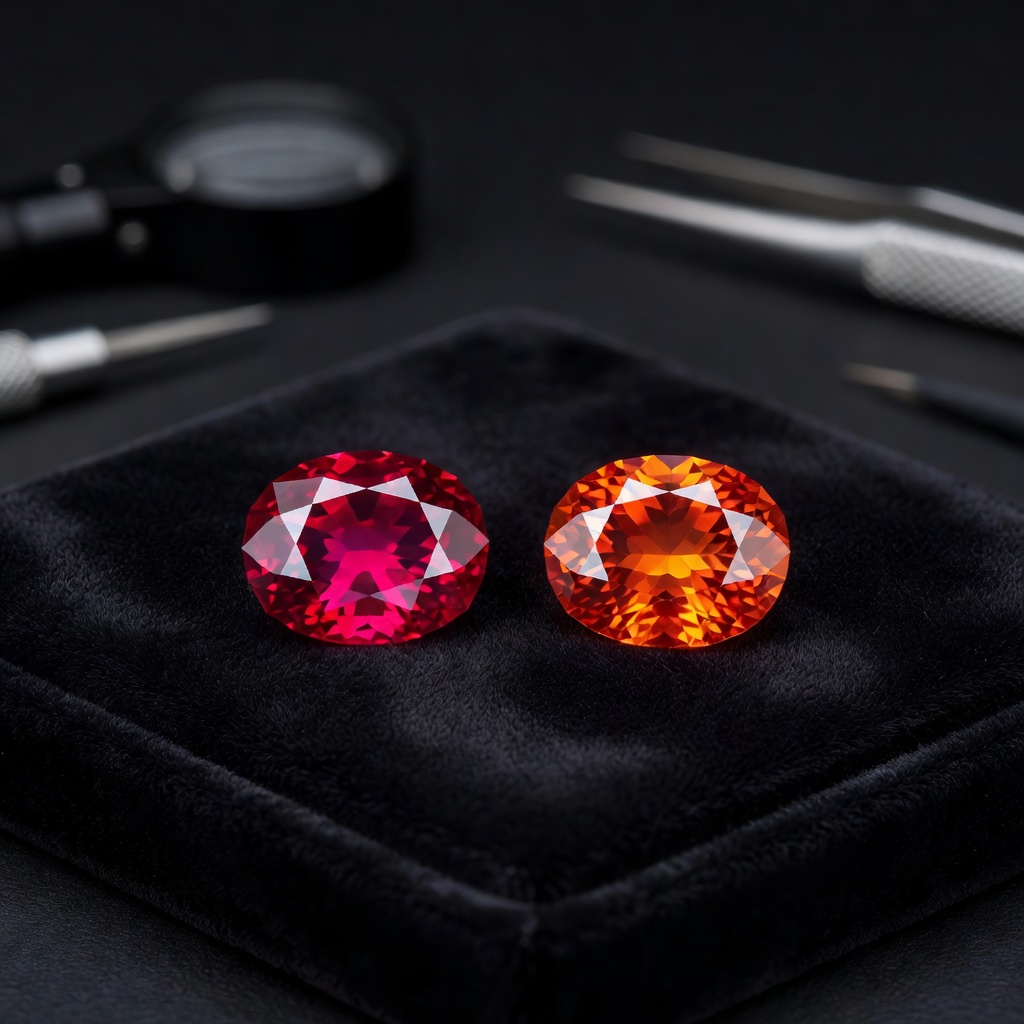
When exploring the vibrant world of red and orange gemstones, the comparison between Ruby vs Mandarin Garnet represents one of the most fascinating debates in modern gemology. Rubies have long reigned as the undisputed king of gemstones, coveted by royalty and collectors for millennia, while mandarin garnet emerged as what industry experts dubbed the "discovery of the decade" following its 1991 discovery in Namibia. These two extraordinary gems occupy distinct yet occasionally overlapping territories on the color wheel, creating confusion for buyers seeking that perfect fiery centerpiece.
Although both stones can appear deceptively similar under certain lighting conditions, they belong to entirely different mineral families with unique geological histories, physical properties, and value propositions. Understanding the key decision factors—including budget constraints, durability requirements, and specific color preferences—becomes essential when choosing between these captivating red-orange alternatives. Whether you are selecting an engagement ring destined for daily wear or a statement pendant for special occasions, recognizing the fundamental differences between these gems will ensure your investment matches both your aesthetic desires and practical lifestyle needs.
Geological Origins and Chemical Composition
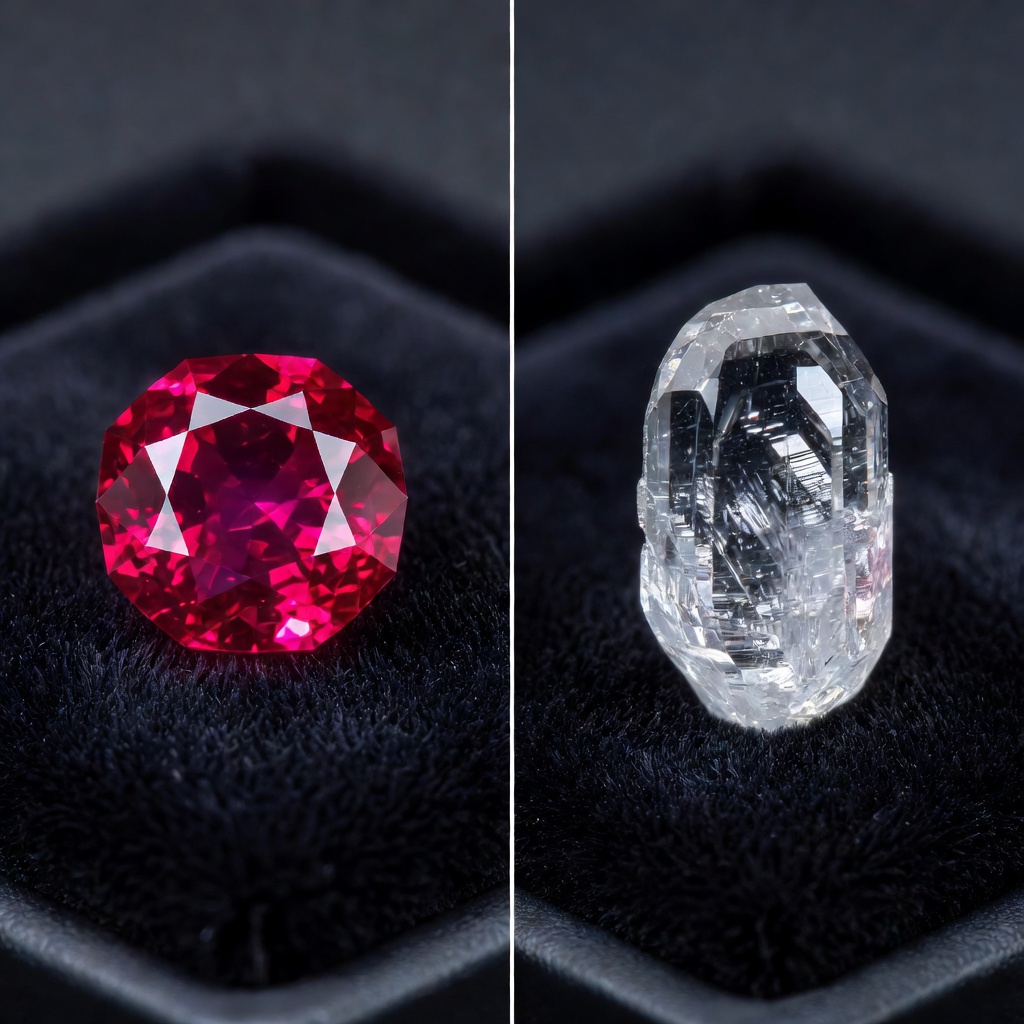
The chemical distinction between these gemstones reveals why they exhibit such different characteristics despite similar visual appearances. Ruby belongs to the corundum family, composed primarily of aluminum oxide (Al₂O₃) that achieves its legendary red color through the presence of chromium ions, which replace aluminum in the crystal lattice. This metamorphic gemstone forms under extreme heat and pressure conditions deep within the Earth's crust, typically originating in marble or basalt deposits that have undergone significant geological transformation over millions of years.
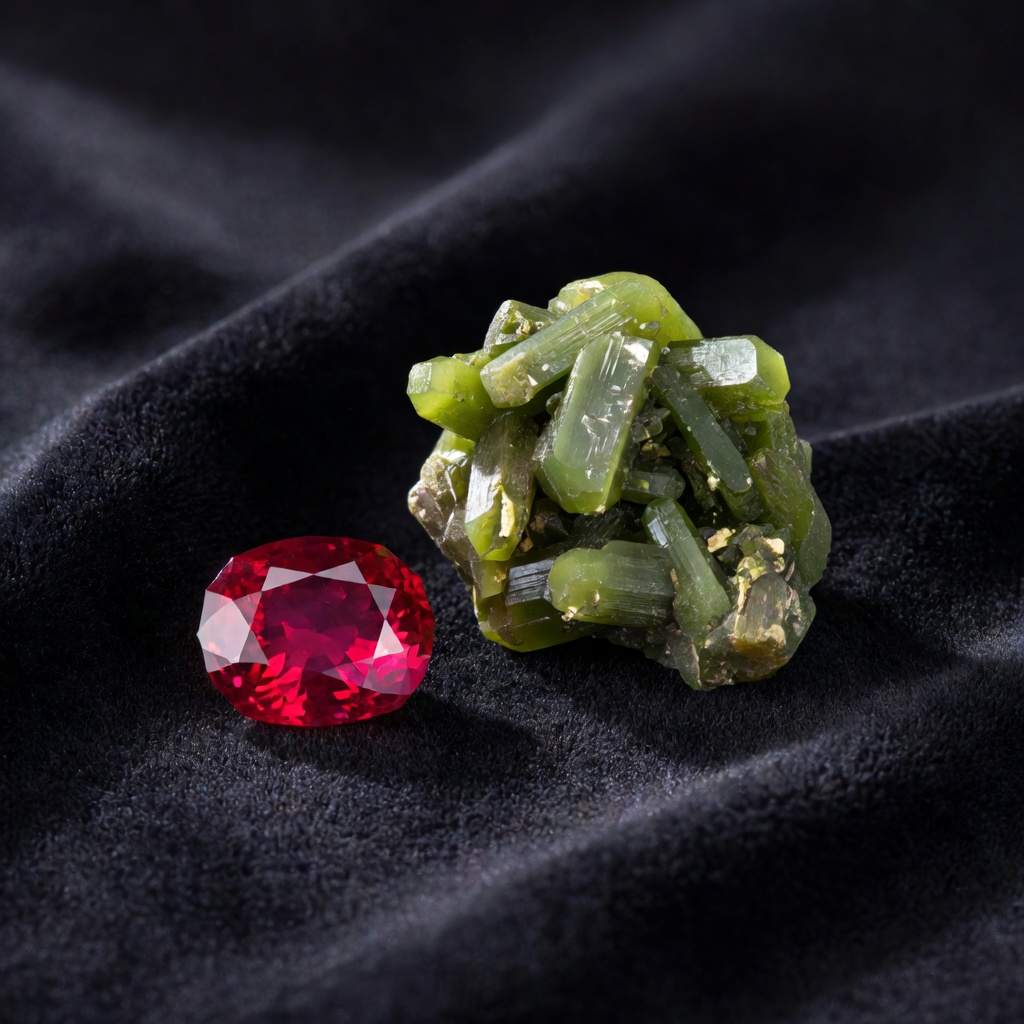
Conversely, mandarin garnet represents the finest variety of spessartine garnet, chemically classified as manganese aluminum silicate (Mn₃Al₂Si₃O₁₂) with specific iron content that creates its distinctive orange hue. The spessartine garnet properties that define mandarin specimens include a unique isometric (cubic) crystal system that distinguishes it fundamentally from ruby's trigonal structure. Primary sources for fine rubies include the historic mines of Myanmar (Burma), alongside significant deposits in Mozambique and Madagascar, while mandarin garnets specifically hail from the alluvial deposits of Namibia and Nigeria, where the specific geological conditions create the intense orange coloration that separates mandarin from other spessartite varieties.
Understanding these gemstone composition differences proves crucial for collectors because the cubic crystal system of garnets results in single refraction, while ruby's trigonal structure creates double refraction—a diagnostic feature that gemologists use for identification. Additionally, the formation environments differ dramatically; rubies crystallize in high-pressure, low-silica environments within metamorphosed limestones, whereas spessartine garnets typically form in granite pegmatites and metamorphosed manganese-rich rocks, explaining the presence of different inclusion types that affect clarity and durability.
Color Analysis: Pigeon Blood vs Mandarin Orange
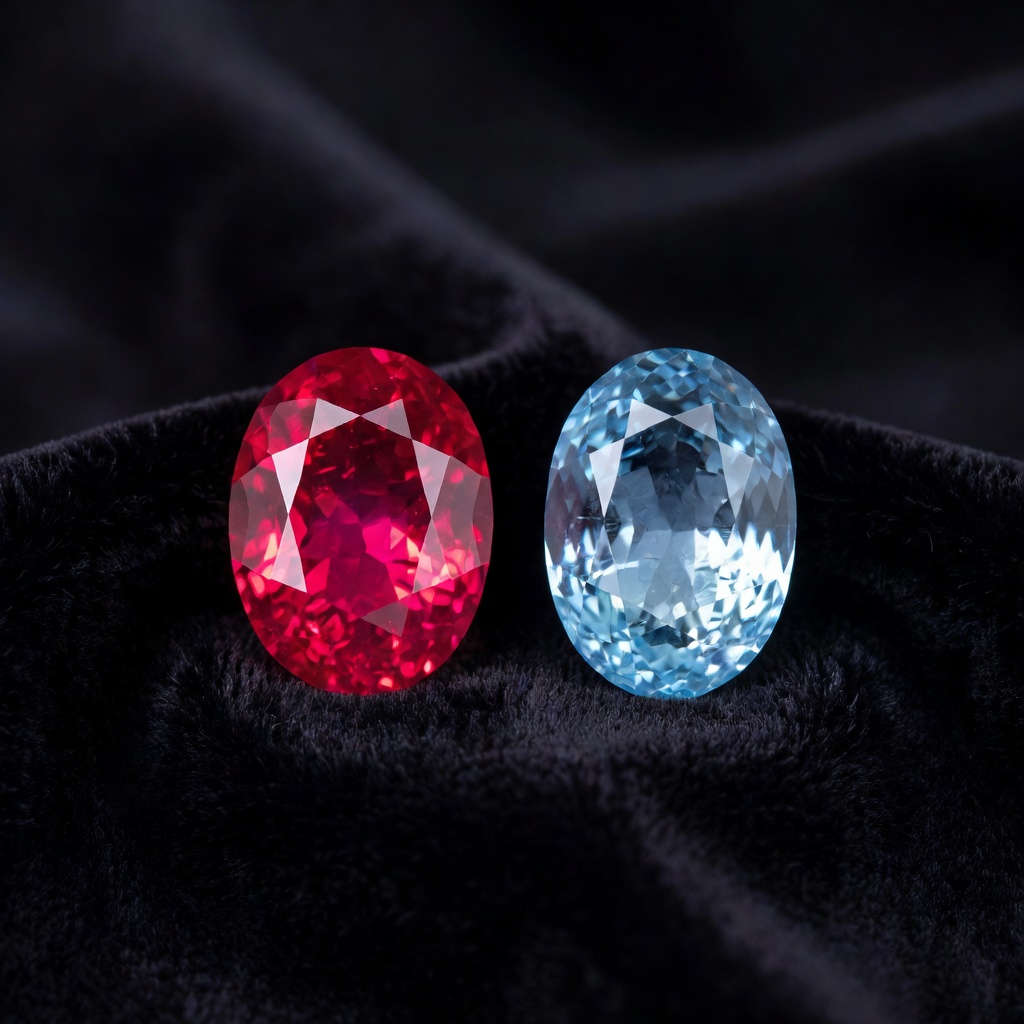
The color distinctions between these gems extend far beyond simple red versus orange categorizations, involving complex interactions of hue, saturation, and tone that determine both beauty and value. Ruby's color spectrum spans from pure vivid red to slightly purplish or pinkish red, with the coveted "pigeon blood" designation—characterized by a pure red hue with medium-dark tone and vivid saturation—commanding the highest premiums in the global market. This specific color results from an optimal balance of chromium content and the absence of iron, which would otherwise dull the fluorescence that gives fine rubies their internal glow.
Mandarin garnet occupies a unique position in the orange garnet vs ruby color comparison, displaying a distinctive fiery orange to reddish-orange spectrum that never achieves true red, regardless of lighting conditions. The finest specimens exhibit a pure orange hue reminiscent of ripe tangerines or sunset skies, with the most valuable stones showing a slight reddish modifier that intensifies the warmth without crossing into brownish or yellowish territories. Unlike rubies, which can show pleochroism—displaying different colors (orange-red vs purplish-red) when viewed from different angles due to their anisotropic nature—mandarin garnets remain singly refractive, showing consistent color regardless of viewing direction.
Lighting conditions dramatically affect how these gemstones appear, creating scenarios where the untrained eye might confuse high-quality mandarin with lighter rubies. Incandescent lighting enhances ruby's red component, making even slightly pinkish stones appear more vividly crimson, while daylight or fluorescent illumination brings out the pure orange fire in mandarin garnets. When examining mandarin garnet color specifically, natural daylight reveals the stone's true potential, whereas under warm artificial light, the reddish-orange varieties might temporarily masquerade as orange-leaning rubies—a phenomenon that has led to both delighted discoveries and disappointing purchases among inexperienced buyers.
Durability and Wearability Comparison
Selecting between these gemstones requires honest assessment of how the jewelry will be worn, as the red gemstone hardness comparison reveals significant differences in practical durability. On the Mohs hardness scale, ruby ranks at 9, making it second only to diamond and moire suited for daily wear, including engagement rings and bracelets that withstand constant impact and abrasion. This exceptional hardness means rubies resist scratching from dust particles and household items, maintaining their polish through decades of continuous wear without requiring professional refinishing.
Mandarin garnet presents a more moderate hardness profile, typically ranging between 6.5 and 7.5 on the Mohs scale depending on specific chemical composition and inclusion content. While this rating qualifies as "good" for gemstone purposes, mandarin garnet durability concerns become apparent when considering the stone's relative brittleness, particularly around liquid feather inclusions common in spessartine varieties. Unlike ruby, which can develop fractures under sharp impact but generally maintains structural integrity, mandarin garnets require protective settings and more careful handling to prevent chipping or cracking at the girdle edges.
For daily wear suitability, rubies excel in high-impact jewelry pieces, having historically survived centuries of royal wear without significant damage, whereas mandarin garnets perform better in pendants, earrings, and occasional-wear rings where they encounter fewer opportunities for hard knocks against countertops or doorframes. Maintenance protocols also differ significantly; while ultrasonic cleaning remains safe for most untreated rubies, the vibration and heat can exacerbate existing fractures in mandarin garnets or cause stones with liquid inclusions to rupture. Professional jewelers recommend gentle soap and water cleaning for mandarin specimens, avoiding steam cleaners and harsh chemicals that might affect the stone's surface integrity over time.
Clarity, Brilliance, and Cut Quality
Examining these gems under magnification reveals distinctly different internal characteristics that affect both beauty and value. Rubies commonly contain rutile needle inclusions known as "silk," which, when fine and evenly distributed, can actually enhance the stone's appearance by softening the color and creating a velvety texture highly prized in Burmese specimens. However, these same inclusions can reduce transparency, meaning that eye-clean rubies command significant premiums, particularly in sizes over one carat where inclusion-free material becomes exponentially rarer.
Mandarin garnets typically display different inclusion patterns, most commonly featuring liquid inclusions, negative crystals, or partially healed fractures that appear as fingerprint patterns under magnification. When evaluating spessartite garnet vs ruby clarity standards, mandarin garnets often achieve eye-clean status more readily than rubies of comparable value, though the presence of significant inclusions can create durability concerns specific to the garnet family. The liquid inclusions common in spessartine can expand or contract with temperature changes, potentially causing internal stress that affects long-term stability.
Perhaps surprisingly, mandarin garnet boasts a higher refractive index (1.79-1.81) compared to ruby (1.76-1.77), resulting in greater brilliance and "fire" or dispersion—the rainbow colors that flash when light splits within the stone. This superior optical performance means that gemstone brilliance comparison often favors mandarin garnet, particularly when cut in round brilliant or trillion shapes designed to maximize light return. Rubies, conversely, are typically cut as ovals or cushions to maximize color retention and weight, as these shapes help the cutter orient the crystal to show the most desirable red while minimizing windowing (light leakage through the bottom). For mandarin garnets, rounds and trillions enhance the stone's natural fire, creating a lively, sparkling appearance that distinguishes it from the deeper, more subdued glow of fine ruby.
Price, Rarity, and Investment Value
The economic comparison between these gemstones reveals dramatic disparities that influence purchasing decisions for both jewelry lovers and serious investors. Untreated Burmese rubies of fine quality routinely command $10,000 to $100,000 or more per carat, with exceptional pigeon blood specimens reaching into the millions, placing them firmly in the realm of serious luxury assets and museum-quality collections. Even heated rubies from Mozambique or Madagascar with fine color typically start at several thousand dollars per carat for stones over two carats, creating significant barriers for budget-conscious buyers seeking substantial red gemstones.
High-quality mandarin garnets present a more accessible orange garnet value proposition, typically ranging from $500 to $2,000 per carat for fine specimens, with exceptional Namibian material occasionally reaching $3,000 to $5,000 per carat for large, clean stones. This pricing structure makes mandarin garnet an attractive ruby alternative for those seeking substantial carat weights without astronomical investment, allowing buyers to acquire impressive five to ten-carat specimens for the price of a modest one-carat ruby. Treatment disclosure further differentiates these markets; while heat treatment is common and generally accepted in the ruby trade (though untreated stones command premiums), mandarin garnets are typically sold untreated, as heating does not improve their color and may actually damage the stone.
| Characteristic | Ruby | Mandarin Garnet |
|---|---|---|
| Mineral Family | Corundum (Aluminum Oxide) | Spessartine Garnet (Silicate) |
| Mohs Hardness | 9 (Excellent) | 6.5-7.5 (Good) |
| Refractive Index | 1.76-1.77 | 1.79-1.81 |
| Color Range | Pure Red to Purplish/Pinkish Red | Fiery Orange to Reddish-Orange |
| Price per Carat (Fine Quality) | $10,000 - $100,000+ | $500 - $2,000 |
| Common Treatment | Heat Treatment (Common) | Typically Untreated |
| Crystal System | Trigonal (Double Refractive) | Isometric/Cubic (Single Refractive) |
| Best Jewelry Applications | Engagement Rings, Daily Wear | Pendants, Earrings, Occasional Rings |
| Rarity (Large Sizes) | Extremely Rare over 5 carats | Very Rare over 5 carats |
Market rarity presents an interesting paradox in the Ruby vs Mandarin Garnet equation. While rubies are generally considered rarer overall, fine mandarin garnets exceeding five carats are actually scarcer than commercial-grade rubies, as the Namibian deposits that produced the finest material have largely been depleted, making large, clean specimens increasingly difficult to source. However, long-term value retention heavily favors ruby, which has maintained stable or appreciating values for centuries, while mandarin garnet, discovered only in the 1990s, has experienced price volatility reflecting changing fashion trends and mining output fluctuations. For investors seeking portable wealth with historical stability, ruby remains the conservative choice, whereas mandarin garnet appeals to collectors betting on the continued appreciation of this relatively new gemstone discovery.
Jewelry Design Applications and Settings
The physical and optical properties of these gemstones dictate specific design approaches that maximize their beauty while ensuring longevity. Protective setting recommendations become crucial when working with mandarin garnets, with bezel settings or halo designs providing essential protection for the girdle and vulnerable corners, whereas rubies offer versatility accepting prong, bezel, tension, or channel settings without significant durability concerns. For mandarin garnet jewelry intended for rings, designers often recommend partial bezels or robust six-prong settings that secure the stone while allowing adequate light penetration to display the gem's characteristic fire.
Metal pairing strategies differ significantly between these stones based on how various alloys interact with their color profiles. Yellow and rose gold enhance mandarin garnet's warmth, creating cohesive sunset-inspired palettes that emphasize the stone's orange tones, while white metals such as platinum or white gold tend to neutralize the warmth slightly, allowing the stone's red components to emerge. Conversely, rubies often benefit from white metal settings that cool the overall appearance and make the red appear more vivid and pure, though vintage-inspired designs frequently employ yellow gold to create the classic "ruby and gold" aesthetic associated with royal regalia and Art Deco magnificence.
Design versatility extends beyond metal choice into the overall aesthetic language of the pieces. Rubies carry strong associations with vintage elegance, royal heraldry, and traditional romance, making them natural choices for intricate Edwardian-inspired filigree or bold cocktail rings reminiscent of 1950s Hollywood glamour. Mandarin garnets, discovered too recently to carry such historical baggage, lend themselves to modern, architectural designs that celebrate clean lines and organic, sunset-inspired motifs. For buyers considering ruby engagement ring alternatives, mandarin garnet offers an opportunity to own a distinctive, conversation-starting gemstone that few others possess, though practical considerations suggest reserving such pieces for earrings or pendants where the stone's moderate hardness poses fewer risks during daily activities. Size considerations also influence design; whereas a three-carat ruby might require significant budget allocation, the same investment could yield a ten-carat mandarin garnet, allowing for bolder, more dramatic statement pieces that maximize visual impact.
Identification and Authentication Tips
Distinguishing between these gemstones requires understanding key diagnostic features that separate them from each other and from common simulants. Visual identification starts with observing pleochroism: when viewing a ruby through a dichroscope or simply rotating the stone under a single light source, you will observe two distinct colors (typically orange-red and purplish-red), whereas mandarin garnet, being singly refractive, shows only one color regardless of viewing angle. This test for double versus single refraction provides immediate differentiation for those learning how to identify mandarin garnet in the field.
Spectroscope analysis offers definitive ruby vs garnet differences based on absorption spectra. Rubies display characteristic chromium absorption lines, specifically the 694.2 nm doublet and the 668 nm and 659 nm lines, creating a distinctive pattern resembling a "W" or "M" shape in the red portion of the spectrum. Mandarin garnets show manganese absorption bands in the blue-violet region around 430 nm and 420 nm, creating a completely different spectral signature that trained gemologists recognize instantly. These diagnostic patterns remain reliable even when stones are mounted in jewelry, allowing professionals to verify identity without removing the gem from its setting.
Common simulants and synthetics present ongoing challenges for consumers. The ruby market faces issues with glass-filled fractures (formerly called "composite rubies" or more recently "hybrid rubies"), where lead glass is infused into low-quality rough to improve transparency—a treatment that significantly compromises durability and requires disclosure. Mandarin garnet simulants include dyed citrine, heat-treated orange sapphire, or even cubic zirconia, though these typically lack the specific combination of high refractive index and single refraction that defines genuine spessartine. For high-value specimens of either stone, seeking laboratory certification from reputable institutions such as GIA (Gemological Institute of America) or AGL (American Gemological Laboratories) provides essential documentation of species, treatment status, and geographic origin, protecting both the financial investment and the collector's peace of mind.
Making Your Decision: Which Gemstone Wins?
Ultimately, choosing between gemstones in the ruby and mandarin garnet categories requires honest assessment of lifestyle, budget, aesthetic preferences, and long-term intentions. Active individuals who engage in sports, manual labor, or who simply prefer never removing their jewelry should gravitate toward ruby, whose superior hardness and toughness withstand the rigors of 24/7 wear without requiring constant vigilance. Those leading less physically demanding lives or seeking special-occasion pieces can confidently consider mandarin garnet, accepting the trade-off of gentler handling for the reward of owning a uniquely vibrant, relatively rare gemstone that sparks conversations and admiring glances.
Budget optimization strategies favor mandarin garnet for buyers seeking maximum visual impact per dollar spent, as the price differential allows for significantly larger stones or more elaborate settings than ruby would permit at equivalent investment levels. However, those prioritizing heirloom quality and multi-generational durability should view ruby as the safer long-term choice, recognizing that while mandarin garnet offers immediate gratification, ruby has proven its ability to survive centuries of wear and remain fashionable across changing style eras. Color preference serves as the final arbiter: those requiring true red without orange modifiers must select ruby, while enthusiasts of the warm orange-red spectrum that evokes autumn leaves and tropical sunsets will find mandarin garnet satisfies their aesthetic desires more completely than any ruby possibly could.
Consider the specific jewelry application when making your final selection. For engagement rings destined to accompany decades of marriage, ruby's durability justifies its premium pricing, whereas mandarin garnet makes an inspired choice for anniversary earrings, milestone pendants, or right-hand rings worn selectively. Both gemstones offer legitimate paths to owning exceptional colored gems, but understanding that Ruby vs Mandarin Garnet represents a choice between ancient prestige and modern discovery, between ultimate durability and accessible brilliance, will guide you toward the decision that resonates with your personal values and practical needs.
Frequently Asked Questions
Which is more valuable, ruby or mandarin garnet?
Natural, untreated rubies are significantly more valuable, with fine specimens commanding $10,000 to $1 million per carat. Mandarin garnets, while rare in large sizes, typically range from $500 to $2,000 per carat for high-quality stones, making them a more accessible luxury option.
Can mandarin garnet look like a ruby?
In certain lighting conditions, high-quality mandarin garnets with reddish-orange hues can resemble lighter rubies. However, mandarin garnets typically display distinct orange undertones, whereas rubies show pure red or slightly purplish/pinkish red without orange modifiers.
Is mandarin garnet durable enough for an engagement ring?
With a hardness of 6.5-7.5, mandarin garnet is softer than ruby (hardness 9) and requires protective settings like bezels or halos for daily wear. While possible for engagement rings, it's better suited for pendants or earrings, or rings worn occasionally rather than 24/7.
What's the difference between spessartite and mandarin garnet?
Mandarin garnet is a specific trade name for high-quality spessartine (spessartite) garnet displaying a vivid orange to reddish-orange color, originally from Namibia. Not all spessartine garnets qualify as 'mandarin'—the term reserved for the most intensely colored, highly saturated specimens.
How can I tell ruby and mandarin garnet apart without equipment?
Observe the stone's brilliance and color shift: mandarin garnet often shows more 'fire' or rainbow colors and maintains orange tones in all lighting, while ruby shows deeper red with possible purplish flashes. Additionally, rubies typically show silk (fine needle inclusions) when viewed with a flashlight.
Does mandarin garnet change color like alexandrite?
No, mandarin garnet does not display color change. It maintains its orange to reddish-orange hue under different lighting conditions, though incandescent light may deepen the red component slightly. True color-change garnets belong to different varieties like certain pyrope-spessartine mixes.
Are both ruby and mandarin garnet considered birthstones?
Ruby is the official birthstone for July. Mandarin garnet is not a traditional birthstone, though garnet as a species is the January birthstone. Mandarin garnet can serve as an alternative birthstone for January or for those seeking a Leo (July) stone with orange rather than red tones.
Which gemstone is better for investment purposes?
Ruby has a centuries-proven track record as a stable investment, particularly untreated Burmese and Mozambique stones. Mandarin garnet, discovered in the 1990s, has shown price volatility. While fine specimens may appreciate, ruby remains the safer choice for serious gemstone investment portfolios.