Introduction to Ruby and Malachite
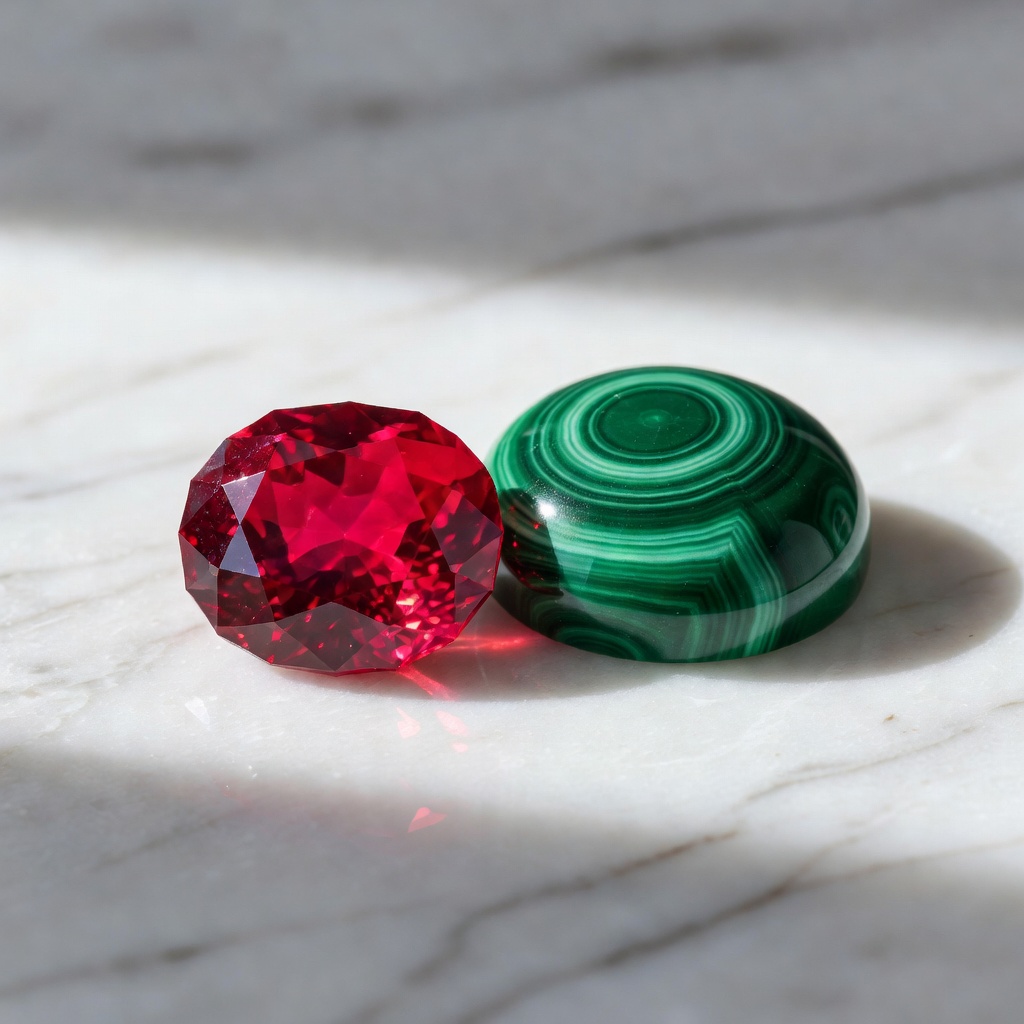
When selecting the perfect gemstone for jewelry or collection, the striking contrast between fiery red rubies and verdant malachite presents a fascinating study in geological opposites. Ruby stands as one of the most coveted precious gemstones, a variety of corundum celebrated for its intense pigeon blood red hues and exceptional durability that rivals diamond. In contrast, malachite emerges as a captivating semi-precious stone, formed from copper carbonate minerals and instantly recognizable by its mesmerizing concentric green banding patterns that evoke natural landscapes.
Despite occupying vastly different positions in the gemstone hierarchy, these stones frequently attract comparison from jewelry enthusiasts and spiritual practitioners alike. The ruby vs malachite debate centers on their dramatic color opposition—representing passion and vitality versus growth and transformation—while highlighting fundamental differences in durability, value, and practical applications. Collectors often evaluate both stones when building diverse jewelry portfolios or seeking specific energetic properties for metaphysical practices.
Understanding the distinctions between these gemstones requires examining multiple factors beyond mere aesthetics. Durability concerns dramatically influence how each stone performs in daily wear environments, while price differentials spanning thousands of dollars per carat necessitate careful budget consideration. Whether you seek a heirloom-quality engagement stone or a fashion-forward statement piece, evaluating ruby vs malachite through the lenses of geological composition, maintenance requirements, and long-term value ensures an informed purchasing decision aligned with your lifestyle needs.
Geological Origins and Chemical Composition
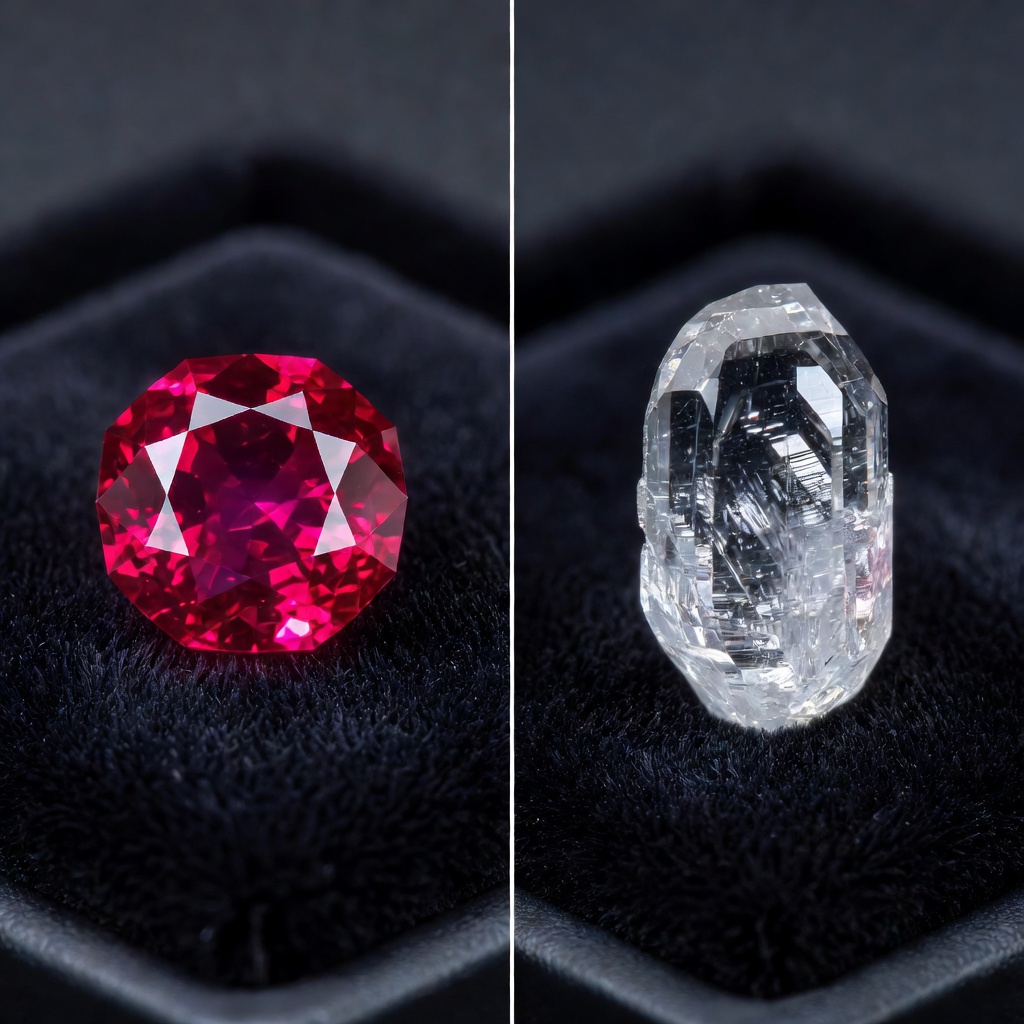
Rubies form deep within Earth's crust under extreme geological conditions that contribute to their remarkable properties. These precious gems crystallize in metamorphic rocks such as marble and gneiss, subjected to intense heat exceeding 800°C and immense pressure over millions of years. The corundum vs copper carbonate distinction becomes immediately apparent when examining ruby's chemical structure: pure aluminum oxide (Al₂O₃) with trace chromium elements substituting for aluminum atoms, creating the characteristic red coloration through complex light absorption processes.
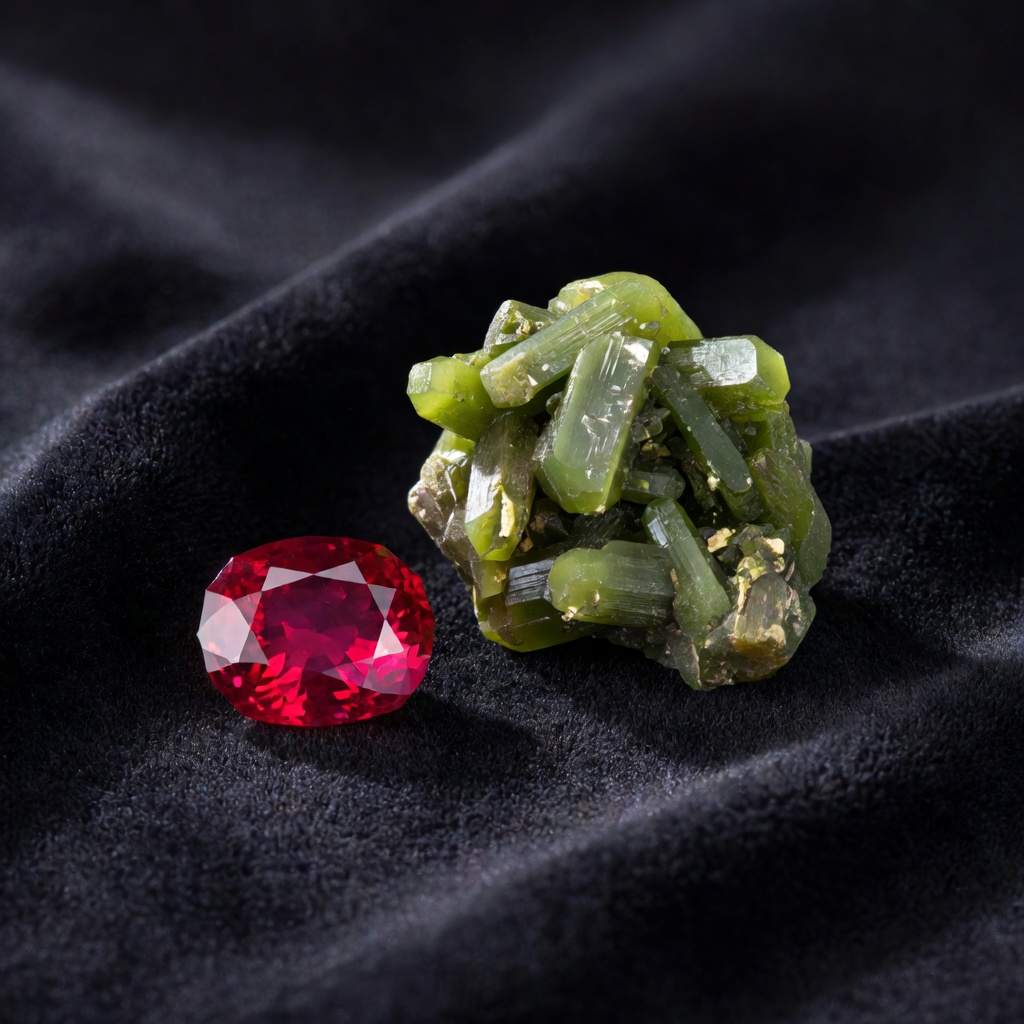
Malachite presents a dramatically different formation story, developing as a secondary mineral within the oxidation zones of copper ore deposits. Unlike ruby's high-pressure metamorphic genesis, malachite forms through weathering processes where carbonated water percolates through copper-rich rocks, gradually precipitating copper carbonate hydroxide [Cu₂(CO₃)(OH)₂] into distinctive botryoidal masses. This formation process explains malachite's relatively soft structure and chemical sensitivity compared to ruby's crystalline stability.
Geographic sourcing further distinguishes these gemstones, with rubies primarily extracted from Myanmar's Mogok Valley, Thailand's Chanthaburi region, and Mozambique's Montepuez deposits. These locations yield the finest pigeon blood specimens commanding premium prices. Conversely, malachite sources concentrate in the copper belts of the Democratic Republic of Congo and Zambia, with significant deposits also found in Russia's Ural Mountains and Australia's Burra region. The chemical stability differences between corundum's tightly packed hexagonal crystal lattice and malachite's monoclinic, water-containing structure directly impact their respective durabilities and care requirements.
Physical Properties and Durability Comparison
The ruby vs malachite hardness differential represents one of the most dramatic contrasts in the gemstone world, fundamentally determining appropriate jewelry applications for each stone. Ruby ranks 9 on the Mohs hardness scale, placing it second only to diamond and making it extraordinarily resistant to scratching and surface abrasion. This exceptional hardness stems from corundum's strong covalent bonding between aluminum and oxygen atoms, creating a crystalline structure capable of withstanding decades of daily wear without losing polish or developing surface damage.
Malachite occupies the opposite end of the durability spectrum, ranking merely 3.5 to 4 on the Mohs hardness scale. This relative softness classifies malachite as poor to fair for jewelry use, rendering it susceptible to scratching from everyday materials including household dust (which often contains quartz particles ranking 7 on the scale). Beyond hardness concerns, malachite exhibits distinct brittleness and perfect cleavage in one direction, making it prone to chipping, fracturing, and breaking upon impact—characteristics that severely limit its suitability for rings or bracelets subjected to physical activity.
Toughness—the resistance to breaking and chipping—further differentiates these gemstones. Ruby demonstrates excellent toughness despite its high hardness, resisting fractures through its lack of cleavage planes and hexagonal crystal structure. Malachite, however, possesses poor toughness due to its microcrystalline aggregate structure and inherent fragility. For collectors considering longevity expectations, rubies maintained in proper settings can last centuries without significant degradation, while malachite requires protective bezel settings and occasional repolishing to maintain its appearance over time. The following comparison table illustrates these critical differences:
| Property | Ruby (Corundum) | Malachite (Copper Carbonate) |
|---|---|---|
| Mohs Hardness | 9 (Excellent) | 3.5-4 (Poor to Fair) |
| Chemical Formula | Al₂O₃ (Aluminum Oxide) | Cu₂(CO₃)(OH)₂ (Copper Carbonate Hydroxide) |
| Crystal System | Hexagonal | Monoclinic |
| Specific Gravity | 3.97-4.05 | 3.6-4.0 |
| Toughness | Excellent (no cleavage) | Poor (brittle, perfect cleavage) |
| Price Range per Carat | $1,000-$50,000+ | $1-$50 |
| Best Jewelry Applications | Rings, bracelets, daily wear | Pendants, earrings, brooches |
| UV Fluorescence | Strong red fluorescence | None |
| Chemical Stability | Resistant to acids/bases | Soluble in acids, damaged by ammonia |
| Maintenance Level | Low (ultrasonic safe) | High (dry cloth only) |
Visual Characteristics and Aesthetic Appeal
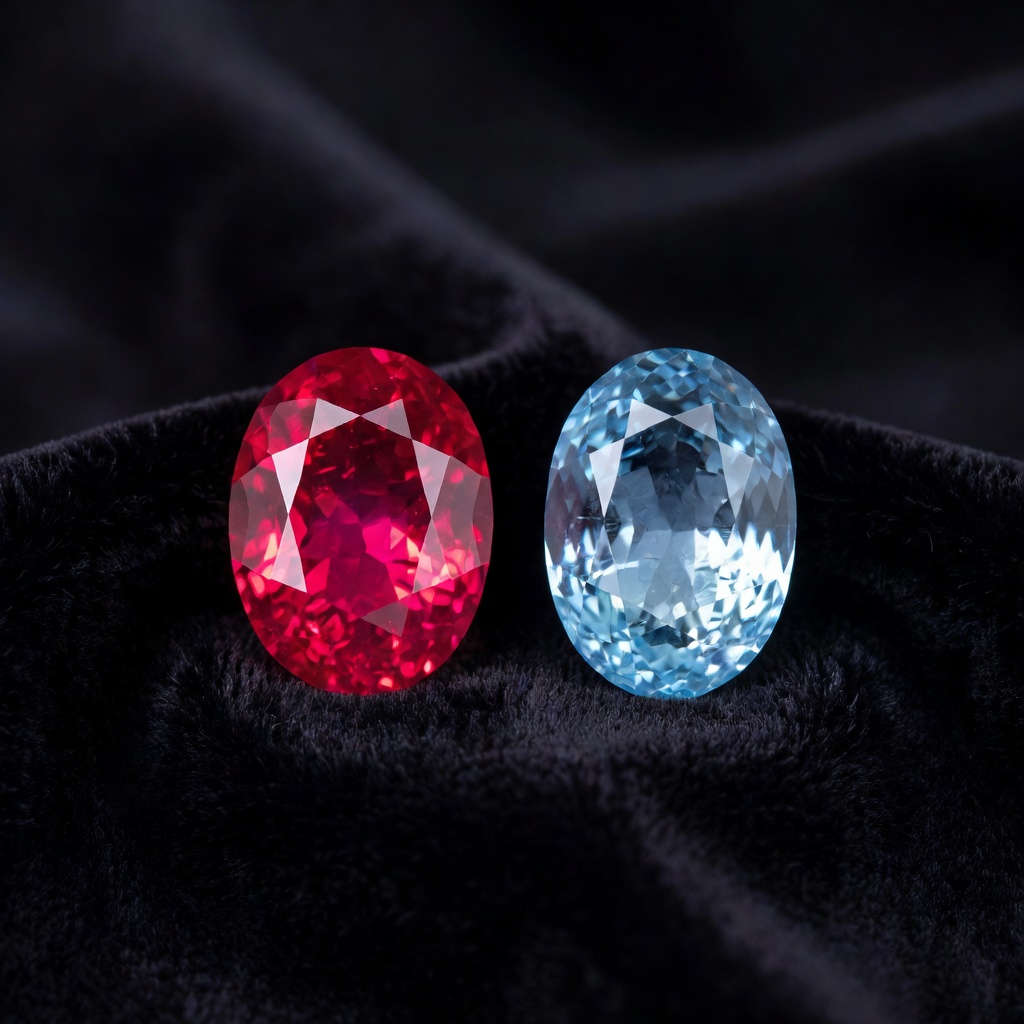
The red ruby green malachite comparison reveals nature's mastery in creating complementary yet opposing visual spectrums. Rubies derive their iconic color from chromium impurities within the corundum lattice, displaying a spectrum ranging from pinkish-red and purplish-red to the coveted "pigeon blood" red—a vivid, slightly bluish-red saturation considered the pinnacle of ruby quality. Under ultraviolet light, natural rubies exhibit strong red fluorescence due to chromium content, creating an inner glow that enhances their apparent brightness and vitality in daylight conditions. This fluorescence, combined with high refractive index (1.76-1.78), produces the brilliant "life" that makes fine rubies appear almost internally illuminated.
Malachite captivates through entirely different optical mechanisms, showcasing distinctive concentric banding patterns in alternating light and dark green shades. These bands form through rhythmic crystallization during formation, creating "bull's-eye" patterns, straight parallel lines, or irregular swirling designs unique to each specimen. Unlike ruby's vitreous luster, malachite displays silky to dull luster depending on polish quality, with occasional chatoyancy (cat's eye effect) appearing in cabochon-cut specimens containing parallel fibrous structures. The green coloration remains remarkably consistent, deriving from copper's inherent chromophore properties without the color variations seen in ruby.
Cutting preferences further distinguish these gemstones based on their physical properties. Rubies typically receive faceted cuts—brilliant, step, or mixed cuts designed to maximize light return and minimize the appearance of inclusions. Master cutters orient rubies to minimize silk (rutile inclusions) visibility while optimizing color saturation through proper table alignment. Malachite, due to its opacity and banding patterns, almost exclusively receives cabochon cuts, carvings, or bead treatments that showcase its distinctive patterns rather than brilliance. Clarity standards differ dramatically: while ruby collectors accept certain inclusions as proof of natural origin (such as rutile silk or mineral crystals), malachite is valued for its pattern density and color consistency rather than transparency, with opaque specimens commanding higher prices when banding remains sharp and concentric.
Rarity, Value, and Investment Potential
The precious vs semi-precious gemstones classification becomes starkly apparent when examining market valuations for ruby versus malachite. Fine-quality rubies consistently rank among the world's most expensive colored stones, with exceptional Burmese pigeon blood specimens commanding $10,000 to $50,000 per carat for untreated stones over three carats. Even commercial-quality rubies typically range from $1,000 to $5,000 per carat, establishing them firmly within the investment-grade gemstone category alongside diamonds, emeralds, and sapphires. This high valuation reflects extreme rarity: gem-quality rubies constitute less than 1% of all corundum found, with most material proving too included or color-zoned for fine jewelry use.
Malachite occupies the accessible end of the gemstone market, with prices typically ranging from $1 to $50 per carat depending on pattern quality, size, and artistic craftsmanship rather than intrinsic material rarity. While abundant copper deposits worldwide produce substantial malachite quantities, value concentrates in specimens displaying exceptional "bull's-eye" patterns, deep saturated green coloration without black matrix inclusions, and large carving-grade blocks exceeding 50 carats. Unlike ruby, where mineral quality dominates pricing, malachite value often derives from lapidary artistry—intricate carvings, cameos, or inlay work can elevate material value tenfold through skilled craftsmanship.
Investment potential diverges significantly between these stones. Rubies, particularly untreated Burmese or Mozambican origin stones with SSEF or GRS certifications, demonstrate strong value retention and appreciation potential, historically outperforming many traditional investments during economic fluctuations. The closure of Myanmar's Mogok mines and increasing demand from Asian markets continue driving price appreciation for fine specimens. Malachite, while beautiful, functions primarily as a fashion or collector's mineral rather than investment vehicle, with value retention depending on artistic provenance and design rather than material appreciation. For collectors building heirloom collections, rubies offer tangible asset protection, while malachite provides affordable aesthetic enjoyment without significant resale premium expectations.
Jewelry Applications and Design Versatility
Ruby jewelry vs malachite jewelry applications reflect their fundamental durability differences, dictating appropriate settings and wear scenarios. Ruby's exceptional hardness and toughness make it ideal for engagement rings, wedding bands, tennis bracelets, and daily wear earrings—settings where stones encounter frequent impact and abrasion. High jewelry houses including Cartier, Van Cleef & Arpels, and Bulgari consistently feature rubies in crown jewel collections, utilizing them in elaborate necklaces and brooches where durability ensures generational longevity. Platinum and 18k gold settings complement rubies beautifully, with yellow gold enhancing warmer red tones while white metals emphasize pinkish-red Burmese varieties.
Malachite demands protective design strategies limiting physical exposure. Jewelers typically reserve this copper carbonate for pendants, drop earrings, brooches, and collar necklaces—pieces experiencing minimal impact during wear. When set in rings, malachite requires protective bezel settings with high walls shielding the stone's edges from direct contact with hard surfaces. Cabochon cuts predominate, though skilled artisans carve malachite into beads for statement necklaces or inlay small pieces into mosaic designs where metal borders provide structural protection. Metal pairings favor sterling silver, copper, or antiqued brass that complement malachite's earthy green tones, though high-end designers occasionally set malachite in gold for dramatic contrast.
Practical case studies illustrate these applications: a 2-carat Burmese ruby set in platinum with diamond accents functions perfectly as an engagement ring worn daily for decades, maintaining brilliance through household chores, gym sessions, and professional activities. Conversely, a 30-carat malachite cabochon set in a silver pendant with decorative bezel protection suits occasional evening wear, requiring removal before swimming, cleaning, or physical activity. Design limitations for malachite include avoiding tension settings, exposed girdles, or thin stone sections prone to cracking. For collectors seeking versatile jewelry wardrobes, rubies provide foundational pieces suitable for constant wear, while malachite offers artistic accent pieces best reserved for special occasions where their distinctive patterns create maximum visual impact without risking damage.
Metaphysical Properties and Symbolic Meanings
The gemstone healing properties comparison between ruby and malachite reveals complementary energetic profiles suited to different spiritual intentions and chakra work. Ruby resonates with the root chakra (Muladhara), embodying the fire element and stimulating vital life force energy throughout the physical body. Traditional Hindu texts describe rubies as "ratnaraj" (king of gems), believed to maintain physical health by improving blood circulation, strengthening the heart, and enhancing vitality. Crystal practitioners utilize rubies for courage manifestation, passion ignition, and protection against psychic attack, often recommending them for individuals seeking motivation, leadership confidence, or enhanced fertility. The stone's intense red vibration aligns with masculine yang energy, promoting assertiveness and dynamic action.
Malachite operates through the heart chakra (Anahata) and solar plexus, channeling transformation and emotional healing rather than raw vitality. Known historically as the "midwife stone," malachite assists in navigating major life transitions, absorbing negative energies and environmental pollutants while encouraging risk-taking and spiritual growth. Ancient Egyptian civilizations utilized malachite extensively—mining it from Sinai Peninsula deposits over 6,000 years ago—for protective amulets, eye makeup (kohl), and tomb decorations believed to facilitate safe passage to the afterlife. The stone's swirling green patterns symbolize nature's cyclical renewal, making it particularly effective for shadow work, trauma release, and breaking unwanted behavioral patterns.
Historical cultural significance further differentiates these stones. Burmese royalty believed rubies granted invincibility in battle, embedding them into armor and weaponry, while medieval European nobility wore rubies to maintain health, wealth, and wisdom. Malachite adorned Russian imperial palaces—most notably the Malachite Room in St. Petersburg's Winter Palace—where massive columns and vases demonstrated the stone's decorative potential rather than wearable utility. Zodiac associations favor ruby as the traditional birthstone for July and the fifteenth and fortieth wedding anniversary gem, while malachite serves as an alternative birthstone for Taurus and Scorpio despite lacking traditional monthly designation. For contemporary crystal healing practitioners, combining these stones creates powerful root-to-heart energetic circuits, though physical storage requires separation to prevent the harder ruby from scratching malachite.
Care, Cleaning, and Maintenance Requirements
Understanding how to clean ruby and malachite properly prevents inadvertent damage and preserves aesthetic qualities over decades of ownership. Ruby maintenance proves remarkably straightforward due to corundum's chemical inertness and hardness. Untreated rubies safely withstand ultrasonic cleaning and steam cleaning methods used by professional jewelers, though heat-treated or fracture-filled stones require gentler approaches. Home care involves warm water, mild dish soap, and soft brushing with a clean toothbrush to remove accumulated oils and debris from setting crevices. Ruby's resistance to heat, acids, and bases allows wear during cooking, cleaning, and most daily activities without degradation, though harsh blows against hard surfaces should still be avoided despite the stone's toughness.
Malachite presents significantly more complex care requirements due to copper carbonate's chemical reactivity and physical softness. This stone suffers damage from acids commonly found in household cleaners, vinegar, citrus juices, and even prolonged exposure to water, which can dull the polish or cause surface pitting. Ammonia-based jewelry cleaners prove particularly destructive, reacting with copper content to alter coloration permanently. Cleaning protocols restrict owners to wiping with a soft, dry microfiber cloth or barely damp cloth immediately dried afterward—never soaking malachite or exposing it to jewelry cleaning solutions. Professional maintenance should occur annually for malachite jewelry, involving inspection of setting security and gentle polishing to restore luster lost through microscopic surface scratches.
Storage recommendations emphasize preventing contact between these stones despite their compatible aesthetics. Ruby's Mohs 9 hardness easily scratches malachite's surface if stored together in jewelry boxes, necessitating separate soft pouches or compartmentalized storage. Malachite additionally requires protection from direct sunlight, which can fade its vibrant green bands over years of exposure, and from high humidity environments that may promote copper oxidation. For collectors traveling with both gemstones, hard-sided cases with individual padded slots prevent movement and contact damage. Establishing distinct care routines—simple ultrasonic cleaning for rubies versus careful dry wiping for malachite—ensures both stones maintain their beauty across generations, though malachite owners must accept more frequent professional intervention to address inevitable surface wear.
How to Choose Between Ruby and Malachite
Selecting between these contrasting gemstones requires honest lifestyle assessment, budget evaluation, and alignment with personal aesthetic preferences. Active individuals with hands-on careers—medical professionals, athletes, gardeners, or parents of young children—should prioritize ruby for any jewelry receiving daily wear, as its durability withstands physical impact, chemical exposure, and constant handling without degradation. Those seeking occasional statement pieces for evening events, spiritual ceremonies, or artistic expression may find malachite's distinctive patterns and accessible price point more appealing, provided they commit to careful handling protocols and removal during physical activities.
Budget considerations dramatically influence this decision, with ruby representing a significant investment starting at $1,000 per carat for modest quality and escalating rapidly for fine specimens, while malachite allows substantial visual impact for under $100 even for large cabochons. Long-term value expectations differ accordingly: ruby purchases function as store-of-value assets potentially appreciating over decades, whereas malachite acquisitions provide immediate aesthetic satisfaction without significant resale value. For engagement rings or wedding jewelry intended as generational heirlooms, ruby's durability and prestige justify higher initial expenditure, while fashion jewelry or trend-focused collections benefit from malachite's affordability and distinctive appearance.
Personal style alignment plays a crucial role in this selection process. Classic luxury aesthetics favoring timeless elegance, royal associations, and investment-grade materials naturally gravitate toward ruby's brilliant red fire and faceted sparkle. Bohemian, artistic, or nature-inspired styles resonate with malachite's organic banding, earthy green palette, and sculptural cabochon forms. When matching stone properties to specific jewelry types, reserve rubies for rings, bracelets, and daily earrings where durability proves essential, while utilizing malachite for pendants, brooches, and drop earrings protected from impact. Consider also metaphysical intentions: those seeking vitality, passion, and grounding benefit from ruby's root chakra activation, while individuals navigating transformation or seeking heart-centered healing align with malachite's energetic profile. Ultimately, many collectors choose both stones for complementary roles within comprehensive jewelry wardrobes.
Final Verdict and Recommendations
The ruby vs malachite final verdict depends entirely on intended use, investment goals, and personal risk tolerance regarding gemstone maintenance. These stones occupy opposite ends of the gemstone durability and value spectrums—ruby representing the pinnacle of precious gem hardness and investment potential, while malachite offers accessible beauty requiring careful stewardship. Key differentiators remain undeniable: ruby's Mohs 9 hardness enables daily wear across all jewelry categories with minimal maintenance, whereas malachite's 3.5-4 rating restricts it to protected settings and occasional use. Price differentials spanning three orders of magnitude (thousands versus tens of dollars per carat) further distinguish these materials as fundamentally different market categories despite their shared popularity.
Ruby selection proves optimal for several specific scenarios: engagement rings or wedding jewelry intended for continuous multi-decade wear, investment portfolios seeking portable wealth storage, heirloom pieces intended for generational transfer, and individuals seeking low-maintenance luxury. Choose ruby when durability outweighs budget constraints, when the symbolic associations of passion and vitality align with personal intentions, and when classic red brilliance complements existing jewelry collections. Prioritize untreated Burmese or Mozambican origins with laboratory certification (GIA, SSEF, or GRS reports) to ensure value retention and authenticity verification.
Malachite serves as the ideal choice for budget-conscious buyers seeking large, visually striking centerpieces without five-figure investments, spiritual practitioners utilizing stones for meditation and energy work, fashion-forward collectors embracing bohemian or Art Nouveau aesthetics, and designers creating statement pieces where stone size matters more than durability. Select malachite when jewelry will receive protective settings and occasional wear, when green coloration complements personal coloring or wardrobe preferences, and when transformation and protection metaphysical properties align with current life circumstances. When purchasing, examine specimens for sharp, concentric banding without chalky white zones or excessive black matrix inclusions, and verify that copper carbonate content remains pure without chrysocolla admixture that weakens structural integrity.
Regardless of selection, purchase only from reputable dealers providing disclosure of treatments—ruby treatments include heat, glass filling, and diffusion, while malachite occasionally receives stabilization with polymers or waxes to improve durability. For synthetic identification, remember that laboratory-grown rubies display curved growth lines and specific fluorescence patterns distinct from natural stones, while synthetic malachite shows unnaturally uniform banding unlike natural variation. Whether choosing the king of gems or the transformation stone, informed purchasing ensures satisfaction with these remarkably different yet equally captivating green and red treasures.
Frequently Asked Questions
Which is more expensive, ruby or malachite?
Ruby is significantly more expensive than malachite. High-quality rubies can cost thousands to tens of thousands of dollars per carat, especially Burmese pigeon blood varieties. Malachite is much more affordable, typically ranging from $1 to $50 per carat depending on pattern quality and craftsmanship, making it accessible for budget-conscious jewelry lovers.
Is ruby harder than malachite?
Yes, ruby is dramatically harder than malachite. Ruby ranks 9 on the Mohs hardness scale (second only to diamond), making it extremely durable for daily wear. Malachite ranks only 3.5-4 on the Mohs scale, making it relatively soft, prone to scratching, and unsuitable for rings or bracelets that receive heavy impact.
Can malachite be worn daily like ruby?
No, malachite is not recommended for daily wear unlike ruby. Due to its low hardness (3.5-4 Mohs) and brittleness, malachite can easily scratch, chip, or lose its polish with regular exposure. It's best reserved for occasional wear in protected settings like pendants or earrings, whereas ruby's hardness of 9 makes it ideal for everyday jewelry including engagement rings.
Which stone is better for an engagement ring?
Ruby is the superior choice for an engagement ring due to its exceptional hardness (9 Mohs), durability, and resistance to scratching and chipping. Malachite is generally unsuitable for engagement rings because of its softness and vulnerability to damage from daily activities. Ruby's durability ensures it can withstand decades of continuous wear.
Do ruby and malachite have different meanings?
Yes, they have distinct metaphysical properties. Ruby is associated with passion, vitality, courage, and root chakra energy, believed to stimulate life force and improve circulation. Malachite is connected to transformation, protection, and heart chakra healing, known as a stone of change that absorbs negative energies and encourages risk-taking.
Can you wear ruby and malachite together?
Yes, ruby and malachite can be worn together for a striking red-and-green color combination, but care must be taken to prevent the harder ruby from scratching the softer malachite. They should be set in ways that prevent direct contact or stored separately. Energetically, they complement each other by balancing root chakra vitality with heart chakra healing.
How can I tell real ruby from real malachite?
Rubies display vitreous luster, high refraction, and often red fluorescence under UV light, while malachite shows silky to dull luster with distinctive banding patterns and no fluorescence. Ruby is much heavier (specific gravity 4.0) than malachite (3.6-4.0), and ruby can scratch glass easily whereas malachite cannot. Professional gemological testing including refractive index measurement provides definitive identification.
Which gemstone requires more maintenance?
Malachite requires significantly more maintenance than ruby. Malachite must be protected from acids, ammonia, prolonged water exposure, and physical impacts, requiring gentle wiping with a soft dry cloth only. Ruby is low-maintenance, tolerating ultrasonic cleaning, steam cleaning, and regular soap and water without damage, making it ideal for those seeking hassle-free jewelry.