Introduction to Ruby vs Larimar
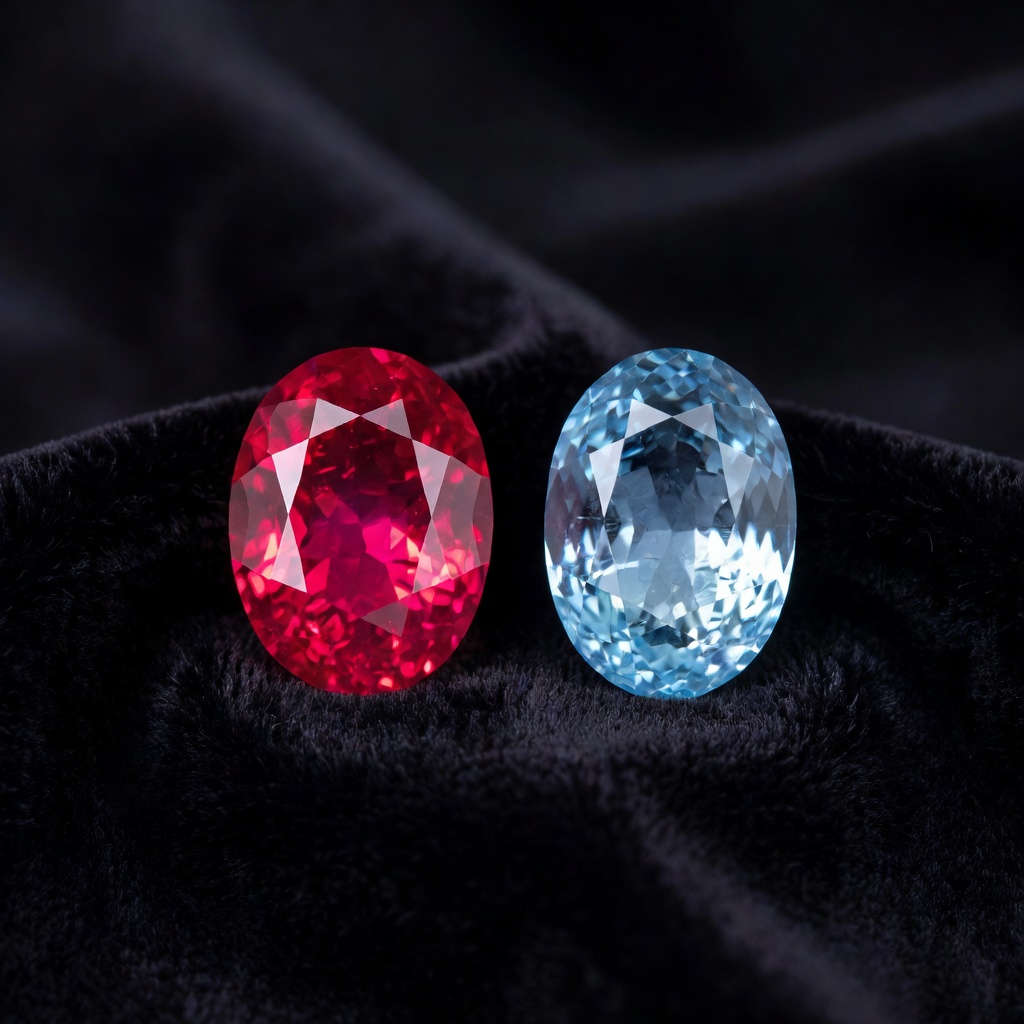
When exploring the fascinating world of colored gemstones, the comparison between Ruby vs Larimar presents one of the most striking contrasts in mineralogy. Known historically as the "King of Gems," the red ruby gemstone has adorned royal crowns and engagement rings for millennia, symbolizing power, passion, and prosperity. In stark contrast, Larimar emerges as the relatively young "Caribbean Gemstone," discovered only in the 1970s, yet quickly captivating collectors with its ethereal ocean-blue hues that seem to capture the essence of tropical waters.
Understanding the distinction between precious vs semi-precious stones becomes essential when comparing these two gems. Rubies belong to the elite "big four" precious stones alongside diamonds, sapphires, and emeralds, commanding premium prices due to their exceptional hardness and rarity. Larimar, despite its limited single-source availability, falls into the semi-precious category, offering accessibility without sacrificing unique beauty. These divergent classifications appeal to distinctly different jewelry enthusiasts: those seeking timeless investment pieces and heirloom quality gravitate toward rubies, while free-spirited collectors drawn to organic textures and oceanic aesthetics find their match in Caribbean larimar jewelry.
Origins and Geological Formation
The Metamorphic Origins of Ruby
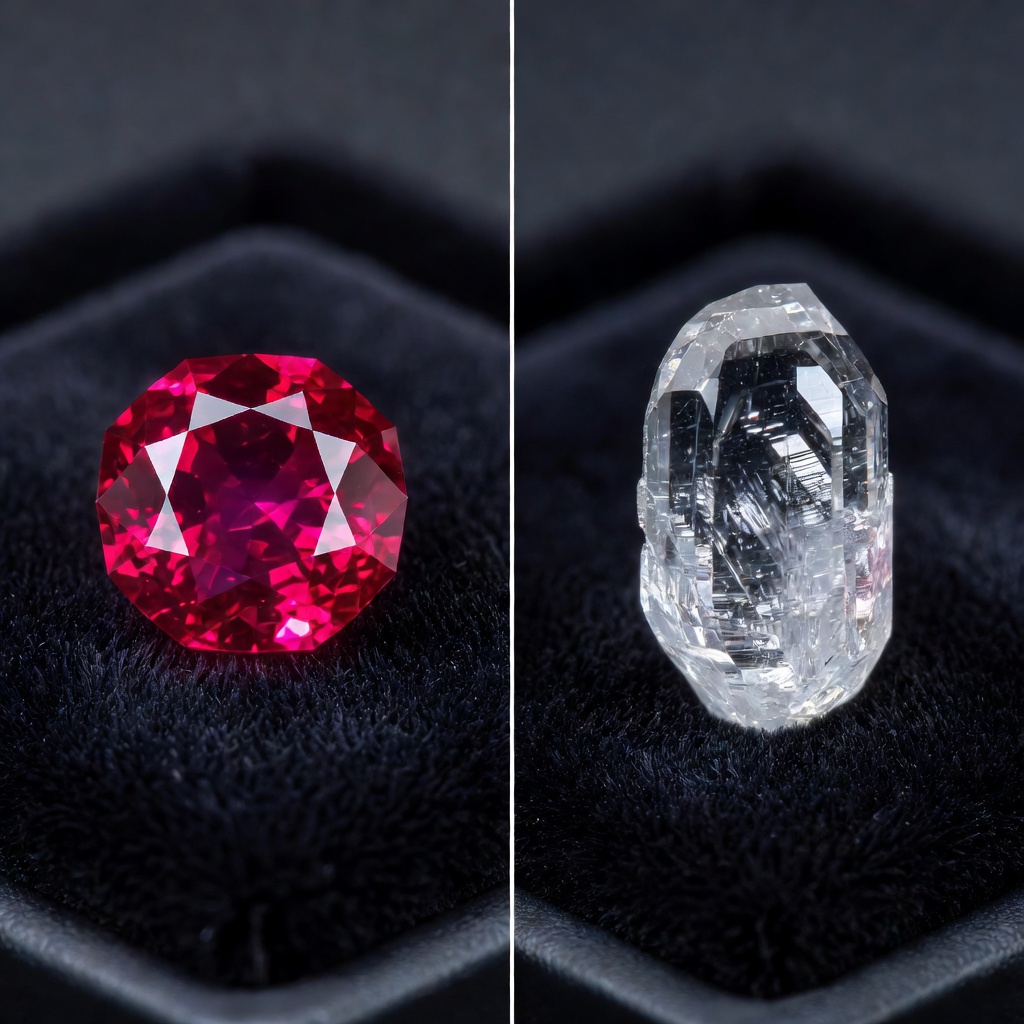
Rubies form deep within the Earth's crust under intense heat and pressure within metamorphic marble deposits, a process that takes millions of years to complete. The most coveted specimens emerge from the Mogok Valley in Myanmar (formerly Burma), where geological conditions create the perfect environment for chromium-rich corundum crystallization. Modern mining operations in Thailand, Mozambique, and Madagascar have expanded global availability, though Burmese rubies remain the gold standard for collectors seeking that legendary pigeon blood red coloration.
The geological age of ruby deposits varies significantly across these regions, with some Myanmar mines containing formations dating back over 500 million years. Mining these precious stones presents considerable challenges, including treacherous underground conditions and the diminishing accessibility of high-quality rough material. Experienced gemologists often examine the internal "silk" inclusions found in marble-hosted rubies to verify their geographical origin, as these microscopic rutile needles serve as fingerprints of their specific formation environment.
Larimar's Volcanic Genesis
Unlike rubies, Caribbean larimar jewelry originates from a dramatically different geological process involving volcanic activity rather than metamorphic transformation. This rare blue pectolite formed exclusively within the Barahona region of the Dominican Republic when volcanic gases trapped mineral-rich solutions in basaltic cavities approximately 20 to 30 million years ago. The presence of copper within these volcanic solutions created Larimar's characteristic turquoise to deep blue coloration, while calcium and sodium contributions formed its distinctive crystalline structure.
The extreme geographical limitation of Larimar makes it geologically scarcer than rubies despite its lower market price. Mining operations focus on a single mountainous region accessible only through narrow, dangerous tunnels carved into volcanic rock. Unlike ruby deposits found across multiple continents, Larimar's single-source origin means that once the Barahona mines exhaust their supply, this gemstone will become extinct in the commercial market. Collectors seeking Larimar stone benefits should consider acquiring pieces now, as future availability remains uncertain due to these mining constraints.
Physical Characteristics and Visual Appeal
The Chromatic Brilliance of Ruby
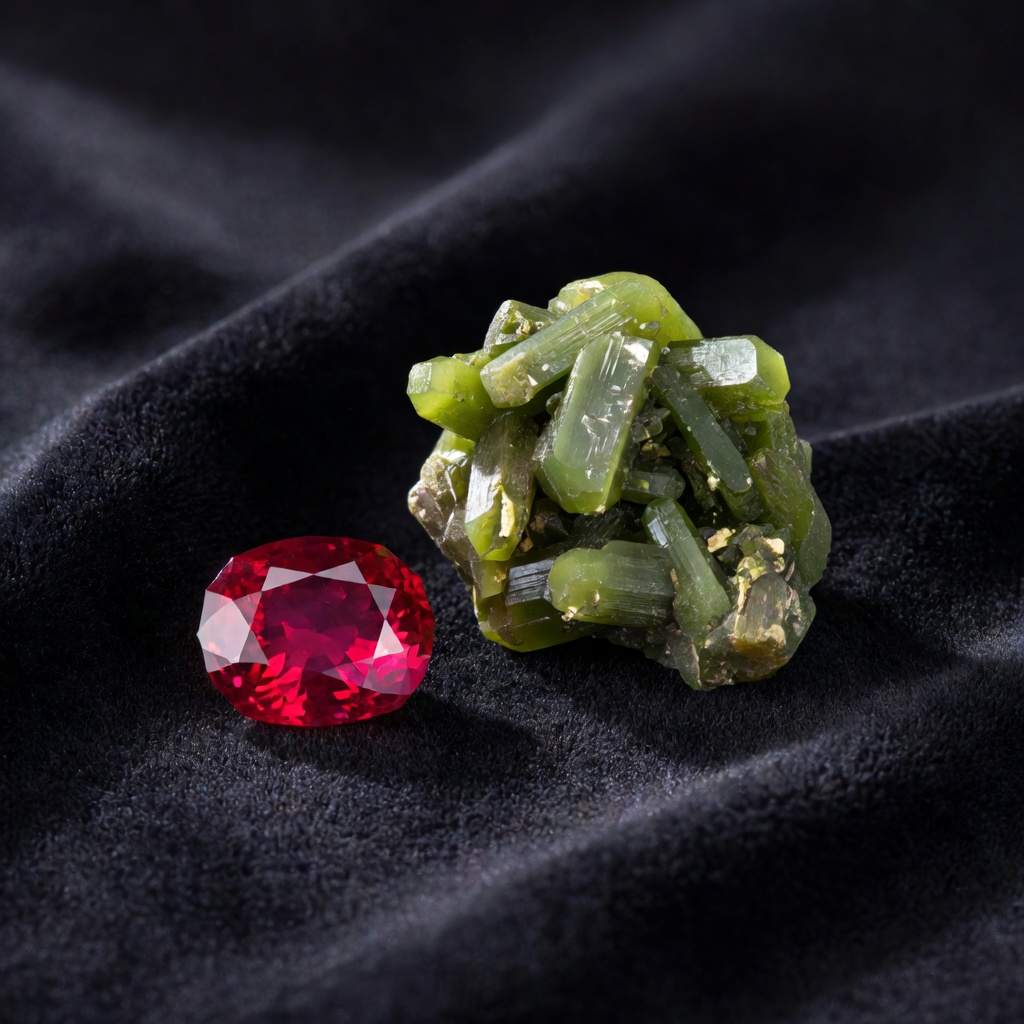
The red ruby gemstone captivates viewers with its intense red fluorescence that seems to glow from within, particularly under natural daylight. Premium specimens display the coveted "pigeon blood" red—a vivid, pure red with a hint of blue that appears to pulse with internal fire. Lower grades may exhibit pinkish-red or orange-red tones, though these remain beautiful and desirable for different jewelry applications. When evaluating ruby quality, gemologists prioritize color saturation above all other factors, as even slightly included stones command premium prices if they possess that elusive pure red hue.
Clarity standards for rubies differ significantly from those applied to diamonds, as natural inclusions actually authenticate these precious stones. The presence of "silk"—microscopic rutile needle inclusions—can actually enhance a ruby's value by creating a soft, velvety appearance prized in Burmese specimens. However, excessive inclusions that reduce transparency or create dark areas significantly diminish value. When shopping for rubies, look for stones that balance vibrant color with eye-clean clarity, remembering that completely flawless natural rubies exceeding one carat are extraordinarily rare and command auction-level prices.
Larimar's Oceanic Aesthetics
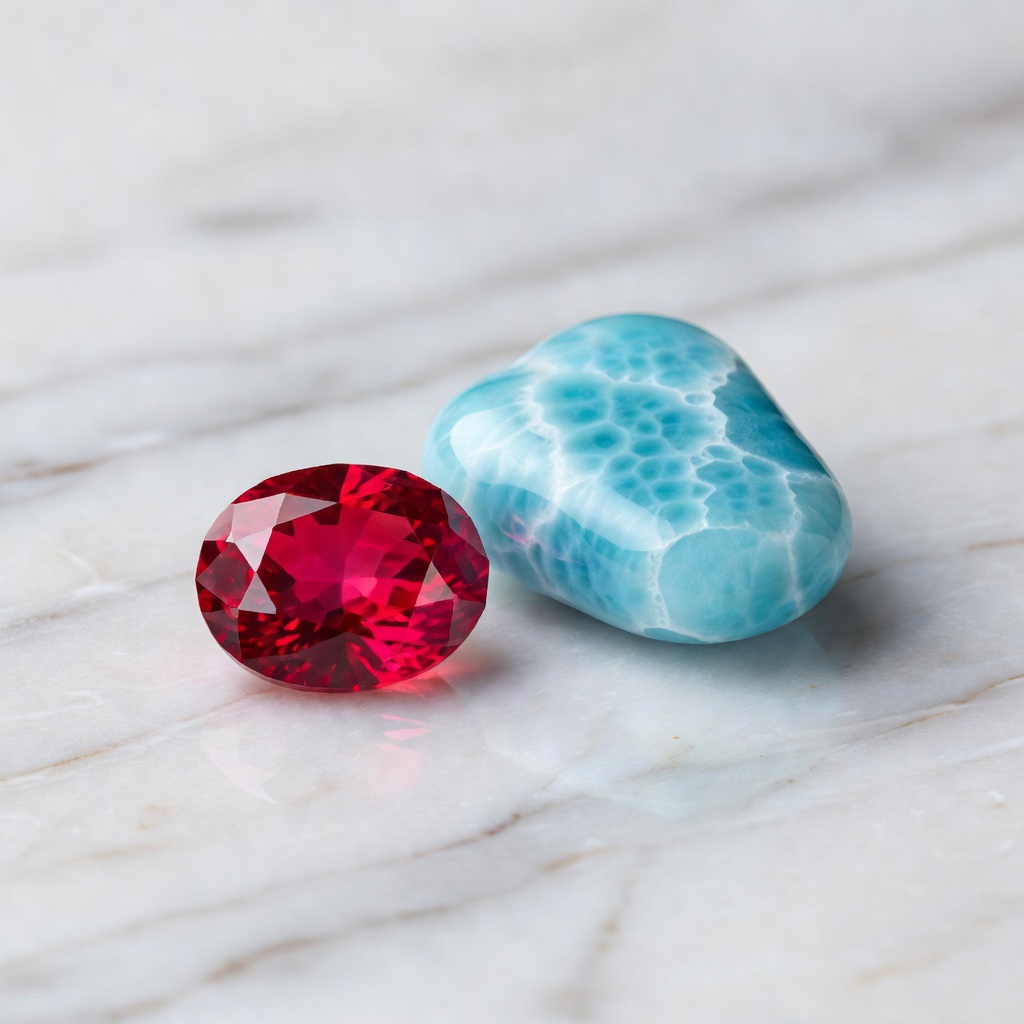
Larimar presents a completely different visual experience, displaying a captivating range of blue tones from pale sky blue to deep volcanic navy, often interlaced with white, red, or brown veining patterns that resemble sunlight dancing on Caribbean waters. These distinctive markings result from the stone's volcanic formation process, where various mineral inclusions created nature's own abstract paintings within each cabochon. Unlike rubies, which gem cutters typically facet to maximize brilliance, Larimar almost always appears as cabochons or free-form shapes that showcase its unique patterning rather than optical performance.
The texture of high-quality Larimar should feel smooth and cool to the touch, with color consistency varying dramatically between specimens. Collectors particularly value stones displaying intense volcanic blue with minimal white veining, though many jewelry designers deliberately incorporate the white patterns to enhance the ocean-wave aesthetic. When examining Larimar for purchase, hold the stone under different lighting conditions—natural sunlight best reveals its true color depth, while artificial lighting may dull its distinctive Caribbean character. Remember that unlike the red ruby gemstone, Larimar's beauty lies in its organic, natural variations rather than standardized perfection.
Durability and Wearability Factors
Understanding gemstone hardness comparison becomes crucial when selecting jewelry intended for daily wear versus occasional use. Ruby ranks 9 on the Mohs hardness scale, making it second only to diamonds in terms of mineral toughness and scratch resistance. This exceptional durability allows ruby rings and bracelets to withstand the knocks, scrapes, and impacts associated with active lifestyles without showing significant wear. Whether you're typing at a keyboard, gardening, or engaging in sports, a well-set ruby maintains its polish and structural integrity decade after decade.
Larimar presents a stark contrast in the precious vs semi-precious stones durability debate, ranking only 4.5 to 5 on the Mohs scale. This relative softness makes Larimar vulnerable to scratching from everyday materials like household dust (which contains silica), metal jewelry, and even fingernails. Wearing a Larimar ring during daily activities almost guarantees surface damage within months, while accidental impacts against hard surfaces can cause chipping or cleaving along its crystalline structure. For this reason, jewelry designers typically recommend reserving Larimar for pendant necklaces, earrings, or occasional-use bracelets where the stone receives protection from direct impact.
Setting requirements differ dramatically between these stones due to their hardness disparities. Rubies accommodate virtually any setting style, including tension settings and delicate prongs that expose maximum surface area to light. Larimar requires protective bezel settings with substantial metal walls surrounding the stone's perimeter, though even these cannot prevent scratches from occurring on exposed surfaces. When traveling with Larimar jewelry, always store pieces separately in soft pouches to prevent contact with harder gemstones that could mar their surface. For those seeking Caribbean larimar jewelry as travel souvenirs, consider purchasing pendants rather than rings to ensure your vacation treasure remains beautiful for years.
Value, Pricing and Investment Potential
The financial contrast between Ruby vs Larimar reflects their classification within the gemstone hierarchy. High-quality rubies command prices ranging from $1,000 to over $15,000 per carat, with exceptional Burmese pigeon blood specimens occasionally exceeding $100,000 per carat at auction. This pricing structure places rubies among the most valuable colored gemstones globally, often surpassing diamonds of equivalent size and quality. Investment-minded collectors focus on untreated stones exceeding one carat with certificates from recognized laboratories like GIA or SSEF, as these represent the strongest appreciation potential.
Larimar remains remarkably accessible despite its extreme geological rarity, typically retailing between $3 and $50 per carat depending on color intensity and pattern quality. While this affordability makes Caribbean larimar jewelry accessible to budget-conscious consumers, it also limits investment potential compared to precious stones. However, gemologists speculate that Larimar prices could rise dramatically if Dominican mining operations cease or regulations restrict extraction, given that no alternative sources exist globally. Savvy collectors might view high-grade volcanic blue Larimar as a speculative investment, particularly large cabochons with minimal veining.
Market availability presents another crucial consideration for collectors. Rubies circulate through established international markets with consistent availability across quality grades, though top-tier Burmese stones face increasing scarcity due to political instability and export restrictions. Larimar's market remains volatile and limited by seasonal mining conditions and the small scale of Dominican operations. When considering resale value, rubies maintain liquidity through auction houses and high-end dealers, while Larimar requires specialized markets or direct collector sales. For those building a jewelry collection, acquiring both stones serves different purposes: rubies function as portable wealth and heirlooms, while Larimar offers affordable artistic expression.
| Characteristic | Ruby | Larimar |
|---|---|---|
| Mohs Hardness | 9 (Excellent durability) | 4.5-5 (Requires protection) |
| Geological Origin | Metamorphic marble deposits (Myanmar, Thailand, Mozambique) | Volcanic basalt cavities (Dominican Republic only) |
| Color Spectrum | Pigeon blood red to pinkish-red with fluorescence | Ocean blue to green-blue with white/red veining |
| Price Range (Per Carat) | $1,000 - $15,000+ (High-quality Burmese) | $3 - $50 (Depending on color intensity) |
| Classification | Precious stone | Semi-precious stone |
| Best Jewelry Applications | Engagement rings, tennis bracelets, daily wear pieces | Pendants, earrings, occasional wear items |
| Metaphysical Associations | Passion, vitality, courage, heart chakra | Tranquility, communication, throat chakra |
| Maintenance Requirements | Ultrasonic cleaning safe, minimal care needed | Gentle hand cleaning only, storage separation required |
| Investment Potential | High appreciation over time | Limited appreciation, collectible rarity |
Metaphysical Properties and Symbolism
Ruby Birthstone Meaning and Energetic Properties
The ruby birthstone meaning resonates deeply with those born in July, representing the fire element, passion, and the life force that drives human achievement. Ancient cultures believed rubies contained the bloodline of the earth itself, granting wearers invincibility in battle and protection from evil spirits. Modern crystal practitioners associate rubies with the heart chakra, using them to stimulate motivation, enhance courage during challenging transitions, and reignite passion in relationships. Wearing a ruby close to the heart—either as a pendant or brooch—maximizes its energetic influence according to traditional healing practices.
Beyond personal adornment, feng shui practitioners place rubies in the southern sector of homes to activate fame and recognition energy. The stone's intense red vibration supposedly increases circulation, boosts energy levels, and combats exhaustion when worn regularly. Historical case studies include Burmese warriors inserting rubies into their flesh before battle, believing the stones would prevent wounds from bleeding. While modern wearers need not go to such extremes, keeping a ruby in a pocket during important meetings or presentations may provide psychological confidence through its association with leadership and vitality.
Larimar Healing Properties and Spiritual Significance
Larimar healing properties center on water element energies, promoting tranquility, clear communication, and emotional release. Discovered during the spiritual awakening movement of the 1970s, Larimar quickly became associated with dolphin energy and the lost continent of Atlantis, believed to facilitate connection with ancient wisdom and higher consciousness. Unlike the stimulating ruby, Larimar soothes frayed nerves and reduces stress-related symptoms, making it ideal for meditation spaces or bedside tables where its calming presence can influence sleep quality and dream recall.
Indigenous Taino traditions of the Dominican Republic recognized the stone's spiritual significance long before its official discovery, using local blue stones in healing ceremonies and communication rituals. Contemporary practitioners align Larimar with the throat chakra, employing it to assist public speakers, teachers, and writers in articulating their truth without fear. For those experiencing emotional trauma or anxiety, holding Larimar during meditation while visualizing ocean waves washing away negativity provides a tangible focus for release practices. Combining Larimar with silver settings enhances these cooling, receptive properties, creating powerful amulets for navigating emotional waters.
Jewelry Design Applications
Formal Elegance with Ruby
Ruby's exceptional hardness and brilliant red color make it the premier choice for engagement rings, particularly for couples seeking alternatives to traditional diamonds while maintaining durability. Three-stone ruby rings flanked by diamonds create classic silhouettes suitable for daily wear, while vintage-inspired settings featuring filigree work complement the stone's royal associations. Tennis bracelets featuring graduated rubies offer stunning alternatives to diamond lines, providing continuous color that transitions seamlessly from office environments to formal galas. When designing with rubies, jewelers often recommend 18k yellow gold to enhance the stone's warmth, though platinum settings create striking modern contrasts that emphasize the gem's pure red saturation.
Beyond bridal jewelry, rubies excel in statement pieces such as Art Deco brooches, chandelier earrings, and cuff bracelets that withstand the rigors of evening events. The stone's compatibility with ultrasonic cleaning means that intricate settings remain brilliant with minimal maintenance, unlike softer gems that trap dirt in crevices. For collectors building versatile wardrobes, investing in a high-quality ruby pendant on a sturdy chain provides a lifetime piece that transitions from professional attire to black-tie events without appearing out of place.
Caribbean Larimar Jewelry and Casual Aesthetics
Larimar's organic beauty finds perfect expression in beach-inspired designs that celebrate its oceanic origins. Free-form cabochons set in textured silver mimic weathered sea glass, while teardrop pendants suspended from leather cords evoke natural elegance suitable for resort wear or bohemian fashion. Unlike rubies, Larimar rarely appears in formal tennis bracelets or heavy rings; instead, designers favor wire-wrapped pendants, drop earrings, and cuff bracelets that minimize impact risk while showcasing the stone's unique patterns.
Metal pairing significantly influences Larimar's visual impact, with sterling silver and white gold providing cool tones that enhance the stone's Caribbean blues. Rose gold creates interesting warm-cool contrasts that appeal to contemporary tastes, while yellow gold occasionally overwhelms Larimar's subtle coloration. When commissioning custom Caribbean larimar jewelry, request bezel settings rather than prongs to protect the stone's vulnerable edges, and consider designs that allow light to enter from the sides to illuminate the stone's depth. For travelers visiting the Dominican Republic, purchasing directly from local artisans ensures authentic stones while supporting the mining communities that extract this rare gem.
Care, Cleaning and Maintenance Requirements
Maintaining the brilliance of Ruby vs Larimar requires distinctly different approaches due to their hardness differential. Rubies tolerate ultrasonic cleaners, steam cleaning, and commercial jewelry solutions without damage, making them ideal for those who prefer low-maintenance luxury. However, rubies treated with fracture filling or heat treatment may require gentler care—always verify treatment status with your jeweler before aggressive cleaning. For routine maintenance, soaking ruby jewelry in warm water with mild dish soap followed by brushing with a soft toothbrush removes accumulated oils and restores fire to the stone.
Larimar demands significantly more cautious handling to preserve its Larimar stone benefits and surface integrity. Never expose Larimar to ultrasonic vibrations, steam, or harsh chemical cleaners, as these can cause fracturing or color fading. Instead, clean pieces using only lukewarm water and a soft cloth, patting dry immediately to prevent water spots from marring the surface. Chemical exposure presents particular risks for Larimar; remove jewelry before applying perfumes, lotions, or hair products, as these can seep into microscopic fractures and cause permanent discoloration.
Storage solutions must account for the vast hardness difference between these stones. Always store Larimar separately from rubies, diamonds, or sapphires, as contact with harder minerals will scratch Larimar's surface. Soft cloth pouches or individual compartments in jewelry boxes prevent accidental abrasion. For ruby storage, while less critical, separating pieces prevents harder stones from scratching softer metals or gems. Professional maintenance should occur annually for ruby rings to check prong security, while Larimar pieces benefit from professional inspection every six months to assess bezel integrity and surface condition before minor scratches become significant chips.
How to Choose Between Ruby and Larimar
Selecting between Ruby vs Larimar ultimately depends on lifestyle assessment, budget parameters, and personal energy alignment. Active professionals or those working with their hands should gravitate toward rubies for daily-wear pieces, as these stones withstand the physical demands of busy lives without constant worry about damage. Conversely, those seeking meditation aids, vacation jewelry, or occasional statement pieces may find Larimar's ethereal beauty perfectly suits their needs, provided they commit to careful handling protocols.
Budget considerations extend beyond initial purchase price to include long-term value expectations. Ruby purchases represent significant financial investments that typically appreciate over decades, potentially serving as emergency assets or inheritance pieces. Larimar offers accessible entry into gemstone collecting without financial strain, though buyers should view these acquisitions as aesthetic pleasures rather than investment vehicles. For the undecided collector, consider acquiring both: a high-quality ruby ring for daily signature wear and a Larimar pendant for spiritual practices or tropical vacations.
Elemental preferences provide another decision framework—those drawn to fire signs, high-energy environments, and passionate pursuits often resonate with ruby's intense vibrations. Water signs, empaths, and those seeking emotional healing typically align with Larimar's soothing frequencies. When possible, visit gemstone showrooms to handle both stones personally; the physical reaction to holding a warm, glowing ruby versus a cool, tranquil Larimar often reveals which stone harmonizes with your specific energetic needs. Regardless of choice, both gems offer unique connections to Earth's geological history, transforming ancient mineral formations into wearable art that speaks to distinct aspects of human experience.
Frequently Asked Questions
Which is more valuable, ruby or larimar?
Ruby is significantly more valuable than larimar. High-quality rubies, especially Burmese pigeon blood specimens, can command $1,000 to $15,000+ per carat, making them among the most precious gemstones globally. Larimar, while rare due to its single-source origin in the Dominican Republic, typically ranges from $3 to $50 per carat, classifying it as an affordable semi-precious stone.
Can larimar be worn daily like ruby?
No, larimar is not suitable for daily wear like ruby. With a Mohs hardness of only 4.5-5, larimar is relatively soft and prone to scratching, chipping, and damage from impacts. Ruby, ranking 9 on the Mohs scale, is extremely durable and ideal for daily wear in rings and bracelets. Larimar is best reserved for occasional wear in pendants or earrings.
Is larimar a good alternative to blue sapphire?
Larimar can be an affordable alternative to blue sapphire for casual, beach-inspired jewelry, offering similar ocean-blue hues at a fraction of the cost. However, it lacks sapphire's durability (9 on Mohs scale) and brilliance. For engagement rings or daily wear, blue sapphire remains superior, while larimar excels in pendant designs where hardness is less critical.
What makes larimar so rare compared to ruby?
Larimar's extreme rarity stems from its exclusive single-source location in the Dominican Republic's Barahona mountains, with no other known deposits worldwide. Additionally, mining is limited to a small, inaccessible volcanic region. While high-quality rubies are rare, they occur in multiple countries (Myanmar, Thailand, Mozambique), making larimar geologically scarcer despite lower market prices.
Do ruby and larimar have different metaphysical meanings?
Yes, they possess distinctly different energies. Ruby represents fire, passion, courage, and vitality, stimulating the heart chakra and enhancing motivation. Larimar embodies water elements, promoting tranquility, clear communication, and emotional healing through the throat chakra. Ruby energizes while larimar soothes, making them complementary for different spiritual needs.
Which stone is better for an engagement ring?
Ruby is the superior choice for engagement rings due to its exceptional hardness (9 Mohs), excellent durability for daily wear, and timeless association with love and passion. Larimar's softness (4.5-5 Mohs) makes it vulnerable to damage in ring settings exposed to daily activities. If choosing larimar, reserve it for pendant or earring engagement gifts rather than rings.
How can I tell if my larimar or ruby is real?
Real rubies display natural inclusions (silk), strong fluorescence under UV light, and exceptional hardness that scratches glass. Genuine larimar shows characteristic white or red veining patterns, varying blue tones from sky to volcanic blue, and feels cool to the touch. Both should be tested by certified gemologists, as glass imitations and dyed stones are common in the market.
Why is larimar only found in the Dominican Republic?
Larimar formed uniquely through volcanic activity millions of years ago when hot gases trapped crystallized minerals in basaltic lava flows within the Dominican Republic's specific geological conditions. The combination of copper contributing to its blue color and the particular volcanic chemistry occurred only in the Barahona region, creating a gemstone found nowhere else on Earth.