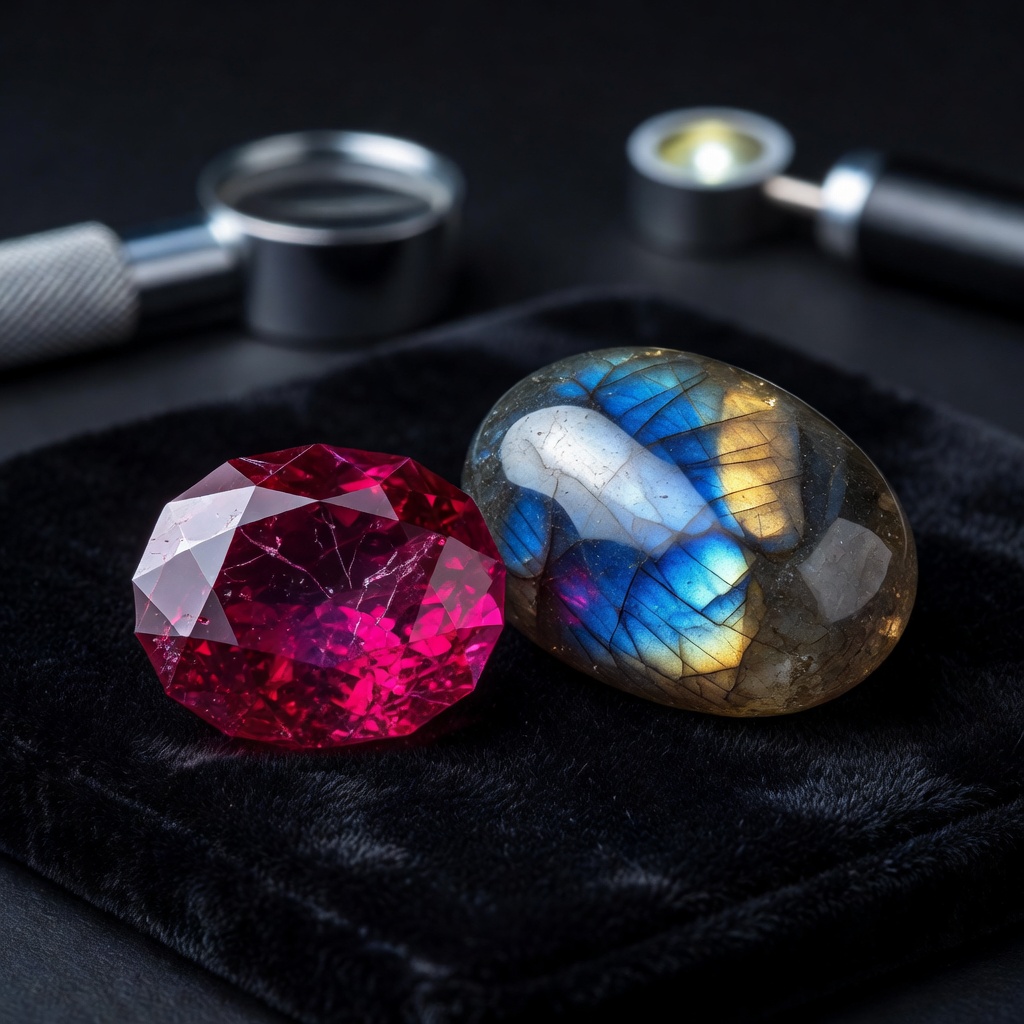
Introduction: Understanding Ruby vs Labradorite
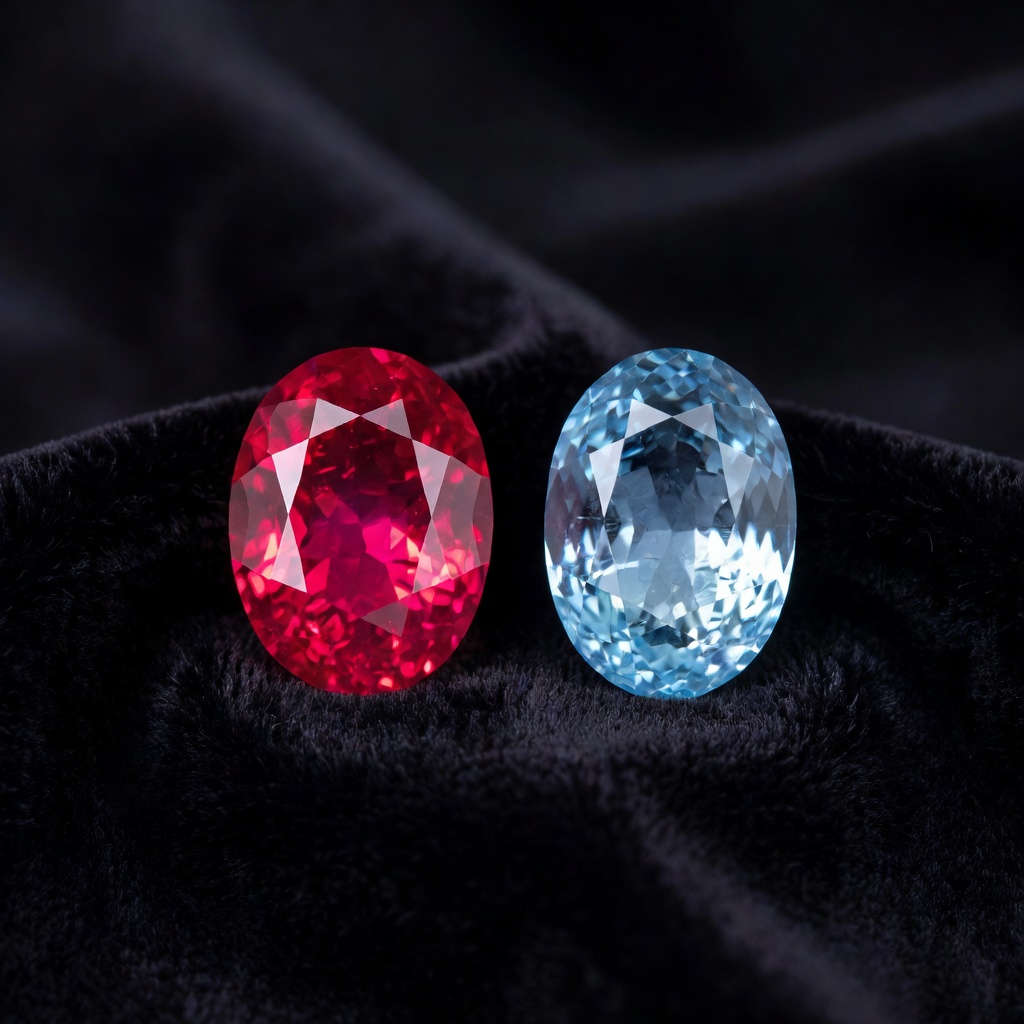
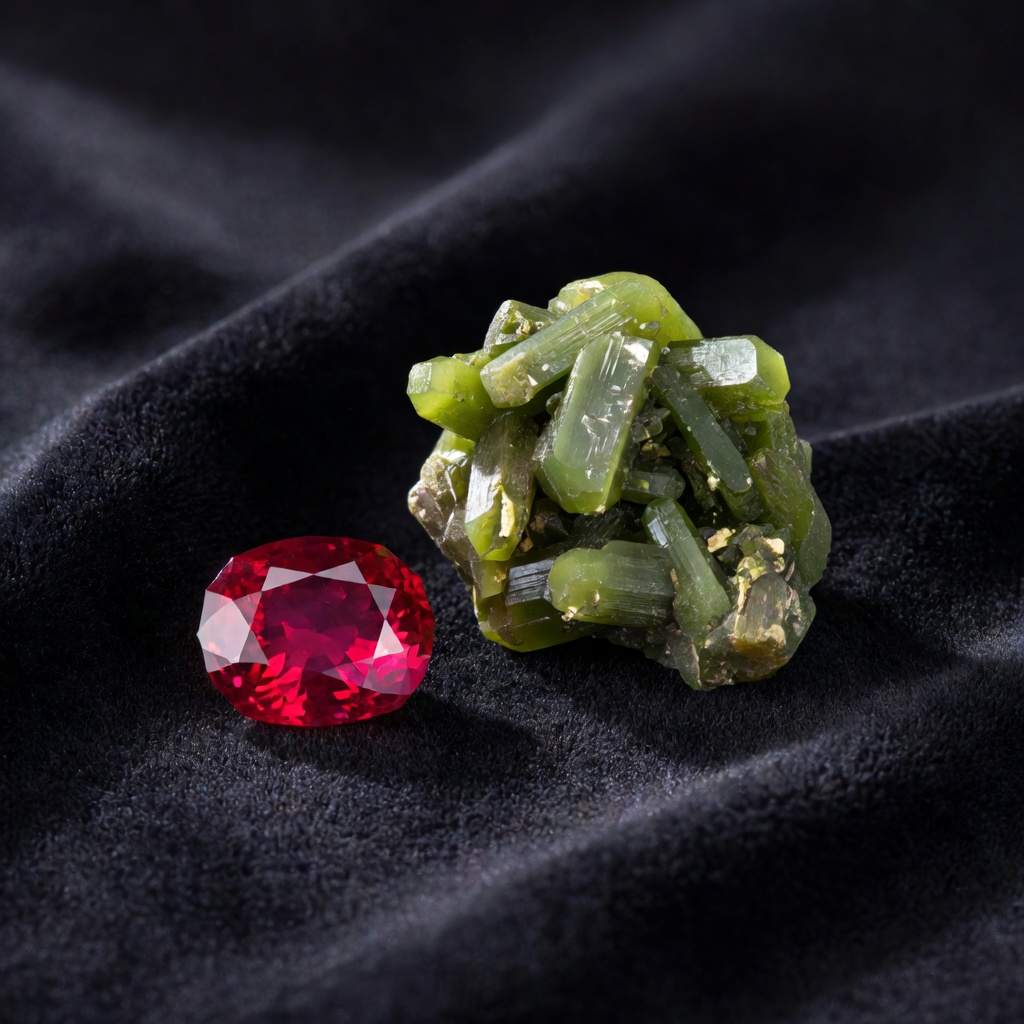
When exploring the diverse world of colored gemstones, the comparison between Ruby vs Labradorite presents a fascinating study in contrasts that captivates both novice collectors and seasoned jewelry enthusiasts. Ruby stands as one of the four precious gemstones, a prestigious category reserved for diamonds, emeralds, sapphires, and rubies, while labradorite occupies a respected position among semi-precious stones despite its extraordinary optical properties. This distinction between precious vs semi-precious gemstones extends beyond mere classification, influencing everything from market valuation and investment potential to jewelry design applications and cultural significance. Consumers frequently find themselves comparing these two stones because they offer distinctly different aesthetic experiences—ruby providing classic, saturated red elegance versus labradorite delivering mystical, color-shifting iridescence—yet both serve as centerpieces in contemporary and traditional jewelry collections.
Understanding the fundamental differences between these gemstones requires examining their geological foundations, physical durability, and optical characteristics that define their unique market positions. While rubies command premium prices and represent enduring luxury, labradorite offers accessible beauty with supernatural visual effects that have surged in popularity among bohemian and spiritual jewelry markets. Whether you are selecting a stone for daily wear, investment purposes, or metaphysical practices, recognizing how these gems differ in composition, care requirements, and symbolic meaning will guide you toward the perfect choice for your specific needs and lifestyle preferences.
Geological Origins and Formation
The Formation of Ruby Corundum in Metamorphic Environments
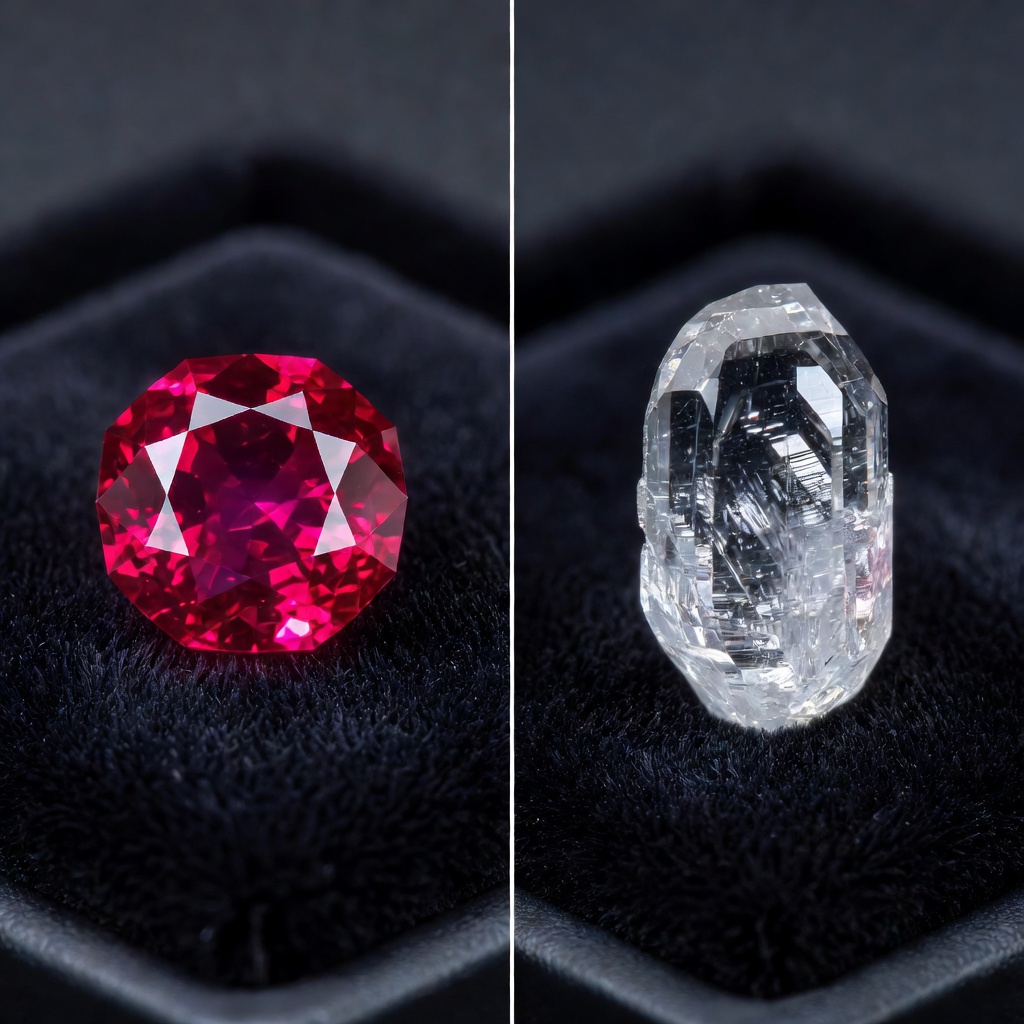
Rubies belong to the corundum mineral family, crystallizing from aluminum oxide (Al₂O₃) under extreme geological conditions that involve high pressure and temperature within metamorphic rock formations. These precious gems typically form in marble deposits or aluminum-rich basaltic environments where the presence of chromium impurities replaces aluminum atoms in the crystal lattice, creating the signature red coloration that defines the species. The formation process requires specific geological conditions lasting millions of years, with chromium availability being the critical factor that distinguishes rubies from their blue counterparts, sapphires, within the same corundum family. Myanmar's Mogok Stone Tract historically produces the finest pigeon blood rubies through this metamorphic process, though modern deposits in Mozambique and Madagascar have emerged as significant sources in recent decades.
Labradorite Crystallization in Igneous Deposits
Labradorite represents a fascinating calcium-rich feldspar mineral that crystallizes primarily within igneous rock formations, particularly in basalt and anorthosite deposits where slow cooling allows for the development of its distinctive internal structures. Unlike the aluminum oxide composition of ruby corundum, labradorite forms from the cooling of molten rock rich in calcium and sodium, creating a plagioclase feldspar structure with specific chemical proportions that enable its famous optical effects. The mineral typically develops in mafic intrusive rocks where geological conditions allow for the formation of microscopic lamellar intergrowths—twinning planes within the crystal structure that create the spectacular color play known as labradorescence. Finnish deposits, particularly in the Ylämaa region, produce the highly valued spectrolite variety, while Madagascar has become the primary commercial source for jewelry-quality labradorite in the global market.
Global Mining Locations and Supply Chains
The geographic distribution of these gemstones significantly impacts their availability, quality grading, and market accessibility for consumers worldwide. Burmese rubies from the Mogok region continue to command the highest premiums due to their exceptional color saturation and historical significance, though ethical sourcing concerns have elevated Mozambique's Montepuez mines as increasingly important suppliers of high-quality material. Labradorite mining operates on a different economic scale, with Finland producing limited quantities of premium spectrolite for collectors while Madagascar supplies the bulk of commercial-grade material used in jewelry manufacturing. Understanding these sourcing distinctions helps buyers appreciate why certain ruby origins add substantial premiums to pricing while labradorite remains broadly accessible across various quality grades and price points.
Physical Properties and Durability Comparison
Mohs Hardness and Daily Wear Considerations
The disparity in physical hardness between these gemstones represents one of the most practical considerations for jewelry selection and long-term wearability. Ruby corundum hardness ranks 9 on the Mohs scale, making it second only to diamond in natural mineral hardness and exceptionally suitable for engagement rings, bracelets, and daily-wear pieces that resist scratching and surface abrasion. In contrast, labradorite measures between 6 and 6.5 on the Mohs scale, placing it in a category of moderate hardness that requires protective settings and mindful wearing habits to prevent damage from everyday impacts or contact with harder materials. This significant hardness differential means that while rubies can withstand decades of continuous wear with minimal surface wear, labradorite pieces demand more careful consideration regarding setting design and occasion-appropriate use.
Crystal Structure and Cleavage Vulnerabilities
Beyond surface hardness, the internal crystal structure of each gemstone reveals critical information about toughness and resistance to breakage under stress. Ruby possesses a trigonal crystal system with no distinct cleavage planes, meaning it lacks natural planes of weakness along which the stone might split when struck, instead displaying conchoidal fracture patterns similar to glass when broken under extreme force. Labradorite crystallizes in the triclinic system with two directions of perfect cleavage at nearly 90-degree angles, creating inherent planes of weakness that make the stone susceptible to chipping or splitting if impacted along these specific orientations. Jewelers must account for these structural differences when designing settings, as labradorite requires protective bezels or thick prongs that minimize exposure to potential impact points, whereas ruby accommodates more delicate setting styles due to its superior toughness characteristics.
Comparative Gemstone Properties Analysis
| Characteristic | Ruby (Corundum) | Labradorite (Feldspar) |
|---|---|---|
| Chemical Composition | Aluminum Oxide (Al₂O₃) with Chromium | Calcium Sodium Aluminum Silicate |
| Crystal System | Trigonal | Triclinic |
| Mohs Hardness | 9 | 6 - 6.5 |
| Cleavage | None (Conchoidal Fracture) | Perfect in Two Directions |
| Specific Gravity | 3.97 - 4.05 | 2.68 - 2.72 |
| Optical Phenomena | Pleochroism (Red to Purplish Red) | Labradorescence (Blue, Gold, Green Flash) |
| Transparency | Transparent to Translucent | Translucent to Opaque |
| Market Value (Per Carat) | $1,000 - $100,000+ (Fine Quality) | $3 - $50 (Quality Specimens) |
| Ideal Jewelry Application | Engagement Rings, Daily Wear, Heirlooms | Pendants, Statement Pieces, Occasional Wear |
Visual Characteristics and Optical Phenomena
Ruby Color Spectrum and Quality Grading
The visual assessment of rubies centers on color purity, saturation, and tone, with the most valuable specimens displaying the legendary "pigeon's blood" red—a vivid, saturated pure red with subtle blue undertones that commands premium prices in international markets. Gemological laboratories evaluate rubies based on hue, saturation, and tone, with top-grade stones exhibiting strong fluorescence under ultraviolet light that enhances their apparent glow and vividness in natural daylight conditions. Unlike many gemstones where lighter tones suggest lower quality, rubies must balance intensity with transparency, as overly dark stones appear almost black while overly light specimens grade as pink sapphires rather than rubies according to modern gemological standards. When examining ruby color grades, collectors should observe the stone under various lighting conditions, as incandescent lighting tends to emphasize red tones while daylight reveals the subtle violet or orange secondary hues that affect valuation.
Understanding the Labradorite Labradorescence Effect
Labradorite distinguishes itself from virtually every other gemstone through the phenomenon of labradorescence, an optical interference effect created when light enters the stone and reflects off internal twinning planes within the feldspar structure, producing spectacular flashes of blue, green, gold, and occasionally violet or orange. Unlike the body color of ruby, which remains consistent regardless of viewing angle, labradorite requires specific orientation and light angles to display its full spectrum of colors, with the finest specimens showing broad "flash" areas that cover significant portions of the stone's surface when moved under light. The intensity and color range of this schiller effect determine quality grading, with Finnish spectrolite displaying the full rainbow spectrum while standard labradorite typically emphasizes blue and gold tones against a dark gray or black body color. When selecting labradorite for jewelry, examine the stone under single-point lighting while rotating it slowly, as high-quality material will reveal bright, directional flashes that appear to float beneath the surface rather than superficial surface reflections.
Transparency and Luster Distinctions
The fundamental difference in transparency between these gemstones significantly influences their cutting styles, setting requirements, and overall aesthetic impact in finished jewelry pieces. Fine rubies typically range from transparent to translucent, allowing light to penetrate and reflect within the stone to create brilliance and depth, which requires precision faceting to maximize light return and minimize windowing or extinction zones within the gem. Labradorite generally presents as translucent to opaque, with cutting styles emphasizing the display of labradorescence over brilliance, often resulting in flat cabochon cuts or shallow domes that position the flash effect for optimal viewing rather than maximizing light refraction through the stone. These optical characteristics dictate that rubies benefit from open-back settings that allow light transmission, while labradorite performs best in solid-back or closed settings that provide a dark background against which the iridescent colors can contrast dramatically.
Market Value, Pricing and Investment Potential
Price Per Carat Analysis and Accessibility
The economic disparity between these gemstones reflects their relative rarity, historical prestige, and positions within the precious vs semi-precious gemstones hierarchy, creating vastly different entry points for collectors and jewelry buyers. Fine untreated rubies from Myanmar or Mozambique routinely command prices ranging from $1,000 to over $100,000 per carat for exceptional stones exceeding five carats with pigeon blood coloration, placing them among the most valuable colored gemstones per carat after certain rare jadeite and alexandrite specimens. Conversely, even high-quality labradorite with intense blue flash typically retails between $3 and $50 per carat, with rare spectrolite from Finland occasionally reaching $100 per carat for exceptional display pieces, making it accessible to virtually all budget ranges while still offering visual distinction. This dramatic price differential means that a modest investment in ruby jewelry might fund an extensive collection of labradorite pieces, though the investment potential and value retention characteristics differ significantly between the two materials.
Factors Affecting Gemstone Valuation
Ruby valuation follows complex gemological criteria where color represents the primary value determinant, followed by clarity, cut quality, carat weight, and treatment status, with unheated natural rubies commanding multiples over heated or fracture-filled specimens that dominate the commercial market. Origin significantly impacts pricing, with Burmese rubies historically achieving 20-30% premiums over Mozambican material of similar quality, though this gap narrows as Mozambican mines produce increasingly fine specimens that rival classical sources in color and clarity characteristics. Labradorite pricing focuses primarily on the quality and extent of the labradorescence effect, with stones displaying full spectral color ranges (spectrolite) or intense electric blue flash commanding premium prices over material showing dull or limited color play, while clarity and transparency remain secondary considerations since the stone typically displays best when cut as cabochons that emphasize optical phenomena over brilliance.
Long-Term Gemstone Investment Comparison
For investors considering precious stones as alternative asset classes, the gemstone investment comparison between ruby and labradorite reveals distinctly different risk profiles, liquidity characteristics, and appreciation potentials over extended time horizons. Record-breaking auction results consistently demonstrate strong demand for untreated Burmese rubies, with prices appreciating steadily over decades as mining depletion increases scarcity, particularly for stones exceeding ten carats with exceptional color and clarity characteristics that appeal to high-end collectors and museums. Labradorite, while beautiful and culturally significant, functions primarily as a decorative or artisanal material rather than an investment vehicle, with limited secondary market liquidity and price appreciation constrained by abundant supply from Madagascar and other global deposits that ensure consistent market availability. Serious collectors seeking portfolio diversification through gemstones should focus on certified, untreated rubies with documented provenance, while labradorite purchases should be motivated by aesthetic appreciation and personal enjoyment rather than financial return expectations.
Metaphysical Properties and Cultural Symbolism
July Birthstone Properties and Historical Significance
Ruby carries profound cultural weight as the July birthstone, a designation that connects it to summer vitality, passion, and the life-giving energy of the sun across numerous civilizations and historical traditions. Ancient Sanskrit texts referred to ruby as "ratnaraj" or the king of precious stones, associating it with power, protection, and prophetic wisdom, while medieval European nobility wore rubies to guarantee health, wealth, wisdom, and success in love affairs or military campaigns. The July birthstone properties emphasize vitality, courage, and leadership, with crystal healers recommending ruby for those seeking to overcome exhaustion, lethargy, or lack of confidence, as the stone's intense red frequency resonates with the base chakra to stimulate life force energy and grounded personal power. In practical applications, individuals born in July often choose ruby jewelry not only for its beauty but as a talismanic connection to their birth month, believing it enhances their natural strengths while providing protective energy throughout the year.
Labradorite as the Stone of Transformation
Labradorite has emerged as one of the most significant stones in contemporary crystal healing practices, widely regarded as the premier crystal for transformation, spiritual awakening, and psychic protection among modern metaphysical communities. Unlike ruby's association with outward action and vitality, labradorite facilitates inward journeying, enhancing intuition, clarifying psychic visions, and strengthening the aura against energy drains or negative influences that might disrupt spiritual progress or emotional equilibrium. Indigenous peoples of Labrador, Canada, where the stone was first identified by European geologists in the 18th century, had long utilized the mineral in shamanic practices, believing that labradorite connected the physical world with unseen realms and revealed the truth behind illusions or deceptions. Practitioners often place labradorite on the third eye during meditation to stimulate psychic abilities or carry it as a protective amulet during travel or periods of significant life transition, trusting its reputation as the "stone of magic" to reveal synchronicities and guide users through periods of uncertainty.
Chakra Associations and Healing Applications
The energetic applications of these stones target different aspects of the subtle body, with ruby resonating primarily with the root chakra (Muladhara) and heart chakra (Anahata), grounding spiritual energy into physical action while stimulating passion and zest for life. Crystal healing protocols often recommend ruby for individuals experiencing adrenal fatigue, low blood pressure, or reproductive system imbalances, as the stone's vibrational frequency supposedly stimulates circulation and enhances physical vitality through its connection to red light wavelengths and blood energy. Labradorite operates primarily on the third eye (Ajna) and crown (Sahasrara) chakras, facilitating spiritual insight, dream recall, and the integration of intellectual knowledge with intuitive wisdom, making it particularly valuable for students of metaphysics, creative professionals, or those undergoing psychological shadow work. Many holistic practitioners create "chakra balancing" jewelry combining both stones, using ruby to anchor the wearer's energy to the earth while labradorite opens higher consciousness centers, creating a complete circuit of grounded spiritual awareness that supports both practical achievement and mystical exploration.
Jewelry Applications and Design Considerations
Ruby Settings for Heirloom and Daily Wear
The exceptional durability of ruby enables versatile jewelry applications that span from delicate everyday pieces to substantial heirloom investments designed for generational transfer. Engagement rings featuring ruby center stones have gained popularity among couples seeking alternatives to diamonds, with the stone's hardness ensuring that prong settings remain secure and facet edges stay crisp despite decades of daily wear, though designers should consider protective settings for stones with natural inclusions reaching the surface. Tennis bracelets, eternity bands, and stud earrings represent ideal applications for ruby jewelry, as the stone's toughness withstands the repeated impacts and abrasions that occur during active lifestyles, while its vivid color pairs elegantly with both yellow gold vintage settings and modern platinum designs that emphasize the stone's purity. When commissioning custom ruby pieces, experienced jewelers recommend six-prong settings for larger stones to maximize security, while bezel settings work beautifully for cabochon-cut rubies or those with surface-reaching inclusions that require additional protection.
Labradorite in Bohemian and Statement Designs
Labradorite's distinctive optical properties and relative softness make it particularly suited for pendant necklaces, statement rings, and earrings where the stone receives less impact than bracelet or daily wear ring applications would entail. The rise of bohemian and spiritual jewelry movements has elevated labradorite to staple status, with designers frequently pairing large cabochon specimens with oxidized silver, copper, or rose gold settings that complement the stone's cool blue flash while providing protective bezel mounts that shield vulnerable edges. Statement necklaces featuring labradorite as the focal point allow the wearer to position the stone against dark clothing, maximizing the visibility of the labradorescence effect as the piece moves with the body, while wire-wrapping techniques popular in artisan jewelry showcase the raw, unpolished beauty of labradorite specimens in organic, nature-inspired designs. For those seeking the mystical appearance of labradorite in ring designs, jewelers strongly recommend protective bezel or halo settings that extend slightly above the stone's surface, combined with design elements that prevent the table (top) of the stone from contacting hard surfaces during normal hand movements.
Metal Pairing and Design Synergies
The selection of precious metals for setting these gemstones significantly impacts the overall aesthetic presentation and can enhance or diminish the visual characteristics that make each stone distinctive. Traditional ruby jewelry favors 18K yellow gold or platinum settings, with yellow gold creating warm contrast that enhances the perception of red saturation in Burmese and Thai rubies, while platinum provides a cool, modern backdrop that emphasizes the pinkish undertones of Mozambique material and creates sophisticated contemporary pieces. Labradorite offers more flexibility in metal selection, with sterling silver providing an affordable, cool-toned setting that harmonizes with the stone's blue flash, while rose gold creates striking contrast against labradorite's dark body color and complements the occasional peach or gold tones found in high-quality spectrolite. Mixed-metal designs incorporating both gemstones create dramatic visual tension, with ruby providing warm punctuation points against labradorite's cool iridescence, though such pieces require careful construction to prevent the harder ruby from scratching the softer labradorite during wear or storage.
Care, Maintenance and Cleaning Guidelines
Ruby Maintenance Protocols and Cleaning Methods
The exceptional durability of ruby simplifies maintenance routines, allowing owners to employ aggressive cleaning methods that would damage softer gemstones, though certain treatments require modified care approaches. Untreated or heat-only treated rubies can safely undergo ultrasonic cleaning and steam cleaning procedures that remove accumulated oils, cosmetics, and environmental grime from behind the stone and within setting details, restoring brilliance without risking surface damage or structural compromise. For fracture-filled or lead glass-filled rubies, which represent a significant portion of commercial material, owners must avoid ultrasonic and steam cleaning in favor of gentle warm water, mild detergent, and soft brush cleaning to prevent damage to filling materials that improve apparent clarity. Regular professional inspections every twelve to eighteen months ensure that prongs remain tight and settings secure, particularly for rings worn daily, as the metal rather than the stone typically requires maintenance to prevent loss.
Labradorite Care and Preservation Strategies
Labradorite care requires mindful attention to the stone's cleavage planes and sensitivity to thermal shock, chemical exposure, and physical impact that could result in chipping, cracking, or dulling of the labradorescence effect. Owners should never expose labradorite to ultrasonic cleaners, steam cleaners, or harsh chemical solvents including chlorine, bleach, or ammonia-based household cleaners, as these can cause internal fracturing or surface etching that permanently damages the stone's optical qualities and structural integrity. Cleaning should be limited to lukewarm water with mild dish soap, using a soft cloth or very soft brush to gently remove surface oils while avoiding excessive pressure that might exploit cleavage weaknesses, followed by immediate drying with a lint-free cloth to prevent water spots that might temporarily dull the stone's appearance. Temperature changes present particular risks for labradorite, so owners should avoid wearing labradorite jewelry in saunas, hot tubs, or during activities where rapid temperature shifts might induce thermal shock fractures within the crystal structure.
Storage Solutions for Mixed Collections
Proper storage becomes crucial when maintaining collections containing both ruby and labradorite, as the significant hardness differential between these materials creates risk of accidental scratching or abrasion if stones contact each other during storage. Jewelry boxes with individual padded compartments or soft fabric pouches prevent harder stones like ruby from contacting and scratching softer labradorite pieces, while anti-tarnish strips for silver-mounted labradorite help prevent setting discoloration that might require aggressive cleaning methods harmful to the stone. When traveling, consider storing labradorite pieces in rigid, foam-padded cases that prevent movement and impact, while ruby jewelry can travel in standard jewelry rolls with moderate protection, though both benefit from avoiding extreme temperatures in car glove compartments or checked luggage holds. Implementing a rotation system where daily-wear ruby pieces receive regular cleaning while occasional-wear labradorite pieces undergo less frequent but gentle maintenance helps preserve both collections while ensuring each stone receives appropriate care matched to its physical properties.
How to Choose Between Ruby and Labradorite
Lifestyle and Wearability Considerations
Selecting between these gemstones requires honest assessment of your daily activities, occupation, and lifestyle habits that will determine whether a stone receives gentle occasional wear or must withstand rigorous daily use. Professionals with active hands-on careers, medical personnel who wash hands frequently, or individuals who rarely remove their jewelry should prioritize ruby for its durability, as the stone withstands impacts, chemical exposure, and temperature variations that would eventually damage labradorite's cleavage-prone structure. Conversely, those seeking statement pieces for special occasions, spiritual practitioners who use stones primarily for meditation or energy work, or collectors who enjoy rotating jewelry collections may find labradorite's mystical aesthetics perfectly suited to their needs despite the requirement for protective handling. Consider your track record with jewelry care—if you have damaged softer stones in the past or tend to be hard on your accessories, ruby offers forgiving durability, while labradorite rewards mindful caretakers with unique visual beauty unavailable in harder materials.
Budget Parameters for First-Time Buyers
Financial considerations play a decisive role in gemstone selection, with entry points for quality material differing by orders of magnitude between these two options. First-time buyers with limited budgets can acquire beautiful, high-quality labradorite specimens with intense blue flash for under $100, allowing for the purchase of substantial carat weights or elaborate custom settings without financial strain, making it ideal for experimenting with colored gemstones or building a diverse jewelry wardrobe. Ruby purchases require more substantial capital commitment for quality specimens, with even small commercial-grade heated rubies starting around $500-$1,000 per carat and fine untreated material representing significant investments comparable to diamond purchases, necessitating careful saving, insurance considerations, and long-term commitment to the piece. For those drawn to red gemstones but constrained by budget, consider that labradorite occasionally occurs in rare red or orange varieties (spectrolite from Finland), offering an affordable entry into warm-toned stones while saving for a future ruby investment, or explore ruby alternatives like red spinel or garnet that offer ruby-like color at labradorite-level prices.
Aligning With Personal Style Aesthetics
Your personal aesthetic preferences and existing wardrobe should guide the final selection between these distinctly different visual statements that communicate different aspects of personality and style sensibility. Classic, traditional, or professional wardrobes that emphasize tailored silhouettes, neutral palettes, and timeless elegance pair seamlessly with ruby's sophisticated red, particularly in yellow gold settings that reference historical jewelry traditions or platinum designs that project modern luxury and boardroom authority. Bohemian, artistic, eclectic, or spiritual fashion aesthetics align naturally with labradorite's shapeshifting colors and organic appeal, particularly when set in artisan-crafted silver or mixed-metal designs that emphasize individuality, mystical connection, and creative expression over conventional luxury signifiers. Many collectors ultimately acquire both stones, using ruby for formal occasions, professional settings, and daily wear pieces that must endure, while reserving labradorite for creative pursuits, spiritual practices, and occasions where conversation-starting jewelry enhances the social or meditative experience.
Frequently Asked Questions
Is Ruby more valuable than Labradorite?
Yes, ruby is significantly more valuable as a precious gemstone. Fine rubies can command thousands per carat, while labradorite remains an affordable semi-precious stone typically priced under $50 per carat for quality specimens.
Which is better for daily wear, Ruby or Labradorite?
Ruby is superior for daily wear due to its 9/10 Mohs hardness and excellent toughness. Labradorite (6-6.5 hardness) has distinct cleavage planes that make it prone to chipping and scratching, making it better suited for occasional wear or protective settings.
What causes the color differences between Ruby and Labradorite?
Ruby's red color comes from chromium replacing aluminum in the corundum crystal structure. Labradorite's iridescent blue/gold flash (labradorescence) results from light interference between microscopic lamellar intergrowths within the feldspar crystal structure.
Can Labradorite be used in engagement rings like Ruby?
While labradorite can be used in engagement rings, it requires protective bezel settings and careful wear due to its relative softness. Ruby is the traditional choice for engagement jewelry due to its exceptional durability and romantic symbolism.
Are both Ruby and Labradorite considered birthstones?
Ruby is the official July birthstone. Labradorite is not a traditional birthstone, though some modern crystal healing associations link it to February or as an alternative spiritual birthstone for those seeking transformation and intuition.
How can I tell the difference between Ruby and red Labradorite?
Rubies display a consistent red to pink body color with high transparency in quality specimens. Red labradorite (spectrolite) shows directional iridescent flash effects rather than solid color, is typically more translucent, and lacks ruby's vitreous luster and hardness.
Can you wear Ruby and Labradorite together in jewelry?
Yes, combining ruby and labradorite creates striking contrast between solid red and iridescent blue flashes. However, store them separately as ruby's hardness can scratch labradorite. Many designers pair them in bohemian or spiritual jewelry collections.
Which stone has better metaphysical properties for protection?
Labradorite is widely regarded as the superior protection stone, known as the 'stone of magic' that shields the aura. Ruby focuses more on vitality, courage, and passion. For psychic protection specifically, labradorite is preferred; for personal power and energy, choose ruby.