Understanding Ruby and Its Synthetic Counterparts
The centuries-old confusion between these red gemstones continues to influence modern jewelry markets, with many consumers unaware that some of history's most famous "rubies" were actually spinels. The Black Prince's Ruby adorning the British Imperial State Crown and the Timur Ruby in the British Crown Jewels both exemplify this historical misidentification, as gemological science had not yet distinguished between these visually similar stones. Today, the comparison of Ruby vs Lab-Created Spinel remains relevant not due to ignorance, but because advanced laboratory techniques now produce synthetic red spinel that rivals fine ruby's appearance at a fraction of the cost. Modern consumers increasingly evaluate these options for engagement rings, anniversary gifts, and fashion jewelry, requiring a thorough understanding of their fundamental differences beyond surface appearance.
Contemporary jewelry shoppers face a complex decision matrix when selecting between natural corundum and manufactured alternatives. While natural rubies form over millions of years under intense geological pressure, laboratory-grown spinel emerges from controlled environments within months, offering ethical sourcing and perfect clarity. However, these manufacturing advantages come with significant trade-offs in durability, value retention, and long-term investment potential. Understanding the basic distinction between natural corundum and manufactured spinel empowers buyers to align their purchases with both their aesthetic preferences and practical lifestyle needs.
Chemical Composition and Crystal Structure Differences
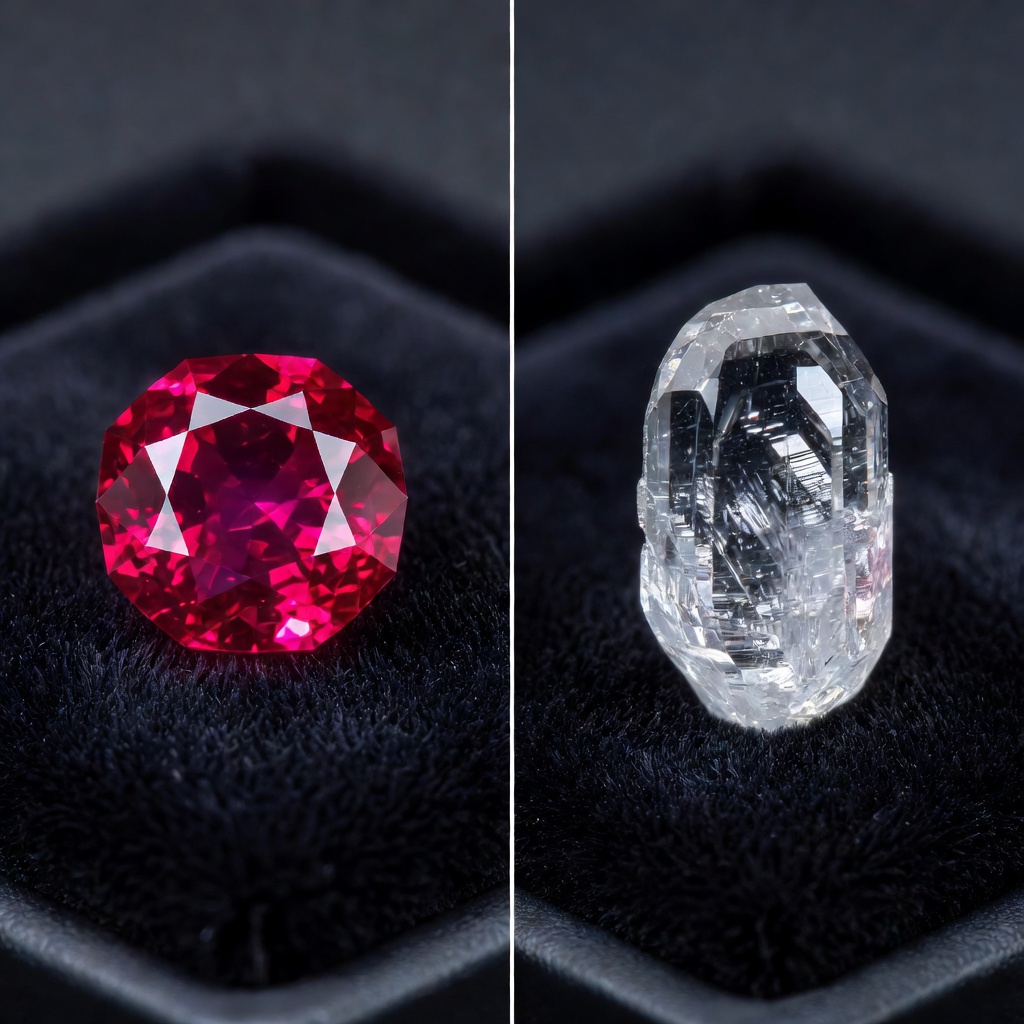
The fundamental distinction between these gemstones lies at the atomic level, where their chemical formulas and crystalline arrangements create vastly different optical and physical behaviors. Ruby constitutes aluminum oxide (Al₂O₃) with chromium impurities that produce its characteristic red color, crystallizing within the trigonal crystal system. This hexagonal structure creates directional properties that significantly impact how light interacts with the stone. In contrast, lab-created spinel comprises magnesium aluminum oxide (MgAl₂O₄), crystallizing in the isometric or cubic crystal system where all axes are equal and perpendicular to one another.
When examining corundum vs spinel under polarized light, gemologists observe dramatically different behaviors that definitively separate the two materials. Ruby exhibits anisotropic properties, meaning its optical characteristics vary depending on the viewing direction, which manifests as pleochroism and double refraction. Lab-created spinel demonstrates isotropic behavior, appearing optically identical from every angle due to its cubic symmetry. This distinction becomes crucial for identification, as jewelers can use polariscopes to instantly differentiate between the two materials, observing the anomalous double refraction in spinel versus the distinct pleochroism in ruby.
The crystal structure also influences how each gemstone accepts trace elements and develops internal characteristics during formation. Ruby's trigonal structure accommodates titanium and iron impurities, creating the silk inclusions that sometimes enhance value through asterism (the star effect). Spinel's cubic structure tends to produce more uniform color distribution and fewer natural-looking inclusions, though flux-grown varieties may contain characteristic flux inclusions resembling fingerprints. These structural differences directly impact not only identification but also the cutting and polishing processes, as ruby requires orientation consideration to maximize color while spinel can be cut without directional concerns.
Physical Properties: Hardness, Durability, and Toughness
When evaluating gemstones for jewelry applications, understanding the relationship between hardness, toughness, and stability proves essential for predicting long-term wear characteristics. On the Mohs hardness scale, ruby ranks 9, making it second only to diamond in resistance to scratching, while lab grown spinel durability registers at 8. Though numerically close, this one-point difference represents a significant gap in scratch resistance, as Mohs scale values are not linear but ordinal, with each level being substantially harder than the previous. For daily wear items such as engagement rings or bracelets that encounter frequent contact with hard surfaces, this hardness differential becomes critically important over years of use.
Toughness—the resistance to breaking, chipping, or cracking—presents another crucial differentiation between these materials. Ruby possesses excellent toughness despite its hardness, lacking cleavage planes and resisting fracture under impact, which explains its popularity for high-contact jewelry pieces. Lab-created spinel, while reasonably tough, exhibits different fracture characteristics and may be more susceptible to damage along specific planes depending on its growth method. Flame-fusion spinel particularly may contain internal strain that reduces its overall toughness compared to flux-grown varieties, making the specific manufacturing technique relevant to durability assessment.
Specific gravity measurements provide additional diagnostic differentiation, with ruby ranging between 3.99 and 4.00 compared to spinel's 3.58 to 3.61 range. While consumers cannot easily measure this property at home, it affects how stones feel when handled and how they sit in certain settings. From a practical jewelry perspective, these physical properties dictate setting choices and wear recommendations. For a daily-worn engagement ring subjected to kitchen work, gym equipment, and accidental impacts, ruby's superior hardness and toughness make it the pragmatic choice. Conversely, lab-created spinel suits earrings, pendants, or occasional-wear cocktail rings where mechanical stress remains minimal and replacement costs are manageable.
Visual Characteristics: Color, Brilliance, and Fire
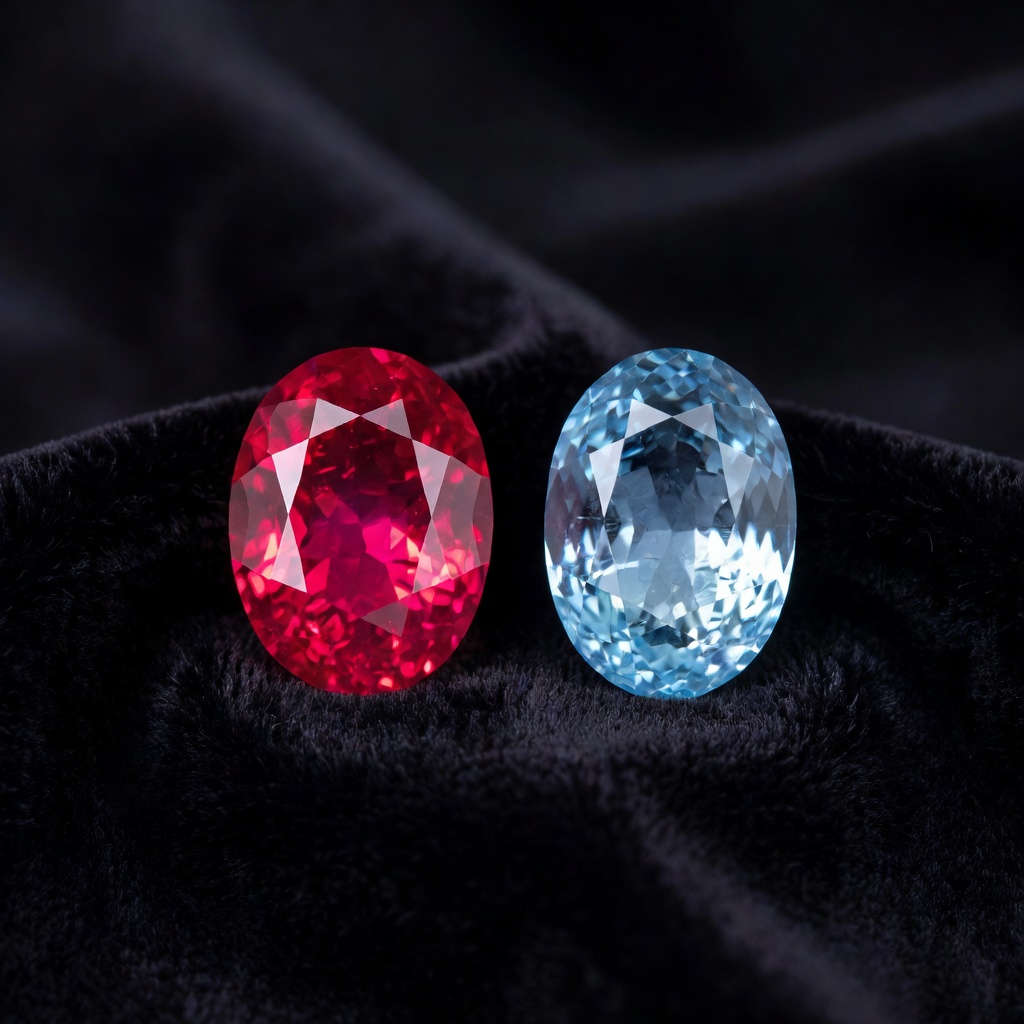
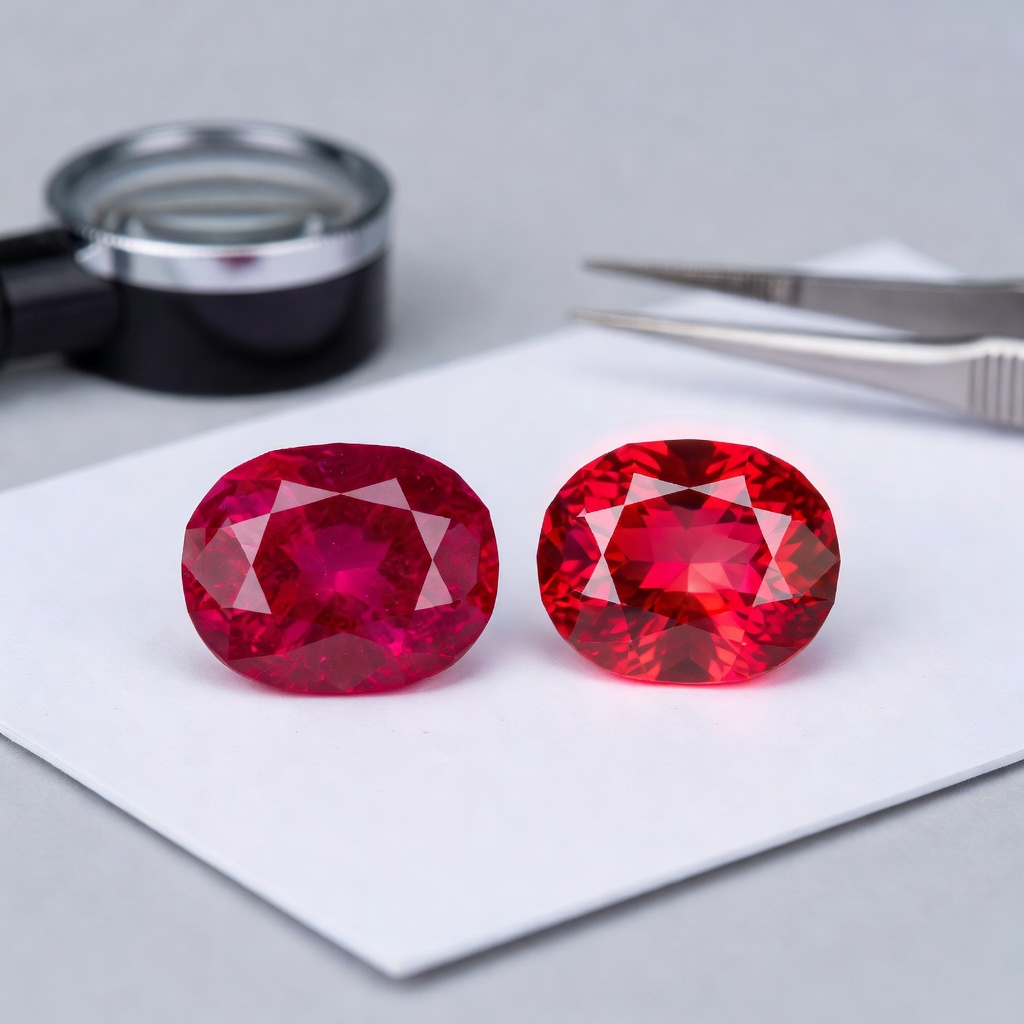
The aesthetic comparison between these red gemstones reveals subtle but significant differences that trained observers can identify, though high-quality synthetics may challenge even experienced gemologists. Natural rubies displaying the coveted "pigeon blood" red exhibit complex color nuances with subtle secondary purple or orange undertones that shift under different lighting conditions. Synthetic red spinel often presents as "too perfect"—a uniform, saturated red lacking the depth and slight irregularities that characterize natural corundum. This hyper-perfection, while visually striking to casual observers, sometimes signals artificiality to connoisseurs seeking the organic variability of natural stones.
Refractive index differences significantly impact how these gemstones interact with light, affecting their brilliance and perceived "life." Ruby's refractive index ranges from 1.76 to 1.77, while spinel measures approximately 1.72. This higher refractive index allows ruby to return more light to the viewer's eye, creating greater brilliance and that distinctive "glow" prized in fine specimens. When comparing similarly cut stones side-by-side, ruby typically appears more lively and luminous, though spinel's lower dispersion sometimes creates a softer, more velvety appearance that certain consumers prefer for vintage-inspired settings.
Pleochroism—the phenomenon where a stone shows different colors when viewed from different angles—provides a definitive visual distinguishing factor. Ruby exhibits strong pleochroism, appearing orangy-red when viewed along one crystal axis and purplish-red along another, requiring cutters to orient the stone carefully to minimize the orange component. Lab-created spinel, being isotropic, shows no pleochroism and maintains uniform color regardless of viewing angle. Additionally, ultraviolet fluorescence patterns offer diagnostic clues: natural rubies typically display strong red fluorescence under long-wave UV light due to chromium content, while synthetic spinel remains inert or shows weak fluorescence, allowing consumers with UV lights to perform basic home testing.
| Characteristic | Natural Ruby | Lab-Created Spinel |
|---|---|---|
| Chemical Composition | Aluminum Oxide (Al₂O₃) | Magnesium Aluminum Oxide (MgAl₂O₄) |
| Crystal System | Trigonal (Hexagonal) | Cubic (Isometric) |
| Mohs Hardness | 9 | 8 |
| Refractive Index | 1.76 - 1.77 | 1.72 |
| Specific Gravity | 3.99 - 4.00 | 3.58 - 3.61 |
| Pleochroism | Strong (Orange-red to Purplish-red) | None (Isotropic) |
| UV Fluorescence | Strong Red | Inert to Weak |
| Price per Carat | $1,000 - $15,000+ | $100 - $300 |
| Investment Value | High Appreciation Potential | Negligible Resale Value |
| Durability Rating | Excellent for Daily Wear | Good for Occasional Wear |
Creation Methods: Natural Formation vs Laboratory Growth
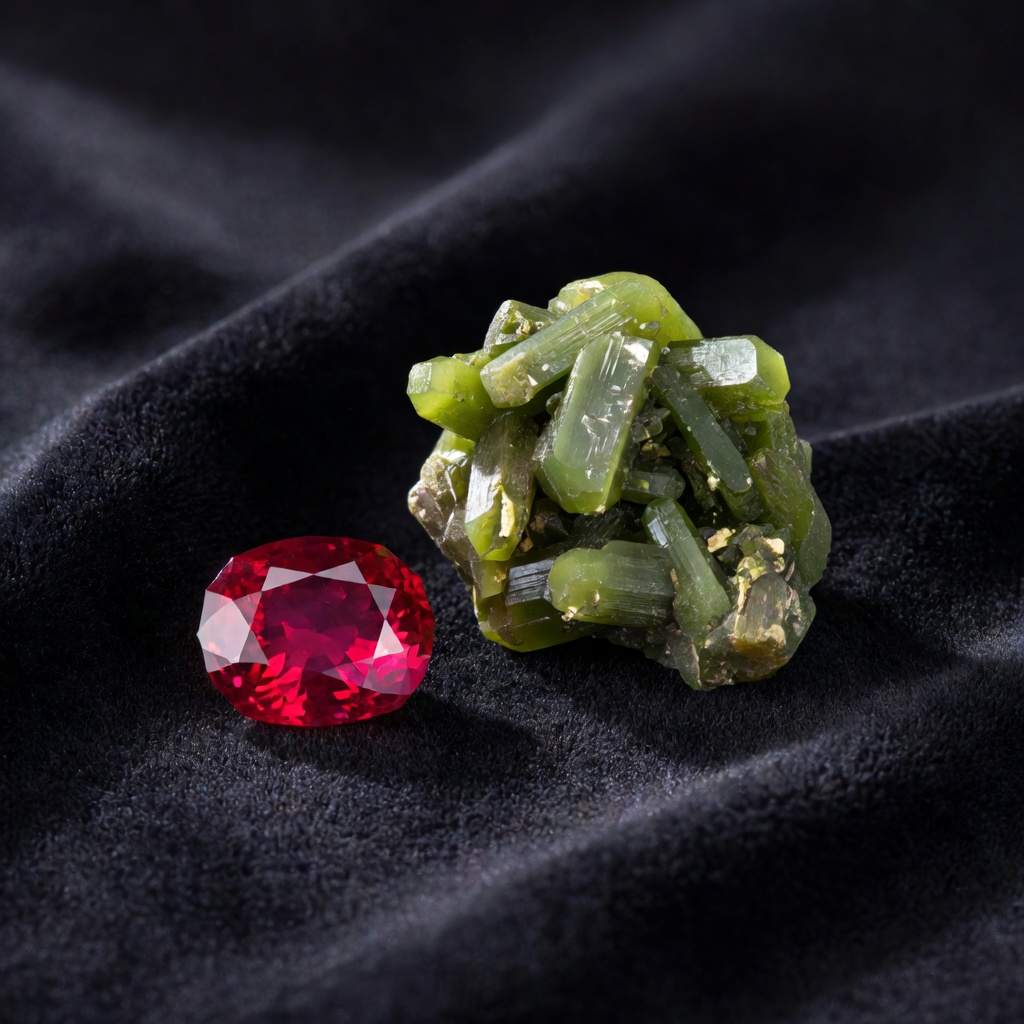
The journey from raw material to finished gemstone diverges radically between these two red varieties, with one emerging from tectonic violence over geological timescales and the other from controlled scientific processes measured in months. Natural rubies form within metamorphic marble or basalt host rocks when aluminum-rich minerals encounter chromium-bearing solutions under extreme heat and pressure, typically requiring 20 to 30 million years of geological processing. These formation environments produce characteristic inclusions—rutile needles, silk, crystal guests, and healed fractures—that serve as fingerprints of authenticity and origin determination for gemologists.
Modern flux grown spinel identification requires understanding the two primary laboratory creation methods: flux growth and flame fusion (Verneuil). The flux growth method, producing higher-quality crystals, dissolves aluminum and magnesium oxides in a molten flux at temperatures around 1,300°C, allowing crystals to grow slowly over several months. This method creates spinel crystals with physical properties nearly identical to natural spinel, sometimes containing platinum crucible inclusions or flux remnants resembling fingerprint patterns. The Verneuil process, developed in 1902, creates synthetic spinel by dripping powdered chemicals through an oxyhydrogen flame, producing boules with characteristic curved growth striae visible under magnification.
Environmental and ethical considerations increasingly influence consumer choices between these creation methods. Traditional ruby mining impacts ecosystems through land disruption, water usage, and potential labor concerns in certain regions, though ethical sourcing initiatives and traceable supply chains are improving industry standards. Laboratory production of spinel eliminates mining impacts but requires significant energy inputs for high-temperature furnaces and specialized equipment. Some manufacturers now utilize renewable energy sources for crystal growth, offering consumers a "seed to stone" traceability that parallels the hajvcd certification standards used in advanced materials manufacturing. When selecting between these options, environmentally conscious consumers must weigh the ongoing ecological costs of energy-intensive laboratory production against the one-time extraction impact of mining.
Price, Value Retention, and Investment Potential
The economic disparity between these gemstones reflects fundamental market dynamics of rarity, desirability, and collectible status rather than mere aesthetic considerations. Current market analysis reveals lab-created spinel typically commands $100 to $300 per carat depending on size and quality, while fine untreated rubies from prestigious sources like Myanmar or Mozambique range from $1,000 to over $15,000 per carat for exceptional specimens. This price differential of ten to fifty times reflects not production costs alone, but the natural ruby investment value derived from genuine scarcity and centuries of cultural significance.
Rarity factors drive long-term appreciation potential for natural rubies, particularly untreated stones from depleted mines. The Mogok Valley in Myanmar, source of the world's finest rubies, produces increasingly limited quantities, while demand from emerging markets continues growing. This supply-demand imbalance historically yields annual appreciation rates of 5-8% for high-quality natural rubies, with exceptional stones outperforming traditional investment vehicles. Conversely, ruby simulant stones like lab-created spinel possess effectively zero resale value as collectibles; their worth derives purely from decorative utility, similar to costume jewelry or fashion accessories.
Insurance and appraisal considerations further distinguish these materials for serious jewelry collectors. Professional appraisers document natural rubies with detailed origin reports, treatment disclosures, and replacement valuations that appreciate over time, requiring updated appraisals every three to five years for adequate insurance coverage. Lab-created spinel typically receives appraisals at purchase price or lower, with insurers often requiring specific riders for high-value synthetic pieces. For estate planning and generational wealth transfer, natural rubies function as portable, concentrated stores of value, while synthetic spinel represents depreciating consumer goods despite their initial beauty.
Gemological Identification Techniques
Distinguishing between these red gemstones requires increasingly sophisticated techniques as manufacturing methods improve, though several reliable tests remain accessible to consumers and professionals alike. Spectroscope analysis provides definitive identification by revealing chromium absorption lines in ruby versus cobalt absorption lines in synthetic spinel. When viewed through a spectroscope, ruby displays distinct absorption bands at 694.2 nm (the ruby line) along with additional lines in the blue and yellow regions, creating a characteristic pattern. Synthetic spinel shows entirely different spectral features, primarily strong cobalt absorption bands in the yellow and orange regions that appear as broad, dark bands rather than the fine lines seen in ruby.
Microscopic examination of internal characteristics offers the most reliable differentiation method for trained gemologists. Natural rubies typically contain rutile needle inclusions (silk), zircon crystals with halos, healed fractures resembling fingerprints, and color zoning. Flame-fusion synthetic red spinel displays diagnostic curved striae or growth lines following the curved surface of the boule, appearing like growth rings in a tree trunk but curved rather than straight. Flux-grown spinel may contain platinum platelets from the crucible or flux inclusions resembling wispy veils, distinguishing them from natural spinel which typically contains octahedral crystal inclusions or iron staining.
The Chelsea filter serves as a practical field tool for preliminary separation, though it requires careful interpretation. When viewed through this dichromatic filter, natural rubies typically appear red or pinkish due to chromium content transmission in both red and green filter segments. Synthetic blue spinel (sometimes used to simulate ruby through color manipulation) appears bright red under Chelsea filter due to cobalt content, though red synthetic spinel may show variable reactions. Professional testing laboratories utilize advanced techniques including Raman spectroscopy, X-ray fluorescence, and laser ablation inductively coupled plasma mass spectrometry (LA-ICP-MS) for definitive separation and origin determination, particularly important for high-value purchases where authentication certificates prove essential.
Jewelry Applications: Settings and Wearability
Practical jewelry design considerations must accommodate the different physical properties of these gemstones to maximize both beauty and longevity. For lab grown spinel durability concerns, protective settings become essential when using this material in rings or bracelets subjected to mechanical stress. Bezel settings that encircle the girdle with metal provide superior protection compared to prong settings, preventing edge chipping and reducing exposure to impacts. Channel settings work well for spinel accent stones, while rubies tolerate more open prong settings that maximize light exposure and display their superior brilliance.
Heat sensitivity concerns affect repair and resizing procedures for both materials, though ruby's higher thermal conductivity generally makes it more stable during jewelry work. Lab-created spinel, particularly flux-grown varieties, may experience thermal shock if subjected to rapid temperature changes during soldering or stone setting. Jewelers should always remove spinel stones before applying heat to mountings, while rubies typically remain secure during moderate heating provided they lack fillings or treatments sensitive to thermal alteration. When resetting either stone, professionals should use protective heat sinks and gradual temperature changes to prevent damage.
Metal pairings significantly impact the perceived color of these red gemstones, requiring thoughtful design coordination. Yellow and rose gold enhance the warm red tones of Burmese rubies, creating classic, romantic aesthetics favored in vintage-inspired pieces, while white metals like platinum or white gold accentuate the cooler, more perfect red of synthetic spinel, creating modern, crisp appearances. Cleaning protocols differ between the materials: ruby tolerates ultrasonic cleaning and steam cleaning provided it lacks significant fractures or lead-glass fillings, while lab-created spinel should be cleaned using mild soap and water with soft brushes to prevent potential damage to surface coatings or accumulated dirt in softer surfaces.
Pros and Cons: Making Your Final Decision
Selecting between these gemstones requires honest assessment of priorities regarding budget, durability expectations, and emotional significance. Ruby offers unmatched prestige, exceptional durability suitable for daily heirloom jewelry, and genuine investment potential that appreciates across generations. For individuals seeking engagement rings intended to last fifty years or family jewelry meant to traverse generations, ruby's Mohs hardness of 9 and excellent toughness provide security against life's inevitable impacts. The rarity and historical significance of natural ruby also carry emotional weight, connecting the wearer to centuries of royal tradition and romantic symbolism.
Conversely, ruby simulant stones like lab-created spinel present compelling advantages for specific use cases and consumer values. The affordability allows for larger carat weights and elaborate designs impossible with natural ruby budgets, while laboratory creation eliminates concerns regarding conflict mining or environmentally destructive extraction practices. Spinel's availability in flawless clarity grades appeals to perfectionists frustrated by natural ruby's typical inclusions, and its reasonable hardness suits earrings, pendants, and brooches that receive minimal mechanical stress. For fashion jewelry intended to complement specific outfits or trend-conscious pieces likely to be replaced within a decade, lab-created spinel represents intelligent resource allocation.
Ethical considerations increasingly influence this decision beyond mere environmental impact. While natural ruby mining supports artisanal mining communities in countries like Mozambique, Madagascar, and Myanmar, supply chain transparency varies significantly between sources. Laboratory-created spinel offers guaranteed conflict-free status but lacks the economic benefit to developing mining communities. Ultimately, the choice between Ruby vs Lab-Created Spinel should align with the intended wearing frequency, budget constraints, value expectations, and personal ethics of the purchaser, recognizing that neither choice is inherently superior—merely different solutions to the desire for beautiful red gemstone jewelry.
Frequently Asked Questions
Is lab-created spinel the same as a ruby?
No, lab-created spinel and ruby are chemically distinct gemstones. Ruby is corundum (aluminum oxide) with a Mohs hardness of 9, while lab-created spinel is magnesium aluminum oxide with a hardness of 8. Though both can appear red, they differ in crystal structure, optical properties, and value.
Can you tell the difference between ruby and lab-created spinel with the naked eye?
While high-quality lab-created spinel can closely mimic ruby's color, trained observers may notice differences in brilliance and fire. Ruby typically shows stronger fluorescence under UV light and exhibits pleochroism (color shifting when viewed from different angles), whereas lab spinel appears uniformly colored from all angles.
Which is more durable for daily wear, ruby or lab-created spinel?
Ruby is significantly more durable for daily wear with a Mohs hardness of 9 and excellent toughness. Lab-created spinel, while reasonably hard at 8 on the Mohs scale, is more prone to scratching and chipping over time, making ruby the superior choice for engagement rings and daily-worn jewelry.
Why is lab-created spinel so much cheaper than natural ruby?
Lab-created spinel costs less because it is manufactured in controlled environments without mining expenses, and it lacks the rarity of natural rubies. Additionally, synthetic spinel has no resale value as a collectible, whereas natural rubies, especially untreated stones, appreciate in value over time.
Does lab-created spinel have any resale or investment value?
Lab-created spinel typically has negligible resale value and should not be considered an investment. Unlike natural rubies, which can appreciate significantly, synthetic gemstones are valued primarily for their beauty rather than rarity. They are best viewed as affordable alternatives for fashion jewelry rather than assets.
Is synthetic spinel commonly used as a ruby simulant?
Yes, red synthetic spinel has been used as a ruby simulant since the early 20th century, particularly stones created by the Verneuil flame fusion process. However, modern gemological testing easily distinguishes between them using spectroscopic analysis and examination of internal growth features.
Which gemstone has better brilliance and fire, ruby or lab spinel?
Ruby typically displays superior brilliance due to its higher refractive index (1.76-1.77 compared to spinel's 1.72) and greater hardness allowing for better polish retention. However, lab-created spinel often appears more inclusion-free and can show vivid color, though with slightly less spectral fire than fine ruby.
Should I buy lab-created spinel instead of ruby for an engagement ring?
Choose lab-created spinel if budget constraints are primary and you prioritize ethical sourcing and flawless appearance. Choose ruby if you seek a durable heirloom stone with lasting value. For daily wear engagement rings, ruby's superior hardness (9 vs 8) makes it more practical despite the higher cost.