Introduction to Ruby and Lab-Created Opal
When selecting the perfect gemstone for fine jewelry, collectors and couples increasingly find themselves weighing the merits of Ruby vs Lab-Created Opal. These two stones represent opposite ends of the gemstone spectrum—one forged through immense geological pressure over millions of years, the other born from human ingenuity in controlled laboratory environments. Understanding the distinct natural ruby properties alongside the unique characteristics of synthetic silica gems helps buyers make informed decisions that align with their lifestyle, values, and aesthetic preferences.
Natural ruby stands as one of the cardinal precious gemstones, belonging to the corundum family and prized for its exceptional hardness and saturated red hues. In contrast, lab-created opal consists of synthetic silica with an identical chemical composition to its natural counterpart, displaying the mesmerizing play-of-color that has captivated jewelry enthusiasts for centuries. While these stones serve different purposes in jewelry design, they frequently compete for attention in pendant, ring, and earring selections due to their vibrant color presentations and varying price accessibility.
The decision between these gemstones ultimately depends on several critical factors including daily wear requirements, maintenance willingness, budget constraints, and ethical sourcing priorities. Whether you seek an heirloom piece capable of withstanding generations of daily wear or an affordable artistic statement for special occasions, understanding the fundamental differences between corundum and silica-based gems ensures your investment brings lasting satisfaction.
Formation and Origins: Natural vs Laboratory
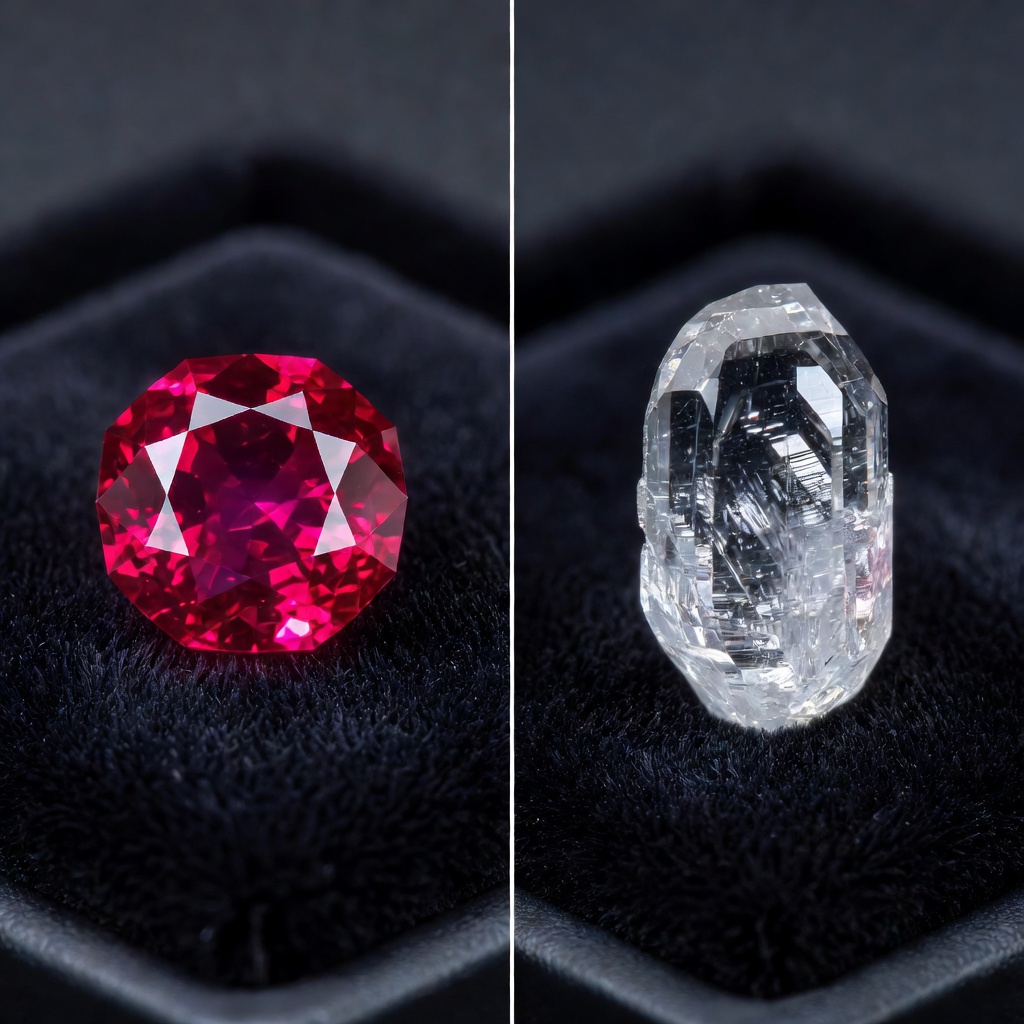
The journey from raw material to finished gemstone reveals dramatic differences between these two beautiful options. Natural rubies form deep within the Earth's crust under extreme metamorphic conditions, requiring high-pressure, high-temperature environments typically found in regions like Myanmar, Mozambique, and Thailand. These aluminum oxide crystals develop within marble or basalt host rocks over millions of years, incorporating trace amounts of chromium that create their signature red coloration while excluding iron to prevent color dulling.
Lab-created opal emerges through sophisticated technological processes that replicate natural opal formation in compressed timeframes. Manufacturers utilize sedimentary layering techniques, suspending microscopic silica spheres in controlled solutions that gradually deposit into stable formations over weeks or months rather than geological eras. This process simulates the natural conditions where silica-rich water percolates through rock crevices, evaporating to leave behind the hydrated silica structure responsible for opalescence.
The environmental conditions required for each stone highlight their fundamental structural differences. Rubies demand intense heat exceeding 800 degrees Celsius combined with significant tectonic pressure to align corundum's crystalline lattice properly. Conversely, lab opal production requires precise humidity control and temperature stability to prevent premature dehydration while allowing silica spheres to settle into the ordered arrays necessary for light diffraction. This distinction between corundum's rigid crystalline structure and opal's amorphous hydrated silica composition directly influences their durability and care requirements.
Physical Properties and Durability Comparison
Understanding the gemstone durability comparison between these materials proves essential for selecting appropriate jewelry applications. Ruby ranks 9 on the Mohs hardness scale, making it second only to diamond in terms of scratch resistance among popular gemstones. This exceptional hardness stems from corundum's tightly packed hexagonal crystal structure, which creates strong atomic bonds resistant to abrasion and surface damage during daily activities.
Lab-created opal presents a more moderate durability profile, ranking between 5.5 and 6.5 on the Mohs scale. While harder than materials like pearl or turquoise, synthetic opal remains susceptible to scratching from common household dust, which often contains silica particles at similar hardness levels. Beyond surface hardness, toughness factors reveal significant disparities—ruby exhibits excellent resistance to chipping and breaking due to its crystalline integrity, while opal's amorphous structure contains up to 20% water content, creating internal stress points vulnerable to cracking or crazing under impact.
Thermal stability represents another critical differentiation in the corundum vs silica debate. Rubies withstand extreme temperature fluctuations without damage, making them suitable for steam cleaning and professional jewelry repair involving heat application. Lab-created opal, however, demonstrates significant sensitivity to thermal shock and dehydration. Sudden temperature changes can cause the hydrated silica structure to contract or expand unevenly, resulting in cracks that permanently damage the stone's appearance. Additionally, prolonged exposure to dry environments or direct sunlight can cause opal to lose water content, leading to crazing—a network of fine surface cracks that diminish both beauty and value.
| Characteristic | Natural Ruby | Lab-Created Opal |
|---|---|---|
| Mohs Hardness | 9 (Excellent) | 5.5-6.5 (Moderate) |
| Toughness | High resistance to chipping | Vulnerable to crazing and cracking |
| Price Range (Per Carat) | $1,000 - $15,000+ | $20 - $200 |
| Best Jewelry Applications | Engagement rings, bracelets, daily wear | Earrings, pendants, occasional rings |
| Maintenance Level | Low (ultrasonic safe) | High (humidity control required) |
| Ethical Sourcing | Variable (mining dependent) | Excellent (conflict-free, sustainable) |
| Visual Appeal | Deep red, adamantine luster | Play-of-color, iridescent flashes |
| Investment Potential | High (appreciating asset) | Low (minimal resale value) |
| Chemical Composition | Aluminum oxide (Corundum) | Hydrated silicon dioxide |
Visual Characteristics and Optical Properties
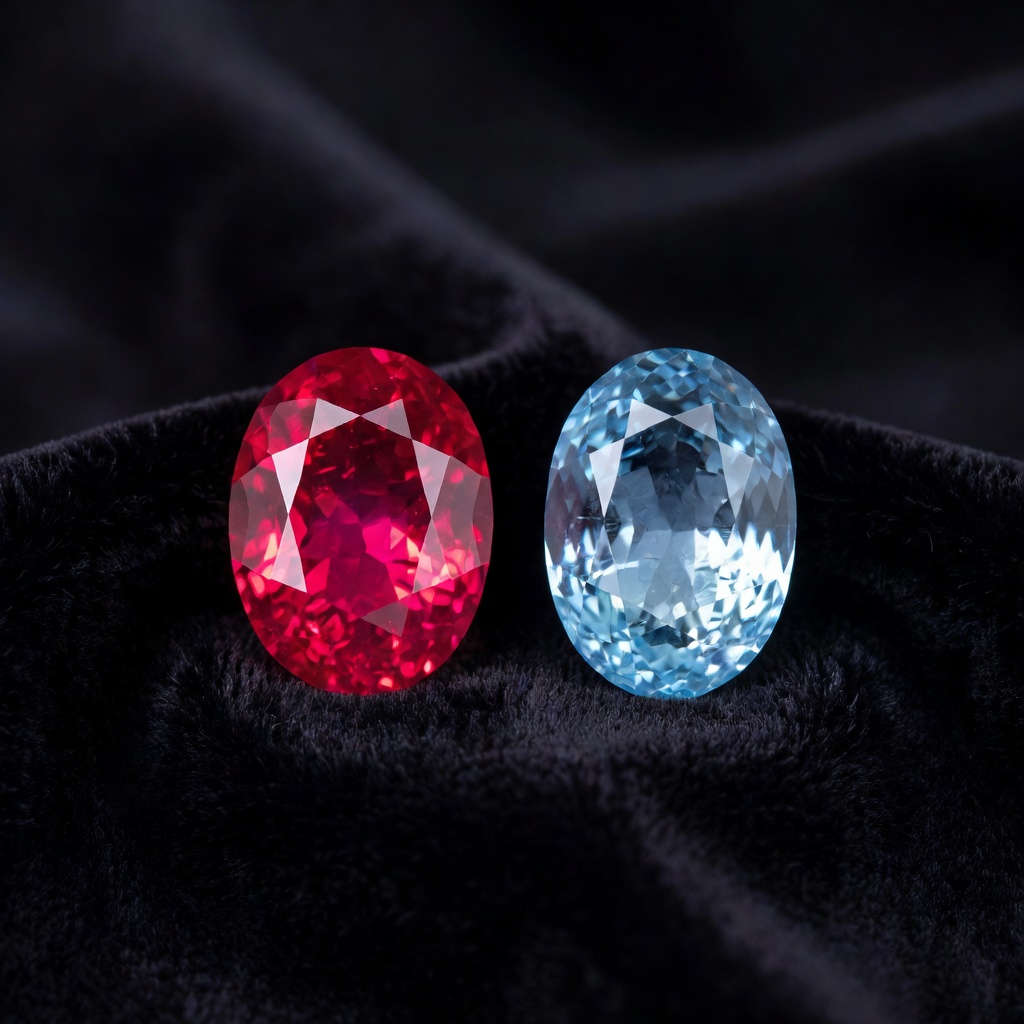
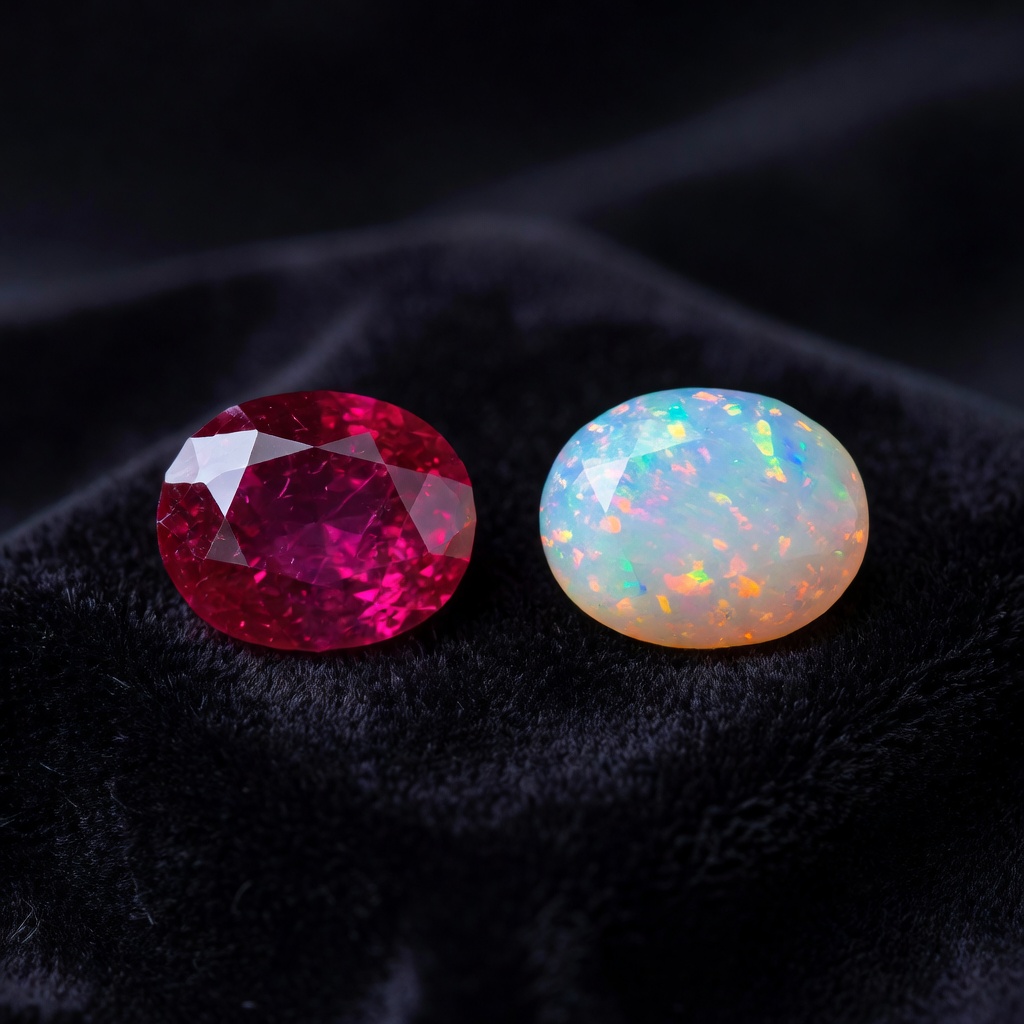
The aesthetic distinction between these gemstones offers buyers distinctly different visual experiences suited to varying personal styles. Premium rubies display the coveted "pigeon blood" red—a vivid, saturated crimson with subtle blue undertones that seems to glow from within. This color results from chromium absorption spectra interacting with light, while high-quality stones exhibit strong fluorescence under UV light, appearing to burn with an inner fire in sunlight. The adamantine to vitreous luster of polished ruby creates sharp, mirror-like reflections that emphasize precise faceting and geometric brilliance.
Synthetic opal appearance centers on the phenomenon of play-of-color, or opalescence, created through light diffraction rather than absorption. As light enters the stone, it encounters the ordered arrays of silica spheres within the hydrated silica structure, breaking into spectral colors that shift and flash with movement. High-quality lab-created opal displays vibrant reds, blues, greens, and oranges dancing across the surface, sometimes arranged in distinct patterns resembling harlequin, pinfire, or flashfire configurations depending on the manufacturing technique employed.
Transparency ranges and optimal cutting styles further differentiate these materials. Rubies typically appear transparent to translucent, with clarity grades affecting value significantly; inclusions visible to the naked eye can reduce prices by 50% or more. Gem cutters favor faceted cuts—round brilliants, ovals, and cushions—to maximize light return and color saturation in ruby. Conversely, lab-created opal generally appears opaque to translucent, with cabochon cuts (domed, unfaceted surfaces) proving optimal for displaying the full spectrum of color play. Flat faceting tends to diminish opal's optical effects, while high-domed cabochons allow maximum light interaction with the silica sphere layers.
Pricing, Value, and Investment Potential
The economic comparison between these gemstones reveals stark contrasts in accessibility and long-term value retention. Natural ruby pricing follows complex valuation criteria including geographic origin, with Burmese (Myanmar) rubies commanding premium prices due to their historically superior color and relative scarcity compared to African sources from Mozambique or Madagascar. Treatment status significantly impacts cost—untreated natural rubies can fetch 300-400% more than heat-treated equivalents of similar appearance, while fracture-filled rubies occupy lower market tiers. Carat weight premiums accelerate dramatically for rubies exceeding one carat, with three-carat fine quality stones potentially costing $30,000-$50,000 per carat.
Lab-created opal price points remain remarkably accessible, typically ranging between $20 to $200 per carat depending on color intensity, pattern complexity, and manufacturing quality. Unlike natural opal, which commands prices rivaling precious gems for premium black opal varieties, synthetic opal benefits from unlimited supply and efficient production processes. This affordability allows jewelry designers to create substantial statement pieces—large pendants or cocktail rings—without the prohibitive costs associated with equivalent-sized natural gemstones or rubies.
Investment potential diverges significantly between these materials. Fine natural rubies historically appreciate in value, with untreated Burmese stones from reputable mines representing legitimate alternative investments comparable to colored diamonds. They maintain robust secondary markets through auction houses and estate sales. Lab-created opal, while beautiful, carries minimal resale value due to its reproducible nature and unlimited supply. Buyers should approach synthetic opal as a consumable luxury or fashion purchase rather than a store of value, whereas quality rubies can serve as generational wealth transfers. Full disclosure regarding treatments remains essential—reputable jewelers must disclose heat treatment in rubies, while lab-created opal's origin should be clearly stated to prevent confusion with natural material.
Jewelry Applications and Setting Recommendations
Selecting appropriate jewelry designs requires matching gemstone durability to intended use cases and lifestyle factors. Ruby's exceptional hardness and toughness make it ideal for high-impact jewelry including engagement rings, tennis bracelets, and daily wear pieces subject to frequent contact with hard surfaces. Its resistance to scratching ensures that anniversary rings or right-hand rings maintain their polish through decades of continuous wear, while the stone's stability allows for intricate prong settings that maximize light exposure without compromising security.
Synthetic opal jewelry demands more protective design considerations due to its moderate hardness and sensitivity to environmental factors. Earrings and pendants represent optimal applications, as these pieces experience minimal impact and remain protected from the knocks and abrasions common to rings and bracelets. When set in rings, lab-created opal requires protective bezel settings or recessed mountings that shield the girdle and crown from direct contact. Occasional wear designs featuring opal suit cocktail rings or special-event pieces rather than daily drivers.
Metal pairing strategies enhance each gemstone's unique visual properties. Yellow gold complements ruby's warm red tones, creating classic, timeless aesthetics that reference historical royal jewelry traditions. Rose gold offers a contemporary alternative that softens ruby's intensity while harmonizing with its color palette. For lab-created opal, white metals—platinum, white gold, or sterling silver—provide neutral backgrounds that allow the stone's play-of-color to dominate visual attention without color competition. Setting requirements differ significantly: ruby thrives in open prong settings that allow light penetration from multiple angles, while opal benefits from closed-back settings that help maintain humidity levels and protect against temperature fluctuations.
Care, Cleaning, and Maintenance Requirements
Proper maintenance protocols ensure longevity and sustained beauty for both gemstone types, though how to care for opal differs dramatically from ruby maintenance routines. Ruby's corundum structure permits aggressive cleaning methods including ultrasonic cleaners and steam cleaning, making it ideal for owners seeking low-maintenance luxury. The stone resists household chemicals, perfumes, and lotions, requiring only occasional brushing with mild soap and warm water to remove accumulated oils and restore brilliance. Annual professional inspections focus primarily on checking prong security and setting integrity rather than stone condition.
Lab-created opal requires vigilant, specialized care to prevent dehydration and physical damage. Owners must avoid water immersion entirely—bathing, swimming, or dishwashing while wearing opal jewelry risks water penetration that can destabilize the silica structure or cause temporary color dulling. Cleaning should involve only a barely damp soft cloth gently wiped across the surface, followed by immediate drying. Storage necessitates humidity control; storing opal in dry environments or exposed to direct heating vents can cause the stone to lose water content and develop cracks. Many collectors store opal jewelry with small moisture sources or in sealed bags with damp cotton to maintain hydration.
Temperature precautions prove critical for opal preservation. Removing opal jewelry before cooking, sunbathing, or entering saunas prevents thermal shock that can cause immediate cracking. In contrast, ruby withstands temperature extremes from freezing winters to hot summer days without damage. Professional maintenance for opal should occur bi-annually to assess for early signs of crazing or dehydration, while ruby settings require only annual checks unless subjected to significant impact. Understanding these distinct care requirements helps buyers realistically assess whether they can commit to opal's maintenance demands or would better suit ruby's durability.
Ethical Considerations and Environmental Impact
Modern consumers increasingly prioritize ethical gemstone sourcing when making luxury purchases, revealing significant distinctions between mined rubies and laboratory-grown opals. Natural ruby mining, particularly in Myanmar (Burma) and Madagascar, raises documented concerns regarding environmental disruption including deforestation, water table contamination from processing chemicals, and habitat destruction. Labor practices in some mining regions involve hazardous working conditions, child labor in artisanal mining sectors, and potential funding of conflict activities—though the Kimberley Process and related initiatives work to address these issues within the colored gemstone trade.
Lab-created opal offers inherently sustainable advantages through minimal land use and controlled manufacturing environments. Production occurs in laboratory settings requiring no mining excavation, eliminating the landscape scarring and ecosystem disruption associated with extracting natural gemstones. The conflict-free guarantee of synthetic opal appeals to ethically conscious consumers seeking transparency in their supply chains. Additionally, lab production eliminates the dangerous working conditions often found in artisanal mining operations, ensuring worker safety and fair labor practices.
Certification options provide pathways for responsible ruby purchasing, including Fair Trade gemstones sourced from certified ethical mines in countries like Greenland or specific Tanzanian operations. These stones command premium prices but offer traceability and community benefit guarantees. Carbon footprint analysis presents nuanced comparisons—while ruby mining and international shipping generate significant transportation emissions and mechanical energy use, laboratory production of synthetic opal requires substantial electrical energy for maintaining precise temperature and humidity controls over extended growth periods. However, centralized production facilities can utilize renewable energy sources, potentially reducing overall carbon impact compared to decentralized mining operations in remote regions.
Final Decision: Which Gemstone Should You Choose?
Choosing between ruby and opal ultimately requires honest assessment of lifestyle realities, aesthetic preferences, and value priorities. Active individuals with hands-on careers or hobbies involving physical contact should gravitate toward ruby for engagement rings or daily wear pieces. The stone's resilience against impact, chemicals, and temperature variations accommodates gardeners, athletes, healthcare workers, and parents without constant worry about damage. Conversely, those seeking artistic statement pieces for gala events, dinner parties, or professional settings may find lab-created opal's iridescent beauty perfectly suited for occasional wear earrings or pendants that remain protected during daily activities.
Budget analysis extends beyond initial purchase price to consider long-term value and replacement costs. Investing in a heirloom-quality ruby represents acquisition of a portable store of value that appreciates over decades, potentially serving as emergency collateral or estate assets. The upfront cost, while substantial, amortizes over generations of wear. Lab-created opal offers affordable luxury accessible to younger buyers or those building jewelry collections, allowing experimentation with bold designs without financial strain, though buyers should anticipate potential replacement costs as the material shows wear over ten to fifteen years.
Aesthetic preferences range from classical to contemporary design sensibilities. Ruby embodies timeless elegance and romantic symbolism—associations with passion, protection, and vitality that have persisted across cultures from ancient India to medieval Europe. Its deep red commands attention through saturated color rather than optical effects. Lab-created opal appeals to modern tastes favoring iridescence, color-shifting phenomena, and artistic uniqueness. Its connection to creativity, inspiration, and spontaneity resonates with artistic personalities. Whether selecting ruby's enduring crystalline fire or opal's dancing color play, matching the gemstone to your daily reality ensures decades of satisfying wear.
Frequently Asked Questions
Is lab-created opal considered a real gemstone?
Yes, lab-created opal is chemically, physically, and optically identical to natural opal. It possesses the same silica sphere structure that creates play-of-color, but is formed in controlled laboratory conditions rather than underground over millions of years. The primary difference is origin and rarity, not composition.
Which gemstone is harder, ruby or lab-created opal?
Ruby is significantly harder, ranking 9 on the Mohs hardness scale compared to lab-created opal's 5.5-6.5. This makes ruby highly resistant to scratching and suitable for daily wear, while lab opal requires protective settings and careful handling to prevent surface damage and chipping.
Can lab-created opal be worn every day like ruby?
Lab-created opal is not recommended for daily wear in rings or bracelets due to its moderate hardness and sensitivity to temperature changes and dehydration. Ruby, however, is ideal for everyday jewelry including engagement rings due to its exceptional durability and toughness.
Why is natural ruby so much more expensive than lab-created opal?
Natural ruby commands higher prices due to extreme rarity, mining costs, and the geological time required for formation. Lab-created opal benefits from efficient manufacturing processes, unlimited supply, and lower production costs, making it an affordable alternative despite its beauty.
Does lab-created opal look exactly like natural opal?
To the naked eye, high-quality lab-created opal displays the same vibrant play-of-color as natural opal. However, under magnification, lab opal often shows a more regular, columnar pattern of color patches compared to natural opal's random flashes. Both are beautiful, but trained gemologists can distinguish them.
Is ruby or lab-created opal better for an engagement ring?
Ruby is the superior choice for engagement rings due to its hardness (9 Mohs), resistance to scratching, and ability to withstand daily wear for decades. Lab-created opal is better suited for pendants or earrings in bridal jewelry, or for occasional wear rings with protective bezel settings.
Can you shower or swim with lab-created opal jewelry?
No, you should avoid exposing lab-created opal to water, soap, and sudden temperature changes. Unlike ruby, opal contains water within its structure and can absorb chemicals or experience thermal shock that causes cracking (crazing). Remove opal jewelry before bathing, swimming, or washing hands.
How long does lab-created opal last compared to ruby?
With proper care, lab-created opal can last many years but may eventually show wear, surface scratching, or drying. Ruby is extremely durable and can last centuries or even millennia with minimal care, often becoming heirloom pieces passed through generations while maintaining their brilliance.