Understanding Two Distinct Gemstone Worlds
When selecting a centerpiece for fine jewelry, discerning buyers increasingly find themselves weighing the timeless allure of a Natural Ruby Gemstone against the modern brilliance of laboratory-created alternatives. Rubies have reigned as the "King of Gems" for millennia, serving as the July birthstone and carrying profound cultural significance across civilizations from ancient India to Victorian England. Meanwhile, lab-created moissanite has emerged as a revolutionary sustainable option, originally discovered in meteorites but now grown in controlled environments to offer exceptional durability and fire that rivals even diamonds.
The comparison between Ruby vs Lab-Created Moissanite might seem unconventional at first glance, as these stones occupy different categories within the jewelry market. However, with the advent of treated red moissanite entering the market, consumers now face genuine decisions when seeking red-hued centerpieces for engagement rings, anniversary bands, or statement jewelry. Understanding the fundamental differences in composition, optical performance, and long-term value helps ensure your selection aligns with both your aesthetic preferences and practical lifestyle requirements.
Origins and Composition: Earth vs Laboratory
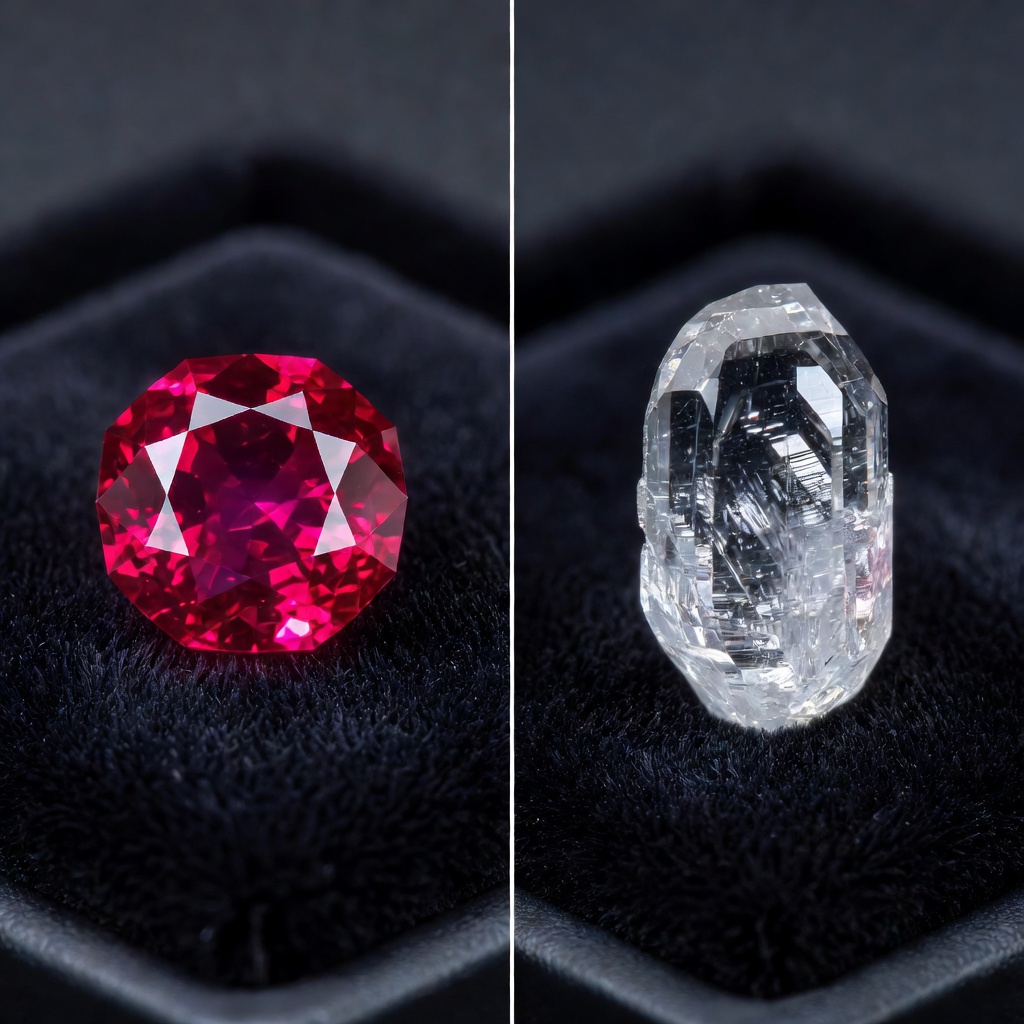
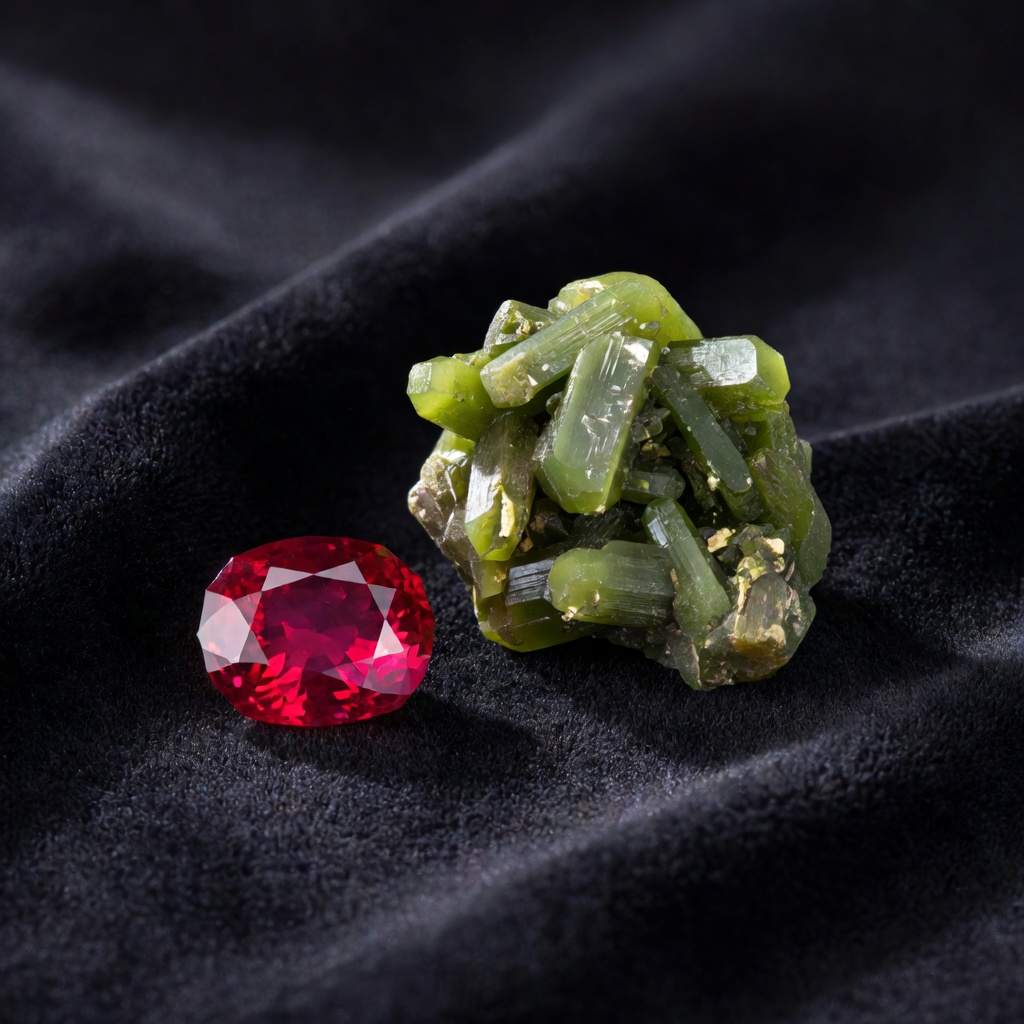
The journey from raw material to finished gemstone reveals the stark contrast between these two beautiful yet entirely distinct crystalline structures. Natural rubies form deep within the earth's crust as varieties of corundum, composed of aluminum oxide (Al₂O₃) that derives its signature crimson color from trace amounts of chromium replacing aluminum atoms in the crystal lattice. These precious stones develop under intense heat and pressure within metamorphic rocks, primarily extracted from historic mines in Myanmar (Burma), Thailand, Mozambique, and Madagascar, where geological conditions remained stable for millions of years.
In contrast, Corundum vs Silicon Carbide represents a fundamental dichotomy in material science that directly impacts visual characteristics. Lab-created moissanite consists of silicon carbide (SiC), a compound first identified in 1893 by Nobel Prize-winning chemist Henri Moissan within a meteor crater in Arizona. Modern manufacturing employs either the Lely process or chemical vapor deposition (CVD) techniques to grow these crystals in high-temperature laboratory environments, creating gem-quality stones in approximately two to three months rather than the millions of years required for natural ruby formation.
Crystalline Structure Implications
The hexagonal crystal system of ruby allows for specific growth patterns that gemologists recognize as "silk" inclusions, while moissanite's structure produces double refraction, causing light to split into two rays as it passes through the stone. This optical property means that when viewing red moissanite through a loupe, you may notice doubled facet lines, whereas natural rubies display singly refractive characteristics similar to diamonds. These structural differences fundamentally determine how each gem interacts with light, affecting everything from brilliance to apparent depth of color.
Visual Characteristics: Color Depth vs Fire and Brilliance
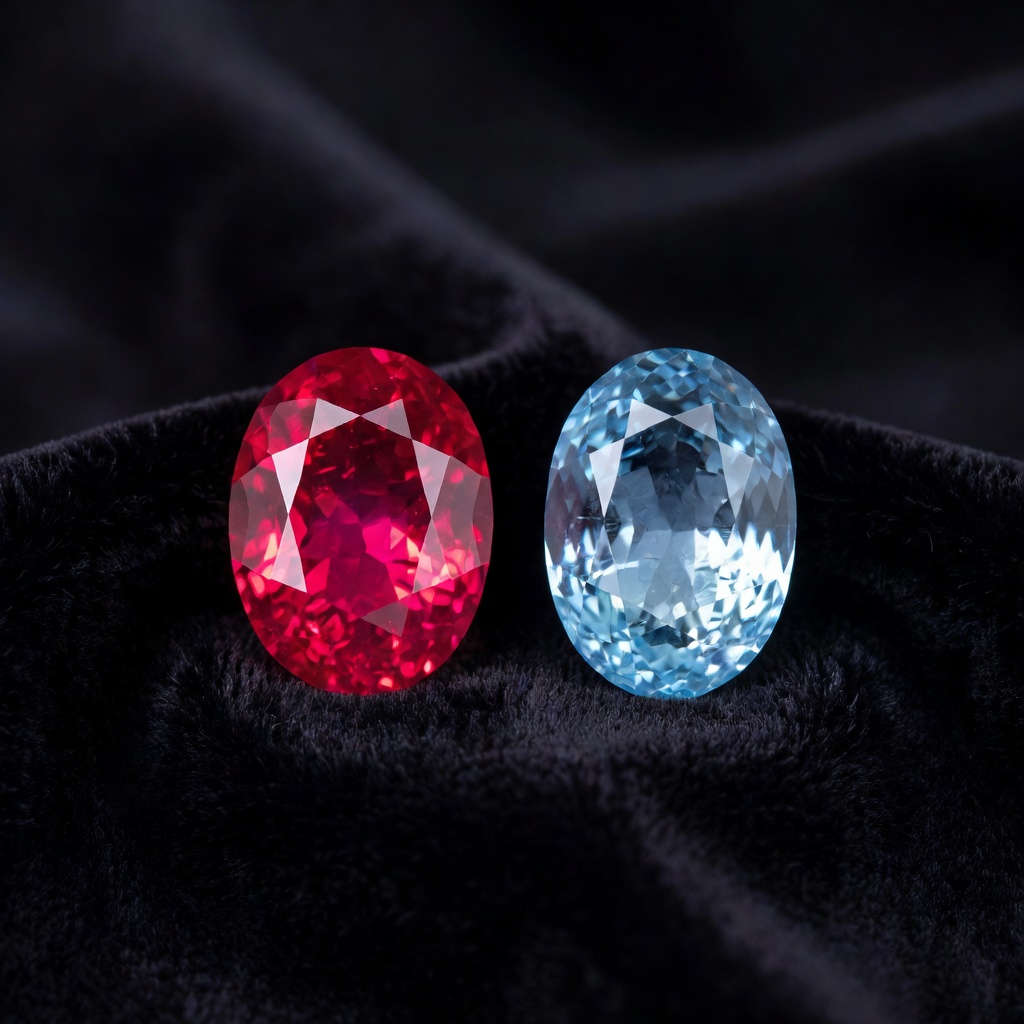
The aesthetic experience of wearing these gemstones diverges dramatically based on their inherent optical properties. Exceptional natural rubies exhibit the coveted "pigeon blood" red hue, a pure, vivid red with medium to medium-dark tone and vivid saturation that seems to glow from within the stone. This color results from chromium absorption spectra that transmit red light while absorbing other wavelengths, creating a depth and intensity that connoisseurs prize above all other red gemstones. Natural rubies also display characteristic inclusions, often described as "silk," which can enhance the stone's appearance by scattering light softly across its surface, though excessive inclusions may diminish transparency.
Conversely, even a Red Moissanite Stone exhibits optical performance characteristics that prioritize brilliance over color saturation. Moissanite possesses a refractive index of 2.65-2.69, significantly higher than ruby's 1.76-1.77, resulting in more intense sparkle and return of light to the eye. More notably, moissanite displays dispersion ratings of 0.104, nearly triple that of diamond and exponentially higher than ruby's minimal fire. This means red moissanite produces rainbow flashes of color when moved under light sources, creating a disco-ball effect that differs substantially from ruby's deep, velvety glow. While treated red moissanite can simulate ruby color, it cannot replicate the subtle internal characteristics and color permanence of natural chromium-bearing corundum.
Practical Identification Tips
When examining stones under natural daylight, hold the gem at arm's length and observe how it returns light. A high-quality ruby will show even color distribution with potential subtle zoning, while maintaining a dignified, steady red appearance. Red moissanite will display more dramatic scintillation with colorful flashes that change rapidly as you move the stone. For engagement ring purposes, consider whether you prefer the classic, sophisticated presence of ruby or the maximum light performance and sparkle characteristic of moissanite.
Durability and Hardness: Mohs Scale Reality Check
Jewelry intended for daily wear demands careful consideration of physical durability beyond mere beauty. The Gemstone Hardness Comparison between these materials reveals important distinctions for long-term wearability. Natural rubies rank 9 on the Mohs hardness scale, making them extremely resistant to scratching from everyday encounters with dust particles, which typically contain quartz (hardness 7). However, rubies possess distinct cleavage planes and potential parting along twinning planes, meaning that while they resist surface abrasion excellently, they can fracture under sharp impact if struck at specific angles, particularly along girdle edges or pointed corners.
Lab-Grown Moissanite Durability actually exceeds that of ruby in several crucial aspects. Scoring 9.25 on the Mohs scale, moissanite resists scratching even better than ruby while simultaneously exhibiting superior toughness—the resistance to chipping, cracking, and breaking. Moissanite lacks cleavage planes entirely, meaning it has no preferred direction of fracture and can withstand accidental impacts that might damage more brittle gemstones. This structural integrity makes moissanite particularly suitable for active individuals who work with their hands or engage in sports, whereas ruby jewelry often requires protective settings and more mindful wearing habits.
Setting Considerations for Protection
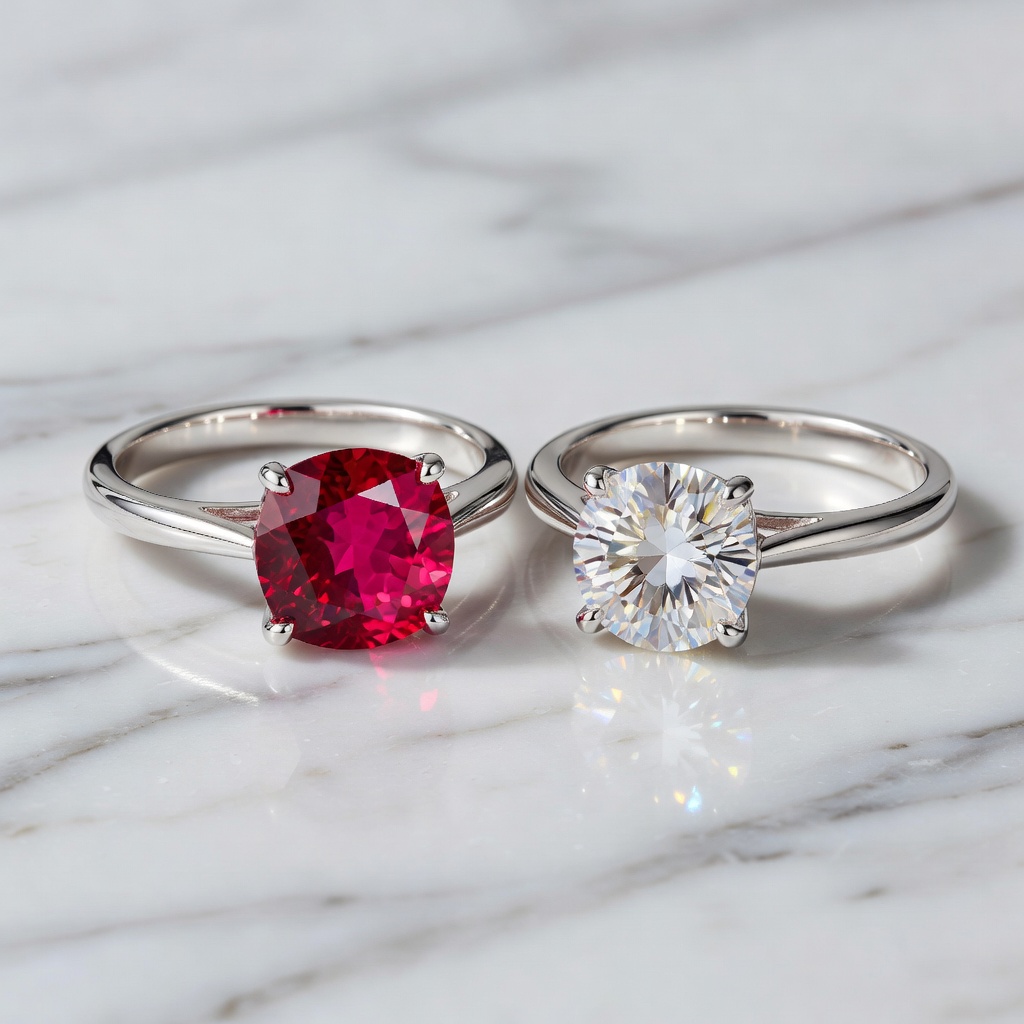
Jewelry designers frequently recommend bezel settings or full halo designs for ruby centerpieces to protect vulnerable girdle edges from direct impact. For example, a vintage-inspired ruby engagement ring benefits from milgrain-edged bezels that wrap the stone's circumference. Moissanite offers greater versatility, accommodating delicate four-prong settings that maximize light exposure without compromising security, making it ideal for modern solitaire designs where minimal metalwork showcases the stone's brilliance.
Price and Investment Value: Luxury vs Accessibility
The financial implications of selecting between these gemstones extend far beyond the initial purchase price into long-term value retention and heirloom potential. Precious Gemstone Value for natural rubies follows complex market dynamics based on origin, color grading, and treatment history. Fine-quality Burmese rubies displaying the legendary pigeon blood color can command prices exceeding $100,000 per carat at auction, while even commercial-quality natural rubies typically range from $1,000 to $10,000 per carat depending on size and clarity. These stones often appreciate over time, particularly untreated specimens accompanied by certification from respected laboratories like GIA or SSEF, making them legitimate alternative investments alongside fine art and rare wines.
Lab-created moissanite operates within an entirely different economic paradigm, offering accessibility without exclusivity. Currently priced between $300 and $600 per carat regardless of color treatment, moissanite provides size and visual impact at roughly one-tenth the cost of comparable natural rubies. However, this affordability comes with minimal resale value; synthetic gemstones lack the rarity factor that drives secondary markets. While a natural ruby purchased today might appreciate for your grandchildren, moissanite represents a consumption expenditure rather than a store of value, similar to purchasing a luxury automobile that depreciates upon leaving the showroom.
Budget Allocation Strategies
For couples allocating $5,000 toward an engagement ring, choosing moissanite allows investment in elaborate platinum settings or accent diamonds while still obtaining a substantial two-carat center stone. Conversely, the same budget might secure a modest half-carat natural ruby requiring simpler mounting, prioritizing the stone's intrinsic rarity over setting complexity. Consider whether your jewelry purchase serves as a financial investment, a symbolic gesture, or a fashion statement when evaluating these divergent value propositions.
Jewelry Applications: Engagement Rings and Beyond
The intended use case significantly influences which gemstone proves more appropriate for specific jewelry designs. Ruby vs Lab-Created Moissanite considerations vary dramatically between engagement rings, anniversary gifts, and fashion jewelry. Natural rubies traditionally dominate anniversary jewelry, specifically celebrating 15th and 40th wedding milestones, and excel in vintage-inspired settings featuring intricate filigree work and halo designs. Their rich red color complements yellow and rose gold beautifully, creating warm, romantic aesthetics that reference Victorian and Art Deco periods. However, ruby's potential brittleness makes it less ideal for solitaire engagement rings exposed to daily kitchen activities, gym equipment, or outdoor adventures.
Moissanite has revolutionized the bridal jewelry sector specifically because its Lab-Grown Moissanite Durability accommodates modern lifestyles. Contemporary couples increasingly select moissanite for everyday wear engagement rings, appreciating its resistance to the abrasion that gradually dulls softer stones. The gem's brilliance performs exceptionally in minimalist settings where clean lines and maximum light exposure create striking modern silhouettes. Additionally, because moissanite costs significantly less per carat, designers can create elaborate three-stone arrangements or expansive eternity bands without budgetary constraints that would prohibit such designs using natural rubies.
Case Study: Active Lifestyle Adaptations
Consider Sarah, a rock climbing instructor who initially chose a natural ruby engagement ring for its romantic symbolism. After experiencing two chip repairs within eighteen months, she switched to a bezel-set moissanite alternative that survived daily belaying, route setting, and equipment handling without damage. Conversely, Margaret, a museum curator, wears her heirloom Burmese ruby exclusively to gallery openings and formal dinners, where the stone's historical significance and rarity generate conversation while remaining protected from physical stress.
Care and Maintenance Requirements
Long-term ownership experiences differ substantially based on each gemstone's chemical stability and surface properties. Natural rubies require nuanced care protocols depending on treatment history. Untreated or heat-only treated rubies generally tolerate ultrasonic cleaning and steam cleaning, though sudden temperature changes can cause thermal shock in stones with significant inclusions. Fracture-filled or lead-glass filled rubies demand gentle cleaning with warm soapy water and soft brushes only, as harsh chemicals or ultrasonic vibrations may damage filling materials. Owners should also protect rubies from prolonged intense sunlight exposure, as some treated stones may experience slight color fading over decades of direct UV exposure.
Moissanite presents a remarkably low-maintenance ownership experience due to its hydrophobic surface properties that resist oil and dirt accumulation better than diamond or ruby. Unlike diamonds that attract grease and require frequent cleaning to maintain brilliance, moissanite stays cleaner longer between maintenance sessions. When cleaning becomes necessary, standard jewelry cleaner, ultrasonic devices, or simple soap and water restore full brilliance without risk of damage. This stability extends to color permanence; unlike some treated red gemstones that may fade, laboratory-created moissanite maintains its color indefinitely regardless of sun exposure or chemical contact.
Professional Maintenance Schedules
Ruby owners should schedule professional inspections every six months to check for loose prongs or developing chips, particularly in rings worn regularly. Consider removing ruby jewelry before applying lotions, perfumes, or household cleaners that might accumulate in setting crevices. Moissanite wearers can maintain annual inspection schedules similar to diamond owners, though the stone's toughness reduces the urgency of these checkups. For both gemstones, storing pieces in individual soft pouches prevents scratches from contact with other jewelry.
Symbolism, Meaning, and Ethical Considerations
Beyond physical properties, the metaphysical associations and ethical implications of each stone resonate differently with individual value systems. The Natural Ruby Gemstone carries millennia of cultural weight, associated with passion, protection, vitality, and undying love across Hindu, Burmese, and European traditions. Ancient warriors embedded rubies into their skin believing the stones granted invincibility in battle, while medieval Europeans associated rubies with prophecy and wisdom. As the July birthstone, rubies connect wearers to specific astrological energies and seasonal cycles, making them deeply personal for summer-born individuals.
Moissanite represents twenty-first century values of innovation, environmental consciousness, and ethical transparency. Created through sustainable laboratory processes that eliminate mining entirely, moissanite offers guaranteed conflict-free assurance without the traceability concerns that plague some natural gemstone supply chains. While lacking ancient folklore, moissanite has developed modern symbolism representing enduring love that doesn't require exploiting earth's resources, appealing to environmentally conscious couples who prioritize sustainability over tradition. The stone's extraterrestrial origins—first discovered in meteorites—also lend cosmic romance for those who appreciate celestial connections.
Ethical Sourcing Verification
For ruby purchasers concerned about mining ethics, seek stones certified by the Responsible Jewellery Council or traceable to specific fair-trade mines in Greenland or specific Sri Lankan operations. These rubies command premium prices but ensure fair wages and environmental protection. Moissanite eliminates these concerns entirely, as laboratory creation requires no mining labor and generates minimal carbon footprint compared to extraction industries, though buyers should verify manufacturer certifications regarding renewable energy use in production facilities.
How to Choose: Decision Framework for Buyers
Navigating the choice between Ruby vs Lab-Created Moissanite requires honest assessment of lifestyle, aesthetic priorities, and financial goals. Begin by evaluating your daily activities: if you work in healthcare, construction, culinary arts, or fitness training, moissanite's superior toughness provides practical advantages that outweigh ruby's traditional prestige. Conversely, if you maintain office environments or attend frequent formal events where jewelry remains protected, ruby's unmatched color depth and investment potential become more relevant.
Color preference serves as another crucial differentiator. Those drawn to deep, saturated crimson with subtle internal character and "milk and honey" optical effects will find satisfaction only in fine natural rubies. However, if maximum brilliance, fire, and light performance take precedence over specific hue intensity, moissanite delivers optical excitement that rubies cannot match. Budget allocation strategies should consider whether you view this purchase as a temporary fashion accessory, a lifetime keepsake, or a generational investment, as these perspectives radically alter the value equation between these stones.
Consultation Recommendations
Before finalizing your decision, examine both stones in person under various lighting conditions—natural daylight, fluorescent office lighting, and warm incandescent evening light. Request certification for any natural ruby, verifying whether treatments include heat-only, flux healing, or glass filling, as these significantly impact value and care requirements. For moissanite, ensure your jeweler provides warranty information covering optical properties and structural integrity, as reputable laboratories guarantee their stones against changes in appearance or damage under normal wear conditions.
Final Verdict: Which Gemstone Wins for You?
Ultimately, neither gemstone universally dominates the other; instead, each excels within specific contexts defined by wearer priorities and intended applications. Natural rubies remain unbeatable for collectors seeking Precious Gemstone Value, historical significance, and the unique warmth that only millions of years of geological formation can create. They reward careful owners with appreciating assets and conversation-starting provenance. Lab-created moissanite triumphs in practicality, offering Corundum vs Silicon Carbide durability advantages that accommodate modern, active lifestyles without financial anxiety over potential loss or damage.
Comprehensive Comparison Reference
| Characteristic | Natural Ruby | Lab-Created Moissanite |
|---|---|---|
| Chemical Composition | Corundum (Aluminum Oxide) with Chromium | Silicon Carbide (SiC) |
| Mohs Hardness | 9.0 | 9.25 |
| Refractive Index (Brilliance) | 1.76-1.77 (Moderate) | 2.65-2.69 (Very High) |
| Dispersion (Fire) | 0.018 (Low) | 0.104 (Very High) |
| Toughness | Good to Excellent (with cleavage planes) | Excellent (no cleavage) |
| Color Availability | Natural red hues (pigeon blood to pinkish) | Colorless standard, treated reds available |
| Price per Carat | $1,000-$100,000+ (depending on quality) | $300-$600 (relatively uniform) |
| Investment Value | High appreciation potential | Minimal resale value |
| Ethical Sourcing | Requires verification (fair-trade options available) | Guaranteed conflict-free, eco-friendly |
| Best Applications | Anniversary jewelry, cocktail rings, heirlooms | Daily wear engagement rings, active lifestyle |
| Maintenance Level | High (protective settings, careful cleaning) | Low (resistant to dirt, stable color) |
For engagement rings intended for daily wear over decades, moissanite offers pragmatic advantages that justify its selection despite lacking ruby's investment cachet. For milestone anniversary gifts or heritage pieces intended for vault storage and occasional ceremonial wear, natural rubies provide emotional and financial returns that synthetic alternatives cannot replicate. Consult with a certified gemologist who can provide GIA or AGS reports for natural rubies, ensuring you understand exactly what treatments or enhancements affect your specific stone. For moissanite, seek retailers offering lifetime warranties covering optical properties and chipping, ensuring your sustainable choice remains beautiful indefinitely.
Frequently Asked Questions
Is lab-created moissanite better than natural ruby?
Neither is objectively better—it depends on your priorities. Moissanite offers superior brilliance, higher hardness (9.25 vs 9), and affordability, making it ideal for daily-wear jewelry. Ruby provides rare natural beauty, investment value, and rich cultural symbolism, but requires more careful handling and costs significantly more per carat.
Can lab-created moissanite look like a ruby?
Standard moissanite is colorless, but treated red moissanite exists. However, they look distinctly different: rubies exhibit deep, velvety red saturation with subtle internal characteristics, while even red moissanite displays higher dispersion (rainbow fire) and glass-like clarity. Gemologists can easily distinguish them by optical properties.
Which is more expensive, ruby or lab-created moissanite?
Natural rubies are significantly more expensive, with fine-quality stones commanding thousands per carat based on color, clarity, and origin (Burmese rubies being most prized). Lab-created moissanite costs roughly $300-$600 per carat, making it accessible for most budgets while offering excellent durability.
Is moissanite as durable as ruby for everyday wear?
Moissanite is actually harder (9.25 on Mohs scale vs ruby's 9) and more resistant to scratching. However, ruby has been worn for centuries in jewelry. While both suit daily wear, ruby requires protective settings due to potential cleavage planes, whereas moissanite's toughness makes it more forgiving for active lifestyles.
Can you tell the difference between ruby and red moissanite with the naked eye?
Yes. Ruby displays characteristic inclusions (silk, needles) and a distinctive red body color with subtle variations. Red moissanite shows extreme brilliance, double refraction (doubling of facet lines when magnified), and rainbow dispersion that rubies lack. Under magnification, the differences are immediately obvious.
Which is better for an engagement ring, ruby or moissanite?
Choose moissanite for maximum sparkle, durability, and budget efficiency—ideal for active lifestyles. Choose ruby if you desire a unique, rare gemstone with romantic symbolism and don't mind higher maintenance and cost. Many couples select ruby for vintage designs and moissanite for modern solitaires.
Does lab-created moissanite have resale value like ruby?
No. Lab-created moissanite has minimal resale value, similar to other synthetic gemstones. Natural rubies, especially those with certification from reputable labs (GIA, SSEF), retain and often appreciate in value over time, making them suitable as heirlooms or investment pieces.
Are there ethical concerns when choosing between these gemstones?
Lab-created moissanite offers guaranteed conflict-free sourcing with minimal environmental impact. Natural rubies may carry ethical concerns regarding mining practices, though certified fair-trade and responsibly sourced options exist. If ethical sourcing is your top priority, moissanite provides peace of mind without traceability concerns.