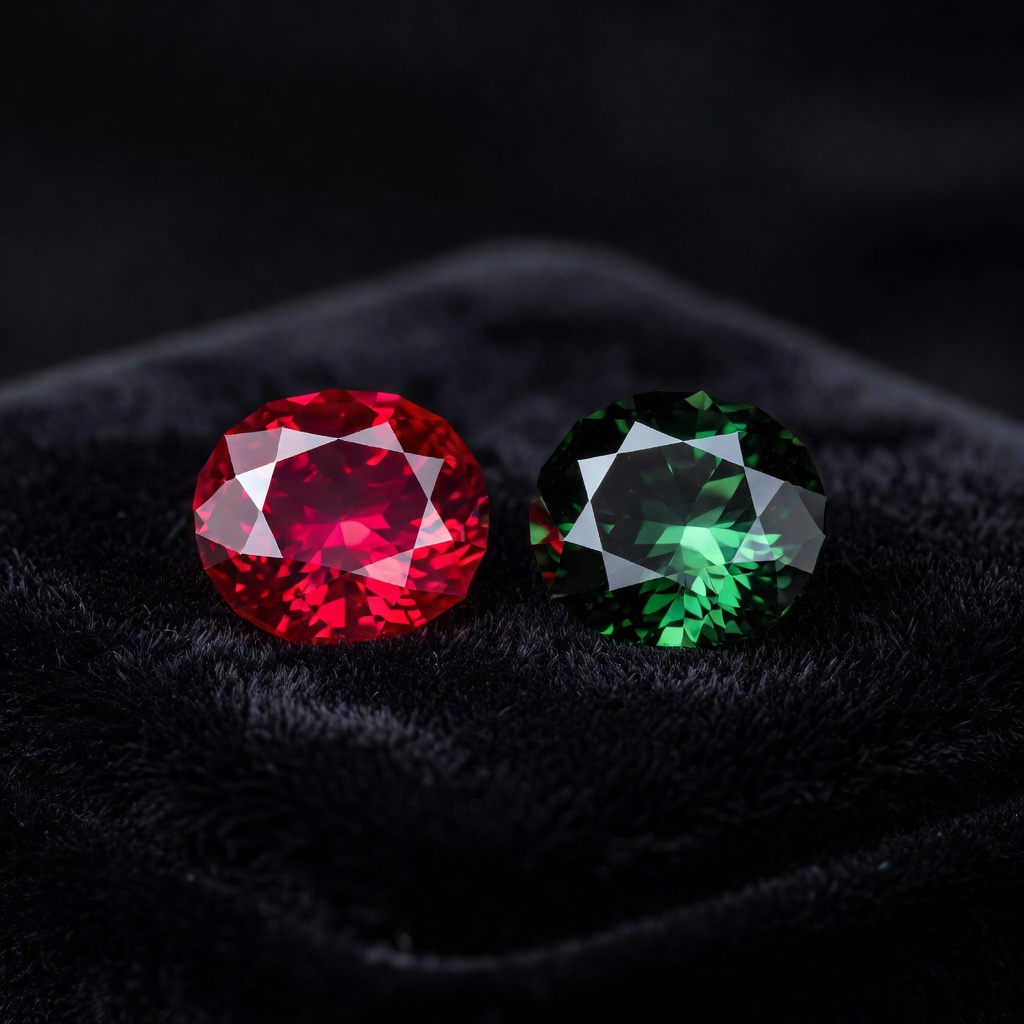
Introduction to Ruby and Kornerupine
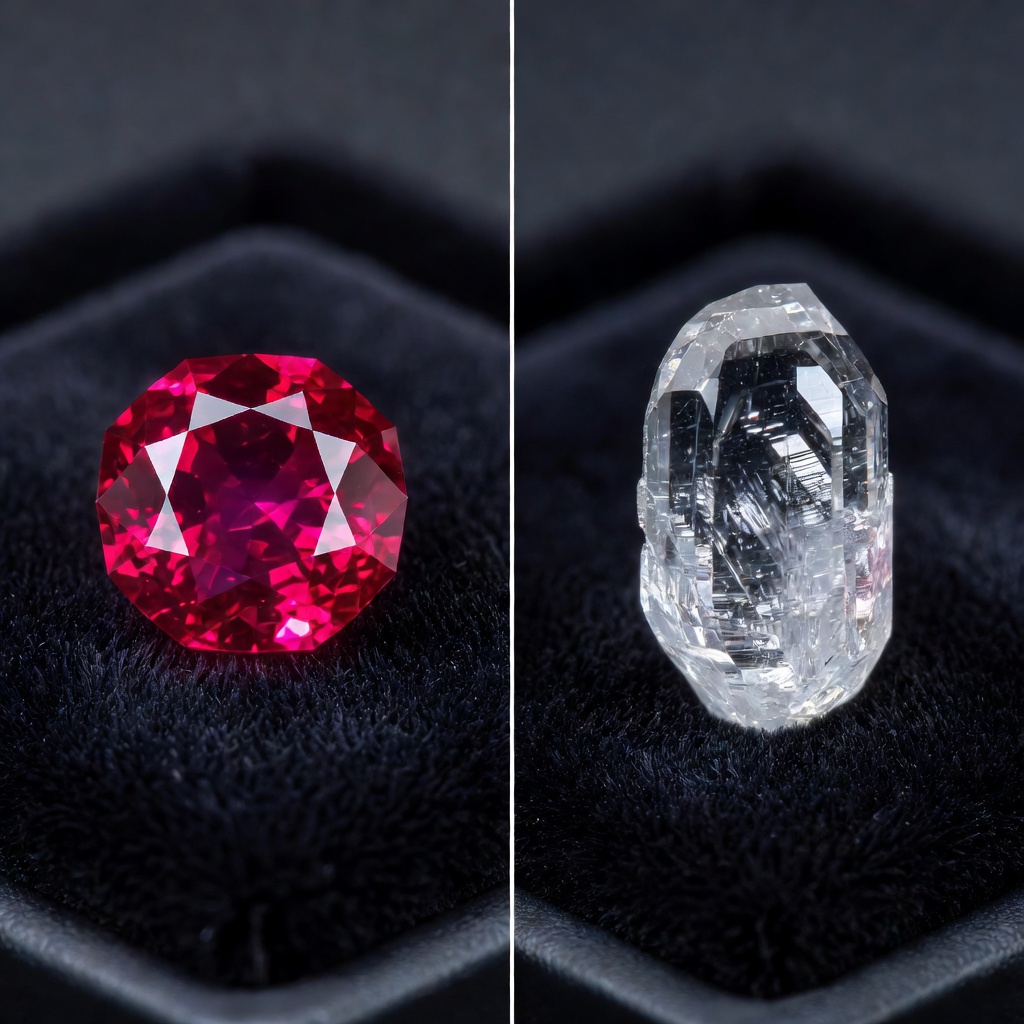
When evaluating precious gemstones for jewelry acquisition or investment portfolios, the comparison between Ruby vs Kornerupine presents a fascinating study in contrasts. Ruby stands as one of the celebrated "Big Four" precious gemstones, alongside diamond, sapphire, and emerald, commanding centuries of royal admiration and consistently achieving record-breaking prices at international auctions. This aluminum oxide gem from the corundum family represents the pinnacle of traditional colored stone collecting, with its fiery red hues symbolizing passion and power across virtually every culture.
In stark contrast, Kornerupine remains one of the mineral kingdom's best-kept secrets, known primarily to devoted gemologists and specialized collectors who appreciate its extraordinary optical properties. Named after Danish naturalist Andreas Nikolaus Kornerup, this borosilicate mineral exhibits remarkable pleochroism and represents one of the rarest gem-quality materials available on the commercial market. While rubies feature prominently in crown jewels and celebrity engagement rings, fine kornerupine specimens rarely exceed two carats, making them true connoisseur's stones that challenge even experienced dealers to source.
Understanding the distinctions between these two gems matters significantly for discerning buyers navigating the colored gemstone marketplace. Whether you seek a durable centerpiece for daily-wear jewelry or a unique addition to a rare collector gemstones portfolio, recognizing how these stones differ in durability, rarity, and investment potential will inform smarter purchasing decisions and prevent costly mismatches between gemstone properties and intended use.
Geological Origins and Chemical Composition
The fundamental differences between Ruby vs Kornerupine begin at the molecular level, where distinct chemical structures dictate their physical behaviors and visual characteristics. Ruby constitutes crystalline aluminum oxide (Al₂O₃) belonging to the trigonal crystal system, with its iconic red coloration resulting from chromium ions replacing aluminum atoms within the crystal lattice. This corundum variant typically forms within high-grade metamorphic environments, particularly in marble deposits subjected to intense heat and pressure over millions of years, creating the hexagonal crystals prized by lapidaries worldwide.
Kornerupine presents a far more complex chemical formula—(Mg,Fe²⁺)₄(Al,Fe³⁺)₆(SiO₄,BO₄)₅(O,OH)₂—classifying it as a boron aluminum silicate mineral crystallizing in the orthorhombic system. Unlike ruby's relatively straightforward formation, kornerupine gemstone properties emerge from boron-rich pegmatites and high-grade metamorphic rocks where complex chemical interactions occur between magnesium, aluminum, and boron. These formation conditions prove significantly rarer than those producing corundum, contributing to kornerupine's extreme scarcity in facetable qualities.
Geographic distribution further distinguishes these gems, with Myanmar's Mogok Stone Tract producing the world's most coveted "pigeon blood" rubies from marble-hosted deposits, while Mozambique, Thailand, and Madagascar supply additional commercial quantities. Conversely, gem-quality kornerupine originates primarily from Sri Lanka's alluvial gravels and Madagascar's pegmatite deposits, with minor occurrences in East Africa and Greenland. This geographic concentration means that while ruby mining operations maintain steady commercial production, kornerupine discoveries remain sporadic and unpredictable, often yielding only small crystals suitable for cutting.
Physical Properties and Durability
When assessing gemstone suitability for jewelry applications, Ruby hardness and durability establish the benchmark against which all other colored stones must measure themselves. Ranking 9 on the Mohs scale, ruby possesses exceptional resistance to scratching and abrasion, second only to diamond in natural gem materials. This remarkable hardness stems from strong covalent bonds within the corundum structure, allowing rubies to maintain their polish and facet edges even after decades of daily wear. Additionally, rubies exhibit no cleavage planes, meaning they resist splitting along specific directional weaknesses, though they can fracture under extreme impact.
Kornerupine occupies a more modest position at 6.5 to 7 on the Mohs hardness scale, comparable to quartz or peridot, rendering it susceptible to surface wear and edge chipping during regular use. More critically, kornerupine displays distinct cleavage in one direction and good cleavage in another, creating planes of structural weakness that skilled cutters must navigate carefully to prevent stone breakage during faceting. These physical limitations significantly restrict kornerupine's applications in jewelry, requiring protective settings and mindful wearing habits to preserve the gem's integrity.
Perhaps the most striking optical difference involves pleochroism in gemstones, where kornerupine demonstrates strong trichroism—displaying three distinct colors when viewed from different crystallographic directions. Typically, collectors observe emerald green, yellow-brown, and reddish-brown or colorless tones depending on the viewing angle, a phenomenon caused by differential light absorption along varying crystal axes. Ruby, being uniaxial negative, may show weak pleochroism in some specimens but typically appears uniformly colored from all angles, lacking the dramatic color-shifting spectacle that makes kornerupine identification possible without sophisticated equipment.
Color Characteristics and Visual Appeal
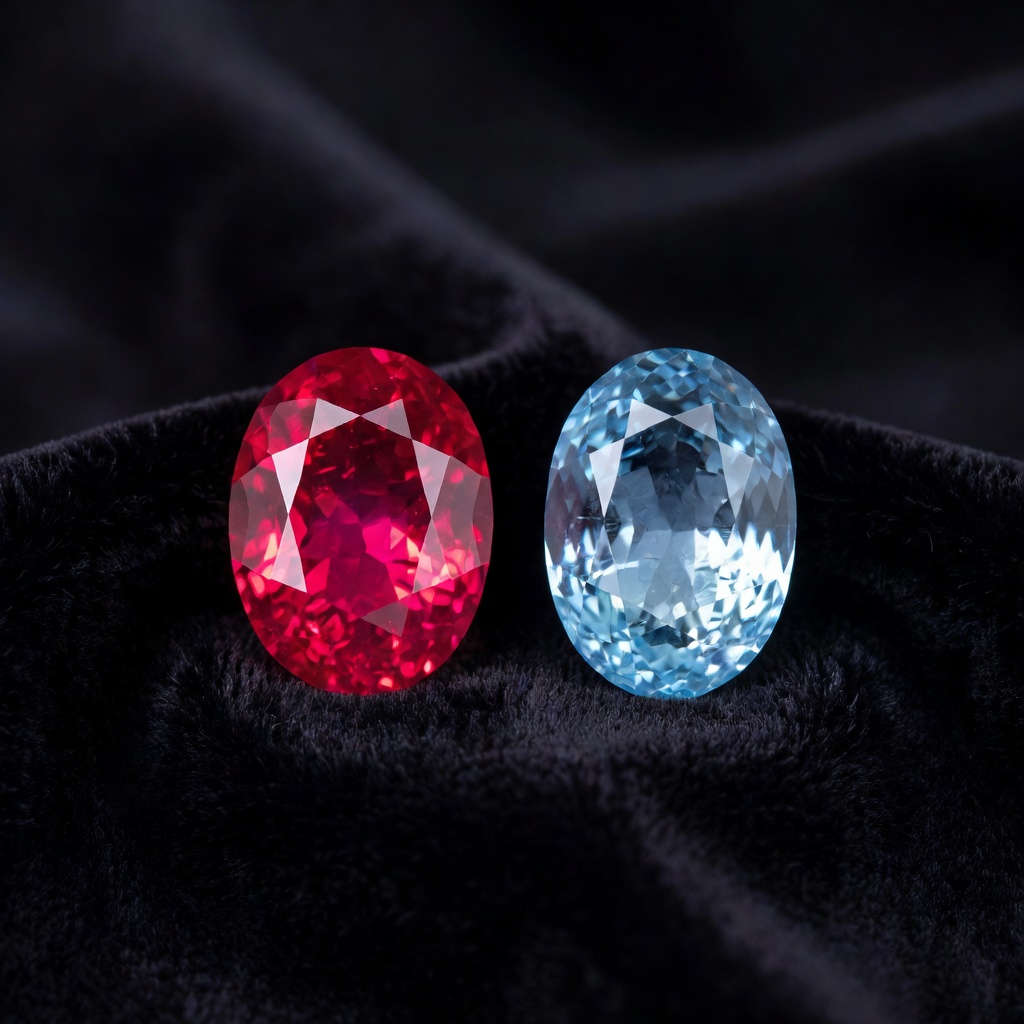
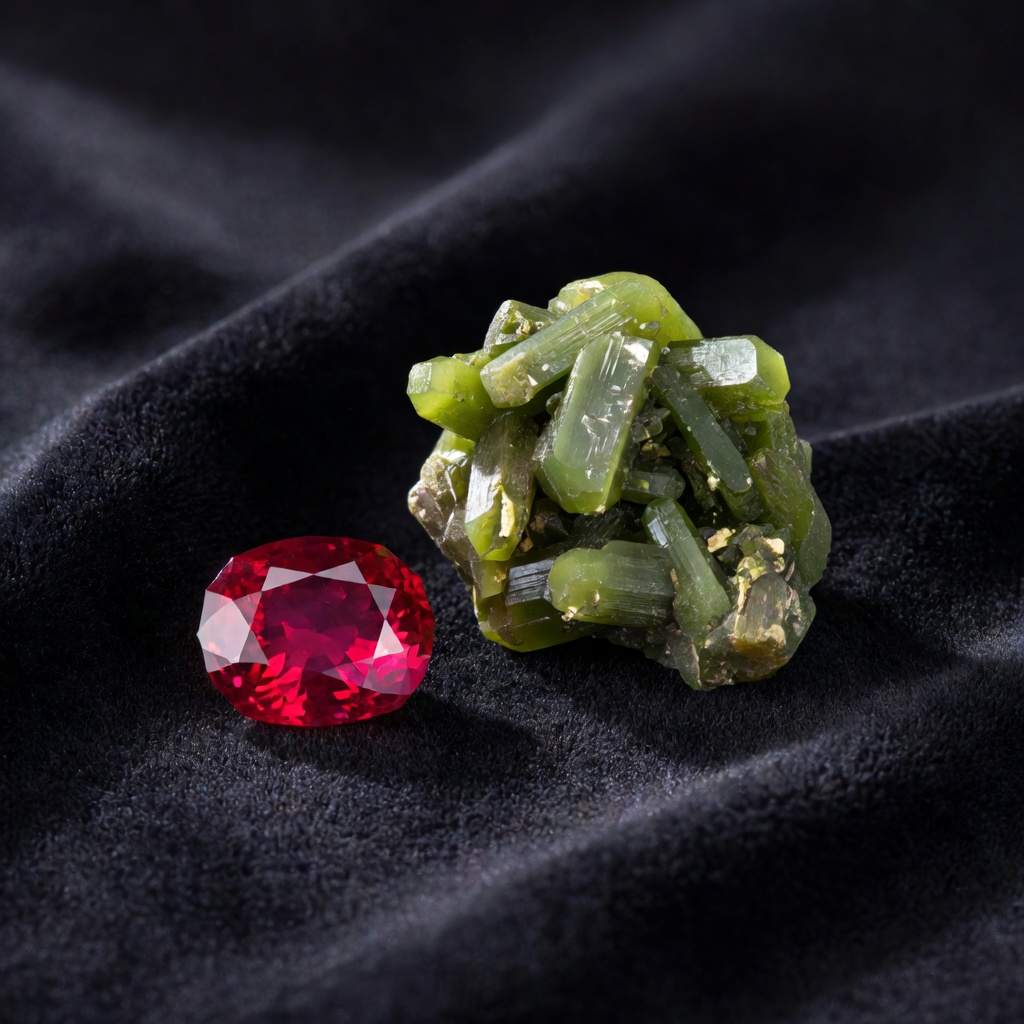
The visual distinction between Red vs green gemstones becomes immediately apparent when comparing these two species side by side. Ruby's color spectrum spans from pinkish-red to deep crimson, with the coveted "pigeon blood" red—characterized by strong red fluorescence and a slight blue undertone—commanding premium prices. This fluorescence, activated by ultraviolet light exposure, causes fine Burmese rubies to appear to glow from within, an effect particularly noticeable in daylight or fluorescent lighting conditions. Chromium content not only creates the primary red hue but can also produce secondary fluorescence that enhances the stone's apparent saturation and "life."
Kornerupine offers a completely different aesthetic palette, ranging from emerald green and forest green to yellowish-brown, honey-yellow, and exceptionally rare colorless or blue varieties. The most desirable specimens display a rich emerald-like green resulting from chromium or vanadium content, though iron impurities frequently introduce brownish or yellowish modifiers that reduce value. Unlike ruby's consistent coloration, kornerupine frequently exhibits color zoning or gradation within single crystals, requiring expert orientation during cutting to maximize face-up color while minimizing undesirable brownish tones.
Clarity expectations differ substantially between these gems. The trade accepts that most rubies contain inclusions—rutile needles (silk), mineral crystals, or healed fractures—that prove their natural origin and often indicate geographic source. These inclusions rarely detract from value unless they significantly impact transparency or durability. Conversely, kornerupine typically occurs eye-clean to loupe-clean in available specimens, partly because heavily included material rarely survives the cutting process due to the mineral's cleavage tendencies. This clarity advantage allows kornerupine to display exceptional brilliance when properly cut, though the small size of available rough limits the visual impact compared to larger ruby specimens.
Rarity, Availability and Market Presence
While both materials qualify as rare collector gemstones, their relative scarcity manifests in distinctly different ways within the marketplace. High-quality rubies exceeding five carats certainly qualify as rare, particularly untreated specimens from historic Burmese mines, yet commercial mining operations in Mozambique, Madagascar, and Vietnam maintain relatively consistent supplies of facetable material across various quality grades. The gemstone industry establishes reliable supply chains for rubies, with annual production volumes sufficient to satisfy ongoing demand from high-end jewelry houses and retail consumers.
Kornerupine represents an entirely different magnitude of rarity. Facet-grade crystals exceeding one carat prove challenging to source, while specimens over two carats become exceptionally rare, and stones surpassing five carats achieve museum-grade status rarely seen outside specialized collections. Unlike ruby mining, which involves systematic extraction from primary deposits, kornerupine recovery occurs almost exclusively as a byproduct of alluvial gem mining in Sri Lanka, where miners seeking sapphire or chrysoberyl occasionally encounter these green crystals. This incidental recovery means annual production volumes remain unquantified but certainly minuscule compared to any commercial gemstone.
Collector demand drives a niche but passionate market for fine kornerupine, with specialized gem enthusiasts specifically seeking these stones for their unique optical properties and extreme scarcity. However, the lack of consumer recognition compared to ruby means that despite being objectively rarer, kornerupine commands significantly lower prices per carat. This paradox creates opportunities for knowledgeable collectors to acquire truly rare specimens at accessible price points, while ruby prices reflect not just scarcity but centuries of cultural significance and established demand from luxury jewelry brands.
Comparison Table: Ruby vs Kornerupine
| Property | Ruby | Kornerupine |
|---|---|---|
| Chemical Composition | Aluminum Oxide (Al₂O₃) | Boron Aluminum Silicate |
| Mohs Hardness | 9 | 6.5 - 7 |
| Cleavage | None (Conchoidal Fracture) | Good to Distinct (Two Directions) |
| Pleochroism | Weak to None | Strong Trichroism (Green/Yellow-Brown/Reddish-Brown) |
| Primary Colors | Red to Pinkish-Red | Emerald Green to Yellow-Brown |
| Typical Clarity | Included (Silk, Crystals) | Eye-Clean to Loupe-Clean |
| Rarity Level | Rare (High Quality) | Extremely Rare (Facet Grade >2ct) |
| Best Jewelry Use | Engagement Rings, Daily Wear | Earrings, Pendants, Occasional Wear |
| Price Range (Per Carat) | $1,000 - $100,000+ | $500 - $3,000 |
Jewelry Suitability and Wearability
Practical jewelry applications reveal the most significant functional differences in the Ruby vs Kornerupine comparison. Ruby's exceptional hardness and lack of cleavage make it ideal for engagement rings, daily-wear bands, bracelets, and other jewelry subjected to regular physical contact. High-end jewelers frequently set rubies in prong, bezel, or tension settings with confidence that the stone will withstand decades of wear without significant abrading or chipping. For collectors seeking heirloom pieces that can pass through generations without requiring re-polishing, ruby remains the undisputed champion among red gemstones.
Kornerupine requires substantially more restrictive setting strategies due to its moderate hardness and distinct cleavage planes. Jewelry designers recommend reserving this gem for earrings, pendants, and brooches—pieces that experience minimal physical impact and abrasion. When set in rings, kornerupine demands protective bezel settings that shield the girdle and crown from direct blows, avoiding high-pressure prong settings that could torque the stone along cleavage planes. Clients should remove kornerupine jewelry before physical activities, household cleaning, or any situation involving potential impact against hard surfaces.
Setting considerations extend beyond protection to optical performance. Ruby's uniform coloration allows flexible orientation during setting, while kornerupine's strong pleochroism requires careful table alignment to ensure the face-up view displays the most desirable green coloration rather than the less attractive brown or yellow directions. Experienced gem cutters must orient kornerupine with the table perpendicular to the Y optical axis to maximize green transmission, a precision requirement less critical for ruby orientation. This cutting complexity, combined with the risk of breakage during setting, means kornerupine jewelry commands higher labor costs relative to material value compared to ruby pieces.
Price Analysis and Investment Value
Current market valuations reflect the Gemstone investment comparison between established luxury goods and emerging collector materials. Fine untreated Burmese rubies command $10,000 to $100,000+ per carat for exceptional stones over five carats, while high-quality heated rubies from Mozambique range from $1,000 to $15,000 per carat depending on color saturation and clarity. These prices demonstrate remarkable liquidity, with auction houses like Christie's and Sotheby's regularly featuring important rubies that appreciate consistently year-over-year, making them viable alternative investments comparable to fine art or rare wines.
Kornerupine occupies a more accessible price bracket, typically ranging from $500 to $3,000 per carat for fine green specimens, with rare large or exceptional color stones occasionally exceeding these ranges. This pricing discrepancy stems not from relative abundance—kornerupine remains significantly rarer—but from limited consumer awareness and the absence of major jewelry brands promoting the stone. For speculative investors, this creates potential upside if market recognition increases, though the lack of established resale channels means liquidity remains limited compared to ruby markets.
Investment decisions should consider treatment status carefully. The ruby market distinguishes sharply between untreated Burmese stones (investment grade), heat-treated stones (commercial jewelry), and fracture-filled stones (value significantly compromised). Kornerupine rarely receives enhancement treatments due to its limited commercial viability, meaning most specimens represent natural, untreated material—a purity that appeals to purist collectors. However, investors seeking stable, appreciating assets with established exit strategies should prioritize certified untreated rubies, while those accepting higher risk for potential discovery premiums might allocate smaller portions of portfolios to exceptional kornerupine specimens from documented localities like Sri Lanka or Madagascar.
Identification and Authentication Tips
Accurate Kornerupine identification requires attention to optical properties that distinguish it from visually similar green gems like tourmaline, peridot, or diopside. The definitive field test involves observing pleochroism using a dichroscope or simply rotating the stone under single light sources; kornerupine displays three colors (typically green, yellow-brown, and reddish-brown), whereas tourmaline shows two colors and peridot shows none. Specific gravity testing provides additional confirmation, with kornerupine ranging 3.28-3.35, heavier than peridot (3.27-3.37 overlap) but distinct from tourmaline's 3.02-3.26 range.
For Ruby vs Kornerupine differentiation when colors overlap (rare red kornerupine vs ruby), several diagnostic tests prove reliable. Ruby exhibits strong red fluorescence under long-wave ultraviolet light due to chromium content, while kornerupine remains inert or shows weak greenish-yellow fluorescence. Hardness testing—carefully observing whether the unknown stone scratches quartz (kornerupine may struggle, ruby easily scratches)—provides quick separation, though destructive testing should be avoided on finished gems. Ruby's refractive index (1.762-1.770) exceeds kornerupine's (1.665-1.682), measurable with refractometers by trained gemologists.
Laboratory certification remains essential for both gemstones to detect treatments and synthetics. Major laboratories including GIA, AGL, and SSEF provide reports identifying geographic origin for rubies—a critical value factor—and confirming natural versus synthetic origin. For kornerupine, certification primarily verifies natural origin and documents any treatments, though synthetics remain virtually nonexistent due to limited commercial demand. Common misidentifications occur when kornerupine resembles green tourmaline or when ruby spinel (which shares ruby's red color but lacks fluorescence) requires distinction from true corundum. Professional gemological testing involving spectroscopic analysis provides definitive identification when visual methods prove inconclusive.
Care and Maintenance Requirements
Proper Gemstone care tips vary significantly between these species due to their differing physical properties. Ruby maintenance proves relatively straightforward for owners; untreated stones generally withstand ultrasonic cleaning devices safely, though steam cleaning requires caution if the stone contains significant inclusions or has been fracture-filled (a treatment common in lower-quality rubies). Warm soapy water with soft brushes remains the safest universal cleaning method, effectively removing accumulated oils and debris without risking thermal shock or chemical damage. Ruby's chemical stability means it resists damage from brief exposure to common household chemicals, though prolonged contact with harsh acids should be avoided.
Kornerupine demands significantly more restrictive care protocols due to its cleavage and moderate hardness. Owners must strictly avoid ultrasonic cleaners, as the vibrations can exploit cleavage planes causing internal fracturing or complete stone breakage. Similarly, steam cleaning risks thermal shock and should never be used. Cleaning should be limited to brief immersion in lukewarm water with mild dish soap, using soft cloths or brushes with minimal pressure. Rapid temperature changes—such as moving from hot sunlight into air-conditioned rooms—should be minimized to prevent stress fractures.
Storage recommendations emphasize separation by hardness to prevent scratching. Ruby jewelry should be stored separately from diamonds or other rubies to prevent mutual abrasion, though ruby can safely contact softer materials. Kornerupine requires individual soft pouches or separate compartments, isolated not just from harder gems like ruby, sapphire, and diamond, but also from other kornerupine pieces to prevent edge chipping. When traveling, kornerupine jewelry should be packed in rigid, padded containers that prevent movement and impact, whereas ruby pieces travel with less concern regarding minor jostling. Regular professional inspections help identify loose settings or developing chips before they result in stone loss, particularly important for kornerupine set in rings or bracelets.
Final Recommendations: Which Should You Choose?
Selecting between Ruby vs Kornerupine ultimately depends on your specific priorities regarding wearability, investment goals, and aesthetic preferences. Choose Ruby if you seek heirloom-quality jewelry intended for daily wear, particularly engagement rings or anniversary bands that will withstand decades of continuous use. Ruby suits buyers prioritizing established investment value, traditional beauty associated with royal regalia, and the psychological satisfaction of owning one of history's most celebrated gemstones. Those drawn to intense red colors with fluorescent "life" and who value the liquidity of easily sellable assets will find ruby the superior choice despite higher initial costs.
Choose Kornerupine if you desire unique collector's pieces that spark conversation among gem enthusiasts and provide ownership of something genuinely rarer than nearly any other commercially available gemstone. This mineral appeals to connoisseurs who appreciate optical phenomena like pleochroism and who prioritize rarity over brand recognition. Kornerupine works beautifully for special-occasion jewelry—statement earrings, pendants, or brooches worn carefully on important occasions rather than daily. Budget-conscious collectors seeking rare gems without five-figure price tags will find kornerupine offers exceptional value propositions, allowing acquisition of museum-quality rarity at accessible prices.
For those building comprehensive colored gemstone collections, incorporating both varieties creates desirable diversification. Ruby provides the portfolio anchor—a stable, appreciating asset with universal recognition—while kornerupine offers the speculative growth potential and specialist appeal that differentiates amateur collections from sophisticated assemblages. Consider your lifestyle honestly: if you rarely remove jewelry, kornerupine's fragility makes it unsuitable regardless of its beauty. However, if you maintain careful wearing habits and appreciate gemstones as much for their mineralogical significance as their decorative function, kornerupine deserves serious consideration alongside its more famous red counterpart.
Frequently Asked Questions
Is Kornerupine rarer than Ruby?
Yes, high-quality facet-grade Kornerupine is significantly rarer than Ruby. While fine rubies are scarce, gem-quality kornerupine over 1-2 carats is exceptionally rare, with specimens over 5 carats considered museum-grade collector's items.
Can Kornerupine be used in engagement rings?
Kornerupine is not recommended for engagement rings due to its Mohs hardness of 6.5-7 and distinct cleavage, making it vulnerable to chipping and abrasion from daily wear. Ruby, with a hardness of 9, is far superior for daily-wear jewelry like engagement rings.
Why does Kornerupine show different colors from different angles?
This phenomenon is called pleochroism or trichroism. Kornerupine crystals absorb light differently depending on viewing direction, typically displaying green, yellow-brown, and reddish-brown colors when rotated, whereas Ruby shows no pleochroism.
Which gemstone is more valuable per carat?
Fine untreated Burmese rubies command the highest prices, often $10,000-$100,000+ per carat for exceptional stones. Kornerupine typically ranges from $500-$3,000 per carat, making it more affordable despite being rarer, due to lower consumer recognition.
How can I tell Ruby and Kornerupine apart if both are red?
Red Kornerupine is extremely rare; most are green or brown. If comparing red stones, check hardness (ruby scratches kornerupine), pleochroism (kornerupine shows color shift, ruby doesn't), and fluorescence (ruby glows red under UV light, kornerupine does not).
Does Ruby require different care than Kornerupine?
Yes. Rubies can generally withstand ultrasonic cleaning (if untreated) and are durable enough for daily wear. Kornerupine requires gentle handling, avoiding heat, steam, and ultrasonic cleaners, and should only be cleaned with mild soap and lukewarm water.
Is Kornerupine a good investment gemstone?
Kornerupine is a speculative investment for specialized collectors. While extremely rare, it lacks the established market liquidity of rubies. Investment potential depends on increasing awareness among gem collectors and declining new discoveries.
What causes the color in Ruby vs Kornerupine?
Ruby's red color comes from chromium (Cr³⁺) replacing aluminum in the corundum structure. Kornerupine's color varies based on iron (greenish-yellow), chromium (green), or vanadium content, with different trace elements creating its color range.