Introduction to Ruby vs Jet: Understanding the Basics
When exploring the diverse world of gemstones, few comparisons reveal such dramatic contrasts as Ruby vs Jet. These two stones represent opposite ends of the gemological spectrum, offering collectors and jewelry enthusiasts distinctly different aesthetic, practical, and historical value propositions. Ruby stands as one of the most coveted precious gemstones, a variety of corundum celebrated for its vivid red hues and exceptional durability that has adorned royalty for millennia. In stark contrast, jet emerges as an organic gemstone with deep historical roots, formed from fossilized wood and prized for its intense black color and lightweight warmth.
The fundamental distinction between these materials lies in their categorical classification: ruby represents the mineral kingdom with its crystalline aluminum oxide structure, while jet belongs to the organic gemstone family, bearing the preserved essence of ancient forests. This dichotomy influences every aspect of their application, from jewelry design possibilities to long-term investment potential. Whether you are selecting a center stone for an engagement ring, building a vintage jewelry collection, or seeking meaningful symbolic jewelry, understanding the unique characteristics that separate these stones ensures you make an informed decision aligned with your lifestyle and aesthetic preferences.
Throughout this comprehensive gemstone comparison guide, we will examine the geological origins, physical properties, durability factors, and cultural significance that distinguish ruby from jet. By exploring their distinct maintenance requirements, value propositions, and design applications, you will gain the practical knowledge necessary to select the perfect stone for your specific needs, whether you prioritize heirloom durability or historical sentimentality.
Geological Origins: Mineral Formation vs Organic Fossilization
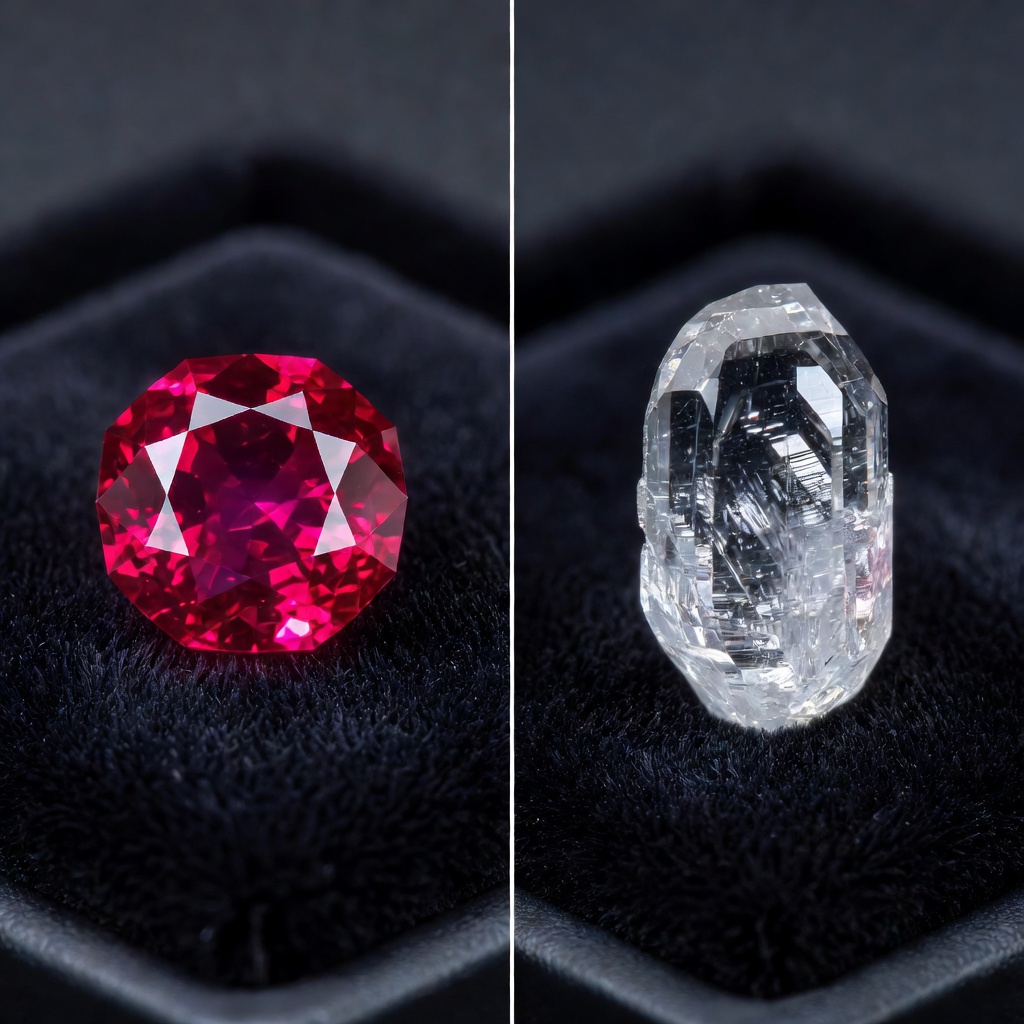
The formation processes of ruby and jet illustrate nature's remarkable ability to create beauty through vastly different mechanisms, spanning millions of years and distinct environmental conditions. Ruby crystallizes deep within the Earth's crust under extreme heat and pressure, forming in metamorphic rocks such as marble and gneiss, as well as igneous rocks like basalt. This precious corundum gemstone develops when aluminum oxide molecules arrange themselves into a hexagonal crystal system, with trace amounts of chromium creating the signature red coloration that ranges from pinkish-red to the highly prized pigeon blood red. Major deposits currently producing exceptional rubies include the Mogok region of Myanmar, the Montepuez mines in Mozambique, and various locations throughout Thailand and Sri Lanka.
Jet stone origin tells a completely different geological story, one that begins not with minerals but with ancient forests dating back to the Jurassic period. This organic gemstone forms when waterlogged driftwood becomes buried under sediment and undergoes a transformation into lignite coal through immense pressure over millions of years. Unlike ruby's crystalline structure, jet retains the carbon-based composition of its arboreal origins, creating a mineraloid rather than a true mineral. The most famous jet deposits emerge from Whitby, England, where Victorian miners extracted the material from seaside cliffs, though significant sources also exist in Turkey, Spain, and the United States.
The chemical composition differences between these stones directly impact their physical properties and care requirements. Ruby consists primarily of aluminum oxide (Al₂O₃) with chromium impurities, creating an extremely stable and inert material resistant to chemical alteration. Jet, conversely, comprises carbon mixed with various organic compounds and hydrocarbons, making it susceptible to degradation from oils, chemicals, and environmental factors. For collectors examining rough specimens, ruby presents as heavy, cold, and crystalline, while authentic jet feels surprisingly lightweight and warm to the touch immediately upon handling—a tactile distinction that helps gemologists differentiate genuine jet from black glass or obsidian imitations.
Physical Properties and Visual Characteristics
Visual and tactile examination reveals striking differences between these gemstones that extend far beyond their obvious color contrast. Ruby color grades span a remarkable spectrum from delicate pinkish-red tones to the highly coveted pigeon blood red, a vivid, saturated hue with a slight blue undertone that commands premium prices in the global market. Gemologists evaluate ruby color based on hue, tone, and saturation, with the most valuable stones displaying a pure, vibrant red without excessive darkness or brownish overtones. Clarity in rubies varies significantly, with transparent to translucent specimens representing the highest quality, though inclusions (known as "silk") can sometimes enhance a stone's value by creating asterism—the star effect seen in star rubies.
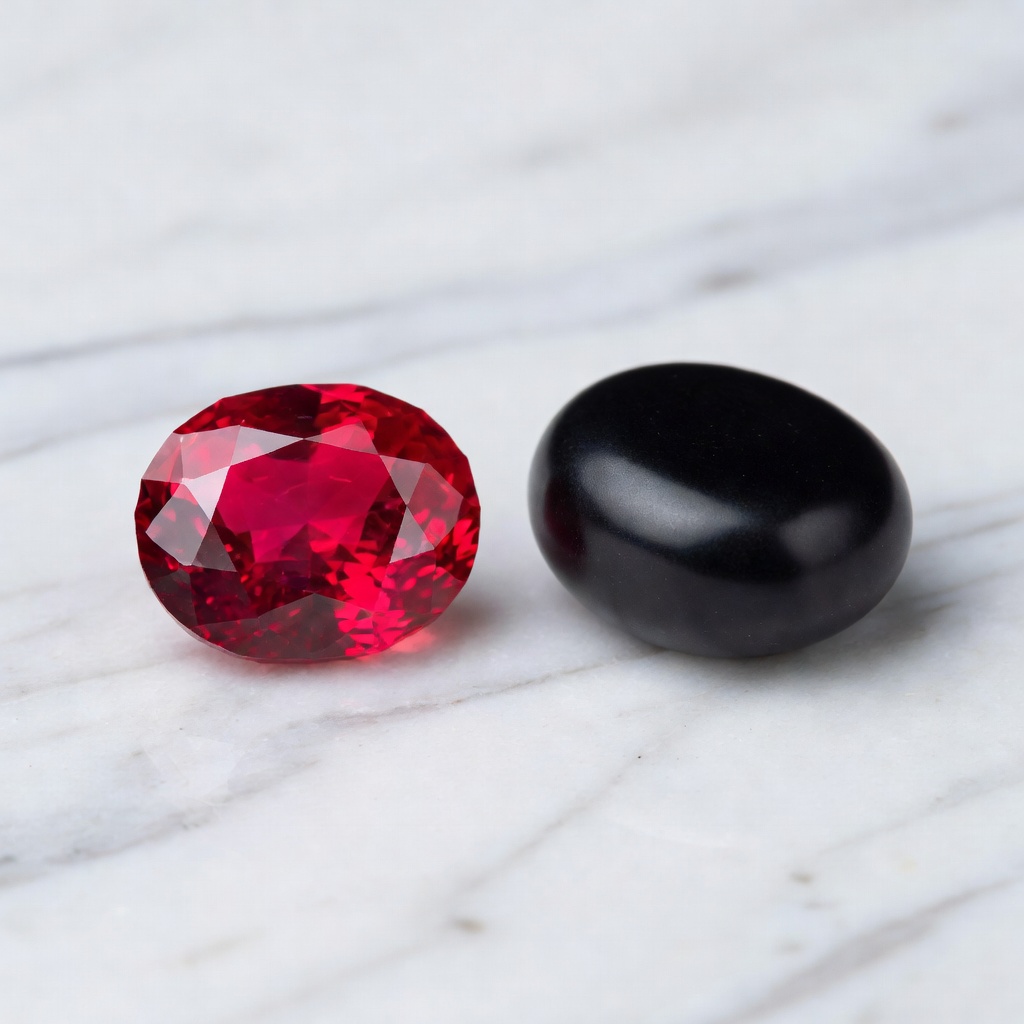
Jet stone appearance offers a study in uniform darkness and organic warmth that has captivated jewelry makers for centuries. Quality jet displays a deep, intense black color that may reveal subtle brown undertones when examined under strong light, though the finest Whitby jet maintains a pure, velvety black appearance. Unlike ruby's potential transparency, jet remains consistently opaque, displaying a warm, subdued luster rather than brilliant reflection. When polished, high-quality jet achieves a mirror-like finish that absorbs light rather than refracting it, creating the distinctive "jet black" aesthetic that has become synonymous with deep darkness in popular culture.
The weight and density contrast between these materials provides one of the most immediate identification methods for collectors and appraisers. Ruby possesses a specific gravity ranging from 3.9 to 4.1, making it substantially heavier than it appears and giving fine ruby jewelry a satisfying heft. Jet, with a specific gravity of approximately 1.3, feels remarkably lightweight—so much so that large jet beads or carved pieces can be worn comfortably without neck strain, a property that made jet popular for elaborate Victorian mourning necklaces. Crystal structure examination further distinguishes these materials: ruby displays a hexagonal crystal system with distinct growth patterns visible in rough specimens, while jet exhibits an amorphous, organic structure without crystalline organization, occasionally revealing wood grain patterns or cellular structures under magnification.
Ruby vs Jet: Comprehensive Comparison
| Characteristic | Ruby (Corundum) | Jet (Organic Gem) |
|---|---|---|
| Chemical Composition | Aluminum Oxide (Al₂O₃) with Chromium | Carbon-based organic compounds (fossilized wood) |
| Mohs Hardness | 9 (Extremely Hard) | 2.5-4 (Relatively Soft) |
| Specific Gravity | 3.9-4.1 (Heavy) | 1.3 (Lightweight) |
| Color Range | Pinkish-red to Pigeon Blood Red | Deep Black with possible brown undertones |
| Transparency | Transparent to Opaque | Opaque only |
| Crystal Structure | Hexagonal crystalline system | Amorphous (no crystal structure) |
| Primary Sources | Myanmar, Mozambique, Thailand, Sri Lanka | Whitby (England), Turkey, Spain |
| Typical Jewelry Use | Engagement rings, high-end statement pieces | Beaded necklaces, mourning jewelry, cameos |
| Price Range (per carat) | $1,000-$15,000+ (depending on quality) | $5-$50 (antique Whitby up to $200+) |
| Care Requirements | Ultrasonic and steam cleaning safe | Dry cloth only; avoid water and chemicals |
| Durability | Excellent for daily wear | Fragile; suitable for occasional wear only |
Durability and Hardness: Mohs Scale Comparison
The gemstone hardness comparison between ruby and jet reveals one of the most significant practical differences affecting their jewelry applications and longevity. Ruby durability Mohs scale ratings place this precious stone at 9, making it second only to diamond in hardness among natural gemstones. This exceptional hardness means ruby resists scratching from almost all other materials encountered in daily life, maintaining its polish and surface integrity through decades of continuous wear. The stone's toughness—resistance to breaking or chipping—complements its hardness, as ruby lacks cleavage planes that would make it susceptible to splitting upon impact, though extremely hard blows can still cause damage.
Jet stone durability presents a starkly different scenario that requires careful consideration for potential owners. Measuring only 2.5-4 on the Mohs hardness scale, jet ranks alongside materials like fluorite and calcite in terms of scratch resistance. This relative softness means jet can be scratched by everyday objects including household dust (which contains silica), fingernails, copper coins, and even prolonged contact with skin or clothing. The organic nature of jet also contributes to its fragility; unlike crystalline minerals that might chip cleanly, jet tends to crack, splinter, or develop conchoidal fractures when subjected to impact or pressure.
These durability differences directly impact the longevity considerations for heirloom jewelry and investment pieces. A ruby set in a well-designed mounting can realistically survive centuries of wear, passing through generations as a family heirloom with minimal surface degradation beyond normal wear patterns. Jet jewelry, conversely, requires protective settings and occasional wear to preserve its condition, making it less suitable for pieces intended to withstand active lifestyles or rough handling. For collectors considering these stones as investment vehicles, ruby's durability supports its value retention and appreciation, while jet's fragility limits it to the category of collectible rather than durable investment asset, though historically significant Victorian jet jewelry can command respectable prices due to craftsmanship and provenance rather than material durability.
Historical Significance and Cultural Symbolism
The ruby symbolism meaning stretches across millennia and continents, establishing this red gemstone as one of humanity's most consistently prized possessions. Ancient Sanskrit texts referred to ruby as "ratnaraj," the king of precious stones, while Burmese warriors believed implanting rubies beneath their skin made them invincible in battle. European royalty adorned crowns and regalia with rubies to signify power, passion, and protection, with the stone becoming particularly associated with the Christian concept of the blood of Christ and the vitality of the heart. In Eastern traditions, rubies represented the sun, fire, and the life force itself, often placed at the foundations of buildings to secure good fortune for the structure and its inhabitants.
Jet stone history intertwines deeply with human mourning practices and spiritual protection beliefs, particularly during the Victorian era when Queen Victoria's extended mourning for Prince Albert created a massive demand for black jewelry. Victorian jet jewelry became the socially required accessory for grieving widows and family members, with Whitby jet workshops employing thousands of artisans to produce intricate carved beads, brooches, and earrings. Beyond mourning symbolism, various cultures believed jet possessed protective properties against evil spirits and witchcraft, leading to its use as amulets and talismans throughout medieval Europe. Wiccan and pagan practices continue to value jet for its alleged ability to absorb negative energy and facilitate grief processing.
The evolution of popularity trends for these stones reflects broader cultural shifts in fashion and sentimentality. While ruby has maintained consistent prestige as a precious gemstone suitable for engagement rings and coronation regalia across centuries, jet experienced dramatic fluctuations in popularity. After dominating Victorian fashion, jet fell into obscurity during the early twentieth century, only to experience periodic revivals during the Art Deco period and subsequent vintage jewelry booms. Today, ruby remains a staple in high jewelry collections by houses like Cartier and Van Cleef & Arpels, while jet enjoys niche appreciation among collectors of antique mourning jewelry and practitioners of alternative spirituality who value its organic origins and historical resonance.
Jewelry Applications and Design Versatility
Ruby jewelry settings leverage the stone's exceptional hardness to allow for diverse and secure mounting options that maximize light exposure and visual impact. Prong settings remain the most popular choice for ruby engagement rings and cocktail rings, allowing maximum light penetration to showcase the stone's brilliance and color while protecting the gem's vulnerable girdle from direct impact. Bezel settings offer alternative protection for active wearers, surrounding the ruby's perimeter with metal to prevent chips, while channel settings accommodate smaller rubies in wedding bands and eternity rings. High-end luxury pieces often feature rubies in elaborate statement necklaces and tiaras, where the stone's durability allows for intricate openwork designs without fear of damage during wear or storage.
Jet stone jewelry designs require fundamentally different approaches that account for the material's softness and fragility. Beaded necklaces represent the most traditional application, with jet spheres or carved beads strung together to create lightweight, dramatic black statements that were particularly popular during the Victorian era. Carved cameos and intaglios showcase jet's workability—its softness allows artisans to create intricate relief carvings depicting mourning scenes, floral motifs, or classical profiles that would be difficult to achieve in harder stones. Mourning brooches, lockets, and cross pendants represent historically significant applications, often incorporating woven hair compartments or engraved inscriptions to commemorate deceased loved ones.
Metal pairing recommendations differ significantly between these stones based on both aesthetic tradition and practical considerations. Rubies achieve stunning contrast against white metals such as platinum and white gold, which enhance the stone's red color by providing a cool, neutral background, while yellow gold settings create warm, classic combinations reminiscent of royal regalia. Jet traditionally pairs with silver, antique brass, or gunmetal settings that complement its somber black color, though modern designers occasionally mount jet in yellow gold for striking contemporary contrast. Design limitations due to hardness differences necessitate protective bezel settings or cage settings for jet to prevent edge chipping, whereas ruby can safely utilize delicate prong work and exposed pavilion designs that would immediately damage softer materials.
Value, Pricing, and Investment Considerations
Ruby price per carat varies more dramatically than nearly any other gemstone, with values ranging from approximately $1,000 per carat for commercial-quality treated stones to over $15,000 per carat for untreated, pigeon blood colored specimens from Myanmar or Mozambique. Pricing factors prioritize color saturation above all other characteristics, with the finest rubies displaying a vivid, pure red without purple or orange overtones. Clarity significantly impacts value, though rubies typically contain inclusions that prove their natural origin; completely clean stones may command suspicion of synthetic manufacture or glass filling. Carat weight escalates value exponentially rather than linearly, as rubies over three carats with fine color become exponentially rarer. Origin treatment status heavily influences pricing, with heat-treated rubies representing the industry standard and commanding moderate prices, while untreated stones from prestigious localities achieve auction-record prices.
Jet stone value operates on an entirely different economic model rooted in abundance rather than scarcity. Contemporary jet remains generally inexpensive due to the material's relative abundance in deposits across Turkey, Spain, and the United States, with simple beads or cabochons costing only dollars per carat. However, antique Whitby jet jewelry commands premium prices based on historical significance, craftsmanship quality, and provenance rather than raw material value. Victorian-era jet pieces featuring intricate carving, secure original fittings, and documented history can fetch hundreds or thousands of dollars at specialty auctions, particularly pieces attributed to famous workshops like the Whitby Jet Works.
Investment potential distinguishes these stones sharply in the alternative asset market. Ruby functions as an appreciating precious gemstone with established global markets, certification standards from laboratories like GIA and SSEF, and liquidity for high-quality specimens. Collectors purchasing fine rubies with proper documentation can reasonably expect value appreciation over decades, particularly as Burmese mining restrictions limit supply of the most desirable stones. Jet represents a collectible rather than investment vehicle; while specific antique pieces may appreciate due to historical interest, the material itself does not function as a store of wealth comparable to precious gems. Market availability reflects this distinction, with rubies requiring certification and authentication for high-value transactions, while jet authentication relies more on historical documentation and expert visual examination for antique specimens.
Care, Cleaning, and Maintenance Requirements
Ruby gemstone care benefits from the stone's exceptional durability, allowing for cleaning methods that would destroy softer materials. Ultrasonic cleaners and steam cleaning represent safe options for most natural rubies, effectively removing accumulated dirt and oils from settings and pavilion facets without risking surface damage. The stone's resistance to heat and most household chemicals means owners can maintain ruby jewelry with minimal special precautions, though sudden extreme temperature changes should be avoided to prevent thermal shock. Professional jewelers can perform aggressive cleaning, repolishing, and even re-cutting of damaged rubies to restore their appearance, a service rarely possible with organic gemstones.
Jet stone cleaning demands meticulous attention due to the material's organic porosity and chemical sensitivity. Owners must avoid water immersion, ultrasonic cleaning, steam, oils, perfumes, and harsh chemicals, as these substances can penetrate jet's surface, causing discoloration, deterioration, or structural weakening. Cleaning should be limited to gentle wiping with a dry, soft cloth—preferably microfiber or pure cotton—to remove surface dust and skin oils. Even commercial jewelry cleaning solutions pose risks to jet, potentially removing the stable surface patina that develops on antique pieces and exposing fresher, more vulnerable material beneath.
Storage recommendations highlight the importance of separating these materials to prevent accidental damage. Ruby should be stored separately from other jewelry, not to protect the ruby but to prevent it from scratching softer gemstones, metals, or organic materials like jet, pearls, or opals. Individual cloth pouches or compartmentalized jewelry boxes prevent contact damage. Jet requires padded containers that cushion against impact and prevent abrasion from harder materials; storing jet in soft fabric bags within rigid boxes provides optimal protection. Professional maintenance schedules should include annual inspections for ruby settings to check for loose prongs, while jet pieces require examination for developing cracks, crazing, or surface degradation every six months if worn occasionally, with immediate cessation of wear if any structural compromise appears.
Making Your Choice: Which Gemstone Suits Your Needs
Choosing between ruby and jet requires honest assessment of lifestyle factors, aesthetic preferences, and long-term expectations. Active individuals or those seeking daily-wear jewelry should gravitate toward ruby, as its hardness and durability accommodate the rigors of modern life including hand-washing, exercise, and professional activities without constant worry about damage. Jet suits collectors and enthusiasts who appreciate historical jewelry, practice gentle handling, and reserve special pieces for occasions rather than everyday adornment. Consider your wardrobe and existing jewelry collection: ruby provides bold color statements that complement neutral and warm tones, while jet offers versatile black elegance that pairs with virtually any color palette but carries specific historical associations with mourning and vintage aesthetics.
Budget constraints and long-term value retention expectations should guide purchasing decisions beyond initial aesthetics. Ruby represents a significant financial investment that typically retains or appreciates in value, particularly when purchased as high-quality, certified natural stones from reputable dealers. This investment requires careful research into treatments, origins, and certification to ensure authenticity. Jet offers accessibility for beginning collectors or those seeking authentic Victorian aesthetics without substantial financial commitment, though purchasers should verify authenticity of antique pieces and accept that jet functions as a consumable collectible rather than financial asset. Ethical sourcing considerations favor jet for environmentally conscious consumers, as the material represents sustainable fossilized wood requiring minimal mining impact, while ruby mining—particularly in Myanmar—raises ongoing concerns regarding labor practices and environmental degradation that conscientious buyers must research through transparent supply chains.
Practical decision-making involves examining specific pieces for craftsmanship quality regardless of material. For ruby, inspect setting security, color consistency, and clarity characteristics that justify the price point. For jet, examine carving quality (if applicable), structural integrity without cracks, and the presence of authentic Whitby characteristics for antique pieces. Ultimately, the choice between these stones need not be mutually exclusive; many collectors appreciate both for their distinct contributions to jewelry history and personal expression, selecting ruby for milestone celebrations and heirloom creation while reserving jet for historical appreciation and somber elegance.
Frequently Asked Questions
Is jet considered a precious gemstone like ruby?
No, jet is classified as an ornamental or organic gemstone rather than a precious stone. While ruby is one of the four precious gemstones (along with diamond, sapphire, and emerald) due to its rarity, hardness, and value, jet is a mineraloid formed from fossilized wood. Jet is valued for its historical significance and unique appearance but does not command the same prices or prestige as precious rubies.
Which is harder, ruby or jet?
Ruby is significantly harder than jet. Ruby ranks 9 on the Mohs hardness scale, making it one of the hardest natural substances and extremely resistant to scratching. Jet, conversely, ranks only 2.5-4 on the Mohs scale, making it relatively soft and susceptible to scratches, chips, and abrasion. This dramatic difference affects their suitability for different types of jewelry and daily wear.
Can I wear jet jewelry every day?
Daily wear of jet jewelry is not recommended due to its softness (2.5-4 Mohs). Jet can easily scratch, chip, or lose its polish when exposed to daily activities, cosmetics, perfumes, and even skin oils. Ruby, however, is excellent for daily wear due to its exceptional hardness (9 Mohs) and durability. Jet is best reserved for occasional wear or pieces that receive minimal contact.
Why is ruby so much more expensive than jet?
Ruby commands higher prices due to its status as a precious gemstone, extreme rarity in high-quality specimens, exceptional hardness, and global demand. Factors like pigeon blood color, clarity, and untreated status drive prices to thousands per carat. Jet is relatively abundant, softer, and considered a semi-precious or ornamental material, making it affordable and accessible, though antique Whitby jet can be valuable to collectors.
How can I tell if my jet stone is authentic?
Authentic jet is lightweight (specific gravity of 1.3), warm to the touch, and produces a brown streak when rubbed on unglazed porcelain. Unlike black glass or obsidian, genuine jet is not cold and heavy. When heated, real jet emits a coal-like odor due to its carbon content. Additionally, true jet will float in water, while most imitations sink.
Are there any cultural associations that make jet inappropriate for some occasions?
Jet is historically associated with mourning jewelry, particularly from the Victorian era, which led to some viewing it as somber or inappropriate for celebratory occasions like weddings. However, modern fashion has embraced jet for its elegant, neutral aesthetic. Conversely, ruby symbolizes passion and vitality, making it universally appropriate but potentially too bold for conservative settings depending on design.
Can ruby and jet be combined in the same jewelry piece?
Yes, ruby and jet can be combined for striking contrasting designs, but require careful setting considerations. The extreme hardness difference means ruby could easily scratch jet if they touch. Jewelers typically separate them with metal barriers or use protective bezel settings for the jet components while allowing prong settings for rubies. This combination creates dramatic red-and-black aesthetic popular in Art Deco revival styles.
Which gemstone is better for an engagement ring?
Ruby is significantly better suited for engagement rings than jet. Engagement rings require stones that withstand daily wear, impact, and exposure to chemicals. Ruby's hardness (9 Mohs) and excellent toughness make it ideal for lifelong wear. Jet's softness (2.5-4 Mohs) makes it unsuitable for engagement rings as it would quickly show wear, scratches, and potential breakage from daily activities.