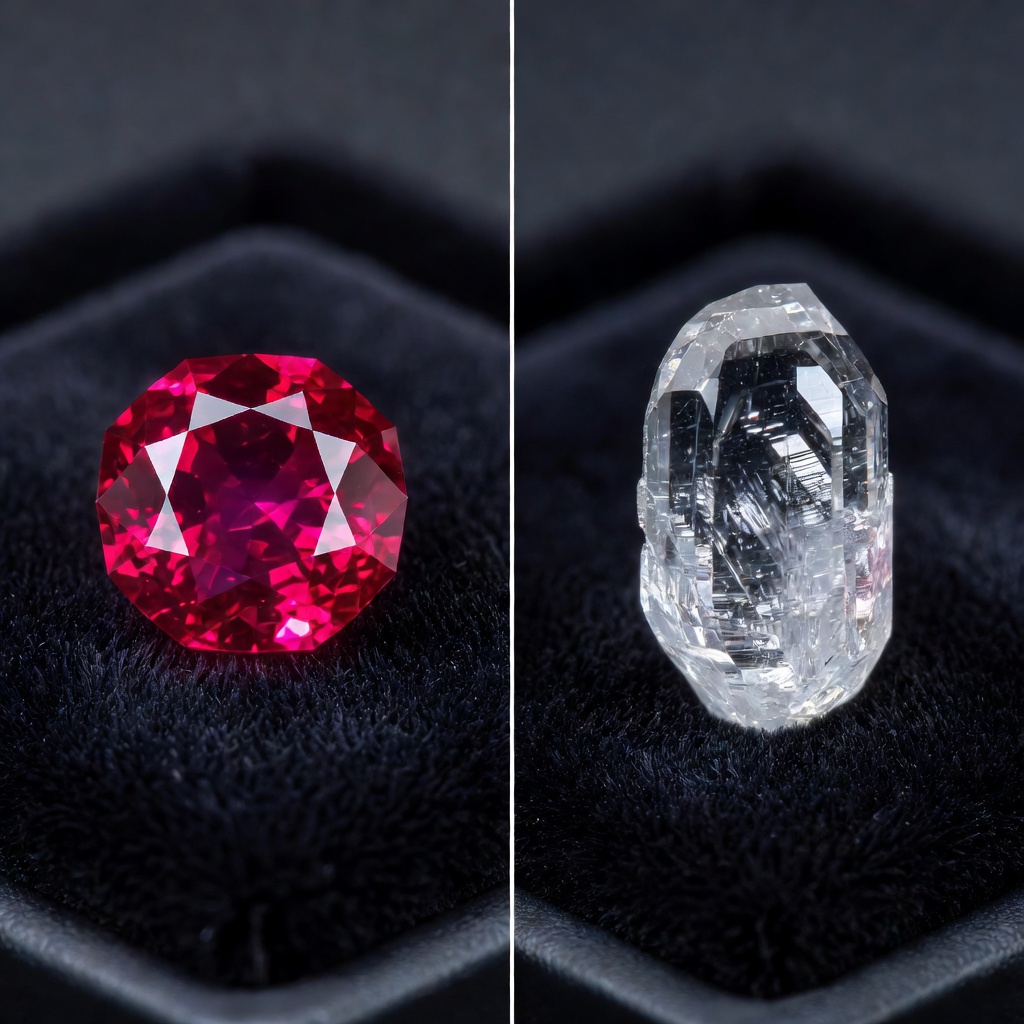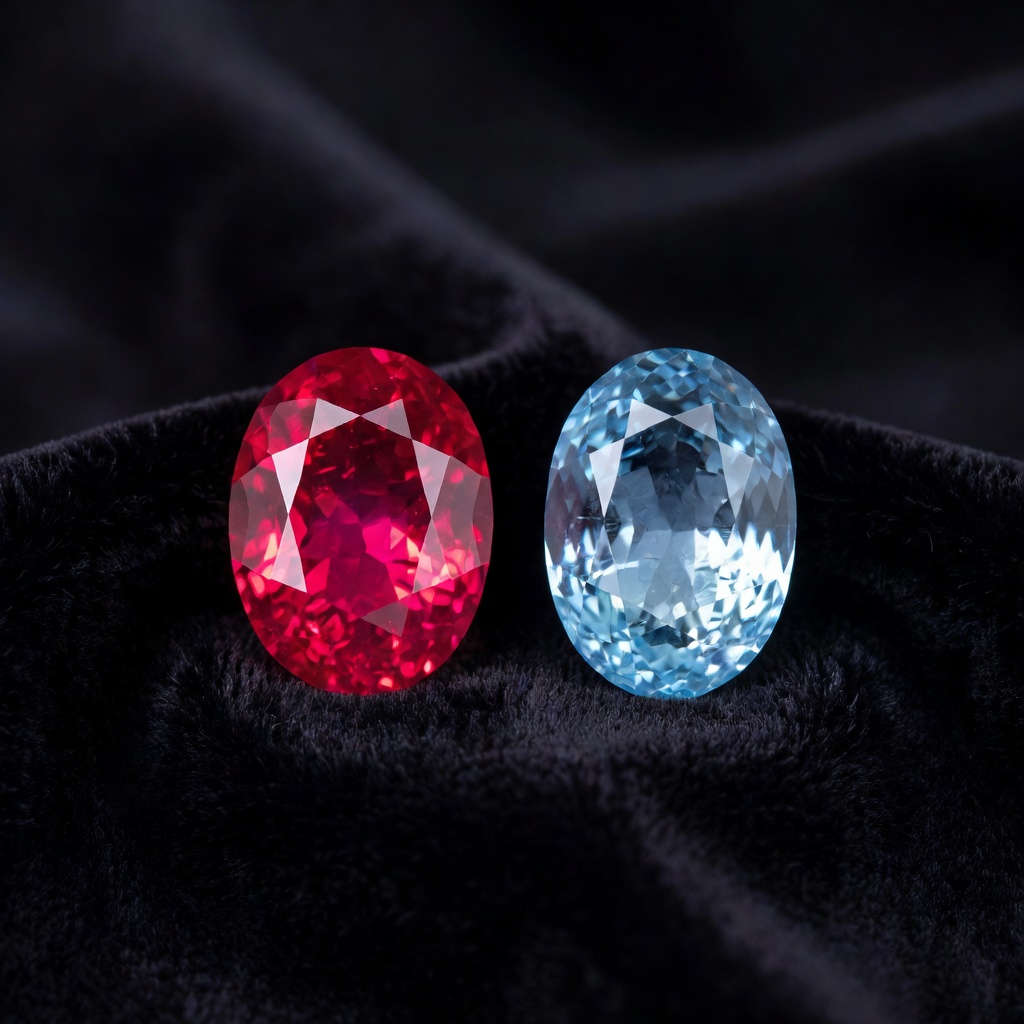
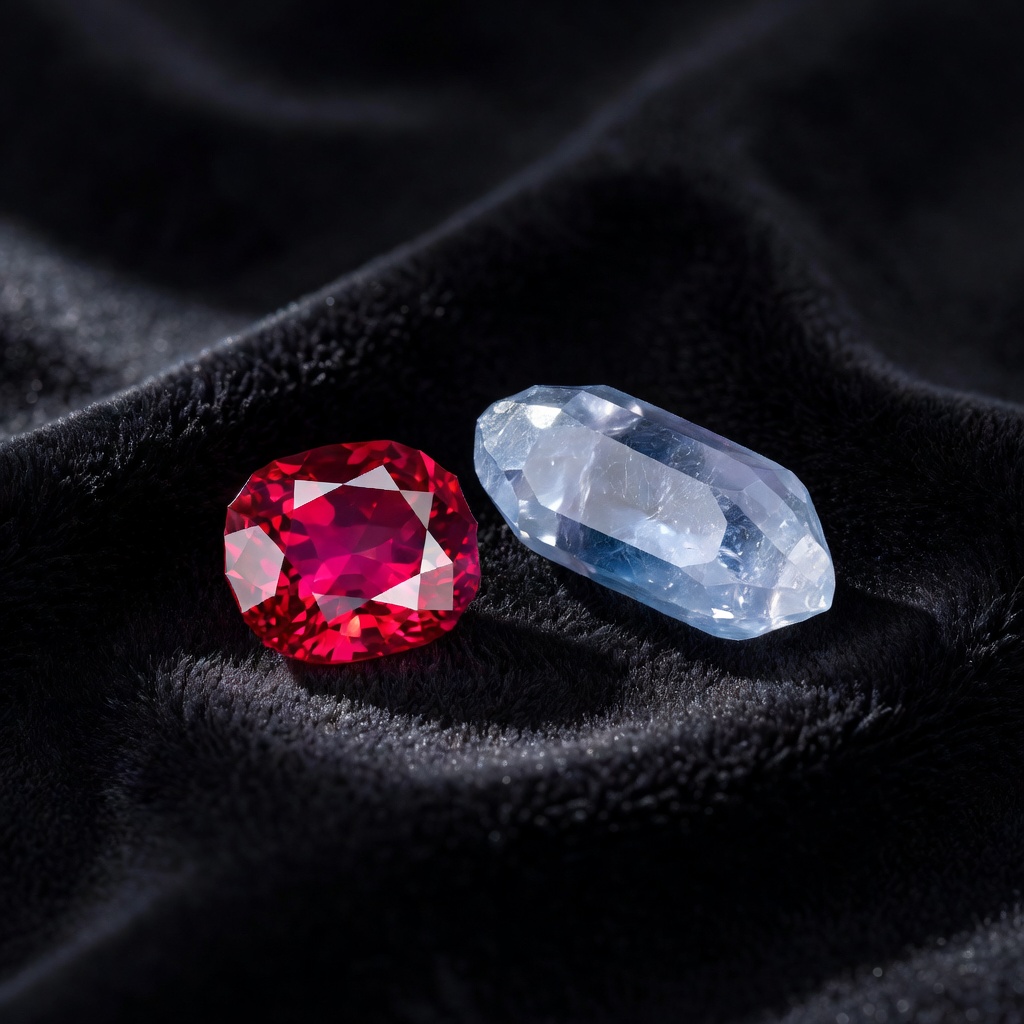
The Legendary Red vs The Ultra-Rare Blue
When collectors discuss the pinnacle of colored gemstones, ruby invariably commands attention as one of the prestigious "Big Three" alongside sapphire and emerald. This red corundum variety has captivated civilizations for millennia, adorning royal crowns and modern engagement rings with equal magnificence. Yet beneath the radar of mainstream jewelry consumers lies jeremejevite, an aluminum borate mineral so scarce that most gemologists never handle a specimen throughout their entire careers. Understanding the nuances of Ruby vs Jeremejevite becomes essential for serious collectors and investors seeking to balance portfolio stability with the thrill of owning Earth's rarest treasures.
The contrast between these two gemstones extends far beyond their color differences. While ruby represents accessibility to luxury through established mining networks and recognizable beauty, jeremejevite embodies the exclusivity that drives niche mineral collecting. This comprehensive comparison examines everything from geological formation to investment potential, providing actionable insights for anyone considering these remarkable stones. Whether you seek a daily wearable heirloom or a museum-quality specimen, understanding their distinct value propositions will guide your acquisition strategy.
Geological Origins and Chemical Composition
Ruby's Metamorphic Birth as Red Corundum
Ruby forms as a variety of corundum, composed primarily of aluminum oxide (Al₂O₃) with trace chromium elements that create its signature red coloration. These gemstones crystallize under intense heat and pressure within metamorphic rocks, particularly marble and basalt deposits where limestone interactions facilitate the necessary chemical exchanges. The Ruby formation geology typically occurs at depths exceeding 20 kilometers, where temperatures surpass 800 degrees Celsius and specific tectonic conditions allow chromium to replace aluminum atoms in the crystal lattice.
Major ruby deposits develop through contact metamorphism when magma intrudes into carbonate rocks, creating the perfect environment for large crystal growth. Myanmar's Mogok Stone Tract represents the most famous example, where marble-hosted rubies have formed over millions of years. The geological stability required for fine ruby formation means that significant deposits remain relatively rare globally, though commercial mining operations in Mozambique and Madagascar have increased availability in recent decades. Understanding these formation conditions helps gemologists predict quality variations based on host rock characteristics.
Jeremejevite's Unique Aluminum Borate Structure
Jeremejevite stands apart as one of the rare aluminum borate minerals, chemically classified as aluminum borate hydroxide with fluoride content (Al₆B₅O₁₅(F,OH)₃). Unlike corundum's simple oxide structure, jeremejevite contains boron as an essential component, creating a complex hexagonal crystal system that rarely achieves gem-quality sizes. The Jeremejevite chemical composition requires highly specific pegmatite formations or alpine cleft deposits where boron-rich fluids interact with aluminum-bearing minerals under low-temperature hydrothermal conditions.
This gemstone typically forms in cavities within granite pegmatites or high-pressure, low-temperature alpine-type fissures where late-stage hydrothermal solutions concentrate rare elements. The presence of fluorine in jeremejevite's structure contributes to its exceptional transparency and distinctive optical properties. Most specimens measure under one carat when faceted, with crystals over five carats representing extreme rarities that command premium attention at specialized mineral auctions. The geological specificity of jeremejevite formation explains why fewer than five significant deposits exist worldwide.
Physical Properties and Durability Comparison
Mohs Hardness Scale Analysis
Durability represents one of the most critical factors distinguishing these gemstones for jewelry applications. Ruby Mohs hardness scale ratings reach 9, placing these gems second only to diamond in resistance to scratching and daily wear. This exceptional hardness stems from corundum's tightly packed oxygen and aluminum atomic structure, allowing rubies to maintain their polish indefinitely even in rings subjected to constant contact. For consumers seeking Ruby engagement rings or daily wear pieces, this hardness translates to generational durability with minimal maintenance requirements.
Jeremejevite hardness varies between 6.5 and 7.5 on the Mohs scale, creating significant implications for jewelry setting and wear patterns. While this range provides adequate resistance for occasional wear, the mineral's perfect cleavage in one direction makes it susceptible to splitting if struck along specific crystallographic planes. Jeremejevite hardness limitations require protective bezel or halo settings rather than exposed prong mountings, particularly for rings that might encounter impact during daily activities. Collectors must weigh this vulnerability against the stone's extraordinary rarity when determining appropriate jewelry applications.
Cleavage and Toughness Considerations
Beyond simple hardness measurements, gemstone toughness—the resistance to breaking and chipping—varies dramatically between these species. Ruby exhibits excellent toughness despite its high hardness, lacking cleavage planes and resisting fracture under normal wearing conditions. This combination makes ruby ideal for active lifestyles and heirloom jewelry intended for daily transmission through family lines. Even significant inclusions rarely compromise ruby's structural integrity, allowing cutters to fashion bold designs without excessive concern for breakage during setting.
Conversely, jeremejevite's perfect basal cleavage creates vulnerability that contradicts its moderate hardness rating. A sharp blow perpendicular to the c-axis can split even high-quality crystals cleanly in two, requiring jewelers to orient stones carefully within protective mountings. This characteristic relegates most jeremejevite to pendant and earring designs where impact risk remains minimal. When comparing Ruby durability against jeremejevite's fragility, the practical differences become stark: one welcomes daily adventure while the other demands museum-quality care.
| Characteristic | Ruby (Red Corundum) | Jeremejevite |
|---|---|---|
| Chemical Composition | Aluminum Oxide (Al₂O₃) with Chromium | Aluminum Borate Hydroxide with Fluoride |
| Mohs Hardness | 9.0 | 6.5 - 7.5 |
| Specific Gravity | 3.99 - 4.00 | 3.28 - 3.31 |
| Primary Colors | Red to Pinkish-Red | Pale Blue, Colorless, Pale Yellow |
| Major Sources | Myanmar, Mozambique, Madagascar | Namibia, Tajikistan, Siberia |
| Typical Treatment | Heat Treatment (Common) | Usually Untreated |
| Price Range (Per Carat) | $1,000 - $15,000+ | $2,000 - $10,000+ |
| Best Jewelry Application | Engagement Rings, Daily Wear | Pendants, Earrings, Collector Specimens |
| Annual Production | Thousands of Carats (Fine Quality) | Dozens of Crystals Globally |
Color Variations and Optical Characteristics
The Red Spectrum of Corundum
Ruby red shades span from delicate pinkish-red to the coveted deep "pigeon blood" red that commands premium prices in Asian markets. The most valuable specimens display a pure, vibrant red with medium to medium-dark tone and vivid saturation, often exhibiting slight blue or purple secondary hues depending on chromium and iron content ratios. Burmese rubies traditionally set the color standard, displaying a fluorescent red glow under daylight that seems to emanate from within the stone due to chromium's effect on light absorption.
Under ultraviolet light, natural rubies typically display strong red fluorescence, a diagnostic feature that helps distinguish them from garnets or spinels. This optical property creates the "glow" effect prized in top-tier stones, particularly those from marble deposits rather than basalt origins. Clarity expectations for ruby remain relatively inclusive; while eye-clean stones command premiums, traditional connoisseurs often accept silk inclusions (rutile needles) that prove natural origin and can create desirable asterism when properly oriented. These inclusions rarely detract from beauty when they enhance the stone's character without compromising transparency.
Jeremejevite's Diverse Color Palette
Jeremejevite color varieties encompass pale blue (the most valued), colorless, pale yellow, white, and exceptionally rare aquamarine-like blue-green shades. Unlike ruby's singular color family, jeremejevite offers subtle pastel tones that appeal to collectors seeking alternatives to mainstream blue gemstones. The blue coloration results from trace iron content, with the most desirable specimens displaying a delicate sky blue or cornflower hue reminiscent of fine sapphire but with distinctive optical properties that set them apart in side-by-side comparisons.
The mineral exhibits strong pleochroism, showing different colors—typically colorless to pale blue or yellowish—when viewed from different crystallographic angles. This optical phenomenon requires careful cutting orientation to maximize face-up color, often resulting in shallow pavilion angles that preserve weight while enhancing hue. Jeremejevite vs sapphire rarity comparisons frequently note that while blue sapphire remains readily available, fine blue jeremejevite appears on the market perhaps once or twice per year globally. Exceptional transparency represents another hallmark; whereas rubies often contain visible inclusions, jeremejevite frequently achieves eye-clean or loupe-clean clarity due to its formation in open cavity environments.
Rarity, Mining Locations, and Market Availability
Ruby's Established Mining Infrastructure
Global ruby production centers on Myanmar's Mogok region, Mozambique's Montepuez mines, Madagascar's Ilakaka deposits, and Thailand's Bo Rai area, creating a relatively consistent supply chain for the jewelry industry. Modern mining operations in Mozambique have revolutionized the market since 2009, producing fine red stones that rival Burmese quality while operating under more traceable ethical standards. These operations yield thousands of carats monthly, though fine gem-quality material represents less than one percent of total production, maintaining exclusivity at the highest levels.
The established infrastructure supporting ruby mining includes sophisticated sorting facilities, cutting centers in Thailand and India, and direct pipelines to international auction houses. This accessibility ensures that collectors can acquire certified stones with relative ease, though prices continue climbing due to increasing demand from Asian luxury markets. When conducting a rare gemstones comparison, ruby occupies an interesting middle ground: genuinely rare in fine quality yet commercially available through established dealer networks and major jewelry retailers worldwide.
Jeremejevite's Microscopic Global Yield
Jeremejevite mining locations remain restricted to three primary regions: Namibia's Erongo Mountains (producing the finest blue crystals), Tajikistan's Pamir Mountains, and Siberia's Adun-Chilon Mountains in Russia. The Namibian deposits, discovered in the late 20th century, yield the only consistently gem-quality material, yet annual production often totals fewer than fifty crystals suitable for faceting. Most specimens measure under two carats finished, with stones exceeding five carats appearing perhaps once every few years at specialized mineral shows.
The extreme scarcity of jeremejevite creates a seller's market where availability dictates pricing more than traditional gemological quality factors. Unlike ruby, where miners can predict yields based on geological surveys, jeremejevite discoveries remain entirely unpredictable, often occurring as single exceptional pockets within larger pegmatite operations. This uncertainty means that collectors must maintain relationships with specialized dealers who monitor global mineral shows, as jeremejevite rarely appears in traditional jewelry stores or mainstream online marketplaces. The total global supply of faceted jeremejevite likely numbers fewer than 1,000 stones, creating exclusivity that transcends even the rarest diamond colors.
Pricing Analysis and Investment Potential
Price Per Carat Comparison
Current market analysis reveals fascinating overlaps in Jeremejevite price per carat versus ruby valuations, though the underlying market dynamics differ substantially. Fine rubies typically command $1,000 to $15,000 per carat for commercial-quality stones, with exceptional Burmese pigeon blood specimens exceeding $100,000 per carat at auction. These prices reflect both intrinsic beauty and established luxury market demand, with untreated stones commanding premiums of 40-60% over heated material. The Ruby investment value remains relatively liquid, with stones readily salable through auction houses, dealer networks, and private sales.
Jeremejevite pricing typically ranges from $2,000 to $10,000 per carat for fine blue specimens, with colorless or pale yellow stones commanding slightly less. However, exceptional large crystals or intense blue hues can exceed these ranges, particularly when provenance traces to specific famous pockets like Namibia's Tubussis Farm. Unlike ruby, jeremejevite lacks standardized grading systems, meaning prices depend heavily on collector demand at specific moments rather than consistent market metrics. Investment grade colored gemstones like jeremejevite require longer holding periods for appreciation, as the buyer pool remains specialized and liquidity events occur less frequently.
Market Liquidity and Value Appreciation
Ruby offers superior market liquidity due to established certification standards, auction house departments dedicated to colored stones, and global recognition among high-net-worth individuals. Investors can liquidate fine rubies within weeks through Sotheby's, Christie's, or specialized dealers, with price histories dating back centuries providing confidence in long-term value retention. Recent auction records demonstrate consistent appreciation for untreated Burmese material, with certain stones doubling in value over five-year periods despite economic fluctuations.
Jeremejevite represents a speculative investment suitable for portfolio diversification rather than quick returns. The mineral's extreme rarity suggests significant appreciation potential as deposits deplete, but sales require specialized mineral auctions or direct collector-to-collector transactions. Smart investors acquire jeremejevite during economic downturns when specialized collectors liquidate holdings, then hold for decades until supply constraints force price recognition. Unlike ruby, where treatment disclosure significantly impacts value, jeremejevite's typically untreated nature simplifies valuation, though authentication costs remain higher due to the need for advanced gemological testing.
Jewelry Applications and Setting Considerations
Ruby's Versatility in Daily Wear
The exceptional hardness and toughness of ruby make it ideal for Ruby engagement rings, anniversary bands, and statement pieces intended for daily wear. Contemporary designers frequently set rubies in platinum or 18-karat gold mountings that protect the girdle while maximizing light return, creating pieces that withstand decades of active lifestyles. Prong settings remain popular for high-quality stones, though bezel settings offer additional protection for stones with surface-reaching inclusions. Yellow gold enhances the warmth of Burmese rubies, while white metals complement the cooler tones of Mozambique stones.
Beyond rings, rubies excel in bracelet designs, brooches, and earrings where their durability prevents the chipping common in softer gemstones. High jewelry houses like Cartier and Van Cleef & Arpels frequently feature ruby centerpieces in parure sets, knowing these stones will maintain their beauty through generations of wear. For consumers seeking birthstone jewelry (July) or 40th anniversary gifts, ruby offers practical durability alongside symbolic significance that softer stones cannot match.
Protective Settings for Jeremejevite
Given jeremejevite's cleavage vulnerabilities, Jeremejevite jewelry settings require protective designs that minimize impact risk while showcasing the stone's exceptional clarity. Bezel settings with full girdle protection work best for rings, though most collectors prefer pendant designs where the stone remains safely away from hard surfaces. Earrings represent another excellent option, particularly stud or drop designs where movement remains controlled and impact unlikely.
White metals including platinum, white gold, and palladium complement jeremejevite's cool blue and colorless varieties, enhancing the stone's delicate hues without color competition. Some collectors prefer minimalist tension settings that display the crystal's hexagonal habit, though these require expert craftsmanship to avoid pressure points along cleavage planes. When designing custom pieces, jewelers should orient jeremejevite with the table perpendicular to the c-axis to minimize cleavage exposure, a technical consideration unnecessary with ruby's isometric durability.
Enhancements, Treatments, and Authenticity
Common Ruby Treatments and Detection
The vast majority of rubies undergo heat treatment to improve color saturation and clarity, a permanent enhancement accepted within the trade provided disclosure accompanies sale. However, Ruby treatment identification becomes crucial when assessing value, as untreated stones command significant premiums. Low-quality rubies sometimes receive glass filling or flux healing to mask fractures, treatments that significantly compromise durability and value. Laboratory reports from GIA or AGL specify treatment levels, with "no evidence of heating" notations essential for investment-grade purchases.
Detection methods include microscopic examination for heat-altered inclusions, spectroscopic analysis of chromophore changes, and fluorescence pattern evaluation. Buyers should insist on certification from reputable laboratories rather than relying on dealer representations, particularly for stones priced above $5,000 per carat. Be alert for synthetic rubies created through flux growth or hydrothermal processes; while chemically identical to natural stones, these laboratory creations carry significantly lower values and require advanced testing for definitive identification.
The Untreated Appeal of Jeremejevite
Untreated jeremejevite represents the norm rather than the exception in this rare species. The stone's scarcity and specialized collector market create little incentive for enhancement, as purists seek natural crystals in their original state. While heating could theoretically improve color in pale specimens, the risk of cleavage damage during treatment and the microscopic supply make such processes economically unviable. This untreated status simplifies purchasing decisions, as buyers can focus on natural beauty without navigating complex treatment hierarchies.
Authentication challenges differ from ruby, as jeremejevite's rarity means fewer reference samples exist in gemological laboratories. Advanced testing including refractive index measurement (1.64-1.65), specific gravity determination (3.28-3.31), and Raman spectroscopy confirms identity beyond visual examination. Collectors should request detailed provenance documentation indicating specific mines and discovery dates, as certain localities like Namibia produce superior material worth premium prices. Unlike ruby certification, jeremejevite documentation often comes from mineralogical institutions rather than standard gem labs, reflecting its status as a collector mineral rather than mainstream jewelry stone.
Care, Cleaning, and Long-term Maintenance
Proper maintenance protocols vary significantly between these gemstones due to their differing physical properties. Ruby generally tolerates ultrasonic and steam cleaning provided the stone lacks significant fractures or glass fillings, making professional jewelry maintenance straightforward. However, treated rubies—particularly those with lead glass filling—require gentle cleaning with warm soapy water and soft brushes only, as ultrasonic vibrations can loosen fillings or cause clouding. Store ruby jewelry separately from diamonds or other rubies to prevent scratching, though ruby-to-ruby contact poses minimal risk.
Jeremejevite demands meticulous Gemstone care guide protocols including gentle soap and water cleaning exclusively, avoiding ultrasonic vibrations that could activate cleavage planes. Store jeremejevite pieces in individual soft cloth pouches away from harder gemstones, as even casual contact with quartz (7.0 hardness) or topaz (8.0) could scratch the surface. When traveling, carry jeremejevite in rigid boxes with padded interiors, as impact during transport poses the greatest damage risk. Unlike ruby, which often improves with wear as oils polish microscopic surface irregularities, jeremejevite requires protective storage to maintain its pristine condition.
Final Verdict: Which Gemstone Belongs in Your Collection?
The Ruby vs Jeremejevite comparison ultimately reveals two distinct collecting philosophies rather than competing alternatives. Ruby suits collectors seeking immediately recognizable beauty, daily wearability, and liquid investment potential. Its superior hardness, established market infrastructure, and timeless appeal make it ideal for engagement rings, family heirlooms, and conservative investment portfolios. For those prioritizing jewelry that transitions seamlessly from boardrooms to social events while appreciating steadily, ruby offers unmatched versatility among colored stones.
Jeremejevite appeals to the connoisseur who values exclusivity above recognition, collecting for the joy of owning something truly unique rather than display value. Its extreme rarity and typically untreated nature provide portfolio diversification distinct from mainstream gem markets, though the specialized buyer pool requires patience when eventual liquidation becomes necessary. Consider jeremejevite if you maintain relationships with mineral dealers, attend specialized gem shows, and view collecting as a multi-generational endeavor rather than short-term investment.
For the sophisticated collector, the optimal strategy incorporates both: ruby for wearable luxury and wealth preservation, jeremejevite for rarity appreciation and the satisfaction of possessing one of Earth's scarcest treasures. Budget considerations also factor heavily—while $10,000 might acquire a modest ruby, it could secure a world-class jeremejevite specimen, offering different value propositions depending on whether you prioritize size, color intensity, or exclusivity.
Frequently Asked Questions
What is jeremejevite and why is it compared to ruby?
Jeremejevite is an extremely rare aluminum borate mineral discovered in 1883, named after Russian mineralogist Pavel Jeremejev. While ruby is famous for its red color and durability, jeremejevite is compared to it as an ultra-rare collector's gemstone that often exceeds fine ruby in rarity, though it remains largely unknown to the general public.
Is jeremejevite more expensive than ruby per carat?
High-quality jeremejevite can command prices comparable to or exceeding commercial-grade rubies, typically ranging $2,000-$10,000+ per carat for fine blue specimens. However, exceptional Burmese pigeon blood rubies still command higher prices ($15,000-$100,000+ per carat) due to established luxury market demand.
Which gemstone is harder and better for daily wear?
Ruby is significantly harder at 9 on the Mohs scale compared to jeremejevite's 6.5-7.5, making ruby far superior for daily wear jewelry like engagement rings. Jeremejevite has perfect cleavage and requires protective settings, making it better suited for pendants, earrings, or occasional-wear pieces.
What colors do ruby and jeremejevite come in?
Ruby exclusively occurs in red to pinkish-red hues due to chromium content. Jeremejevite occurs in pale blue (most valued), colorless, pale yellow, white, and rarely aquamarine-blue shades. Unlike ruby, jeremejevite exhibits pleochroism, showing different colors when viewed from different angles.
Where are these gemstones mined?
Rubies are primarily mined in Myanmar (Burma), Mozambique, Madagascar, and Thailand with consistent commercial production. Jeremejevite is mined in extremely limited quantities in Namibia (primary source), Tajikistan, and Siberia, Russia, with total annual production often measuring in just dozens of crystals rather than tons.
Are these gemstones typically treated or enhanced?
Most rubies on the market undergo heat treatment to improve color and clarity, with some lower-quality stones receiving glass or lead filling. Jeremejevite is almost never treated due to its rarity and the collector market's preference for completely natural specimens, though buyers should always request certification.
How can I verify I'm buying authentic jeremejevite versus ruby?
Ruby can be identified by its hardness (9), specific gravity (3.99-4.00), and often visible inclusions like rutile needles. Jeremejevite requires gemological testing for confirmation, showing distinct refractive indices (1.64-1.65) and specific gravity (3.28-3.31). Always purchase from reputable dealers with laboratory certification from GIA or AGL.
Which makes a better investment for gemstone collectors?
Ruby offers better market liquidity and established auction records, making it suitable for traditional investors. Jeremejevite appeals to specialized mineral collectors seeking extreme rarity, with potential for significant appreciation as deposits deplete, though the market is smaller and more specialized. Diversification into both offers different risk-reward profiles.