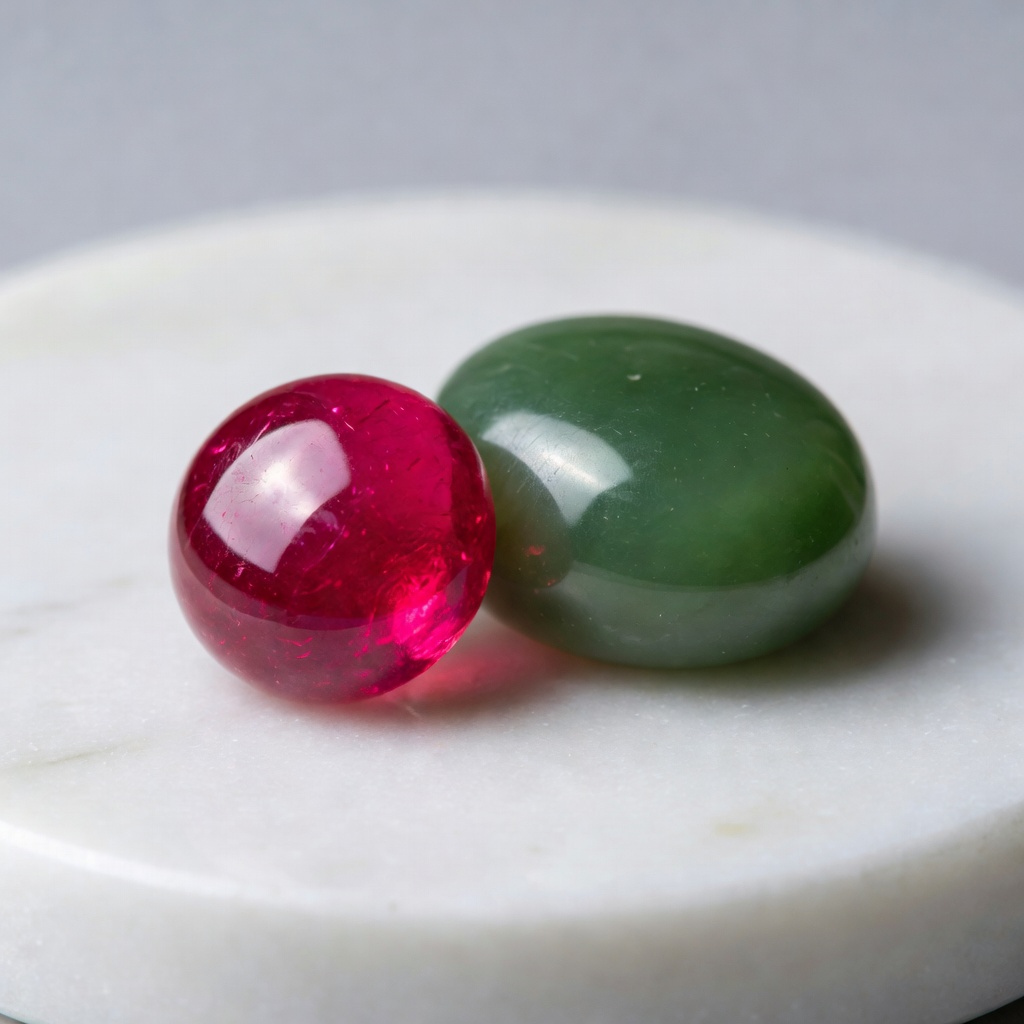
Understanding Two Legendary Gemstones
When exploring the Ruby vs Jade (Nephrite) debate, collectors and jewelry enthusiasts encounter two of humanity's most cherished treasures. Ruby has earned its title as the "King of Gems" through centuries of royal patronage and biblical references, while nephrite jade has been revered as the "Stone of Heaven" across Asian civilizations for millennia. These stones frequently appear in comparative discussions despite belonging to entirely different mineral families, primarily because both represent pinnacle achievements in colored gemstone desirability and cultural prestige. Understanding the fundamental distinctions between corundum and amphibole minerals helps discerning buyers navigate important decision factors including long-term durability, symbolic significance, and potential investment returns.
Contemporary jewelry markets position both stones as premium options, yet they serve distinctly different aesthetic and functional purposes. Ruby's association with passion and power appeals to Western sensibilities and modern bridal markets, while nephrite jade's connection to virtue and longevity resonates deeply with Eastern philosophical traditions. Before making acquisition decisions, prospective owners must evaluate their lifestyle requirements, budget parameters, and whether they prioritize scratch resistance or resistance to breakage. This comprehensive analysis examines every critical dimension to illuminate which legendary gemstone aligns with your specific needs.
Geological Origins: Corundum vs. Amphibole Minerals
The geological formation processes behind these gemstones reveal fascinating contrasts in mineralogy and crystallization environments. Ruby crystallizes as aluminum oxide (Al₂O₃) within the corundum family, requiring extreme conditions of 750-950°C temperatures and 4-6 kilobars of pressure typically found in metamorphic limestone environments or aluminum-rich igneous rocks. These苛刻 conditions, combined with trace chromium elements that create the characteristic red coloration, explain why significant ruby deposits remain relatively rare globally. The Mogok Stone Tract in Myanmar produces the legendary pigeon blood specimens, while Mozambique's Montepuez deposits have emerged as crucial sources for fine material since the early 2000s.
Nephrite jade forms through markedly different geological mechanisms as a calcium magnesium silicate belonging to the amphibole mineral group. Rather than crystallizing in distinct formations, nephrite develops through the metamorphism of dolomitic marbles and serpentinite rocks, creating an interlocking fibrous structure that distinguishes it from its jadeite cousin. Primary mining operations concentrate in British Columbia's Cassiar Mountains, where massive boulders yield the prized apple-green material, and Siberia's Sayan Mountains, renowned for producing spinach-green to black varieties. Unlike ruby's discrete crystal formations, nephrite often occurs in large boulders or vein systems that facilitate the carving of substantial artistic objects.
Physical Properties and Durability Face-Off
The gemstone hardness comparison between these materials presents one of the most significant practical considerations for jewelry applications. Ruby ranks 9 on the Mohs scale, making it second only to diamond in scratch resistance and exceptionally suitable for daily wear rings and bracelets. This exceptional hardness derives from corundum's tightly bonded aluminum and oxygen atoms arranged in a hexagonal crystal system. However, hardness alone does not determine a gemstone's survivability in jewelry settings, as the relationship between hardness and toughness involves complex mineralogical factors that surprise many first-time buyers.
Nephrite jade registers 6-6.5 on the Mohs scale, significantly softer than ruby, yet possesses superior toughness due to its unique interlocking fibrous crystal structure. While ruby can chip or fracture along cleavage planes when struck sharply, nephrite's felted amphibole fibers absorb impact energy, making it extraordinarily resistant to breaking. This toughness paradox explains why ancient civilizations successfully carved intricate nephrite weapons and tools despite the material's relative softness. For modern jewelry collectors, this means ruby excels in preventing surface scratches during daily activities, while nephrite better withstands accidental drops or impacts, particularly important for carved pendants and bangles.
| Property | Ruby (Corundum) | Nephrite Jade |
|---|---|---|
| Mineral Composition | Aluminum Oxide (Al₂O₃) | Calcium Magnesium Silicate |
| Mohs Hardness | 9 | 6-6.5 |
| Toughness | Good, but exhibits cleavage | Exceptional (interlocking fibers) |
| Primary Colors | Red (pigeon blood to pinkish) | Green (spinach to apple), white, black |
| Luster | Vitreous (glassy) to adamantine | Waxy to greasy |
| Price Range (per carat) | $1,000-$15,000+ (fine quality) | $100-$3,000+ (fine quality) |
| Best Jewelry Applications | Engagement rings, earrings, daily wear | Pendants, bangles, carved art pieces |
| Refractive Index | 1.762-1.770 | 1.606-1.632 |
Color Spectrum and Visual Characteristics
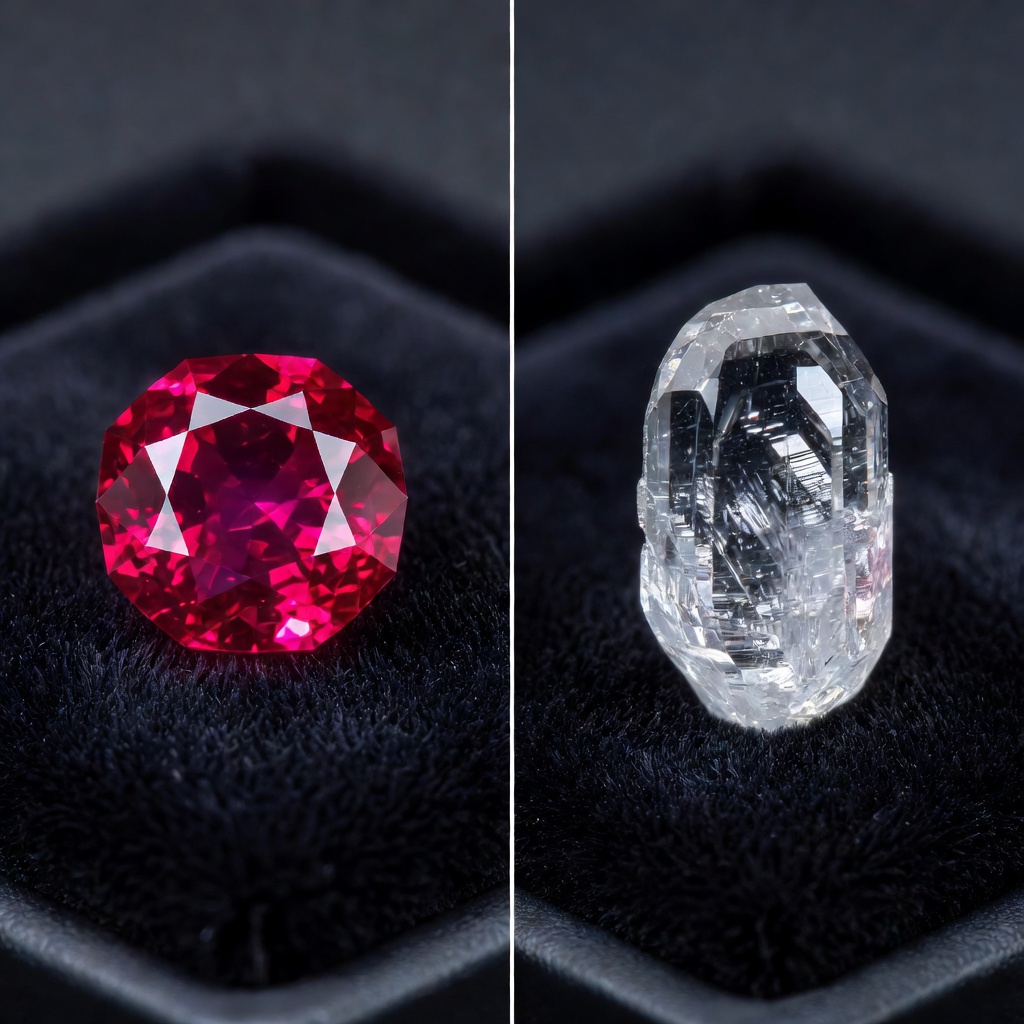
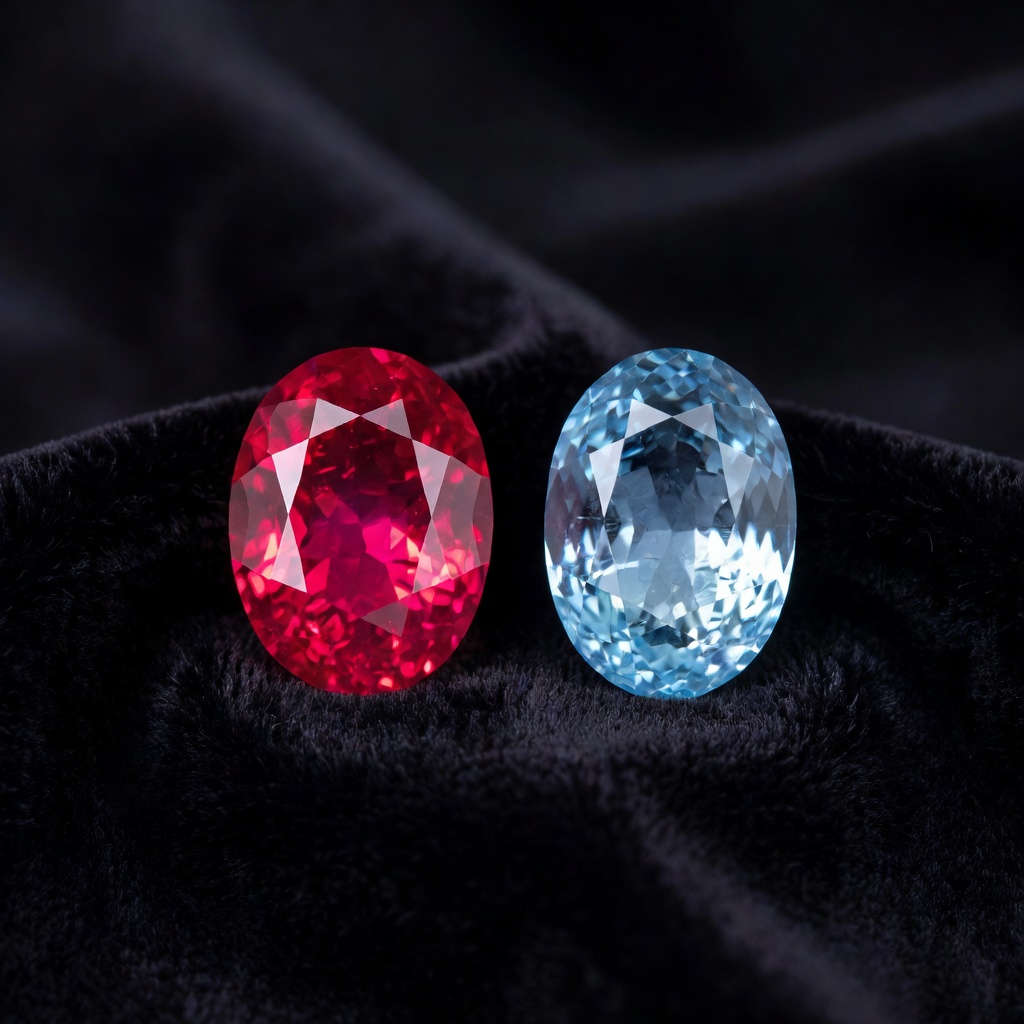
Distinguishing between red gemstone vs green gemstone aesthetics involves appreciating fundamentally different optical properties and quality grading systems. Ruby's color evaluation centers on the legendary "pigeon blood" red, a vivid saturated crimson with slight blue undertones originally defined by stones from Myanmar's Mogok Valley. Fine specimens exhibit strong fluorescence under ultraviolet light, creating an internal glow that seems to illuminate the stone from within. Clarity standards demand eye-clean appearances for investment-grade material, though silk inclusions—minute rutile needles—can actually enhance value when they create the desirable "star" effect in asteriated varieties.
Nephrite jade presents a completely different visual language emphasizing texture, translucency, and color consistency across the spinach-green spectrum. Unlike ruby's glass-like transparency, high-quality nephrite displays a distinctive waxy or greasy luster that feels almost moist to the eye, particularly in the coveted "mutton fat" white jade from Hotan. Characteristic mottling and subtle color banding represent acceptable and often desirable features rather than clarity defects. When evaluating nephrite, collectors prioritize "water" or translucency alongside color, with the finest specimens exhibiting a glowing, semi-translucent quality that seems to hold light within the stone's depth.
Cultural Significance and Symbolism Through History
The July birthstone properties of ruby have cemented its status in Western traditions as the ultimate symbol of passion, protection, and prosperity. Ancient Sanskrit texts referred to ruby as "ratnaraj" or king of precious stones, while medieval Europeans believed the stone could warn wearers of impending danger by darkening in color. Burmese warriors implanted rubies beneath their skin to render themselves invincible in battle, and the gemstone features prominently in British crown jewels, including the Black Prince's Ruby in the Imperial State Crown. For those born in July, ruby represents vitality, confidence, and leadership qualities that align with the height of summer energy.
Nephrite jade meaning extends across more than 8,000 years of continuous Chinese cultural tradition, where the stone represents the concentrated essence of heaven and earth. Confucius associated jade with five cardinal virtues: benevolence, righteousness, wisdom, courage, and propriety. Unlike Western precious stone hierarchies, Chinese culture traditionally valued nephrite above gold and silver, with the imperial seal historically carved exclusively from this material. The stone's association with immortality manifested in burial practices where jade suits encased Han Dynasty royalty, while Taoist traditions credit nephrite with protecting the physical body and ensuring spiritual transcendence. This deep cultural reservoir continues driving demand in Asian markets regardless of Western gemological classifications.
Market Value and Investment Potential Analysis
Navigating precious stone investment strategies requires understanding dramatically different pricing structures and liquidity patterns between these markets. Fine untreated Burmese rubies command $1,000 to $15,000+ per carat, with exceptional pigeon blood specimens over five carats occasionally selling for $100,000+ per carat at international auction houses like Christie's and Sotheby's. The "Sunrise Ruby," a 25.59-carat Burmese stone, sold for $30.3 million in 2015, establishing price benchmarks that continue appreciating as Myanmar's political situation restricts supply. Investment-grade rubies require certification confirming no heat treatment, with unheated stones showing 300-500% price premiums over heated equivalents.
Nephrite jade operates within broader price ranges of $100 to $3,000+ per carat for fine quality, though exceptional imperial green or translucent white "mutton fat" specimens can exceed $10,000 per carat in Asian auction contexts. Unlike ruby's standardized carat-based pricing, nephrite valuation emphasizes artistic merit, carving complexity, and historical provenance. Antique white nephrite carvings from the Qing Dynasty regularly outperform contemporary material at auction, suggesting different investment horizons. While ruby offers greater liquidity in Western markets and more standardized grading, nephrite presents opportunities for specialized collectors who understand Chinese aesthetic preferences and can identify untreated "A-jade" material.
Jewelry Applications and Design Versatility
Selecting between these materials for gemstone jewelry design depends largely on intended wear patterns and aesthetic goals. Ruby engagement rings have gained significant popularity as alternatives to diamonds, particularly for couples seeking distinctive color symbolism combined with practical durability. The stone's 9 Mohs hardness rating ensures that anniversary bands and solitaire settings maintain their polish through decades of daily wear. Contemporary designers frequently pair rubies with platinum or white gold to enhance the stone's cool blue undertones, though yellow gold settings remain traditional for Burmese material. Practical tip: When commissioning custom ruby jewelry, request bezels or protective V-prongs for pointed cabochons to prevent chipping at vulnerable edges.
Nephrite jade dominates categories requiring artistic carving and substantial material presence rather than faceted brilliance. Master carvers utilize nephrite's toughness to create intricate bangles, belt buckles, and pendants featuring traditional motifs like dragons, peonies, and Buddhist figures. The material's workability allows for hollowed "double happiness" pendants and bi-discs impossible to execute in brittle gemstones. For daily wear, nephrite performs excellently in pendant necklaces and hoop earrings where impact risks remain minimal. Metal pairing recommendations favor 22-karat yellow gold or rose gold settings that complement nephrite's warm green tones, though contemporary designers increasingly use titanium or carbon fiber for avant-garde jade pieces.
Authentication: Treatments and Synthetic Detection
Understanding buying ruby vs jade requires expertise in detecting treatments that significantly impact value and durability. Ruby treatments range from accepted heat enhancement (which improves color and clarity) to problematic glass filling and flux healing that compromise structural integrity. Glass-filled rubies, often called "composite rubies," contain lead-glass fillings in surface-reaching fractures that can deteriorate with normal cleaning or jewelry repair heat. Professional gemological laboratories use laser ablation-inductively coupled plasma-mass spectrometry (LA-ICP-MS) to detect chemical signatures indicating heat treatment or geographic origin. Always insist on GIA, SSEF, or Gübelin certification for investment-grade ruby purchases, particularly verifying "no indications of heating" notations.
Nephrite jade authentication focuses on distinguishing natural "A-jade" from polymer-impregnated "B-jade" and dyed "C-jade." B-jade treatments involve bleaching and polymer injection to improve translucency, while C-jade represents outright color enhancement through chemical dyes. Advanced testing uses infrared spectroscopy to detect polymer peaks around 2800-3200 cm⁻¹, while experienced observers note that treated jade often displays surface glossiness inconsistent with natural waxy luster. Case study: A 2018 Hong Kong auction house scandal revealed that 40% of "imperial green" jadeite items (often confused with nephrite) contained undisclosed polymer treatments, emphasizing the critical importance of purchasing from dealers who provide independent laboratory reports specifically testing for impregnation and dye.
Care, Maintenance, and Longevity Guidelines
Proper gemstone care guide protocols differ significantly between these materials despite both representing long-term heirloom investments. Ruby maintenance generally allows ultrasonic and steam cleaning for untreated stones, though heat-treated or fracture-filled specimens require gentle cleaning with warm soapy water and soft brushes. The stone's hardness makes it resistant to scratching from household dust (which contains silica at 7 Mohs), but storing ruby jewelry separately prevents accidental contact with diamonds that could cause damage. Practical tip: Remove ruby rings before rock climbing or weightlifting activities where impact against metal equipment could cause chips along cleavage planes.
Learning how to clean jade involves respecting the material's chemical sensitivity and porosity. Never expose nephrite to harsh acids, ultrasonic vibrations, or extreme temperature changes that could cause internal fracturing. Clean jade using lukewarm water with mild phosphate-free soap, drying immediately with lint-free cloths to prevent water spots. Antique nephrite pieces occasionally benefit from light oiling using mineral oil or jade-specific conditioners to prevent drying, particularly for carved items stored in climate-controlled environments. Storage recommendations include wrapping jade separately in acid-free tissue paper and maintaining 40-60% humidity levels to prevent the material from becoming brittle. Never store jade in direct contact with harder gemstones like ruby, as the hardness differential guarantees scratching damage to the jade surface.
Final Verdict: Which Gemstone Should You Choose?
Making the definitive Ruby vs Jade decision ultimately requires honest assessment of lifestyle factors, aesthetic preferences, and financial objectives. Active individuals or those seeking daily-wear engagement jewelry should prioritize ruby's superior scratch resistance and hardness, accepting the higher price point as insurance against surface damage. Budget-conscious collectors exploring entry-level luxury might find that $500-$1,000 purchases significantly higher quality nephrite carvings than comparably priced rubies, which at this range typically show heavy inclusions or heat treatment. Consider your cultural connections: those drawn to Western metaphysical traditions may resonate with ruby's fire energy, while practitioners of Eastern medicine or feng shui typically prefer nephrite's wood-element harmonics.
From an investment perspective, diversification suggests that serious collectors eventually acquire both materials, but starting priorities depend on market access. Western investors seeking liquid assets with established auction markets should focus on certified unheated Burmese rubies above two carats. Those with access to Asian markets or expertise in Chinese art history might find better value appreciation in Qing Dynasty nephrite carvings or contemporary masterworks by recognized artists like Wu Desheng. Spiritual alignment considerations also matter significantly: ruby stimulates the root chakra and enhances vital life force, while nephrite soothes the heart chakra and promotes emotional equilibrium. Trust your intuitive response when viewing specimens side-by-side, as both stones carry millennia of human reverence that transcends purely analytical comparisons.
Frequently Asked Questions
Which is more expensive, ruby or nephrite jade?
High-quality untreated Burmese rubies typically command higher prices per carat ($1,000-$15,000+) compared to nephrite jade ($100-$3,000+), though imperial-grade white or translucent green nephrite can occasionally exceed mid-quality ruby prices due to cultural demand in Asian markets. The rarity of unheated pigeon blood rubies over five carats drives exceptional premiums at international auctions, while nephrite pricing depends heavily on artistic merit and historical provenance alongside material quality. Entry-level collectors will find that investment-grade nephrite remains more accessible than equivalent quality ruby, making jade an attractive starting point for precious stone portfolios.
Can you wear nephrite jade every day like ruby?
While nephrite jade is softer (6-6.5 Mohs) than ruby (9 Mohs), it is actually tougher and more resistant to breaking due to its interlocking fibrous crystal structure. However, ruby resists scratching better, making it superior for daily-wear rings, while jade excels in pendants and bangles. If choosing jade for daily wear, select protective settings that shield the stone from direct impact and avoid wearing jade rings during activities involving hard surfaces or chemicals. Regular maintenance including gentle cleaning and occasional restringing for beaded jade jewelry ensures longevity comparable to harder gemstones.
Is ruby or jade better for an engagement ring?
Ruby is generally preferred for engagement rings due to its superior hardness (9 Mohs) that withstands daily abrasion. Nephrite jade requires more protective settings and mindful wear, though it offers unique cultural significance and artistic carving possibilities for alternative bridal jewelry. Couples choosing jade engagement rings should consider bezel settings or halo designs that elevate the stone above contact surfaces, while those selecting ruby should verify that the stone is untreated or properly disclosed as heated to ensure long-term stability. Both stones carry romantic symbolism: ruby represents passionate eternal love, while jade signifies faithful commitment and protection.
How do I tell real ruby from real nephrite jade?
Rubies display vitreous (glassy) luster, fluorescence under UV light, and often visible crystalline inclusions. Nephrite jade shows waxy or greasy luster, no fluorescence, and a characteristic fibrous or mottled texture. Professional refractive index testing confirms identification definitively, with ruby measuring 1.762-1.770 and nephrite 1.606-1.632. Visual examination under magnification reveals ruby's hexagonal crystal growth patterns and potential rutile inclusions, while nephrite shows an interlocking felted structure resembling twisted fibers. When in doubt, consult a certified gemologist who can perform specific gravity testing and advanced spectroscopic analysis to distinguish these materials from simulants like red spinel or aventurine quartz.
Which gemstone has better investment potential?
Unheated, Burmese pigeon blood rubies historically show stronger investment appreciation and liquidity in Western markets. However, certified imperial nephrite jade demonstrates steady appreciation in Asian markets, particularly for antique carvings with provenance or rare white 'mutton fat' specimens. Ruby investments benefit from standardized grading systems and international auction house recognition, while nephrite requires specialized knowledge of Chinese art history and connoisseurship to identify undervalued masterpieces. Diversified collectors often maintain both assets, with rubies serving as liquid stores of value and nephrite representing cultural heritage investments with different market cycles.
Do rubies and jade have different healing properties?
Ruby is associated with stimulating life force, enhancing passion, and improving circulation in crystal healing traditions. Nephrite jade is linked to heart chakra healing, emotional balance, kidney health support, and attracting good fortune and friendship in Eastern metaphysical practices. Practitioners recommend ruby for individuals seeking motivation, courage, and revitalized energy, particularly during convalescence or career transitions. Nephrite serves those requiring emotional stability, physical detoxification support, and harmonious relationships, with traditional Chinese medicine specifically associating the stone with kidney and adrenal gland health. Both stones should be cleansed regularly using moonlight, sage smoke, or running water to maintain their energetic properties.
Can ruby and jade be worn together in jewelry?
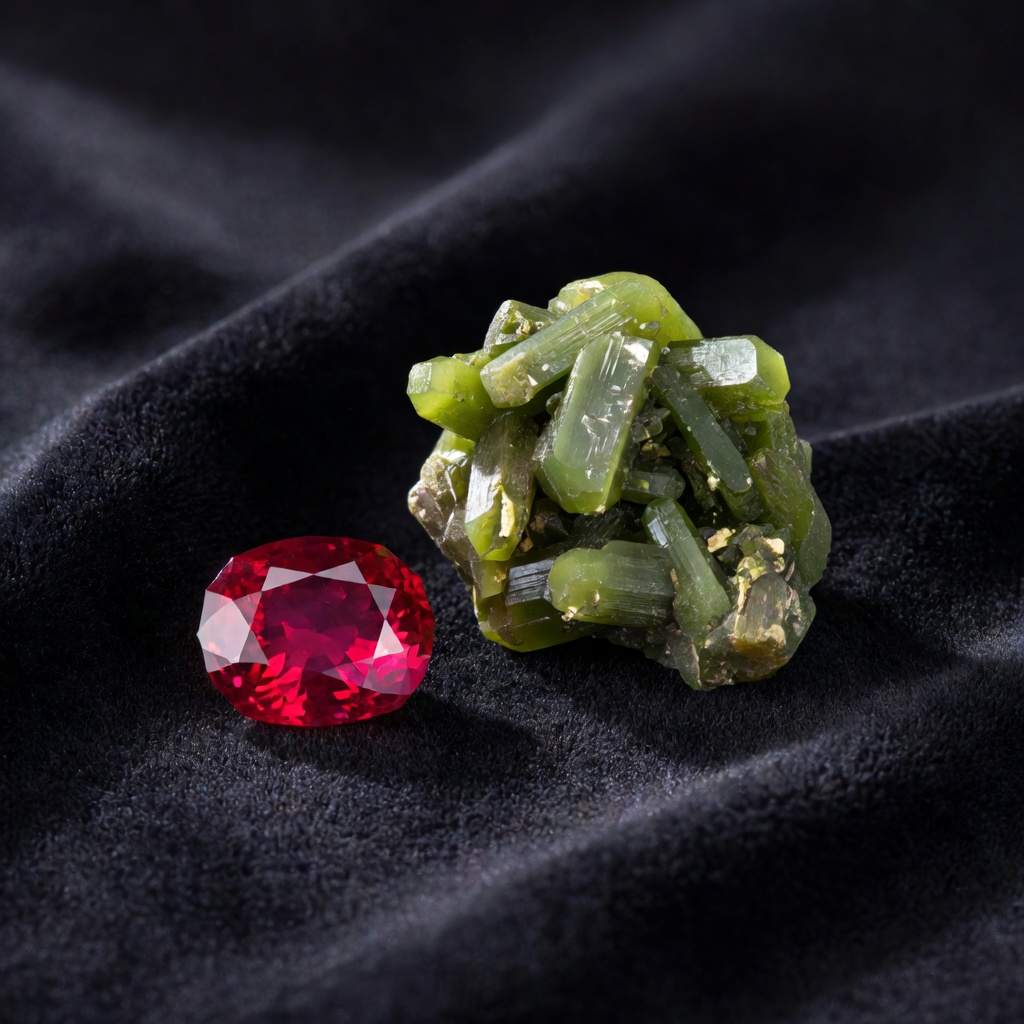
Yes, ruby and jade create striking color contrasts in jewelry, but protective settings are essential since ruby's hardness (9) can scratch jade (6-6.5). Designers often separate them with metal bezels or use them in multi-strand necklaces where they don't contact each other directly. Successful combinations include ruby and jade eternity bands alternating with metal dividers, or statement pieces where jade forms the central carved element surrounded by ruby melee in raised settings. When storing mixed jewelry pieces, always wrap individual items in soft cloth to prevent the harder ruby from abrading the nephrite surface during transport or display.
Which is rarer, high-quality ruby or imperial jade?
Gem-quality untreated Burmese rubies over 5 carats are statistically rarer than diamonds. While fine imperial nephrite jade is scarce, particularly in translucent white or deep spinach green, significant deposits in British Columbia and Siberia make high-quality nephrite somewhat more accessible than top-tier rubies. The closure of Myanmar's Mogok mines to foreign mining companies has further restricted ruby supply, while nephrite production continues steadily from Canadian and Russian operations. However, "imperial" grade nephrite representing the top 1% of material—particularly antique carved pieces from depleted Hotan riverbed deposits—may actually exceed ruby rarity when considering specific quality and provenance criteria.